
Politics
Democrats eye a red-state push even as intraparty fighting persists


Democrats are vowing to expand the midterm map into redder territory next year after strong showing Tuesday night in Tennessee, but prominent moderates warn the party must still overcome its tarnished national brand.
State Rep. Aftyn Behn’s overperformance in a district President Donald Trump won by more than 20 points last year further emboldened Democrats, after sweeping victories last month. The Democratic Congressional Campaign Committee is planning to soon expand its 35-seat target list of Republican-held seats, according to a person familiar with the committee’s thinking who was granted anonymity to share details. And in a memo to donors and allied groups obtained by Blue Light News, Senate Majority PAC President JB Poersch said Tuesday’s results “mean Ohio, Florida, Alaska, Texas and Iowa could be competitive.”
But Behn’s progressive credentials — and the GOP’s ability to spend-heavilly and bring her down with previous comments about police funding — is inflaming debates about the future of the Democratic Party and what types of candidates it should nominate in primary contests.
Former Democratic Rep. Conor Lamb of Pennsylvania, who flipped a deep-red district in a 2018 special election, called the race “a missed opportunity.”
“It just sort of looks like we ran a standard to progressive Democratic campaign and we got the result you would expect,” Lamb said. “What a successful candidate would have done is motivate people, exactly the way that she did around Nashville, but also appeal to some more people who are less partisan outside of it.”
He added, “to win enough of a House majority to really be able to do anything of significance, we’re going to have to do that.”
The internal sniping comes despite a string of special election overperformances this year — Democratic candidates won by double digits in New Jersey and Virginia’s gubernatorial races last month. Those victories spurred fundraising surges and candidate recruitment for Democrats.
Behn’s race turned into a national flashpoint after those successes, drawing more than $3.5 million in outside spending from Republican groups to attack her as “a very radical person” in TV ads. She outran Harris by less than any other Democrat in a special congressional election since Trump took office — though those other races didn’t draw any significant outside spending. That triggered a round of finger-pointing, particularly on social media, over whether a more moderate candidate might have performed better.
When pressed in media interviews during the campaign about her previous social media posts, Behn said she’d “matured,” adding she was a private citizen when she made the comments. She also said police funding should be decided at the local level.

“I don’t think it’s radical to have spent my entire career organizing to make healthcare more affordable or groceries cheaper,” she said ahead of Tuesday’s election.
Ian Russell, a Democratic consultant who worked on Behn’s campaign, responded to post-election criticisms, saying that in her interviews and campaign ads, “Aftyn was laser-focused on lowering costs — a message that our polling showed worked very well with both Democrats and the very small pool of persuadable voters.”
Internal Behn campaign analytics shared with Blue Light News showed thousands of Democrats who did not vote in the 2022 midterms had come out in the early vote. Early voting data out of rural counties also suggested she won over some voters who previously cast ballots for Trump or GOP Rep. Mark Green.
But some Democrats lamented Behn’s “politically toxic positions” as “anvils weighing [her campaign] down,” Lanae Erickson, a senior vice president at the center-left Third Way, said.
After an election that many viewed as a disappointment for the GOP given the pattern of Democratic overperformances, Republicans were eager to exploit those divides.
“Democrats can daydream about ‘expanding’ the House map all they want, but reality keeps smacking them in the face,” National Republican Congressional Committee spokesman Mike Marinella said in a statement. “Their party is splintered, their messy primaries are a socialist free-for-all, and voters are consistently reminded that the Democrat Party is on the wrong side of every single issue.”
Even so, Behn’s ability to narrow Republicans’ margin-of-victory coupled with stronger-than-expected turnout gives Democrats reason for optimism heading into the midterms. That’s why Democrats say they are casting their eyes deeper into the electoral map, which includes 46 GOP-held congressional seats that Trump won by 13 or fewer points in 2024 — the margin by which Behn closed the gap between Trump and Harris.
“If Democrats do 13 points better than [Kamala] Harris did next November in every district, we flip the House and it’s not even close,” Democratic pollster Brian Stryker said. “Add this to New Jersey and Virginia, and it’s clear if the election were today we’d clean Republicans’ clocks.”
Courtney Rice, the DCCC’s communications director, said in a statement that the committee “started the 2026 cycle on offense with our original list of ‘Districts in Play,’ ranging from true swing districts to districts Trump won by 17 points.” She said recent elections “are further proof that our strategy of expanding the map and holding Republicans accountable for their broken promises to lower costs is the right one.”
The Tennessee race — which drew the attention of Trump and Harris — also yielded higher turnout than other special elections this year. Votes cast in the special election slightly surpassed the 2022 midterm in the district, and were roughly 54 percent of the total cast in the 2024 presidential election. None of the other congressional special elections where Democrats made bigger gains this year came near that.
That means Behn’s overperformance can’t just be chalked up to low-turnout conditions that typically favor Democrats. Narrowing Republicans’ margin even with midterm-like turnout gives the party new reason for optimism heading into 2026.
“There is a lot of excitement based upon what we saw last night in the 7th [District],” said Columbia, Tennessee’s Democratic Mayor Chaz Molder, who is challenging Rep. Andy Ogles in the state’s neighboring 5th District, which encompasses part of Nashville as well as suburbs and exurbs to the south.
“We saw a clear message from the voters that they want sensible leadership and candidates are focused on the issues that matter — lowering costs, that includes housing and grocery costs. I think affordability certainly remains a key theme here,” Molder said. “And so I’m going to use last night to show as a sign that I need to remain laser focused on those issues.”
An Ogles’ spokesperson did not respond to a request for comment.
The high turnout in the race is spooking some in the GOP, where the mood was already sour following Democrats’ victories last month. While some continue to dismiss Democrats’ ballot box strength as an off-year anomaly, others see a rough cycle ahead.

“I think the results are more good for Republicans than bad, but it’s clear the left is energized to turnout and if that continues a year from now it will be a rough year for Republicans,” said Republican strategist Matt Wolking.
And while Trump campaigned harder for Van Epps in Tennessee than he did in other races this year, he still hasn’t hit the trail, instead opting to rally voters remotely from Washington. To keep control of the House next year, Republicans believe Trump — who maintains a near-total grip on his MAGA base — needs to be more visible.
And as polls show that voters are losing faith in the president’s ability to handle the economy, Republicans need to find a cohesive message, fellow GOP members say.
Tony Fabrizio, Trump’s top pollster, told House Republicans during a closed door meeting to “stay the course and talk about the realities of the economy,” arguing the closer-than-desired margin was in part because of how Van Epps discussed the economy, POLITICO reported Wednesday.
Some of that is already underway. James Blair, Trump’s 2024 political director, told Blue Light News after the GOP’s losses in November that the president “is very keyed into what’s going on” economically.
“I think you’ll see him be very, very focused on prices and cost of living,” Blair, who now serves as White House deputy chief of staff, said in the interview.
Speaker Mike Johnson dismissed the results on Wednesday, telling reporters, “This doesn’t concern me at all.”
“Democrats put millions of dollars in,” Johnson said. “They were really trying to set the scenario that there’s some sort of wave ongoing. There’s not.”
Lisa Kashinsky contributed to this report.


Statewide ballot measures are flying under the national radar — but some are drawing big spending.
At least $400 million has been spent on TV ads for ballot initiatives, according to data from the ad-tracking firm AdImpact. The 145 ballot measures across 39 states include fights attracting the attention of future presidential candidates and millions from dark-money groups on both sides of the aisle.
The focus of this year’s ballot measures reflect broader shifts in the political discourse. The number of abortion-related initiatives has dropped precipitously since 2022 as states have had time to determine their individual laws following the repeal of Roe v. Wade. At the same time, voters in five states will weigh in on ballot measures focusing on transgender issues, the most in history.
Here are the most consequential ballot initiatives facing voters in November:
California’s wealth tax
By far the most expensive and most aggressively targeted ballot measure in November is California’s Prop 40, which if passed would levy a one-time 5% tax on the state’s billionaires. An eye-watering $92 million has been spent on TV ads debating the issue, mostly on the “No” side, although that pales in comparison to what the Silicon Valley tycoons opposing the initiative like tech investor Peter Thiel and Google co-founder Sergey Brin would be forced to pay should it pass.
Leading progressive figures including Bernie Sanders and Ro Khanna are backing the “Yes” side. Caught in the middle is Gov. Gavin Newsom, a potential 2028 presidential candidate, who’s opposed the measure even as he’s tried to claim some populist credibility by proposing a national tax hike on billionaires. A Citrin-POLITICO poll earlier this month found the measure receiving 46% support, short of the majority needed to pass.
Newsom and Brin are both backing another ballot measure, Prop 42, a separate question that would cancel out the Prop 40 wealth tax if it passes. If both pass, Prop 42 could still cancel out Prop 40 if it receives more votes.
Redistricting wars continue
Maryland Gov. Wes Moore is making himself the face of a constitutional amendment that, if it passes, would pave the way for the state legislature to draw new lines turning the state’s lone GOP House seat solidly blue. Moore, a potential presidential candidate in 2028, is taking a cue from Newsom, who passed a redistricting referendum last year that is likely to swing five House seats in favor of Democrats. Former President Barack Obama cut an adfor the “Yes” campaign this week.
Missouri Democrats recently won a contentious legal battle that barred the GOP from using a new gerrymander to erase a Kansas City-area Democratic seat held by Rep. Emanuel Cleaver and allowed voters a referendum on whether that gerrymander will be used in future elections.. Now, voters get to choose what the state does going forward. The campaign pushing “No” on the referendum reported raising $6 million earlier this month, with big help from Democratic megadonors, including LinkedIn co-founder Reid Hoffman and Illinois Gov. JB Pritzker.
Transgender rights restrictions hit the ballot
This year marks the first time multiple states have taken up ballot initiatives focusing on transgender issues.
The six initiatives across Colorado, Missouri, Washington, Arizona and Nebraska help make up the most LGBTQ-related ballot measures in a year since the Supreme Court legalized same-sex marriage in 2015. Each of the measures asks voters to either ban transgender surgeries for minors or restrict access to girls sports for transgender girls.
Abortion access measures in four states
Measures in Nevada and Virginia would enshrine abortion access in those states’ constitutions, similar to measures that have passed over the last few years in Ohio, Michigan, Montana and other states.
A measure in Idaho, which would override the state’s near-total ban, is a statutory change rather than a constitutional one, meaning the GOP-dominated state legislature could (and is expected to) vote to override it if it passes.
Missouri has a social conservative combo: a proposition to overturn the abortion-rights constitutional amendment that voters approved in 2024 and reinstate a near-total ban on the procedure that would also prohibit gender transition surgeries for minors. Advocacy groups on both sides are pouring millions into the initiatives, with abortion rights groups spending $22.5 million and anti-abortion groups spending $8.7 million on TV ads, with most of that money being spent in Missouri.
Voting on voting
Over a dozen ballot measures will weigh election administration rules for future elections. In seven states,voters could approve requirements for valid ID to vote. Six states will give voters the chance to explicitly codify in state law that only U.S. citizens can vote in the state. Massachusetts voters will weigh in on whether to establish a top-two nonpartisan primary system, like California has, while Alaska voters will decide if the state will end its top-four primary and ranked-choice voting laws in favor of traditional party primaries and first-past-the-post vote counting.
Republicans rethink their attacks on AOC
lead image
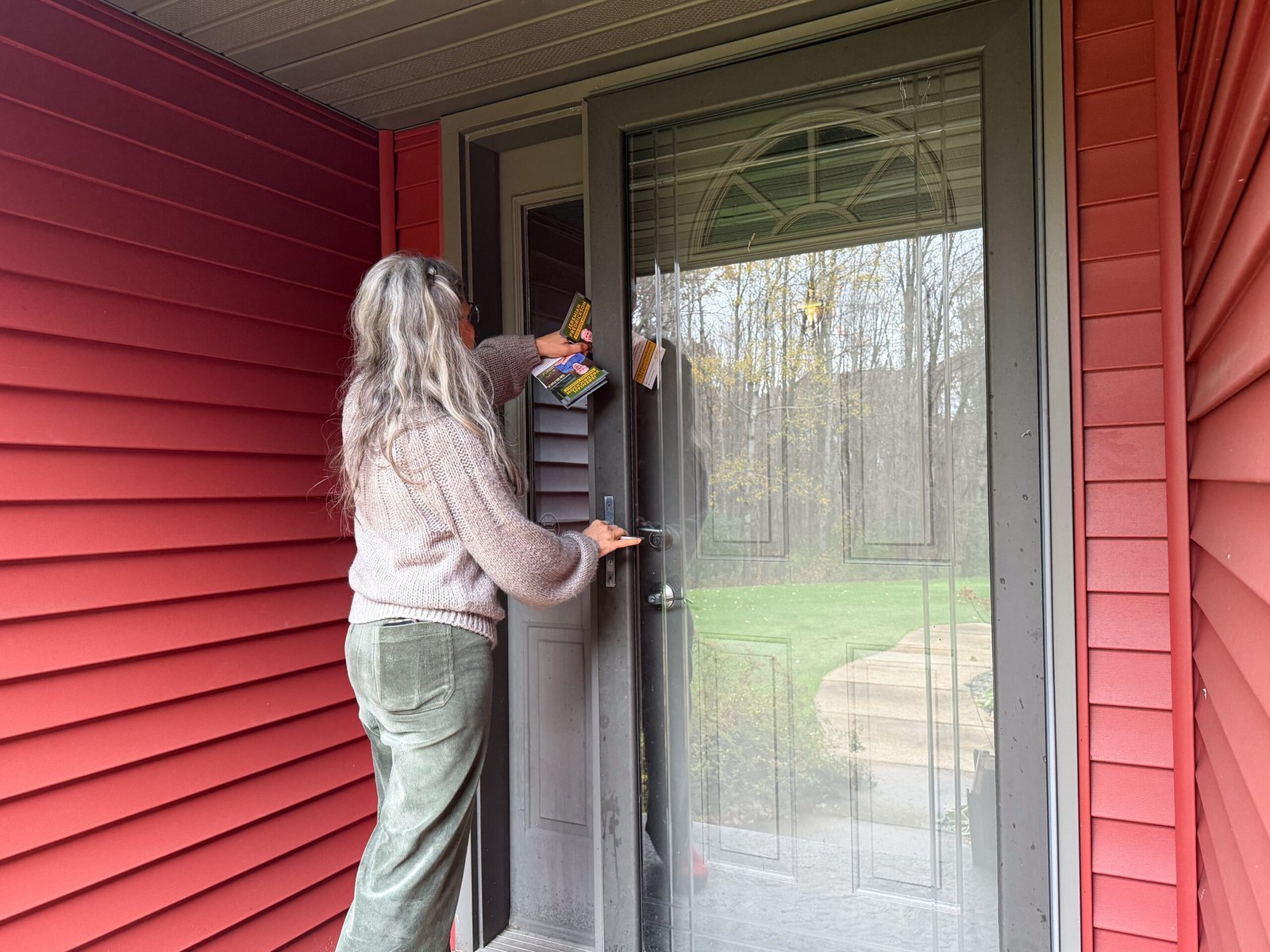
EAU CLAIRE, Wisconsin — In this rural-heavy stretch of the upper Midwest, Democrats are trying to claw back districts where their party brand is still deeply toxic.
It won’t be easy, even in a midterm environment that heavily favors their party. Local Democratic organizers in western Wisconsin, where Rebecca Cooke is trying to oust GOP Rep. Derrick Van Orden, know that elections here are decided by the slimmest of margins. They have no room for error.
“Everything’s on a razor’s edge,” Clara Serrano, who volunteers for the local Democratic Party, said as she drove along farms and cornfields outside Eau Claire.
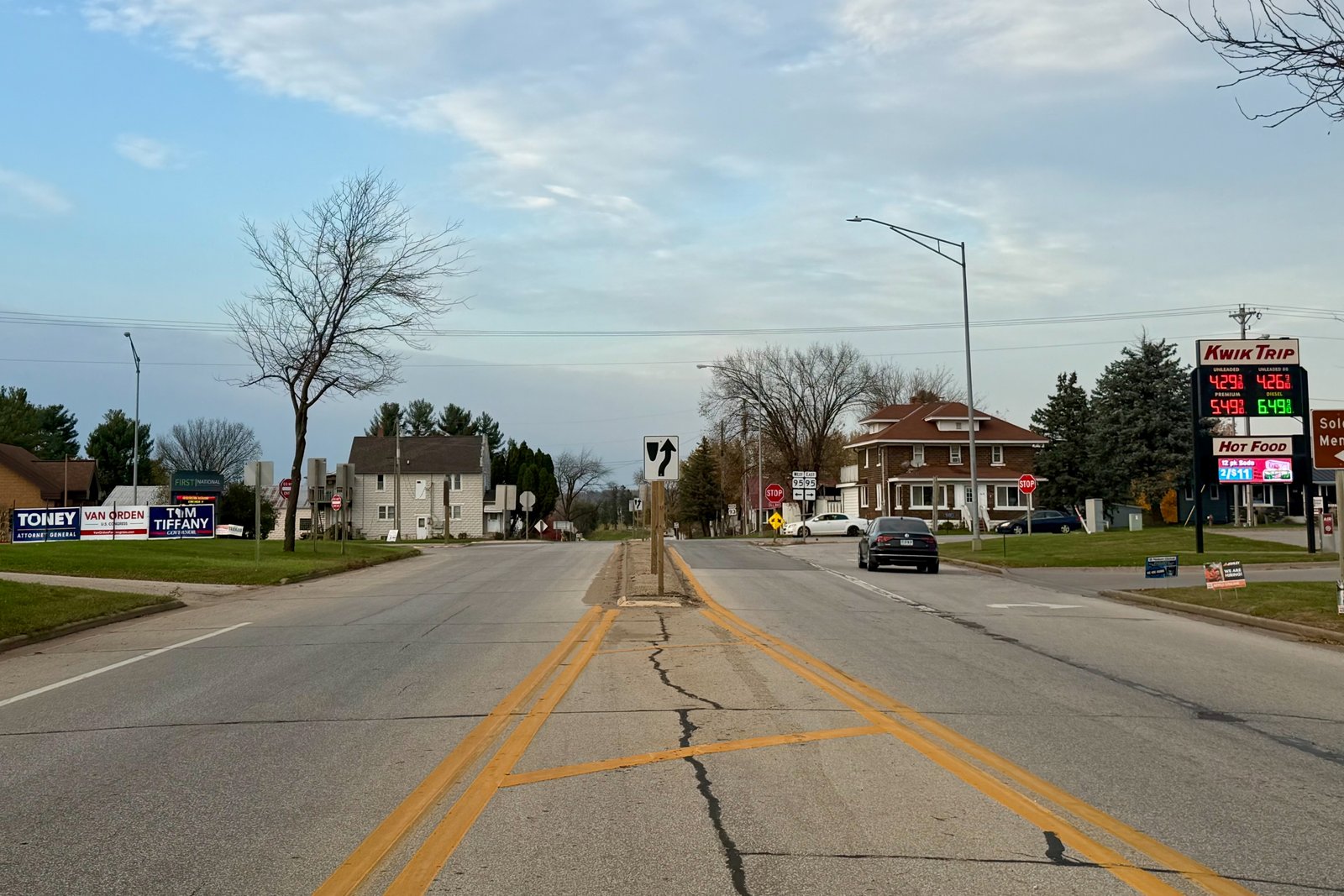
But a decade after President Donald Trump’s populism and culture wars swung the formerly Democratic-leaning region right, many voters from western Wisconsin over to southern Minnesota and down to eastern Iowa are hurting — and blame the president’s policies. Family farms are reeling from his tariffs. Diesel is over $6 a gallon. The cost of fertilizer has shot up more than 30 percent since the war in Iran began earlier this year.
“[Rural voters are] mad when we get to the door — and not at us,” said William Garcia, co-chair of the La Crosse County Democratic Party who has been out canvassing. “They’re mad about gas prices. They’re mad about fertilizer. They’re mad about the tariffs. And so all we do as Democrats is say, ‘Hey, we agree. We rejected all of these things. We’ve been fighting all of these things.’ So it’s much more receptive now than really it’s ever been.”
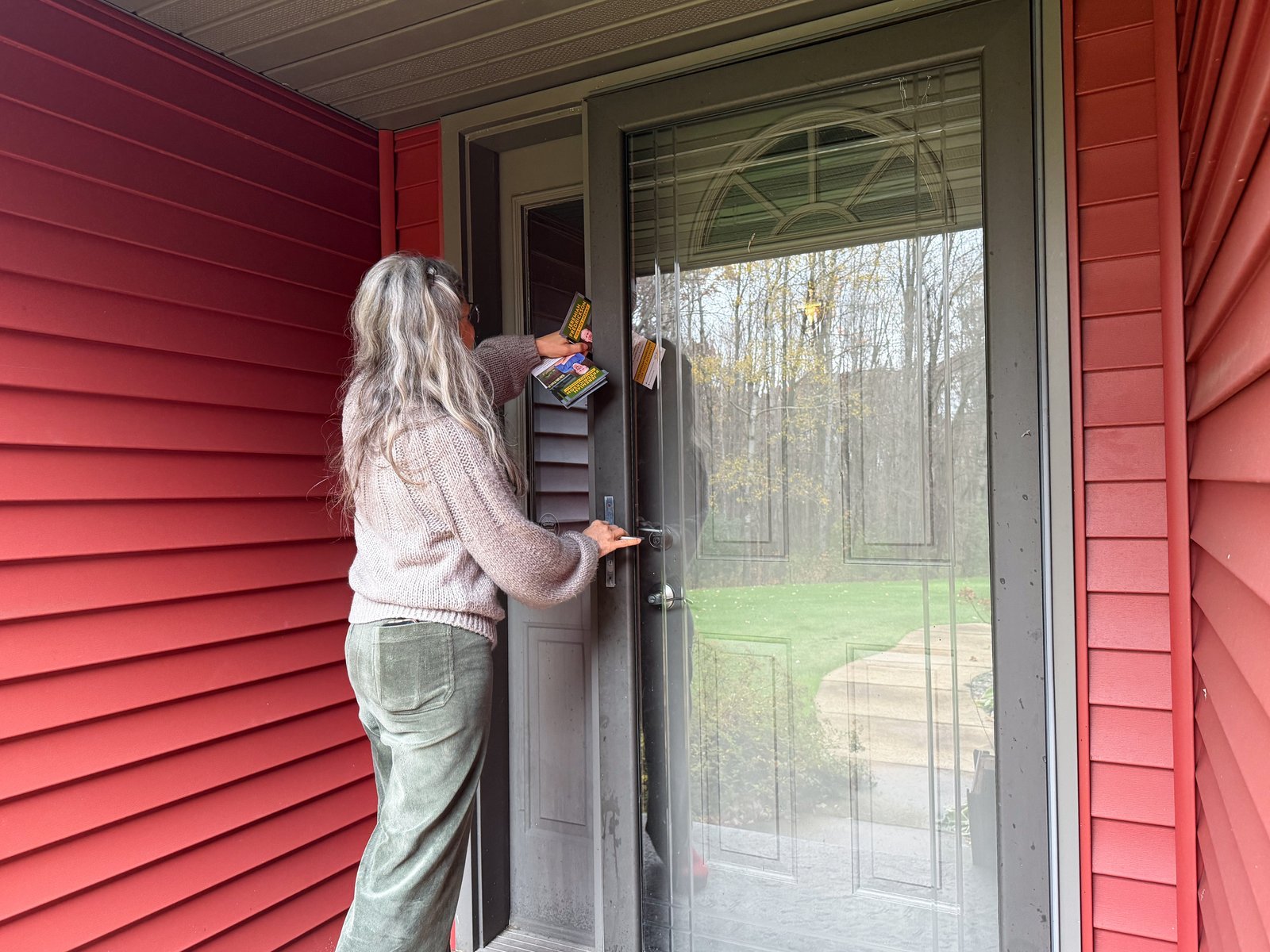
Local Democrats have pulled out all the stops to propel Cooke in Wisconsin’s 3rd District, knocking endless doors in redder areas. There have been national reinforcements as well: Populist Sen. Bernie Sanders (I-Vt.) endorsed Cooke during the primary and hit the campaign trail with her this week in Eau Claire. The national party is trying to make generational gains in Minnesota’s 1st District — where they’re hoping to pull off a major upset to unseat GOP Rep. Brad Finstad in a Trump +12 district — and in deep-red Iowa, where Democrats are targeting three GOP House seats, a Senate seat and the governorship.
Democrats for years have faltered with rural voters in these districts. Now, with polling showing Democrats gaining ground in redder territory and an electorate that’s souring on the GOP, Democrats hope they can finally make up ground this November — and lay a solid foundation for the 2028 presidential election.
If that doesn’t happen, it’s an ominous sign for the party.
“If we can’t win these seats now in this environment, it seems like we’re in for a world of hurt in 2028,” said one House Democrat, who, like others in this article, was granted anonymity to speak candidly.
Wisconsin Democrats have worked nearly-year round to build up a ground game. A major new initiative from the state party has helped to boost organizing, especially in rural counties and other places they’ve struggled.
“We haven’t really stopped organizing since 2024,” said Pete Huff, co-chair of the nearby Dunn County Democratic party, where Trump won by 16 points.
Cooke, who grew up on a farm in the area, has tried to create a more durable brand of politics in the district by largely trying to distance herself from the national Democratic party as she seeks to win over a broader base of voters. It helped in 2024: She overperformed Kamala Harris by 9,000 votes across the district, even though she narrowly lost to Van Orden.
“I think that the party doesn’t know how to speak the language of rural America, and I feel like I uniquely do,” Cooke said in an interview. She regularly canvasses in rural communities and has tried to tie Van Orden to increasingly unpopular data center developments, after local projects sparked backlash. On Sunday, before the campus rally, Cooke attended a meeting for residents worried about a new high-voltage transmission line that would cut through farmland.
This cycle, she’s especially leaned into the rare House endorsement from Sanders, who’s built his own populist and anti-establishment brand. At a Sunday rally on the University of Wisconsin-Eau Claire campus, she introduced the Vermont senator by saying: “Everyone forgets he’s an independent.”

Potential 2028 Democratic presidential contenders see the stakes of winning back rural-heavy districts as well.
Former Transportation Secretary Pete Buttigieg is traveling to Minnesota’s 1st District on Sunday to rally voters for Democrat Jake Johnson in Rochester.
It’s one of the many once-safe red seats that Republicans and Trump’s political operation are scrambling to shore up in these final days, with Johnson and Finstad running in what’s become a highly competitive race. Minnesota’s Democratic Gov. Tim Walz, then a high school teacher, won a House seat here in a 2006 wave election amid voter anger at the Iraq war and their GOP incumbent. Also that year, a local prosecutor named Amy Klobuchar swept to a big Senate win, part of a Democratic surge across the region.
Democrats are hopeful that history is repeating, with high costs and a president unpopular because of a Middle East incursion hurting the GOP in the region and nationally.
“The price of diesel is devastating,” said Ted Winter, who farms with his son near Fulda.
“We’ve patterned a lot of our campaign after Amy Klobuchar, who famously shows up in every single county every single year,” Johnson, a math teacher, said in an interview. “And so I just said, ‘hey guys, let’s host a town hall in every county.’”
National Republicans for months brushed off concerns from local Republicans that Finstad’s race was growing increasingly competitive. Pro-Trump super PACs only recently injected their first cash of the race into the district, with the latest total quickly hitting several million dollars — an unheard-of prospect just a few weeks ago. The National Republican Congressional Committee spent for the first time in the race Tuesday. Democratic groups, on the other hand, started spending in the contest over the summer — and the leading House Democratic super PAC just responded with a $2.2 million money dump and a last-minute TV ad campaign.
Finstad said in an interview at a local textile mill in Faribault that he flagged money concerns to national Republicans weeks ago. He also raised those concerns to GOP Whip Tom Emmer, who is from Minnesota.
“We raised that with anybody and everybody that would want to hear it,” Finstad said. “From a global perspective, people were like, ‘Well, you won by 18, you’re fine.’ And, you know, those of us in Minnesota know that this district has always had kind of an independent streak to it.”
But Finstad said the tariffs were helping farmers in some cases, and the massive fraud scandals in Minnesota are keeping Trump voters and Republicans engaged in the final days. That’s one particular drag that could hit Johnson in this area.
Democrats are still optimistic.
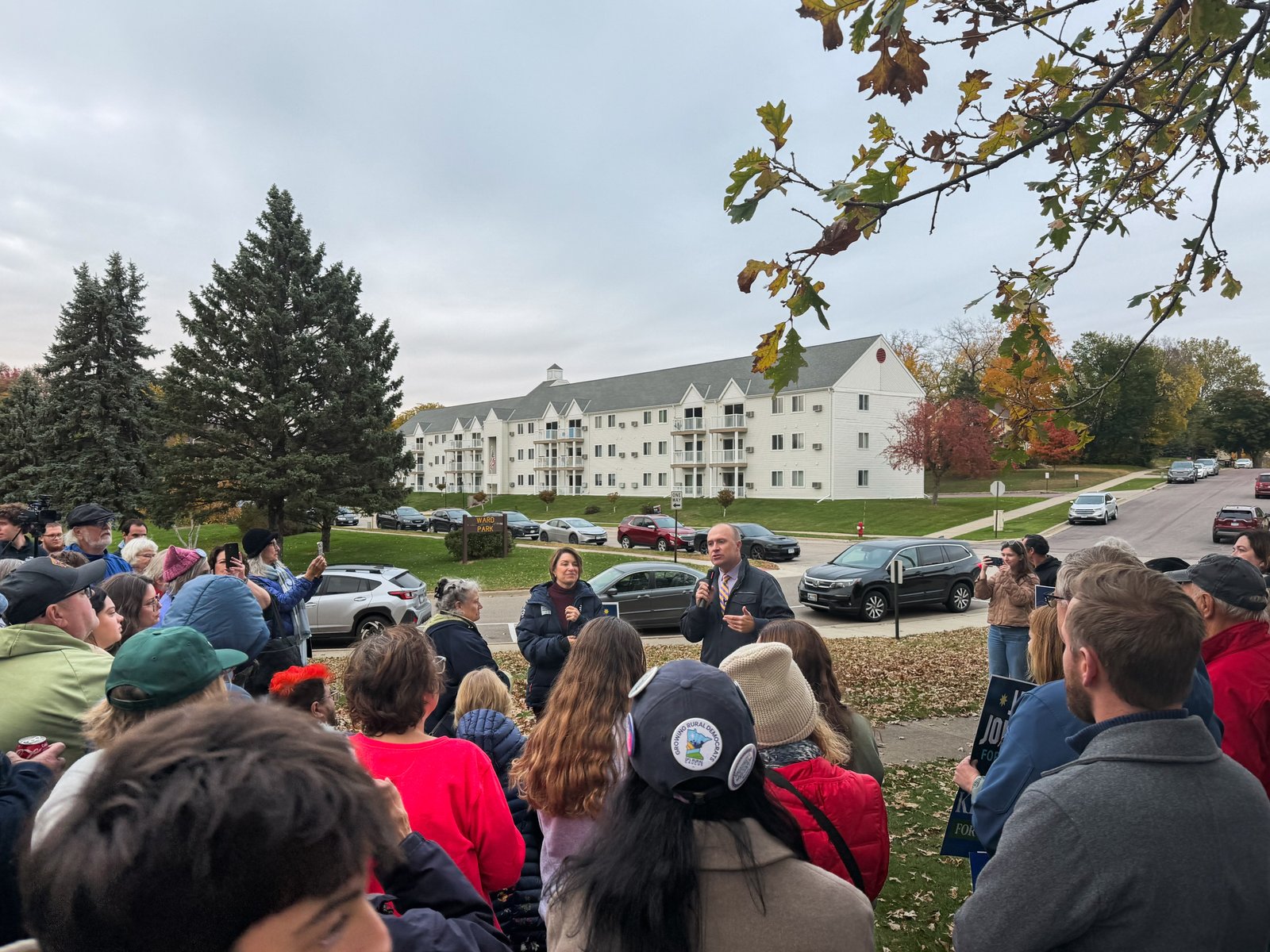
“Things are changing in rural America right now,” Klobuchar, who’s now running for governor, told a crowd of volunteers and voters alongside Johnson on Sunday, at a local park in Fairmont. She pointed not only to the tightening 1st District race, but also to neighboring Iowa as proof.
Republicans have grown particularly worried about the Hawkeye State as they’ve privately come to believe Democrats will flip at least one of three congressional seats there. And, they’re alarmed about the prospect of wider losses across a state Trump won by 13 percentage points, should disillusioned Republican voters decide not to turn out in the numbers they need.“Does it feel good to be running neck-and-neck against Democrats in Iowa just days out? No,” said one GOP strategist in Iowa working on a House race. But they noted that long-term demographic make-up of most Iowa districts do not favor Democrats.
Speaker Mike Johnson is traveling to Rep. Zach Nunn’s Des Moines-based district in Iowa on Wednesday to help save the seat. Republican Joe Mitchell, who is running in the nearby seat to replace GOP Rep. Ashley Hinson, is locked within the margin of error in his race against Democrat Lindsay James, according to two people with direct knowledge of internal polls. And Republicans are largely assuming GOP Rep. Mariannette Miller Meeks’ seat just to the south of that is already gone as she faces Democrat Christina Bohannan.
“The tariffs, the Iran war, the health care cuts, these things are just brutal for the people of Southeast Iowa,” Bohannan said in an interview. That’s why national and local Democrats alike worry if they can’t pull out key wins in the upper Midwest this election season, they will continue to be shut out of power for years. They’re keenly aware that, no matter how frustrated rural voters are with Republicans, they’re still wary of the national Democratic party brand.
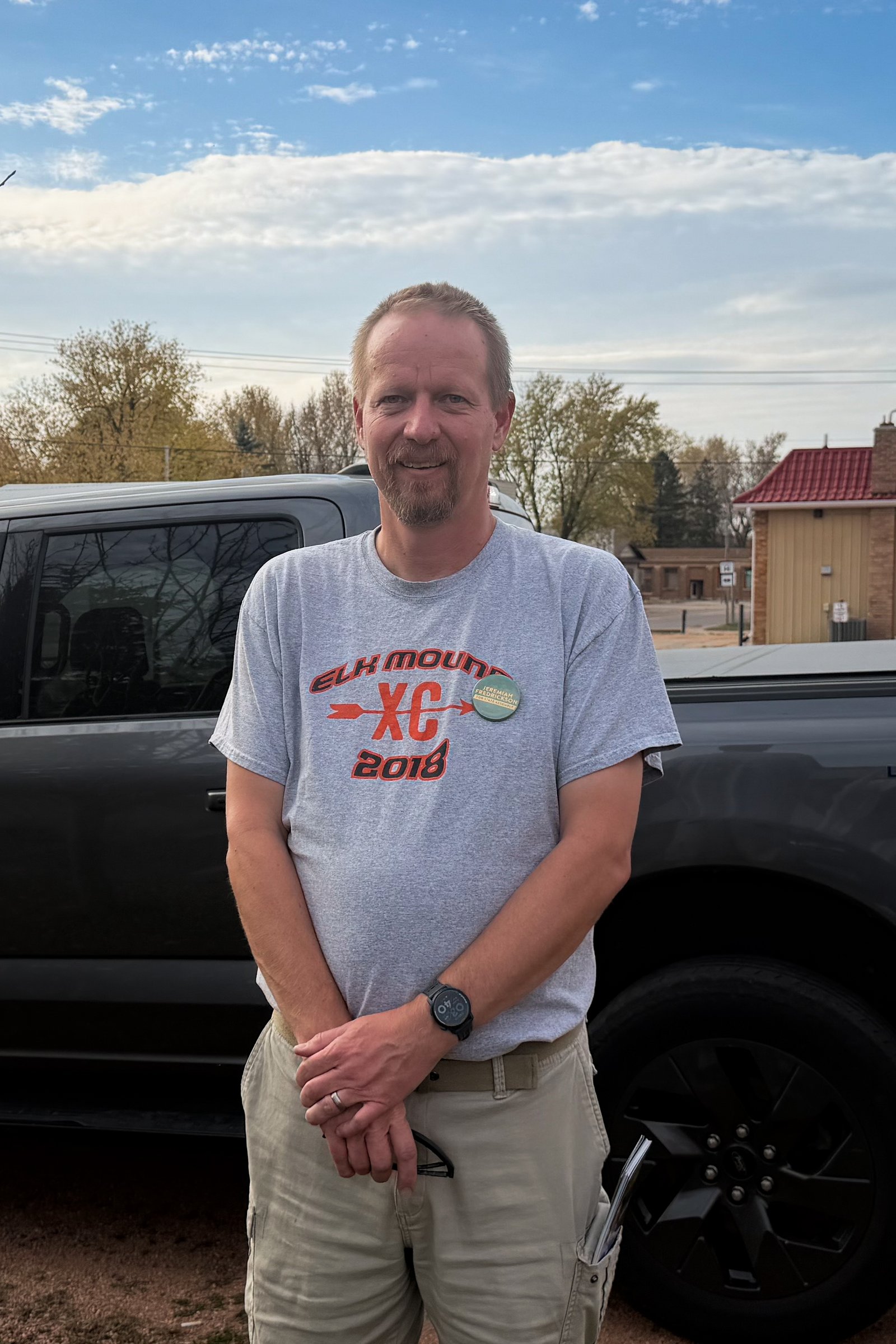
“I don’t approach the door as a Democrat,” Jeremiah Fredrickson, who’s running to flip a Wisconsin state assembly seat, said in an interview before he knocked doors in the small, GOP-leaning village of Elk Mound. “My goal is to try to be a representative. I think way too many of our politicians have gotten to the point where they go to Madison, and they forget about the people back here.”
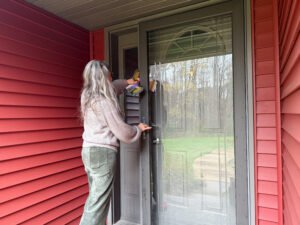
At one door, an older man with white hair looked down at the pamphlet Serrano — the Democratic volunteer for Cooke and Fredrickson — was holding. “You can keep that,” he replied. “I’m not voting for them. No way in hell.”
Van Orden, the Wisconsin Republican racing to hold his seat against Cooke, is skeptical his district’s voters will swing back toward Democrats. That’s despite high prices and Trump’s current unfavorability.
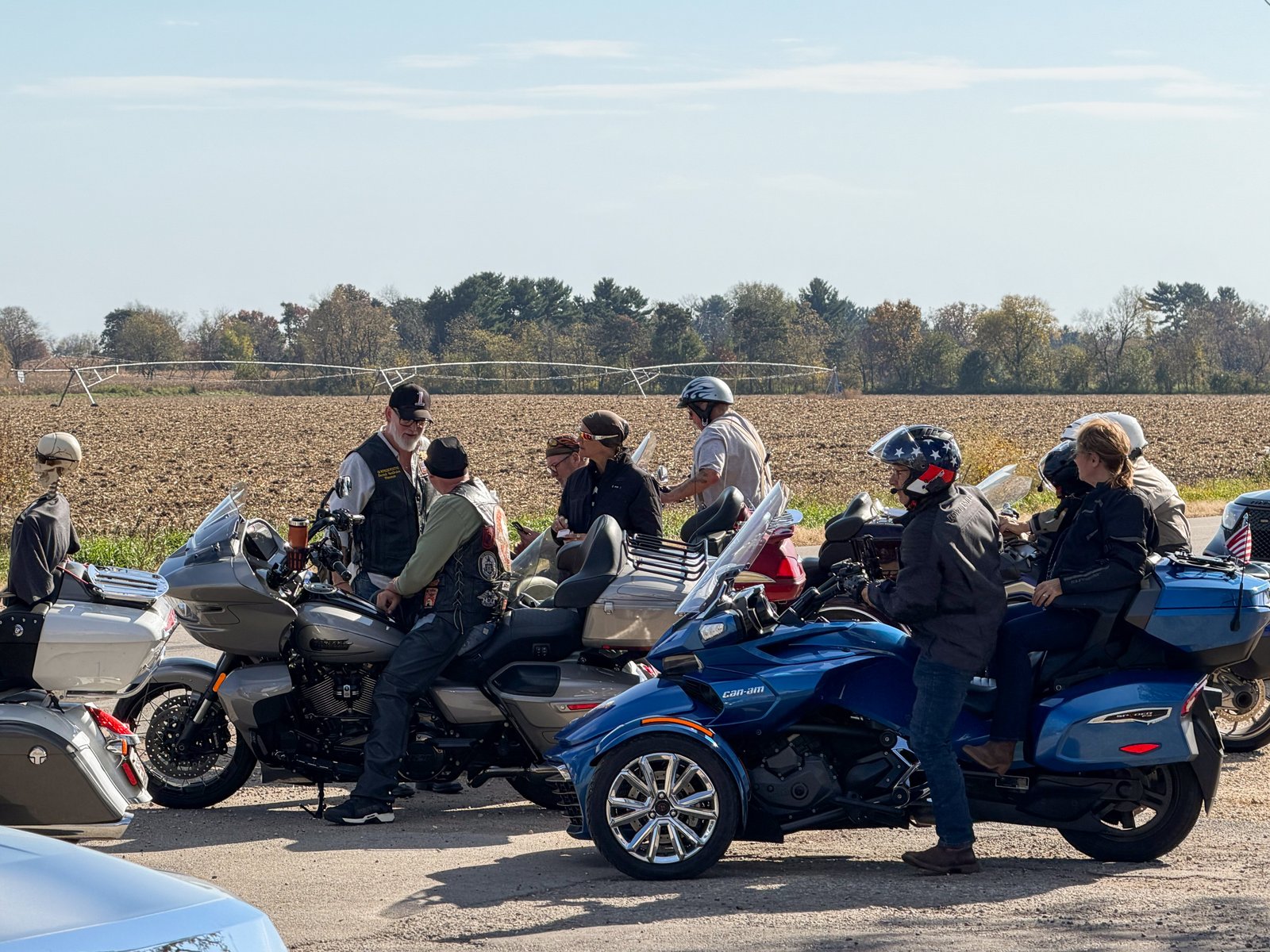
The retired Navy SEAL rode in on his Harley-Davidson motorcycle to the Boon Docks bar as part of a multi-day district tour. After greeting patrons, he told Blue Light News in an interview that Cooke is a “flat-out socialist.” He dismissed Sanders’ draw, saying that “voters here hate career politicians.”
“Is it politically convenient that we’re fighting with the Iranians now? The answer is no,” Van Orden said. “I don’t want gas prices to go up. I also don’t want my grandkids fighting the Iranians … 50 years from now.” But he’s counting on Trump voters to turn out for him.
Across the bar, Deb Bork, who’s in her 70s and lives up the road in the small town of Independence, said she was sticking with Van Orden and Trump, regardless of the “hardship” of higher gas prices, saying the war was a blip compared to the length of other U.S. wars.
She still trusts Trump.
“He feels it’s in the best interest of our country to protect us,” she added. “For so long we’ve been out there protecting everybody else and forgetting about the people that live here.”
- Pelosi in London
- Billionaire taxes, trans rights, abortion, voting rights: This year’s biggest state votes
- Capitol agenda: House GOP eyes Jordan vs. Scalise
- Republicans rethink their attacks on AOC

- The midterms may revive a dying breed: The oil-state Democrat
- New satellites see thousands of methane leaks. Governments shrug.
- Dems have lost in the rural Midwest for years. This might be their time to win it back.
- GOP defense hawks break with Trump ahead of the midterms
- Inside the shadow campaign to lead a diminished House GOP
- Abbott taps tech cash for closing push in Texas governor’s race
-

 Politics2 years ago
Former ‘Squad’ members launching ‘Bowman and Bush’ YouTube show
-
Uncategorized2 years ago
Bob Good to step down as Freedom Caucus chair this week
-

 The Josh Fourrier Show2 years ago
DOOMSDAY: Trump won, now what?
-

 The Dictatorship2 years ago
Pete Hegseth’s tenure at the Pentagon goes from bad to worse
-

 Politics2 years ago
Former Kentucky AG Daniel Cameron launches Senate bid
-

 Politics1 year ago
John Legend advises Trump to drop the ‘dictator s‑‑‑’ if he wants Nobel Peace Prize
-

 The Dictatorship2 years ago
Luigi Mangione acknowledges public support in first official statement since arrest
-

 Politics2 years ago
Blue Light News’s Editorial Director Ryan Hutchins speaks at Blue Light News’s 2025 Governors Summit