
The Dictatorship
Unlawful combatants in Caribbean…

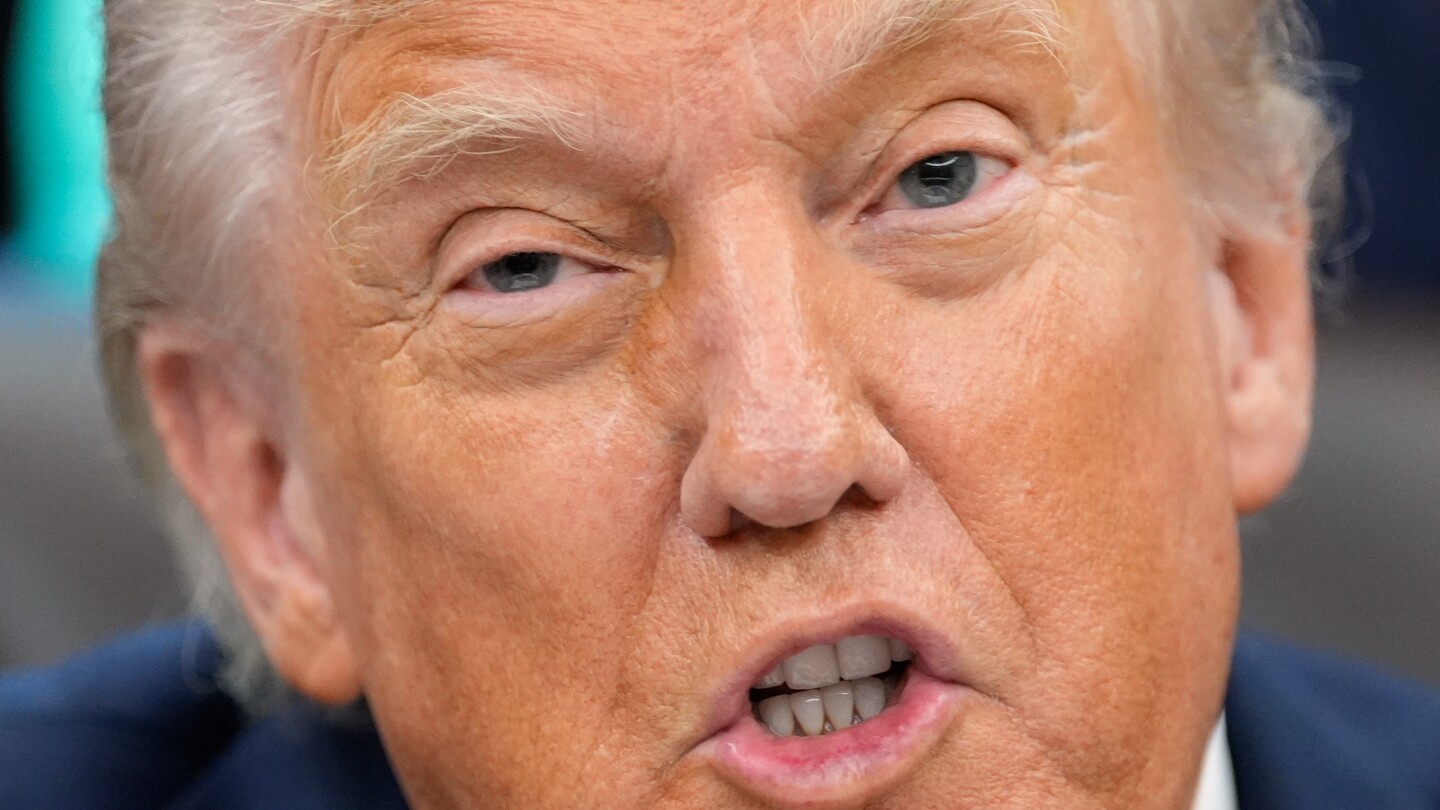
WASHINGTON (AP) — President Donald Trump has declared drug cartels to be unlawful combatants and says the United States is now in an “armed conflict” with them, according to a Trump administration memo obtained by The Associated Press on Thursday, following recent U.S. strikes on boats in the Caribbean.
The memo appears to represent an extraordinary assertion of presidential war powerswith Trump effectively declaring that trafficking of drugs into the United States amounts to armed conflict requiring the use of military force — a new rationale for past and future actions.
“The President determined that the United States is in a non-international armed conflict with these designated terrorist organizations,” the memo says. Trump directed the Pentagon to “conduct operations against them pursuant to the law of armed conflict.”
“The United States has now reached a critical point where we must use force in self-defense and defense of others against the ongoing attacks by these designated terrorist organizations,” the memo says.
Besides signaling a potential new moment in Trump’s stated “America First” agenda that favors non-intervention overseas, the declaration raises stark questions about how far the White House intends to use its war powers and if Congress will exert its authority to approve — or ban — such military actions.
“The United States is taking a much more dramatic step — one that I think is a very, very far stretch of international law and a dangerous one,” said Matthew Waxman, who was a national security official in the George W. Bush administration. It “means the United States can target members of those cartels with lethal force. It means the United States can capture and detain them without trial.”
Declaration follows boat strikes in the Caribbean
The U.S. military last month carried out three deadly strikes against boats in the Caribbean that the administration accused of ferrying drugs. At least two of those operations were carried out on vessels that originated from Venezuela.
Those strikes followed up a buildup of U.S. maritime forces in the Caribbean unlike any seen in recent times. The Navy’s presence in the region — eight warships with over 5,000 sailors and Marines — has been pretty stable for weeks, according to two defense officials, who spoke on condition of anonymity to discuss ongoing operations.
The memo did not include a timestamp, but it references a Sept. 15 U.S. strike that “resulted in the destruction of the vessel, the illicit narcotics, and the death of approximately 3 unlawful combatants.”
“As we have said many times, the President acted in line with the law of armed conflict to protect our country from those trying to bring deadly poison to our shores, and he is delivering on his promise to take on the cartels and eliminate these national security threats from murdering more Americans,” the White House said.
Pentagon officials briefed senators on the strikes Wednesday, according to a person familiar with the matter, who was not authorized to comment publicly and spoke on the condition of anonymity. The Pentagon referred questions to the White House.
From AP’s Standards and Stylebook teams:
The AP is using anonymous sourcing to provide information for this story. Click here to hear Washington Bureau Chief Anna Johnson explain AP’s policy on the use of anonymous sources.
What the Trump administration laid out at the classified briefing at the Capitol was perceived by several senators as pursuing a new legal framework that raised questions particularly regarding the role of Congress in authorizing any such action, that person said.
Pentagon officials also briefed House staffers last week on the strikes, according to another person who was briefed on the meeting and similarly spoke on condition of anonymity.
The memo, which was reported earlier by The New York Times, lays out a rationale seen both as the administration’s justification for the military strikes it has already taken on the boats in the Caribbean — which have raised concerns from lawmakers as potentially unlawful — as well as any action to come.
A White House official who wasn’t authorized to comment publicly and spoke on condition of anonymity said the memo was sent to Congress on Sept. 18 and does not convey any new information. The person familiar with the Senate briefing said it was transmitted this week.
Details weren’t given on the cartels targeted
Trump has designated several Latin American drug cartels as foreign terrorist organizationsand the administration had previously justified the military action as a necessary escalation to stem the flow of drugs into the United States.
Pentagon officials could not provide a list of the designated terrorist organizations at the center of the conflict, a matter that was a major source of frustration for some of the lawmakers who were briefed this week, according to one of the people familiar with the briefings.
While “friendly foreign nations have made significant efforts to combat these organizations,” the memo said, the groups “are now transnational and conduct ongoing attacks throughout the Western Hemisphere as organized cartels.” The memo refers to cartel members as “unlawful combatants.”
The Trump administration is trying to justify the use of military force against drug cartels in the same way the Bush administration justified the war against al-Qaida following the Sept. 11 attacks, said Waxman, who served in the State and Defense Departments and on the National Security Council under Bush.
Bush, however, had authorization from Congress, unlike Trump. The Trump administration is arguing that it no longer has to consider the individual circumstances of using force, said Waxman, who now chairs Columbia Law School’s National Security Law Program.
“It’s basically saying, ‘We don’t have to engage in that kind of case-by-case decision-making,’” Waxman said. “All of these vessels that are carrying enemy personnel can be targeted, whether they’re headed towards the United States or not.”
Waxman said he expects more strikes and “we’ll see if the United States takes the next big step and engages in lethal force or armed force on the territory of another state.”
Lawmakers of both major political parties have pressed Trump to seek war powers authority from Congress for operations against alleged drug traffickers. Several senators and human rights groups have questioned the legality of the strikes, calling them potential overreach of executive authority in part because the military was used for law enforcement purposes.
Sen. Jack Reed of Rhode Island, the top Democrat on the Senate Armed Services Committee, said drug cartels are “despicable” but the Trump administration has offered “no credible legal justification, evidence or intelligence for these strikes.”
Reed, a former Army officer, said “every American should be alarmed that their President has decided he can wage secret wars against anyone he calls an enemy.”
___
Associated Press writers Konstantin Toropin, Ben Finley and Michelle L. Price contributed to this report.


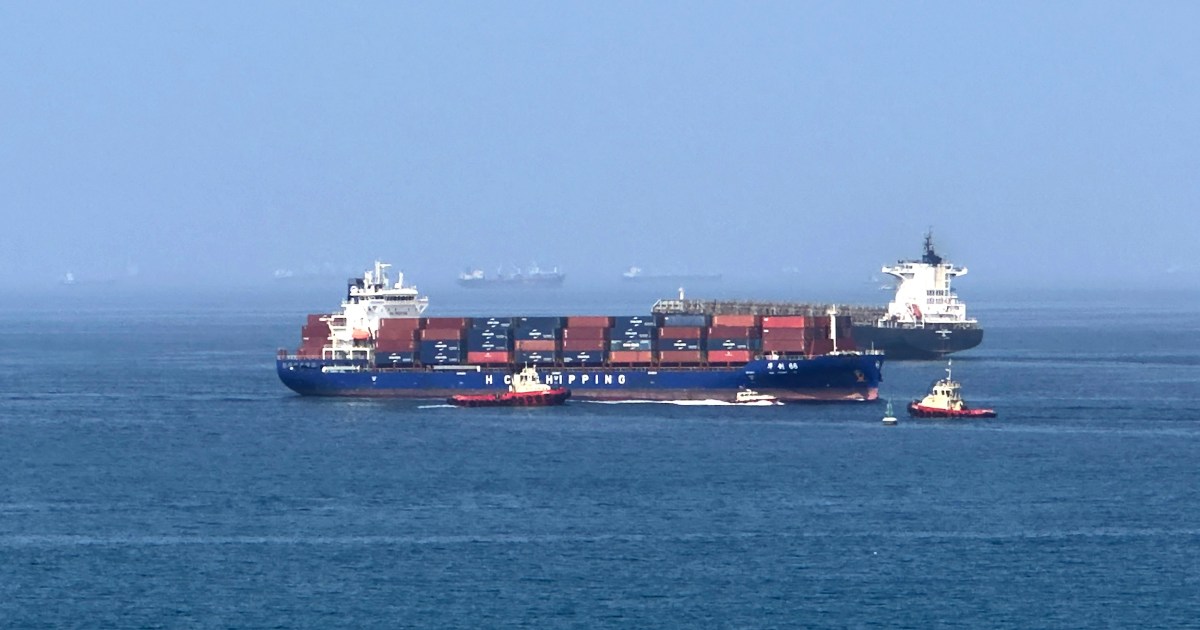
DUBAI, United Arab Emirates (AP) — Iran again launched drone and missile attacks targeting Bahrainand Kuwaiton Sunday following new U.S. airstrikes against the Islamic Republic, and threatened a “complete halt” in negotiations to end the warif Washington continues its attacks.
Efforts to reopen the Strait of Hormuzwithout Iran’s oversight has sparked days of crossfire. A multinational maritime body overseen by the U.S. Navy said Saturday it would expand a route near Omanfor inbound and outbound traffic.
Iranian Foreign Minister Abbas Araghchi on Sunday reiterated the claim that Tehran must govern the strait to the Persian Gulfthat once carried a fifth of the world’s oil and natural gas.
“Any attempt to establish new or separate arrangements from those currently being carried out by the Islamic Republic of Iran will only lead to further complications, delay the reopening of the Strait of Hormuz and increase the level of tension,” Araghchi said.
The strait has long been considered an international waterway despite its location in Iran and Oman’s territorial waters. In recent days, Iran has twice attacked vessels going through a route near the Omani side.
A Pakistani official involved in the technical talks between the U.S. and Iran told MS NOW Sunday that talks between the sides are on hold given the ongoing fighting between the two sides. The source, who did not want to be named to discuss the sensitive matter, said the U.S., Iran, Pakistan and Qatar all have representatives currently in Switzerland to restart discussions when instructed to do so.
But the Trump administration said nothing has been canceled and technical talks are on track for the coming days.
Talks include arrangements around the strait, the removal of a U.S. blockade on Iranian ports and sanctions on Iran, and the future of Iran’s stockpile of highly enriched uranium. The two sides have 60 days from their signing of the memorandum of understanding earlier this month to work out details.
Continued conflict in Lebanon threatens the agreement, which says fighting must end on all fronts before certain issues can be discussed.
Strikes target Gulf states hosting US military
Iran’s paramilitary Revolutionary Guard claimed responsibility for the attacks in Bahrain and Kuwait.
Kuwait, which hosts a major U.S. military base, said air defenses intercepted Iranian drones and two missiles just after the U.S. strikes in Iran. There were no reports of injuries or damage.
Bahrain said the Iranian strikes damaged a residential building near the international airport and no one was killed. Bahrain is home to the U.S. Navy’s 5th Fleet. The damaged building was not near its headquarters.
Bahrain’s Foreign Ministry denounced what it called “a dangerous escalation that reveals that what Tehran is doing is not a passing act, nor an isolated incident, but rather a deliberate approach and a systematic pattern of repeated aggression.”
Later on Sunday, Qatar said a civilian had been killed, and another person was hurt, by shrapnel related to “military operations in the area” after a vessel didn’t return at its scheduled time on Saturday. It did not give details.
Trump accuses Iran of violating ceasefire
The U.S. military said it struck Iranian military “surveillance infrastructure, communication systems, air defense sites, drone storage facilities and minelayer capabilities” following an attack on a ship on Saturday. The Panamanian-flagged tanker Kiku carried crude oil for the state-run energy company of Qatar, another key mediator.
U.S. President Donald Trump on social media accused Iran of violating the deal and warned of a point where the U.S. may “be forced to militarily complete the job.”
“If that happens, the Islamic Republic of Iran will no longer exist!” Trump wrote.
The exchanges of fire began when an Iranian drone struck a merchant vesseloff Oman on Thursday and the U.S. military retaliated.
Ship traffic on the strait had increased over the past 72 hours, “despite the elevated threat environment,” the multinational maritime body overseen by the U.S. Navy said Sunday, adding that “U.S.-assisted commercial transits continued uninterrupted.”
It said 89 such transits had been made, below the historical average of 138 vessels a day.
Iran calls for new ‘conflict control unit’ in Lebanon
Last week, Israel and Lebanon signed a framework agreementto end the latest fighting between Israel and the Iranian-backed Hezbollah militant group, which began two days after the Iran war started when Hezbollah fired at Israel. Israel has responded with an invasion of southern Lebanon and it has said it will not withdraw until Hezbollah is disarmed.
The agreement did not include Iran or Hezbollah, which has criticized itand rejected calls to disarm.
On Sunday, Iran’s foreign minister again said the U.S. must force Israel to halt attacks and withdraw. Israel occupies around 600 square kilometers (231 square miles) in southern Lebanon, which it says it needs as a security buffer.
Sporadic clashes have continued, and Hezbollah’s leader said Saturday that the group would continue fighting until Israel withdraws from Lebanon.
Key Iranian negotiator and parliament Speaker Mohammad Bagher Qalibaf said Sunday that a meeting of a new “conflict control unit” formed among Iran, the United States and Lebanon should meet as soon as possible, Iran’s state broadcaster reported.
Two strikes hit southern Lebanon on Sunday morning — one in Taybeh town and the other in the Nabatiyeh area, according to Lebanon’s National News Agency. There was no immediate word on casualties.
Overnight, Hezbollah militants killed an Israeli soldier in Deir Siryan village in southern Lebanon, according to Israel’s military. Hezbollah did not comment.
Israel targets a village in Syria
Israel’s military targeted Abdin village in southern Syria’s Daraa province with artillery shelling Sunday evening, Syrian state media reported. There was no immediate report of casualties.
State news agency SANA earlier reported that residents had blocked the road into the village with stones to prevent Israeli forces from entering it again after they had entered and withdrawn.
Earlier Sunday, Israel’s military said it had killed several armed men in southern Syria but gave no details. There was no statement from Syrian officials.
Israel seized control of a U.N.-patrolled buffer zone in southern Syria in December 2024 following the ouster of former Syrian President Bashar Assad in an insurgent offensive. Israeli officials initially called the move temporary, but more recently they have said they plan to occupy the zone indefinitely.

New York Mayor Zohran Mamdani has a message for political opponents using him as the new face of the Democratic Party: “Let them.”
Recent primary races in New York turned into a proxy war between progressives, including democratic socialists like Mamdani, and establishment Democratic politicians after candidates endorsed by Mamdani faced off against those endorsed by House Minority Leader Hakeem Jeffries and New York Gov. Kathy Hochul. After all three of Mamdani’s endorsements bore fruit, a national spotlight shone on the mayor as a growing influence in the Democratic Party.
Asked on ABC News’ “This Week” on Sunday how he felt about Republicans making him the “poster child” for the Democratic Party, Mamdani said, “Let them. We don’t have to ask ourselves what life looks like if a socialist wins. I won last November, and over the course of these last six months, what we’ve delivered for working people are the very things we were told were impossible.”
He touted recent campaign promises he delivered on, including freezing rents for nearly one million rent-stabilized apartments, expanding free child care and filling potholes across the city.
“I think we are seeing a hunger that is not just felt by New Yorkers, but frankly by Americans from coast to coast for a new politics, one that puts working people at the heart of it,” Mamdani told ABC.
Mamdani dismissed criticism from Republicans and Democrats alike. Jeffries, who represents parts of Brooklyn and Queens, said last week that he and the mayor “agree to strongly disagree about some of his endorsements, and he’s got work to do in terms of the conversations that he’s going to have with members of Congress moving forward.” Democratic Sen. Richard Blumenthal of Connecticut said, “The effort to nationalize New York is going to fail.”
Mamdani said he’s focused on the three congressional candidates he has already endorsed: Brad LanderDarializa Avila Chevalier and Claire Valdez. But he didn’t rule out future endorsements outside of New York.
“It’s not just New York City where working people are asking themselves ‘why can’t I afford my rent, why can’t I afford my groceries, why can’t I find enough money in my pocket for childcare no matter how hard I work?,’” Mamdani said.
When asked about a recent manifesto penned by a number of moderate House Democrats and Democratic candidates, promoting capitalism over socialism, Mamdani doubled down on his vision for the party.
“I’m not interested in writing a manifesto, or frankly, in reading one,” the mayor said. “I’m interested in delivering.”
Mamdani also criticized Democrats who continue to make antagonizing Trump the center of their politics rather than working people.
“You’ve got to have something that you are not just willing to stand up for, but that you’re also willing to explain how this is relevant to working people,” he said. “And I think this just comes back to the fact that I’m leading a city that’s the wealthiest city in the wealthiest country in the history of the world. I could end the sentence there and say that life is great for 8.5 million people. But it’s also a city where one in four are living in poverty. And for far too many Americans, those contradictions have become their day to day life.”
Erum Salam is a breaking news reporter for MS NOW, with a focus on how global events and foreign policy shape U.S. politics. She previously was a breaking news reporter for The Guardian.
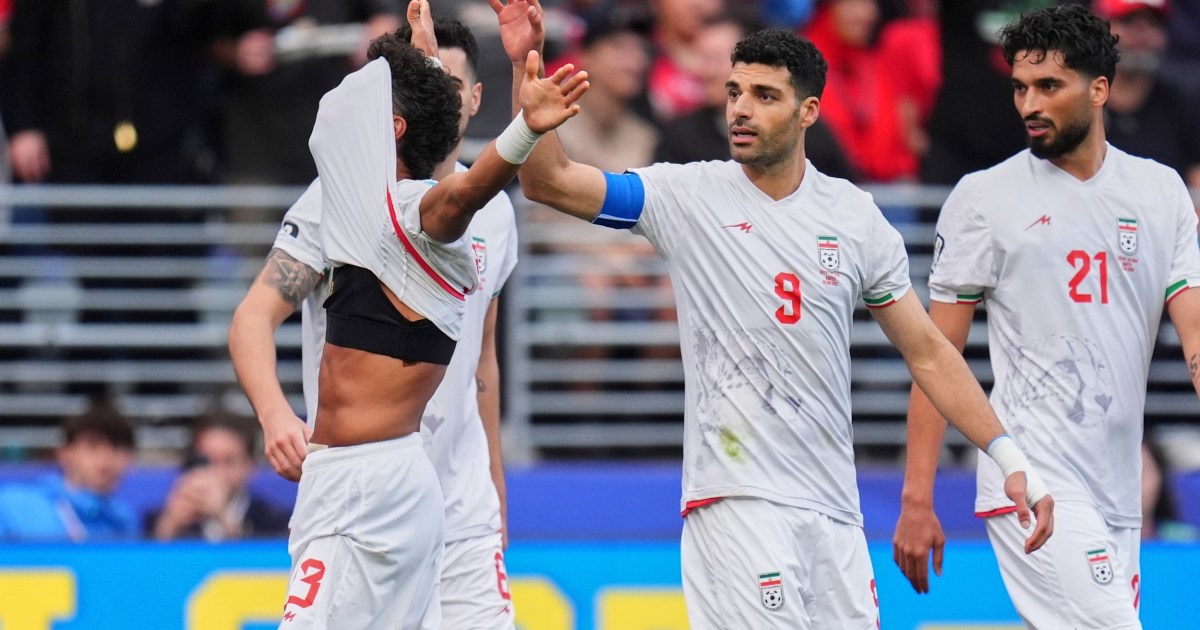
Despite remaining undefeated in the initial round of the World Cupthe Iran national team is going home after failing to secure enough points to advance. But they do not leave quietly.
Iran’s tumultuous journey in the World Cup has been the subject of widespread attention amid the U.S. war with Iran, with the United States being one of three countries hosting matches. The Iranian team captain, Mehdi Taremi, blamed FIFA, saying, “It’s a disaster World Cup. A disaster.”
“I mean, FIFA, they have to solve every problem here but unfortunately they could not solve it since the beginning,” Taremi said at a press conference Friday after his team drew with Egypt, knocking Iran out of the tournament.
He pointed to the team’s biggest obstacle. “We don’t have our logistics people here. They don’t have a visa,” Taremi said, adding, “We always complain about these things but no one helps. No one.”
The Trump administration denied visas to key Iranian staff and severely restricted players’ travel. The team’s base camp was moved from Arizona to Tijuana, Mexico, where it was required to return immediately after each game.
“How is it possible we always have to travel from Tijuana? We love the people in Tijuana. We love Mexico,” the Iran team captain said, but added, “It’s not fair.”
Throughout the tournament, the Football Federation of Iran lamented the number of issues, threatening to lodge a formal complaint against FIFA. Head coach Amir Ghalenoei called his team the “most oppressed” in the tournament. A few days before Iran’s final match against Egypt in Seattle on Friday, the U.S. loosened travel restrictions to allow players to enter the United States two days before the game.
“The Iran team will still be required to leave the day the match ends,” the Department of Homeland Security said ahead of the match. “The overall security measures and protocol are the same. We remain committed to providing the safest tournament possible for players, staff, and fans alike.”
Still, Iran finished Group G in third place with three points earned after drawing in its matches against Belgium, New Zealandand Egypt. Under FIFA’s new 48-team format, the top eight of third-place teams move on to the next round, but Iran narrowly fell short.
The team initially seemed poised to advance when it was tied with the same amount of points as Algeria, which scored a goal in stoppage-time against Austria Saturday night. But moments later, Austria tied the game, guaranteeing Iran’s elimination.
Off the field, tensions with Iran heightened Friday when the U.S. struck Iran despite signing a memorandum of understanding meant to halt hostilities in order to finalize a peace deal.
Erum Salam is a breaking news reporter for MS NOW, with a focus on how global events and foreign policy shape U.S. politics. She previously was a breaking news reporter for The Guardian.
- Fetterman, McCormick sidestep Shapiro on Pennsylvania’s ‘Great American State Fair’ booth

- AOC calls to ‘break up’ big tech companies amid price hikes

- Renewed Iranian attacks following U.S. strikes threaten to halt talks
- Mamdani embraces GOP making him ‘poster child’ of Democratic Party: ‘Let them’

- Iran soccer team leaves after narrow loss, denouncing ‘disaster World Cup’

- What Ron DeSantis’ closure of ‘Alligator Alcatraz’ reveals about MAGA
- Republicans get antsy about confirmations as the Senate hangs in the balance
- Rick Scott says he’s just trying to help
- Millions drop Obamacare health coverage after subsidies expire and costs rise

- The Lincoln Memorial should be green with envy: This reflecting pool stayed clear

-

 Politics1 year ago
Former ‘Squad’ members launching ‘Bowman and Bush’ YouTube show
-

 The Dictatorship1 year ago
Luigi Mangione acknowledges public support in first official statement since arrest
-

 Politics1 year ago
Former Kentucky AG Daniel Cameron launches Senate bid
-
Uncategorized2 years ago
Bob Good to step down as Freedom Caucus chair this week
-

 The Josh Fourrier Show2 years ago
DOOMSDAY: Trump won, now what?
-

 The Dictatorship1 year ago
Pete Hegseth’s tenure at the Pentagon goes from bad to worse
-

 Politics1 year ago
Blue Light News’s Editorial Director Ryan Hutchins speaks at Blue Light News’s 2025 Governors Summit
-

 The Dictatorship10 months ago
Mike Johnson sums up the GOP’s arrogant position on military occupation with two words