
Politics
Health experts say a second Trump term might make Americans sick — literally

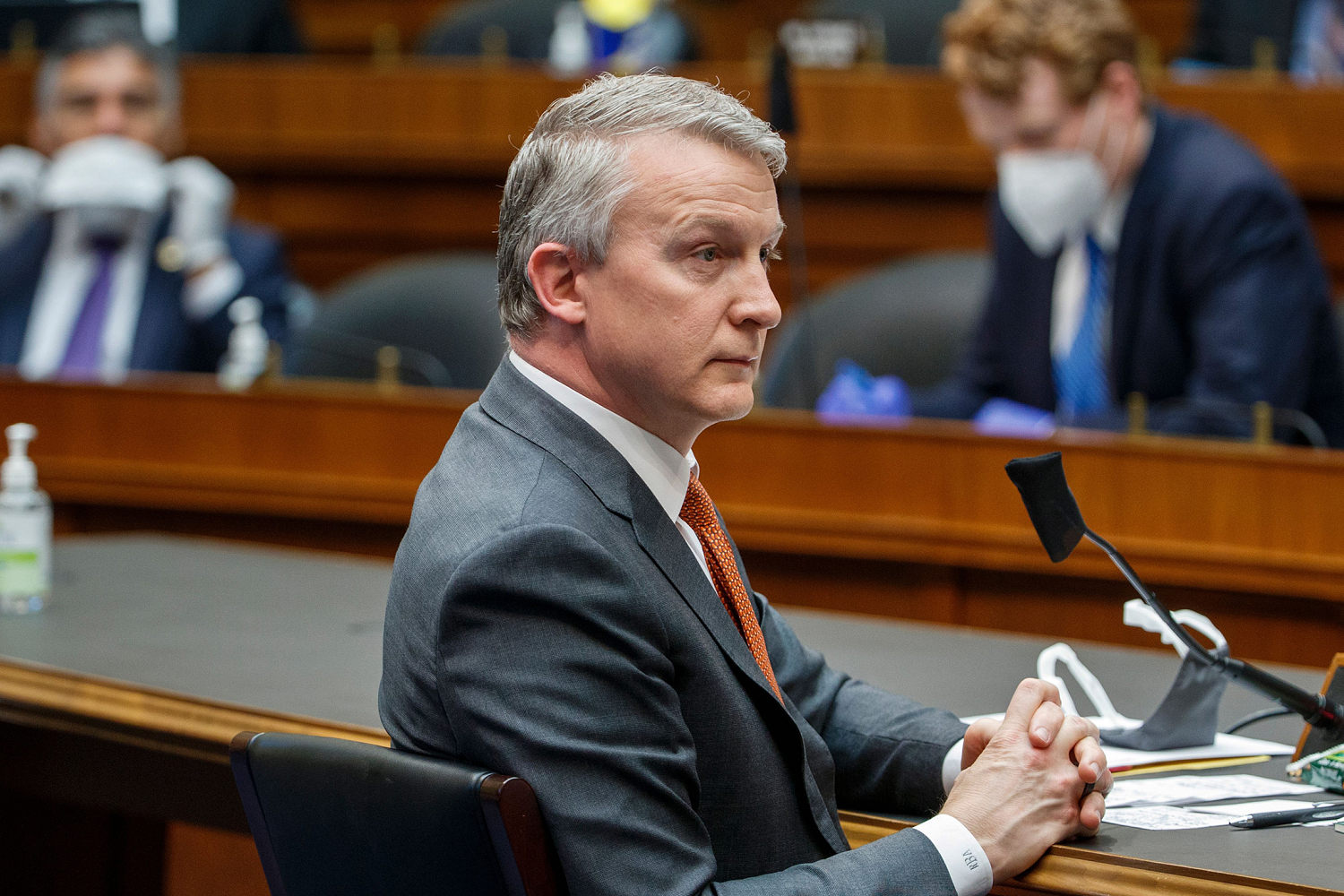

Former Trump administration health official Rick Bright published an op-ed in The New York Times warning of the nightmarish public health scenarios likely to unfold if Donald Trump is elected president again.
Bright ought to know. He was head of the Biomedical Advanced Research and Development Agency in the Health and Human Services Department but became a whistleblower in 2020 to sound the alarm on the Trump administration’s mismanagement of the Covid pandemic.
In light of new and disturbing reporting about Trump giving Covid test machines to Russian President Vladimir Putin that year, Bright’s warnings about the potential destruction of health institutions in a second Trump term deserve attention. As he writes, Trump would be empowered to undermine public health measures even more than he did the first time if he retakes the White House. And he has a playbook to do just that.
Now Mr. Trump seeks to return to power with a potentially more aggressive agenda to reshape our health institutions. Proposals supported by conservative initiatives like Project 2025 aim to split the C.D.C., stripping it of its ability to issue critical vaccine guidance, weaken the F.D.A.’s approval processes for key medical products and further slash N.I.H. funding. Some of these proposed changes, should Mr. Trump decide to embrace them, would require congressional approval. Yet a determined president could do a great deal of damage to our public health infrastructure through the installation of loyalists in key positions, redirection of funds and agency restructuring via executive actions.
Bright explains what that could look like in practice:
A weakened C.D.C. would struggle to provide unified guidance during health crises. N.I.H. cuts would impede crucial medical breakthroughs, jeopardizing advancements in cancer treatments, vaccines for diseases like Ebola and vital research on heart disease. A compromised F.D.A. could lead to hasty approvals of unproven treatments, eroding public trust in medical interventions. Furthermore, undermining these institutions would diminish America’s role in global health initiatives, leaving us more susceptible to international health threats.
This topic — about what public health would look like under a second Trump term — has been on my mind since the height of the pandemic, when thousands of Americans died monthly amid Trump’s arrogance and willful ignorance. And, as Bright mentioned, the threat of Trump implementing Project 2025, the far-right plan to pack the government with MAGA stooges, looms large over the health world with weeks to go until Election Day.
That’s why I recently chatted with Drs. Chris Pernell and Regina Davis Moss, two public health professionals who discussed what’s at stake in this election regarding Americans’ health and well-being. Pernell is the director of the NAACP’s Center for Health Equitywhile Moss is the president and CEO of “In Our Own Voice,” an organization that prides itself on leading the “National Black Women’s Reproductive Justice Agenda.”
Together, as part of ongoing coverage of Project 2025 from “The ReidOut,” we discussed abortion surveillance, anti-trans crackdowns, the health impact of hypermasculinity, the war on health equity, and the various ways conservatives’ far-right agenda for a second Trump term could make Americans sick … in more ways than one.
Stay tuned for a video of our conversation on The ReidOut Blog next week!
Ja’han Jones is The ReidOut Blog writer. He’s a futurist and multimedia producer focused on culture and politics. His previous projects include “Black Hair Defined” and the “Black Obituary Project.”


Politics
Trump wants the Postal Service to radically overhaul mail voting. But ballots are already going out.
President Donald Trump’s controversial demands for the Postal Service to overhaul and monitor millions of mail ballots hit another snag on Friday, when North Carolina became the first state in the nation to start sending out ballots for the November election.
In March, Trump signed the initial executive order, which aimed to crack down on mail-in voting — which he regularly alleges without evidence is a vector for widespread voter fraud — and assert an unprecedented amount of federal control over the upcoming elections.
Under this order and the subsequent rule drafted by the U.S. Postal Service, the USPS would refuse to deliver ballots to states that failed to provide lists of eligible mail voters or did not adhere to an approved envelope design style.
Since then, the order has faced legal challenges, and it remains paused by a federal judge’s orders. But the Trump administration has asked the Supreme Court to allow the new rule to proceed — something current and former election officials from both parties say would be both a legal nightmare that oversteps the federal government’s traditional role in elections and a logistical one that is happening far too close to the November election to implement even if they agreed with it.
“Why the hell are you rocking the boat this late in the game?” said Stephen Richer, a former Republican recorder of Maricopa County, Arizona, who has clashed with Trump allies for defending the security of the 2020 election.
Still, election officials are trying to project a sense of normalcy for voters, particularly in North Carolina, which serves as a test of whether established local election systems can operate normally amid intensifying federal scrutiny.
“I want to emphasize this point because there has been a lot of outside noise: Our county workers are ready,” Sam Hayes, a longtime Republican lawyer in the state and now executive director of the North Carolina State Board of Elections, said in a Thursday afternoon press conference.
He added, “All we can do is what we’re doing. … It is business as usual as far as I’m concerned.”
Despite the legal challenges, the Trump administration has continued to press the courts to let it proceed. The Trump administration asked the Supreme Court on Thursday to lift an order from a Massachusetts judge which temporarily prevents the USPS from enforcing their rule. It is the second time the Trump administration has asked the Supreme Court to step in, after winning an earlier victory in which the high court dismissed an earlier hold on the rule as premature.
“The uncertainty is coming from a single activist judge who continues to try and obstruct President Trump from implementing commonsense measures to protect the security of mail-in ballots and ensure only Americans vote in American elections,” White House spokesperson Lauren Bis said in a statement. “These safeguards for mail ballots were proposed months ago giving election officials ample time to prepare for the 2026 election.”
The USPS did not immediately respond to requests for comment.
Election officials said that if the rule goes into effect this close to November, it would cause chaos and place added strain on the USPS and election officials. And an anonymous federal whistleblower said in a report circulated earlier this week by Sen. Richard Blumenthal (D-Conn.) that the USPS was moving forward in a “secretive, rushed, chaotic, and fundamentally flawed process” to try to implement the new system ahead of the midterms.
In the coming weeks, states across the country will follow North Carolina’s lead. Nine other states will begin mailing ballots in the next two weeks, according to a tracker from the National Conference of State Legislatures — with the biggest day for mailing coming 45 days before the election in mid-September.
“It would be so outrageous to try to let this go into effect. It’s hard to even imagine,” said Ben Hovland, a senior fellow for democracy at the progressive think tank Center for American Progress and former Democratic commissioner with the Election Assistance Commission who was fired by Trump in July.
He added, “It would be a break-glass moment for our democracy.”
The rule would require meticulous changes to ballot handling and tracking practices that Hovland said are impossible to implement before Election Day in about two months, effectively disenfranchising millions of voters.
“Ballots are printed. Envelopes are printed. You can go on and on with all the practical reasons that show that implementing something like this at this time is not feasible,” he said.
Richer said he doubted the new rules would bring about more security. Even if the USPS received lists from the states, according to the postal service’s final rule, it would not do any additional vetting of the list, Richer said.
“It’s just that the mail ballots have to be on that list, and I don’t see what added value for election integrity that does,” he said.
He added, “It creates a lot of administrative burden, and I think it creates a lot more opportunity for error.”
While a decision looms in the courts, election officials and experts cast doubt on the likelihood of the rules going into effect before November. A more pressing issue, they said, is the confusion and uncertainty surrounding mail-in ballots, which could subvert and change the behaviors of voters.
“It makes things seem messy or difficult, and it can dissuade people from participating or coming out to vote,” Hovland said. “It certainly also helps establish a pretext to make bad faith claims about election results.”
Hovland said that while none of these claims of voter fraud are backed up with facts, they could cause Americans to lose faith in the voting process.
Still, some current officials contended they were well-prepared for whatever happens — and that they’d be able to communicate effectively with voters who have become increasingly buffeted by dramatic rhetoric about the once-unmentioned nuts and bolts of actually running an election.
“There’s always a lot of noise around elections, that’s not going to change, and it can be hard to differentiate that from what’s actually going on on the ground,” said Jason Tyson, director of external affairs for the North Carolina State Board of Elections.
As Election Day approaches, Tyson and election officials said they urge voters to check their registration status and make a plan to vote.
He added, “I think we’ve got a really well-trained, solid staff who are ready, and who have gone through all of the checks and balances and points of contact that we need to do to get to where we are.”
Missouri’s Supreme Court suspended a congressional map that state Republicans drew last year that would have netted the GOP an additional House seat, likely keeping the seat in Democratic hands this November.
The court ruled unanimously on Thursday that a referendum petition organized by Democrats to put the new congressional maps to a vote was incorrectly deemed insufficient by Republican Secretary of State Denny Hoskins, and ordered that the gerrymandered map be put to a vote in the fall.
Voters will ultimately decide the fate of the new lines in November. But in the meantime, it cannot be in place for the midterms, meaning Rep. Emanuel Cleaver’s original Kansas City-based district will likely stay in Democrats’ hands this fall.
Construction crews could begin the excavation process for what will be President Donald Trump’s massive 250-foot-tall arch in as soon as the next two weeks, Interior Secretary Doug Burgum announced on Thursday.
The monument — which will be erected in a traffic circle at the head of the Memorial Bridge over the Potomac River, coming between the Lincoln Memorial and Arlington Cemetery — has generated controversy as concerns emerged about the design and traffic congestion during construction.
The arch would take two to three years to construct on the proposed schedule, according to documents released in June.
“We are pleased to announce that after a very long wait (over 125 years!), we are preparing to start, over the next two-week period, the excavation work necessary for the Great Triumphal Arch and Military Observation Deck,” Burgum said in a social media post.
The 250-foot-tall arch will be among Trump’s most visible projects, as the administration continues its attempts to remake Washington. Critics, however, have voiced fears that the structure may be too large, and overshadow other monuments, like the Lincoln Memorial on the other side of the Potomac River.
The proposed arch will dwarf the Arc de Triomphe in Paris in size. It is unclear at this time how much construction will cost; the National Endowment for the Humanities earmarked $15 million for the monument.
“This will be one the the Great Pieces of American Architecture, honoring the history and significance of Arlington National Cemetery and befitting the most powerful Capital in the World,” Burgum said.
The monument will be constructed on land overseen by the National Park Service, and critics have argued Trump’s latest project requires explicit congressional approval. However, the Interior secretary continues to rebut these claims.
Instead, Burgum echoed previous statements and said historically “Congress and various congressionally chartered commissions decreed that a monumental work should adorn Columbia Island,” the traffic circle where the monument is planned to be constructed.
“Despite Congress’s intent, the site became and remains today a barren traffic circle lacking any monumental treatment and significant historic value,” he said.
-

 Politics2 years ago
Former ‘Squad’ members launching ‘Bowman and Bush’ YouTube show
-
Uncategorized2 years ago
Bob Good to step down as Freedom Caucus chair this week
-

 Politics2 years ago
Former Kentucky AG Daniel Cameron launches Senate bid
-

 The Dictatorship2 years ago
Luigi Mangione acknowledges public support in first official statement since arrest
-

 The Josh Fourrier Show2 years ago
DOOMSDAY: Trump won, now what?
-

 The Dictatorship2 years ago
Pete Hegseth’s tenure at the Pentagon goes from bad to worse
-

 Politics2 years ago
Blue Light News’s Editorial Director Ryan Hutchins speaks at Blue Light News’s 2025 Governors Summit
-

 The Dictatorship12 months ago
Mike Johnson sums up the GOP’s arrogant position on military occupation with two words