
Politics
How Democrats could gerrymander New York

With help from Amira McKee
WHAT COULD BE ON TAP FOR 2028: There’s never been a full-fledged partisan gerrymander on the books for New York’s congressional districts.
Democrats and Republicans have split power in Albany during most modern redistricting cycles. When they didn’t in 2024, the lines drawn by Democrats after a series of court battles were nowhere near as aggressive as some partisans hoped.
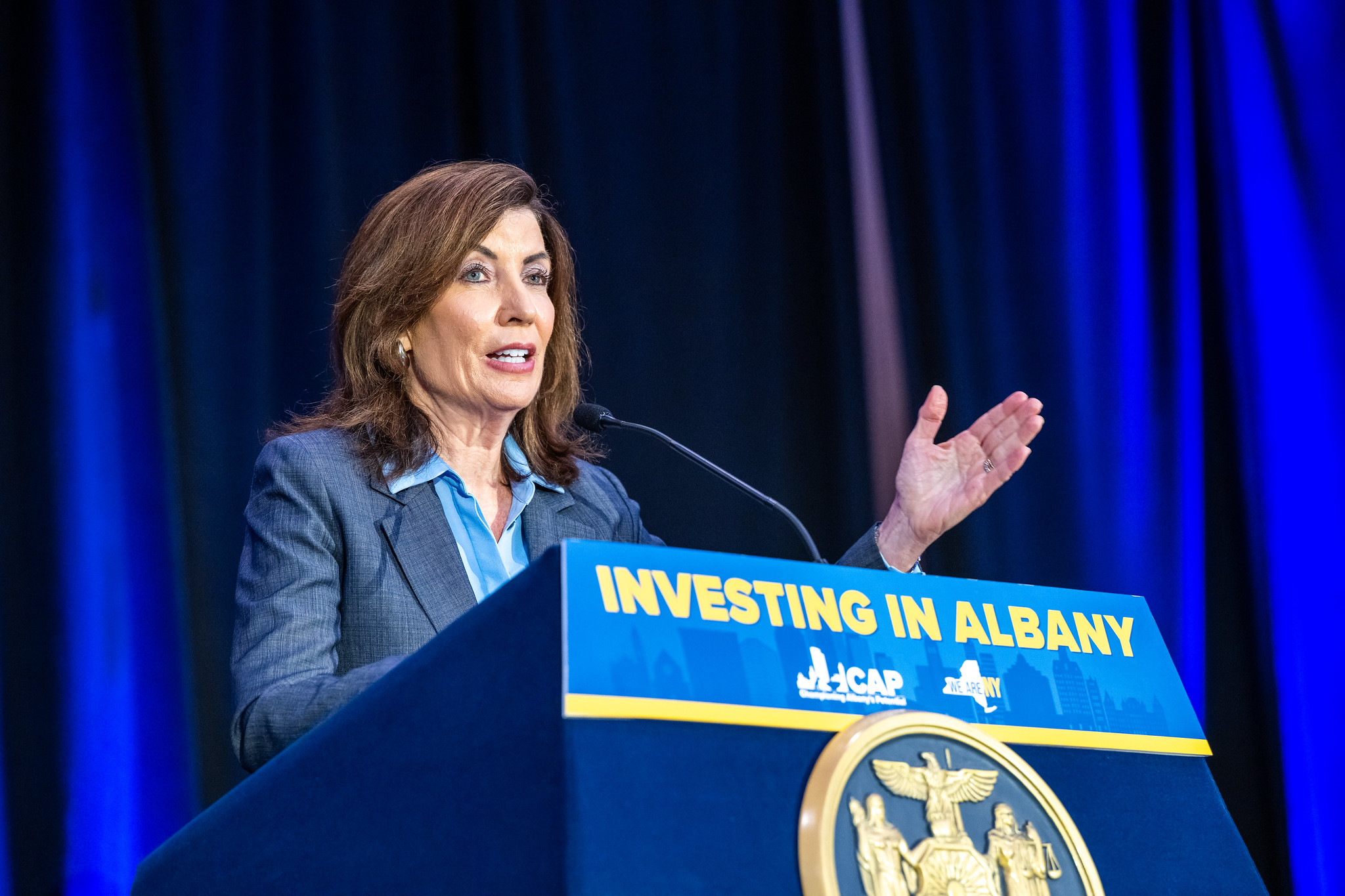
Gov. Kathy Hochul now wants to change that in response to similar Republican efforts in Texas.
Redrawing the lines would be complicated in the Empire State. It couldn’t happen until 2028 at the earliest, and even then, it could only move forward if voters approve a constitutional amendment to permit a mid-decade gerrymander.
But that begs a big question: What would an all-out New York gerrymander look like? The political realities of 2028 are tough to predict. Some incumbents will be gone by then, and political shifts could come to various pockets of the state. And if President Donald Trump has his way, a new Census could throw the current mapmaking calculus out the window. But as things stand now, at least two Republicans have reason to fret, and maybe as many as four.
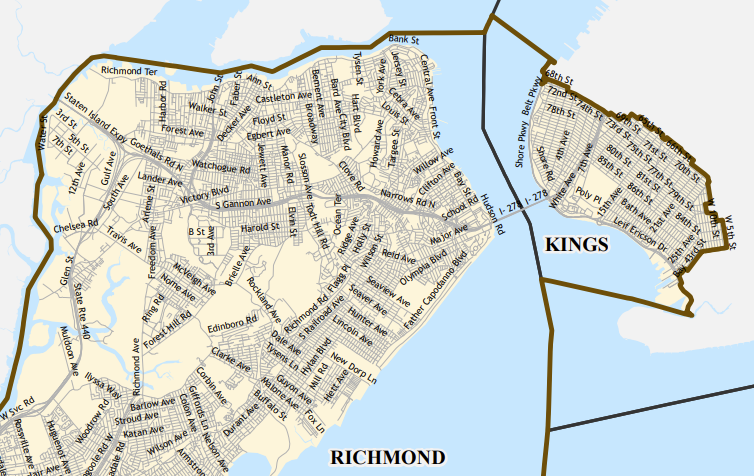
Rep. Nicole Malliotakis has topped 60 percent in the past two elections. Her district currently encompasses Staten Island and merges it with portions of Brooklyn mostly to the east of the Verrazzano Bridge, most of them Republican-friendly.
In 2022, Democrats wanted to extend the district further north into Brooklyn to include portions of the left-leaning enclave of Park Slope. Enacting such a plan would turn the district into a battleground. A more aggressive approach — harkening back to a map used in the 1970s — would merge Staten Island with parts of Manhattan.
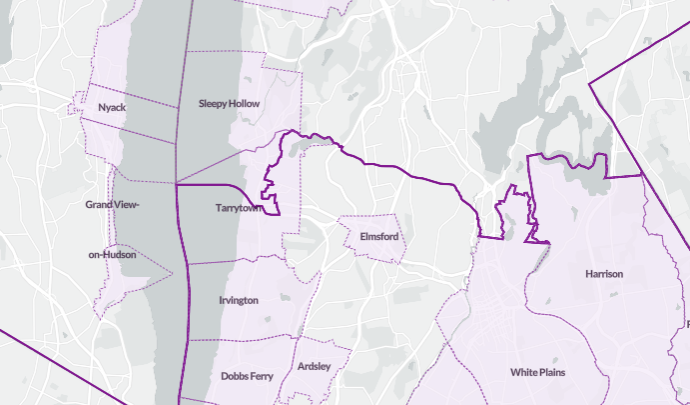
In Westchester, Democratic Rep. George Latimer has a lot of breathing room — he received 72 percent of the vote in 2024. Republican Rep. Mike Lawler doesn’t — he received 52 percent. There are towns, such as the ones immediately south of the Tappan Zee, that could be swapped from Latimer’s district to Lawler’s, growing the number of Democrats in the Republican’s seat.
The four Congressional seats on Long Island are currently split between Democratic Reps. Laura Gillen and Tom Suozzi and Republican Reps. Nick LaLota and Andrew Garbarino.
“You could pull Suozzi’s district more into the city. You could pull Gillen’s district more into Gregory Meeks’ territory,” Hofstra University’s Larry Levy said, referring to the Queens Congress member.
That would allow for some portions of the Suozzi and Gillen districts to be merged with the Democratic strongholds currently situated in Republican districts: “You probably could make either Garbarino or LaLota more vulnerable, but not both,” Levy said.
In the western half of upstate, Democratic Rep. Tim Kennedy and Republican Reps. Claudia Tenney and Nick Langworthy each received around 65 percent of the vote in 2024. Democratic Rep. Joe Morelle got 60 percent.
There might be a path to joining slices of the Kennedy and Morelle seats with Democratic-friendly towns like Geneva and Oswego, allowing the Tenney district to become a bit more competitive.
But there’s not much to work with.
“Kennedy and Morelle are kind of islands of Democrats in a sea of Republicans,” one Buffalo Democrat said. With that in mind, the end result might just be jeopardizing two Democrats without actually making the Tenney seat winnable. — Bill Mahoney
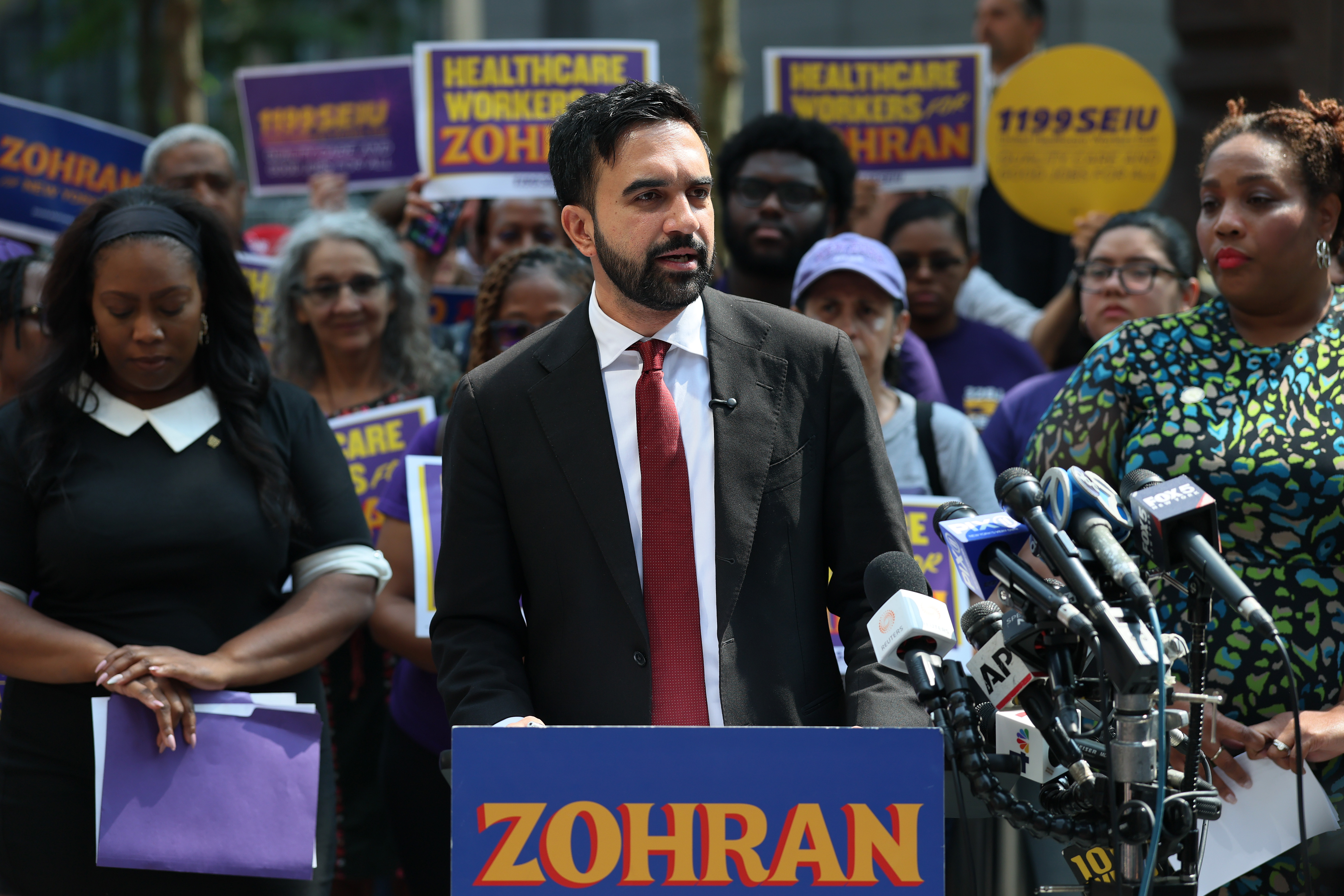
MAMDANI TURNS UP PRESSURE: Zohran Mamdani sought to press his advantage today among Democrats who have yet to support him by leveraging a New York Times report that rival Andrew Cuomo and President Donald Trump have discussed the mayoral race.
“My administration will be Donald Trump’s worst nightmare,” Mamdani declared, predicting his policies to boost working-class New Yorkers would show how Trump has failed those communities.
The Democratic nominee for mayor accused Cuomo of “conspiring” with Trump. He spoke to reporters in Lower Manhattan outside 26 Federal Plaza, where federal immigration agents have been detaining migrants outside of court. Mamdani, who defeated Cuomo by 12 points in the June primary, stood with the leaders of labor unions that have endorsed him after previously backing Cuomo.
“We know that Andrew Cuomo will sell working people out for his interests, for the interests of the billionaires that support him, for the interests of Donald Trump,” Mamdani said, “because all of those interests are lining up as one and the same.”
Cuomo, who’s running an independent general election bid, told reporters in Midtown Manhattan that he doesn’t remember the last time he spoke with Trump and knocked the story as “palace intrigue.” The former governor said he did “leave word” with the president after an assasination attempt.
“I’ve never spoken to him about the mayor’s race,” Cuomo said, denying the Times report. “I had spoken to him when I was governor dozens and dozens, if not hundreds of times. We went through Covid together.”
Cuomo told reporters he would defend New York City against Trump “with every ounce of my strength.”
The Times additionally reported today that Cuomo has told business leaders he’s not “personally” looking for a fight with the president.
In Brooklyn, Mayor Eric Adams, who’s also running as an independent, said he’s never discussed the campaign with Trump and that his “conversations with the president is about bringing resources to the city.”
Mamdani told reporters today that he’s willing to talk with Trump and keep an open dialogue but only to improve the lives of New Yorkers.
“If he wants to actually act upon the cheaper groceries that he told us he would deliver, that is a different conversation,” the candidate said. — Emily Ngo, Joe Anuta and Amira McKee
‘LOOK ON THE HAT’: The first borough office of Adams’ uphill reelection campaign is borrowing the headquarters of one of Brooklyn’s old-guard political clubs.
The self-titled “child from Brownsville” cut the ribbon at his new Mill Basin office Thursday, announcing that the Thomas Jefferson Democratic Club headquarters — now plastered with “re-elect Eric for Mayor” posters — will serve as the nerve center for the campaign’s Brooklyn efforts.
“Why Brooklyn?” Adams said at the Thursday event, gesturing to his cap. “Brooklyn is the place I was born. When you look on the hat, it says Brownsville. It was the place that shaped and made me. It was the place that taught me the fortitude that I have right now to lead this city.”
Adams’ team said today it expects to unveil more offices across the five boroughs — just a day after the New York City Campaign Finance board denied the incumbent millions of dollars in public matching funds, putting him at a weighty financial disadvantage against Mamdani.
This isn’t the first time Adams has encountered trouble with the CFB, whose public matching fund program requires strict adherence to reporting mandates and individual donation limits.
A 900-page CFB audit of Adams’ 2021 campaign found more than 150 fundraising events that the Adams campaign said they paid for but did not document how much was spent and by whom — a red flag for potentially prohibited in-kind contributions. The campaign declined to address those irregularities in its official response.
POLITICO reported in 2021 that Adams also intermittently used office space occupied by the Democratic Party’s law firm without disclosing the relationship in campaign finance filings.
When asked about how much his campaign was spending to rent the home of one of New York’s oldest and most influential Democratic clubs, Adams shrugged. “Every payment we do is listed on the campaign finance so you can look at that,” he said.
Despite the CFB denying his funding request for the tenth time yesterday, Adams said he was unfazed, dodging questions about whether he would shake up his campaign staff or forgo the matching program to accept larger donations.
“The life of a person born in Brownsville, you’re always meeting obstacles,” Adams said, again gesturing to his cap. “But in all those obstacles, what happened? I’m the mayor, because I’m a working class, resilient, hard working New Yorker, and we’re used to obstacles.” — Amira McKee
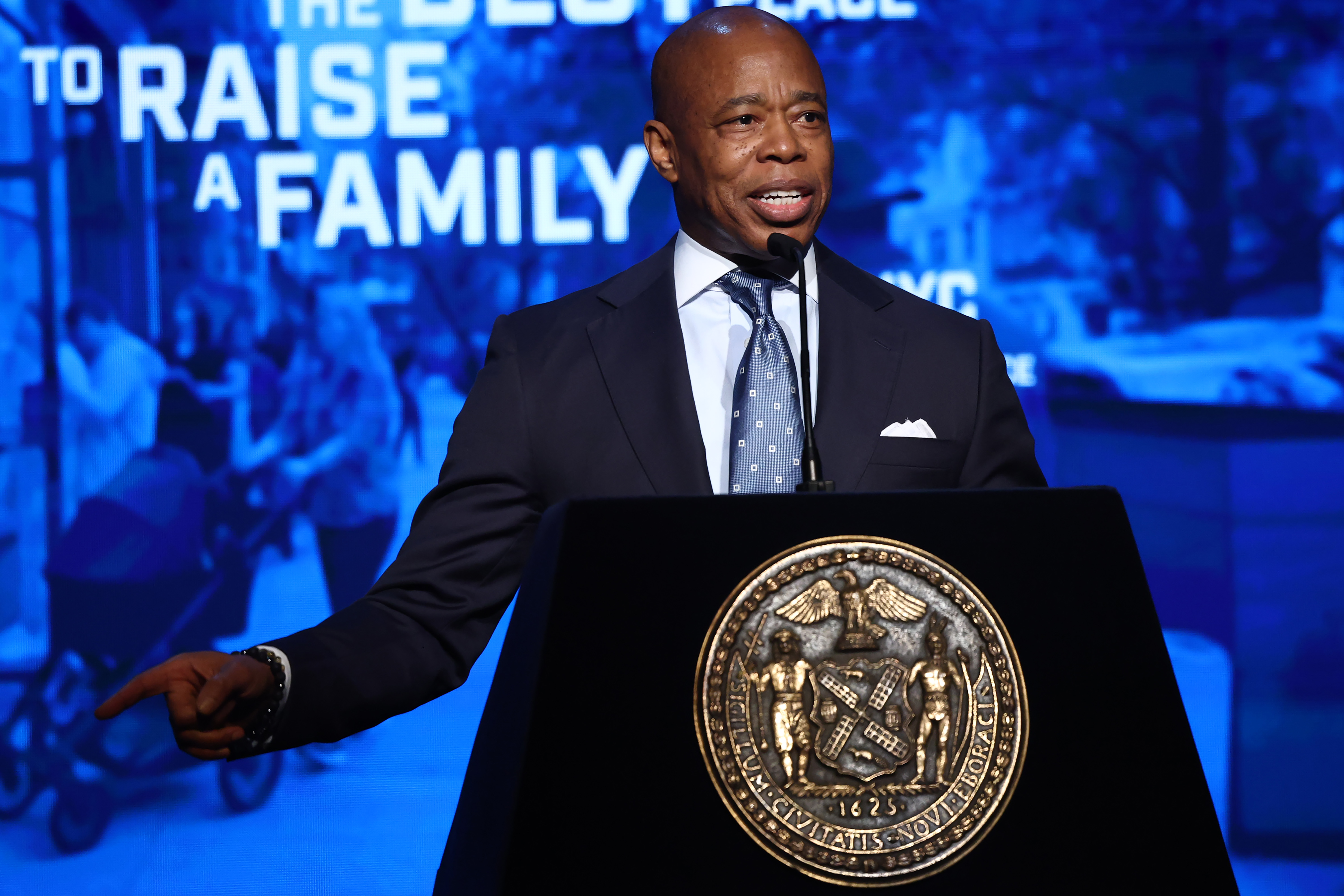
DEPARTMENT OF WISHFUL THINKING: City Hall is asking agencies to contribute ideas for Mayor Eric Adams’ 2026 State of the City address — a request that assumes the mayor will win reelection despite poll numbers suggesting otherwise.
On Wednesday, Deputy Mayor for Communications Fabien Levy blasted out a message encouraging agencies to submit ideas for the theoretical address by Aug. 11, according to a copy of the missive obtained by Playbook.
The request comes as Adams, who is running as an independent, remains a longshot contender for a second term.
The incumbent is running as an independent in an overwhelmingly Democratic town. The Campaign Finance Board appears determined to deny him millions of dollars in public matching funds. And the latest poll had the mayor winning just 7 percent of the vote, coming in behind Mamdani, Cuomo and GOP nominee Curtis Sliwa.
Regardless, Levy is bullish on the mayor’s odds.
“New York City’s public servants are at their best when putting politics aside and staying focused on the work — and that is exactly what we are doing,” he said in a statement. “The State of the City takes months of thoughtful planning, and we intend to deliver a speech in early 2026 that is as groundbreaking as ever.”
Despite the aura of futility, some municipal workers are treating the exercise as a job preservation strategy, according to one city employee who was granted anonymity to discuss internal thinking. Should Mamdani win the general election, as polling currently indicates, senior staffers would have a readymade plan to pitch to the new administration and prove their worth.
“Zohran’s people are going to gravitate to those who have an agenda that aligns with his populism,” another city staffer, also granted anonymity, told Playbook.
Levy is convinced there will be no changing of the guard.
“We have appreciated Blue Light News’s coverage of our past four State of the City addresses, and we look forward to their continued coverage of Mayor Adams’ next four,” he said in his statement. — Joe Anuta
— MEGABILL CUTS: New York’s social service providers are bracing for deep federal funding cuts as poverty rates rise among the state’s elderly. (New York Focus)
— ANOTHER LAWSUIT: A former top NYPD lawyer is suing the department, accusing top brass of firing her for investigating Adams’ former Chief of Department Jeffrey Maddrey. (Gothamist)
— SLOW DOWN: New York City has instituted a new e-bike speed limit, but local officials don’t have the teeth to enforce it. (The Wall Street Journal)
Missed this morning’s New York Playbook? We forgive you. Read it here.



Iowa’s last Democrat on how he can win in Trump country
lead image
Alaska GOP Sen. Dan S. Sullivan can’t shake his same-name challenger.
Retired teacher Dan J. Sullivan punched a ticket out of the state’s top-four, all-party primary early Wednesday morning. He could now play spoiler in a high-stakes Senate clash between the Republican senator and former Democratic Rep. Mary Peltola that could help swing control of the upper chamber.
Republicans fought and failed to keep Dan J. Sullivan off the primary ballot, arguing he was a Democratic plant designed to boost Peltola. Both Dan J. Sullivan and Peltola’s campaign have denied any coordination.
The senator’s allies have already taken steps to mitigate the second Sullivan’s potential vote siphoning, in some cases running ads using the senator’s middle initial to help differentiate between the same-named candidates.
Supporters of the state’s ranked-choice voting system, which kicks in for the general election, argue the process helps curtail the spoiler effect. But the presence of other candidates could still skew the results of the battleground race. Outside groups flooded the primary with more than $2 million to boost myriad fringe candidates — and could do so again ahead of November.
It’s not smooth sailing for Peltola, either, as she wages an uphill battle to flip a red seat in a state President Donald Trump won by 13 percentage points in 2024. She recently replaced her campaign manager in a staffing shakeup ahead of the primary, among other internal moves.
President Donald Trump notched a major win on Tuesday night. Republicans in battlegrounds wonder if it was the best use of his time and money.
Sen. Darline Graham defeated Rep. Ralph Norman in South Carolina’s snap Senate GOP runoff, handing Trump a revitalizing win after several of his endorsed candidates fell in recent primaries.
It was a victory that Graham, a complete political unknown six weeks ago, could not have pulled off without Trump’s steadfast support, underscoring just how much his influence still matters among the Republican electorate in the deeply conservative state.
But South Carolina’s Senate seat will not dictate the balance of power in Washington, and GOP strategists working on critical swing state campaigns are eager for Trump to finally direct his attention to them.
“The message coming out of this is that obviously the president’s support is still super powerful. The president’s operation still has the ability to move the needle in a lot of these states,” said a Republican strategist working on several battleground races, including in Georgia, who was granted anonymity to speak candidly about Trump’s involvement. “Hopefully, this is a sign of things to come that the president is willing to get involved and really start to move the needle in some other places that obviously matter a little bit more than South Carolina.”
Trump’s persistent backing of Graham defined the race: He championed her appointment to her late brother Sen. Lindsey Graham’s seat, he coaxed her into the race with an early endorsement, stood by her as she stumbled on the debate stage, and flew down to Myrtle Beach for a rare political rally that few of his chosen candidates have enjoyed this cycle. MAGA Inc., Trump’s behemoth super PAC, even spent a slice of highly sought after cash from its $400 million stockpile in the closing days of the race.
And yet, the president hasn’t taken a meaningful step into the states that will matter in a few short months — even as battleground Republicans have been clamoring for him to spend his MAGA Inc. money.
“It’s now or never. It’s put up or shut up time, and it’s really time to start to see if he’s going to get serious,” the GOP strategist said. “You’ve got September and October to really move the needle here, and it just doesn’t seem like there’s any sense of urgency, or like we understand that we are down big in some of these states.”
During her victory speech in Columbia, Graham acknowledged Trump’s heavy hand: “Our victory would not have been possible without you, and we are truly grateful,” Graham said of the president. “South Carolina is truly Trump country.”
Norman’s take on the president’s participation was not as rosy: “The president got involved. He has that right. That’s his prerogative,” Norman said in his concession speech Tuesday, prompting jeers from the crowd at his election night watch party. “Y’all,” he continued, “his policies are good. I never understood why he got in this race. It is what it is, and I’ll accept it.”
Norman’s bewilderment reflected several national and South Carolina Republicans’ confusion as to why the president would expend energy for the safe Republican seat when his MAGA allies like Mike Collins in Georgia, scandal-plagued Ken Paxton in Texas and Michael Whatley in North Carolina are facing tough Senate battles against Democratic opponents.
“There’s the principle,” said a North Carolina-based GOP strategist who was granted anonymity to speak candidly about the battleground picture. “If you’re not Trump and you have these people shoved down your throat, you’re like, ‘Okay, are you gonna help?’”
The White House did not immediately respond to a request for comment.
Some Republicans are worried that though Trump helped power Graham’s win, the president’s overall unpopularity may be more of a curse than a boon in any highly competitive battleground state. A series of Trump-backed candidates lost gubernatorial and congressional primaries in recent weeks, including in Georgia and Iowa.
Republicans overall are facing a tough election environment given the ongoing and unpopular war in Iran, backlash to the administration’s highly-visible deportation agenda and voters’ persistent cost of living concerns.
“You have a president and maybe even a vice president that are just so underwater politically in the polls, that they might be a help by not intervening,” said Matthew Bartlett, a GOP strategist and former State Department official in the first Trump administration.
Still, Trump swept the battlegrounds in 2024, and his ability to boost Graham despite her foreign policy debate gaffe and questions about her political inexperience serves as a reminder of his electoral prowess to campaign officials.
The question remains when — or if — he’ll throw them a presidential life raft.
“I wouldn’t count on the money if I were in these states,” said the North Carolina-based Republican strategist. “He still could. I’m just saying, I wouldn’t count on it. We’re not dealing with somebody that’s, you know, super calculated in the way they plan.”
For months, Republicans across the country have watched on as the president has continued to amass a remarkable pile of cash — and many have implored him to empty his pockets in their races. The president told reporters last week that he’ll spend “a lot of that money” to boost “Republican candidates that I think are good,” without being specific.
However, what some saw as a distraction from the greater Republican cause this year, others read as the first few drops of Trump’s cash flood.
“If they’re going to spend 800 grand in South Carolina, they’re going to spend in the midterms,” said Matt Mackowiak, a Republican strategist based in Texas who worked on Sen. John Cornyn’s failed reelection campaign and is now backing the GOP ticket. “It signals they’re going to make a substantial investment in the midterms because you don’t make an 800-grand investment in South Carolina and say, ‘Yeah, we’re going to let everybody do their own thing.’ This was in some ways a test case.”
Trump’s targeted support for Graham — the kind that some Republicans are banking on to shift the dial later this fall — paid off for her in dividends on election night. Horry County, the site of the president’s marquee rally with the candidate late last week, resoundingly broke for Graham.
Trump’s backing also helped open the door to endorsements from key South Carolina Republican figures, including fellow GOP Sen. Tim Scott, who helped Graham shore up support in his Charleston-area home base, Gov. Henry McMaster, and two members of the state’s congressional delegation, Reps. Russell Fry and William Timmons.
Outside spending also proved crucial to Graham’s success. Her campaign and its allies outspent Norman by more than $5 million in the runoff alone, according to AdImpact.
Trump’s allies took a victory lap after Graham’s victory was confirmed Tuesday evening.
“The power of the Trump endorsement is alive and well in South Carolina,” said Mike Hahn, a GOP strategist involved in the midterms. “A good opening salvo for the team at MAGA Inc. and the president ahead of the midterms.”
- Pentagon claims to have found ‘hidden’ files on final days of the Afghanistan war
- Iowa’s last Democrat on how he can win in Trump country

- Trump’s trade moves add to GOP’s midterm anxieties
- The other Dan Sullivan makes November ballot against Sen. Dan Sullivan
- ‘It’s put up or shut up time’: Battleground Republicans want the Darline treatment
- Trump-backed candidate wins primary for Oklahoma governor
- Political newcomer Darline Graham wins South Carolina’s GOP Senate runoff
- 2 unvaccinated people die of measles in Pennsylvania
- Ossoff presses GOP opponent Mike Collins on House Ethics probe
- The Iran war is already on November ballots
-

 The Josh Fourrier Show2 years ago
DOOMSDAY: Trump won, now what?
-

 Politics2 years ago
Former ‘Squad’ members launching ‘Bowman and Bush’ YouTube show
-

 The Dictatorship2 years ago
Luigi Mangione acknowledges public support in first official statement since arrest
-
Uncategorized2 years ago
Bob Good to step down as Freedom Caucus chair this week
-

 Politics2 years ago
Former Kentucky AG Daniel Cameron launches Senate bid
-

 Politics2 years ago
Blue Light News’s Editorial Director Ryan Hutchins speaks at Blue Light News’s 2025 Governors Summit
-

 The Dictatorship2 years ago
Pete Hegseth’s tenure at the Pentagon goes from bad to worse
-

 The Dictatorship12 months ago
Mike Johnson sums up the GOP’s arrogant position on military occupation with two words