
The Dictatorship
When it comes to ICE encounters, what are the rules — and your rights?

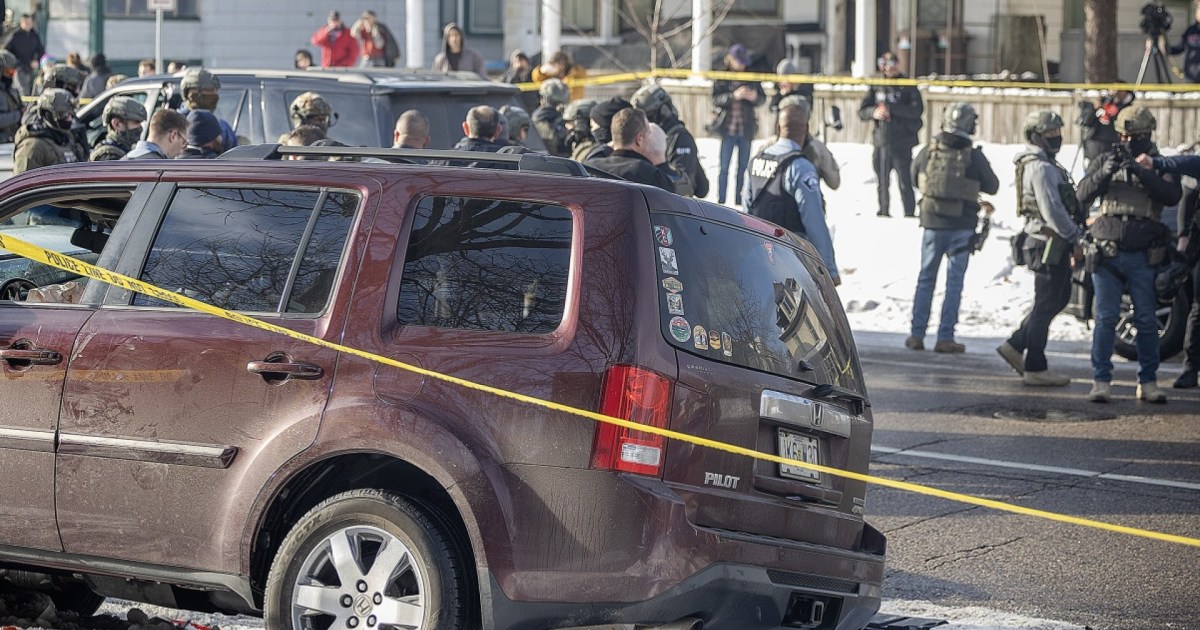
In the wake of Renee Nicole Good’s death, Americans are asking, with heightened urgency, what authority ICE and CBP agents have when they engage with U.S. citizens. And as with many areas of the law, the answer is largely, “It depends.”
Can ICE use deadly force on U.S. citizens – or ever?
When it comes to the use of force, and specifically, the use of firearms, ICE has its own specific policy that was last updated in 2023. That policy was filed in the Chicago-area litigation over ICE and CBP’s treatment of protesters, clergy, and journalists. (Interestingly, on ICE’s website, that same policy is almost entirely redacted.) This policy does not vary depending on the subject’s immigration or citizenship status. Here’s what it says:
First, the policy authorizes the use of force “only when no reasonably effective, safe, and feasible alternative appears to exist and may use only the level of force that is objectively reasonable in light of the totality of facts and circumstances confronting the officer at the time force is applied.” But the policy is equally clear that an officer does not have to meet force with equal or lesser force, does not have to wait for an attack before using force, and does not have any duty to retreat to avoid the reasonable use of force.
Second, where feasible and without creating any greater threat to his own safety or that of others, an ICE officer must attempt to “de-escalate by the use of communication or other techniques during an encounter to stabilize, slow, or reduce the intensity of a potentially violent situation without using physical force, or with a reduction in force.”
Third, ICE policy is also clear that officers have a “duty to intervene to prevent or stop a perceived use of excessive force” so long as it is safe to do so. It further states that a failure to intervene and/or report such incidents is itself misconduct — and potential grounds for discipline.
What’s the guidance if U.S. citizens are given orders by ICE?
Short of using force or deadly force, however, can ICE give orders to U.S. citizens? For example, it appears that ICE agents directed Renee Nicole Good to get out of her car shortly before she was killed.
ICE can give orders to U.S. citizens, but again, only in limited circumstances that are directly tied to the ICE agent’s immigration-related authority. For example, ICE can give orders to U.S. citizens — or even detain them temporarily — if they are obstructing or interfering with immigration enforcement activity.
These situations are often very subjective. U.S. citizens do have significantly more freedom in their interactions with ICE than non-citizens. For example, according to guidance issued by the ACLU and the City of New Yorkamong others, if ordered or detained by ICE, a U.S. citizen can ask, “Am I free to leave?” and they should then be allowed to leave on their own free will.
Can ICE agents search a car without a warrant?
ICE agents also have the authority to search a car without a warrant in limited scenarios. The Fourth Amendment includes the automobile exceptionwhich allows federal agents to search a vehicle without a warrant if there’s probable cause to believe there’s evidence to a crime or contraband. Because a car can be driven away quickly, it may not be practical to secure a warrant beforehand without jeopardizing the investigation.
But federal agents must have specific probable cause to search a car without a warrant. A hunch or a feeling that the car conceals evidence of illegal activity is not enough for a federal agent to search a car without a warrant. ICE does have broader authority to search vehicles within 100 miles of the U.S. border, but even so, these searches typically require probable cause. Notably, ICE cannot search a car without a warrant simply because they suspect someone may be an undocumented immigrant.
However, car searches are the only major exception. ICE officers require search warrants for all other searches. Without a warrant, both U.S. citizens and non-citizens can say, “I do not consent to a search,” according to guidance issued by immigration rights organizations.
What’s the guidance on U.S. citizens recording or taking photos of ICE during enforcement activities?
Civil liberties groups generally advise that under the First Amendment, U.S. citizens can record or take photos of ICE performing law enforcement activities in public places so long as the recording does not interfere with ICE activity, like an arrest. Bystanders are allowed by law to collect important information, including names and badge numbers of the ICE agent executing the immigration activity.
Some states, including Florida, Tennessee, and Louisiana, have enacted their own laws requiring observers — or anyone else — to move back 25 feet or more from law enforcement or other first responders upon their request. While other, similar laws passed by Arizona and Indiana have been struck down, the constitutionality of these states’ laws has not been determined.
Finally, citizens and non-citizens alike share one fundamental right when it comes to encounters with ICE, or any other law enforcement agency, for that matter: the right to remain silent.
Lisa Rubin is MS NOW’s senior legal reporter and a former litigator.
Fallon Gallagher is a legal affairs reporter for MS NOW.


The Dictatorship
The Latest: US and Israel attack Iran as Trump says US begins ‘major combat operations’
Rice secures 80-74 win over Temple
Anthony’s 16 help Iona beat Manhattan 69-65
Folefac scores 23 as Siena beats Rider 76-61
SnoCountry Mountain Reports
Gulf States Sportswatch Daily Listings
Quinnipiac wins 67-63 against Canisius
President Donald Trump called the celebrations in the streets of Iran “fantastic” following the killing of the country’s supreme leaderAyatollah Ali Khamenei, during a brief phone call with MS NOW on Saturday night.
Trump told MS NOW that he’s seen the celebrations in Iran and in parts of America, after joint U.S.-Israel airstrikes killed Khamenei.
“I think it’s fantastic,” the president said of the celebrations. “I’ve seen them in Los Angeles, also — celebrations.”
“I’ve seen them in Los Angeles, celebrations, celebrations,” Trump said, accentuating the point.
The interview took place roughly 11 hours before the Pentagon announced the first U.S.military casualties of the war. U.S. Central Command said three American service members were killed in action, and five others had been seriously wounded.
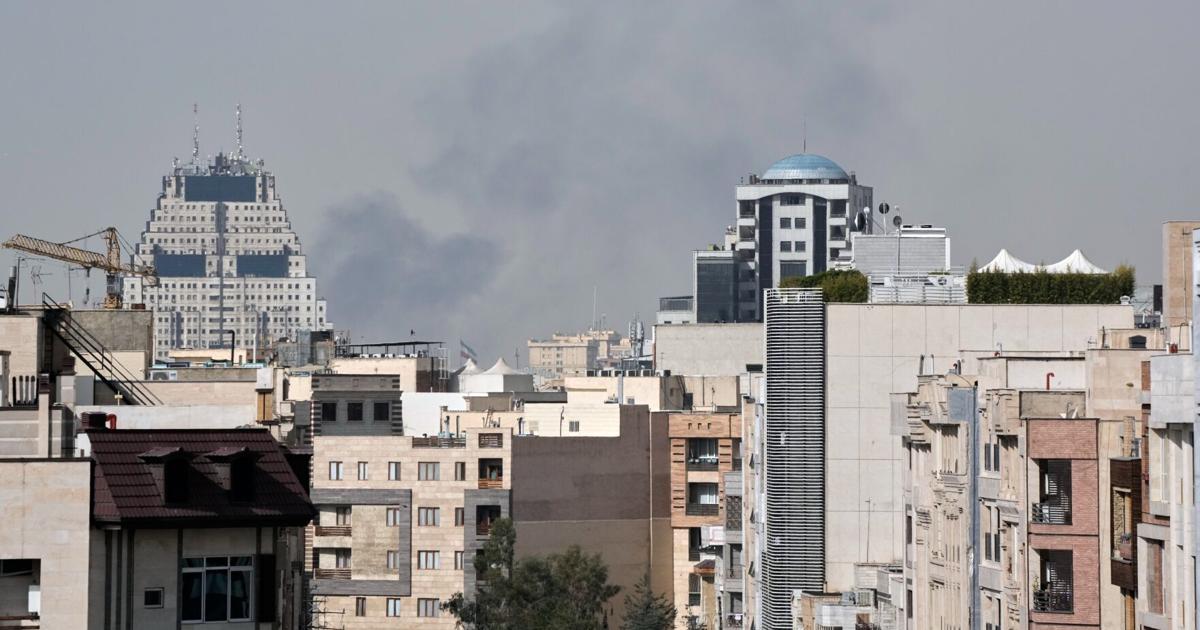
Revelry broke out in Iran, the United States and across the globe on Saturday, with Iranians cheering the death of Khamenei, who led Iran with an iron fist for more than 30 years, cracking down on dissent at home and maintaining a hostile posture with the U.S. and Israel.
Asked how he was feeling after the strike on Khamenei, whose death was confirmed just a few hours earlier, Trump said it was a positive development for the United States.
“I think it was a great thing for our country,” he said.
The call — which lasted less than a minute — came after a marathon day, which began in the wee hours of the morning with strikes on Iran and continued with retaliatory ballistic missiles from Tehran targeting Israel and countries in the Middle East region that host U.S. military bases.
The day ended with few answers from the White House to increasing questions about the long-term future of Iran, how long the U.S. will continue operations there, and the metastasizing ramifications it could have on the world stage. In fact, the president has done little to convince the public to back his Iran operation, nor to explain why the country is at war without the authorization of Congress.
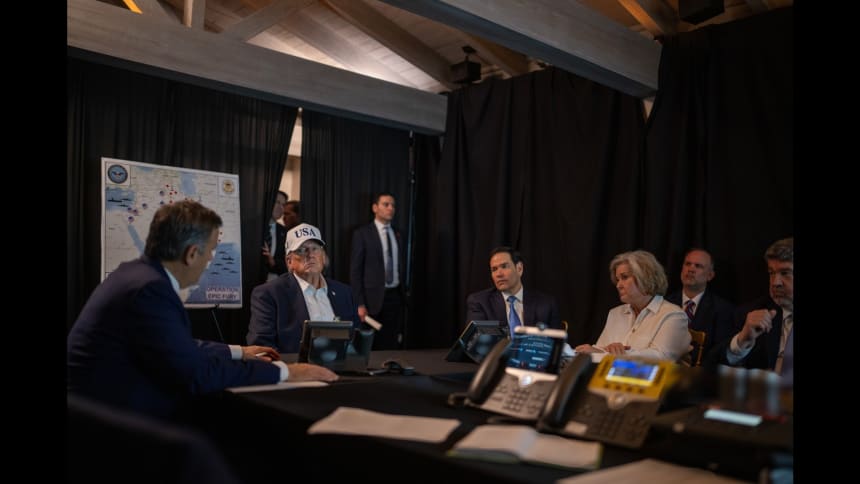
On perhaps the most consequential day of his second term, Trump did not give a formal address to the public, nor did he hold a press conference. Instead, he stayed out of public view at Mar-a-Lago, his private club and residence in Palm Beach, Florida, where he attended a $1 million-per-plate fundraising dinner on Saturday evening.
But throughout the day, Trump took calls from reporters at various new outlets, including from MS NOW at around 11 p.m. ET.
The strikes, known formally as “Operation Epic Fury,” came after months of talks over Iran’s nuclear program, and warnings from Trump that he would strike Tehran if they did not agree to his often shifting conditions.
At 2:30 a.m. ET on Saturday, Trump posted a video to social media announcing the operation, which he said was designed to “defend the American people by eliminating imminent threats from the Iranian regime, a vicious group of very hard, terrible people.”
“The lives of courageous American heroes may be lost and we may have casualties. That often happens in war,” Trump said when he announced the strikes on Iran.
Mychael Schnell is a reporter for MS NOW.
Laura Barrón-López covers the White House for MS NOW.
Three U.S. service members were killed and five seriously wounded as the United States and Israel launched attacks on Iran, U.S. Central Command said Sunday morning.
The three service members — the first Americans to die in the conflict — were killed in Kuwait, a U.S. official said.
Several others sustained minor injuries from shrapnel and concussions but will return to duty, the Pentagon said. The identities of the dead and wounded have not been made public.
“The situation is fluid, so out of respect for the families, we will withhold additional information, including the identities of our fallen warriors, until 24 hours after next of kin have been notified,” Central Command said in a statement.
The U.S. and Israel launched sweeping airstrikes on Iranon Saturday, killing Ayatollah Ali Khameneithe country’s supreme leader for nearly four decades. Iran has vowed retaliation and hit several U.S. military bases across the region.
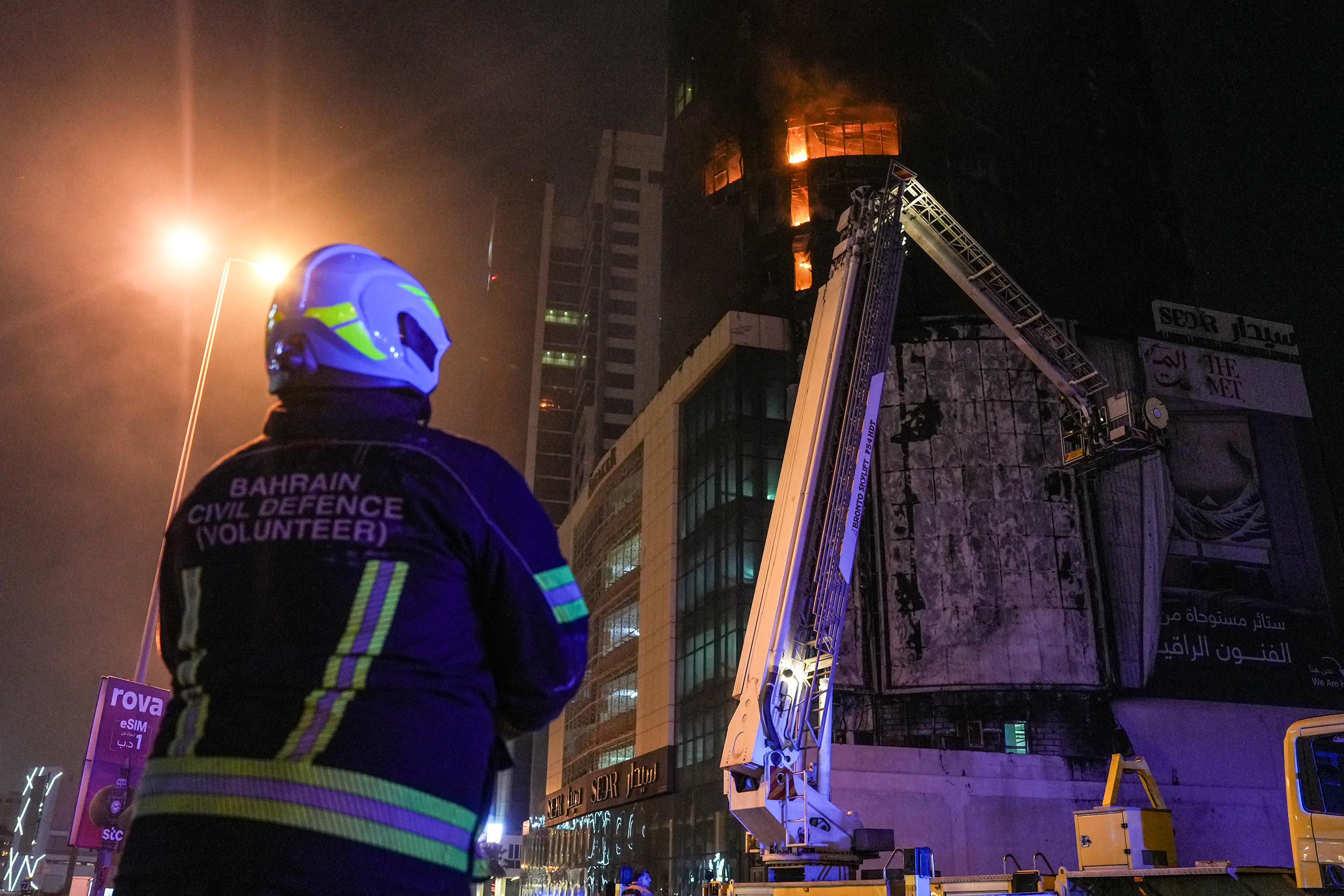
According to U.S. Central Command, Iran has also attacked more than a dozen locations, including airports in Dubai, Kuwait and Iraq, and residential neighborhoods in Israel, Bahrain and Qatar.
Israel Defence Forces said Sunday that Iran fired missiles toward the neighborhood of Beit Shemesh, killing civilians. The missile hit a synagogue, killing at least nine people, according to the Associated Press.
AP reported that authorities said at least 22 people were killed and 120 others wounded when demonstrators tried to attack the U.S. Consulate in Karachi in Pakistan.
The violence came after the United States and Israel attacked Irankilling its Supreme Leader Ayatollah Ali Khamenei. Police and officials at a hospital in Karachi said that at least 50 people were also wounded in the clashes and some of them were in critical condition.
On Sunday, Israel Defence Forces said on X, “It’s official: All senior terrorist leaders of Iran’s Axis of Terror have been eliminated.”
President Donald Trump told CNBC’s Joe Kernen on Sunday that the operation in Iran is “moving along very well, very well — ahead of schedule.”
In a phone call with MS NOW late Saturday, Trump called the celebrations in the streets of Iran “fantastic” following the killing of Khamenei.
Confirming Khamenei’s death, Prime Minister Benjamin Netanyahu said Sunday: “We have eliminated the tyrant Khamenei and dozens of senior figures of the oppressive regime. Our forces are now striking at the heart of Tehran with increasing intensity, set to escalate further in the coming days.”
The exchange of hostilities comes after weeks of fragile negotiations between the U.S. and Iran over Iran’s nuclear operations.
Esmail Baghaei, a spokesperson for Iran’s foreign ministry, called the joint U.S-Israeli attack an “unprovoked, unwarranted act of aggression” in an interview with MS NOW’s Ali Velshi on Sunday. He said Iran’s nuclear program has been used a pretext for the attack.
“We have every right to defend our people because we have come under this egregious act of aggression,” Baghaei said.
Trump announced the attack early Saturday during a short video posted on his Truth Social account. He called for an end to the Iranian regime and urged Iranians to “take back the country.”
Negotiators and mediators from Oman were supposed to meet in Vienna on Monday to discuss the technical aspect of a potential nuclear deal.
Rep. Eric Swawell, D-Calif., told MS NOW’s Alex Witt on Sunday afternoon that the president’s military operation in Iran was illegal, echoing what many lawmakers have said in citing that under the U.S. Constitution only Congress can declare war.
“This is a values argument. We don’t just lob missiles into other countries when we are not provoked, attacked and have no plan for what comes next,” he said.
“We have been shown zero evidence that anything changed in Iran from last year when the president did not come to Congress and took a strike on Iran,” Swalwell said.
In June the U.S. struck three Iranian nuclear sites. Trump said the facilities had been “completely and totally obliterated.” But experts and U.S. officials said the sites were damaged but not destroyed.
Erum Salam is breaking news reporter for MS NOW, with a focus on how global events and foreign policy shape U.S. politics. She previously was a breaking news reporter for The Guardian and is a graduate of Texas A&M University and the Columbia University Graduate School of Journalism. Follow her on X, Bluesky and Instagram.
Akayla Gardner is a White House correspondent for MS NOW.
- Noem defends her leadership of DHS amid sharp questioning from senators
- Republicans took shots at Hillary Clinton — and she came ready to fight back

- Democrats reject ‘ridiculous’ GOP demand to fund DHS after Iran attack
- US considering military support for Middle East oil and gas supplies
- Dems use Iran to attack Trump on economy
- Republicans took shots at Hillary Clinton — and she came ready to fight back
- Iran strikes aren’t an ‘endless’ war, Pentagon policy chief argues
- Republicans dismiss energy cost concerns after Iran strikes
- Trump to Blue Light News: Iran is ‘running out of launchers’
- Republicans took shots at Hillary Clinton — and she came ready to fight back
-

 The Dictatorship1 year ago
Luigi Mangione acknowledges public support in first official statement since arrest
-

 Politics1 year ago
Former ‘Squad’ members launching ‘Bowman and Bush’ YouTube show
-

 Politics1 year ago
Blue Light News’s Editorial Director Ryan Hutchins speaks at Blue Light News’s 2025 Governors Summit
-

 The Dictatorship6 months ago
Mike Johnson sums up the GOP’s arrogant position on military occupation with two words
-

 Politics1 year ago
Former Kentucky AG Daniel Cameron launches Senate bid
-

 The Dictatorship1 year ago
Pete Hegseth’s tenure at the Pentagon goes from bad to worse
-
Uncategorized1 year ago
Bob Good to step down as Freedom Caucus chair this week
-

 Politics11 months ago
Democrat challenging Joni Ernst: I want to ‘tear down’ party, ‘build it back up’