
The Dictatorship
What Trump’s replacement of Lina Khan reveals about JD Vance

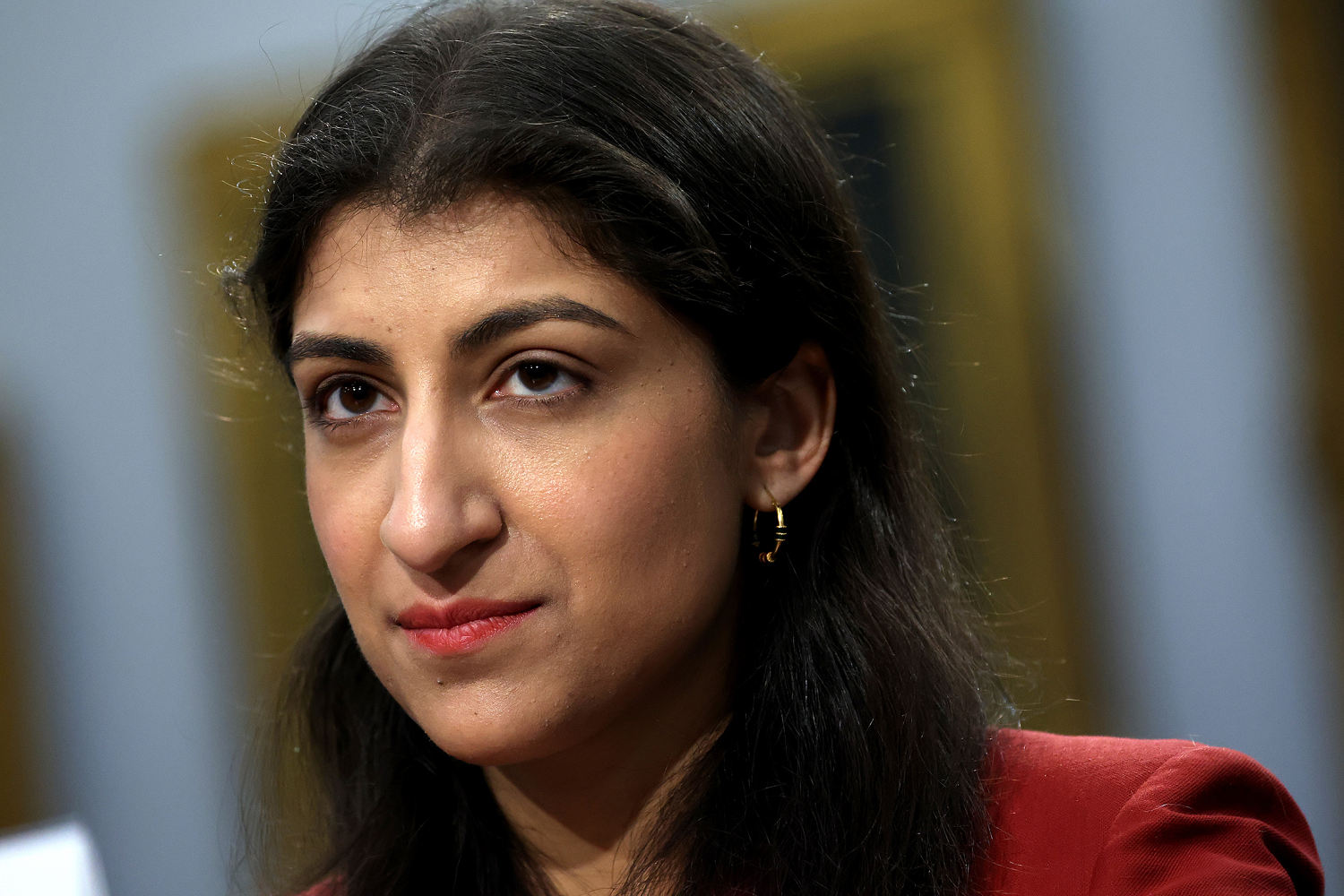
For the last few years, a younger generation of Republicans — including Vice President-elect J.D. Vance — has tried to convince their party to (partially) rethink its traditional kowtowing to corporate interests. If they really want to be the party of the working class, it might not be enough to pour contempt on college professors and government employees. What if they combined that with a genuine skepticism of corporate power, and a willingness to use government to police monopolies and make sure markets work for everyone?
It was an interesting idea. But even if Vance and his allies were sincere — and there are plenty of reasons to doubt that — the incoming Trump White House is going in another direction. Big business will have even more influence in Donald Trump’s second administration than in his first, and the dream of a Republican Party that cares about voters’ pocketbooks, not just CEOs’ salaries, will be deferred yet again. The idea that this administration will be “populist” in any meaningful sense looks more like a joke every single day.
While not all of Khan’s antitrust actions have been successful, she has notched some notable victories.
Already, Trump has tapped more than a dozen billionaires and Wall Street tycoons to fill out Cabinet posts and advisory positions. He is dining with industry lobbyists and promising regulatory exemptions to big companies. And on Tuesday, he confirmed that he would replace Lina Khan, the government’s most prominent fighter against corporate poweras chair of the Federal Trade Commission.Under Khan, the FTC has been at the center of some of the most important action on markets and monopolies over the last four years. Along with Jonathan Kanter, head of the Justice Department’s Antitrust Division, Khan has reinvigorated antitrust enforcement, challenging giant mergers and bringing lawsuits against tech companies for their exploitative practices.
While not all of Khan’s antitrust actions have been successful, she has notched some notable victories. Earlier this year, the FTC sued to block a proposed merger between grocery giants Kroger and Albertsons, arguing the merger would raise prices and hurt workers. After a judge sided with the FTC and state regulators, Albertsons backed out of the deal.
Though wealthy donors in both parties despise Khanher adversarial relationship with large corporations, and particularly with the tech industry, won her some fans on the right. “I look at Lina Khan as one of the few people in the Biden administration that I think is doing a pretty good job,” said Vance earlier this year. Sen. Josh Hawley, R-Mo., said that her past criticism of Amazon was “precisely why she was a good choice for the FTC.”
Hawley is just one Republican who has styled himself an anti-corporate crusader; he has introduced a billto outlaw corporate political contributions, which he says would “hold Corporate America accountable for drowning out the voices of the American people.” Sen. Marco Rubio, R-Fla., Trump’s pick for secretary of state, once endorseda union organizing drive at an Amazon facility, though only because he thought the company was too “woke” and should be punished.
The support for Khan from these “Khanservatives,” and the forlorn hope that Trump’s “populism” has anything to do with economics, led some to wonder if Trump might actually let Khan stay on. The conservative Wall Street Journal editorial board warnedIn July that “Mr. Vance may lobby Mr. Trump to reappoint her in a second term.” Instead, Trump has picked FTC Commissioner Andrew Ferguson as her replacement. In announcing Ferguson on his Truth Social platform, Trump wrote that “Andrew has a proven record of standing up to Big Tech censorship.” But this hostility emerges only when Ferguson believes tech companies are censoring conservatives. He recently praised X owner Elon Musk, saying that the platform’s “current turn toward free expression is due only to its new owner’s unusually firm commitment to free and open debate.” In fact, Musk regularly silences his own critics on X and files lawsuits trying to quash speech he doesn’t like.
Ferguson’s pitch to run the agencyfirst reported by Punchbowl Newsdemonstrates that he will broadly reverse Khan’s robust antitrust enforcement. In the one-page document, he promises to “reverse Lina Khan’s anti-business agenda” by repealing “burdensome” regulations (i.e. regulations that businesses don’t like) and stopping “Lina Khan’s war on mergers.” And lest Big Tech gets too worried, he pledges to “end the FTC’s attempt to become an AI regulator.”
Now Vance and his allies’ claims to populism will be truly tested.
No one should be surprised that conservative support for Khan and opposition to Big Tech was never about the dangers of monopoly power or the well being of consumers. Republicans only get mad at companies when they perceive a threat to their partisan interests. Likewise, they’ll condemn corporate “wokeness” when companies celebrate Pride Month, but they don’t care if those same companies jack up prices, mistreat workers or pollute communities. For all the Khanservatives’ claim to be reimagining their party’s stance toward corporations, they lack any broader conception of how much power corporations should have, how government should ensure the proper functioning of markets, or what constitutes genuine competition in the public interest. They’re happy to have the FTC, and the government in general, revert to a reflexive view that corporations should be able to do pretty much whatever they want — so long as it’s conservative officials who are determining where the lines are.
Now Vance and his allies’ claims to populism will be truly tested. Are the corporate-oriented officials running key agencies in the new Trump administration going to reverse the Biden administration’s efforts in taking on corporate power? What about the FTC’s recently finalized “click to cancel” rule, which will require that canceling a subscription or gym membership is as easy as signing up in the first place? What about its crackdown on “junk fees,” or its ban on onerous noncompete agreements? Based on Trump’s actions since the election, all these moves could be at risk.
It’s not just the FTC — we could see the Trump administration end the efforts to get better treatment for airline passengers that Biden started, or follow up on threats to neuter the Consumer Financial Protection Bureau, which protects consumers from financial industry scams and mistreatment (Elon Musk has said he wants to “delete” the CFPB). Here’s the real measure of the phoniness of the Republican claim to populism: As the next four years progress, watch how often the administration takes the side of consumers when they come in conflict with corporate interests. My bet is on “almost never.”
Perhaps Vance was sincere all the times he said he wanted a genuinely populist Republican Party that is skeptical of corporate power. But that’s almost certainly not what we’re going to get. Conservative ideology, and subservience to the moneyed interests that fund the GOP, will determine what Republicans do when they take power, just as they always have.


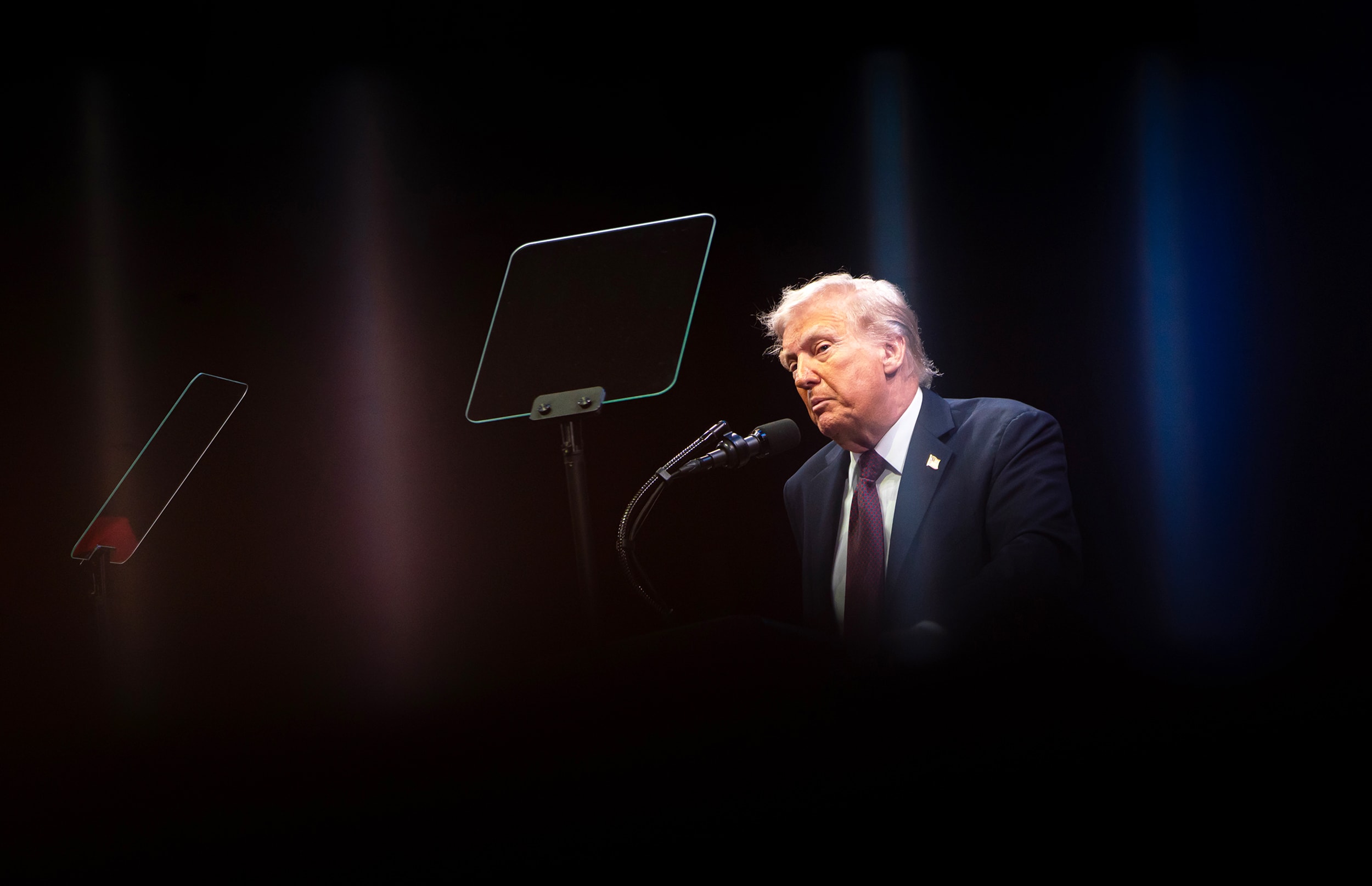
President Donald Trump’s so-called Religious Liberty Commission, which is filled with right-wing zealotsappears to be coming apart at the seams.
Last week’s resignation of Sameerah Munshi, formerly the only Muslim woman selected as one of the commission’s advisers, underscores the religious divisions that are causing disarray for the panel and the conservative movement more broadly.
Munshi is a conservative activist who has advocated for allowing parents to opt out of lesson plans related to LGBTQ+ issues, a stance the White House has praised for its rejection of “radical gender ideology.” She said her resignation was due to two things: the commission’s expulsion of conservative activist Carrie Prejean Boller and the Trump administration’s war with Iran.
I recently wrote about how Boller’s removal, which followed a heated argument at a commission hearing over antisemitism, has fueled allegations of anti-Catholicism within the MAGA movement. Boller recently appeared on an episode of Tucker Carlson’s podcast for a chummy chat about her removal. And Rep. Thomas Massie, R-Ky., requested last week that the House Oversight and Judiciary committees review her ouster.
In addition to that, Trump’s Religious Liberty Commission is being sued over its lack of diversity. (The White House has said the panel is intended to reflect a “diversity of faith traditions, professional backgrounds and viewpoints.”)
So Munshi’s resignation is just the latest negative publicity for the commission.
“I resign in protest of two deeply troubling developments: the official removal of Carrie Prejean Boller for her deeply held beliefs about Palestine and the federal government’s illegal war against Iran, undertaken without clear constitutional or congressional authorization,” Munshi wrote on Substack.
“Ultimately, I will have to stand before God and answer to Him for my role in this commission,” she added. “I ask His forgiveness if I have legitimized their evil or the evil of this administration in any way. I ask Him to keep my intentions pure and to guide me toward paths that bring true benefit to my community.”
Boller’s removal has also helped fuel right-wing antipathy toward the Rev. Paula White, who Boller has said was behind a “witch hunt” that led to her ouster. During their conversation, Boller and Carlson took turns bashing White, a controversial preacher of the prosperity gospel who has served as religious adviser to Trump.
Some evangelicals in the MAGA movement were apoplectic when White was chosen to lead the White House Faith Office. And now it appears the chickens have come home to roost as her involvement with Trump’s White House threatens the MAGA movement’s religious coalition.
Ja’han Jones is an MS NOW opinion blogger. He previously wrote The ReidOut Blog.
Today’s edition of quick hits.
* A big loss for RFK Jr.: “A federal judge on Monday blocked key parts of Health Secretary Robert F. Kennedy Jr.’s effort to reshape U.S. vaccine policy, including a move to reduce the number of shots routinely recommended for children.”
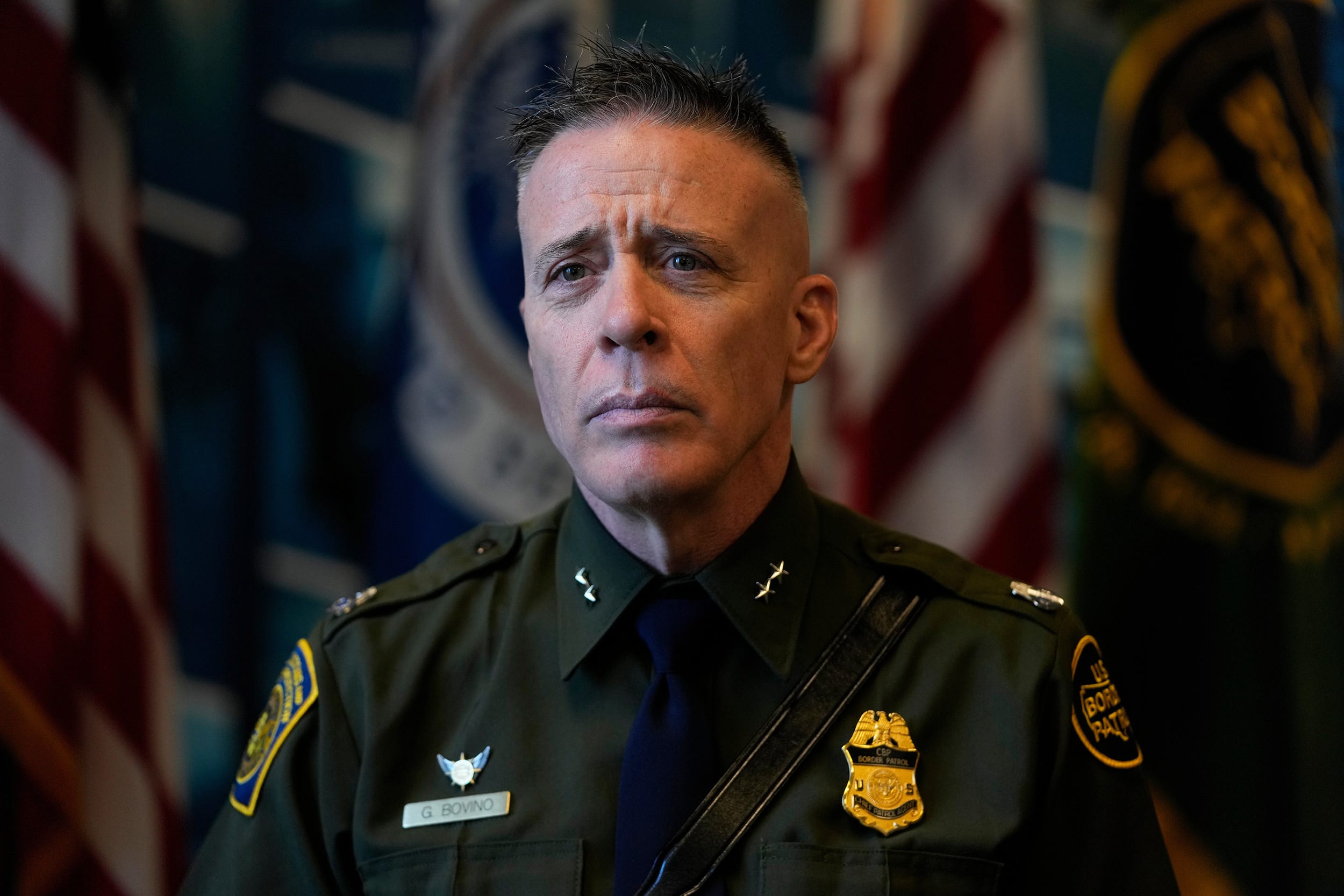
* After Minnesota, it was clear that Bovino’s professional future was not bright: “Border Patrol official Greg Bovino, most widely recognized for leading the Trump administration’s immigration crackdown, will retire at the end of the month, CBS News reported, citing two sources directly familiar with his decision.”
* It’s not just oil: “The war with Iran is driving up more than gasoline prices. It is beginning to hit semiconductors, medical imaging, backyard gardens and even children’s party balloons.”
* In the Middle East: “At least four Palestinians, including two boys and a woman pregnant with twins, were killed Sunday by an Israeli airstrike in the war-torn Gaza Strip, hospital authorities said.”
* In Ukraine: “A combined missile and drone attack on the Kyiv region killed at least four people and wounded at least 15 overnight into Saturday, according to the head of the regional administration for the Ukrainian capital.”
* Whether the White House understands this or not, moves like these are likely to push consumer prices higher: “Some 200,000 immigrant truck drivers will begin to lose their commercial driver’s licenses as they expire under a new Trump administration rule that takes effect Monday.”
* Small gestures can have a significant meaning: “A temporarily new-issued dime that commemorates America’s 250th anniversary is drawing criticism for its lack of olive branches — a symbol of peace. Instead, the back of the dime showcases the Great Seal of the United States, featuring a bald eagle, but it’s clutching only arrows, a symbol of war, and lacks the traditional olive branch in its other talon.”
* I wish reports like these were less common: “The University of Florida’s College Republicans chapter was disbanded after a finding that some of its members had violated a statewide organization’s rules, including making an antisemitic gesture.”
* You mean presidents can’t change federal laws through largely symbolic executive orders? “The Justice Department on Friday moved to dismiss charges against a veteran who set an American flag on fire across the street from the White House following an executive order seeking to crack down on flag burning.”
* Best wishes for a speedy recovery: “White House Chief of Staff Susie Wiles has breast cancer but will stay in her role as she gets treatment, President Donald Trump announced Monday.”
See you tomorrow.
Steve Benen is a producer for “The Rachel Maddow Show,” the editor of MaddowBlog and an MS NOW political contributor. He’s also the bestselling author of “Ministry of Truth: Democracy, Reality, and the Republicans’ War on the Recent Past.”
ByNicholas Grossman
The Iran was is exposing President Donald Trump’s unfitness for national leadership. The lie-filled bluster and escalation he relied on to succeed in business and domestic politics aren’t workingand the situation is out of his control. The world is interconnected and other people get a say, including oil companies and energy markets. But Trump never understood that, and since he has no other moves, he’s kept doubling down despite no plausible path to victory, making things worse.
With Venezuela, Trump said he attacked to take oilequating his personal rapaciousness with national interest. After U.S. special operations forces ousted Venezuelan president Nicolas MaduroTrump found the rest of the Venezuelan regime more pliable, including now-interim President Delcy Rodriguez, and told U.S. energy companies to go get Venezuela’s oil.
To address this crisis of his own making, Trump tried saying the war is almost over and the U.S. already won.
Except those companies didn’t want it. Which shouldn’t have been a surprise. Venezuela’s oil deposits are dirty, needing considerable refinement, and drilling isn’t profitable unless oil is priced higher than it was at the time. The infrastructure is poor, and U.S. companies would have to spend billions developing it. And the security situation was volatile after the U.S. military overthrew the national leader. Oil is flammable, and platforms would be a target if an insurgency develops.
But apparently it was a surprise to the White House. Trump berated energy executivesbut that didn’t work. They won’t throw away money just because he told them to.
With the Iran war, Trump is trying to bully not only energy companies, but the entire global energy market. Except the war is disrupting supply, making prices rise no matter what he says.
Trump ordered the U.S. military to attack Iran, and hasn’t articulated a clear goalbut did issue existential threats. At various times he’s called for regime change, told Iranians to overthrow the government, and demanded “unconditional surrender.”
And this comes after Trump reneged on the Iran nuclear deal without cause in his first term. That showed Iran that the United States in general, and Trump specifically, cannot be trusted to honor any agreement, and will react to concessions by demanding more.

In response to the U.S.-Israeli attack, Iran played its biggest card, closing the Strait of Hormuz. It’s a narrow choke point at the end of the Persian Gulf, and a kink in the waterway leaves it exposed to a lot of Iran’s coastline. About 20% of the world’s oil passes through Hormuz, and it isn’t hard for Iran to stop the traffic.
Iran can’t prevent U.S. and Israeli forces from flying over the gulf, and they probably couldn’t keep the U.S. Navy out of it, but to close the strait, they don’t need to. They only have to make shipping companies afraid to sail, and insurance companies think the risk of insuring the ships is too high. With threats, a few attacks on tankers, and now possibly sea mines, Iran has.
Again, this shouldn’t have been a surprise. For example, “Closing Time: Assessing the Iranian Threat to the Strait of Hormuz” by Caitlin Talmadge appeared in the leading journal International Security in 2008.
There’s no one to sue, no rules to manipulate, just the hard realities of resource shortages and war.
To address this crisis of his own making, Trump tried saying the war is almost over and the U.S. already won. It made the oil price drop back down for a bit, but as U.S.-Israeli bombardment continued and market disruptions got worse, it rose again.
Trump tried telling ships to traverse the Strait of Hormuz, but most wouldn’t, and a few who did exploded, presumably at Iran’s hand.
He tried releasing oil from America’s strategic reserve, and some other countries did from theirs. But that’s a Band-Aid on a gaping wound, and had little impact.
Then he tried bombing Kharg, an island in the gulf that Iran uses for oil exports. The apparent logic is that hindering Iran’s shipping will get Iran to stop blocking everyone else’s.
That recalls one of Trump’s go-to moves in business: the bad faith lawsuit. He’d break a contract, screw someone over, and dare them to sue him. Or would initiate legal action himself. Either way, he bet that he’d have more resources and greater tolerance for a protracted legal fight, and the other party would settle even when the facts were on their side.
That won’t work with Iran.

By making the threat existential, Trump set the bar for the Iranian regime at survival, and incentivized them to use whatever leverage they have. America’s military can overwhelm Iran’s, and is doing a lot more damage to Iran than the Iranians can do back. But even without its main source of revenue, Iran can keep up a defensive war for a while. Especially since the only thing it really needs to do is keep getting some shots off, such as with relatively cheap, domestically-produced Shahed dronesor small boats laden with explosives. The U.S. probably can’t stop that by force without a large ground invasion and indefinite occupation of Iran’s gulf coastline—a massive, costly undertaking—and maybe not even then.
Much of the time when Trump was in the private sector and messed up, his rich dad bailed him out or he’d declare bankruptcy. Instead of holding equity or debt, Trump would have the business pay him a salary and bonusesso that money was gone when the company went under, and his partners and contractors would take most of the losses.
When Trump stiffed lenders, there was usually someone else he could get to give him money. That’s how the Trump Organization ended up with a lot of Russian financing — by that point, just about everyone else wouldn’t touch him.
Now he’s done that to America. After a year of Trump denigratingthreatening, and tariffing U.S. alliesno one is willing to help rescue the U.S. from a mess of its own making, no matter how much he browbeats them.
Trump started something that quickly spiraled and seems out of ideas. There’s no one to sue, no rules to manipulate, just the hard realities of resource shortages and war.
And there’s a good chance Iran can tolerate being bombed more than the U.S. can tolerate a rapidly rising oil price and the economic damage it causes.

Nicholas Grossman
Nicholas Grossman is a political science professor at the University of Illinois, editor of Arc Digital and the author of “Drones and Terrorism.”
- Right-wing Muslim activist resigns from Trump’s Religious Liberty Commission
- Monday’s Mini-Report, 3.16.26

- Right-wing Muslim activist resigns from Trump’s Religious Liberty Commission
- Jesse Jackson’s family grapples with Illinois Senate endorsement controversy
- Johnson on Trump’s Hormuz plan
- House Budget chair eyes more safety-net cuts for second megabill
- Capitol agenda: Trump’s Doral demands ripple through GOP
- Trump is failing at the business of war
- Federal judge temporarily blocks RFK Jr.’s changes to vaccine policy
- What Brendan Carr’s media threats are really about
-

 The Dictatorship1 year ago
Luigi Mangione acknowledges public support in first official statement since arrest
-

 Politics1 year ago
Former ‘Squad’ members launching ‘Bowman and Bush’ YouTube show
-

 Politics1 year ago
Blue Light News’s Editorial Director Ryan Hutchins speaks at Blue Light News’s 2025 Governors Summit
-

 Politics1 year ago
Former Kentucky AG Daniel Cameron launches Senate bid
-

 The Dictatorship6 months ago
Mike Johnson sums up the GOP’s arrogant position on military occupation with two words
-

 The Dictatorship1 year ago
Pete Hegseth’s tenure at the Pentagon goes from bad to worse
-

 Politics11 months ago
Democrat challenging Joni Ernst: I want to ‘tear down’ party, ‘build it back up’
-
Uncategorized1 year ago
Bob Good to step down as Freedom Caucus chair this week