
The Dictatorship
Venezuela seeks to criminalize oil tanker seizures

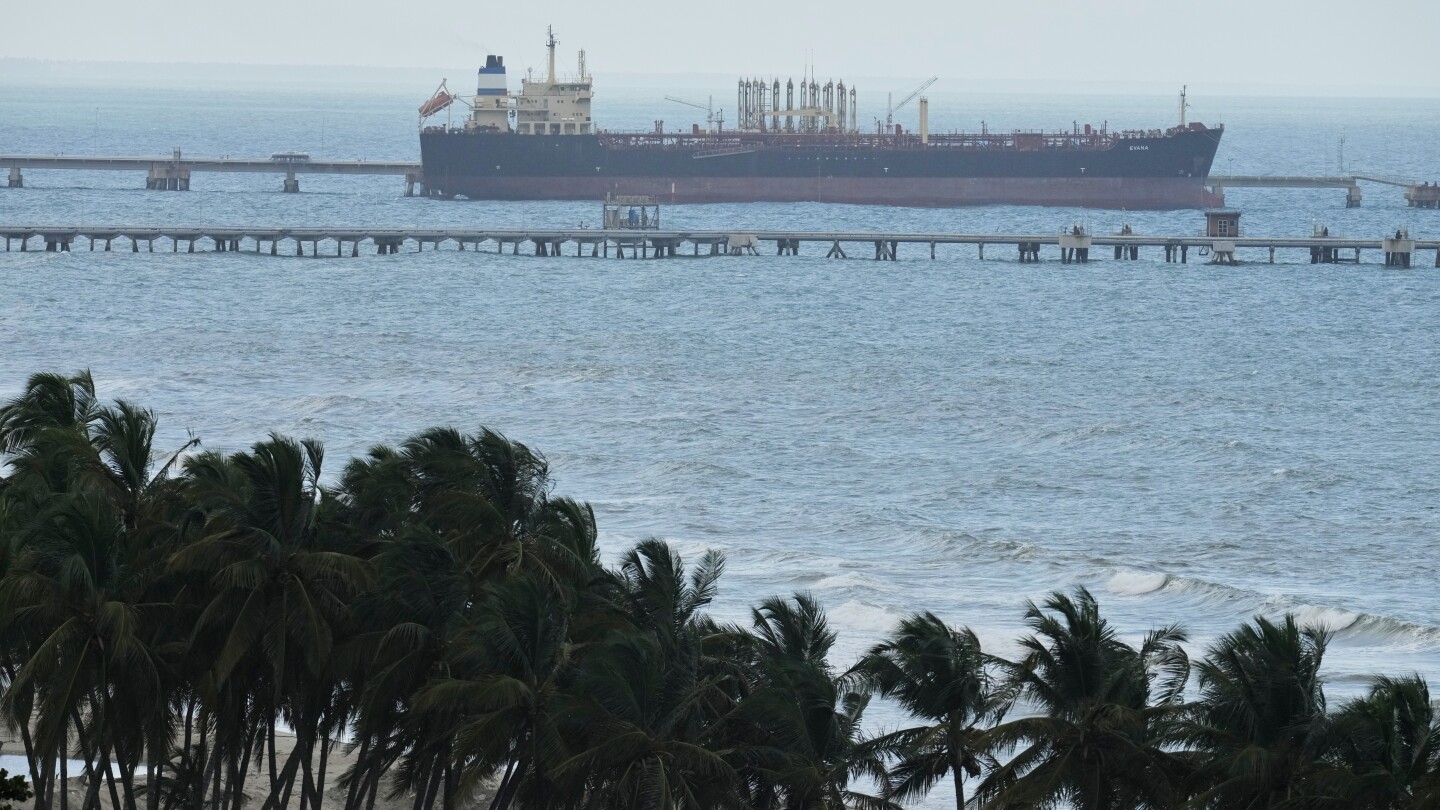
CARACAS, Venezuela (AP) — Venezuela’s parliament on Tuesday approved a measure that criminalizes a broad range of activities that can hinder navigation and commerce in the South American country, such as the seizure of oil tankers.
The bill — introduced, debated and approved within two days in the National Assembly — follows this month’s seizures by U.S. forces of two tankers carrying Venezuelan oil in international waters. The seizures are the latest strategy in U.S. President Donald Trump’s four-month pressure campaign on Venezuela’s leader Nicolás Maduro.
The tankers are part of what the Trump administration has said is a fleet Venezuela uses to evade U.S. economic sanctions.
The unicameral assembly, which is controlled by Venezuela’s ruling party, did not publish drafts on Tuesday nor the final version of the measure. But as read on the floor, the bill calls for fines and prison sentences of up to 20 years for anyone who promotes, requests, supports, finances or participates in “acts of piracy, blockades or other international illegal acts” against commercial entities operating with the South American country.
Venezuela’s political opposition, including Nobel Peace laureate María Corina Machadohas expressed support for Trump’s Venezuela policy, including the seizure of tankers. Machado and Trump have both repeatedly said that Maduro’s days in power are numbered.
The bill, which now awaits Maduro’s signature, also instructs the executive branch to come up with “incentives and mechanisms for economic, commercial and other protections” for national or foreign entities doing business with Venezuela in the event of piracy activities, a maritime blockade or other unlawful acts.
The U.S. Coast Guard on Saturday seized a Panama-flagged vessel called Centuries that officials said was part of the fleet moving sanctioned cargo. With assistance from the U.S. Navy, it seized a rogue tanker called Skipper on Dec. 10. That ship was registered in Panama.
Trump, after that first seizure, said the U.S. would carry out a “blockade” of Venezuela. He later demanded that Venezuela return assets that it seized from U.S. oil companies years ago, justifying anew his announcement of the blockade against sanctioned oil tankers traveling to or from the South American country.
At an emergency meeting of the U.N. Security Council called by Venezuela, U.S. Ambassador Mike Waltz on Tuesday stressed that sanctioned oil tankers “operate as the primary economic lifeline for Maduro and his illegitimate regime.”
“Maduro’s ability to sell Venezuela’s oil enables his fraudulent claim to power and his narco-terrorist activities,” Waltz said. “The United States will impose and enforce sanctions to the maximum extent to deprive Maduro of the resources he uses to fund Cartel de los Soles.”
Maduro was indicted in 2020 on narcoterrorism charges in the U.S. and accused of leading the Cartel de los Soles, which the Trump administration designated as a foreign terrorist organization last month. But the entity is not a cartel per se.
Venezuelans began using the term Cartel de los Soles in the 1990s to refer to high-ranking military officers who had grown rich from drug-running. As corruption expanded nationwide, its use loosely expanded to police and government officials as well as activities like illegal mining and fuel trafficking.
At Tuesday’s meetingVenezuela’s U.N. Ambassador Samuel Moncada accused the U.S. of acting “outside international law” and its own domestic laws, by demanding that Venezuelans vacate the country and hand it over to the Trump administration, including all its oil fields.
“What right does the United States government have to appropriate, to date, almost 4 million barrels of Venezuelan oil?” Moncada asked, referring to the cargo of the two seized tankers. “This alleged naval blockade is essentially a military act aimed at laying siege to the Venezuelan nation, degrading its economic and military apparatus, weakening its social and political cohesion, and causing internal chaos to facilitate aggression by external forces.”
Many countries expressed concern about violations of international maritime law and adhering to the United Nations Charter, which requires all 193 member nations to respect the sovereignty and territorial integrity of every other country. The United States’ actions were supported by a few countries, including Panama and Argentina.
___
Associated Press writer Edith Lederer in New York contributed to this report.


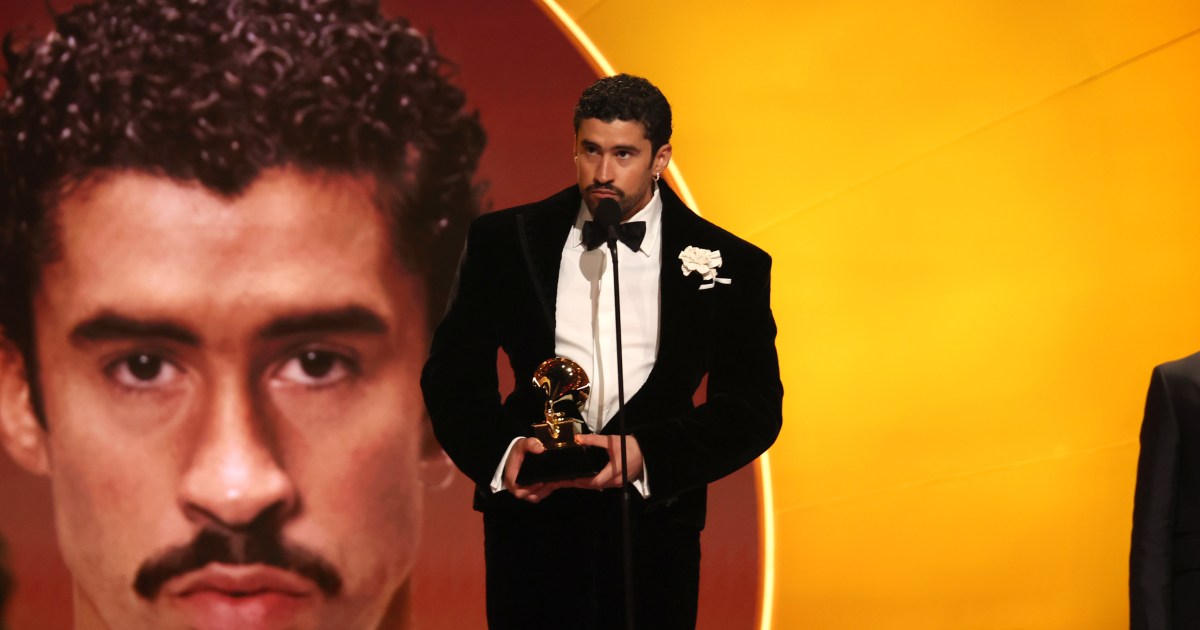
As awards season progresses, celebrities continue to speak out against the Trump administration’s immigration crackdown — especially in Minneapolis. Though some stars have opted for a slight nod of resistance with pins that say “ICE out,” others have been more vocal in their stances.
Upon accepting the Grammy Award for Best Música Urbana Album on Sunday night, Bad Bunny got straight to the point.
“Before I say thanks to God, I’m going to say ICE out,” the Puerto Rican performer said as soon as he approached the podium with award in hand.
After a standing ovation and cheers from the crowd, he continued.
“We’re not savage, we’re not animals, we’re not aliens. We are humans and we are Americans.”
This is not the first time the artist has spoken out against the Trump administration’s rhetoric against immigrants in the United States. Last year, he announced he would no longer tour in the U.S., which drew criticism from some right-wing commentators.
Despite that pushback, Bad Bunny scored the headlining spot at this year’s Super Bowl and said he decided to “do just one date in the United States.”
The album Bad Bunny accepted the award for, “Debí Tirar Más Fotos,” also won Album of the Year, becoming the first primarily Spanish-language album to win the distinction in the ceremony’s 68-year history.
Kathleen Creedon is a platforms editor for MS NOW. She previously worked as a web producer for Vanity Fair.
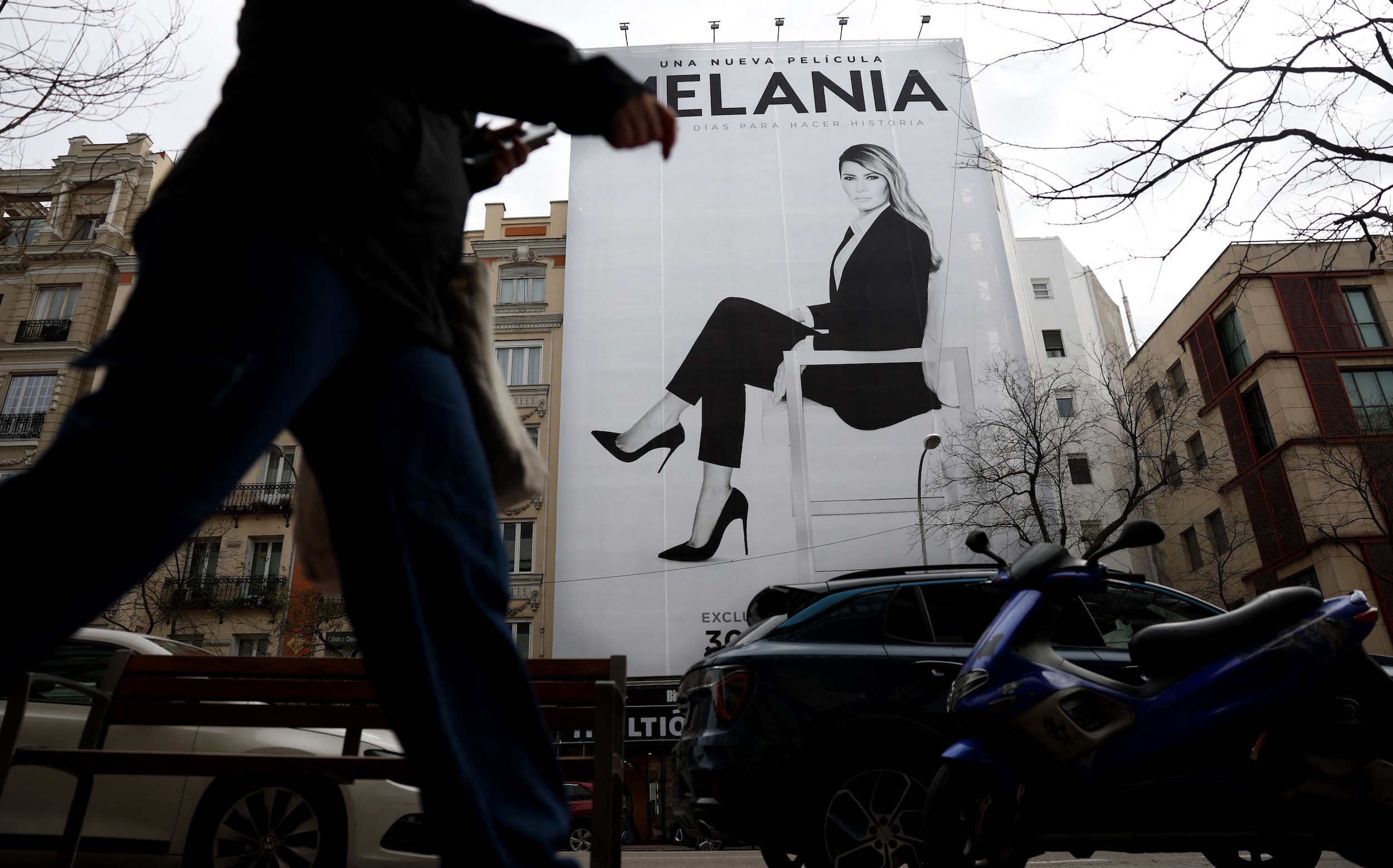
Despite a brutal critical reception“Melania,” the documentary about the first lady released on January 30, outperformed expectations in its opening weekend.
“Melania” earned more than $7 million at the domestic U.S. box office, the highest opening for a non-concert documentary in decades. Most recently, the best-performing film in the same genre was Stephen Gray and Chris Radtke’s “After Death,” which opened at around $5 million domestically in 2023. With an opening box office of almost $24 million, Michael Moore’s 2004 film “Fahrenheit 9/11” remains the highest-grossing political documentary.
Critics, however, have been less kind to “Melania.” The documentary has received an aggregate rating of 10% among professional critic reviews on Rotten Tomatoes (which is owned by Versant, MS NOW’s parent company), and negative reviews from major news outlets abound. Writing for MS NOW, media critic Jen Cheney said the film is “so devoid of substance that it feels wrong to call it a documentary” and suggested “This thing is basically ‘Let Them Eat Cake: The Movie,’” invoking Marie Antoinette, the French queen beheaded during the revolution.
Still, the film about the model-turned-political figure found its audience. Media analytics company Comscore reported that roughly 72% of Melania’s audience during opening weekend were women, and 72% were over the age of 55. The majority of the movie-goers were also white.
Directed by Brett Ratner in his first film since he faced accusations of sexual abuse (allegations he has denied), “Melania” outperformed expectations out of the gate but has far to go before it becomes profitable: Amazon’s MGM Studios paid $40 million to license the film and another $35 million to promote it.
“We’re very encouraged by the strong start and positive audience response, with early box office for ‘Melania’ exceeding our expectation,” said Kevin Wilson, Amazon MGM Studios’ head of domestic theatrical distribution.
Erum Salam is a breaking news reporter and producer for MS NOW. She previously was a breaking news reporter for The Guardian.
The Dictatorship
British prime minister says Prince Andrew should testify to Congress over Epstein ties

British Prime Minister Keir Starmer called on Andrew Mountbatten-Windsor, the disgraced British royal formerly known as Prince Andrew, to testify before the U.S. Congress over his ties to the late convicted sex offender Jeffrey Epstein.
“Firstly, I have always approached this question with the victims of Epstein in mind. Epstein’s victims have to be the first priority. As for whether there should be an apology, that’s a matter for Andrew,” Starmer told press on Saturday during an official visit to Tokyo, Japan.
“But yes, in terms of testifying, I have always said anybody who has got information should be prepared to share that information in whatever form they are asked to do that. You can’t be victim-centered if you’re not prepared to do that.”
The statement comes after the Justice Department on Friday released more than 3 million pages of documents related to its investigation into Epstein as part of its mandate to fulfill the requirements of the Epstein Files Transparency Act.
Among the documents are photographs that show a barefoot Mountbatten-Windsor kneeling over and touching the stomach and waist of an unidentified female figure whose face has been redacted.
Also among the newly released documents, the Guardian identified email exchanges between him and Epstein dated 2010. In them, Epstein tells Mountbatten-Windsor, “I have a friend who I think you might enjoy having dinner with” and refers to a 26-year-old Russian woman. Andrew replied that he would be “delighted to see her” and told Epstein to give her his contact information.
Mountbatten-Windsor has been unable to distance himself from the scandal over his friendship with Epstein, the American financier who ran a sex-trafficking ring.
Amid ongoing revelations about his history with Epstein, Mountbatten-Windsor was stripped of his royal titles last year by his older brother, King Charles III. Andrew was also evicted from his home at Royal Lodge, a 30-room mansion located on the grounds of Windsor Castle.
Virginia Giuffreone of Epstein’s victims, sued Mountbatten-Windsor in 2021, claiming she was forced to have sex with him. The case was settled for an undisclosed amount in 2022with no admission of wrongdoing. Giuffre died by suicide last April. Mountbatten-Windsor has repeatedly denied the allegations against him. In a now-famous BBC Newsnight interviewhe claimed he was at a PizzaExpress in Woking with his daughter, Princess Beatrice, at the time of the alleged assault.
MS NOW is reviewing the documents released by the Justice Department in collaboration with journalists from NBC, AP, CNBC and CBS. Journalists from each newsroom worked together to examine the documents and share information about what is in them. Each outlet is responsible for its own independent news coverage of the documents.
Erum Salam is a breaking news reporter and producer for MS NOW. She previously was a breaking news reporter for The Guardian.
- Capitol agenda: Mike Johnson’s shutdown gamble
- Billie Eilish rips ICE at Grammys: ‘No one is illegal on stolen land’

- GOP rep: ‘Senate is very, very corrupt’
- Bad Bunny denounces ICE in Grammys speech: ‘We’re not savages’

- Portland mayor tells ICE to leave city after federal agents use tear gas on protesters

- Trevor Noah roasts Nicki Minaj’s Trump support at Grammys
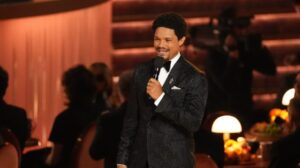
- ‘ICE out’: Bad Bunny uses Grammy speech to speak out

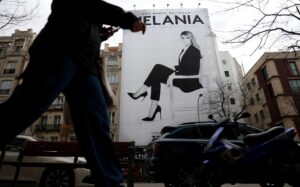
- ‘Melania’ documentary beats expectations at box office
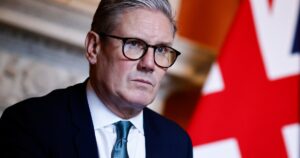
- British prime minister says Prince Andrew should testify to Congress over Epstein ties
- DOJ’s misconduct complaint dismissed against judge in Alien Enemies Act case
-

 The Dictatorship12 months ago
Luigi Mangione acknowledges public support in first official statement since arrest
-

 Politics12 months ago
Former ‘Squad’ members launching ‘Bowman and Bush’ YouTube show
-

 The Dictatorship5 months ago
Mike Johnson sums up the GOP’s arrogant position on military occupation with two words
-

 Politics12 months ago
Blue Light News’s Editorial Director Ryan Hutchins speaks at Blue Light News’s 2025 Governors Summit
-

 The Dictatorship12 months ago
Pete Hegseth’s tenure at the Pentagon goes from bad to worse
-

 Politics12 months ago
Former Kentucky AG Daniel Cameron launches Senate bid
-
Uncategorized1 year ago
Bob Good to step down as Freedom Caucus chair this week
-

 Politics10 months ago
Democrat challenging Joni Ernst: I want to ‘tear down’ party, ‘build it back up’