
The Dictatorship
Trump’s meme coin represents a dangerous confluence of power


American presidents throughout history have broken with precedent before, but for a president-elect to launch a crypto “meme coin” days before his inauguration is really out there on the bleeding edge of the untested. As Donald Trump returns to the White House following his 2024 electoral victory, his association with a meme coin launch represents an unprecedented convergence of presidential influence and speculative finance. Even Andrew Jacksonwho had a notorious appetite for gambling and financial risk, never displayed such brazenness as to promote an investment product on the eve of assuming office.
These are purely speculative instruments, unapologetically existing for no reason other than to enrich their creators.
While the value of established cryptocurrencies remains a subject of considerable debate among economists and technologistsother cryptocurrencies often peddle a narrative justification centered on utility. Proponents of bitcoin, for instance, suggest its potential as a digital analog to gold, or as a payment network; ethereum adherents point to so-called smart contracts. Whether such proposed applications ultimately prove viable remains highly questionable, and many critics argue that these narratives are fundamentally incoherent.
Meme coinsin contrast, dispense with the pretense of utility or narrative: These are purely speculative instrumentsunapologetically existing for no reason other than to enrich their creators.
The mechanics of meme coins are remarkably straightforward: Initial purchasers acquire tokens at a nominal cost. Publicity intensifies, often fueled by social media amplification and a fear of being left behind, and prices spike. Early investors can then sell their holdings to later buyers at a profit. This dynamic, however, is inherently unsustainable, and the inevitable result is that subsequent investors are left holding largely valueless digital tokens that are untethered from any asset or income. It’s a mathematical certainty that a majority of participants will incur financial losses — the only question is the precise distribution of those losses. The value of these tokens rests solely on their ability to induce successive purchasers to pay an inflated price, a characteristic that invites comparison to pyramid schemes without the overt promise of guaranteed returns.
The launch of the Trumps’ tokens just before the inauguration represents a troubling development in the realm of money in politics. It’s shocking to have the presidential office even tangentially connected to such a nakedly speculative financial undertaking at such a sensitive political moment. This timing seems to suggest that supporting the candidate and engaging in a risky financial gamble are somehow connected, a notion that raises significant ethical concerns about the influence of personal financial interests on political decision-making and could potentially lead to conflicts of interest.
The dangers surrounding meme coins arise not so much because they exist in a regulatory vacuum, but because some crypto businesses operate with a cynical disregard for the laws we already have. Traditional financial markets have rules that forbid predatory offerings and market manipulation and that require disclosures, but many crypto operations openly flout these regulations, knowing that regulators are often too underresourced to enforce them. The result is a perfect storm for market manipulation, with concentrated ownership and coordinated buying campaigns conducted openly on social media platforms.
This pattern of market behavior is eerily reminiscent of the “robber baron” era of the late 19th century. Before the advent of securities laws, powerful figures amassed fortunes through schemes that often left ordinary investors in financial ruin. That era, characterized by limited regulatory oversight, allowed many predatory schemes and abuses that ultimately led to the modern securities regulations that govern traditional finance today.
What’s particularly fraught about the present circumstance is the combination of a historically familiar pattern with the speed and reach of digital technology, and now the direct association with a presidential transition. Potential buyers may not understand that they’re not investing in anything real — they’re merely buying tokens in a digital game of hot potato, where the only way to win is to pass their holdings to someone else at a higher price before the music stops.
The overall rise of crypto reflects a deeper nihilism in American culture — a collective rejection of fundamental value and the premise of markets.
The overall rise of crypto reflects a deeper nihilism in American culture — a collective rejection of fundamental value and the premise of markets. In this worldview, if investing is a rigged game, why not embrace the absurdity? Such a cynical perspective approaches markets as a mere casino where the only things that matter are momentum and hype. That this mindset has become intertwined with the presidency, with tokens backed by nothing but vanity and political loyalty, reveals a profound loss of faith in institutions and the very concept of value itself.
For the public, the message should be unequivocal: Meme coins, irrespective of their branding or timing, are not legitimate investments. They are speculative gambles, more like lottery tickets than financial assets. When draped in political symbolism and launched at times of heightened public attention, they become an especially dangerous proposition: a chimera of political devotion and financial recklessness that is fraught with moral hazard and does not serve the public interest.
The launch of a personal meme coin by a president represents a dangerous confluence of political power and speculative finance that would be bad on its own. More fundamentally — and more troubling — it represents a betrayal of the duty of the office. Using the highest office of the land to promote a financial product designed to transfer wealth from the public to a private individual undermines the institutional integrity of the presidency itself.
The Trump meme coin may be just the latest chapter in this ongoing story, but it signals a troubling new direction in the use of political influence for financial gain.
Stephen Diehl
Stephen Diehl is a software engineer who often write about software, technology, and the future.


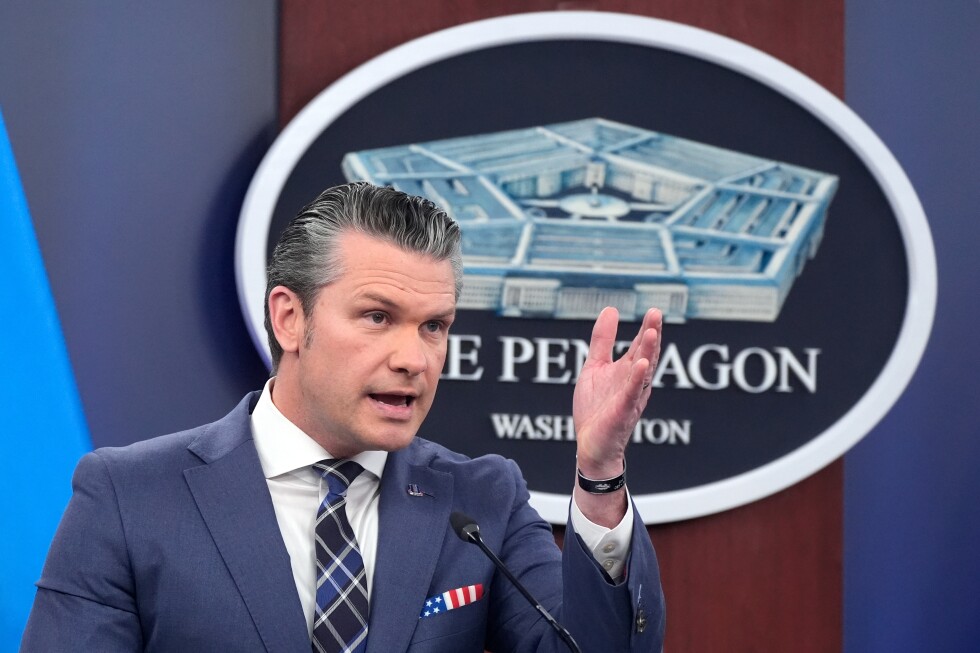
WASHINGTON (AP) — A federal judge agreed Friday to block the Trump administration from enforcing a policy limiting news reporters’ access to the Pentagon, agreeing with The New York Times that key portions of the new rules are unlawful.
U.S. District Judge Paul Friedman in Washington, D.C., sided with the newspaper and ruled that the Pentagon policy illegally restricts the press credentials of reporters who walked out of the building rather than agree to the new rules.
The Times sued the Pentagon and Defense Secretary Pete Hegseth in December, claiming the credentialing policy violates the journalists’ constitutional rights to free speech and due process.
The current Pentagon press corps is comprised mostly of conservative outlets that agreed to the policy. Reporters from outlets that refused to consent to the new rules, including from The Associated Press, have continued reporting on the military.
The Defense Department has been letting some of the legacy media reporters that didn’t agree to the restrictions back in the Pentagon for some of Hegseth’s Iran war briefings. Hegseth rarely calls on them, although he did recently take questions from reporters like Eric Schmitt of The Times and Luis Martinez of ABC.
Friedman, who was nominated to the bench by Democratic President Bill Clinton, said the policy “fails to provide fair notice of what routine, lawful journalistic practices will result in the denial, suspension, or revocation” of Pentagon press credentials. He ruled that it violates the First and Fifth amendment rights to free speech and due process.
“Those who drafted the First Amendment believed that the nation’s security requires a free press and an informed people and that such security is endangered by governmental suppression of political speech. That principle has preserved the nation’s security for almost 250 years. It must not be abandoned now,” the judge wrote.
Pentagon spokesperson Sean Parnell posted late Friday on X, “We disagree with the decision and are pursuing an immediate appeal.”
Times lauds ruling as boon for press freedom
New York Times spokesperson Charlie Stadtlander said the newspaper believes the ruling “enforces the constitutionally protected rights for the free press in this country.”
“Americans deserve visibility into how their government is being run, and the actions the military is taking in their name and with their tax dollars,” Stadtlander said in a statement. “Today’s ruling reaffirms the right of The Times and other independent media to continue to ask questions on the public’s behalf.”
Theodore Boutrous, an attorney who represented The Times at a hearing earlier this month, said in a statement that the court ruling is “a powerful rejection of the Pentagon’s effort to impede freedom of the press and the reporting of vital information to the American people during a time of war.”
The judge ordered the Pentagon to reinstate the press credentials of seven Times journalists. He also said his decision to vacate the challenged policy terms applies to “all regulated parties.”
Noting that part of the ruling, the Pentagon Press Association — which includes AP reporters — called for the immediate reinstatement of the credentials of all its members.
The PPA released a statement saying: “This is a great day for freedom of the press in the United States. It is also hopefully a learning opportunity for Pentagon leadership, which took extreme steps to limit press access to information in wartime.”
The Defense Departmant has argued that the policy imposes “common sense” rules that protect the military from the disclosure of national security information.
“The goal of that process is to prevent those who pose a security risk from having broad access to American military headquarters,” government attorneys wrote.
Times attorneys claim the policy is designed to silence unfavorable press coverage of President Donald Trump’s administration.
“The First Amendment flatly prohibits the government from granting itself the unbridled power to restrict speech because the mere existence of such arbitrary authority can lead to self-censorship,” they wrote.
Judge finds Pentagon tried to weed out ‘disfavored’ journalists
The judge said he recognizes that “national security must be protected, the security of our troops must be protected, and war plans must be protected.”
“But especially in light of the country’s recent incursion into Venezuela and its ongoing war with Iran, it is more important than ever that the public have access to information from a variety of perspectives about what its government is doing — so that the public can support government policies, if it wants to support them; protest, if it wants to protest; and decide based on full, complete, and open information who they are going to vote for in the next election,” Friedman wrote.
Friedman said the “undisputed evidence” shows that the policy is designed to weed out “disfavored journalists” and replace them with those who are “on board and willing to serve” the government, a clear instance of illegal viewpoint discrimination.
“In sum, the Policy on its face makes any newsgathering and reporting not blessed by the Department a potential basis for the denial, suspension, or revocation of a journalist’s (credentials),” he wrote. “It provides no way for journalists to know how they may do their jobs without losing their credentials.”
Pentagon must update judge in a week
The Pentagon had asked the judge to suspend his ruling for a week for an appeal. Friedman refused. He gave the Pentagon a week to file a written report on its compliance with the order.
The Times argued that the Pentagon has applied its own rules inconsistently. The newspaper noted that Trump ally Laura Loomera right-wing personality who agreed to the Pentagon policy, appeared to violate the Pentagon’s prohibition on soliciting unauthorized information by promoting her “tip line.” The government didn’t object to Loomer’s tip line but concluded that a Washington Post tip line does violate its policy because it purportedly “targets” military personnel and department employees.
The judge said he doesn’t see any meaningful difference between the two tip lines.
“But the problem is that nothing in the Policy explicitly prevents the Department from treating these two nearly identical tip lines differently,” Friedman added.
__
Associated Press writers Konstantin Toropin in Washington and David Bauder in New York contributed to this report.
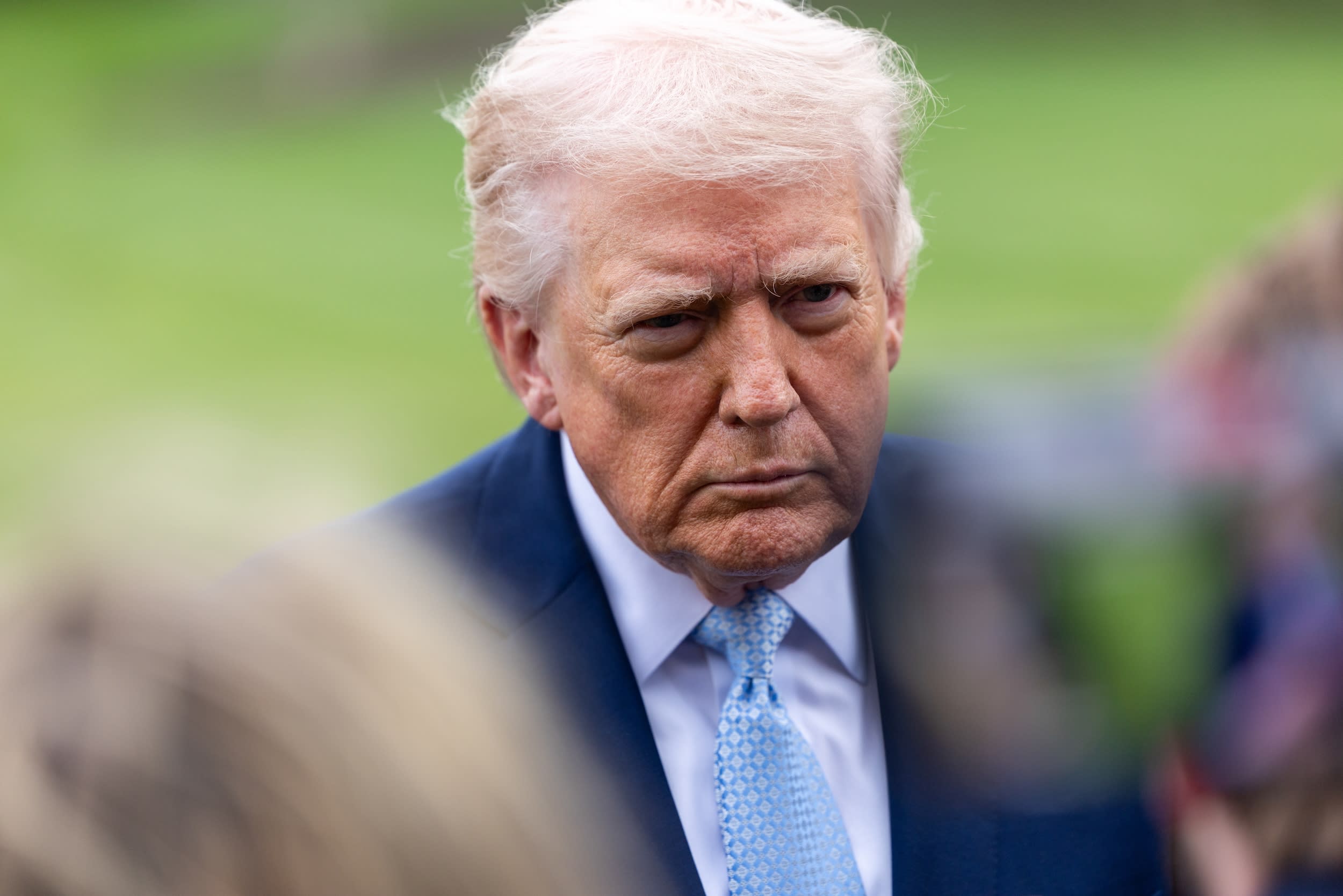
Critics say the Trump administration’s decision to halt sanctions on Iranian oil — in a bid to curb soaring energy prices caused by the intensifying war — benefits the very regime the United States is fighting.
“It’s very clear that the Trump administration is trying to alleviate some of these global energy and oil market pressures, but at the same time, what they’re doing is allowing Iran to be able to benefit from that relaxation of sanctions,” former CIA Director John Brennan said on MS NOW’s “The Weekend” on Saturday. “It shows the inconsistencies in these policies.”
Brennan, MS NOW’s senior national security and intelligence analyst, predicted the conflict will last “a long, long time, and it’s going to be very, very dangerous for U.S. national security interests.”
Philip Gordon, a former national security official in the Biden, Obama and Clinton administrations, accused Trump of hypocrisy for “giving Iran up to ten times” the amount of money that former President Barack Obama sent to the country in 2016.
When Obama sent Iran $400m + $1.3bn in interest in 2016 Trump called it “insane” and he and others spent a decade mocking the idea of “pallets of cash” even though it was Iran’s own money, American prisoners were released, courts were likely to require the U.S. payment, and Iran… https://t.co/RhP8nZRT9D
— Phil Gordon (@PhilGordonDC) March 21, 2026
Treasury Secretary Scott Bessent announced the pause in sanctions in a post on X Friday, saying it would add roughly 140 million barrels of oil to global markets. He said Iran “will have difficulty accessing any revenue generated” from those sales, and that the U.S. will essentially “be using the Iranian barrels against Tehran to keep the price down.”
But critics, including those in Congress, which did not authorize President Donald Trump’s decision to wage war on Iran jointly with Israel, say easing sanctions on the Islamic Republic helps Tehran no matter how the administration tries to sell it.
Sen. Jeanne Shaheen, D-N.H., ranking member of the Senate Foreign Relations Committee, accused the administration of “giving the regime a financial lifeline.”
“To say the President has no plan is an understatement,” she said in a statement on X.
“The Trump Administration is lifting sanctions on Iranian oil, giving the regime a financial lifeline while Americans continue to feel the impact of @POTUS’s war.
To say the President has no plan is an understatement.” –@SenatorShaheen https://t.co/tiiHbD9NaF
— Senate Foreign Relations Committee (@SFRCdems) March 20, 2026
In an attempt to stem the economic fallout from the war, as Iran’s closure of the Strait of Hormuz destabilizes global energy markets, the Trump administration also lifted sanctions on Russian oil last week, angering European allies who want to continue exerting economic pressure on Moscow.
“Sickeningly, shamefully stupid—lifting sanctions on oil sales by Russia & Iran, fueling their war machines with windfall cash,” Sen. Richard Blumenthal, D-Conn., said in a social media post on Friday. “A minimal benefit to oil prices, but huge boost to sworn enemies.”
Tommy Vietor, a former National Security Council spokesman in the Obama administration, said“This is the biggest, dumbest concession ever given to Iran by the US and all you need to know about what a disaster Trump’s policy is.”
Neither Trump nor members of his administration have given a definitive timeline for U.S. involvement in the war. Trump told MS NOW’s Stephanie Ruhle on Friday that it would take Iran 10 years to rebuild if the U.S. ended the war now, but suggested that was not acceptable to him.
“If we stay longer, they’ll never rebuild,” he said.
Still, the president indicated later in the day that he is thinking of an exit soon. In a post on Truth Social, Trump said he is considering “winding down” the military operation against Iran and claimed that the U.S. is “getting very close to meeting our objectives” — despite having said repeatedly that the U.S. has “won” the war.
Clarissa-Jan Lim is a breaking news reporter for MS NOW. She was previously a senior reporter and editor at BuzzFeed News.

President Donald Trump says U.S. Immigration and Customs Enforcement officers will take over security at the nation’s airports amid staffing shortages and extensive lines as soon as Monday if Democrats won’t back a GOP government funding bill.
“If the Democrats do not allow for Just and Proper Security at our Airports, and elsewhere throughout our Country, ICE will do the job far better than ever done before!” Trump said in a post on Truth Social Saturday afternoon as the Senate met in a rare weekend session. “I look forward to moving ICE in on Monday, and have already told them to, ‘GET READY.’”
The president doubled down on a threat he made earlier in the day after Senate Republicans blocked a long-shot attempt by Minority Leader Chuck Schumer to pay TSA agents separately while the Department of Homeland Security shutdown drags on. A funding bill failed to pass the Senate for the fifth time on Friday.
“If the Radical Left Democrats don’t immediately sign an agreement to let our Country, in particular, our Airports, be FREE and SAFE again,” Trump wrote earlier on Truth Social“I will move our brilliant and patriotic ICE Agents to the Airports where they will do Security like no one has ever seen before, including the immediate arrest of all Illegal Immigrants who have come into our Country, with heavy emphasis on those from Somalia.”
MS NOW has reached out to ICE and DHS for comment.
Flight delays and long security lines at airports have become a pattern over the past week as more TSA agents — who are required to work without pay — are not showing up. Acting deputy TSA administrator Adam Stahl told CBS News this week that officials “may have to shut down airports” if funding continues to stall.
Homeland security funding has lapsed for weeks as Democrats maintain their demands for reforms to the department’s heavy-handed and even lethal immigration enforcement tactics.
Schumer on Saturday urged his Senate colleagues to support his effort to force a vote on funding for TSA agents. “It’s unacceptable for workers and travelers and entire airports to get taken hostage in political games,” the New York Democrat said. “But that’s what the Republicans are doing. It is unacceptable to say we will only pay TSA workers if it is attached to a bill that funds ICE with no reforms. But that’s what the Republicans have been doing.”
Clarissa-Jan Lim is a breaking news reporter for MS NOW. She was previously a senior reporter and editor at BuzzFeed News.
- Maher outlines ways US ‘f—-ed up’ Iran conflict strategy

- DHS funding deal stalls in Congress amid continuing negotiations
- Sunday shows preview: Iran conflict persists as DHS funding fight snarls travel
- Cruz proposes splitting ICE from Homeland Security funding bill to end airport chaos
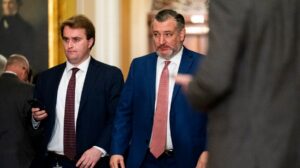
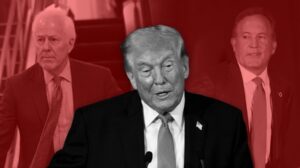
- Cornyn, Paxton lock into Texas Senate GOP runoff still seeking Trump’s nod
- Judge sides with NYT against policy limiting reporters’ Pentagon access

- ‘Shamefully stupid’: Critics blast U.S. move to lift Iran oil sanctions
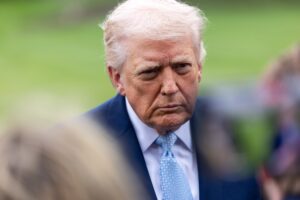
- Trump threatens to deploy ICE to run airport security during shutdown

- Former FBI director and special counsel Robert Mueller has died
- Audi Crooks plays for Iowa State — and for all those who’ve been told their body is too big

-

 The Dictatorship1 year ago
Luigi Mangione acknowledges public support in first official statement since arrest
-

 Politics1 year ago
Former ‘Squad’ members launching ‘Bowman and Bush’ YouTube show
-

 Politics1 year ago
Blue Light News’s Editorial Director Ryan Hutchins speaks at Blue Light News’s 2025 Governors Summit
-

 Politics1 year ago
Former Kentucky AG Daniel Cameron launches Senate bid
-

 The Dictatorship6 months ago
Mike Johnson sums up the GOP’s arrogant position on military occupation with two words
-

 The Dictatorship1 year ago
Pete Hegseth’s tenure at the Pentagon goes from bad to worse
-
Uncategorized1 year ago
Bob Good to step down as Freedom Caucus chair this week
-

 Politics11 months ago
Democrat challenging Joni Ernst: I want to ‘tear down’ party, ‘build it back up’