
The Dictatorship
Trump’s chaos might just jolt libertarianism back to life


A corrupt Republican president abuses his executive power to restrict free markets, placing legal constraints on free trade in goods and services, and then uses the granting of specific exceptions to shake down contributions from businessmen who are hurt by the restrictions. This political extortion is seen as such an abuse of office and betrayal of conservative economics principles that members of his own party band together to oppose him.
That corrupt Republican president? Richard Milhouse Nixon.
When President Nixon imposed his wage and price controls across the country, it wasn’t just economically destructive; it was also corrupt. As Ciara Torres-Spelliscy noted for the Brennan Center, by creating a blanket policy that crushed businessesNixon was soliciting connected business owners to petition him for exceptions in exchange for large donations to his campaign.
Nixon’s wage and price controls inspired David Nolan to gather a group of free market Republicans — all disgusted with Nixon’s schemes — in his Colorado living room. This is how the Libertarian Party was born.
President Donald Trump has in many ways followed Richard Nixon’s economic playbook, though instead of wage and price controls, he has chosen to impose arbitrary blanket tariffsviolating free market principles (and trade deals he negotiated) by putting import taxes on everything American businesses and consumers buy from other countries. Trump has a record of targeting media companies and law firms to extract personal benefits. Imposing tariffs gives him another tool in the box. He may not have used it yet, but he’s already made public statements about how countries can “come to the table” to negotiate an exception from these punitive tariffs. Some impacted businesses are going to ask for exceptions from import taxes and may assume their chances of success are far greater if they offer something of value to Trump’s interests.
Now would be a great time for the Libertarian Party, founded in opposition to Republican corruption, to oppose another president’s meddling with the markets, potentially for his own gain. Alas, the current iteration of the party is far more dedicated to fighting MAGA-friendly culture war battles than standing up for free market principles.
In the wake of the 2017 Charlottesville “Unite the Right” rally and the neo-Nazi murder of counteractivist Heather Heyer, then-Libertarian Party executive director Wes Benedict publicly rejected the hateful and bigoted views of the alt-right groups who marched to chants of “Jews will not replace us.”
Now would be a great time for the Libertarian Party, founded in opposition to Republican corruption, to oppose another president’s meddling with the markets, potentially for his own gain.
However, as a reaction to that anti-bigotry stance, a group called the Mises Caucus was formed to try to steer the Libertarian Party toward a more MAGA-friendly platform that would welcome anti-immigrant, anti-abortion and antisemitic conservatives into a historically pro-freedom party. It took five years, but by the 2022 Libertarian National Conventionthe Mises Caucus was able to install an anti-vaccine activist and former paralegal, Angela McArdle, as Libertarian National Committee Chair and remove the anti-bigotry and pro-choice planks from the Libertarian platform.
With a majority of the national committee sympathetic to a far-right Republican distortion of libertarian principles, Trumpworld figures like Ric Grenell — who has served in both Trump administrations — started communicating directly with McArdle about ways that the Libertarian Party could assist Trump by delivering the Libertarian vote in what promised to be a very close election.
During the 2024 campaign, Angela McArdle seemed more interested in providing public support for fellow anti-vaccine activist Democratic (and later, independent) candidate Robert F. Kennedy Jr. and Republican candidate Donald Trump than she did for Libertarian Party nominee Chase Oliver. Both Kennedy and Trump were given prime-time speaking spots at the Libertarian National Convention in Washington, D.C., where Trump promised to pardon Silk Road founder Ross Ulbricht — who was serving a life sentence in prison — if elected. McArdle used that promise as a fig leaf for her deliberate sabotage of the Libertarian Party’s candidate that contributed to his disappointing fourth-place finish behind Jill Stein of the Green Party and a collapse of the Libertarian Party’s finances. (Trump made good on that promise, pardoning Ulbricht a day after taking office.)
Facing multiple lawsuits and allegations of embezzlement by a former Libertarian Party gubernatorial candidate, Angela McArdle resigned as LNC Chair in January 2025, replaced by Florida business owner Stephen Nekhaila, who defeated a Mises Caucus candidate for the job. (In response to questions about the accusations, McArdle told the libertarian-leaning Reason magazine that she was the victim of “aggressive cyberstalking” by her accusers, and added, “I will be working with new appointees in the Trump administration to find out if the FBI and State Dept have been involved in the attacks on the LP and me.”)
This rejection of the far-right elements in the Libertarian Party, combined with the urgency of President Trump’s tariff schemes, has created an opportunity for Americans —particularly those leaning Republican — who support free people and free markets to rejoin the Libertarian Party and join the opposition to the Trump administration.
Tariffs are taxes Americans pay. The libertarian position is that we should be fighting for zero tariffs, and we certainly shouldn’t let a president unilaterally usurp the constitutional authority of Congress to impose taxes.
There is no legitimate reason for Libertarians in the Trump administration’s orbit to be supporting these tariffs.
Republicans, particularly Trump’s senior trade adviser Peter Navarro, over the past several months have engaged in charm offensive on tariffs, trying to persuade the Libertarian voter that they should adopt the Republican position on the issue instead of the party’s formative view that tariffs harm the United States of America. Navarro has claimed to have proprietary data demonstrating the positive nature of, and even necessity of tariffs. MSNBC’s Rachel Maddowhowever, exposed this charm offensive as being built on a house of cards, as supported by at least one fictional expert, “Ron Vara,” that Navarro made up out of whole cloth.
There is no legitimate reason for Libertarians in the Trump administration’s orbit to be supporting these tariffs. Thankfully, Stephen Nekhaila, the new Chair of the Libertarian Party, has recommitted the party to the fight against Trump’s tariffs.
America needs a vocal Libertarian Party to stand up against a corrupt Republican president even more now than it did in 1971. It’s time for individual libertarians to break with the Republican Party as they did 50 years ago and express our shared condemnation of tariffs and price controls, in our voter registrations where possible, in the voting booth, and even, if possible, at protests with like-minded individuals.
Nicholas Sarwark
Nicholas Sarwark is an attorney and was Chair of the Libertarian National Committee from 2014 to 2020.


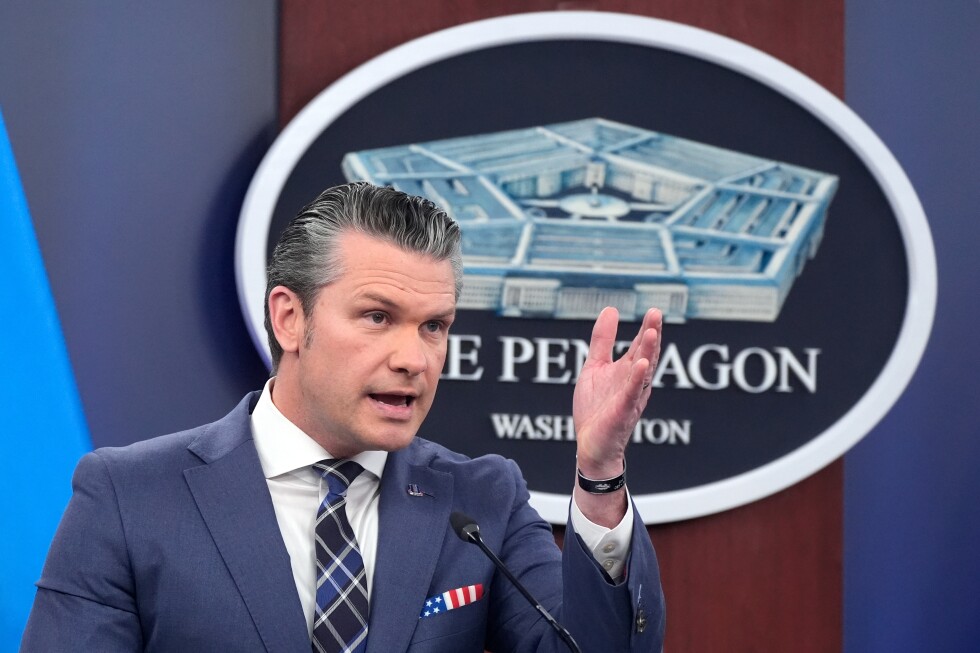
WASHINGTON (AP) — A federal judge agreed Friday to block the Trump administration from enforcing a policy limiting news reporters’ access to the Pentagon, agreeing with The New York Times that key portions of the new rules are unlawful.
U.S. District Judge Paul Friedman in Washington, D.C., sided with the newspaper and ruled that the Pentagon policy illegally restricts the press credentials of reporters who walked out of the building rather than agree to the new rules.
The Times sued the Pentagon and Defense Secretary Pete Hegseth in December, claiming the credentialing policy violates the journalists’ constitutional rights to free speech and due process.
The current Pentagon press corps is comprised mostly of conservative outlets that agreed to the policy. Reporters from outlets that refused to consent to the new rules, including from The Associated Press, have continued reporting on the military.
The Defense Department has been letting some of the legacy media reporters that didn’t agree to the restrictions back in the Pentagon for some of Hegseth’s Iran war briefings. Hegseth rarely calls on them, although he did recently take questions from reporters like Eric Schmitt of The Times and Luis Martinez of ABC.
Friedman, who was nominated to the bench by Democratic President Bill Clinton, said the policy “fails to provide fair notice of what routine, lawful journalistic practices will result in the denial, suspension, or revocation” of Pentagon press credentials. He ruled that it violates the First and Fifth amendment rights to free speech and due process.
“Those who drafted the First Amendment believed that the nation’s security requires a free press and an informed people and that such security is endangered by governmental suppression of political speech. That principle has preserved the nation’s security for almost 250 years. It must not be abandoned now,” the judge wrote.
Pentagon spokesperson Sean Parnell posted late Friday on X, “We disagree with the decision and are pursuing an immediate appeal.”
Times lauds ruling as boon for press freedom
New York Times spokesperson Charlie Stadtlander said the newspaper believes the ruling “enforces the constitutionally protected rights for the free press in this country.”
“Americans deserve visibility into how their government is being run, and the actions the military is taking in their name and with their tax dollars,” Stadtlander said in a statement. “Today’s ruling reaffirms the right of The Times and other independent media to continue to ask questions on the public’s behalf.”
Theodore Boutrous, an attorney who represented The Times at a hearing earlier this month, said in a statement that the court ruling is “a powerful rejection of the Pentagon’s effort to impede freedom of the press and the reporting of vital information to the American people during a time of war.”
The judge ordered the Pentagon to reinstate the press credentials of seven Times journalists. He also said his decision to vacate the challenged policy terms applies to “all regulated parties.”
Noting that part of the ruling, the Pentagon Press Association — which includes AP reporters — called for the immediate reinstatement of the credentials of all its members.
The PPA released a statement saying: “This is a great day for freedom of the press in the United States. It is also hopefully a learning opportunity for Pentagon leadership, which took extreme steps to limit press access to information in wartime.”
The Defense Departmant has argued that the policy imposes “common sense” rules that protect the military from the disclosure of national security information.
“The goal of that process is to prevent those who pose a security risk from having broad access to American military headquarters,” government attorneys wrote.
Times attorneys claim the policy is designed to silence unfavorable press coverage of President Donald Trump’s administration.
“The First Amendment flatly prohibits the government from granting itself the unbridled power to restrict speech because the mere existence of such arbitrary authority can lead to self-censorship,” they wrote.
Judge finds Pentagon tried to weed out ‘disfavored’ journalists
The judge said he recognizes that “national security must be protected, the security of our troops must be protected, and war plans must be protected.”
“But especially in light of the country’s recent incursion into Venezuela and its ongoing war with Iran, it is more important than ever that the public have access to information from a variety of perspectives about what its government is doing — so that the public can support government policies, if it wants to support them; protest, if it wants to protest; and decide based on full, complete, and open information who they are going to vote for in the next election,” Friedman wrote.
Friedman said the “undisputed evidence” shows that the policy is designed to weed out “disfavored journalists” and replace them with those who are “on board and willing to serve” the government, a clear instance of illegal viewpoint discrimination.
“In sum, the Policy on its face makes any newsgathering and reporting not blessed by the Department a potential basis for the denial, suspension, or revocation of a journalist’s (credentials),” he wrote. “It provides no way for journalists to know how they may do their jobs without losing their credentials.”
Pentagon must update judge in a week
The Pentagon had asked the judge to suspend his ruling for a week for an appeal. Friedman refused. He gave the Pentagon a week to file a written report on its compliance with the order.
The Times argued that the Pentagon has applied its own rules inconsistently. The newspaper noted that Trump ally Laura Loomera right-wing personality who agreed to the Pentagon policy, appeared to violate the Pentagon’s prohibition on soliciting unauthorized information by promoting her “tip line.” The government didn’t object to Loomer’s tip line but concluded that a Washington Post tip line does violate its policy because it purportedly “targets” military personnel and department employees.
The judge said he doesn’t see any meaningful difference between the two tip lines.
“But the problem is that nothing in the Policy explicitly prevents the Department from treating these two nearly identical tip lines differently,” Friedman added.
__
Associated Press writers Konstantin Toropin in Washington and David Bauder in New York contributed to this report.
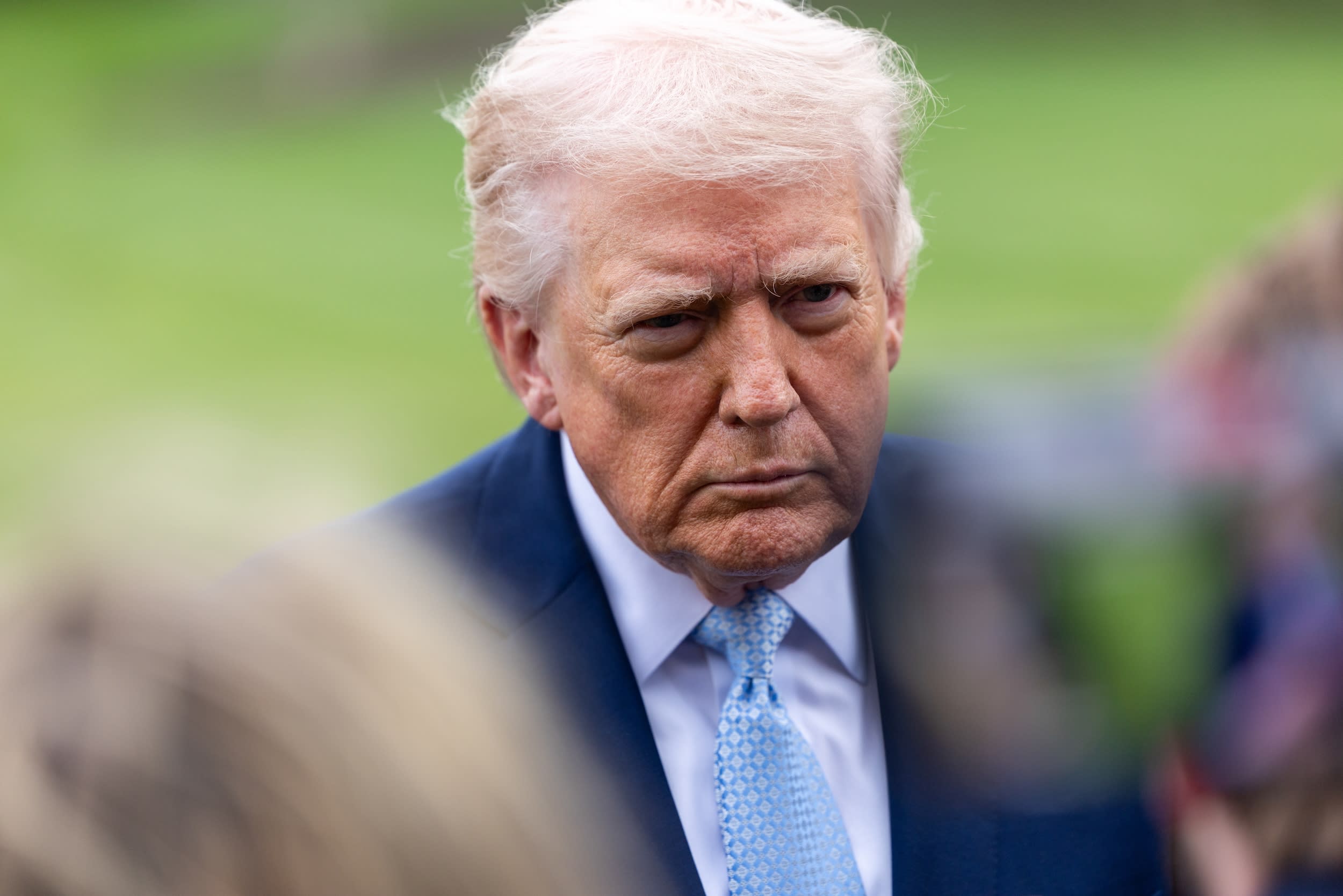
Critics say the Trump administration’s decision to halt sanctions on Iranian oil — in a bid to curb soaring energy prices caused by the intensifying war — benefits the very regime the United States is fighting.
“It’s very clear that the Trump administration is trying to alleviate some of these global energy and oil market pressures, but at the same time, what they’re doing is allowing Iran to be able to benefit from that relaxation of sanctions,” former CIA Director John Brennan said on MS NOW’s “The Weekend” on Saturday. “It shows the inconsistencies in these policies.”
Brennan, MS NOW’s senior national security and intelligence analyst, predicted the conflict will last “a long, long time, and it’s going to be very, very dangerous for U.S. national security interests.”
Philip Gordon, a former national security official in the Biden, Obama and Clinton administrations, accused Trump of hypocrisy for “giving Iran up to ten times” the amount of money that former President Barack Obama sent to the country in 2016.
When Obama sent Iran $400m + $1.3bn in interest in 2016 Trump called it “insane” and he and others spent a decade mocking the idea of “pallets of cash” even though it was Iran’s own money, American prisoners were released, courts were likely to require the U.S. payment, and Iran… https://t.co/RhP8nZRT9D
— Phil Gordon (@PhilGordonDC) March 21, 2026
Treasury Secretary Scott Bessent announced the pause in sanctions in a post on X Friday, saying it would add roughly 140 million barrels of oil to global markets. He said Iran “will have difficulty accessing any revenue generated” from those sales, and that the U.S. will essentially “be using the Iranian barrels against Tehran to keep the price down.”
But critics, including those in Congress, which did not authorize President Donald Trump’s decision to wage war on Iran jointly with Israel, say easing sanctions on the Islamic Republic helps Tehran no matter how the administration tries to sell it.
Sen. Jeanne Shaheen, D-N.H., ranking member of the Senate Foreign Relations Committee, accused the administration of “giving the regime a financial lifeline.”
“To say the President has no plan is an understatement,” she said in a statement on X.
“The Trump Administration is lifting sanctions on Iranian oil, giving the regime a financial lifeline while Americans continue to feel the impact of @POTUS’s war.
To say the President has no plan is an understatement.” –@SenatorShaheen https://t.co/tiiHbD9NaF
— Senate Foreign Relations Committee (@SFRCdems) March 20, 2026
In an attempt to stem the economic fallout from the war, as Iran’s closure of the Strait of Hormuz destabilizes global energy markets, the Trump administration also lifted sanctions on Russian oil last week, angering European allies who want to continue exerting economic pressure on Moscow.
“Sickeningly, shamefully stupid—lifting sanctions on oil sales by Russia & Iran, fueling their war machines with windfall cash,” Sen. Richard Blumenthal, D-Conn., said in a social media post on Friday. “A minimal benefit to oil prices, but huge boost to sworn enemies.”
Tommy Vietor, a former National Security Council spokesman in the Obama administration, said“This is the biggest, dumbest concession ever given to Iran by the US and all you need to know about what a disaster Trump’s policy is.”
Neither Trump nor members of his administration have given a definitive timeline for U.S. involvement in the war. Trump told MS NOW’s Stephanie Ruhle on Friday that it would take Iran 10 years to rebuild if the U.S. ended the war now, but suggested that was not acceptable to him.
“If we stay longer, they’ll never rebuild,” he said.
Still, the president indicated later in the day that he is thinking of an exit soon. In a post on Truth Social, Trump said he is considering “winding down” the military operation against Iran and claimed that the U.S. is “getting very close to meeting our objectives” — despite having said repeatedly that the U.S. has “won” the war.
Clarissa-Jan Lim is a breaking news reporter for MS NOW. She was previously a senior reporter and editor at BuzzFeed News.

President Donald Trump says U.S. Immigration and Customs Enforcement officers will take over security at the nation’s airports amid staffing shortages and extensive lines as soon as Monday if Democrats won’t back a GOP government funding bill.
“If the Democrats do not allow for Just and Proper Security at our Airports, and elsewhere throughout our Country, ICE will do the job far better than ever done before!” Trump said in a post on Truth Social Saturday afternoon as the Senate met in a rare weekend session. “I look forward to moving ICE in on Monday, and have already told them to, ‘GET READY.’”
The president doubled down on a threat he made earlier in the day after Senate Republicans blocked a long-shot attempt by Minority Leader Chuck Schumer to pay TSA agents separately while the Department of Homeland Security shutdown drags on. A funding bill failed to pass the Senate for the fifth time on Friday.
“If the Radical Left Democrats don’t immediately sign an agreement to let our Country, in particular, our Airports, be FREE and SAFE again,” Trump wrote earlier on Truth Social“I will move our brilliant and patriotic ICE Agents to the Airports where they will do Security like no one has ever seen before, including the immediate arrest of all Illegal Immigrants who have come into our Country, with heavy emphasis on those from Somalia.”
MS NOW has reached out to ICE and DHS for comment.
Flight delays and long security lines at airports have become a pattern over the past week as more TSA agents — who are required to work without pay — are not showing up. Acting deputy TSA administrator Adam Stahl told CBS News this week that officials “may have to shut down airports” if funding continues to stall.
Homeland security funding has lapsed for weeks as Democrats maintain their demands for reforms to the department’s heavy-handed and even lethal immigration enforcement tactics.
Schumer on Saturday urged his Senate colleagues to support his effort to force a vote on funding for TSA agents. “It’s unacceptable for workers and travelers and entire airports to get taken hostage in political games,” the New York Democrat said. “But that’s what the Republicans are doing. It is unacceptable to say we will only pay TSA workers if it is attached to a bill that funds ICE with no reforms. But that’s what the Republicans have been doing.”
Clarissa-Jan Lim is a breaking news reporter for MS NOW. She was previously a senior reporter and editor at BuzzFeed News.
- Capitol agenda: Senate heads into a weekend grind

- Republicans balk at going it alone on Iran war funding

- Mullin’s nomination to be DHS chief advances out of committee

- Capitol agenda: Senate heads into a weekend grind
- Trump threatens to send ICE to airports amid DHS standoff
- ‘This is about attention’: Mike Lee’s MAGA crusade is driving his colleagues crazy
- Capitol agenda: Senate heads into a weekend grind
- Maher outlines ways US ‘f—-ed up’ Iran conflict strategy

- DHS funding deal stalls in Congress amid continuing negotiations
- Sunday shows preview: Iran conflict persists as DHS funding fight snarls travel
-

 The Dictatorship1 year ago
Luigi Mangione acknowledges public support in first official statement since arrest
-

 Politics1 year ago
Former ‘Squad’ members launching ‘Bowman and Bush’ YouTube show
-

 Politics1 year ago
Blue Light News’s Editorial Director Ryan Hutchins speaks at Blue Light News’s 2025 Governors Summit
-

 Politics1 year ago
Former Kentucky AG Daniel Cameron launches Senate bid
-

 The Dictatorship6 months ago
Mike Johnson sums up the GOP’s arrogant position on military occupation with two words
-

 The Dictatorship1 year ago
Pete Hegseth’s tenure at the Pentagon goes from bad to worse
-
Uncategorized1 year ago
Bob Good to step down as Freedom Caucus chair this week
-

 Politics11 months ago
Democrat challenging Joni Ernst: I want to ‘tear down’ party, ‘build it back up’