
The Dictatorship
Trump wants Linda McMahon to lead the command of his war on universities

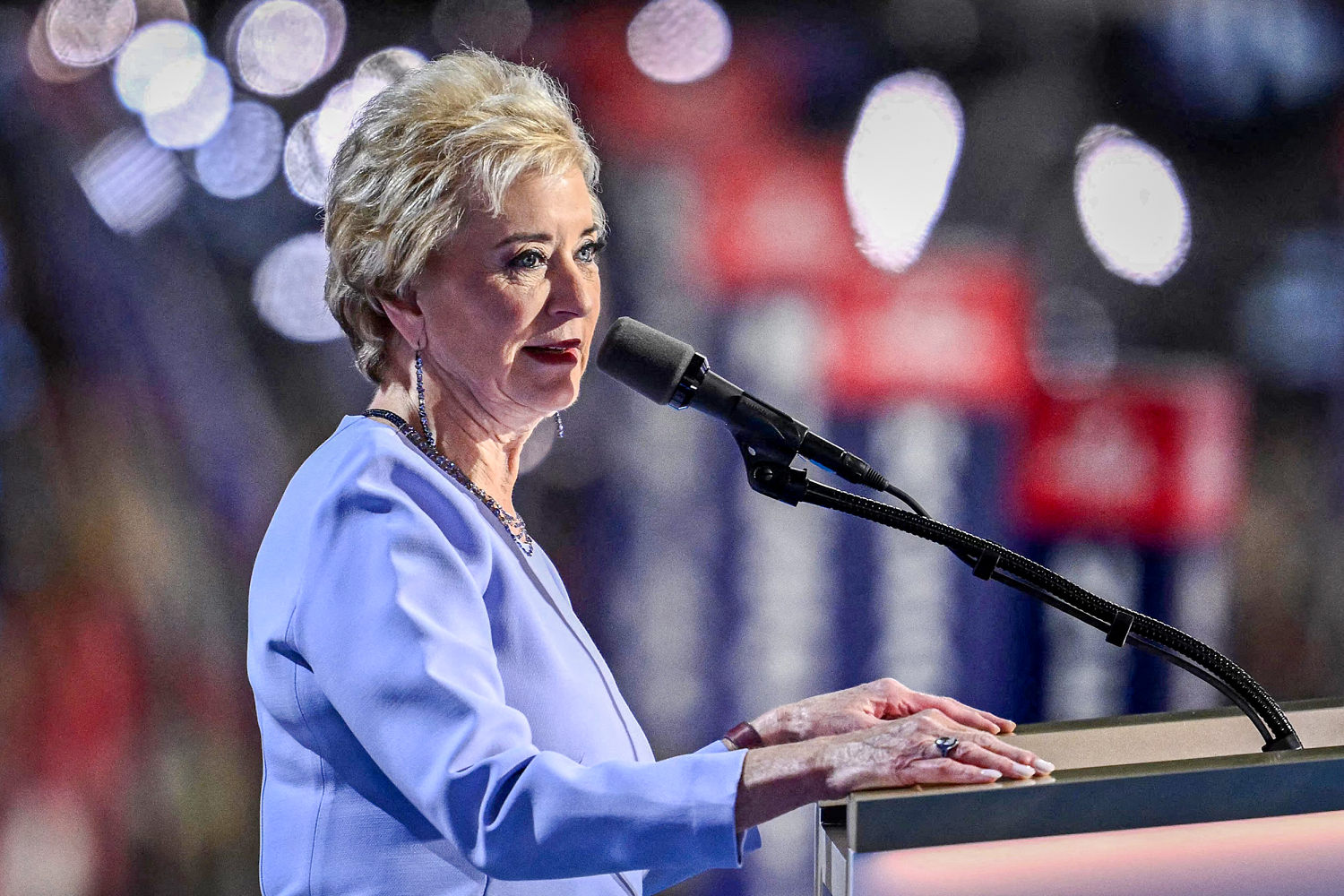
When Donald Trump announced his choice of former World Wrestling Entertainment executive Linda McMahon to lead the Department of Education, his statement shouted that with her at the helm, “We will send Education BACK TO THE STATES.” The sentence was a reference to Trump’s previous pledge to shut down the department entirely — a promise Republicans have been making since it was created in 1979.
But axing the entire department was always unlikely — not just because it would require congressional action, but because what Trump actually wants is more federal control over education, not less.
The real focus in the new Trump administration will be higher education.
Like everything else in Trump’s vision for government, he wants the department McMahon would lead to be more corrupt, more ideologically right wing and less capable of doing the job it is supposed to do. In the past, McMahon has promoted private school vouchers that drain money from public schools, and she will surely do so again. But the real focus in the new Trump administration will be higher education. The war on universities is about to begin.
This war has both practical and political purposes for the GOP. For decades, demonizing higher education has been a favorite tactic for Republicans. They believe universities stand in fundamental opposition to the right’s project, and in many ways they’re correct: Most professors are liberal, and critical inquiry often undermines conservative ideas and values.
During the campaign, Trump released a video laying out his plan to “reclaim our once-great educational institutions from the radical left.” He promised to use the “secret weapon” of accreditation, punishing schools that don’t follow his instructions by stripping them of the certification without which they might not survive. “I will fire the radical left accreditors that have allowed our colleges to become dominated by Marxist maniacs and lunatics,” he said, and replace them with Trump-approved accreditors who will bring a more MAGA-friendly approach to higher education.
Trump also said he would have the Justice Department target “schools that continue to engage in racial discrimination,” by which he clearly meant efforts to promote diversity; his allies are planning to invert the DOJ’s Civil Rights Division so it focuses on alleged anti-white racism. If universities do not meet Trump’s standard, they “will not only have their endowment taxed, but through budget reconciliation, I will advance a measure to have them fined up to the entire amount of their endowment.”
Seizing the endowments of universities would almost certainly be illegal, but Trump is spoiling for a fight, and his “secret weapon” is a powerful threat. Accreditation is vital to every university; without it, their students can’t get federal loans and they can’t receive federal research funding (more than half of university research funds come from the federal government).
This assault is already going on at the state level, where Republicans have passed laws outlawing diversity programs, weakening tenure protections and gagging professors from discussing certain ideas. No politician has waged war on his state’s higher education system with more venom than Florida Gov. Ron DeSantis. A 2023 report from the American Association of University Professors called DeSantis’ efforts “a politically and ideologically driven assault unparalleled in US history, which, if sustained, threatens the very survival of meaningful higher education in the state.”
In Vice President-elect JD Vance, Trump has an enthusiastic partner for this fight.
Trump is essentially promising to mount the same kind of attack from Washington. And there’s more. Project 2025 proposed to “deny loan access to students at schools that provide in-state tuition to illegal aliens.” (Trump, of course, disavowed Project 2025, but since the election, those around him have embraced it.) That would mean any student attending a state school in one of the 25 states (plus Washington, D.C.) that allow undocumented students to pay in-state tuition would have their loans cut off.
In Vice President-elect JD Vance, Trump has an enthusiastic partner for this fight. Earlier this year, as a senator, Vance sponsored legislation to take federal funding from universities that allowed undocumented students, including DACA recipients legally allowed to work, to have campus jobs. Vance has expressed admiration for the way Viktor Orbán, the authoritarian prime minister of Hungary, seized control of Hungarian universities as part of his effort to silence his critics. Vance argued that because universities are not properly educating students, “there needs to be a political solution to that problem.”
While Trump and Vance are no doubt sincere in their disgust with diversity and other liberal ideas, their war on universities is driven by politics. We are now in an age of education polarization; in 2020Joe Biden beat Trump among voters with college degrees by 24 points, and when the data comes in from 2024, the results will probably be similar. The same trend is visible in many Western democracies, as voters with more education increasingly support left-wing parties.
It isn’t just that Republicans are less interested in getting the support of voters with college degrees; they’re also eager to use universities as a foil and a scapegoat. We saw that last year when they put on what were essentially show trials of Ivy League presidents over protests against Israel’s war in the Gaza Strip. The purpose wasn’t to defend Jewish students (you’ll forgive me if I have trouble granting the sincerity of Rep. Elise Stefanik, lead inquisitor and one of the most cynically opportunistic characters in Washington); it was to make elite universities an object of anger and contempt.
When Republicans attack higher education as a cauldron of radical ideas that will turn your children against you, they not only undermine colleges and universities that are essential to America’s economy and innovation, they also feed distrust in institutions as a whole that has served Trump so well.
Trump has made many threats against both K-12 and higher education; we don’t know how many he’ll follow up on, or how much enthusiasm Linda McMahon will bring to this fight. But even if he accomplishes only some of his goals, the damage to our country, and one of its greatest engines of social and economic progress, will be severe.


The Dictatorship
US intel official says Iran’s regime still intact but refuses to discuss talks with Trump about war
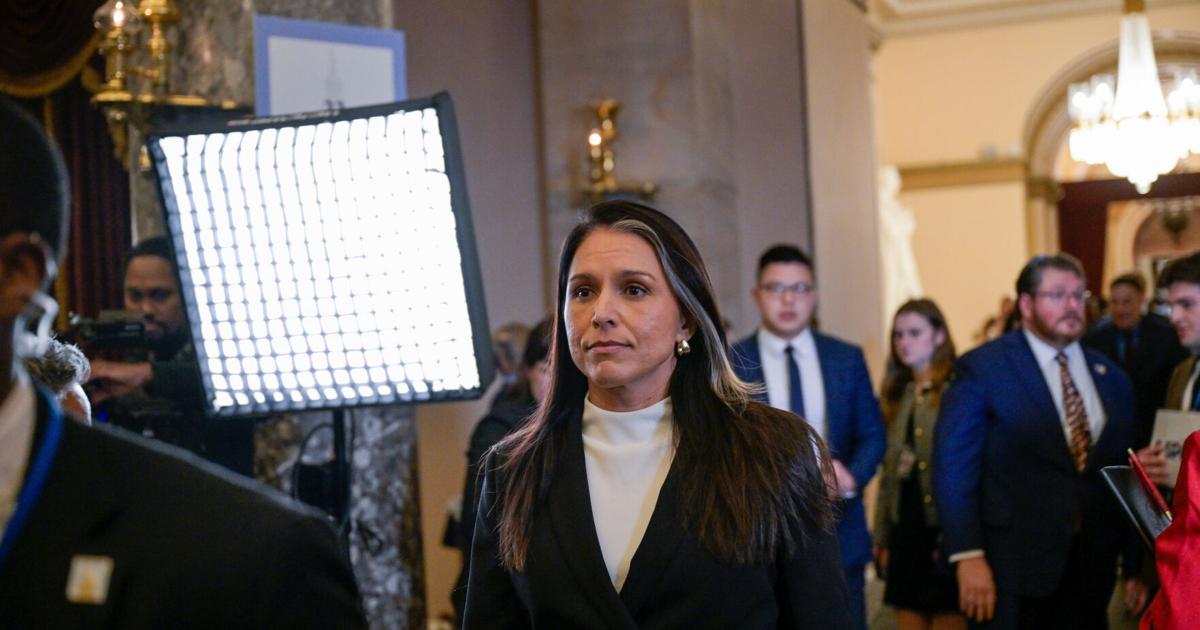
WASHINGTON (AP) — The U.S. government’s top intelligence official told lawmakers Wednesday that Iran’s government “appears to be intact but largely degraded” yet repeatedly dodged questions about whether President Donald Trump had been warned about the fallout from the weeks-old war, including Iran’s attacks on Gulf nations and its effective closure of the vital Strait of Hormuz.
Tulsi Gabbardthe director of national intelligence, also stated in prepared remarks to the Senate Intelligence Committee that U.S. attacks on Iran last year had “obliterated” Iran’s nuclear program and that there had been no effort since then to rebuild that capability.
The statement was notable given Trump’s repeated assertions that a war with Iran was necessary to head off what he said was an imminent threat from the Islamic Republic. Gabbard pointedly said that conclusion was the president’s alone to draw as she declined to directly answer whether the intelligence community had likewise assessed that Iran’s nuclear system presented an imminent risk to the United States.
Watch live the U.S. Senate Intelligence Committee hearing on worldwide threats.
“It is not the intelligence community’s responsibility to determine what is and is not an imminent threat,” she said at one point.
From left, FBI Director Kash Patel, Defense Intelligence Agency Director James Adams III, Director of National Intelligence Tulsi Gabbard, and Acting Commander of the U.S. Cyber Command William Hartman, listen during the Senate Committee on Intelligence hearings to examine worldwide threats on Capitol Hill Wednesday, March 18, 2026, in Washington. (AP Photo/Jose Luis Magana)
From left, FBI Director Kash Patel, Defense Intelligence Agency Director James Adams III, Director of National Intelligence Tulsi Gabbard, and Acting Commander of the U.S. Cyber Command William Hartman, listen during the Senate Committee on Intelligence hearings to examine worldwide threats on Capitol Hill Wednesday, March 18, 2026, in Washington. (AP Photo/Jose Luis Magana)
Democratic Sen. Jon Ossoff of Georgia shot back: “It is precisely your responsibility to determine what constitutes a threat to the United States.”
The testimony came at the first of two congressional hearings held each year to offer the public a glimpse into the largely secret operations of the government’s intelligence agencies and the threats they confront.
The hearings this week take place at a time of scrutiny over the war with Iran and heightened concerns about terrorism at home after recent attacks at a Michigan synagogue and a Virginia university. Wednesday’s hearing also came a day after the resignation of Joe Kent as director of the National Counterterrorism Center. Kent said he could not “in good conscience” back the war and did not agree that Iran posed an imminent threat.
But the hours-long hearing offered few revelations from Gabbard, who repeatedly declined to discuss conversations with Trump, or other senior intelligence officials who testified.
“I am very disappointed,” said an exasperated Sen. Mark Warner, the top Democrat on the Senate Intelligence Committee. “It’s the only one time of year the public gets to hear from you guys in this kind of setting.”
Gabbard deflected questions about intelligence given to Trump
A frequent line of questioning for Democrats: What intelligence, if any, had been given to Trump about the war’s potential consequences? Trump, for instance, has said he was surprised that Iran responded to strikes from the United States by attacking Arab nations and has been contending with the economic impact of the effective closure of the Strait of Hormuz, a body of water connecting the Persian Gulf to the world’s oceans and a vital passageway for oil and gas.
CIA Director John Ratcliffe testifies during the Senate Committee on Intelligence hearings on Capitol Hill Wednesday, March 18, 2026, in Washington. (AP Photo/Jose Luis Magana)
CIA Director John Ratcliffe testifies during the Senate Committee on Intelligence hearings on Capitol Hill Wednesday, March 18, 2026, in Washington. (AP Photo/Jose Luis Magana)
White House press secretary Karoline Leavitt said in a post on X that Trump was “fully briefed” on the possibility of Iran closing the Strait of Hormuz and that the Pentagon has been planning for the possibility of Iran closing it “for DECADES.”
But Trump’s plan to secure the waterway is unclear, especially after he said this week that NATO and most other allies had rejected his calls to help secure it. Iran has said the strait is open except to the U.S. and its allies.
Democrats got few direct answers when they pressed administration officials on what Trump understood about that possibility, with Gabbard saying she would not divulge her conversations with him and CIA Director John Ratcliffe observing that he had been in countless briefings with the president.
“We’re trying to figure out if the president knew what the downside was of the Strait of Hormuz being closed,” said Sen. Mark Kelly, an Arizona Democrat. “Did he know this was going to happen or did he just disregard it?”
Gabbard appeared to try to thread a needle between emphasizing the intelligence community’s views of Iran’s risks — she said, for instance, that internal tensions would continue to increase even if the regime’s leadership remained intact — and not completely echoing the president’s arguments of an imminent threat.
At one point, Warner noted that Gabbard, in her prepared written statement submitted to the committee, said Iran’s nuclear enrichment program had been obliterated in strikes last year, but her opening remarks on Wednesday did not use that language.
He asked whether she had omitted that reference to conform to Trump’s claims of an imminent threat. Gabbard insisted that she had skipped some of her written statement in the interest of time.
FBI Director Kash Patel listens during the Senate Committee on Intelligence hearings on Capitol Hill Wednesday, March 18, 2026, in Washington. (AP Photo/Jose Luis Magana)
FBI Director Kash Patel listens during the Senate Committee on Intelligence hearings on Capitol Hill Wednesday, March 18, 2026, in Washington. (AP Photo/Jose Luis Magana)
Trump has sought to distance himself from Kent. Ratcliffe tried to do the same Wednesday when he was asked whether intelligence supported Kent’s assessment that Iran was not an imminent threat. “The intelligence reflects the contrary,” Ratcliffe said.
Questions about other attacks and Gabbard’s presence at an FBI search
Gabbard and Ratcliffe fielded the majority of questions, but other witnesses included the heads of the National Security Agency and Defense Intelligence Agency, as well as FBI Director Kash Patel, who was pressed about the terrorism threat amid a spate of attacks this month. Those include a man with a past terrorism conviction who opened fire inside an Old Dominion University classroom in Virginia and a Lebanese-born man in Michigan who drove his car into a synagogue.
One subject that did not receive attention: a deadly missile strike on an elementary school in Iran, which people familiar with the matter have said the U.S. likely carried out as a result of outdated intelligence.
Apart from Iran, Gabbard was pressed on her presence at an FBI search in January of the main election hub in Fulton County, Georgia, where agents seized voter data related to the 2020 presidential election. Her appearance at a domestic law enforcement operation raised eyebrows given that Gabbard’s office is meant to focus squarely on foreign threats.
Warner described her appearance there as part of an “organized effort to misuse her national security powers to interfere in domestic politics and potentially provide a pretext for the president’s unconstitutional efforts to seize control of the upcoming elections.”
Gabbard responded that she was present for the search at the request of the president but did not participate, though she later said she helped to oversee it.
The House Intelligence Committee will hold its own threats hearing on Thursday.
_____
Associated Press writers Mike Catalini, Ben Finley and Michelle L. Price contributed to this report.
WASHINGTON (AP) — Jay Allen is a fan of President Donald Trumpand voted for him on the belief that the Republican would cut taxes and trim regulations, helping his manufacturing business in northeast Arkansas.
But the tariffs at the core of Trump’s economic agenda have wreaked havoc on his company, Allen Engineering Corp., which makes industrial equipment used to install, finish and pave concrete. The import taxes have raised the costs of engines, steel, gearboxes and clutches made abroad that Allen needs to build power trowels that can sell for up to $100,000 each.
Jay Allen, owner of Allen Engineering Corporation, poses for a portrait Monday, March 16, 2026, in Paragould, Ark. (AP Photo/Kevin Wurm)
Jay Allen, owner of Allen Engineering Corporation, poses for a portrait Monday, March 16, 2026, in Paragould, Ark. (AP Photo/Kevin Wurm)
Allen’s experience embodies a growing body of evidence that the tariffs that Trump said would help American factories are, in fact, squashing many of them. The problem could get worse as the administration scrambles to craft new tariffs to replace the emergency import taxes that the Supreme Court ruled illegal in February.
Allen said he ran his company at a loss in 2025 because of tariffs. His payroll has fallen to 140 workers from a peak of 205. To get by this year, he has hiked prices by 8% to 10%, even though that might mean fewer sales.
“What’s really sad is the unintended consequences of his tariffs are hurting manufacturing in our country,” said Allen. “Unfortunately, the working-class people are getting squeezed.”
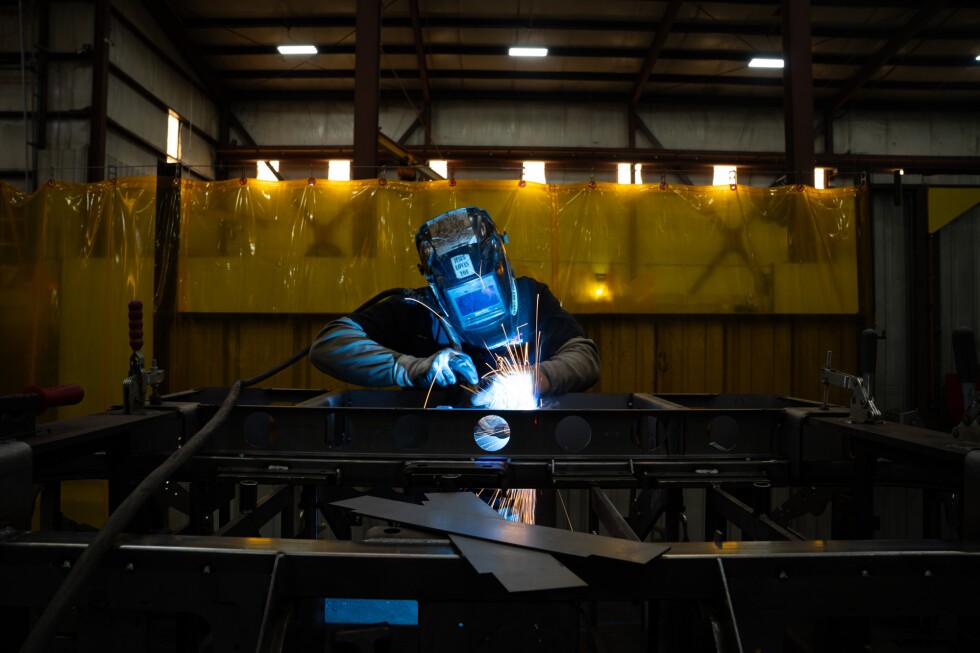
A welder is seen inside the Allen Engineering Corporation plant Monday, March 16, 2026, in Paragould, Ark. (AP Photo/Kevin Wurm)
A welder is seen inside the Allen Engineering Corporation plant Monday, March 16, 2026, in Paragould, Ark. (AP Photo/Kevin Wurm)
Manufacturing jobs have declined during Trump’s first year back
Trump’s core rationale for tariffs has been that they would force more factories to open in the U.S. and would generate enough revenue to close federal budget deficits. But that hasn’t materialized.
Factories continue to shed workers, with 98,000 manufacturing jobs lost during Trump’s first full 12 months back in the White House. American companies that foot the bill for tariffs are now suing the Trump administration for more than $130 billion in tariff refunds. Meanwhile, the federal deficit is projected to climb over the next decade.
The White House maintains that construction spending is high, more workers are being hired to build factories, new investments are being made and labor productivity in manufacturing is increasing — which could eventually fuel a factory revival.
“It takes time to get production online, and therefore it will be some more time before we fully materialize the benefits of the president’s policies,” Pierre Yared, the acting chairman of the White House Council of Economic Advisers, said in an email.

Assembly of a riding trowel is seen in the assembly department of the Allen Engineering Corporation plant Monday, March 16, 2026, in Paragould, Ark. (AP Photo/Kevin Wurm)
The Allen Engineering Corporation plant is seen Monday, March 16, 2026, in Paragould, Ark. (AP Photo/Kevin Wurm)
Construction is up — but that’s due to Biden’s bill
Some of the bright spots in construction cited by the White House appear to be the result of programs launched by then-President Joe Biden, a Democrat.
Factory construction spending began to accelerate in 2022 with the anticipation of government support from Biden’s CHIPS and Science Actwhich included big subsidies for computer chip plants. The law was a primary contributor to a historic surge in the annualized rate of construction spending on manufacturing facilities, said Skanda Amarnath, executive director of the economic policy group Employ America.
Construction spending on factories has slipped during Trump’s presidency, but the pace remains relatively high largely because of continuing work on Biden-era projects in Arizona, Texas and Idaho, Amarnath said.
Amarnath has also gone through the interviews regional Federal Reserve banks have held with businesses. Those comments show some companies might expand by taking advantage of Trump’s tax breaks on investments in equipment and new buildings.
But while the pharmaceutical drug sector might be expanding, the comments show no overall uptick in manufacturing because of Trump’s tariffs.
“You don’t get the sense that there is this new manufacturing renaissance underway,” Amarnath said.
An American flag and the Pledge of Allegiance is seen inside the Allen Engineering Corporation plant Monday, March 16, 2026, in Paragould, Ark. (AP Photo/Kevin Wurm)
An American flag and the Pledge of Allegiance is seen inside the Allen Engineering Corporation plant Monday, March 16, 2026, in Paragould, Ark. (AP Photo/Kevin Wurm)
Uncertainty in tariffs has deterred investments
Based on orders, proclamations and other statements, Trump has taken more than 50 actions on tariffs so far — and that tally doesn’t include the tariff threats he regularly makes on social media or in conversations with reporters but hasn’t formally put in place.
The flurry of announcementsreversals, exemptions and legal challenges — as well as Trump’s decision to bypass Congress to impose tariffs — has made it difficult for smaller manufacturing companies to plan.
For example, Allen Engineering imports its 75-horsepower diesel engines from Germany. Building them in the United States would require a $20 million investment — a huge risk if the status of the tariffs is unclear.
Are engine-makers “going to spend that kind of money to move production from Germany to the U.S. when they don’t know what the landscape is going to be in three years?” Allen said. “I don’t know who is going to be in the White House, and what the stance is going to be on these tariffs.”
Joseph Steinberg, an economist at the University of Toronto, said research shows that under the best-case scenario “it would take a decade for manufacturing employment to rise above where it was before tariffs were enacted.”
But Steinberg said “the current situation is nothing like the ‘best case,’” since U.S. trade policy is unsettled and that leaves companies reluctant to expand.
The main entrance to the Allen Engineering Corporation is seen Monday, March 16, 2026, in Paragould, Ark. (AP Photo/Kevin Wurm)
The main entrance to the Allen Engineering Corporation is seen Monday, March 16, 2026, in Paragould, Ark. (AP Photo/Kevin Wurm)
Equipment makers have been hit hard by rising steel costs
About 98% of U.S. manufacturing establishments have fewer than 200 workers, according to Census Bureau data, and don’t have the kind of name-brand recognition or lobbying heft to minimize the damage from tariffs that big players like Apple, General Motors and Ford possess.
The Association of Equipment Manufacturers in February reported that America’s share of global manufacturing severely lags China’s. The group has urged tax credits to offset the expense of tariffs, and specifically called for tariff relief on raw materials, parts and components that cannot be acquired domestically at scale.
Steel tariffs have been a particular concern. Trump imposed them last March and hiked them to 50% in June. They were not affected by the Supreme Court decision.
Trump has credited the tariffs with restoring profits at American steel mills. But they have hurt companies that use that steel, like Calder Brothers in South Carolina, which makes equipment to pave asphalt.
“The steel tariffs were the first thing that got my attention,” said Glen Calder, the company’s president. “My steel pricing jumped 25% two weeks before the tariffs went into effect for domestic steel. The market price just jumped. It has stayed elevated.”
Meanwhile, China’s trade surplus has grown
Part of Trump’s push to expand manufacturing was to help American companies compete against China — a country he plans to visit this spring for talks with its leader, Xi Jinping.
But the U.S. manufacturing trade imbalance rose last year under Trump instead of narrowing. Meanwhile, China’s trade surplus with the world climbed to a record $1.2 trillion.
This trend exposes one of the big problems with Trump’s tariff strategy, said Lori Wallach, director of the Rethink Trade program at American Economic Liberties Project. She noted that he largely bypassed Congress and failed to address gaps in the World Trade Organization’s rules for the trade frameworks that he negotiated with other countries.
Instead of working with partners to ensure there were penalties for foreign manufacturers with abusive labor practices and unfair subsidies, Trump chose against rallying partners to counter China as a unified group. American manufacturers are at a disadvantage, Wallach argued, because there is not a coalition of nations that can impose penalties for currency manipulation, subsidies and schemes to evade tariffs.
“The general revulsion of this administration to international cooperation means they’re trying to do it alone,” Wallach said.
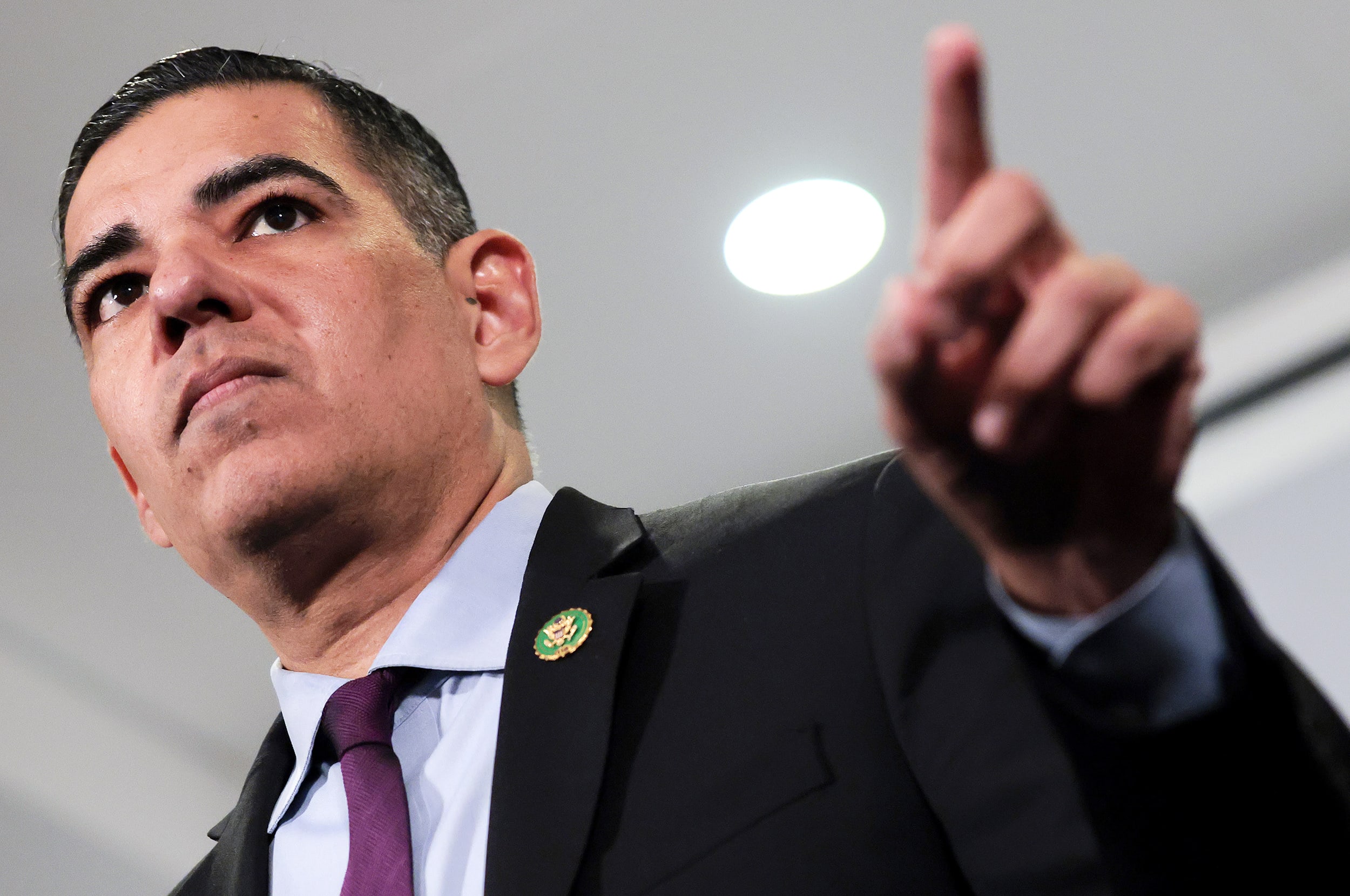
The top Democrat on the House Oversight Committee joined MS NOW on Wednesday, just hours after lawmakers walked out of a closed-door briefing with top Justice Department officials about the Epstein files.
Appearing on “The Weeknight,” Rep. Robert Garcia, D-Calif, called the meeting with Attorney General Pam Bondi and Deputy Attorney General Todd Blanche a “complete travesty” and accused his Republican colleagues of putting politics above obtaining justice for Jeffrey Epstein’s victims.
The House Oversight Committee recently bucked Chairman James Comer, R-Ky., voting to subpoena the attorney general over her department’s Epstein investigation. However, Garcia said Bondi has yet to commit to complying with the subpoena and testifying under oath.
“The American public should be very clear that Pam Bondi is leading a White House cover-up, and right now the Republican majority is assisting them,” Garcia said.
The California Democrat said committee members were informed about Bondi’s appearance only 24 hours prior and that he asked her at the start of the meeting if she planned to return.
“The attorney general would not commit to following the subpoena and coming in under oath,” he said. “Yet she wants to come in and set up some type of fake hearing where we ask questions, but it’s not transcribed, it’s not under oath, and it’s not shown to the American people.”
The congressman also spoke about a heated exchange between Comer and Rep. Summer Lee, during which the committee’s chairman accused the Pennsylvania Democrat of “b—-ing” and wasting the committee’s time.
“I’m obviously not going to repeat what chairman Comer said, but it was disgusting and not a way to talk to a colleague,” Garcia said, adding that Democrats were “not going to allow our members to be disrespected that way.”
“And we’re certainly not going to allow the attorney general to play games and not sit for an under-oath deposition with a subpoena that was bipartisan,” he continued.
Garcia said despite Wednesday’s setback, he and his fellow Democrats would do everything in their power to ensure Bondi returns to Capitol Hill and delivers testimony under oath.
“I want to be very clear that Attorney General Bondi will be in front of our committee,” he said.
“They’re dealing with the wrong people,” Garcia said, pledging that Democrats would “not rest and stop until we get justice for the survivors.”
You can watch Garcia’s full interview in the clip at the top of the page.
Allison Detzel is an editor/producer for MS NOW. She was previously a segment producer for “AYMAN” and “The Mehdi Hasan Show.”
- Epstein’s lawyer tells House Oversight investigators he had ‘no knowledge’ of Epstein’s crimes
- Congress must ‘adequately’ fund defense, Johnson says, amid talk of $200 billion war request
- Senate recess at risk if DHS shutdown continues, Thune says
- Epstein’s lawyer tells House Oversight investigators he had ‘no knowledge’ of Epstein’s crimes
- US intel official says Iran’s regime still intact but refuses to discuss talks with Trump about war
- How Trump’s tariffs have hurt manufacturers instead of helping them

- Congress moves to scrutinize AI use in federal court
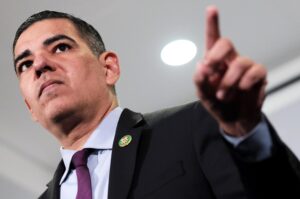
- Garcia explains why lawmakers walked out of ‘fake’ Bondi hearing
- As Epstein’s longtime lawyer testifies, questions remain about what he knew
- Garcia explains why lawmakers walked out of ‘fake’ Bondi hearing
-

 The Dictatorship1 year ago
Luigi Mangione acknowledges public support in first official statement since arrest
-

 Politics1 year ago
Former ‘Squad’ members launching ‘Bowman and Bush’ YouTube show
-

 Politics1 year ago
Blue Light News’s Editorial Director Ryan Hutchins speaks at Blue Light News’s 2025 Governors Summit
-

 Politics1 year ago
Former Kentucky AG Daniel Cameron launches Senate bid
-

 The Dictatorship6 months ago
Mike Johnson sums up the GOP’s arrogant position on military occupation with two words
-

 The Dictatorship1 year ago
Pete Hegseth’s tenure at the Pentagon goes from bad to worse
-
Uncategorized1 year ago
Bob Good to step down as Freedom Caucus chair this week
-

 Politics11 months ago
Democrat challenging Joni Ernst: I want to ‘tear down’ party, ‘build it back up’