
The Dictatorship
Trump to reward celebrity tax cheats with a pardon, adding to scandalous list


Donald Trump’s list of controversial pardons was scandalous long before this week, but the president’s abuses reached a new level over the last few days.
On Monday afternoon, for example, Trump pardoned former Culpeper County Sheriff Scott Jenkinsdespite a jury verdict that the Virginia Republican accepted over $75,000 in bribes in exchange for deputy badges for wealthy local businessmen, who would use their status to get out of traffic tickets or carry concealed firearms.
The president claimed Jenkins was the victim of some kind of ill-defined partisan conspiracydespite the fact that jurors heard testimony from, among others, undercover FBI agents who gave Jenkins envelopes filled with cash.
A day later, The New York Times reported fresh details surrounding Trump’s recent pardon for Florida health care executive Paul Walczak — whose clemency was already controversial — with the newspaper noting that the president unexpectedly intervened in Walczak’s case soon after his mother attended a $1-million-per-person fundraising dinner at Mar-a-Lago.
Hours after the Times published its striking report, the list managed to get even worse. NBC News reported:
President Donald Trump called two of the children of imprisoned reality television couple Todd and Julie Chrisley from the Oval Office on Tuesday, informing them of his plans to pardon their parents as soon as Wednesday. The pair, known for their roles on the TV show “Chrisley Knows Best,” sought pardons from Trump in February after they were convicted of bilking banks out of tens of millions of dollars in 2022, NBC News reported.
By all accounts, the evidence assembled by prosecutors was quite strongand a jury in Georgia found the television personalities guilty of fraud, tax evasion and conspiracy to defraud the United States following a weekslong federal trial.
It’s worth emphasizing that Trump’s pardon for the Chrisleys isn’t yet official, though NBC News confirmed that action from the White House is imminent.
If recent history is any guide, the president will justify his intervention in their cases by alleging that the celebrity tax cheats were targeted because they’re conservatives. In reality, there’s still no evidence of the Biden-era Justice Department prosecuting anyone as part of a partisan or ideological agenda, and making matters worse, the Chrisleys were first indicted when federal prosecutors brought evidence to a grand jury in 2019 — during the first term of the Trump administration.
But as the political world pauses to wonder who might be next on the president’s get-out-of-jail-free list, it’s hard not to marvel at the sheer brazenness of Trump’s gambit. In his first term, the president effectively wielded his pardon power as a corrupt weapon, rewarding loyalistscompleting cover-upsundermining federal law enforcement and doling out favors to the politically connected, but much of these actions transpired after his 2020 election defeat — when it seemed as if his political career was over and he no longer had to concern himself with consequences.
But as his second term gets underway, it appears Trump is no longer concerned about appearances or the pretense of propriety. He’s corrupting the pardon process; he knows that he’s corrupting the pardon process; he knows that we know that he’s corrupting the pardon process; and he’s doing it anyway.
The president seems eager to act with impunity, confident in the knowledge that a Republican-led Congress will shrug its shoulders with indifference; Republican-appointed Supreme Court justices have already said Trump’s office effectively puts him above the law; evidence of corruption doesn’t seem to have an appreciable impact on his approval rating; and news organizations have to divide their coverage between this and a wide variety of other presidential abuses.
The result is a dynamic in which Trump is effectively declaring, “I’m handing out pardons like party favors to my political allies, because they’re my political allies, and there’s nothing you can do about it.”
Traditionally, presidents have issued pardons to right a wrong or to protect those who have been falsely accused of wrongdoing. In 2025, if Trump sees a convicted criminal as an ally, that’s apparently all the president needs to know.
For all the GOP hysterics during the Biden era about a “two-tiered” system of justice, it seems the White House has gone out of its way to create the very dynamic Republicans claimed to be against.
This post updates our related earlier coverage.

Steve Benen is a producer for “The Rachel Maddow Show,” the editor of MaddowBlog and an BLN political contributor. He’s also the bestselling author of “Ministry of Truth: Democracy, Reality, and the Republicans’ War on the Recent Past.”


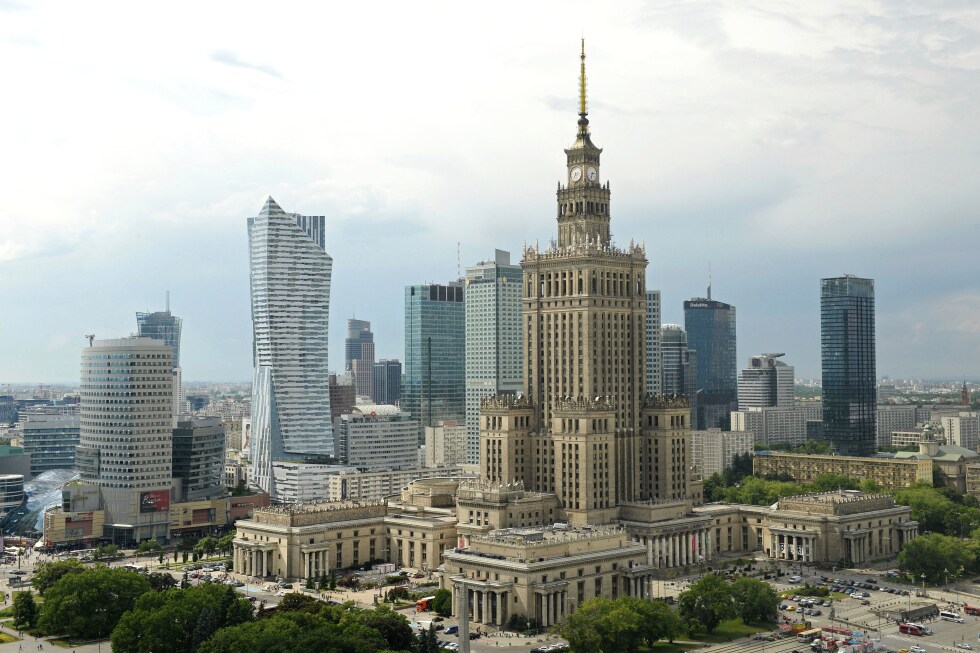
POZNAN, Poland (AP) — A generation ago, Poland rationed sugar and flour while its citizens were paid one-tenth what West Germans earned. Today, the economy of the country has edged past Switzerland to become the world’s 20th largest with more than $1 trillion in annual output.
It’s a historic leap from the post-Communist ruins of 1989-90 to European growth champion, which economists say has lessons on how to bring prosperity to ordinary people — and that the Trump administration says should be recognized by Poland’s presence at a summit of the Group of 20 leading economies later this year.
The transformation is reflected in people like Joanna Kowalska, an engineer from Poznan, a city of around 500,000 people midway between Berlin and Warsaw. She returned home after five years in the U.S.
“I get asked often if I’m missing something by coming back to Poland, and, to be honest, I feel it’s the other way around,” Kowalska said. “We are ahead of the United States in so many areas.”
Kowalska works at the Poznan Supercomputing and Networking Center, which is developing the first artificial intelligence factory in Poland and integrating it with a quantum computer, one of 10 on the continent financed by a European Union program.
Kowalska worked for Microsoft in the U.S. after graduating from the Poznan University of Technology, in a job she saw as a “dream come true.”
Newer skyscrapers flank the communist-era Palace of Culture and Science, foreground, in n, Poland, May 25, 2018. (AP Photo/Alik Keplicz, File)
Newer skyscrapers flank the communist-era Palace of Culture and Science, foreground, in n, Poland, May 25, 2018. (AP Photo/Alik Keplicz, File)
But she missed having a “sense of mission,” she said.
“Especially when it comes to artificial intelligence, the technology started developing so rapidly in Poland,” Kowalska said. “So it was very tempting to come back.”
Breaking out of poverty
The guest invitation to the G20 summit is mostly symbolic. No guest country has been promoted to full member since the original G20 met at the finance minister level in 1999, and that would take a consensus decision of all the members. Moreover, the original countries were chosen not just by gross domestic product rank, but by their “systemic significance” in the global economy.
But the gesture reflects a statistical truth: In 35 years — a little less than one person’s working lifetime — Poland’s per capita GDP rose to $55,340 in 2025, or 85% of the EU average. That’s up from $6,730 in 1990, or 38% of the EU average and now roughly equal to Japan’s $52,039, according to International Monetary Fund figures measured in today’s dollars and adjusted for Poland’s lower cost of living.
Poland’s economy has grown an average 3.8% a year since joining the EU in 2004, easily beating the European average of 1.8%.
It wasn’t simply one factor that helped Poland break out of the poverty trap, says Marcin Piątkowski of Warsaw’s Kozminski University and author of a book on the country’s economic rise.
One of the most important factors was rapidly building a strong institutional framework for business, he said. That included independent courtsan anti-monopoly agency to ensure fair competition, and strong regulation to keep troubled banks from choking off credit.
As a result, the economy wasn’t hijacked by corrupt practices and oligarchs, as happened elsewhere in the post-Communist world.
Poland also benefited from billions of euros in EU aidboth before and after it joined the bloc in 2004 and gained access to its huge single market.
Above all, there was the broad consensus, from across the political spectrum, that Poland’s long-term goal was joining the EU.
“Poles knew where they were going,” Piątkowski said. “Poland downloaded the institutions and the rules of the game, and even some cultural norms that the West spent 500 years developing.”
As oppressive as it was, communism contributed by breaking down old social barriers and opening higher education to factory and farmworkers who had no chance before. A post-Communist boom in higher education means half of young people now have degrees.
“Young Poles are, for instance, better educated than young Germans,” Piatkowski said, but earn half what Germans do. That’s “an unbeatable combination” for attracting investors, he said.
Success of an electric bus company
Solaris, a company founded in 1996 in Poznan by Krzysztof Olszewski, is one of the leading manufacturers of electric buses in Europe with a market share of around 15%. Its story shows one hallmark of Poland’s success: entrepreneurship, or the willingness to take risks and build something new.
Workers build electric buses at the Solaris bus factory in Poznan, Poland, Thursday, Jan. 29, 2026. (AP Photo/Pietro De Cristofaro)
Workers build electric buses at the Solaris bus factory in Poznan, Poland, Thursday, Jan. 29, 2026. (AP Photo/Pietro De Cristofaro)
Educated as an engineer under the Communist government, Olszewski opened a car repair shop where he used spare parts from West Germany to fix Polish cars. While most enterprises were nationalized, authorities gave permission to small-scale private workshops like his to operate, according to Katarzyna Szarzec, an economist at the Poznan University of Economics and Business.
“These were enclaves of private entrepreneurship,” she said.
In 1996, Olszewski opened a subsidiary of the German bus company Neoplan and started producing for the Polish market.
“Poland’s entry to the EU in 2004 gave us credibility and access to a vast, open European market with the free movement of goods, services and people,” said Mateusz Figaszewski, responsible for institutional relations.
Then came a risky decision to start producing electric buses in 2011, a time when few in Europe were experimenting with the technology. Figaszewski said larger companies in the West had more to lose if switching to electric vehicles didn’t work out.
“It became an opportunity to achieve technological leadership ahead of the market,” he said.
An aging population
Challenges still remain for Poland. Due to a low birth rate and an aging society, fewer workers will be able to support retirees. Average wages are lower than the EU average. While small and medium enterprises flourish, few have become global brands.
Workers stand together at a shipyard in Gdansk, Poland, Aug. 23, 2007. (AP Photo/Czarek Sokolowski, File)
Customers queue outside a bakery in Warsaw, Poland, Aug. 23, 1989. (AP Photo/David Caulkin, File)
Poznan Mayor Jacek Jaśkowiak sees domestic innovation as a third wave in Poland’s postsocialist economic development. In the first wave, foreign countries opened factories in Poland in the early 1990s, taking advantage of a skilled local population.
Around the turn of the millennium, he said, Western companies brought more advanced branches, including finance, information technology and engineering.
“Now it’s the time to start such sophisticated activities here,” Jaśkowiak says, adding that one of his main priorities is investing in universities.
“There is still much to do when it comes to innovation and technological progress,” added Szarzec, the Poznan economist. “But we keep climbing up on that ladder of added value. We’re no longer just a supplier of spare parts.”
Szarzec’s students say more needs to be done to reduce urban-rural inequalities, make housing affordable and support young people starting families. They say Poles need to acknowledge that immigrants, such as the millions of Ukrainians who fled Russia’s full-scale invasion in 2022, contribute to economic development in an aging population.
“Poland has such a dynamic economy, with so many opportunities for development, that of course I am staying,” said Kazimierz Falak, 27, one of Szarzec’s graduate students. “Poland is promising.”
Computer equipment at the Poznan Supercomputing and Networking center is seen in Poznan, Poland, Wednesday, Jan. 28, 2026. (AP Photo/Pietro De Cristofaro)
Computer equipment at the Poznan Supercomputing and Networking center is seen in Poznan, Poland, Wednesday, Jan. 28, 2026. (AP Photo/Pietro De Cristofaro)
___
David McHugh reported from Frankfurt, Germany.
WASHINGTON (AP) — President Donald Trump relied on his gut and largely side-stepped diplomatic coordination as he made the decision to launch strikes on Iran with Israel. But now with the war’s economic and geopolitical consequences unfurling rapidly, he’s cajoling allies and other global powers to help mop up the mess.
Trump says he’s asked roughly a half-dozen other countries to send warships to reopen the vital Strait of Hormuza consequential waterway through which one-fifth of the world’s traded oil flows. So far, none has committed. Trump even indicated he would use his long-planned trip to China to pressure Beijing to help with a new coalition meant to get oil tanker traffic moving through the strait — a notion that his treasury secretary later downplayed.
“We strongly encourage other nations whose economies depend on the strait far more than ours … we want them to come and help us with the strait,” Trump said at the White House on Monday, listing Japan, China, South Korea and several countries in Europe as examples. Trump has argued that the shipping channel is not something the United States needs because of its own access to oil.
It’s the type of bullying to action that has secured key foreign policy wins for the Republican president in his second term, like prompting nearly all NATO countries to up their defense spending last year after he spent years accusing allies of freeloading off American largess, and using tariffs to extract investments and concessions from trade partners.
But with oil prices soaring and the Middle East rattled by violencethere’s little inclination from other countries to heed Trump’s call.
AP AUDIO: Trump side-stepped diplomacy on his way to war in Iran. Now, he’s asking China and others for help
AP’s Lisa Dwyer reports that President Trump is upping the pressure on China.
China is noncommittal. France is a maybe on escorting ships, when “circumstances permit.” Britain is unlikely to dispatch a warship.
In Trump’s view, this lack of appetite for helping to secure the strait confirms his suspicions about the benefits of working with other countries, because “if we ever needed help, they won’t be there for us.”
“I’ve always felt that was a weakness of NATO,” Trump said Monday. “We were going to protect them, but I always said when in need, they won’t protect us.”
Yet not long after, Trump insisted the U.S. didn’t need help from anybody because “we’re the strongest nation in the world.”
White House: Trump ‘right’ to demand help with Strait of Hormuz
Nonetheless, the pressure campaign from the White House is continuing.
Trump’s top spokeswoman, when asked why other nations that were neither consulted nor involved should put their troops in danger to secure the Strait of Hormuz, argued that other countries were benefiting directly from Trump’s attempt to disarm the Iranian regime.
“This is something not just the United States but the entire Western world has agreed with for many, many years,” White House press secretary Karoline Leavitt told reporters on Monday.
Separately, Trump signaled in a Sunday interview with the Financial Times that “we’d like to know” before he leaves for a late-March summit in Beijing whether China will help secure the strait because of its reliance on Middle Eastern oil, adding: “We may delay.”
In an afternoon event in the Oval Office, Trump revealed that he has asked China to delay the trip “a month or so.”
“We’re speaking to China. I’d love to, but because of the war … I have to be here, I feel,” Trump said.
Yet calling off the face-to-face visit with Chinese President Xi Jinping could have its own major economic consequences as the relations between the world’s two biggest economies remain fraught over tariffs and other issues. In a CNBC interview Monday, Treasury Secretary Scott Bessent said any delay would not be due to disputes over the strait and explicitly urged investors not to react negatively should Trump put off his trip.
“If the meeting for some reason is rescheduled, it would be rescheduled because of logistics,” Bessent said from Paris, where he was meeting with Chinese Vice Premier He Lifeng for a new round of trade talks that were meant to pave the way for the trip.
A Foreign Ministry spokesperson in Beijing, Lin Jian, did not respond directly to questions about Trump’s call for outside help in the strait. He noted the impact on goods and energy trade and repeated his government’s call for an end to the fighting.
No takers so far on Trump’s call for a coalition to secure Hormuz
In the early days of the Iran conflict, Trump had said U.S. Navy vessels would escort oil tankers through the strait, which connects the Persian Gulf to the Gulf of Oman, and downplayed the threat posed by Iran. But as oil prices soared, he and his administration have been forced to consider new options — including the idea, broached this weekend, for other countries to join the push with their own warships.
Trump told reporters that he has asked about seven countries to participate in a coalition that would help oil tankers navigate the Strait of Hormuz, which Iran says is only cut off for the United States, Israel and their allies.
In addition to China, Japan and South Korea, Trump has made appeals for help to Britain and France.
Prime Minister Keir Starmer said Monday that Britain is working with allies on a plan to reopen the Strait of Hormuz, but “will not be drawn into the wider war.”
Britain is discussing with the U.S. and allies in Europe and the Gulf the possibility of using mine-hunting drones that the U.K. has in the region, Starmer said. But he signaled the U.K. is unlikely to dispatch a warship.
Other countries have similarly been resistant to get involved.
Australia’s Transport Minister Catherine King told Australian Broadcasting Corp. on Monday that “we won’t be sending a ship to the Strait of Hormuz,” although she wasn’t aware of such a request from the U.S.
Italian Foreign Minister Antonio Tajani told reporters in Brussels on Monday that while Italy backs reinforcing EU naval missions in the Red Sea, “I don’t think these missions can be expanded to include the Strait of Hormuz.”
Trump administration downplays oil price spikes
War in Iran has sent the price of oil skyrocketing, which has raised the price Americans pay at the pumpjust as the midterm election season begins to heat up.
Bessent downplayed the war’s impact on oil prices and accused the media of “trying to make it into some crisis that it’s not.” Echoing Trump, the secretary insisted prices would come down after the conflict ends.
“I don’t know how many weeks it will be, but on the other side of this, the world will be safer, and we will be better supplied,” Bessent said on CNBC.
China, which faces its own economic pressures, recently lowered its 2026 target for growth slightly to 4.5% to 5%, its slowest projected growth since 1991, meaning prolonged disruptions in the strait could have long-term impacts for Beijing as well.
At the White House on Monday, Trump was asked what his aides have told him about how long gas prices will remain high.
Trump dismissed the question, showing once again that he ultimately relies on his own instincts.
“I don’t need advisers to tell me that,” he said. “I know what it is.”
___
Associated Press writers Jill Lawless in London, Samy Magdy in Cairo, Rod McGuirk in Melbourne, Ken Moritsugu in Beijing, and Giada Zampano in Rome contributed to this report.
President Donald Trump’s so-called Religious Liberty Commission, which is filled with right-wing zealotsappears to be coming apart at the seams.
Last week’s resignation of Sameerah Munshi, formerly the only Muslim woman selected as one of the commission’s advisers, underscores the religious divisions that are causing disarray for the panel and the conservative movement more broadly.
Munshi is a conservative activist who has advocated for allowing parents to opt out of lesson plans related to LGBTQ+ issues, a stance the White House has praised for its rejection of “radical gender ideology.” She said her resignation was due to two things: the commission’s expulsion of conservative activist Carrie Prejean Boller and the Trump administration’s war with Iran.
I recently wrote about how Boller’s removal, which followed a heated argument at a commission hearing over antisemitism, has fueled allegations of anti-Catholicism within the MAGA movement. Boller recently appeared on an episode of Tucker Carlson’s podcast for a chummy chat about her removal. And Rep. Thomas Massie, R-Ky., requested last week that the House Oversight and Judiciary committees review her ouster.
In addition to that, Trump’s Religious Liberty Commission is being sued over its lack of diversity. (The White House has said the panel is intended to reflect a “diversity of faith traditions, professional backgrounds and viewpoints.”)
So Munshi’s resignation is just the latest negative publicity for the commission.
“I resign in protest of two deeply troubling developments: the official removal of Carrie Prejean Boller for her deeply held beliefs about Palestine and the federal government’s illegal war against Iran, undertaken without clear constitutional or congressional authorization,” Munshi wrote on Substack.
“Ultimately, I will have to stand before God and answer to Him for my role in this commission,” she added. “I ask His forgiveness if I have legitimized their evil or the evil of this administration in any way. I ask Him to keep my intentions pure and to guide me toward paths that bring true benefit to my community.”
Boller’s removal has also helped fuel right-wing antipathy toward the Rev. Paula White, who Boller has said was behind a “witch hunt” that led to her ouster. During their conversation, Boller and Carlson took turns bashing White, a controversial preacher of the prosperity gospel who has served as religious adviser to Trump.
Some evangelicals in the MAGA movement were apoplectic when White was chosen to lead the White House Faith Office. And now it appears the chickens have come home to roost as her involvement with Trump’s White House threatens the MAGA movement’s religious coalition.
Ja’han Jones is an MS NOW opinion blogger. He previously wrote The ReidOut Blog.
- Democrats deliver latest DHS funding offer to White House
- Capitol agenda: House hard-liner headaches ahead
- Poland is a model for economic growth
- Trump says he may delay China trip as Iran war roils oil prices
- 5 things to watch in Tuesday’s Illinois primaries
- AIPAC faces its biggest test this year in Illinois
- Right-wing Muslim activist resigns from Trump’s Religious Liberty Commission
- Monday’s Mini-Report, 3.16.26

- Right-wing Muslim activist resigns from Trump’s Religious Liberty Commission
- Jesse Jackson’s family grapples with Illinois Senate endorsement controversy
-

 The Dictatorship1 year ago
Luigi Mangione acknowledges public support in first official statement since arrest
-

 Politics1 year ago
Former ‘Squad’ members launching ‘Bowman and Bush’ YouTube show
-

 Politics1 year ago
Blue Light News’s Editorial Director Ryan Hutchins speaks at Blue Light News’s 2025 Governors Summit
-

 Politics1 year ago
Former Kentucky AG Daniel Cameron launches Senate bid
-

 The Dictatorship6 months ago
Mike Johnson sums up the GOP’s arrogant position on military occupation with two words
-

 The Dictatorship1 year ago
Pete Hegseth’s tenure at the Pentagon goes from bad to worse
-

 Politics11 months ago
Democrat challenging Joni Ernst: I want to ‘tear down’ party, ‘build it back up’
-
Uncategorized1 year ago
Bob Good to step down as Freedom Caucus chair this week