Connect with us

Politics

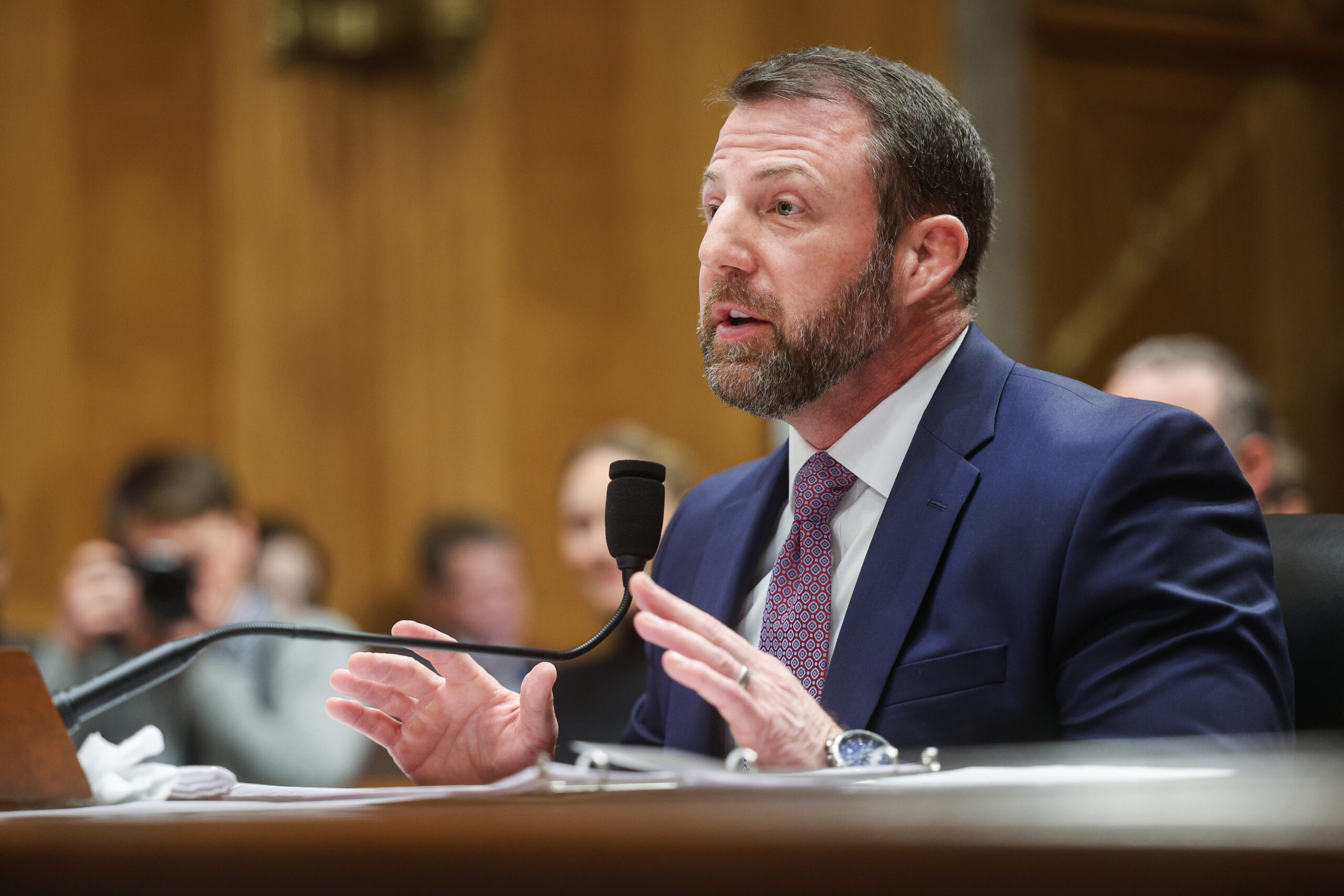
Trump picks Pete Hoekstra to be US ambassador to Canada

Published

on

Donald Trump wants to give former Rep. Pete Hoekstra another turn as a diplomat. Trump announced Wednesday that Hoekstra, who served as ambassador to the Netherlands during his first administration, is his pick for ambassador to Canada for his second. “In my Second Term, Pete will once again help me put AMERICA FIRST,” Trump said in a statement…
Read More


Continue Reading
Click to comment

Leave a Reply

Your email address will not be published. Required fields are marked *

Politics

Democrats’ divide over Israel erupts after attacks on Iran

Published

on

The United States’ attack on Iran is stirring up an already-roiling Democratic debate over Israel, just as primary season kicks off.

The joint U.S.-Israel military operation has put the countries’ relationship squarely at the center of the national political debate — and the role of its big-spending allies like the American Israel Public Affairs Committee, which praised President Donald Trump’s strikes, front-and-center in the Democratic primaries where the group is spending.

A heated House race in North Carolina whose election is Tuesday, several contests in Illinois two weeks later and an already stormy Michigan Senate primary have been impacted by tensions over Israel’s war in Gaza and fury over heavy spending by pro-Israel organizations.

“Palestine has become a litmus test in the party,” said Matt Duss, a former foreign policy adviser to Sen. Bernie Sanders (I-Vt.) and executive vice president at the progressive think tank Center for International Policy. “You see this in both the Michigan and Illinois primaries, where candidates are being pushed to acknowledge that Gaza is a genocide and to pledge not to take AIPAC donations. That was definitely going to continue as we move toward the 2028 presidential primary. This war [in Iran] will amplify it even more.”

AIPAC’s involvement has already upended multiple elections in Illinois, where groups aligned with the lobbying group have spent close to $14 million on four House races ahead of the state’s mid-March primary. In Tuesday’s North Carolina primaries, Israel has been a hot topic in Democratic Rep. Valerie Foushee’s reelection bid. And Middle Eastern politics loom large in Michigan’s blockbuster three-way Democratic Senate race, where there have already been sharp divisions between the candidates over Israel. Elected officials and operatives there have been fretting for months about how AIPAC could turn the race on its head and pave a way for a Republican victory for the first time since 1994.

“The war [in Iran] accentuates the risk that AIPAC’s intervention will result in electing the most anti-war, anti-Israel progressive of the available candidates in some of these districts — just as it did in mine,” said former Rep. Tom Malinowski (D-N.J.), who recently lost a hotly contested House primary to now-Rep. Analilia Mejia, a much sharper critic of Israel, after AIPAC spent more than $2 million against him in a failed bid to elevate a more unabashedly pro-Israel candidate.

AIPAC isn’t backing down. In a statement Saturday, the group hailed the U.S.-Israel-led strikes as “decisive action against the terror-supporting regime in Iran.” Its super PAC, United Democracy Project, had nearly $100 million in the bank at the end of January and plans to be active in dozens of races this year, including both Democratic and Republican primaries.

“Anti-Israel candidates should be on notice that we are looking closely at their races,” United Democracy Project spokesperson Patrick Dorton said in an interview. “Our goal is to elect the biggest possible bipartisan pro Israel majority in Congress, no matter which party is in control, and we are singularly focused in this election year on electing a pro-Israel majority in Congress.”

Maurice Mitchell, national director of the Working Families Party, said that Democrats are “gonna have to answer for” AIPAC support in primaries. “Any of those Democrats that take AIPAC money, they’re going to have a reckoning,” he said. “How can they stand for peace and the billionaire backers that are supporting them are advocating for this war?”

The Iran strikes did not initially split Democrats as deeply as Israel’s war in Gaza has over the past few years, with most in the party accusing Trump of embroiling the Middle East in conflict, even as disagreements emerged on what comes next.

“I don’t think anyone wants to be seen on the side of Iran, and I think Democrats are generally united on the idea that the president needs to explain to the American people, what the strategy is, what the endgame is,” said Brian Romick, president of Democratic Majority for Israel, a group that supports pro-Israel Democrats.

Several Democratic strategists said it’s too early to predict how much Iran will be on voters’ minds over the next few months, let alone for the next presidential election.

“We know Trump ran against wars just such as these, and the close collaboration with Israel on it may play into ongoing debates in the primary,” David Axelrod, a longtime Democratic strategist, wrote in a text. “But the unknown is the length and level of loss this will entail. The longer, the more costly, the deeper the debate will be.

In Illinois, AIPAC-aligned groups have already spent heavily

Perhaps nowhere on the map does Iran loom larger than in Illinois, whose March 17 primary is just weeks away.

Democratic strategists in the state expect the attacks on Iran to call attention to the role of Congress and the broader implications of partnering with Israel.

“Now this isn’t just about Israel and Gaza,” said an Illinois political consultant granted anonymity because they’re working on multiple local campaigns. “This is about standing with Israel to wage a broad war in the Middle East that has a lot more ramifications.”

An AIPAC-aligned super PAC has already spent more than $1 million supporting state Sen. Laura Fine and attacking one of her top primary opponents, Evanston Mayor Daniel Biss, in the race to replace retiring Rep. Jan Schakowsky.

Biss and Fine’s other opponents have criticized AIPAC involvement in the race. He issued a lengthy statement Saturday slamming Trump and Netanyahu for “pushing America into another reckless and illegal regime change war.”

A separate AIPAC-linked group is set to target progressive activist and digital strategist Kat Abughazaleh, who is Palestinian American.

In an interview, Abughazaleh said Iran will be a crucial focus in her race’s closing weeks.

“We will be talking about it very vocally and often because this is very much a topic on people’s minds,” she said. “ People care about this for a lot of reasons, whether it’s our tax dollars, whether it’s because you have family in Iran, whether you’re just horrified by the humanitarian implications of these strikes, or because you’re very afraid of a forever war that you may be moved into against your will.”

War in Iran isn’t the same issue as Israel’s war in Gaza, and in the first hours after Trump launched the operation, Democrats were much more unified in their opposition — including Democrats who have AIPAC’s support.

After the attack, Fine posted on X calling for Trump’s impeachment, warning that he “is leading us into another military conflict to distract from his own failures that puts American lives at risk and threatens to send the Middle East into further chaos.”

Congressional candidates Donna Miller in the 2nd District and Melissa Conyears-Ervin in the 7th, who are supported by AIPAC-aligned committees, respectively called the attacks “reckless” and “immoral” in separate statements. And Melissa Bean, who has support from an AIPAC-aligned group in the 8th District, said “Congress has the sole power to authorize acts of war.”

North Carolina presents an early test

Tuesday’s primaries in North Carolina will give an early indication of how Democratic primary voters may be considering Israel.

Rep. Valerie Foushee (D-N.C.) was first elected to the seat in 2022 with AIPAC help — its super PAC spent more than $2.1 million to boost her to victory. But in 2025, Fousheesaid she would no longer accept the pro-Israel group’s money.

“Check my voting record to see how I have voted and what I have voted for as it relates to the people of Gaza,” she said at a town hall in August.

Dorton, the spokesperson for the AIPAC-aligned super PAC, said Foushee “rejected AIPAC support and we are not involved in or participating in any way in this race.”

But Foushee’s primary opponent, Durham County Commissioner Nida Allam, has attacked Foushee for being insufficiently tough on Israel. A new super PAC created to push back against AIPAC from the left has spent heavily in support of Allam.

Trump’s “illegal and reckless war” in Iran “will inevitably be on voters’ minds as they head to the ballot box on Tuesday,” Allam, North Carolina’s first Muslim woman elected official, said in a statement.

Foushee was also quick to condemn Trump’s “illegal war with Iran.” In a statement, she said her “record and support for legislation to stop arms sales to Israel speaks for itself.”

“It is clear to me and my constituents that the Netanyahu government’s indiscriminate killing of Palestinians cannot continue,” she continued.

Israel was already a major topic in Michigan

The Gaza conflict has already been a major issue in the three-way Democratic battle to succeed retiring Sen. Gary Peters in battleground Michigan, a state with the highest percent of Arab-American residents in the country. More than 100,000 people voted “uncommitted” instead of backing then-President Joe Biden in the 2024 primary over his administration’s support of Israel.

Layla Elabed, one of the founders of the Uncommitted movement who now leads the progressive Arab Americans for Progress, said Democrats “do not want to see their dollars continuing to fund Israel’s genocide and now a war on Iran, especially without congressional approval.”

She said Trump’s Iran attack underscores that Democrats need candidates who “stand up to pro-war lobbies like AIPAC, who have poured money from right-wing MAGA donors into our Democratic primaries here in Michigan.”

Rep. Haley Stevens, who has been supported by AIPAC in the past, said in a statement that Trump “has once again put Americans in harm’s way without consulting Congress,” but warned that a nuclear Iran “would bring even more violence and chaos to the Middle East and the entire world.”

Her foes in the August primary took a different approach. State Sen. Mallory McMorrow said the president “has chosen a war overseas at the expense of everyone back home;” physician Abdul El-Sayed, the most progressive candidate in the field, declared “this war must end” and Trump “must be held accountable.”

Brakkton Booker contributed to this article.

Continue Reading

Politics

Many of Trump’s own voters didn’t want to attack Iran. Now he has to win them over.

Published

on

President Donald Trump’s overnight strikes are forcing a hypothetical debate into reality.

And a president with extraordinary control over his party’s base will test how far his supporters will follow him on an issue that polling showed divided his coalition.

Just half of 2024 Trump voters, 50 percent, supported military action in a Blue Light News poll last month — but 30 percent opposed it. Those fractures, combined with largely unified opposition from Democrats, meant Americans broadly did not want an attack on Iran.

In the January POLITICO poll, nearly half of Americans, 45 percent, said the United States should not take military action in Iran; fewer than one-third, 31 percent, said it should. An Economist/YouGov poll conducted last weekend similarly found broad public opposition to military action in Iran.

The stakes are particularly high for a Republican Party already staring down a difficult midterm landscape, where even small defections from their winning 2024 coalition could carry outsized consequences.

Part of the challenge for Trump is that support for military intervention in Iran was strongest among Trump’s base — and far weaker outside of it. A 61 percent majority of Trump voters who self-identified as “MAGA Republicans” said they support military action, according to The Blue Light News Poll conducted Jan. 16 to 19, when Trump was ramping up his rhetoric against Iran but an outright attack remained hypothetical. That’s much higher than the 42 percent of Trump voters who do not identify as “MAGA” who said the same.

That leaves Trump navigating an evolving issue where support within his coalition — at least before the strikes — was real but not overwhelming and where overall public opposition outweighed support.

Democrats were largely unified. Two-thirds of voters who backed former Vice President Kamala Harris in 2024 said the U.S. should not intervene in Iran, while just 18 percent said it should, the Blue Light News survey conducted by Public First found. The Economist/YouGov found 76 percent of Democrats opposed an attack. That Democratic unity is a warning sign for the GOP: It means that before the strikes, there were not enough pro-intervention Democrats to offset the anti-intervention Republicans.

Trump has repeatedly demonstrated an ability to reshape Republican public opinion, bringing his voters along on issues including trade and foreign policy. Whether that pattern holds here may depend on how the conflict unfolds.

“The political risk depends on the outcome,” Michigan-based Republican strategist Jason Roe told Blue Light News. “If we break Iran without terrorist attacks coming to America or harm coming to allies in the region, it will be a political win for Trump. … If this expands into a protracted conflict, or ends up with troops on the ground, it will be a liability.”

That dynamic underscores the broader tension inside the modern GOP — a party base deeply loyal to the president and largely unified around an “America First” prerogative, now being tested by his own foreign policy decisions.

The divide also illustrates the longtime debate within the Republican Party between the hawks favoring a more aggressive posture on the world stage and those skeptical of intervention.

Mercedes Schlapp, a senior fellow at the Conservative Political Action Conference, said the length and severity of conflict could determine how Trump’s MAGA base responds.

“I think that the MAGA base will make it very loud and clear to the President that they will not necessarily agree, if it becomes a situation that it becomes a prolonged war,” she said on C-SPAN’s Ceasefire earlier this week.

Polling was already showing early signs of skepticism about overseas entanglements, including among Republicans. A February POLITICO Poll found that 47 percent of Americans said the U.S. government is too focused on international issues and not focused enough on domestic ones, while roughly one-quarter said it is striking the right balance.

The question did not reference Trump directly. Even so, 41 percent of his 2024 voters said the U.S. government is too focused on international issues, including about half — 49 percent — of Trump voters who do not consider themselves MAGA Republicans.

Those non-MAGA Trump voters are especially important for the GOP heading into November, and the president’s ability to overcome their initial opposition could prove crucial to maintaining control of Congress. Otherwise, if they swing back to Democrats — or sit out the midterms — Trump’s base alone is not enough to carry his party to midterm successes.

Continue Reading

Politics

Democrats split over response to Trump’s Iran strikes

Published

on

Democrats of all stripes quickly accused President Donald Trump of starting another prolonged conflict in the Middle East on Saturday and demanded limits to his war powers.

That’s where their agreement ended.

Progressives castigated the president for pursuing “dangerously illegal,” “totally unnecessary” and potentially “catastrophic” military action when diplomacy was still on the table. Some, including Sens. Bernie Sanders (I-Vt.) and Jeff Merkley (D-Ore.), declared “no war with Iran.”

But several lawmakers from battleground districts adopted a more cautious tone, calling for Trump to justify his actions to Congress but stopping short of demanding an end to the operation.

And moderate Rep. Josh Gottheimer (D-N.J.) and Sen. John Fetterman (D-Pa.), both staunch supporters of Israel, which aided the U.S. in the strikes, praised Trump for defending national security and being “willing to do what’s right and necessary to produce real peace in the region.” Gottheimer also requested a classified briefing and said he expects Trump to “comply with the War Powers Act.”

The breaks in their responses reveal the underlying divisions that have shadowed the party for two decades, and the challenge Democrats face in presenting a unified foreign policy message ahead of the midterms, where Trump’s aggressive use of the military could become a defining flashpoint.

“There’s always been a peace wing to the Democratic Party and there’s always been a more interventionist wing to the party. That has narrowed over time, but it is still there,” said veteran Democratic strategist Mark Longabaugh.

Democratic lawmakers split over the Iraq vote in 2002, the Yemen war powers vote in 2019 and the first Trump administration’s strike on Iranian commander Qasem Soleimani in 2020.

Now they will have to navigate yet another politically thorny foreign policy vote — one that is playing out against the backdrop of a yearslong intraparty struggle over Israel as public support for the longtime U.S. ally slides.

Congress is set to vote next week on ending Trump’s military campaign in Iran through a pair of resolutions Democrats are pushing alongside GOP Rep. Thomas Massie (R-Ky.). Fetterman has said he’ll oppose the effort. A spokesperson for Rep. Greg Landsman (D-Ohio) said he would as well. And House Democratic leaders believe moderates in their caucus could join them.

Many Democrats opted for careful messaging as the situation unfolded on Saturday, attempting to strike a balance between the need to crack down on Iran and the desire to denounce Trump’s unilateral action and its potentially deadly consequences.

Democratic congressional leaders Chuck Schumer and Hakeem Jeffries both focused on the process Trump should follow: Iran must never obtain a nuclear weapon, they said, but lawmakers need to be briefed and vote on further action.

Schumer said in a statement he had urged Secretary of State Marco Rubio to “be straight with Congress and the American people about the objectives of these strikes and what comes next,” adding that the Senate “should return to session to pass a war powers resolution.”

Jeffries similarly pressed for classified briefings and a vote.

“Iran is a bad actor and must be aggressively confronted for its human rights violations, nuclear ambitions, support of terrorism and the threat it poses to our allies like Israel and Jordan in the region,” Jeffries said in a statement. But, he added, “The Trump administration must explain itself to the American people and Congress immediately, provide an ironclad justification for this act of war, clearly define the national security objective and articulate a plan to avoid another costly, prolonged military quagmire in the Middle East.”

Neither leader is expected to break ranks with the majority of their fellow Democrats, who plan to vote to bar Trump from taking further military action against Iran without congressional approval.

Still other members, including lawmakers in battleground districts or with military and national security backgrounds, stopped short of explicitly calling for the operation to end.

Sen. Elissa Slotkin (D-Mich.) slammed Trump on X for not providing justification for “committing our nation to war” and said Congress “should come back to Washington to debate these issues.” Rep. Henry Cuellar (D-Texas) said the administration “must immediately brief the full Congress and clearly explain the scope, strategy, and expected duration of this operation.”

Rep. Tom Suozzi, a swing-seat New York Democrat, even appeared to defend Trump, saying the president briefed appropriate leadership ahead of the attack — though he still called for Trump to seek congressional authorization going forward.

“I agree with the President’s objectives that Iran can never be allowed to obtain nuclear capabilities,” Suozzi wrote on X. “The President must now clearly define the national security objective and articulate his plan to avoid another costly, prolonged war in the Middle East.”

But progressives — including possible 2028 contenders Rep. Alexandria Ocasio-Cortez (D-N.Y.) and Sen. Chris Murphy (D-Conn.) — were adamant about drawing a red line, saying that Trump was steering the U.S. toward another “disaster” in the region.

They found a surprising ally in former Vice President Kamala Harris.

“I am opposed to a regime-change war in Iran,” Harris said in a statement. “I know the threat that Iran poses, and they must never be allowed to have a nuclear weapon, but this is not the way to dismantle that threat.”

Where Democrats did find more uniformity on Saturday was in their attempts to turn Trump’s strike on Iran into a campaign cudgel, accusing the president of again violating his “America First” doctrine and breaking the compact he made with voters to end “endless wars.” Some began circulating Trump allies’ past comments denouncing the notion of war with Iran and other prolonged conflicts in the Middle East.

Sen. Ruben Gallego (D-Ariz.) relayed the party’s message bluntly, rejecting the war in Iran as “wrong.”

“Trump ran on exposing the pedophiles and stopping wars,” he wrote on X. “Trump is now protecting pedophiles and starting wars.”

Continue Reading

Trending