
The Dictatorship
Trump gets no-penalty sentence in his hush money case, while calling it ‘despicable’

Follow the AP’s live coverage of Trump’s sentencing in his New York hush money case.
NEW YORK (AP) — President-elect Donald Trump was sentenced Friday to no punishment in his historic hush money casea judgment that lets him return to the White House unencumbered by the threat of a jail term or a fine.
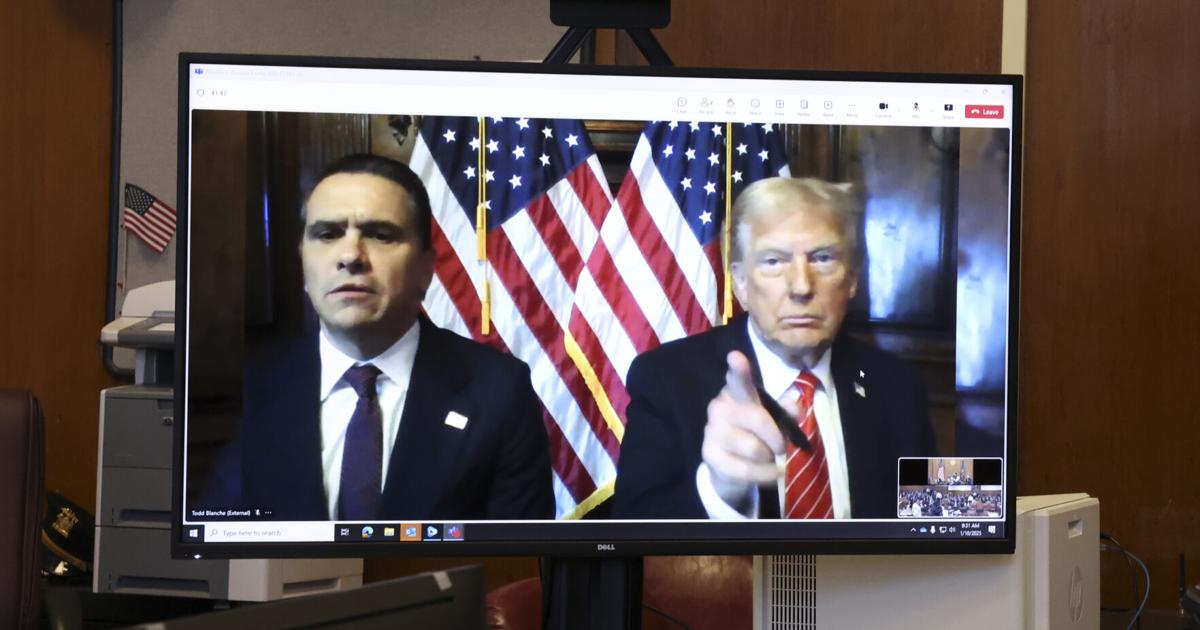
With Trump appearing by video from his Florida estate, the sentence quietly capped an extraordinary case rife with moments unthinkable in the U.S. only a few years ago.
It was the first criminal prosecution and first conviction of a former U.S. president and major presidential candidate. The New York case became the only one of Trump’s four criminal indictments that has gone to trial and possibly the only one that ever will. And the sentencing came 10 days before his inauguration for his second term.
In roughly six minutes of remarks to the court, a calm but insistent Trump called the case “a weaponization of government” and “an embarrassment to New York.” He maintained that he did not commit any crime.
“It’s been a political witch hunt. It was done to damage my reputation so that I would lose the election, and, obviously, that didn’t work,” the Republican president-elect said by video, with U.S. flags in the background.
AP AUDIO: Trump gets no-penalty sentence in his hush money case, while calling it ‘despicable’
AP correspondent Julie Walker reports from court, president-elect Donald Trump got a sentence of unconditional discharge at his New York hush money case.
After the roughly half-hour proceeding, Trump said in a post on his social media network that the hearing had been a “despicable charade.” He reiterated that he would appeal his conviction.
Manhattan Judge Juan M. Merchan could have sentenced the 78-year-old to up to four years in prison. Instead, Merchan chose a sentence that sidestepped thorny constitutional issues by effectively ending the case but assured that Trump will become the first president to take office with a felony conviction on his record.
Trump’s no-penalty sentence, called an unconditional discharge, is rare for felony convictions. The judge said that he had to respect Trump’s upcoming legal protections as president, while also giving due consideration to the jury’s decision.
“Despite the extraordinary breadth of those protections, one power they do not provide is the power to erase a jury verdict,” said Merchan, who had indicated ahead of time that he planned the no-penalty sentence.
Donald Trump was sentenced on Friday in his hush money case, but the judge declined to impose any punishment. It was the first criminal prosecution and first conviction of a former U.S. president and major presidential candidate.
As Merchan pronounced the sentence, Trump sat upright, lips pursed, frowning slightly. He tilted his head to the side as the judge wished him “godspeed in your second term in office.”
Before the hearing, a handful of Trump supporters and critics gathered outside. One group held a banner that read, “Trump is guilty.” The other held one that said, “Stop partisan conspiracy” and “Stop political witch hunt.”
Manhattan District Attorney Alvin Bragg, whose office brought the charges, is a Democrat.
The norm-smashing case saw the former and incoming president charged with 34 felony counts of falsifying business records, put on trial for almost two months and convicted by a jury on every count. Yet the legal detour — and sordid details aired in court of a plot to bury affair allegations — didn’t hurt him with voters, who elected him in November to a second term.
Beside Trump as he appeared virtually Friday from his Mar-a-Lago property was defense lawyer Todd Blanche, with partner Emil Bove in the New York courtroom. Trump has tapped both for high-ranking Justice Department posts.
Prosecutors said that they supported a no-penalty sentence, but they chided Trump’s attacks on the legal system throughout the case.
“The once and future president of the United States has engaged in a coordinated campaign to undermine its legitimacy,” prosecutor Joshua Steinglass said.
Afterward, Trump was expected to return to the business of planning for his new administration. He was set later Friday to host conservative House Republicans as they gathered to discuss GOP priorities.
The specific charges in the hush money case were about checks and ledgers. But the underlying accusations were seamy and deeply entangled with Trump’s political rise.
Trump was charged with fudging his business’ records to veil a $130,000 payoff to porn actor Stormy Daniels. She was paid, late in Trump’s 2016 campaign, not to tell the public about a sexual encounter she maintains the two had a decade earlier. He says nothing sexual happened between them and that he did nothing wrong.
Prosecutors said Daniels was paid off — through Trump’s personal attorney at the time, Michael Cohen — as part of a wider effort to keep voters from hearing about Trump’s alleged extramarital escapades.
Trump denies the alleged encounters occurred. His lawyers said he wanted to squelch the stories to protect his family, not his campaign. And while prosecutors said Cohen’s reimbursements for paying Daniels were deceptively logged as legal expenses, Trump says that’s simply what they were.
“For this I got indicted,” Trump lamented to the judge Friday. “It’s incredible, actually.”
Trump’s lawyers tried unsuccessfully to forestall a trial, and later to get the conviction overturned, the case dismissed or at least the sentencing postponed.
Trump attorneys have leaned heavily into assertions of presidential immunity from prosecution, and they got a boost in July from a Supreme Court decision that affords former commanders-in-chief considerable immunity.
Trump was a private citizen and presidential candidate when Daniels was paid in 2016. He was president when the reimbursements to Cohen were made and recorded the following year.
Merchan, a Democrat, repeatedly postponed the sentencing, initially set for July. But last week, he set Friday’s dateciting a need for “finality.”
Trump’s lawyers then launched a flurry of last-minute efforts to block the sentencing. Their last hope vanished Thursday night with a 5-4 Supreme Court ruling that declined to delay the sentencing.
AP AUDIO: Trump is sentenced in his hush money case, but the judge declines to impose any punishment
AP correspondent Julie Walker reports from court that president-elect Donald Trump is sentenced in his hush money case, but the judge declines to impose any punishment.
Meanwhile, the other criminal cases that once loomed over Trump have ended or stalled ahead of trial.
After Trump’s election, special counsel Jack Smith closed out the federal prosecutions over Trump’s handling of classified documents and his efforts to overturn his 2020 election loss to Democrat Joe Biden. A state-level Georgia election interference case is locked in uncertainty after prosecutor FieldsWillis was removed from it.
___
Associated Press writer Adriana Gomez Licon in West Palm Beach, Florida, contributed to this report.
___
Follow the AP’s coverage of President-elect Donald Trump at https://apnews.com/hub/donald-trump.


Happy Tuesday. Here’s your Tuesday Tech Drop, the past week’s top stories from the intersection of technology and politics.
Trump seeks funds to snoop on liberals
Rep. Mary Gay Scanlon, D-Pa., sounded the alarm on Monday over the Trump administration’s latest budget proposal, particularly its requests for “counterterrorism” funds to be used to target Americans. Scanlon flagged recent reporting from journalist Ken Klippenstein that highlighted the White House’s request for a “joint mission center” that would “proactively” target Americans deemed a terrorist threat due to opinions such as anti-Christian sentiment, “anti-Americanism” and “anti-capitalism.” Those definitions came from a national security memo the Trump administration issued last yearknown as NSPM-7.
The proposed budget references social media platforms as hotspots for the so-called terrorism the administration is “proactively” trying to target.
“We’ve been raising the alarm about Trump’s counterterrorism directive – NSPM-7 – a plan to label Americans as domestic terrorists over opposition to immigration enforcement, beliefs about capitalism, and positions on race, gender, and religion,” Scanlon wrote on X. “Now, the White House wants to use taxpayer dollars to spy on those who oppose its extremist agenda.”
We’ve been raising the alarm about Trump’s counterterrorism directive – NSPM-7 – a plan to label Americans as domestic terrorists over opposition to immigration enforcement, beliefs about capitalism, and positions on race, gender, and religion.
Now, the White House wants to use… https://t.co/HKQIzHZCKI
— Congresswoman Mary Gay Scanlon (@RepMGS) April 7, 2026
DOJ privacy official quits Civil Rights Division
Kilian Kagle, a privacy official with the Civil Rights Division, which oversees voting rights at the Justice Department, resigned last week as the Trump administration works to compel states to hand over sensitive voter information. Kagle did not give a reason for his departure.
Read my blog on Kagle’s resignation here.
Propagandists join Trump’s Easter party
The founders of Tenet Media, a right-wing organization paid by Russian interests to launder pro-Russian talking points to Americans in an illegal scheme, apparently attended the White House Easter celebration on Monday.
The founders of illegal Russian media operation Tenet Media weren’t just allowed back in the country. They’re invited to the White House Easter egg roll! https://t.co/sEoiwMcZmY
— Will Sommer (@willsommer) April 6, 2026
Trump’s wasteful war enriches defense industry
The Pentagon is seeking $4.5 billion dollars to replenish its stockpile of Tomahawk missiles, which Trump has depleted over the course of his deadly and economically destructive war with Iran. During a recent episode of “All In with Chris Hayes,” Sen. Chris Murphy, D-Conn., discussed how Trump’s reckless use of extremely expensive military weapons will likely benefit defense contractors that have agreed to fund the president’s legally dubious new ballroom at the White House.

Read more about the White House’s request at Bloomberg here.
Reporting for the record
A new report in the Gateway Journalism Review highlights how data journalists have helped establish a public record of the devastating effects of Trump’s racist, anti-immigrant crackdown.
Read more at the Gateway Journalism Review here.
TMZ targets vacationing lawmakers
Digital tabloid TMZ has had a field day outing lawmakers who have gone on vacation during the government shutdown of the Department of Homeland Security. One of those lawmakers, Rep. John James, R-Mich., has been facing mockery after he posted an old video of himself at a gun range, apparently in an effort to raise doubts about whether he went to Turks and Caicos during the shutdown.
Feast your eyes on the evidence:
Read more at the Daily Beast here.
After a bunch of conservative lawmakers posted artificial intelligence-generated images that purported to show the colonel who was rescued after his plane was shot down over Iran, the Daily Kos’ Alix Breeden wrote about the crisis of Republicans “getting tricked by AI slop.”
Read the post on Daily Kos here.
Holocaust Memorial pulls links
Blue Light News reported this week on alterations made last year to references to racism on the U.S. National Holocaust Memorial website, removing a page called “Teaching Materials on Nazism and Jim Crow,” which, according to the outlet, “Provided lesson plans and resources about the connections between Americande jureracism and the Nazi regime, including links to sites about ‘African American Soldiers during World War II’ and ‘Afro-Germans during the Holocaust.’” A spokesperson for the museum told Blue Light News, “The Trump administration has not requested any changes to the Museum’s content or programming,” pointing them to other, still-active pages that touch on related topics.
Read the Blue Light News report here.
Ja’han Jones is an MS NOW opinion blogger. He previously wrote The ReidOut Blog.
Today’s edition of quick hits.
* Kharg Island: “The U.S. conducted strikes early this morning on military targets on Kharg Island, Iran’s main hub for oil exports, according to a U.S. official with direct knowledge of the incident. ‘This was not an oil infrastructure strike,’ the official stressed, describing the attack as ‘restrikes’ on what the U.S. had previously hit. The Wall Street Journal was the first to report the strikes.”
* A joint statement from House Democrats: “House Democratic leadership demanded Congress come back in session to ‘vote to end this reckless war of choice in the Middle East before Donald Trump plunges our country into World War III,’ according to a joint statement issued by House Minority Leader Hakeem Jeffries, D-N.Y., and Democratic Whip Katherine Clark, D-Mass., among others. The leaders called Trump ‘completely unhinged’ and said his latest statement, issued Tuesday morning, ‘shocks the conscience and requires a decisive congressional response.’”
* A similar joint statement from Senate Democrats: “‘We speak today with one voice and one purpose: to condemn President Trump’s threat to extinguish an entire civilization,’ said the statement from Senate Minority Leader Chuck Schumer, D-N.Y.; Sen. Jack Reed, D-R.I., the ranking member of the Armed Services Committee; and Sen. Jeanne Shaheen, D-N.H., the ranking member of the Foreign Relations Committee, among others.”
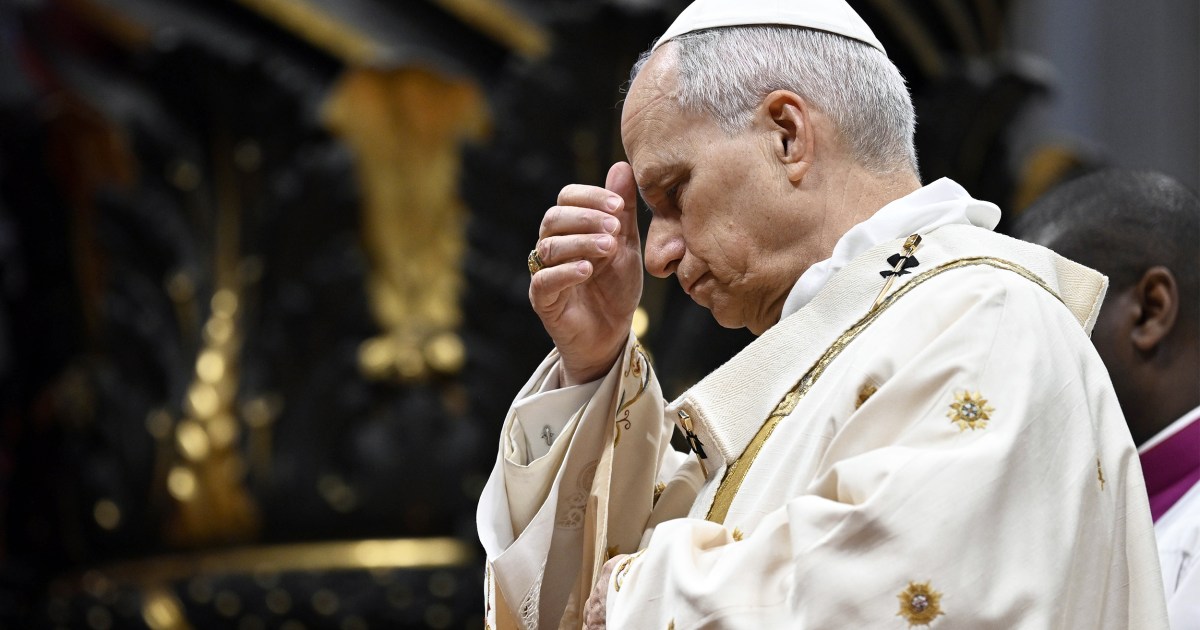
* From the Vatican: “Pope Leo XIV blasted Trump’s latest threats against Iran as ‘truly unacceptable,’ in his most recent rebuke of the U.S.’ actions in Iran.”
* From Turtle Bay: “The United Nations rebuked Trump’s threats to Iran at a press briefing in New York today, during which U.N. spokesperson Stéphane Dujarric implored leaders to ‘choose dialogue over destruction.’ … ‘There is no military objective that justifies the wholesale destruction of a society’s infrastructure or the deliberate infliction of suffering on civilian populations,’ Dujarric said.”
* Fortunately, most of these injuries have not been serious: “At least 373 American service members have been wounded since the start of the war with Iran on Feb. 28, according to the U.S. Central Command.”
* He obviously needs to go: “After Representative Tony Gonzales, Republican of Texas, admitted in March to a sexual relationship with a staff member who later took her own life, House Republican leaders called for him to end his re-election campaign but stopped short of pressing him to resign from Congress. On Monday, Speaker Mike Johnson and other top Republicans remained mum about Mr. Gonzales’s future in the House after a new batch of texts surfaced indicating that his extramarital affair with Regina Santos-Aviles was part of a pattern of seeking inappropriate sexual relationships with female subordinates.”
* A case worth watching: ‘As of this moment, the Administration believes that the President is legally free to destroy records of his official government conduct, or even spirit away the records for his own future personal use.’ That’s what two nonprofit groups told a federal court in Washington on Monday, in a legal complaint seeking a declaration that the Presidential Records Act is constitutional. The complaint was prompted by a bold new claim to the contrary by the Trump Justice Department’s Office of Legal Counsel.”
See you tomorrow.
Steve Benen is a producer for “The Rachel Maddow Show,” the editor of MaddowBlog and an MS NOW political contributor. He’s also the bestselling author of “Ministry of Truth: Democracy, Reality, and the Republicans’ War on the Recent Past.”
The Dictatorship
Over 50 Democrats push 25th Amendment as Trump threatens to kill ‘a whole civilization’
President Donald Trump’s threat to wipe out “a whole civilization” in Iran has prompted growing calls from Democrats to remove him through a constitutional mechanism that has never been used to end a presidency: The 25th Amendment.
“A whole civilization will die tonight, never to be brought back again,” Trump posted on Truth Social on Tuesday morning. “I don’t want that to happen, but it probably will.”
He continued, saying with a “different, smarter, and less radicalized” regime in Iran, he hoped Tehran would come to a deal on the Strait of Hormuz. But he left it open that the United States would strike Iran on Tuesday night if a deal was not reached.
“WHO KNOWS?” Trump asked.

The post came just 12 hours before the president’s previously announced deadline for Iran to reopen the Strait of Hormuz or risk the U.S. attacking bridges and power plants. Or, as the president put it in an expletive-laced Easter morning social media post“Open the Fuckin’ Strait, you crazy bastards, or you’ll be living in Hell.”
In response to Trump’s threats, Democrats started a new trend on Tuesday that put the onus for Trump’s removal on some of the president’s most obsequious officials, calling on Trump’s Cabinet to invoke the 25th Amendment and declare the president unfit for office. Doing so would, in effect, remove Trump from the White House and replace him with Vice President JD Vance.
In a social media post, Rep. Ilhan Omar, D-Minn., called for “this unhinged lunatic” to “be removed from office.” Rep. Ro Khanna, D-Calif., said“Threatening war crimes is a blatant violation of our constitution and the Geneva Conventions.” And Rep. Yassamin Ansari, D-Ariz., wrote“In the last 48 hours alone, the rhetoric has crossed every line.”
“Donald Trump’s instability is more clear and dangerous than ever,” said former Speaker Nancy Pelosi, D-Calif.
As of early Tuesday evening, more than four dozen Democrats had called on Trump’s Cabinet to invoke the 25th Amendment, including Rep. Jamie Raskin, D-Md.; Rep. Robert Garcia, D-Calif.; Rep. Zoe Lofgren, D-Calif.; Rep. Adriano Espaillat, DN.Y.; Rep. Ritchie Torres, D-N.Y.; and Rep. Teresa Leger Fernández, D.N.M.
Of course, these calls are unlikely to do much of anything.
To actually remove Trump from office, the vice president and a majority of the Cabinet would have to agree that the president “is unable to discharge the powers and duties of his office.” If the president were to dispute that assessment, as he almost certainly would, at least two-thirds of the House and Senate would have to agree that the president is unfit to serve to remove him from office.

The threshold in Congress is actually higher than what is required through a straight impeachment and conviction.
The bar, said Sen. Sheldon Whitehouse, D-R.I., is too high to clear at this moment, as Republicans on Capitol Hill and in Trump’s Cabinet remain in lockstep with the president.
“We’re going to have to buckle down and win this the old-fashioned way,” Whitehouse added in another post.
Some Democrats, such as Rep. Diane DeGette, D-Col.were clear that, if the Cabinet refused to invoke the 25th Amendment, then Congress should begin impeachment proceedings, an unlikely endeavor on its own in the GOP-controlled Congress.
But Democrats have increasingly argued that Trump’s war with Iran, coupled with what they have described as bellicose and progressively unhinged rhetoric, have crossed the line. (Some of the YOU are faithfulsuch as former Rep. Marjorie Taylor Greene and conservative commentators Alex Jones and Candace Owens, have also called on Trump’s Cabinet to invoke the 25th Amendment.)
Still, almost every Republican in Congress has stood by Trump. In fact, rather than pushing back on the president, some criticized Greene on Tuesday.
“The TRUE madness is calling for the 25th to be used against one of the greatest presidents our nation has ever seen! @POTUS is making the entire planet safer,” Rep. Marlin Stutzman, R-Ind., wrote on Xadding that Greene is “starting to sound like” Rep. Rashida Tlaib, D-Mich., and Tucker Carlson.
Most other Republicans have remained silent on Trump’s threats. House Speaker Mike Johnson, R-La., made two posts Tuesday, one touting the “no tax on tips” from the GOP’s reconciliation bill and one cheering the International Olympic Committee for recognizing that “women’s sports are meant for biological women.”
Johnson, like Senate Majority Leader John Thune, R-S.D., has remained silent on Trump’s escalating rhetoric.
Notably, however, some Republicans have started to offer indirect criticism.
During an appearance on conservative journalist and commentator John Solomon’s podcast on Monday, Sen. Ron Johnson, R-Wis., said he is “hoping and praying” that Trump’s threat against Iran “really is bluster.”
“I do not want to see us start blowing up civilian infrastructure,” Johnson said. “I do not want to see that.”

Rep. Nathaniel Moran, R-Texas, also posted online that he does not support “the destruction of a ‘whole civilization.’”
“That is not who we are, and it is not consistent with the principles that have long guided America,” he said.
And Rep. Don Bacon, R-Neb., told MS NOW on Tuesday that while the president’s words about eliminating “a whole civilization” are “reckless,” he argued it is the president “negotiating Trump-style.”
“I do want to see the regime buckle and make a true peace,” Bacon said in a statement.
Democratic leaders in Congress have also been predictably critical of Trump’s threats, though they have stopped short of immediately calling for the 25th Amendment.
House Minority Leader Hakeem Jeffries, D-N.Y.; Majority Whip Katherine Clark, D-Mass.; and leading Democrats have instead called for the House to “come back into session immediately and vote to end this reckless war of choice in the Middle East before Donald Trump plunges our country into World War III.”
And top Senate Democrats, including Senate Minority Leader Chuck Schumer, D-N.Y., and Sen. Chris Coons, D-Del., in a statement condemned the president’s messagesaying it is “not strength.”
“Intentionally destroying the power, water, or basic infrastructure upon which tens of millions of civilians depend to punish the very civilians who suffer at the hands of the Iranian regime would constitute a war crime, a betrayal of the values this nation was founded on, and a moral failure,” they wrote.
While calls have grown for the invocation of the 25th Amendment, some Democrats have targeted others in the administration, such as Defense Secretary Pete Hegseth.

On Monday, Ansari said she planned to introduce articles of impeachment against Hegseth “for repeatedly violating his oath of office and his duty to the Constitution.”
“Only Congress has the power to declare war, not a rogue president or his lackeys. Hegseth’s reckless endangerment of U.S. servicemembers and repeated war crimes, including bombing a girls’ school in Minab, Iran and willfully targeting civilian infrastructure, are grounds for impeachment and removal from office,” she said.
For months now, Democrats have wrestled with the question of presidential accountability — namely, how much to focus on it as part of their party’s midterm messaging and potential governing agenda.
The fear among some Democrats is that focusing too much on anti-Trump sentiment could distract from a positive, kitchen-table agenda.
But as the second year of Trump’s presidency careens from domestic crises to an escalating overseas conflict, the president may be forcing Democrats’ hand. And depending on what happens Tuesday night, the entire political landscape could change with his military actions — and the debate over accountability could shift from theoretical to immediate very quickly.
Kevin Frey is a congressional reporter for MS NOW.
Mychael Schnell is a reporter for MS NOW.
- Iran’s UN envoy says Tehran open to ‘genuine’ talks, rejects temporary ceasefire

- Nuclear energy regulators roll back security drill requirements

- Blanche says DOJ providing counsel on legality of Iran strikes

- Howard Stern and wife Beth sued, accused of hostile work environment

- Alex Jones slams Trump’s ominous Iran threat: ‘That is the definition of genocide’
- Trump’s budget seeks money for Kash Patel’s FBI to spy on Americans
- Tuesday’s Mini-Report, 4.7.26

- Over 50 Democrats push 25th Amendment as Trump threatens to kill ‘a whole civilization’
- DeSantis signs bill giving Florida Republicans the power to designate ‘terrorist’ groups

- Overshadowing the Final Four was Trump’s threat to hamstring college athletes

-

 The Dictatorship1 year ago
Luigi Mangione acknowledges public support in first official statement since arrest
-

 Politics1 year ago
Former ‘Squad’ members launching ‘Bowman and Bush’ YouTube show
-

 Politics1 year ago
Former Kentucky AG Daniel Cameron launches Senate bid
-

 The Dictatorship1 year ago
Pete Hegseth’s tenure at the Pentagon goes from bad to worse
-

 Politics1 year ago
Blue Light News’s Editorial Director Ryan Hutchins speaks at Blue Light News’s 2025 Governors Summit
-

 The Dictatorship7 months ago
Mike Johnson sums up the GOP’s arrogant position on military occupation with two words
-
Uncategorized1 year ago
Bob Good to step down as Freedom Caucus chair this week
-

 Politics12 months ago
Democrat challenging Joni Ernst: I want to ‘tear down’ party, ‘build it back up’