
The Dictatorship
Trump appears to be building an unprecedented spy machine that could track Americans


As Donald Trump and his administration pursue crippling austerity measures across the country, they’re plunging millions of dollars into the president’s pet projects. And that includes reportedly giving hundreds of millions of dollars to a company that’s expanding the government’s ability to spy on its own citizens.
The New York Times has a new report on the administration awarding contracts to the controversial tech company Palantirwhich is apparently helping Trump develop a database of Americans’ private informationscraped from various government agencies, that could theoretically be used to track or persecute them.
The push has put a key Palantir product called Foundry into at least four federal agencies, including D.H.S. and the Health and Human Services Department. Widely adopting Foundry, which organizes and analyzes data, paves the way for Mr. Trump to easily merge information from different agencies, the government officials said. Creating detailed portraits of Americans based on government data is not just a pipe dream. The Trump administration has already sought access to hundreds of data points on citizens and others through government databases, including their bank account numbers, the amount of their student debt, their medical claims and any disability status. Mr. Trump could potentially use such information to advance his political agenda by policing immigrants and punishing critics, Democratic lawmakers and critics have said.
The White House did not respond to the Times’ request for comment, and Palantir declined to comment on its work with the Trump administration. It pointed to a company blog post that said organizations that license its products “define what can and cannot be done with their data; they control the Palantir accounts.”
The Times’ report aligns with concerns about surveillance and the weaponization of federal data highlighted by Rachel Maddow during a recent episode featuring Times reporter Julia Angwin.
Palantir is one of several private companies that have capitalized on Trump’s authoritarian ambitions. The company has been tapped as a key player in Trump’s mass deportation plansand earlier this year, Palantir CEO Alex Karp gave investors a pretty grim summary of what the company’s full slate of work for the Trump administration could entail.
As the outlet Mother Jones reported:
‘I’m very happy to have you along for the journey,’ the CEO said. ‘We are crushing it. We are dedicating our company to the service of the West and the United States of America, and we’re super-proud of the role we play, especially in places we can’t talk about.’ ‘Palantir is here to disrupt,’ he continued. ‘And, when it’s necessary, to scare our enemies and, on occasion, kill them.’ (Palantir did not respond to a request for comment.)
Needless to say, putting American data in the hands of a company whose CEO boasts about his company’s capacity to kill and intimidate doesn’t inspire confidence that the data will be handled responsibly.
On that note, I’ve been laser-focused on the government’s surveillance capabilities in the age of artificial intelligence, particularly under the Trump administration. To learn more about the technologies that enable the sort of surveillance Trump and Palantir could soon unleash on Americans, check out my interview with surveillance and privacy expert Albert Fox Cahn from 2023.


The Dictatorship
The Latest: Trump seeks help opening the Strait of Hormuz as Iran war chokes oil shipping

New Mexico, Sam Houston meet in NIT
Cal plays UIC in NIT
Nevada and Murray State square off in NIT
Ohio squares off against UMBC in NIT matchup
Air Force and Northern Colorado meet in NIT
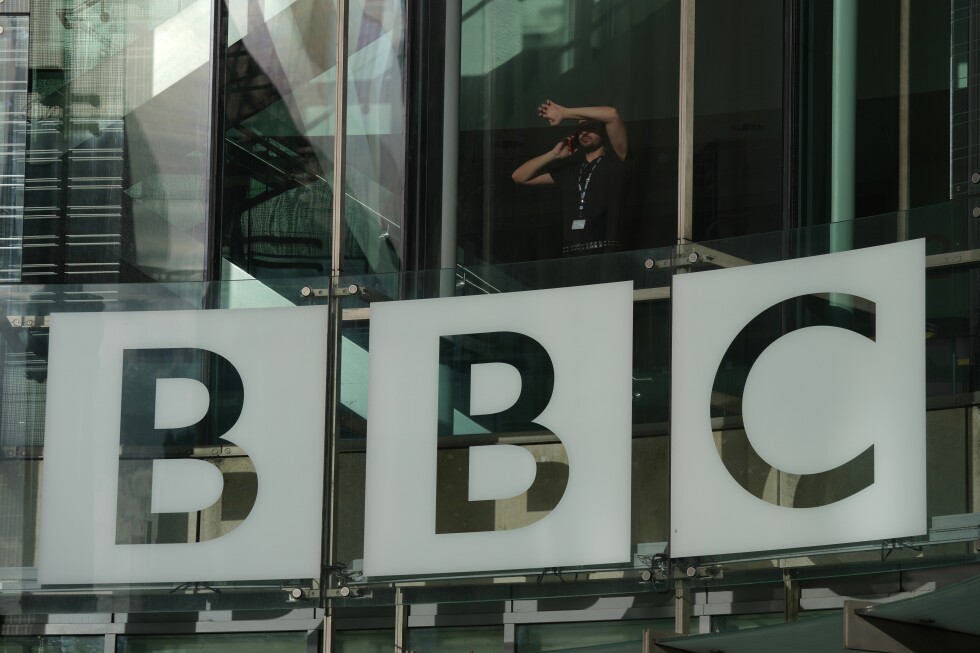

LONDON (AP) — The BBC filed a motion Monday asking a U.S. court to dismiss President Donald Trump’s $10 billion lawsuit against it, warning that the case could have a “chilling effect” on robust reporting on public figures and events.
The suit was filed in a Florida court, but the British national broadcaster argued that the court did not have jurisdiction, nor could Trump show that the BBC intended to misrepresent him.
Trump filed a lawsuit in December over the way a BBC documentary edited a speech he gave on Jan. 6, 2021. The claim seeks $5 billion in damages for defamation and a further $5 billion for unfair trade practices.
Last month a judge at the federal court for the Southern District of Florida provisionally set a trial date for February 2027.
The BBC argued that the case should be thrown out because the documentary was never aired in Florida or the U.S.
“We have therefore challenged jurisdiction of the Florida court and filed a motion to dismiss the president’s claim,” the corporation said in a statement.
In a 34-page document, the BBC also argued that Trump failed to “plausibly allege facts showing that defendants knowingly intended to create a false impression.”
Trump’s case “falls well short of the high bar of actual malice,” it said.
The document further claimed that “the chilling effect is clear” when Trump is “among the most powerful and high-profile individuals in the world, on whose activities the BBC reports every day.”
“Early dismissal is favoured given the powerful interest in ensuring that free speech is not unduly burdened by the necessity of defending against expensive yet groundless litigation, which would constrict the breathing space needed to ensure robust reporting on public figures and events,” it said.
The documentary — titled “Trump: A Second Chance?” — was aired days before the 2024 U.S. presidential election.
The program spliced together three quotes from two sections of a speech Trump made on Jan. 6, 2021, into what appeared to be one quote, in which Trump appeared to explicitly encourage his supporters to storm the Capitol building.
Among the parts cut out was a section where Trump said he wanted supporters to demonstrate peacefully.
Trump’s lawsuit accuses the BBC of broadcasting a “false, defamatory, deceptive, disparaging, inflammatory, and malicious depiction” of him, and called it “a brazen attempt to interfere in and influence” the 2024 U.S. presidential election.
The broadcaster’s chairman has apologized to Trump over the edit of the speech, admitting that it gave “the impression of a direct call for violent action.” But the BBC rejects claims it defamed him. The furor triggered the resignations of the BBC’s top executive and its head of news last year.
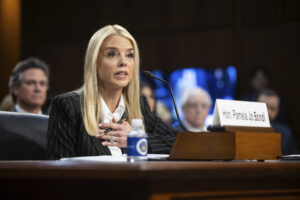
State bar associations play an important accountability role across the country. Trump administration lawyers know that their legal licenses are subject to censure, because practicing law in the United States remains a privilege, not a right. But if Attorney General Pam Bondi has her way, even this guardrail could disappear.
Last week, Bondi proposed a new rule that would allow the Department of Justice to take over investigations of alleged attorney misconduct of its own lawyers. State bar authorities would have to pause their investigations while the Justice Department conducts its own probe. The rule gives the DOJ the ability to delay or even derail a state investigation.
The rule gives the DOJ the ability to delay or even derail a state investigation.
It doesn’t feel like a coincidence that there has been a series of state ethics complaints filed against Trump administration lawyers, including Bondi, Deputy Attorney General Todd Blanche and federal prosecutors handling immigration cases. President Donald Trump’s polarizing pardon attorney Ed Martin is currently facing just such a complaint from the D.C. Bar.
As outlined in the Federal Registerthe proposal argues that “political activists have weaponized the bar complaint and investigation process.” Of course, even if it were true that frivolous complaints were being filed against Justice Department lawyers, state bar grievance authorities should be able to weed them out just as effectively as the department’s own investigators. In fact, having an independent review process would provide more credibility than the DOJ would in dismissing such claims.
Federal law requires all federal prosecutors to comply with the ethics rules of the state where they practice law, including the District of Columbia. The new rule requires Justice Department lawyers to obey the substance of their state’s ethics rules, but gives the DOJ the authority to investigate violations. According to the proposal, whenever a bar grievance is filed, “the Department will have the right to review the allegations in the first instance and shall request that the bar disciplinary authority suspend any parallel investigations until the completion of the Department’s review.”

From there, multiple scenarios are possible. First, “if the Attorney General decides not to complete her review,” the state bar disciplinary authorities “may resume their investigations or disciplinary hearings.” Second, if the attorney general finds misconduct, “the State bar disciplinary authorities will then have the option of beginning or resuming their investigations or disciplinary proceedings” and, if appropriate, “to impose additional sanctions beyond those already imposed by the Department, including suspension or permanent disbarment.”
But what is missing from the language of the rule itself is a potential third scenario. What if the attorney general clears the attorney of misconduct? On that, the rule is silent.
Say, for example, a federal prosecutor in Minnesota is accused of making false representations to an immigration judge. The judge or opposing party could file a grievance with the Minnesota Office of Lawyers Professional Responsibility. Under the new rule, the state bar would be required to stand down and await a DOJ investigation, with no provisions for time limits or transparency. Of course, even the delay could compromise the subsequent Minnesota probe. But if the Justice Department clears the lawyer, it is also unclear what happens next. According to Bloomberg“If the DOJ finds no violation, that blocks the state from investigating the alleged infraction.” This conclusion may be a fair inference for a department that has thrown its weight around. According to the proposed rule, “the Attorney General retains the discretion to displace State bar enforcement and to create an entirely Federal enforcement mechanism.”
But even if the rule merely delays state enforcement, the DOJ could slow-walk a grievance into oblivion. According to a comment posted by the Illinois State Bar Association, the DOJ is attempting to “shield” its lawyers from accountability. The proposed rule also includes an ominous provision that if bar disciplinary authorities refuse the attorney general’s request, “the Department shall take appropriate action to prevent the bar disciplinary authorities from interfering with the Attorney General’s review of the allegations.”
Even if the rule merely delays state enforcement, the DOJ could slow-walk a grievance into oblivion.
In the decades since the Watergate scandal, the Justice Department has conducted robust investigations of allegations of ethical misconduct by its own attorneys and imposed discipline. In fact, it was common for state bar authorities to wait for the DOJ to complete its investigations before initiating their own probes, because the federal process held attorneys to standards even higher than state ethics rules. But that landscape changed last year, when Bondi fired the head of the department’s Office of Professional Responsibility and its chief ethics officer. Now there is a risk that DOJ lawyers will be even further sheltered from meaningful ethical oversight.
In the first nine days of the 30-day notice and comment period, the proposed rule has attracted more than 30,000 comments. And once implemented, the rule will no doubt invite legal challenges and ultimately could be struck down. But until then, it threatens to give carte blanche to DOJ lawyers who represent the Trump administration not just zealously but with impunity, knowing that the attorney general can simply delay or even block state bar ethics complaints. And the rule represents one more openly regressive blow against the checks and balances that are essential to democracy.
Barbara McQuade is a former Michigan U.S. attorney and legal analyst.
- Elizabeth Warren backs Mallory McMorrow in Michigan Senate primary
- Capitol agenda: Tulsi Gabbard takes the hot seat
- The Latest: Trump seeks help opening the Strait of Hormuz as Iran war chokes oil shipping

- The Senate’s marathon elections debate is dividing Republicans, not Democrats
- White House releases DHS funding offer
- Senate bills survive
- Senate launches debate on SAVE America Act with endgame uncertain
- Republicans hope Mullin will turn the page at DHS from Noem. Democrats aren’t buying it.
- Comer subpoenas Attorney General Pam Bondi over Epstein files
- AIPAC faces calls to reassess strategy after split results in Illinois
-

 The Dictatorship1 year ago
Luigi Mangione acknowledges public support in first official statement since arrest
-

 Politics1 year ago
Former ‘Squad’ members launching ‘Bowman and Bush’ YouTube show
-

 Politics1 year ago
Blue Light News’s Editorial Director Ryan Hutchins speaks at Blue Light News’s 2025 Governors Summit
-

 Politics1 year ago
Former Kentucky AG Daniel Cameron launches Senate bid
-

 The Dictatorship6 months ago
Mike Johnson sums up the GOP’s arrogant position on military occupation with two words
-

 The Dictatorship1 year ago
Pete Hegseth’s tenure at the Pentagon goes from bad to worse
-

 Politics11 months ago
Democrat challenging Joni Ernst: I want to ‘tear down’ party, ‘build it back up’
-
Uncategorized1 year ago
Bob Good to step down as Freedom Caucus chair this week