
The Dictatorship
Trump admin reportedly floats plan to use Chicago-area naval base to aid federal operations


By Are Salam
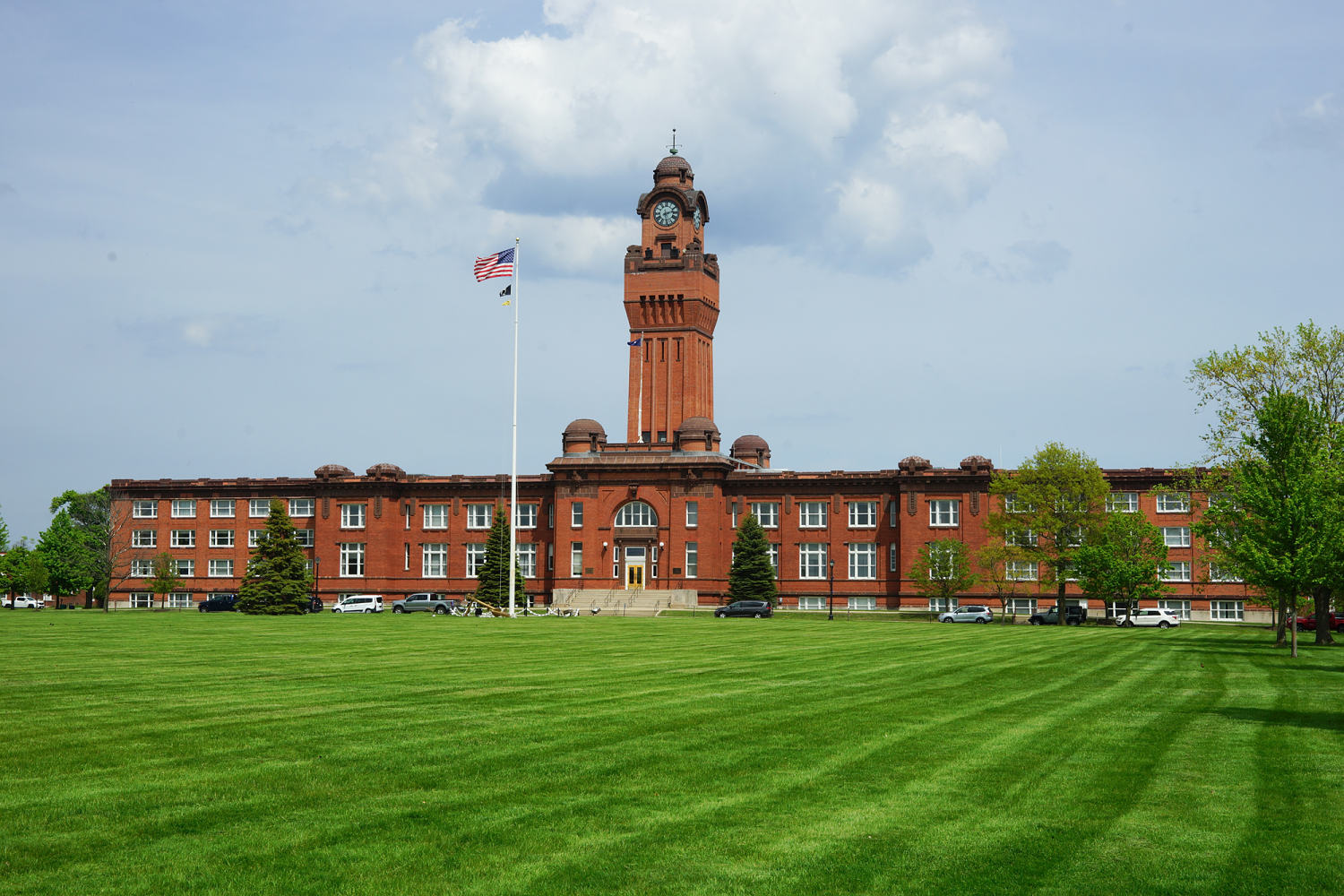
The Trump administration has requested that a military base near Chicago be available to provide support for immigration operations in the area, according to local media reports, signaling a possible escalation in President Donald Trump’s plan to expand federal law enforcement to other major American cities.
Naval Station Great Lakes, Illinois’ largest military installation and training station, could soon house agents with the Department of Homeland Security, U.S. Immigration and Customs Enforcement, and U.S. Customs and Border Protection, according to an email Navy Capt. Stephen Yargosz reportedly sent to his leadership team Monday.
“These operations are similar to what occurred in Los Angeles earlier this summer. Same DHS team,” Yargosz wrote in the email cited by the Chicago Sun-Timeswhich first broke news of the request Wednesday (neither BLN nor NBC News has reviewed the email). “This morning I received a call that there is the potential to also support National Guard units. Not many details on this right now. Mainly a lot of concerns and questions.”
Matthew Mogle, a spokesperson for the base, declined BLN’s request for comment and referred questions to DHS and ICE. Mogle did, however, tell NBC Chicago that “Naval Station Great Lakes has been approached by the Department of Homeland Security regarding a potential request to support U.S. Immigration and Customs Enforcement operations.”
When asked about its plans for the naval base, DHS provided a statement that did not address those reports.
When Trump announced plans last week to “straighten out” ChicagoIllinois Gov. JB Pritzker vowed to fight back.
“There is no emergency in Chicago that calls for armed military intervention that will disrupt the daily lives of our people,” he said. “What President Trump is doing is unprecedented and unwarranted. It is illegal. It is unconstitutional. And it is un-American.”
Chicago Mayor Brandon Johnson called Trump’s intention to deploy the National Guard in the city “uncoordinated, uncalled for, and unsound.”
Johnson did not respond to a request to comment on, and Pritzker declined to comment on, reports about the possible use of the base.
“President Trump’s continued threats to send National Guard and federal troops to Chicago reflects all his worst authoritarian instincts,” Edwin Yohnka, director of communications and public policy at the American Civil Liberties Union of Illinois, told BLN. “Where we see violations of basic rights, we will act and demand that Trump and his federal forces are held accountable for these violations.”
On Aug. 11, Trump declared a public safety emergency in Washington, D.C.and federalized its police force, deploying thousands of National Guard troops to crack down on what he called “out-of-control crime,” despite city leaders pointing to statistics that show violent crime in Washington is at a 30-year low.
While the nation’s capital falls under federal authority as a city without statehood, National Guard units outside the district typically fall under the authority of state governments, although some military experts have argued it may be within the president’s powers to send them wherever he wants.
Erum Salam is a breaking news reporter and producer for BLN Digital. She previously was a breaking news reporter for The Guardian.


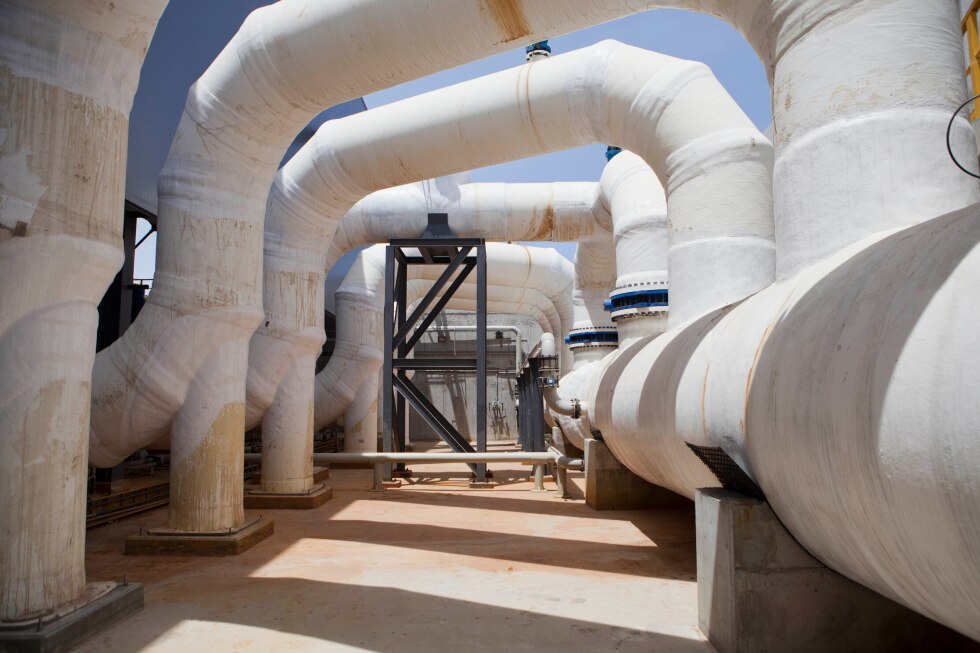
U.S. President Donald Trump on Monday threatened to target Iran’s energy infrastructure, including the country’s desalination plants. Such a move — and Iran’s possible targeting of the plants of its Gulf Arab neighbors — could have devastating impacts across the water-starved Middle East.
In a post on Truth Social, Trump said if a deal to end the war isn’t reached “shortly” and the Strait of Hormuzwhere much oil passes via tankers, is not immediately reopened, “we will conclude our lovely ‘stay’ in Iran by blowing up and completely obliterating all of their Electric Generating Plants, Oil Wells and Kharg Island (and possibly all desalinization plants!), which we have purposefully not yet ‘touched.’”
The biggest danger, analysts warn, may not be what Trump could do to Iran, but how Tehran could retaliate. Iran relies on desalination for a small share of its water supply while Gulf Arab states depend on it for the vast majority.
Hundreds of desalination plants sit along the Persian Gulf coast, putting individual systems that supply water to millions within range of Iranian missile or drone strikes. Without them, major cities — such as Dubai and Abu Dhabi in the United Arab Emirates or Doha, Qatar’s capital — could not sustain their current populations.
“Desalination facilities are oftentimes necessary for the survival of the civilian population and intentional destruction of those types of facilities is a war crime,” said Niku Jafarnia, a researcher at Human Rights Watch.
While less reliant on desalination, Iran’s water situation is dire
See how desalination works. (AP Animation: Panagiotis Mouzakis)
After a fifth year of extreme drought, some Iranian media reports say reservoirs supplying Tehran, the country’s capital, are below 10% capacity. Satellite pictures analyzed by The Associated Press also show reservoirs noticeably depleted. The country still draws most of its water from rivers, reservoirs and depleted underground aquifers.
Israeli airstrikes on March 7 on oil depots surrounding Tehran produced heavy smoke and acid rain. Experts warned the fallout could contaminate soil and parts of the city’s water supply.
“Attacking water facilities, even one, could end up being harmful to the population in such a severe water scarcity context,” Jafarnia said.
Before the war that Israel and the United States launched on Feb. 28, Iran had been racing to expand desalination along its southern coast and pump some of the water inland, but infrastructure constraints, energy costs and international sanctions have sharply limited scalability.
Across the Gulf, many desalination plants are tied to power stations
The Mina Al-Ahmadi oil refinery operates in Kuwait, March 20, 2026. (AP Photo, File)
The Mina Al-Ahmadi oil refinery operates in Kuwait, March 20, 2026. (AP Photo, File)
In Kuwait, about 90% of drinking water comes from desalination, along with roughly 86% in Oman and about 70% in Saudi Arabia. The technology removes salt from seawater — most commonly by pushing it through ultrafine membranes in a process known as reverse osmosis — to produce the freshwater that sustains cities, hotels, industry and some agriculture across one of the world’s driest regions.
Even where the plants are connected to national grids with backup supply routes, disruptions can cascade across interconnected systems, said David Michel, senior fellow for water security at the Center for Strategic and International Studies.
“It’s an asymmetrical tactic,” he said. “Iran doesn’t have the same capacity to strike back … But it does have this possibility to impose costs on the Gulf countries to push them to intervene or call for a cessation of hostilities.”
Desalination plants have multiple stages — intake systems, treatment facilities, energy supplies — and damage to any part of that chain can interrupt production, according to Ed Cullinane, Mideast editor at Global Water Intelligence, a publisher serving the water industry.
“None of these assets are any more protected than any of the municipal areas that are currently being hit by ballistic missiles or drones,” Cullinane said.
Two women from the Iranian Red Crescent Society stand as a thick plume of smoke from a U.S.-Israeli strike on an oil storage facility late Saturday rises into the sky in Tehran, Iran, Sunday, March 8, 2026. (AP Photo/Vahid Salemi, File)
Two women from the Iranian Red Crescent Society stand as a thick plume of smoke from a U.S.-Israeli strike on an oil storage facility late Saturday rises into the sky in Tehran, Iran, Sunday, March 8, 2026. (AP Photo/Vahid Salemi, File)
The Gulf produces about a third of the world’s crude exports and energy revenues underpin national economies. Fighting has already halted tanker traffic through key shipping routes and disrupted port activity, forcing some producers to curb exports as storage tanks fill.
“Everyone thinks of Saudi Arabia and their neighbors as petrostates. But I call them saltwater kingdoms. They’re human-made fossil-fueled water superpowers,” said Michael Christopher Low, director of the Middle East Center at the University of Utah. “It’s both a monumental achievement of the 20th century and a certain kind of vulnerability.”
Trump’s comments came as the conflict intensified, with Tehran striking a key water and electrical plant in Kuwait and an oil refinery in Israel coming under attack, while U.S. and Israeli forces launched a new wave of strikes on Iran.
US and Gulf governments have long recognized the risk
Smoke rises from an Israeli airstrike in Dahiyeh, Beirut’s southern suburbs, March 9, 2026. (AP Photo/Hassan Ammar, File)
Smoke rises from an Israeli airstrike in Dahiyeh, Beirut’s southern suburbs, March 9, 2026. (AP Photo/Hassan Ammar, File)
A 2010 CIA analysis warned that attacks on desalination facilities could trigger national crises in several Gulf states, and prolonged outages could last months if critical equipment were destroyed. More than 90% of the Gulf’s desalinated water comes from just 56 plants, the report stated, and “each of these critical plants is extremely vulnerable to sabotage or military action.”
Saudi Arabia and the UAE have invested in pipeline networks, storage reservoirs and other redundancies designed to cushion short-term disruptions. But smaller states such as Bahrain, Qatar and Kuwait have fewer backup supplies.
Desalination has expanded in part because climate change is intensifying drought across the region. The plants themselves are highly energy-intensive and emit massive amounts of carbon, while their coastal locations make them vulnerable to extreme weather and rising seas.
Past Mideast conflicts have seen attacks on desalination plants
Workers walk in an area at a degassing station in Zubair oil field, whose operations have being reduced due to the Mideast war triggered by the U.S. and Israeli attacks on Iran, near Basra, Iraq, March 28, 2026. (AP Photo/Leo Correa, File)
Workers walk in an area at a degassing station in Zubair oil field, whose operations have being reduced due to the Mideast war triggered by the U.S. and Israeli attacks on Iran, near Basra, Iraq, March 28, 2026. (AP Photo/Leo Correa, File)
During Iraq’s 1990-1991 invasion of Kuwait, retreating Iraqi forces sabotaged power stations and desalination facilities, said Low, from the University of Utah, while millions of barrels of crude oil were deliberately released into the Persian Gulf, which threatened seawater intake pipes used by desalination plants across the region.
Workers rushed to deploy protective booms around the intake valves of major facilities but the destruction left Kuwait largely without fresh water and dependent on emergency water imports. Full recovery took years.
In recent years, Yemen’s Iran-backed Houthi rebels have targeted Saudi desalination facilities as tensions escalated.
International humanitarian law, including provisions of the Geneva Conventions, prohibit targeting civilian infrastructure indispensable to the survival of the population, including drinking water facilities.
___
Follow Annika Hammerschlag on Instagram @ahammergram.
___
The Associated Press receives support from the Walton Family Foundation for coverage of water and environmental policy. The AP is solely responsible for all content. For all of AP’s environmental coverage, visit https://apnews.com/hub/climate-and-environment
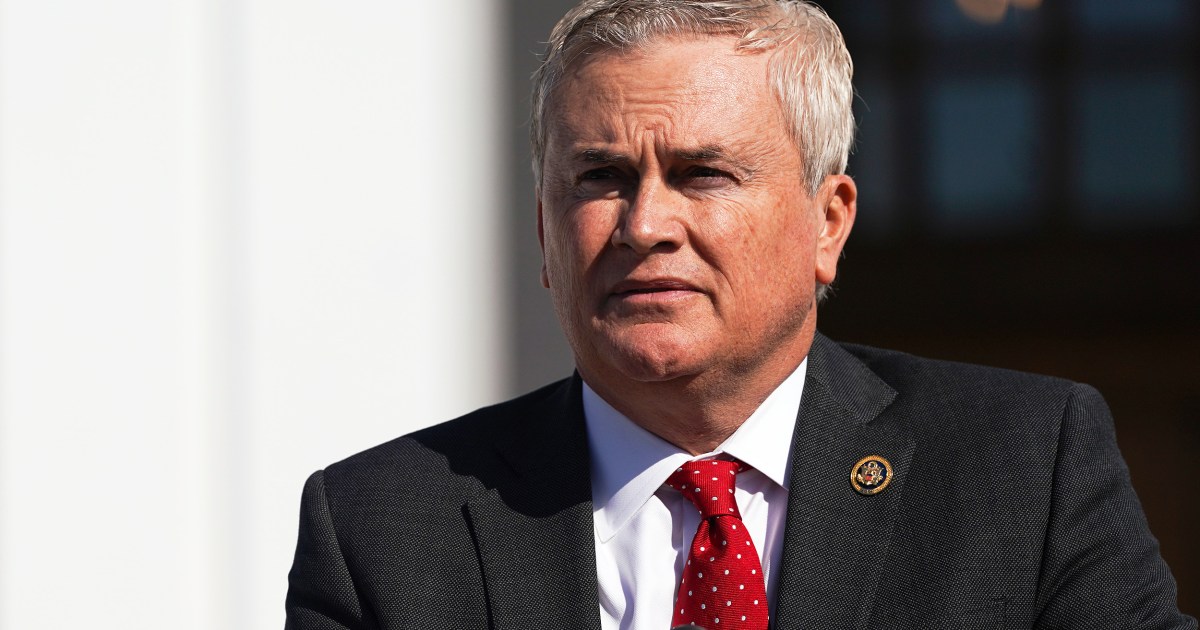
“Botched.” That was apparently House Oversight Committee Chair James Comer’s, R-Ky., assessment of the Justice Department’s handling, or mishandling, of the Epstein files under President Donald Trump. Comer made his critical comments to BLN on Monday night, awkwardly enough, during an attempt to defend the administration from criticism.
Comer also cast some blame on Jeffrey Epstein’s victims for delaying the release of files related to the late sex criminal, suggesting that class action lawsuits and victims’ demands for redactions have caused holdups, despite a federal law and congressional subpoena requiring the release of the vast majority of files related to Epstein.
This explanation doesn’t account for the department withholding documents detailing sexual assault allegations against Trump and other wealthy Epstein associates (all of whom have denied any wrongdoing). Comer’s excuse also doesn’t seem to explain a heavily redacted document that details a 2015 probe by the Drug Enforcement Administration into whether Epstein and others used drugs in connection with a prostitution ring. And of course, it doesn’t account for the inadequate redactions that exposed many victims’ names and personal details when some documents were initially released.
When BLN’s Jake Tapper noted the Trump administration has not released the files as mandated and has redacted names of individuals in Epstein’s inner circle, the chairman was seemingly forced to concede.
“Well, I think the Justice Department has botched this,” Comer said. “I don’t think anyone in America — Republican or, you know, avid Trump supporter — would defend the way that this has been rolled out.”
Some might say “botched” is too generous a characterization, given it suggests there was, at some point, a meaningful attempt to meet public expectations and comply with the law.
I can also think of more than a few Republicans who have defended and continue to defend the way the administration has handled the Epstein files, including TrumpAttorney General Pam Bondi and House Speaker Mike JohnsonR-La.
Comer himself has repeatedly thanked the administration for its “commitment to transparency.”
But Comer’s comment Monday was a prime example of the honesty that slips out of the chairman when he’s trying to defend Trump and his allies while discussing Epstein. Another example came in early March, when he said the DOJ in Trump’s first term moved to kill a 2019 state probe into Epstein’s New Mexico ranch.
“The federal government asked New Mexico to stop their investigation, I believe back in 2019, of that ranch,” Comer told Fox News. “So there’s just so many questions about how the government failed the victims and how government failed in trying to prosecute Epstein sooner. I mean, this whole thing doesn’t make sense.”
Ja’han Jones is an MS NOW opinion blogger. He previously wrote The ReidOut Blog.
Toward the end of Monday’s briefing, a reporter reminded White House press secretary Caroline Leavitt that Pope Leo XIVin remarks delivered on Palm Sunday, said God “does not listen to the prayers of those who wage war.” Citing a Bible passage, the pontiff added, “Even though you make many prayers, I will not listen: Your hands are full of blood.”
Asked for her reaction, Leavitt replied“I don’t think there’s anything wrong with our military leaders or with the president calling on the American people to pray for our service members and those who are serving our country overseas.”
Part of the problem, of course, is that no prominent political figures have argued there is something wrong with praying for service members. But the other element to this is some are going far further than simply calling on the public to pray for U.S. troops.
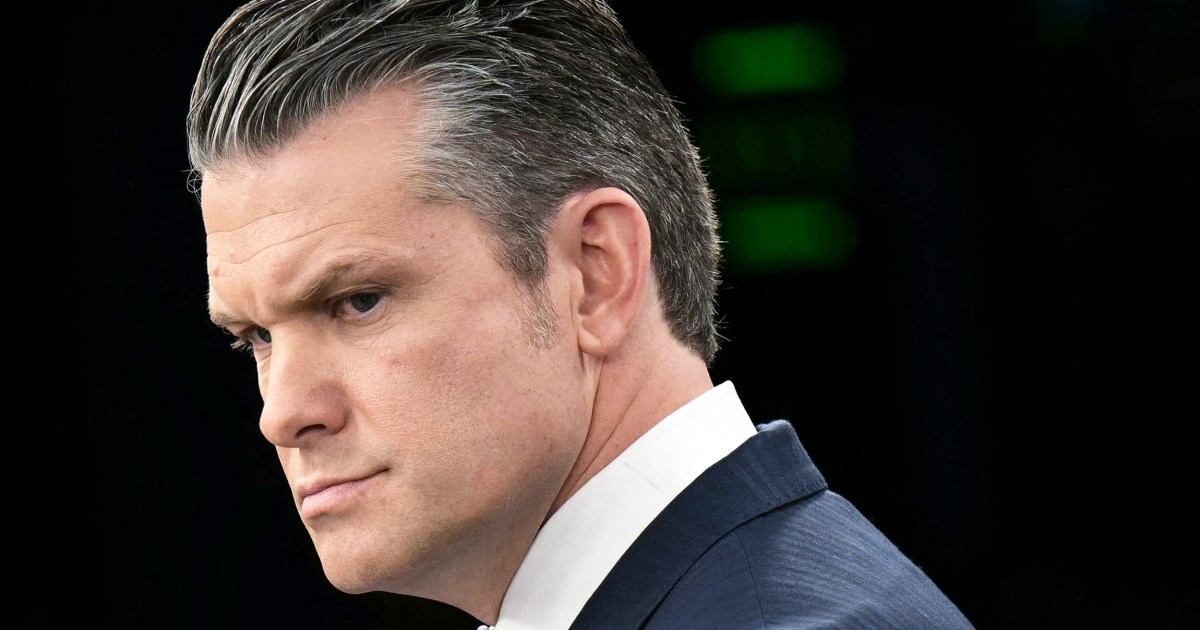
Take Defense Secretary Pete Hegseth, for example. The Washington Post reported earlier this week:
[L]ongtime norms are being upended by the proselytizing Christian campaign of Defense Secretary Pete Hegseth, say multiple former high-ranking military officials and experts on religion and law. Rather than boosting cohesion through a more universal spiritual uplift, they say, the new approach violates the Constitution and undermines the bonds of mutual respect between troops that are essential, especially in wartime.
The scope of the beleaguered Pentagon chief’s embrace of Christian nationalism is quite broad. In recent months, Hegseth has:
- led Christian prayer services in the Pentagon’s auditorium;
- invited radical Christian nationalist figures to speak at official prayer services;
- used social media to promote messages that suggest his faith should dominate over other religious traditions; and
- argued during an official press briefing that Americans should take a knee and pray “in the name of Jesus Christ,” at the same briefing in which he quoted Scripture.
At an event last week, Hegseth took matters to a new level when he prayed for U.S. troops to inflict “overwhelming violence of action against those who deserve no mercy. … We ask these things with bold confidence in the mighty and powerful name of Jesus Christ.”
In case this isn’t obvious, Hegseth is as free as every other American to worship, or not, as he pleases. His religiosity is his own business.
But as has become clear in recent weeks, the defense secretary isn’t just exercising his faith in line with his conscience, he’s also erasing the First Amendment’s church-state line and incorporating Christian nationalism into his wartime message in ways without precedent in the American tradition.
Retired Army Col. Larry Wilkerson, who served as chief of staff to Colin Powell during Powell’s tenures as chairman of the Joint Chiefs of Staff and secretary of state, told the Post, “The American military has had a remarkable ride of equanimity and fairness and justice and all manner of good adjectives with regard to religion. It’s done this in a way that’s really remarkable — until now.”
The New Republic’s Greg Sargent had a related report this week:
If Hegseth truly believes his war on Iran is unfolding in accordance with his conception of biblical law — the highest authority of all — then that explains why he treats all those niggling secular constraints as unbinding on him. Maximum violence and killing of the enemy — who cry out to God but, unlike Hegseth, don’t get an answer back from Him — are affirmatively good.
‘It’s not the way somebody who claims to be a person of God — a religious person — should think,’ [Democratic Sen. Mark Kelly of Arizona]who has flown many combat missions himself, told me. War, he added, ‘is a morally and ethically complicated thing for any person. Any serious warfighter struggles with it.’ If we don’t wrestle with this, Kelly said, we’ll ‘start to lose ourselves.’
Looking ahead, there are limited options to curtail the defense secretary’s public advocacy of Christian nationalism — Donald Trump could intervene, though that seems exceedingly unlikely — but Hegseth’s critics are not powerless. On the contrary, some of the Pentagon chief’s policies related to religious promotion have already sparked litigationwhich opens the door to possible court-imposed limits. Watch this space.
Steve Benen is a producer for “The Rachel Maddow Show,” the editor of MaddowBlog and an MS NOW political contributor. He’s also the bestselling author of “Ministry of Truth: Democracy, Reality, and the Republicans’ War on the Recent Past.”
- Trump’s MAGA allies have a new plan for mass deportations. It could splinter the coalition.
- Isaacman aims to reinvigorate NASA’s image, starting with the moon
- Dems hit the airwaves over Iran
- A slowdown in US visa processing is wreaking havoc on foreign doctors’ lives
- How prediction markets landed in Congress’ crosshairs
- The DHS shutdown might never end

- What Trump’s threat against Iran’s desalination plants means for Mideast

- Artemis is NASA’s return to the moon. Why astronauts won’t land there just yet

- Ingraham questions whether Trump understood Iran military operation’s ‘complexity’

- The Iran conflict is teaching the wrong lessons for the Pacific

-

 Politics1 year ago
Former ‘Squad’ members launching ‘Bowman and Bush’ YouTube show
-

 The Dictatorship1 year ago
Luigi Mangione acknowledges public support in first official statement since arrest
-

 Politics1 year ago
Former Kentucky AG Daniel Cameron launches Senate bid
-

 Politics1 year ago
Blue Light News’s Editorial Director Ryan Hutchins speaks at Blue Light News’s 2025 Governors Summit
-

 The Dictatorship7 months ago
Mike Johnson sums up the GOP’s arrogant position on military occupation with two words
-

 The Dictatorship1 year ago
Pete Hegseth’s tenure at the Pentagon goes from bad to worse
-
Uncategorized1 year ago
Bob Good to step down as Freedom Caucus chair this week
-

 Politics11 months ago
Democrat challenging Joni Ernst: I want to ‘tear down’ party, ‘build it back up’