
The Dictatorship
Transportation Dept. claims Union Station as Trump admin pursues D.C. takeover


By Are Salam
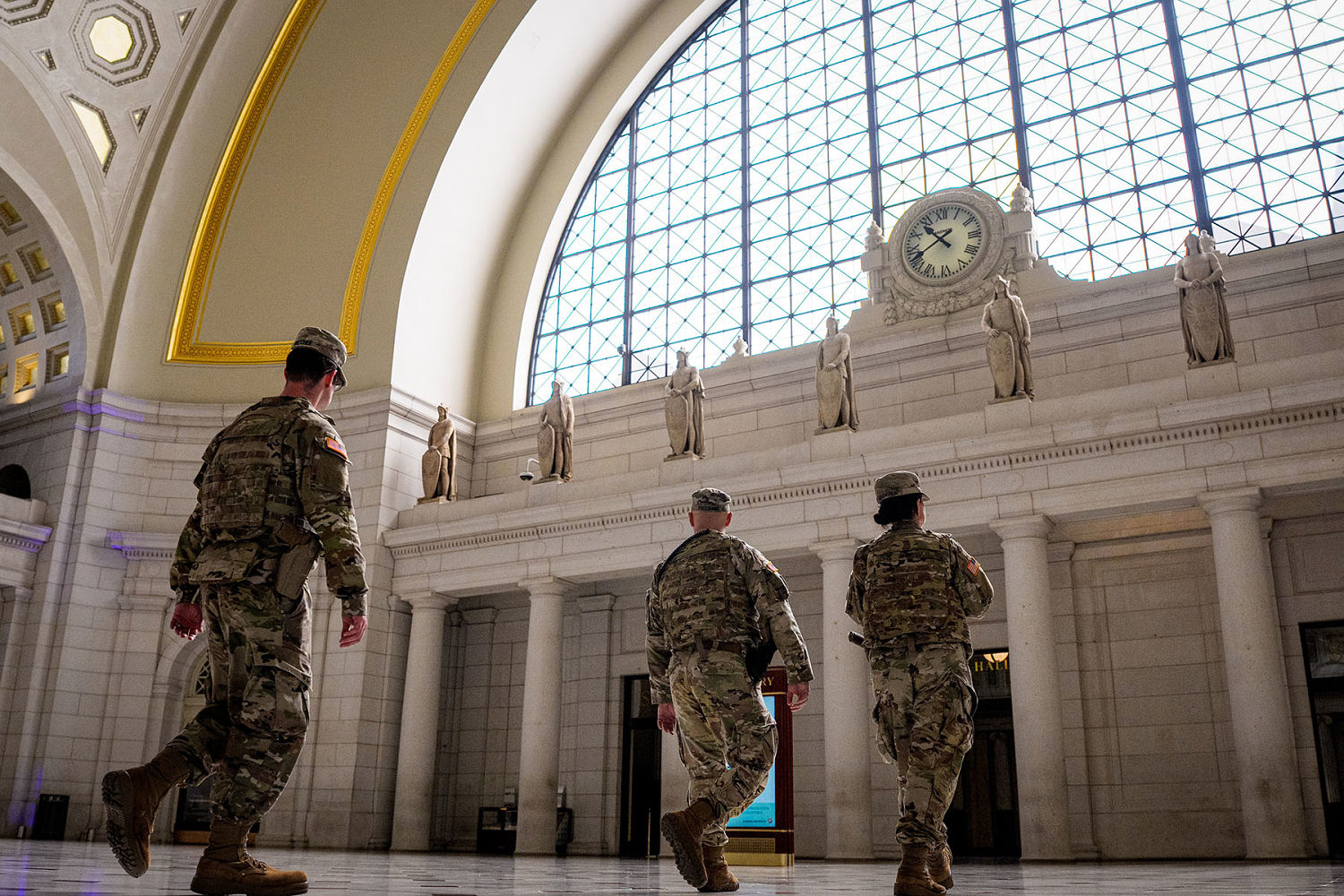
In addition to federalizing the District of Columbia’s police force, the Trump administration announced Wednesday that it is taking over one of the city’s major transit hubs.
Transportation Secretary Sean Duffy said in a press statement that the administration is “reclaiming management of Washington Union Station” because it has “fallen into disrepair.”
The federal government owns Union Station, the city’s main transportation hub, which services the city’s bus lines, subway and Amtrak, the quasi-public national railroad company. But now, the federal government said it’s taking back control of the station’s management from Amtrak and the nonprofit Union Station Redevelopment Corp. (Amtrak did not respond to NBC News’ request for commentand a representative for the USRC “deferred questions to the Transportation Department.”)
“Instead of being a point of pride, Washington’s Union Station has fallen into disrepair,” Duffy said. “By reclaiming station management, we will help make this city safe and beautiful at a fraction of the cost.”
Washington, D.C., Mayor Muriel Bowser hosted a news conference shortly after Duffy’s announcement to give an update on the federal takeover of the city. She praised the significant increase in President Donald Trump’s knowledge of the city from his first term and commended the administration’s desire to improve Union Station, saying it would be a “significant and good investment for this region.”
“If it’s about what Union Station needs for its total transformation, that would be an amazing initiative for the federal government to take on,” Bowser said, adding that Union Station needs at least $8 billion in repairs, which is more than the district can shoulder.
Union Station is the second-busiest Amtrak station in the country after New York’s Moynihan Train Hall at Penn Station. Deputy Transportation Secretary Steve Bradbury cited a new roof and new public restrooms among the needed upgrades.
In recent weeks, Trump activated thousands of National Guard troops and federalized Washington’s Metropolitan Police Department as part of an effort to address what he called “out of control crime” in the city.
Bowser noted at the news conference that, with additional federal law enforcement officers on the street, she thinks “there’s more accountability in the system — or at least perceived accountability in the system — that is driving down illegal behavior. We know that we have had fewer gun crimes, fewer homicides. And we have experienced an extreme reduction in carjackings.”
At the same time, Bowser fiercely criticized the takeover, saying, “What we know is not working is a break in trust between police and community, especially with new federal partners in our community. We know having masked ICE agents in the community has not worked, and National Guards from other states has not been an efficient use of those resources.”
Local reports say that rather than fighting crime, many National Guard troops have been assigned custodial dutieslike picking up trash in roles that had been performed by National Park Service employees before they were laid off by the Trump administration.
Clarification (Aug. 27, 2025, 6:13 am): This post has been updated to clarify that Washington Mayor Muriel Bowser was attributing the city’s recent drop in illegal behavior to the presence of additional federal law enforcement officers, not National Guard troops.
Erum Salam is a breaking news reporter and producer for BLN Digital. She previously was a breaking news reporter for The Guardian.


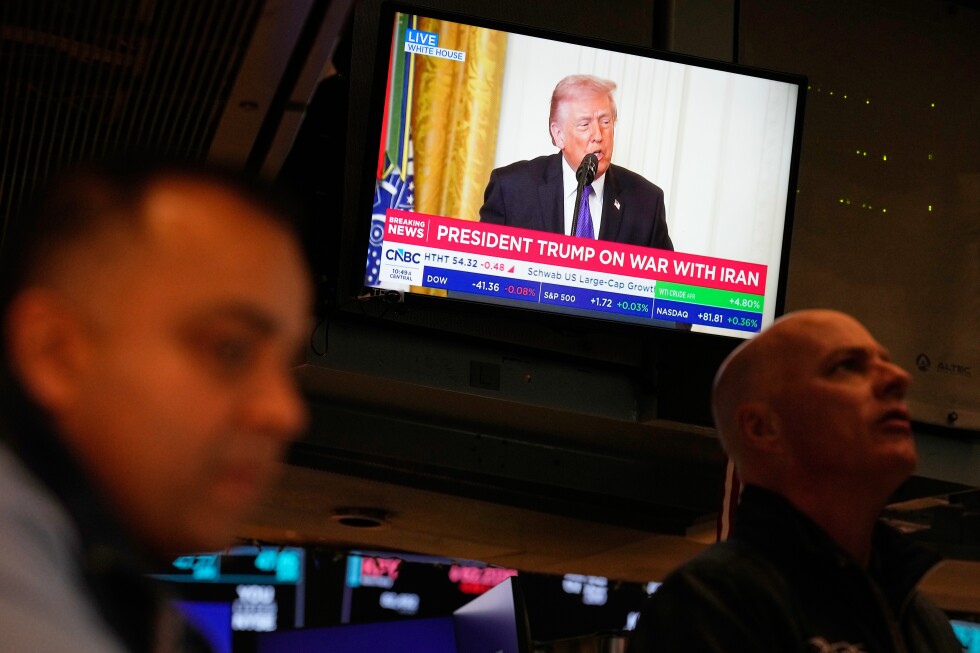
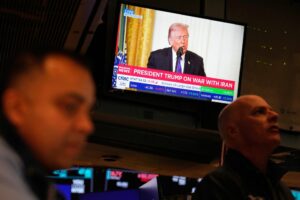
WASHINGTON (AP) — As the Iran war intensifies, President Donald Trump has prioritized efforts to calm the financial markets — trying to keep oil prices from exploding upward, stocks from cratering and interest rates from surging.
When the markets have flashed danger, Trump has been quick with a social media post or a remark to claim the war he launched last month could soon end. He’s publicly declared that the markets are doing better than he expected, even with the S&P 500 stock index declining over the past five weeks and the global oil benchmark up roughly 60%.
“I thought oil prices were going to go up higher than they are now,” Trump said at a Friday investor summit. “And I thought that we would see a bigger drop in stock. It hasn’t been that bad.”
With the Iran war, the White House has largely refrained from messaging more aggressively to voters about the economic consequences — choosing instead to try to contain any damage in the financial markets, which have swung wildly on the prospects of ceasefire or escalation in what has become a high-stakes guessing game about Trump’s next moves.
The Republican president showed the extremes of his messaging Monday before the U.S. stock market opened, writing in a social media post that great progress had been achieved on peace talks with Iran while also threatening civilian infrastructure such as desalination plants if a deal wasn’t reached “shortly.”
The White House sees the stock, energy and bond markets as a way to indirectly reach voters. Trump has staked his economic agenda on cheap prices at the pump, robust gains in 401(k) accounts and cheaper mortgage rates.
But that messaging appears to be wearing thin as the president’s various pronouncements have done little to change the reality that a large chunk of the world’s energy supplies is stranded by the conflict. Just 38% of U.S. adults approve of how he’s handling the economy and only 35% support him on Iran, according to a March survey by The Associated Press-NORC Center for Public Affairs Research.
The president has tried to dictate to markets instead of talking directly to Americans
Gene Sperling, a top economic adviser in the Democratic Clinton, Obama and Biden administrations, said voters can make a direct connection between prices at the pump and Trump’s choice to attack Iran. He said “simplistic jawboning” to the markets is insufficient for a public that is stuck paying the price as gasoline soars past $4 a gallon nationwide.
“Most advisers would say the president has to speak directly to the American people and fully acknowledge the economic pain that his policy has so directly caused in a short amount of time and make the case for why the national security concerns justify it,” Sperling said. “Instead, you have a strategy of not recognizing or even dismissing people’s economic pain.”
White House press secretary Karoline Leavitt on Monday called the oil price increases a “short-term fluctuation.”
Trump’s strategy of giving mixed messages has started to work against him, said Jeffrey Sonnenfeld, a professor at the Yale University School of Management and co-author of the new book “Trump’s Ten Commandments: Strategic Lessons from the Trump Leadership Toolbox.”
“The uncertainty is now soaring,” Sonnenfeld said. “As the messaging to calm markets with false reassurances is having diminishing credibility in financial markets, so, too, has Trump diminished public confidence.”
Trump’s desire for flexibility on the war limits his ability to offer clarity
Trump has embraced having flexibility in how he chooses to conduct the war, even though this has muddled his stated objectives.
During a Cabinet meeting Thursday, he said Iran was “begging” for a deal even as he threatened further military action — all the while maintaining that any economic damage to the U.S. would reverse itself.
On Friday after the markets closed, he extended his deadline for Iran to open the Strait of Hormuza key waterway for the flow of oil, saying he would hold off on bombing Iran’s energy plants in the meantime.
Treasury Secretary Scott Bessent said Monday on Fox News Channel’s “Fox & Friends” that Iran was letting some tankers through the Strait of Hormuz and that the “market is well supplied” because countries are releasing their strategic petroleum reserves and sanctions have been removed for Russian and Iranian oil already on tankers.
“We are seeing more and more ships go through on a daily basis as individual countries cut deals with the Iranian regime for the time being,” Bessent said. “But over time, the U.S. is going to retake control of the straits, and there will be freedom of navigation, whether it is through U.S. escorts or a multinational escort.”
Graham Steele, a Biden-era Treasury official, said Trump’s messaging techniques “can work temporarily, but they have diminishing returns, over time,” if they’re detached from actual policies and results.
“We saw a lot of the volatile market reactions initially, when he kept announcing these things and then walking them back,” Steele said. “The market reaction now is just a steady trend upward in prices,” he noted, adding that markets are “not responding to it in the same way anymore.”
Confidence in the economy and Trump is fading without clear results
The University of Michigan’s Index of Consumer Sentiment on Friday fell to a reading of 53.3 in March, its lowest level since December. Joanne Hsu, director of the surveys of consumers, pointed to the financial market volatility “in the wake of the Iran conflict” as reducing confidence in the economy for households with middle and higher incomes.
Hsu noted that the survey indicated that people do not expect the higher energy costs and stock market declines to persist, but that could change if the war “becomes protracted or if higher energy prices pass through to overall inflation.”
Gus Faucher, the chief economist at PNC Financial Services, stressed that low levels of consumer sentiment do not automatically signal a recession. But he said consumers would have to see lower gas prices, a steady stock market and decreased mortgage rates to feel better about the economy, which likely means a definitive resolution to the conflict rather than a series of pronouncements by Trump.
“The proof is in the pudding,” Faucher said. “People need to see some substantive improvements before they feel better about conditions.”
___
Follow the AP’s coverage of the Iran war at https://apnews.com/hub/iran.
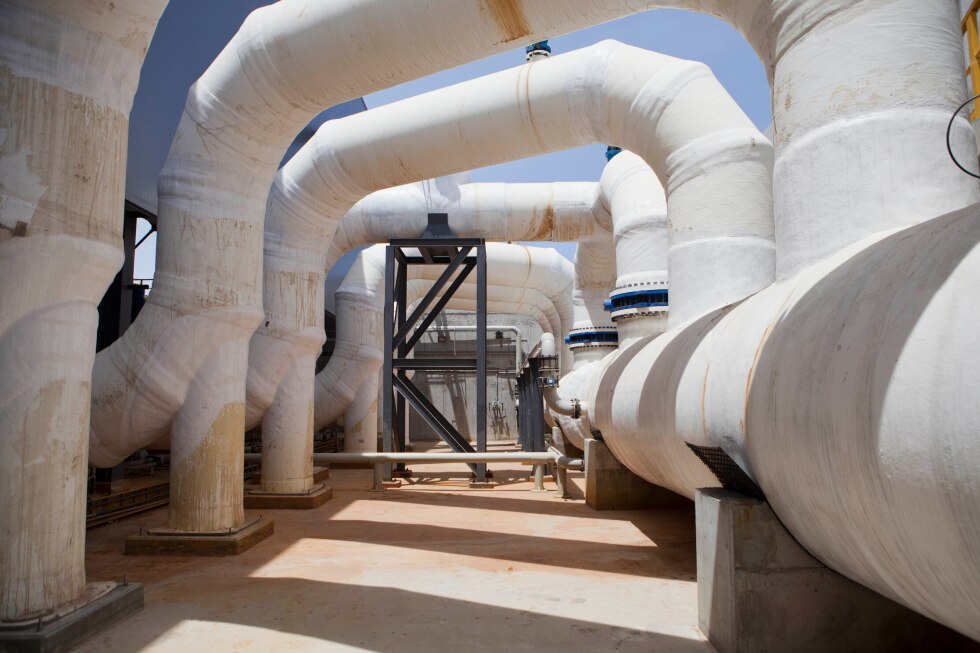
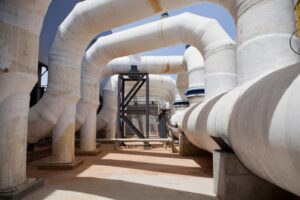
U.S. President Donald Trump on Monday threatened to target Iran’s energy infrastructure, including the country’s desalination plants. Such a move — and Iran’s possible targeting of the plants of its Gulf Arab neighbors — could have devastating impacts across the water-starved Middle East.
In a post on Truth Social, Trump said if a deal to end the war isn’t reached “shortly” and the Strait of Hormuzwhere much oil passes via tankers, is not immediately reopened, “we will conclude our lovely ‘stay’ in Iran by blowing up and completely obliterating all of their Electric Generating Plants, Oil Wells and Kharg Island (and possibly all desalinization plants!), which we have purposefully not yet ‘touched.’”
The biggest danger, analysts warn, may not be what Trump could do to Iran, but how Tehran could retaliate. Iran relies on desalination for a small share of its water supply while Gulf Arab states depend on it for the vast majority.
Hundreds of desalination plants sit along the Persian Gulf coast, putting individual systems that supply water to millions within range of Iranian missile or drone strikes. Without them, major cities — such as Dubai and Abu Dhabi in the United Arab Emirates or Doha, Qatar’s capital — could not sustain their current populations.
“Desalination facilities are oftentimes necessary for the survival of the civilian population and intentional destruction of those types of facilities is a war crime,” said Niku Jafarnia, a researcher at Human Rights Watch.
While less reliant on desalination, Iran’s water situation is dire
See how desalination works. (AP Animation: Panagiotis Mouzakis)
After a fifth year of extreme drought, some Iranian media reports say reservoirs supplying Tehran, the country’s capital, are below 10% capacity. Satellite pictures analyzed by The Associated Press also show reservoirs noticeably depleted. The country still draws most of its water from rivers, reservoirs and depleted underground aquifers.
Israeli airstrikes on March 7 on oil depots surrounding Tehran produced heavy smoke and acid rain. Experts warned the fallout could contaminate soil and parts of the city’s water supply.
“Attacking water facilities, even one, could end up being harmful to the population in such a severe water scarcity context,” Jafarnia said.
Before the war that Israel and the United States launched on Feb. 28, Iran had been racing to expand desalination along its southern coast and pump some of the water inland, but infrastructure constraints, energy costs and international sanctions have sharply limited scalability.
Across the Gulf, many desalination plants are tied to power stations
The Mina Al-Ahmadi oil refinery operates in Kuwait, March 20, 2026. (AP Photo, File)
The Mina Al-Ahmadi oil refinery operates in Kuwait, March 20, 2026. (AP Photo, File)
In Kuwait, about 90% of drinking water comes from desalination, along with roughly 86% in Oman and about 70% in Saudi Arabia. The technology removes salt from seawater — most commonly by pushing it through ultrafine membranes in a process known as reverse osmosis — to produce the freshwater that sustains cities, hotels, industry and some agriculture across one of the world’s driest regions.
Even where the plants are connected to national grids with backup supply routes, disruptions can cascade across interconnected systems, said David Michel, senior fellow for water security at the Center for Strategic and International Studies.
“It’s an asymmetrical tactic,” he said. “Iran doesn’t have the same capacity to strike back … But it does have this possibility to impose costs on the Gulf countries to push them to intervene or call for a cessation of hostilities.”
Desalination plants have multiple stages — intake systems, treatment facilities, energy supplies — and damage to any part of that chain can interrupt production, according to Ed Cullinane, Mideast editor at Global Water Intelligence, a publisher serving the water industry.
“None of these assets are any more protected than any of the municipal areas that are currently being hit by ballistic missiles or drones,” Cullinane said.
Two women from the Iranian Red Crescent Society stand as a thick plume of smoke from a U.S.-Israeli strike on an oil storage facility late Saturday rises into the sky in Tehran, Iran, Sunday, March 8, 2026. (AP Photo/Vahid Salemi, File)
Two women from the Iranian Red Crescent Society stand as a thick plume of smoke from a U.S.-Israeli strike on an oil storage facility late Saturday rises into the sky in Tehran, Iran, Sunday, March 8, 2026. (AP Photo/Vahid Salemi, File)
The Gulf produces about a third of the world’s crude exports and energy revenues underpin national economies. Fighting has already halted tanker traffic through key shipping routes and disrupted port activity, forcing some producers to curb exports as storage tanks fill.
“Everyone thinks of Saudi Arabia and their neighbors as petrostates. But I call them saltwater kingdoms. They’re human-made fossil-fueled water superpowers,” said Michael Christopher Low, director of the Middle East Center at the University of Utah. “It’s both a monumental achievement of the 20th century and a certain kind of vulnerability.”
Trump’s comments came as the conflict intensified, with Tehran striking a key water and electrical plant in Kuwait and an oil refinery in Israel coming under attack, while U.S. and Israeli forces launched a new wave of strikes on Iran.
US and Gulf governments have long recognized the risk
Smoke rises from an Israeli airstrike in Dahiyeh, Beirut’s southern suburbs, March 9, 2026. (AP Photo/Hassan Ammar, File)
Smoke rises from an Israeli airstrike in Dahiyeh, Beirut’s southern suburbs, March 9, 2026. (AP Photo/Hassan Ammar, File)
A 2010 CIA analysis warned that attacks on desalination facilities could trigger national crises in several Gulf states, and prolonged outages could last months if critical equipment were destroyed. More than 90% of the Gulf’s desalinated water comes from just 56 plants, the report stated, and “each of these critical plants is extremely vulnerable to sabotage or military action.”
Saudi Arabia and the UAE have invested in pipeline networks, storage reservoirs and other redundancies designed to cushion short-term disruptions. But smaller states such as Bahrain, Qatar and Kuwait have fewer backup supplies.
Desalination has expanded in part because climate change is intensifying drought across the region. The plants themselves are highly energy-intensive and emit massive amounts of carbon, while their coastal locations make them vulnerable to extreme weather and rising seas.
Past Mideast conflicts have seen attacks on desalination plants
Workers walk in an area at a degassing station in Zubair oil field, whose operations have being reduced due to the Mideast war triggered by the U.S. and Israeli attacks on Iran, near Basra, Iraq, March 28, 2026. (AP Photo/Leo Correa, File)
Workers walk in an area at a degassing station in Zubair oil field, whose operations have being reduced due to the Mideast war triggered by the U.S. and Israeli attacks on Iran, near Basra, Iraq, March 28, 2026. (AP Photo/Leo Correa, File)
During Iraq’s 1990-1991 invasion of Kuwait, retreating Iraqi forces sabotaged power stations and desalination facilities, said Low, from the University of Utah, while millions of barrels of crude oil were deliberately released into the Persian Gulf, which threatened seawater intake pipes used by desalination plants across the region.
Workers rushed to deploy protective booms around the intake valves of major facilities but the destruction left Kuwait largely without fresh water and dependent on emergency water imports. Full recovery took years.
In recent years, Yemen’s Iran-backed Houthi rebels have targeted Saudi desalination facilities as tensions escalated.
International humanitarian law, including provisions of the Geneva Conventions, prohibit targeting civilian infrastructure indispensable to the survival of the population, including drinking water facilities.
___
Follow Annika Hammerschlag on Instagram @ahammergram.
___
The Associated Press receives support from the Walton Family Foundation for coverage of water and environmental policy. The AP is solely responsible for all content. For all of AP’s environmental coverage, visit https://apnews.com/hub/climate-and-environment
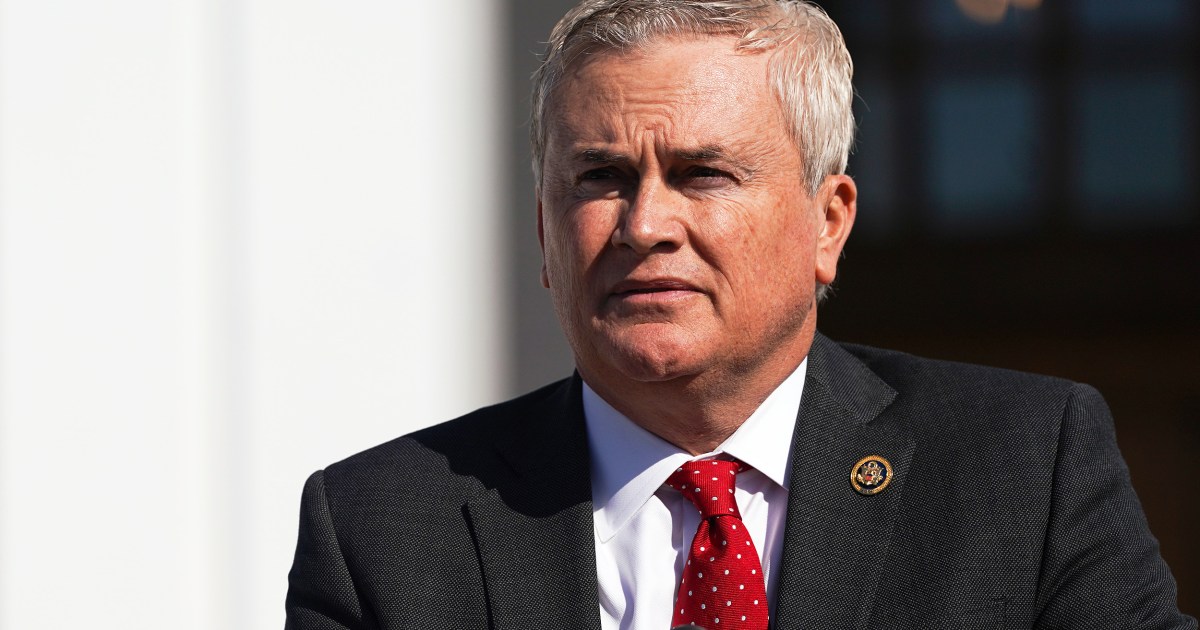
“Botched.” That was apparently House Oversight Committee Chair James Comer’s, R-Ky., assessment of the Justice Department’s handling, or mishandling, of the Epstein files under President Donald Trump. Comer made his critical comments to BLN on Monday night, awkwardly enough, during an attempt to defend the administration from criticism.
Comer also cast some blame on Jeffrey Epstein’s victims for delaying the release of files related to the late sex criminal, suggesting that class action lawsuits and victims’ demands for redactions have caused holdups, despite a federal law and congressional subpoena requiring the release of the vast majority of files related to Epstein.
This explanation doesn’t account for the department withholding documents detailing sexual assault allegations against Trump and other wealthy Epstein associates (all of whom have denied any wrongdoing). Comer’s excuse also doesn’t seem to explain a heavily redacted document that details a 2015 probe by the Drug Enforcement Administration into whether Epstein and others used drugs in connection with a prostitution ring. And of course, it doesn’t account for the inadequate redactions that exposed many victims’ names and personal details when some documents were initially released.
When BLN’s Jake Tapper noted the Trump administration has not released the files as mandated and has redacted names of individuals in Epstein’s inner circle, the chairman was seemingly forced to concede.
“Well, I think the Justice Department has botched this,” Comer said. “I don’t think anyone in America — Republican or, you know, avid Trump supporter — would defend the way that this has been rolled out.”
Some might say “botched” is too generous a characterization, given it suggests there was, at some point, a meaningful attempt to meet public expectations and comply with the law.
I can also think of more than a few Republicans who have defended and continue to defend the way the administration has handled the Epstein files, including TrumpAttorney General Pam Bondi and House Speaker Mike JohnsonR-La.
Comer himself has repeatedly thanked the administration for its “commitment to transparency.”
But Comer’s comment Monday was a prime example of the honesty that slips out of the chairman when he’s trying to defend Trump and his allies while discussing Epstein. Another example came in early March, when he said the DOJ in Trump’s first term moved to kill a 2019 state probe into Epstein’s New Mexico ranch.
“The federal government asked New Mexico to stop their investigation, I believe back in 2019, of that ranch,” Comer told Fox News. “So there’s just so many questions about how the government failed the victims and how government failed in trying to prosecute Epstein sooner. I mean, this whole thing doesn’t make sense.”
Ja’han Jones is an MS NOW opinion blogger. He previously wrote The ReidOut Blog.
- Trump’s strategy to calm markets during Iran war is falling flat
- Trump’s MAGA allies have a new plan for mass deportations. It could splinter the coalition.
- Isaacman aims to reinvigorate NASA’s image, starting with the moon
- Dems hit the airwaves over Iran
- A slowdown in US visa processing is wreaking havoc on foreign doctors’ lives
- How prediction markets landed in Congress’ crosshairs
- The DHS shutdown might never end

- What Trump’s threat against Iran’s desalination plants means for Mideast
- Artemis is NASA’s return to the moon. Why astronauts won’t land there just yet

- Ingraham questions whether Trump understood Iran military operation’s ‘complexity’

-

 Politics1 year ago
Former ‘Squad’ members launching ‘Bowman and Bush’ YouTube show
-

 The Dictatorship1 year ago
Luigi Mangione acknowledges public support in first official statement since arrest
-

 Politics1 year ago
Former Kentucky AG Daniel Cameron launches Senate bid
-

 Politics1 year ago
Blue Light News’s Editorial Director Ryan Hutchins speaks at Blue Light News’s 2025 Governors Summit
-

 The Dictatorship7 months ago
Mike Johnson sums up the GOP’s arrogant position on military occupation with two words
-

 The Dictatorship1 year ago
Pete Hegseth’s tenure at the Pentagon goes from bad to worse
-
Uncategorized1 year ago
Bob Good to step down as Freedom Caucus chair this week
-

 Politics11 months ago
Democrat challenging Joni Ernst: I want to ‘tear down’ party, ‘build it back up’