
Politics
This school’s response to school shootings should upset parents everywhere

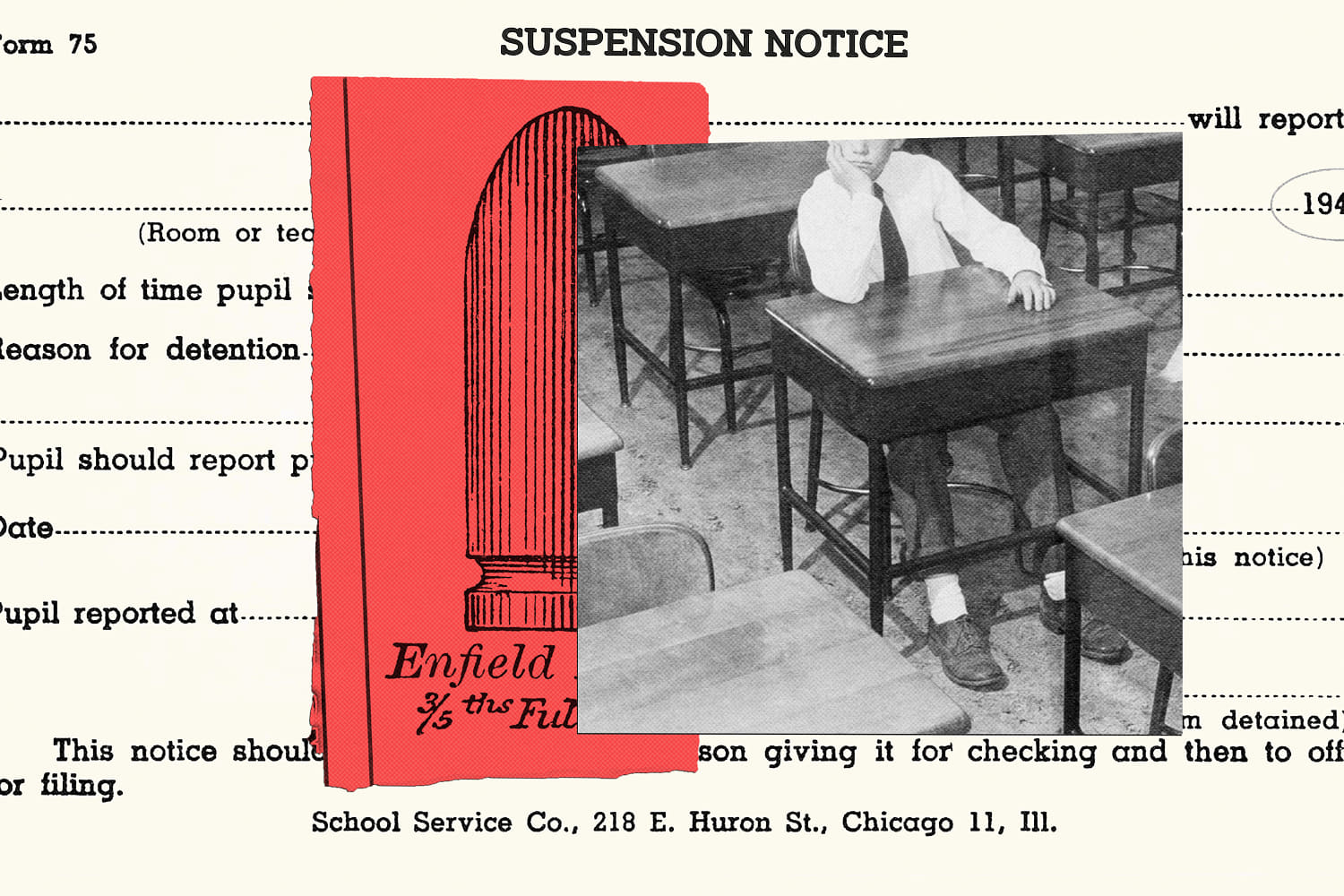
The day after police say a 14-year-old was arrested Georgia’s Apalachee High Schoola radio report about that murderous attack began to play as I drove my 7th grader to school. She wanted to know if anybody had died. I said, “I think so,” deliberately avoiding giving her the details that two students and two teachers were dead. She had just recently participated in her school’s “See Something, Say Something” campaign and had recently had a lockdown drill, and I felt sick with the realization of how much she’s been forced to think about threats at school and what she’d do if one arose.
It was upsetting to hear what a Catholic school in Virginia Beach did when an 11-year-old told officials there that a classmate had brought a bullet to school.
That’s one of the reasons it was so upsetting to hear about what a Catholic school in Virginia Beach did when an 11-year-old 6th grader told officials there that a classmate had brought a bullet to school. He should have been effusively thanked for reporting what he saw. But in a move that epitomizes the trend in American schools of making innocent actors outlaws, the principal, who reportedly commended the boy, at the same time, punished him with a suspension. His waiting two hours for the opportunity to make the report anonymously, they said, was unacceptable and warranted punishment.
It filled me with a rage to think that our daughter, or anybody’s child, would be made to feel bad in such a situation.
Worse still, the boy who reported that his classmate had brought a bullet to school was given the same punishment — a 1-1/2 day suspension — as the boy who brought the contraband. To punish the boy who alerted school officials to a possible danger is by itself indefensible, but to give the other boy the same punishment renders their actions equivalent. It beggars belief that officials at St. John the Apostle Catholic School are acting as if they are.
But school officials and leaders of The Catholic Diocese of Richmond are defending their actions. “Failure to report a safety concern affects the safety of everyone in the school,” Leslie Winneberger, a lawyer for the diocesewrote in a letter obtained by The Washington Post. “… The school cannot, and will not, take chances when it comes to student safety, especially true in light of the school shooting in Georgia this past week.”
But thanking the boy who reported what he saw and using his delay as an opportunity to emphasize the importance of acting with urgency would not have represented the school taking chances. It would have been humane and gracious and in keeping with the school’s mission to provide a “Christ-centered learning environment” with a focus on students’ “moral development.”
What Christ-centered message is St. John the Apostle communicating here: that rain falls on the just and the unjust?
All schools have a role to play in students’ moral development. They should all foster — and at a minimum not impede — students’ discernment of good and bad and right and wrong.
All schools, not just religious ones, have a role to play in students’ moral development. They should all foster — and at a minimum not impede — students’ discernment of good and bad and right and wrong. But whether it’s pre-kindergarteners getting suspended for hugging or elementary students getting sent home for playfully shaping their fingers into a gunwe’ve witnessed a trend over the last couple of decades of school officials letting their fear of being sued justify their punishing undeserving students.
When you add those decisions to policies that criminalize certain hair stylesand demand that students eat lunch without talking to one another and remain just as quiet while walking the halls in perfectly straight linesthere seems at times to be a concerted effort in our country’s schools to stamp out any and every sign of young people’s humanity. And to replace their human-centered sense of right and wrong with the latest download from the school’s risk-management team.
Not only is punishing a boy who alerted school officials to his classmate’s bullet likely to give the entire student body a warped sense of ethics, as an attorney hired by his mother rightly points out, it sends students the message that they’d be “better off not saying anything,” as reported by the Post.
The last thing school officials should want is students who are fearful that reporting something suspicious will get them in trouble from school officials who say they took too long. For many students, the fear of getting in trouble — especially suspended — may be a the worst thing they can imagine. I was such a child, and I don’t think our daughter is much different. And while we may hope that a student who senses a threat rightly prioritizes school safety over fear of getting in trouble, the best way to encourage them to make that a priority is to remove from them the fear of getting in trouble.
Ironically, the boy waited till the end of a standardized test — which the educational establishment has succeeded in convincing students are all important — before he said anything.
For many students, the fear of getting in trouble may be the worst thing they can imagine.
The mother of the boy who told school officials what he knew says he wanted to make the report about the bullet quietly, “because one of the things he didn’t want was to be bullied and didn’t want to be labeled a ‘snitch,’” but because he and the other kid disappeared from their classroom at the same time and they served their suspensions simultaneously, his peers quickly figured it out.
Speaking of a warped sense of right and wrong, a North Carolina man was arrested after officials say he emailed a bomb threat to St. John the Apostle and caused officials to shut down school for two days. It should go without saying that nothing justifies threatening a school, and school officials are right to be angry at the threat.
But that arrest does nothing to address the anger from the mother of the boy who was wrongly suspended or ease the fears of parents who may fear that their school will adopt a policy just as wrongheaded as St. John the Apostle. We all want our children to be safe. But we don’t want them to be made out as villains if they try to keep their school safe but don’t do it quickly enough according to some ridiculously arbitrary standard.




NEW YORK (AP) — A federal judge on Tuesday ordered the Trump administration to restore the government-run Voice of America’s operations after it had effectively been shut down a year ago, putting hundreds of employees who have been on administrative leave back to work.
U.S. District Court Judge Royce C. Lamberth gave the U.S. Agency for Global Media a week to put together a plan for putting Voice of America on the air. It has been operating with a skeleton staff since President Donald Trump issued an executive order to shut it down.
A week ago, Lamberth said Kari Lake, who had been Trump’s choice to lead the agency, did not have the legal authority to do what she had done at Voice of America. In Tuesday’s decision, Lamberth ruled on the actions she had taken to respond to Trump’s order, essentially shelving 1,042 of VOA’s 1,147 employees.
“Defendants have provided nothing approaching a principled basis for their decision,” Lamberth wrote.
There was no immediate comment on the decision by the agency overseeing Voice of America. Lake had denounced Lamberth’s March 7 ruling, saying it would be appealed. Since then, Trump nominated Sarah Rogers, the undersecretary of state for public diplomacy, to run USAGM. That requires Senate approval, a step that was not taken with Lake.
Patsy Widakuswara, Voice of America’s White House bureau chief and a plaintiff in the lawsuit to restore it, said she is deeply grateful for the decision.
“We are eager to begin repairing the damage Kari Lake has inflicted on our agency and our colleagues, to return to our congressional mandate, and to rebuild the trust of the global audience we have been unable to serve for the past year,” she said.
“We know the road to restoring VOA’s operations and reputation will be long and difficult,” she said. “We hope the American people will continue to support our mission to produce journalism, not propaganda.”
Voice of America has transmitted news coverage to countries around the world since its formation in World War II, often in countries with no tradition of a free press. Before Trump’s executive order, VOA had operated in 49 different languages, broadcasting to 362 million people.
NEW YORK (AP) — A federal judge on Tuesday ordered the Trump administration to restore the government-run Voice of America’s operations after it had effectively been shut down a year ago, putting hundreds of employees who have been on administrative leave back to work.
U.S. District Court Judge Royce C. Lamberth gave the U.S. Agency for Global Media a week to put together a plan for putting Voice of America on the air. It has been operating with a skeleton staff since President Donald Trump issued an executive order to shut it down.
A week ago, Lamberth said Kari Lake, who had been Trump’s choice to lead the agency, did not have the legal authority to do what she had done at Voice of America. In Tuesday’s decision, Lamberth ruled on the actions she had taken to respond to Trump’s order, essentially shelving 1,042 of VOA’s 1,147 employees.
“Defendants have provided nothing approaching a principled basis for their decision,” Lamberth wrote.
There was no immediate comment on the decision by the agency overseeing Voice of America. Lake had denounced Lamberth’s March 7 ruling, saying it would be appealed. Since then, Trump nominated Sarah Rogers, the undersecretary of state for public diplomacy, to run USAGM. That requires Senate approval, a step that was not taken with Lake.
Patsy Widakuswara, Voice of America’s White House bureau chief and a plaintiff in the lawsuit to restore it, said she is deeply grateful for the decision.
“We are eager to begin repairing the damage Kari Lake has inflicted on our agency and our colleagues, to return to our congressional mandate, and to rebuild the trust of the global audience we have been unable to serve for the past year,” she said.
“We know the road to restoring VOA’s operations and reputation will be long and difficult,” she said. “We hope the American people will continue to support our mission to produce journalism, not propaganda.”
Voice of America has transmitted news coverage to countries around the world since its formation in World War II, often in countries with no tradition of a free press. Before Trump’s executive order, VOA had operated in 49 different languages, broadcasting to 362 million people.
The Oklahoma senator’s secretive travel a decade ago has emerged as an issue in his confirmation…
Read More
- Judge orders restoration of Voice of America

- Trump delays China trip to focus on war in Iran
- Judge orders restoration of Voice of America
- Judge orders restoration of Voice of America
- Democrats say Bondi won’t commit to testifying in House Epstein investigation
- Senate rejects limits on Trump as Iran war intensifies
- Why Judge Boasberg’s ruling on DOJ’s Jerome Powell investigation is bigger than one case
- Judge writes Kari Lake ‘repeatedly thumbed her nose’ at legal requirements

- In touting SAVE Act, Johnson refuses to cite any fraud it would have prevented
- ‘Warrants or bust’: House hard-liners deliver ultimatum ahead of spy powers vote
-

 The Dictatorship1 year ago
Luigi Mangione acknowledges public support in first official statement since arrest
-

 Politics1 year ago
Former ‘Squad’ members launching ‘Bowman and Bush’ YouTube show
-

 Politics1 year ago
Blue Light News’s Editorial Director Ryan Hutchins speaks at Blue Light News’s 2025 Governors Summit
-

 Politics1 year ago
Former Kentucky AG Daniel Cameron launches Senate bid
-

 The Dictatorship6 months ago
Mike Johnson sums up the GOP’s arrogant position on military occupation with two words
-

 The Dictatorship1 year ago
Pete Hegseth’s tenure at the Pentagon goes from bad to worse
-

 Politics11 months ago
Democrat challenging Joni Ernst: I want to ‘tear down’ party, ‘build it back up’
-
Uncategorized1 year ago
Bob Good to step down as Freedom Caucus chair this week