Connect with us

Politics

This is the new progressive strategy for warring with Trump

Published

on

Progressive Democrats wrestling with how to navigate a second Donald Trump presidency are settling on a new approach: Take his populist, working-class proposals at his word — or at least pretend to.

If he succeeds, they can take some credit for bringing him to the table. If he doesn’t, they can bash him for it.

It’s a change in strategy, emerging in private conversations among some liberal elected officials and operatives, that comes after years of resisting Trump ended with him returning to the White House.

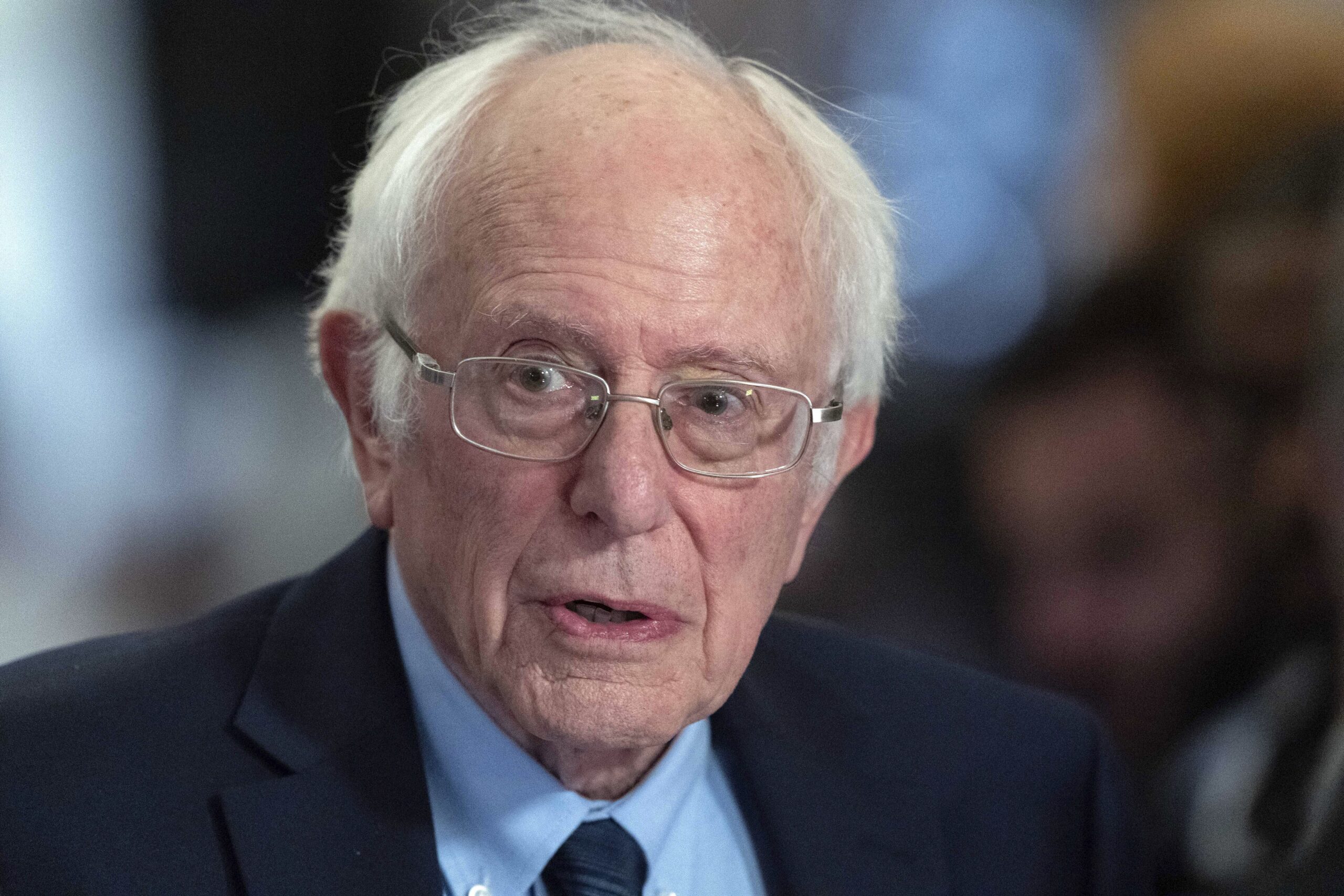
Rep. Pramila Jayapal (D-Wash.), chair of the Congressional Progressive Caucus, said in an interview that she would likely work with Trump if he pursues antitrust promises he made on the campaign trail. Sen. Richard Blumenthal (D-Conn.) said he sees himself partnering with Trump to tackle “large corporate consolidations,” while Sen. Bernie Sanders (I-Vt.) posted on X that he “looked forward” to Trump “fulfilling his promise” to cap credit card interest rates.

Even Sen. Elizabeth Warren (D-Mass.), the resistance icon who popularized the motto “nevertheless, she persisted” while skewering a Trump cabinet pick in 2017, is finding common cause with the president-elect.

“President Trump announced during his campaign that he intended to put a 10 percent interest rate cap on consumer credit,” Warren told Blue Light News. “Bring it on.”

But, she added, “if he refuses to follow through on the campaign promises that would help working people, then he should be held accountable.”

An aide to a progressive member of Congress, who was granted anonymity to discuss internal strategy, stated the obvious: Liberal Democrats will continue to oppose most of what Trump does “tooth and nail.”

However, the person said, “For the few policy proposals that we think will help the working class, capping credit card interest rates being one of them, we’ll say, ‘Put up or shut up.’ Because if he does, it’s a great win for millions of people across this country. And if he doesn’t, it exposes him as a fraud that he is.”

Progressives are not suddenly buying MAGA hats, and with Trump not yet in office, the range of ways they may engage him — or oppose him — remains a work in progress. They are still appalled by Trump’s behavior and policies, including his plans to create the largest deportation program in history, cut taxes for the wealthy and roll back transgender rights. And many of them fear that Trump is an aspiring dictator who threatens democracy itself (which Trump allies have said is unfounded).

But some of Trump’s populist campaign promises fall in line with progressives’ own aspirations. Those include making in vitro fertilization treatments free, ending taxes on tips and capping credit card interest rates. He has also promised for years to protect the popular programs of Social Security and Medicare. At times, he has promoted directing Medicare to negotiate drug prices.

When asked for comment, Trump spokesperson Steven Cheung said, “President Trump’s America First policies will help uplift all Americans and Democrats know voters are now firmly behind him, as opposed to their failed and tired policies that have devastated this country for the last four years.”

And some of Trump’s allies have also backed a handful of other ideas that progressives support, from slashing the Pentagon to strictly enforcing antitrust laws.

Billionaire Elon Musk, who has been charged by Trump with downsizing the federal government, appeared to agree with progressive Rep. Ro Khanna in a recent thread on X that the Department of Defense spends too much money on contractors.
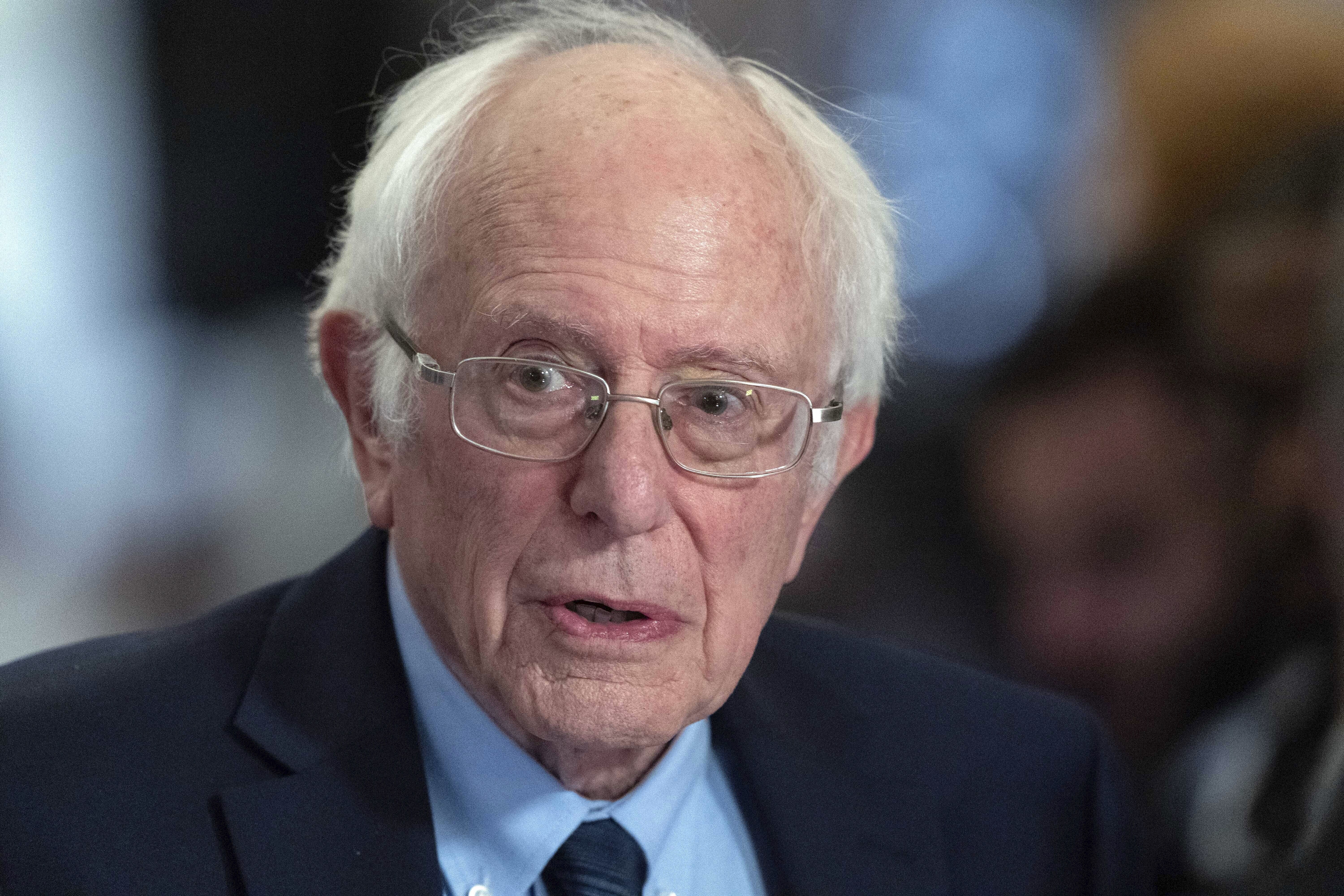
Sen. Bernie Sanders posted on X that he “looked forward” to Trump “fulfilling his promise” to cap credit card interest rates.

Top Trump ally Matt Gaetz, whom the president-elect tapped for attorney general but has since withdrawn, has praised Federal Trade Commission Chair Lina Khan. Khan is revered on the left for infuriating Wall Street and aggressively busting up monopolies. Though Khan is not expected to stay on under Trump, and Musk said she would be “fired soon,” Vice President-elect JD Vance has also spoken positively about her and called for breaking up Big Tech.

Last week, Khan returned the favor at an FTC meeting, saying that she is “so grateful and appreciative of the bipartisan support” for her work, “including from Vice President-elect Vance and formerly Congressman Gaetz.”

Progressives are clear-eyed that with a Republican-controlled House and Senate, many, if not most, of Trump’s populist campaign promises will not happen — if he were ever serious about them to begin with. But they believe that his voters want him to follow through. They also lack any power in Congress and are desperate for even an outside chance to influence policy.

Adam Green, co-founder of the Progressive Change Institute, said that his group conducted polling in the critical battleground states of Pennsylvania and Michigan during the final week of the election. He said the surveys, done in conjunction with the liberal firm Data for Progress, found that the majority of Trump’s voters want him to crack down on price gouging, raise taxes on billionaires, and strengthen anti-monopoly laws.

“Trump actually made promises to people, like helping those on Social Security, ending taxes on tips, and capping credit card interest at 10 percent,” he said. “His own voters believe he has a mandate on that, plus higher taxes on billionaires and big corporations. So let’s hold a mirror up to him and ask, are you going to be a hypocrite or not?”

Not all progressives agree with that strategy. Rep. Summer Lee (D-Pa.), a member of the so-called Squad, said of Trump, “I’ve never gotten the impression that he’s been accountable to anything in his life.” But, she said, “I don’t fault anybody for trying.”

Sen. Peter Welch (D-Vt.) said that holding Trump’s feet to the fire in Congress is “a little bit unrealistic — we don’t have the votes.” But he said there is room to advocate for liberal policies.

“If there’s areas we agree, let’s work together and get them done: credit card fees, cap on interest rates, prescription drug reference pricing,” he said. “I’m all about working on things that are going to help working-class people.”

Either way, it’s not 2017 anymore. And Resistance 2.0 won’t look exactly the same as its first era.

“There’ll be places where resistance is appropriate,” said Warren. “For example, if Trump follows his V.P. JD Vance in trying to ban access to abortion nationwide through the FDA, there will be massive resistance. If Trump follows through on his promises for more tax cuts for billionaires and billionaire corporations, we’re going to be in that fight all the way.”

At the same time, she said, “if Trump is going to lower interest rates on all consumer loans to 10 percent, count me in.”


Continue Reading
Click to comment

Leave a Reply

Your email address will not be published. Required fields are marked *

Politics

Senator Slotkin on why Dems need their own ‘Project 2029’ | The Conversation

Published

on

Senator Slotkin on why Dems need their own ‘Project 2029’ | The Conversation

lead image

Continue Reading

Politics

Trump administration pauses some Medicaid funding to Minnesota

Published

on

WASHINGTON (AP) — Vice President JD Vance announced Wednesday that the Trump administration would “temporarily halt” some Medicaid funding to the state of Minnesota over fraud concernsas part of what he described as an aggressive crackdown on misuse of public funds.

Vance, who made the announcement with Dr. Mehmet Oz, the administrator for the Centers for Medicare and Medicaid Services, said the administration was taking the action “in order to ensure that the state of Minnesota takes its obligations seriously to be good stewards of the American people’s tax money.”

Oz, who referred to people committing fraud as “self-serving scoundrels,” said the federal government would hold off on paying $259.5 million to Minnesota in funding for Medicaid, the health care safety net for low-income Americans.

“This is not a problem with the people of Minnesota, it’s a problem with the leadership of Minnesota and other states who do not take Medicaid preservation seriously,” Oz said.

Wednesday’s move is part of a larger Trump administration effort to spotlight fraud around the country. That effort comes after allegations of fraud involving day care centers run by Somali residents in Minneapolis prompted a massive immigration crackdown in the Midwestern city, resulting in widespread protests. President Donald Trump, in his State of the Union address on Tuesday, announced Vance would spearhead a national “war on fraud.”

Trump also recently nominated Colin McDonald to serve as the first assistant attorney general in charge of a Justice Department division dedicated to rooting out fraud.

Minnesota pushes back

Oz said the administration was simultaneously notifying Minnesota’s Democratic Gov. Tim Walz as he was making the announcement publicly.

“We will give them the money, but we’re going to hold it and only release it after they propose and act on a comprehensive corrective action plan to solve the problem,” Oz said.

He said Walz would have 60 days to respond and advised health care providers and Medicaid beneficiaries who were concerned to contact Walz’s office.

Walz, former Vice President Kamala Harris’ 2024 running mate, said in a pair of social media posts that the administration’s move had nothing to do with fraud.

“This is a campaign of retribution. Trump is weaponizing the entirety of the federal government to punish blue states like Minnesota,” Walz said. “These cuts will be devastating for veterans, families with young kids, folks with disabilities, and working people across our state.”

Minnesota Attorney General Keith Ellison said in a statement that his team has secured over 300 Medicaid fraud convictions since he took office in 2019. And he noted that he called on the Legislature earlier Wednesday to give him more staff and new legal tools to combat Medicaid fraud.

“Courts have repeatedly found that their pattern of cutting first and asking questions later is illegal, and if the federal government is unlawfully withholding money meant for the 1.2 million low-income Minnesotans on Medicaid, we will see them in court,” Ellison said.

Oz said the Centers for Medicare and Medicaid Services were also taking action to crack down on fraud in Medicare, the health care system relied upon by millions of older adults.

He said CMS for six months would block any new Medicare enrollments for suppliers of durable medical equipment, prosthetics, orthotics or other supplies used to treat chronic conditions or assist in injury recovery.

The Office of the Inspector General for the U.S. Department of Health and Human Services found last year that Medicare improperly paid suppliers nearly $23 million for durable medical equipment from 2018 through 2024. But it found that most of that was before January 2020, when changes to the system were implemented.

Oz also announced a new crowdsourcing effort he said would help “crush fraud” by soliciting Americans’ tips and suggestions.

“All of us are smarter than any one of us,” he said.

In a news release accompanying the announcement, CMS said the funding being paused in Minnesota included some $244 million in unsupported or potentially fraudulent Medicaid claims and about $15 million in claims involving “individuals lacking a satisfactory immigration status.”

Immigrants who are not living in the U.S. legally, as well as some lawfully present immigrants, are not allowed to enroll in the Medicaid program that provides nearly-free coverage for health services.

CMS said in the release that if Minnesota fails to satisfy its requirements, it may defer up to $1 billion in federal funds to the state over the next year. CMS spokesperson Catherine Howden said the agency’s review of potential fraud cases would include sampling claims to see if they comply with federal requirements, and potentially requesting more information about specific claims.

Akeiisa Coleman, the senior program officer for Medicaid at the Commonwealth Fund, said CMS was taking a “highly unusual step” in deferring funding. She said if the state doesn’t have enough funds available, it may have to halt payments to providers, which could affect care.

Democratic-run states face cutoffs

The administration has threatened to cut off funding for various programs for some Democratic-run states over fraud concerns over the last few months.

One judge blocked those actions and required that payments flowing to Minnesota and four other states — California, Colorado, Illinois and New York — for a variety of social service programs. The government had said that there was “reason to believe” that those states were granting benefits to people in the country illegally. It did not initially explain where that information came from, but a government lawyer told the judge it was largely in reaction to news reports about possible fraud.

Another judge said she would not let it cut off funding for administrative costs for 22 states that have refused to hand over information about applicants and recipients of food aid through the Supplemental Nutritional Assistance Program.

The latest action was prompted in part by a series of fraud cases, including a nonprofit called Feeding Our Future accused of stealing pandemic aid meant for school meals. Prosecutors have put the losses from that case at $300 million.

Since then, Trump has targeted the Somali diaspora in Minnesota with immigration enforcement actions and has made a series of disparaging comments about the community. During his State of the Union address on Tuesday, Trump said “pirates” have “ransacked Minnesota.”

Federal agencies have also been enlisted to assist in targeting fraud in Minnesota.

Last December, the U.S. Treasury Department issued an order requiring money wire services that people use to send money to Somalia to submit additional verification to the Treasury.

The Center for Medicare and Medicaid Services told Minnesota in January that it intended to freeze parts of payments for some Medicaid programs that were deemed high-risk. The state said that those cuts would add up to more than $2 billion annually if they lasted and made an administrative appeal.

___

Associated Press writers Geoff Mulvihill in Philadelphia, Steve Karnowski in Minneapolis and Fatima Hussein in Washington contributed to this report.

Read More

Continue Reading

Politics

Mike Johnson to attend Turning Point event with far-right global leaders

Published

on

Turning Point Action, the political organization founded by the late conservative activist Charlie Kirk, will bring together U.S. and international politicians at a conference next week — including members of far-right parties across the globe.

Markus Frohnmaier, a political leader from the far-right German party Alternative für Deutschland (AfD), is among the announced guests at the Alliance of Sovereign Nations, scheduled for March 4 to 6 in Washington. Other guests include House Speaker Mike Johnson (R-La.); Rep. Anna Paulina Luna (R-Fla.); George Simion, founder of the far-right Alliance for the Union of Romanians; and European Parliament members Barbara Bonte of the far-right Vlaams Belang party and Petra Steger of Austria’s right-wing Freiheitliche Partei (FPÖ).

In an interview, Turning Point Action COO Tyler Bowyer said the event was “spurred” by Luna and that more attendees will be announced soon. He referred to the parties that will be represented, including AfD, as “center-right.”

Germany’s Federal Office for the Protection of the Constitution in May 2025 classified parts of the AfD as “proven right-wing extremist” for being an alleged threat to the country’s democratic order and agitating against migrants. But the party filed a legal challenge, and a court made a temporary ruling this week suspending the designation until the case is fully decided.

“There’s a lot of people from a lot of different countries that are representing center-right politics across the world. So it’s important to hear everyone,” Bowyer said. “There’s a lot of things going wrong in Germany right now. It’s important to hear everybody out.”

Spokespeople for Johnson and Luna declined to comment. In a social media post Wednesday morning, Luna wrote, “Next week members of government from around the world will be coming together at the Alliance of Sovereign Nations! @SpeakerJohnson will be there!”

The conference’s mission statement declares “every country has a rightful obligation to defend its sovereignty and put their interests first,” according to its website. The conference is also sponsored by Republicans for National Renewal.

The AfD party has gained increasing support in Trump’s Washington. Secretary of State Marco Rubio and Vice President JD Vance have condemned efforts to label the party as extremist. Frohnmaier has recently traveled several times to Washington for meetings with Luna and other Republican representatives as well as State Department officials. State Department officials have accused the German government of suppressing freedom of opinion, an accusation the German government strongly rejects. Sarah Rogers, undersecretary of State for diplomacy, this week called a criminal investigation by German police of a critical post directed at German Chancellor Friedrich Merz “a case of lèse-majesté.”

In October, Luna posted on X that she met with Anna Rathert, a member of Germany’s federal parliament who’s part of the AfD’s parliamentary group and member of the foreign affairs committee in Bundestag. She and other members of Congress also met with Kay Gottschalk and other members of the AfD in Washington in December. She praised the party as “actually working to strengthen ties with the United States and restore a healthy relationship between our governments” and accused Germany’s chancellor of “trashing our president and censoring German citizens.”

In an interview with Welt last November, Luna said she was planning the conference as an event that “will counter Davos” and be more focused on “the sovereignty of nations.”

In Germany, AfD currently polls in second place, only a few percentage points behind the governing Christian Democrats of Merz.

Last December, Frohnmaier was awarded a prize at the New York Young Republican Club gala for AfD’s “courageous work undertaken in the particularly suppressive and hostile political environment of Germany,” as the invitation stated.

Only weeks earlier, the New York State Young Republicans chapter was disbanded after POLITICO reported on a group chat in which leaders praised Adolf Hitler and joked about the Holocaust.

Continue Reading

Trending