
Congress
The turbulent trajectory of Trump’s ‘Nazi streak’ acolyte

A conservative activist who had caught Donald Trump’s attention with flattery via Substack ahead of the 2024 presidential election imagined a prominent role for himself in a future administration.
In a group chat with half a dozen Republican operatives and influencers, Paul Ingrassia in October 2023 texted: “Trump needs me as his chief of staff,” according to a screenshot obtained by Blue Light News.
“I’m not kidding.”
Ingrassia, then in his late 20s, had only graduated from Cornell Law School the year before and had yet to be admitted to the New York Bar.
The coveted job, of course, went to veteran political operator Susie Wiles, who typically shies from the limelight.
But Ingrassia had gained confidence about his potential path to the White House after his Substack columns, which included arguments that Trump would defeat Ron DeSantis in the primary, caught the then-candidate’s eye.
Trump responded with handwritten notes and Ingrassia posted them on X.
“Great seeing you at Bedminster — young and handsome,” Trump wrote to Ingrassia.
Another note, also posted on the social media site in the summer of 2023, read: “Paul, Great seeing you — the man behind the great writings — you are looking good.”
Ingrassia, 30, would eventually land a series of administration jobs, though not as the president’s top aide. He’s now known in Washington for withdrawing from a Senate confirmation process to lead a federal whistleblower agency after a POLITICO report in October revealed racist comments Ingrassia made in the same group chat where he mused about being chief of staff.
Ingrassia and his lawyer, Edward Andrew Paltzik, did not respond to requests for comment for this article. In October, Paltzik did not confirm the texts were authentic, saying they could be manipulated and were provided without proper context.
The GOP-led rejection of Ingrassia’s nomination was a rare break between the administration and a largely compliant Congress. It didn’t result in his ouster. Instead, Ingrassia got an invitation to meet Trump at the White House and another administration post — this time at the General Services Administration that manages federal buildings, IT services and government procurement.
Alan Jacoby, the founder of Patriot Cigar Company who met Ingrassia through New York Republican circles several years ago, said Ingrassia’s goal before Trump was reelected was to get a position in the administration.
“We don’t always agree when it comes to political issues even though we’re both conservatives. However, his support for President Trump is unmatched,” he said.
Ingrassia’s almost Trumpian survival demonstrates how ideological affinity and personal loyalty can outweigh all other considerations in this administration. And while top officials in the Republican Party and White House have split between denouncing bigoted language exhibited by officials like Ingrassia — who said he has a “Nazi streak” according to the texts — and forming a defensive line around supporters, the messages don’t appear to have hurt his official standing.
GSA spokesperson Marianne Copenhaver hailed Ingrassia’s “outstanding service” in a statement about his new role as GSA’s deputy general counsel just weeks after GOP Sen. Rick Scott of Florida said he wouldn’t support his nomination to lead the Office of Special Counsel because he didn’t understand “how anybody can be antisemitic in this country.”
The schism remains at the heart of an unsettled question about MAGA’s future and whether a Trump-style successor can emerge when others who’ve deployed a similarly bombastic and divisive approach to leadership have failed. Where many young Republican staffers lost government or party positions when inflammatory texts were made public in a different POLITICO investigation involving a separate text chain this year, Ingrassia got another senior administration post. In that sense he’s like Trump himself, who only gained more staying power during everything from the Access Hollywood video to the Jan. 6, 2021, riot.
For this article about Ingrassia’s journey from a once-obscure MAGA acolyte to a Trump world fixture, Blue Light News spoke to more than two dozen administration officials, senators, Capitol Hill staffers and others who know Ingrassia. Blue Light News also reviewed contemporaneous messages of former law school classmates and fellow conservative influencers. Many of the people were granted anonymity to speak candidly about Ingrassia because of retaliation concerns or because they weren’t authorized to speak publicly. The White House did not respond to a request for comment.
Law school controversy
Ingrassia’s time in the administration has echoes of his law school experience.
He had trouble fitting into his cohort at Cornell Law, three former classmates told Blue Light News, describing him as a quiet and closely guarded person.
But Ingrassia did draw attention — if unwanted — during his time at Cornell. In the wake of the 2020 election, while classes were partially virtual due to the Covid-19 pandemic, a classmate shared with other students a screenshot of a Twitter post by Ingrassia’s mother repeating claims that Trump was the legitimate winner of the 2020 presidential election, according to two of the former classmates.
“For a little change of pace, here’s Paul’s batshit crazy mom,” the classmate who posted the screenshot wrote in a GroupMe chat for the entire Cornell Law class of 2022, according to the two classmates in the chat. The post was swiftly deleted.
“Following some sage counsel here and issuing an unqualified apology. We obviously have some strong disagreements, but ‘your mom is batshit crazy’ is obviously well over the line and it’s incredibly unfortunate that I posted it here. My bad,” the classmate wrote a short time later, according to a copy of the message.
Reached for comment by Blue Light News, Ingrassia’s mother, Donna Gallo Ingrassia, a Long Island real estate broker, defended standing up for what she believes.
“We are a family who stands up for what we believe in even if it is against the popular viewpoint,” she said in an email. “We fought for my daughter’s former classmate Gabby Petito [who was killed in Wyoming in 2021], fought against vaccine and mask mandates, we fought against the steal of 2020 and we campaigned hard for President Trump.”
A rocky entry
Years later, Ingrassia had the backing of his mother who trekked to the Hill to confront Democratic lawmakers who criticized her son’s nomination. “Obviously, I am going to advocate for my kids,” she told Blue Light News. “People who do not ‘go along to get along’ are usually called ‘crazy.’”
Ingrassia’s bond with Trump only strengthened after those handwritten notes Ingrassia posted on X in 2023. In time, he would call himself “Trump’s favorite writer” after Trump reposted more than 100 of his Substack articles.
So when Trump took office a second time, Ingrassia was poised to thrive. He landed a position as White House liaison to the Justice Department. While most incoming Trump appointees were partying at balls on the night of Trump’s inauguration, Ingrassia spent more than an hour inside the D.C. Central Detention Facility.
He emerged to announce that two people who had pled guilty to assaulting police officers during the Jan. 6 riot at the Capitol were being released after receiving pardons from the president.
It is “a monumental moment in our history,” Ingrassia told reporters.
But Ingrassia’s time at DOJ quickly went downhill.
Inside the department, he clashed with then-DOJ chief of staff Chad Mizelle after Ingrassia reportedly complained to the president that Mizelle was not working to advance his agenda. DOJ and Mizelle declined to comment.
It didn’t help Ingrassia that he lacked a relationship with Attorney General Pam Bondi, according to a DOJ official. That official added that Ingrassia did not generally know anyone in the department.
The official said he believes Ingrassia was a “Day 1” person sent by the White House, as the new administration placed loyalists across the government. The official added that people in the department knew Trump had done social media posts on Ingrassia’s writings.
The connection wasn’t enough. A month after he arrived at Justice, he was reassigned to the Department of Homeland Security. But his time there was even rockier.
Ingrassia seemed to want to build a rapport with colleagues, frequently attending DHS and administration happy hours to network, according to two people who saw him at the events. Despite his brashness on social media, Ingrassia was reserved in social settings, said the two people.
The scandals
But Ingrassia quickly encountered problems at DHS. In July, he took a work trip to Florida where he shared a Ritz-Carlton hotel room with a female colleague. An internal investigation ensued. The attorney for Ingrassia and a DHS spokesperson said the investigation into him ended and cleared him. His attorney denied wrongdoing.
Ingrassia sued Blue Light News for defamation in Warren County, Virginia, in October after Blue Light News reported on the Florida trip.
Ingrassia faced additional scrutiny over the summer after Trump nominated him in May to lead the Office of Special Counsel, which investigates complaints from federal whistleblowers.
A day after the nomination, NPR reported that Ingrassia had called far-right influencer Andrew Tate an “extraordinary man” and “the embodiment of the ancient ideal of excellence.” Before joining the administration Ingrassia worked at a law firm Tate hired. Tate, who has been an advocate for “Holocaust revisionism,” has faced rape and human trafficking charges. He has denied the charges, which are pending.
On Capitol Hill, staffers on the Senate Homeland Security Committee started looking into Ingrassia’s background. Three Democratic Senate aides said in an interview that a staff vetting session on July 21 went poorly for Ingrassia. They said they were troubled he didn’t provide his full biographical information and that he pushed back when asked about the omission of numerous posts, podcasts, interviews and deleted writings.
Several staffers from Republican offices also asked tough questions of Ingrassia. Among them were his views on the Oct. 7, 2023, attacks in Israel, which he had called “another psyop to distract Americans from celebrating Columbus Day.”
Just before Ingrassia was set to testify on July 24, his appearance was postponed.
“This big thing for our state is, he’s had some statements about antisemitism,” Scott, a member of the committee, said at the time.
In August, Ingrassia also lost a key ally at the White House. Sergio Gor, another controversial Trump aide who had been serving as presidential personnel director, was nominated to serve as ambassador to India in a shakeup. Gor, who had drawn the personal antipathy of Elon Musk for trying to wrest back control of agencies after a heated March Cabinet meeting, worked closely with Ingrassia and supported his nomination, according to three administration officials. His departure deprived Ingrassia of an influential defender.
Replacing Gor was Dan Scavino, a White House deputy chief of staff and one of Trump’s closest aides, with whom Ingrassia was not as close, according to two of the administration officials.
Ingrassia still had other defenders in the West Wing, including Trump aide Natalie Harp, according to two administration officials. Harp is known as Trump’s “human printer” because she prints out articles for him to read, including many of Ingrassia’s Substack pieces.
“Natalie Harp in the White House is a big advocate of Paul’s,” one of the officials said.
Gor and Harp were natural allies. Like Ingrassia, they rose to their positions thanks to their fierce loyalty to Trump. Like Ingrassia, they lacked establishment bona fides. Like Trump, they protected their own.
Gor, Scavino and Harp did not respond to requests for comment.
Two months after Gor’s August nomination, Ingrassia was scheduled to appear before the homeland security panel for a Senate confirmation hearing that was supposed to take place on a Thursday. He was in a “murder board” prep session on the preceding Monday afternoon to prepare for the expected avalanche of questions about his background and controversies, according to four administration officials.
But that same afternoon, Blue Light News published its article on his inflammatory texts. The reporting revealed that on a January 2024 text chain with Republican operatives and influencers, Ingrassia said the MLK Jr. holiday should be “tossed in the seventh circle of hell” and that Juneteenth and Kwanza “should also be canceled,” according to the chat. Paltzik, Ingrassia’s lawyer, said at the time that even if they were authentic, they were meant to be self-deprecating and satirical.
The reaction was swift. Senate Majority Leader John Thune told reporters he hoped the White House would withdraw the nomination and that Ingrassia couldn’t pass.
Hours later, Ingrassia posted on X that he was withdrawing his nomination “because unfortunately I do not have enough Republican votes at this time.” He said he was grateful for the “overwhelming support” he received during the process “and will continue to serve President Trump and this administration to Make America Great Again!”
Even people close to the White House with knowledge of how staffers felt about Ingrassia said the revelations of the text messages were not a surprise given his association to extremists like Tate and white nationalist Nick Fuentes.
But since nominations are ultimately chosen by Trump, West Wing staffers back candidates until it becomes evident there are simply not enough votes to confirm them, according to two people who were involved in the process.
Some White House staffers were ultimately “relieved” that he withdrew his nomination, said the first person close to the administration.
“The writing was on the wall early on, and I think the recent changes at [the White House Presidential Personnel Office] allow this nomination to finally die,” the first person added, noting that there was “the onslaught of accusations and many people [questioned] his qualifications to begin with” when Trump tapped him.
Even if staffers aren’t fully on board with everyone Trump chooses, the first person said, the feeling is “let’s have the process work itself out” and “be loyal to the pick but be realistic and move on when needed.”
“Not sure anyone is like heartbroken,” the second person added. “It was never expected that it would go through, at least I never did.”
One reason he has kept a job is because Trump rewards his personal champions.
“Paul’s been a steadfast supporter of President Trump and a leader in the America First movement,” said Caroline Wren, a Republican strategist who served as a liaison between the Trump White House and participants in the Jan. 6 rally preceding the Capitol riot.
More trouble ahead?
Already there are questions about Ingrassia’s credentials at GSA, where he quickly moved from deputy general counsel to acting general counsel in a few weeks. An announcement about his elevation to a position that oversees more than 100 attorneys cites his key role in swiftly filling the DOJ and DHS with trusted political appointees.
“What are we? A halfway house for bigots who can’t find jobs anywhere else in this administration?” a GSA official said. Ingrassia’s predecessor at GSA, Russell “Rusty” McGranahan, had a three-decade career at top firms, including BlackRock and White & Case. He recently became a senior adviser to the Securities and Exchange Commission.
“Rusty was well qualified and served the administration well. I just want the government to be staffed with experienced people who are taken seriously,” the official added.
Another person familiar with the internal workings of GSA said that Ingrassia “basically won’t be given anything meaningful because [agency] leadership doesn’t really want him.”
“I don’t know what he is or is not, but no one cares for him,” the person added.
Earlier this month, six Senate Democrats sent a letter to the White House and the GSA calling Ingrassia’s continued employment in the federal government “unacceptable,” citing Blue Light News’s reporting.
“The Democrats clearly understand that Paul is a very intelligent, strong supporter of President Trump, which is why they want him out,” Ingrassia’s mother said.
Copenhaver, the GSA spokesperson, said that Ingrassia has a bright future at the agency.
“Paul Ingrassia is a well-regarded attorney who has provided outstanding service to President Trump and will continue to do so as GSA’s acting general counsel,” Copenhaver said. “The GSA has complete confidence in his ability to further both its mission and the president’s priorities.”


President Donald Trump met privately on Tuesday with Coinbase CEO Brian Armstrong before publicly backing the company’s position in an ongoing lobbying clash with banks that has derailed a major cryptocurrency bill, according to two people with knowledge of the matter who were granted anonymity to discuss a closed-door matter.
It is unclear what was discussed during the meeting, but it came just before Trump wrote on social media that banks “need to make a good deal with the Crypto Industry” in order to advance digital asset legislation that has stalled on Capitol Hill. He wrote that a recently adopted crypto law is “being threatened and undermined by the Banks, and that is unacceptable” — echoing Coinbase’s position.
A spokesperson for Coinbase declined to comment. The White House did not immediately respond to a request for comment.
The policy clash centers around whether crypto exchanges like Coinbase should be able to offer rewards programs that pay an annual percentage yield to customers who hold digital tokens known as stablecoins that are designed to maintain a value of $1. Wall Street groups are warning that allowing yield-like payments on stablecoins could lead customers to pull deposits from bank accounts and threaten lending that is critical to the economy.
Banks are pushing to ban any type of stablecoin yield payments as part of a sweeping crypto regulatory bill that is currently pending in the Senate. But a wide array of digital asset firms have fought back, and the rift helped derail the so-called crypto market structure legislation bill earlier this year. The legislation would establish new rules governing how crypto tokens are overseen by market regulators — a longtime lobbying goal for digital asset firms, which say they need “regulatory clarity” from Washington.
Coinbase, the largest U.S.-based crypto exchange, has played a key role in the spat. On the eve of a scheduled Senate Banking Committee markup in January, Armstrong came out against the most recent publicly released draft of the crypto bill. He warned in part against “Draft amendments that would kill rewards on stablecoins, allowing banks to ban their competition.” The markup was later postponed, and the bill has remained stalled ever since.
Since then, White House officials have sought to mediate a compromise between the two sides. The White House hosted a series of meetings with representatives from the banking and crypto sectors, but significant differences remain between the two sides and no deal has emerged.
Coinbase has become a major player in Trump’s Washington, thanks in part to massive political spending that is already beginning to shake up the 2026 midterm elections. The exchange, which was co-founded by Armstrong, is a leading backer of a crypto super PAC group known as Fairshake that is armed with a war chest of more than $190 million. Coinbase also donated to Trump’s inaugural committee and to the president’s White House ballroom renovation effort.
In his post on Truth Social Tuesday, Trump included a line that Armstrong has uttered verbatim in interviews about the stablecoin yield fight: “Americans should earn more money on their money.” Separately, on Tuesday night, Trump also posted a picture of an X post from Armstrong praising him for delivering “on his campaign promise to make America the crypto capital of the world.”
The crypto “Industry cannot be taken from the People of America when it is so close to becoming truly successful,” Trump wrote in the initial post.
Declan Harty contributed to this report.
Lawmakers given classified briefings Tuesday evening on the U.S. military conflict in Iran expect President Donald Trump will ask Congress for emergency cash to finance the war.
During the closed-door meetings on Capitol Hill, top Trump administration officials said only that they are considering a supplemental military funding request, according to lawmakers who attended the briefings. But senior intelligence and defense officials described a vast military operation that many members anticipate will require extra funding on top of the nearly $1 trillion Congress has already given the military over the last year.
“I think there will be a supplemental coming,” Sen. Lindsey Graham (R-S.C.) told reporters upon leaving his classified Senate briefing. “We’ll have to approve that.”
Sen. Chris Murphy of Connecticut, the top Democrat on the Senate committee overseeing funding for the Department of Homeland Security, said after the briefing that the military operation “feels like a multitrillion-dollar, open-ended conflict with a very confusing and constantly shifting set of goals” because top Trump administration officials “are refusing to take off the table ground operations.”
Sen. Josh Hawley (R-Mo.) also described the U.S.-Iran conflict as “a massive operation” that’s “rapidly changing.”
“It sounded very open-ended to me,” he added.
Some lawmakers typically opposed to increased spending are open to the idea of providing extra money to fuel the U.S. military’s operation against Iran. “I think it would have support of Republicans,” Sen. Ron Johnson (R-Wis.) said about a supplemental funding request Tuesday night.
“Everybody always wants money, any excuse, whether they’ll need it or not. My guess: They’ll need it,” Johnson continued. “We’re shooting off a lot of ammo. Gotta restock.”
But Democratic votes will be needed to pass any emergency funding package in the Senate, and minority party leaders say they will need far more details from the Trump administration if they are going to consider support for new Pentagon cash.
“Before you can feel satisfied about a supplemental — and I haven’t seen it — you have to know what the real goals are and what the endgame is,” Senate Minority Leader Chuck Schumer told reporters Tuesday.
Delaware Sen. Chris Coons, a senior Democratic appropriator, said he expects the Pentagon will send Congress a supplemental funding request and vowed to “make sure we are making all the investments we can” to keep U.S. troops safe.
But Coons said Trump administration officials need to testify at an open hearing so “the American people can get questions answered about the failures in planning that led to some of the challenges, losses and mistakes in this war.”
Any supplemental spending package to support the Iran war effort would come on top of the more than $150 billion the Pentagon got from the party-line tax and spending package Republicans enacted last summer and nearly $839 billion in regular funding Congress cleared last month.
The House’s lead Democratic appropriator, Connecticut Rep. Rosa DeLauro, said lawmakers have yet to receive information about how much the Pentagon has spent already.
“They’re talking about a supplemental, but we haven’t got a clue,” DeLauro told reporters after Trump administration officials briefed House lawmakers later Tuesday. “There’s no cost estimate of what they have spent so far. Is there anybody writing down what the hell they’re spending? No.”
Senate Majority Leader John Thune said Tuesday that Republicans “forward-funded” military operations with the party-line package enacted last summer but that lawmakers will be “paying attention” to any need for extra money.
“Not only do we have the resources to conduct the operations right now, but a lot of our allies in the region also have capabilities that are coming to bear now,” Thune said.
Even before the strikes on Iran, Trump was eyeing a massive hike in military spending for the upcoming fiscal year. He pledged to pursue a $1.5 trillion Pentagon budget, a roughly 50 percent increase to military spending.
The president said Tuesday, however, that U.S. military resources are far from depleted.
“We have a virtually unlimited supply of these weapons,” Trump said on social media. “Wars can be fought ‘forever,’ and very successfully, using just these supplies.”
Jordain Carney, Meredith Lee Hill, Connor O’Brien, Joe Gould and Calen Razor contributed to this report.
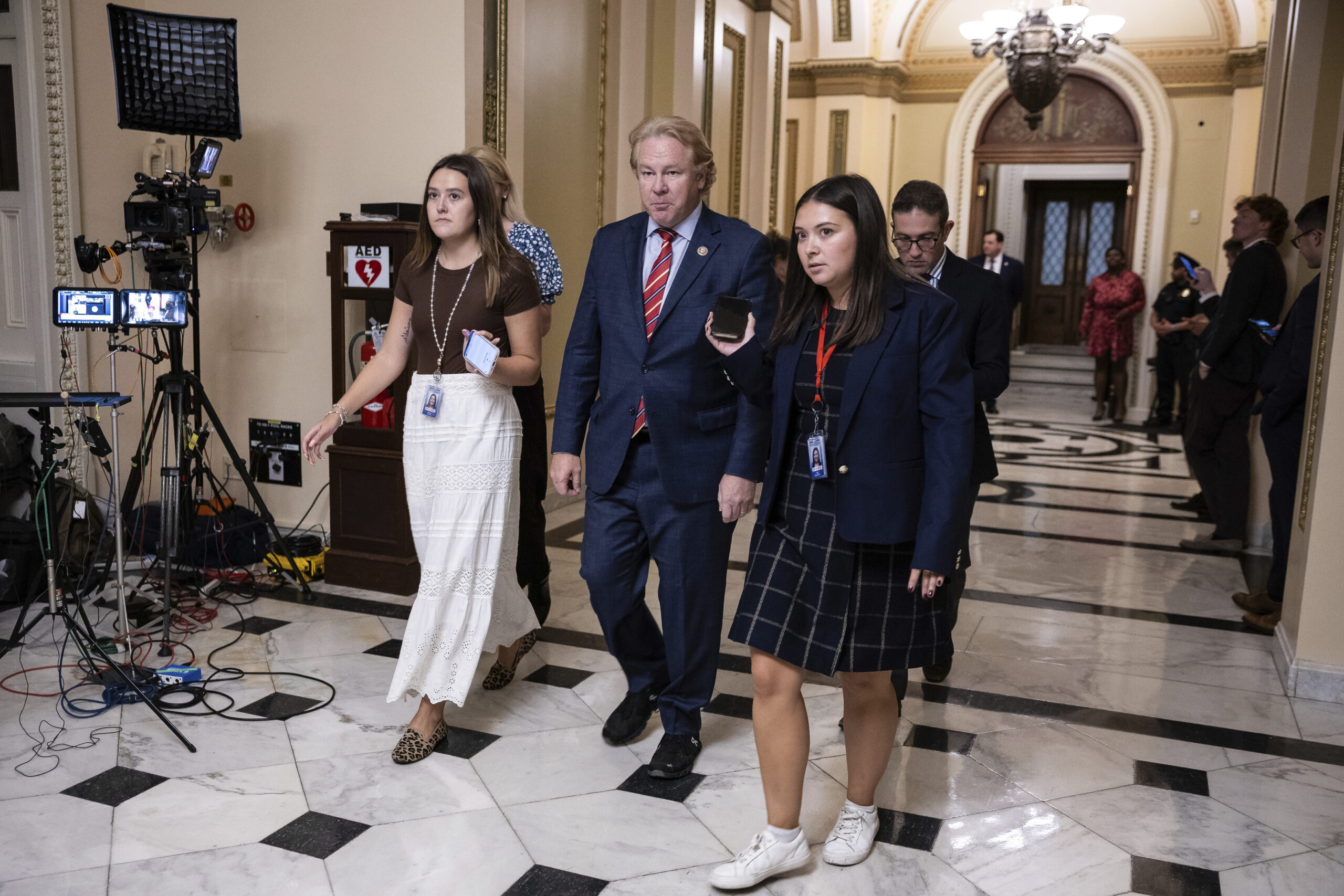
The vast majority of congressional Republicans are publicly supportive of President Donald Trump’s decision to launch a war on Iran. But many are harboring private misgivings about the risks to American troops and global stability — as well as their own political fortunes — should the military campaign drag on indefinitely.
Trump’s comments this week that the bombing could last “four to five weeks” or more, that he doesn’t care about public polling and that the U.S. will do “whatever” it takes to secure its objectives are among the factors that have put lawmakers on edge.
Some of the anxieties have started emerging publicly.
“The constitutional sequence is, you engage the public before you go to war unless an attack is imminent. And imminent means like, imminent — not like something that’s been over a 47-year period of time,” Rep. Warren Davidson (R-Ohio), a former Army ranger, said Tuesday.
Rep. Eli Crane (R-Ariz.), a combat veteran who served in the Iraq War and has cautioned in the past against regime change efforts, called it “a very dicey, a very dynamic situation right now” on the Charlie Kirk Show Monday while also making clear he would give Trump deference.
“I hope it works out,” he added. “Military operations like this can go sideways so fast, you know, it will make your head spin.”
But a wider group of House Republicans granted anonymity to speak candidly shared deeper concerns about the strikes. All said they would stand with Trump and Speaker Mike Johnson this week to oppose a largely Democratic effort to force votes on restraining the president. But they said their support was not guaranteed over the long term.
“Most Republicans want clear objectives, clearer than they are now,” said one House Republican, who added members have pressed GOP leaders and White House officials to be more consistent in articulating the administration’s military goals.
Another was troubled by Trump’s own shifting statements on when the bombing campaign might wrap up, whether he is seeking the fall of the Islamic regime and whether ground troops might ultimately be necessary.
“Sounds a little bit like President Lyndon Johnson going into Vietnam, doesn’t it?” the lawmaker said.
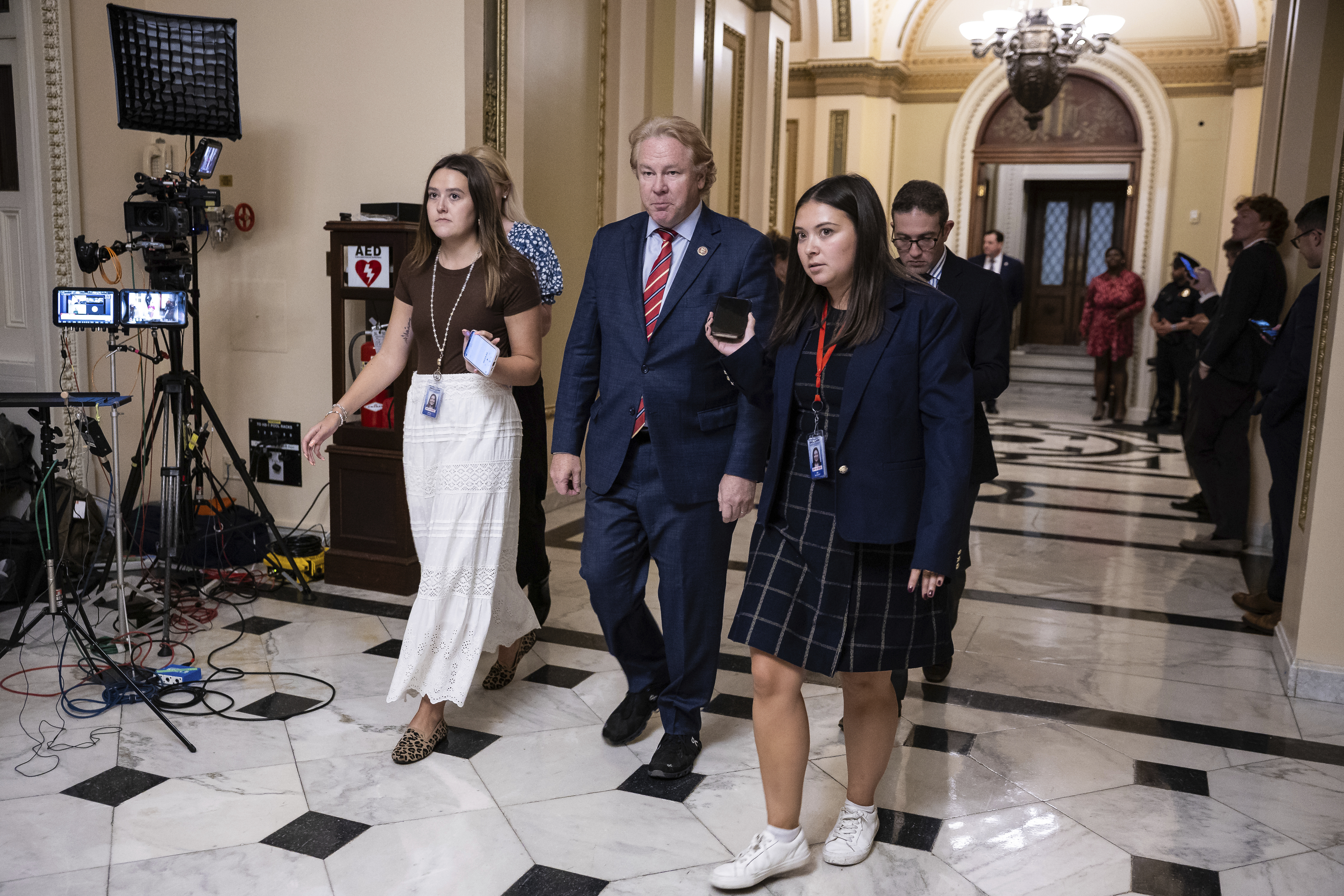
Trump officials and top House GOP leaders have already moved to ease potential member concerns. Johnson, for instance, said leaving a classified briefing Monday that “the operation will be wound up quickly, by God’s grace and will.”
“That is our prayer for everybody involved,” he added.
A White House memo sent to congressional Republicans Monday outlined several military objectives for the bombing campaign and said Trump should be “commended” for taking on a hostile state sponsor of terrorism.
But despite denying that Trump had acted in pursuit of regime change, the document also said the Iranian regime “would be defeated” and included other contradictory statements about the reasons for the strikes — while trying to sidestep the question of whether the strikes constituted a “war,” a word Trump himself has used.
Beyond the fears of a prolonged military engagement that could be costly in dollars and American lives, Republicans are also facing the prospect of a stock market tumble and rising gas prices that could fall hardest on vulnerable incumbents ahead of the midterms. Many of those members promised their constituents, much as Trump did, that they would not engage in endless war.
The planned Thursday vote on a bipartisan war powers resolution has surfaced some of the GOP discomfort, even as party leaders and White House officials whip members against it — including those most at risk of losing their seats.
Rep. Thomas Massie (R-Ky.), who is co-leading the war powers push with Rep. Ro Khanna (D-Calif.), pointed to the White House memo as further evidence of incoherence on the administration’s part.
“So they’re going to defeat a terrorist regime that rules a country of 90 million people, but that’s not war?” he said in an interview.
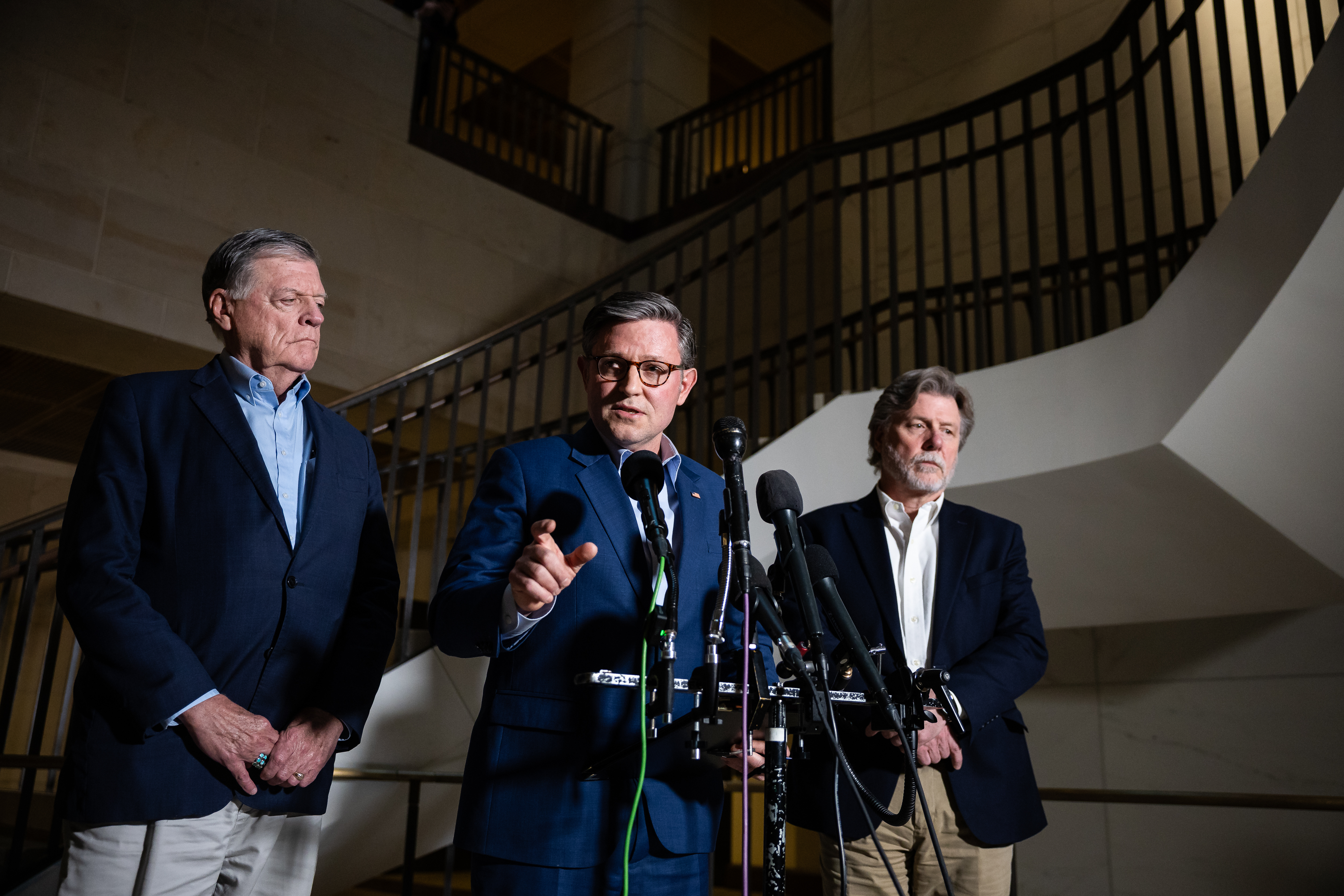
Also raising concerns in advance of the vote is Davidson, who has long railed against extended U.S. wars abroad. He said in a social media post Monday it was “troubling” that Secretary of State Marco Rubio said Monday that an imminent Israeli attack on Iran forced the U.S. to strike. He also raised concerns to reporters Tuesday about some of the administration’s claims.
House Intelligence Chair Rick Crawford (R-Ark.) said in an interview Tuesday he didn’t think the war powers vote was necessary and that Trump was operating within his legal authority.
The vote, he said, was “a way for individuals to sort of register their displeasure or make a political statement.”
Even if the war powers measure is defeated, some Republicans say an effort to restrain Trump could reemerge if the conflict drags on or Trump commits ground troops to the conflict. “If we’re talking months, not weeks, then you will see another vote,” said a third House Republican who added that Trump had some “leeway” for now.
Johnson, meanwhile, is channeling any intraparty concerns about Trump’s war into another vote this week on a stalled Homeland Security spending bill — an attempt to keep the focus on Democrats’ opposition to funding for TSA, FEMA and other agencies as a department shutdown approaches the three-week mark.
He is also arguing, as he told reporters after a classified briefing Monday, that the war powers vote is “dangerous” at a moment when U.S. troops were in harm’s way and that Republicans would act to “put it down.” The strikes, Johnson added, did not need advance congressional approval because they were “defensive in nature.”
Those arguments have resonated with most House Republicans, who say they’re willing to give the president time.
“I think so far, the Pentagon seems to have a good plan,” said Rep. Jeff Crank (R-Colo.), a member of the Armed Services Committee who said he would give Trump “six weeks or … eight weeks or whatever we need to accomplish the missions that we set out.”
“The worst thing we could do is go in and then … to pull back or cut short, whatever our objectives are,” he added. “We’re there. We need to get the objectives finished.”
- Scandal-plagued Rep. Tony Gonzales forced to runoff
- Rep. Dan Crenshaw ousted by primary challenger to his right
- Trump met with Coinbase CEO before bashing banks over crypto bill
- Cornyn, Paxton head to runoff in Texas Senate GOP race
- Rep. Chip Roy headed to runoff in Texas AG race
- Democrats reject ‘ridiculous’ GOP demand to fund DHS after Iran attack
- Josh Hawley says he’ll oppose Iran war powers resolution
- House Ethics panel probing Nancy Mace over alleged improper reimbursements
- Iranian ‘regime will be defeated,’ White House tells Hill Republicans
- Lawmakers splinter on Trump administration’s case for war on Iran
-

 The Dictatorship1 year ago
Luigi Mangione acknowledges public support in first official statement since arrest
-

 Politics1 year ago
Former ‘Squad’ members launching ‘Bowman and Bush’ YouTube show
-

 Politics1 year ago
Blue Light News’s Editorial Director Ryan Hutchins speaks at Blue Light News’s 2025 Governors Summit
-

 The Dictatorship6 months ago
Mike Johnson sums up the GOP’s arrogant position on military occupation with two words
-

 Politics1 year ago
Former Kentucky AG Daniel Cameron launches Senate bid
-

 The Dictatorship1 year ago
Pete Hegseth’s tenure at the Pentagon goes from bad to worse
-
Uncategorized1 year ago
Bob Good to step down as Freedom Caucus chair this week
-

 Politics11 months ago
Democrat challenging Joni Ernst: I want to ‘tear down’ party, ‘build it back up’