
Congress
The government’s top watchdog is retiring — but the Trump probes continue

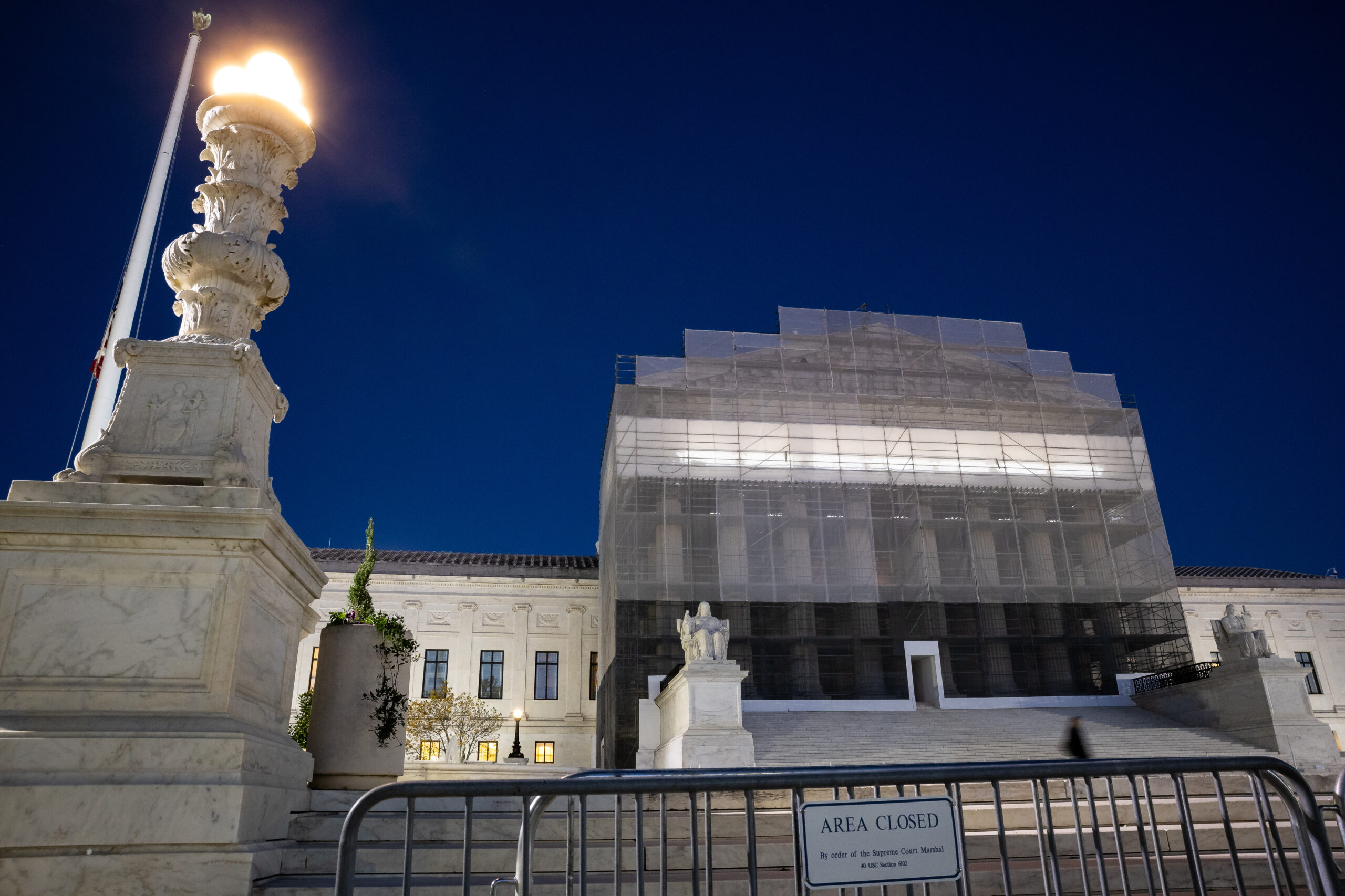
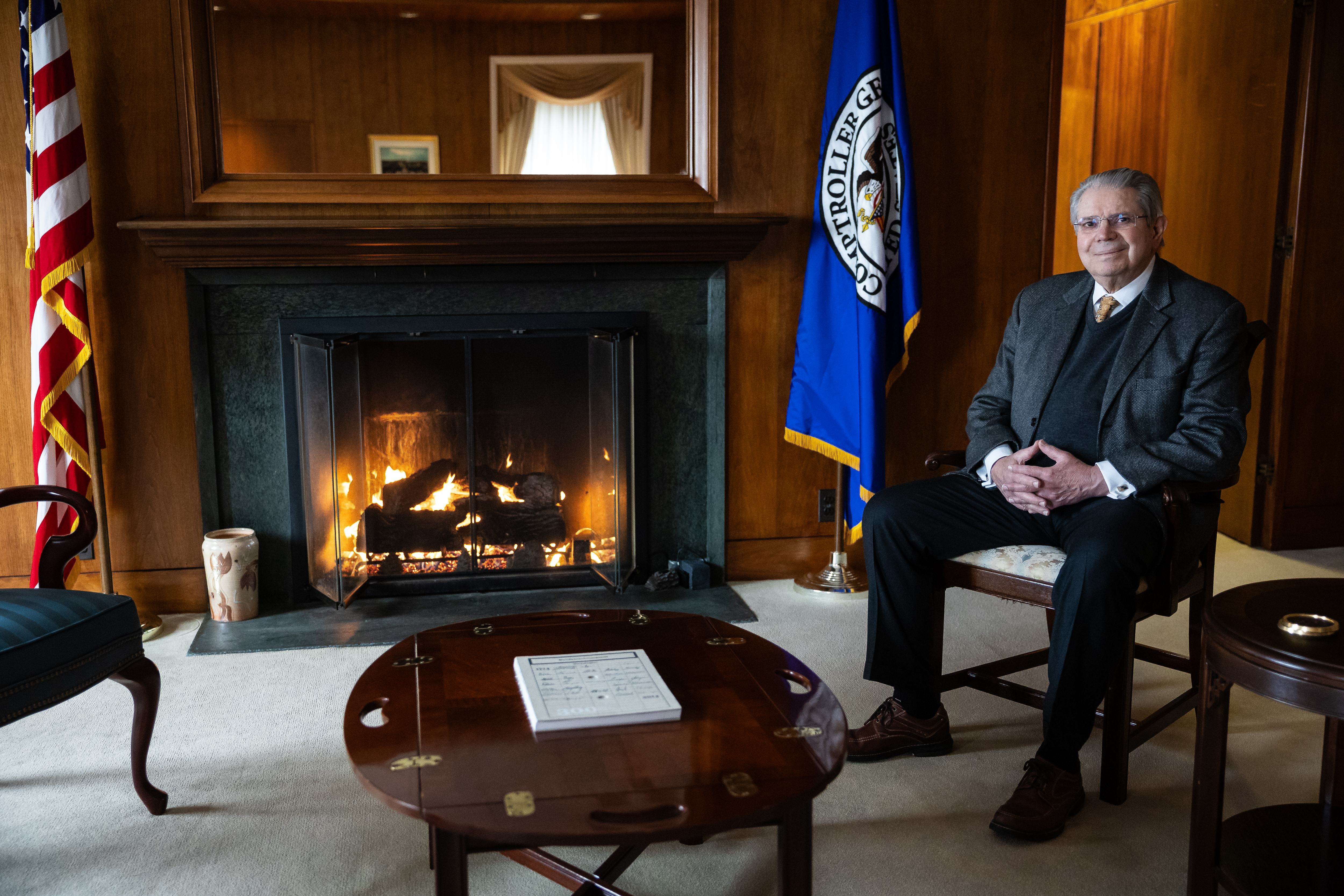
Gene Dodaro started his career at what is now the Government Accountability Office in 1973, as then-President Richard Nixon was battling Congress for control of federal cash.
More than a half-century later, Dodaro runs that watchdog agency amid another epic clash between Capitol Hill and the White House over President Donald Trump’s funding moves. Now, with his 15-year term as comptroller general coming to an end in late December, he’s getting ready to retire.
“I’m going into witness protection,” Dodaro, 74, said in a recent interview of his upcoming departure from the independent office with a workforce of more than 3,000.
He meant it as a joke. But Dodaro’s agency, which is tasked with auditing federal programs and helping lawmakers fulfill their constitutional duties, has been under an unprecedented level of scrutiny this year as conservative lawmakers and the White House publicly challenge GAO’s objectivity and seek to undermine its influence.
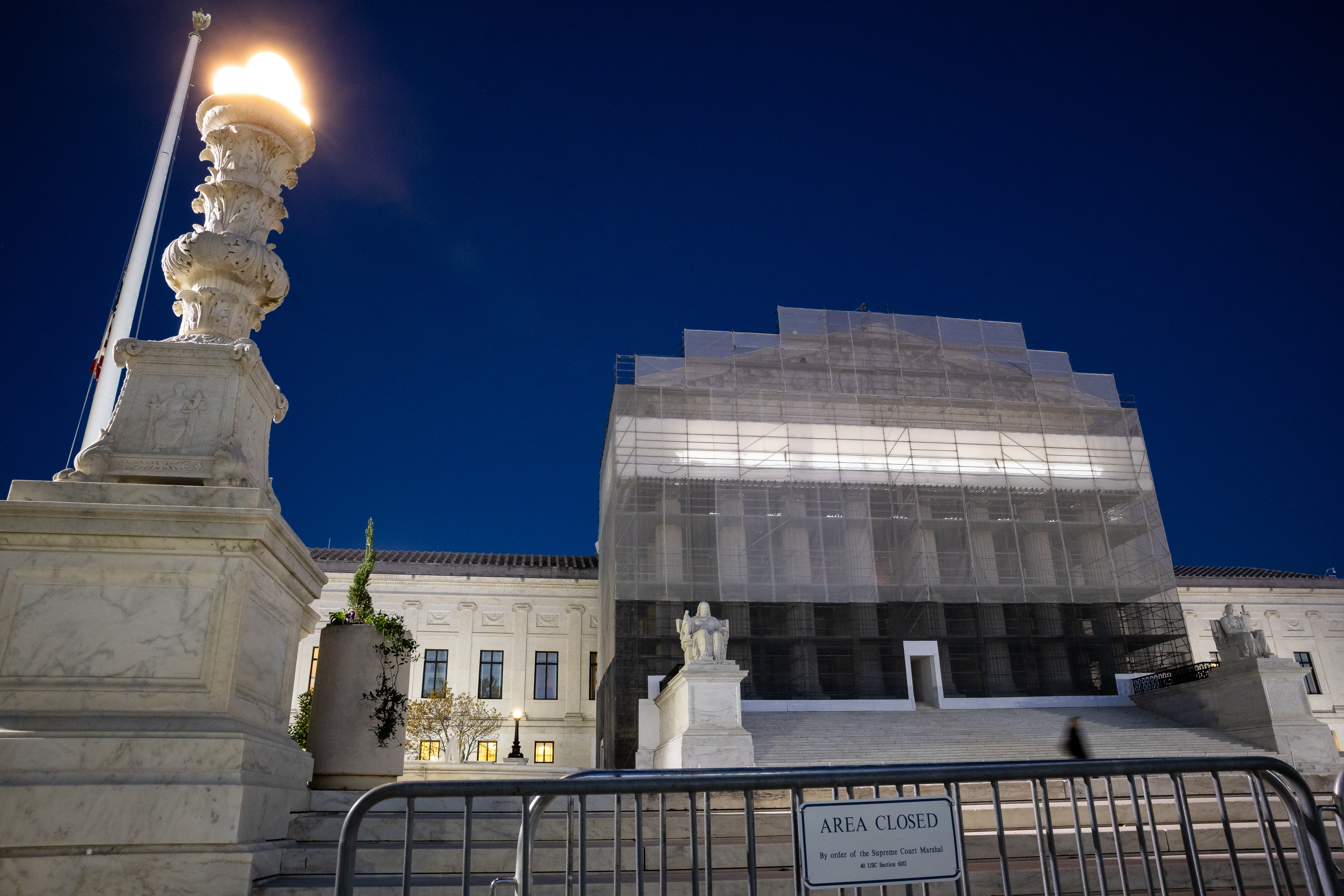
Adding to the pressure on Dodaro, the Supreme Court this fall appeared to endorse the view that only the comptroller general has the authority to sue the Trump administration for flouting impoundment law — not the groups losing out on federal cash.
Dodaro has declined to take such legal action, despite the urging of some lawmakers, including Senate Appropriations Chair Susan Collins. “People are already suing in many cases,” he reasoned, adding that the court’s decision “surprised” him and that he won’t be “cajoled” into suing.
“We’ll see what we need to do. But we need to be prudent and make sure that — when we do it — we’re in the strongest possible position to prevail,” he added.
Following the Supreme Court’s opinion, Collins said in a brief interview that it “goes without saying” this dynamic underscores the need for the lawmakers involved in the selection process to find a strong candidate to succeed Dodaro.
Dodaro’s last day is Dec. 29, at which point he will hand-pick an acting comptroller general to take the reins of the agency until the Senate confirms a permanent replacement. A panel of 10 lawmakers seated on a bipartisan commission is supposed to suggest candidates for Trump to nominate.
Whoever succeeds Dodaro will have to direct ongoing probes into Trump’s funding moves. To date, the agency has issued 11 opinions — five concluding the administration illegally withheld money, two citing some wrongdoing. Dozens are ongoing.
“The worst thing for GAO is to look like you have an agenda. That’s what concerns me about allegations like we’re against the current president’s agenda. We’re not,” he said. “Our job, and most of what we’re doing, is in response to actions they’ve taken. It’s not things we’re bringing up out of nowhere.”
Because the Office of Management and Budget has stonewalled GAO’s requests for information, the agency is forced to rely on evidence in the many lawsuits against the administration, Dodaro said.
Moreover, the GAO head said he has never spoken to Trump’s budget chief, Russ Vought. Multiple attempts to make contact during the first Trump administration were unsuccessful, he added.
“His public comments have led me to believe that wouldn’t be a successful approach here,” Dodaro said of Vought, who on social media this spring accused the office of taking a “partisan role in the first-term impeachment hoax,” a reference to GAO’s conclusion that Trump illegally withheld aid to Ukraine in 2019.
The past 11 months have been politically difficult for Dodaro in other ways. Earlier this year, top Republicans derided GAO for not blessing Senate GOP efforts to skirt filibuster rules to overturn state waivers issued under former President Joe Biden for pollution standards — and ignored the agency’s conclusion to boot.
Dodaro fended off Elon Musk’s attempt to send a downsizing team to GAO as part of the president’s now-disbanded Department of Government Efficiency initiative, before House Republicans proposed cutting the agency’s budget in half for the current fiscal year.
It’s not the first time the comptroller general has irked a party in power. During the Biden administration, GAO delivered its first-ever estimate of fraud in the federal government, pegging losses at between $233 billion and $521 billion dollars a year.
“OMB wasn’t happy,” Dodaro recalled.
Dodaro’s agency doesn’t always disappoint Republicans. Just last week, GOP lawmakers cheered a new GAO report reinforcing their arguments about fraud in the Obamacare insurance marketplace. To investigate this claim, GAO set up 24 fake accounts; 22 successfully enrolled in plans. It ended up costing the federal government thousands of dollars a month.
And Congress has averted several crises as a direct result of the watchdog’s warnings. That includes action to replace crucial weather satellites before they fail and to buoy the federal insurance program designed to protect Americans whose pension benefits are at risk.
“GAO is incredibly valuable … the ability for Congress to ask a hard question and ask them to chase it,” said Sen. James Lankford (R-Okla.), who added that Dodaro has for years aided him in a running effort to compel federal agencies to identify and describe each program they oversee.
Dodaro also started a partnership with experts at the National Academy of Sciences and launched an international effort to help developing countries run audit offices.
Sen. Gary Peters (D-Mich.), who is supposed to serve on the commission to recommend candidates for a Senate-confirmed comptroller general, said lawmakers “won’t find anybody as experienced and as knowledgeable” as Dodaro. “The integrity and professionalism he brought to the job, I thought, was exceptional.”
Dodaro attributes any praise to decades of relationship maintenance, including with top Trump administration officials who used to be members of Congress and senators who formerly served in the House.
“I try to pull out all the stops on my Italian charm,” he joked. “We’re not only in the auditing business. We’re in the relationship business.”
The next comptroller general could be anyone, and it could be a long time before that person is seated. Dodaro is the only Senate-confirmed GAO chief who was picked from inside the agency, and he held the position in an acting capacity for more than two years before then-President Barack Obama nominated him upon the recommendation of lawmakers. The Senate confirmed him by unanimous consent in 2010.
“If it can be done quickly, that’s fine. If it can’t, then they need to take their time to get the right person in the job, because it’s 15 years,” Dodaro said of the selection process for his successor.
“I have great confidence in the people at GAO … and I have confidence in the Congress to take their responsibility seriously and pick someone. This is their person — to serve them.”


Hillary Clinton was subpoenaed to testify about what she knew about convicted sex offender Jeffrey Epstein. Instead, she was being asked to answer questions about “Pizzagate.”
A former first lady, U.S. senator and secretary of State — not to mention a veteran of congressional grillings — warned lawmakers before her deposition in Chappaqua, New York, last week that she had no memory of ever meeting Epstein. She said early on in her closed-door testimony that her husband, former President Bill Clinton, was the person they should talk to.
But when several Republican members of the House Oversight and Government Reform Committee weren’t getting answers about the political power couple’s ties to the late, disgraced financier — pivotal to their ongoing Epstein investigation — they turned to unfounded conspiracy theories regarding Democrats and sex trafficking at a popular District of Columbia pizza shop, along with what the government might know about UFOs.
Clinton was aghast in response to a series of questions from Rep. Lauren Boebert (R-Colo.) regarding the intersection between the “Pizzagate” theory — which centered around allegations that Democrats trafficked children — and the Epstein files, according to video of her deposition released Monday.
“I mean, really — I mean, I expected a lot of interesting questions today, but Pizzagate was not on my list,” she said, smiling.
The roughly six-hour deposition with the Oversight committee exposed all the partisan fault lines in the congressional Epstein probe. Members of the panel walked into two days of depositions with both Bill and Hillary Clinton sharing a bipartisan commitment to interrogate Epstein’s connections to some of the most powerful people — and left just as divided over the purpose of their work.
Neither Bill nor Hillary Clinton have been accused of wrongdoing in connection with Epstein. They have maintained that they had no knowledge of Epstein’s crimes.
“Pizzagate,” said the Oversight Democrats in a statement on X, pointing to the exchange between Boebert and Hillary Clinton. “Embarrassing to spend time asking Secretary Clinton these questions.”
One major flare-up came when Boebert briefly derailed the deposition after it became apparent she leaked a photo of the closed-door deposition to an online far-wing influencer, who put it on social media.
“Oh for heaven’s sake,” said Clinton, slamming her hand on the table before leaving the deposition table altogether in a fury.
“I’m done with this,” Clinton said, as news emerged that Boebert had shared the photo. “You can hold me in contempt from now until the cows come home. This is just typical behavior.”
Rep. Nancy Mace (R-S.C.) accused the former secretary of State as being “unhinged” in a news conference outside the Chappaqua Performing Arts Center, where the deposition was being held.
And it appeared at times that GOP lawmakers wanted to get a rise out of their interview subject. A probing Mace asked how Clinton felt about seeing her husband in the files.
“I am not going to offer opinions or speculation about anything that I have no context for and was not there,” Clinton cooly responded.
When Mace asked about her relationship with Secretary of Commerce Howard Lutnick, she began speaking about her work with the former CEO of Cantor Fitzgerald after many of his employees died in the Sept. 11, 2001 terror attacks. The two then shouted over one another, with Mace vocalizing her own alleged experience with sexual violence while Hillary Clinton defended her work as a New York senator around the aftermath of the Twin Towers’ collapse.
“You want to yell at me, that’s fine, but I’ll yell right back,” Mace said. “I’m doing the job that you would not do.”
Clinton seemed bored, if not annoyed, as Republicans took their jabs. She told Mace that the South Carolina Republican would “have a chance to talk to him tomorrow” — a line she said in variations several times in punting the questioning to her husband, who was scheduled to testify the next day.
“How do you feel about your husband being named in the Epstein files?” asked Rep. John McGuire (R-Va.).
“Well, I think it’s something that is unfortunate,” the former secretary of State responded. “And I’m sure that he will tell you that he wished he had not flown on Epstein’s plane.”
Bill Clinton said in his deposition he flew with Epstein on a few occasions as part of official business with the Clinton Global Initiative but never saw anything inappropriate. He also said he stopped traveling with Epstein once closer acquaintances began offering up their planes.
Hillary Clinton, who lost the presidency to Donald Trump in 2016, has maintained her status as a potent GOP foe despite. Throughout much of her political career, those across the aisle have sought to leverage various scandals to undermine her — from the 2012 attack on a U.S. government facility in Benghazi, Libya to her use of a private email server during her government service. She endured an 11-hour hearing in 2015 before a select House committee investigating the Benghazi attacks.
The proceedings also gave Democrats ammunition to undermine the proceedings as partisan and politically motivated, with Rep. Yassamin Ansari (D-Ariz.) at one point calling the deposition a “clown show.” But Democrats are also leveraging Trump’s relationship with Epstein for political gain, including by suggesting they could move to subpoena Trump should they take control of the House after the midterm elections.
“Democrats used most of their time to ask President Clinton questions about President Trump,” said a spokesperson for Oversight Republicans in a statement. “In doing so, President Clinton destroyed Democrats’ latest hoax against President Trump by stating twice he has no information that he committed any wrongdoing.”
Trump has not been charged with any crime connected to Epstein and has maintained he severed ties years before the financier’s 2019 arrest on sex trafficking charges.
Hillary and Bill Clinton were both subpoenaed by the Oversight panel as part of its investigation into Epstein and his co-conspirator Ghislaine Maxwell, who is now serving 20 years for her part in the sex trafficking crimes.
Unlike Hillary Clinton, the former president recalled meeting Epstein and recounted to investigators about how his former Treasury Secretary Larry Summers, who has since resigned from Harvard, connected the two men. Bill Clinton also questioned why his wife was coming in to testify given that she had “nothing to do” with Epstein.
The former first couple were initially reluctant to sit before House lawmakers, saying that the subpoenas were not tied to a legitimate legislative purpose but the process was instead designed to imprison them. With lawmakers threatening to hold them in contempt of Congress for refusing to cooperate, however, they agreed to sit and answer questions.
Many Republicans asked Clinton questions that were relevant and substantive. House Oversight Committee chair James Comer (R-Ky.) inquired about allegations that Epstein may have operated as some kind of spy and whether Epstein’s activity satisfied the requirements for human trafficking — explaining he wanted his panel to work to strengthen human trafficking laws.
In a press conference after the hearing, Clinton commended Comer for his “significant questions.”
But both Clintons, who had at one point said they were eager appear in public hearings, now appear to have no intention of coming back anytime soon.
“Oh, I’m not gonna do it again,” she told reporters after her deposition. “I think they could’ve spent the day more productively.”
Democrats said Monday they have no plans to end their blockade of Department of Homeland Security funding in the face of GOP pressure to capitulate after President Donald Trump’s sweeping strikes on Iran.
Congressional Republicans insist the military conflict makes ending the 17-day DHS shutdown even more urgent, given the agency’s role in counterterrorism and domestic security.
But Democrats say they’ve been clear from the beginning that if Republicans want their votes, they must agree to changes to how the Trump administration carries out its immigration enforcement agenda.
Sen. Dick Durbin, the No. 2 Senate Democrat, flatly rejected the suggestion that war with Iran should change his party’s shutdown posture.
“No,” he said in an interview. “We gave fair warning to the Republicans that we were serious about reining in what the ICE forces are doing. What we’re talking about is responsible.”
As an alternative, many Democrats are willing to fund DHS agencies that don’t deal with immigration enforcement. Connecticut Rep. Rosa DeLauro, the House’s top Democratic appropriator, introduced a bill almost three weeks ago that would fund parts of DHS including the Coast Guard, TSA, Secret Service, FEMA and the nation’s cybersecurity agency through Sept. 30.
“There’s no disagreement on any of that. We could move forward and fund those for the rest of the year, and then have the negotiation” on ICE and Customs and Border Protection, DeLauro said in an interview Monday night. “But this is about their politics.”
Splitting up the DHS bill is something Republicans have opposed since the funding lapse started. According to three people granted anonymity to disclose private strategy, House and Senate GOP leaders see no reason to change their views now.
Sen. Pete Ricketts (R-Neb.) said in an interview Monday that Democrats are “putting the country at risk” by not funding DHS and that they “should work with the administration to come up with something they can vote for.”
A group of Republicans in the Texas legislature cited a deadly Sunday morning shooting in Austin in urging congressional leaders to “pass full, unencumbered funding for DHS without delay.” Authorities are investigating whether the Iran attack motivated the gunman, who was killed by law enforcement.
Because a huge proportion of DHS employees work on “essential” national security related tasks, agency furloughs have been limited, though administrative and planning work is largely on pause. That means most TSA screeners, FEMA workers and Coast Guard members are at work but not being paid as the shutdown stretches past two weeks.
Immigration enforcement agencies are still active during the DHS shutdown, and they have billions of dollars already in their coffers from the GOP megabill Republicans passed last summer.
The standoff leaves the two sides largely stuck at loggerheads with no clear path to ending the partial government shutdown anytime soon.
House GOP leaders are planning a second vote on DHS funding Thursday — on a bill that has only minor changes from the measure the House passed on Jan. 22. That was just days before the killing of a 37-year-old man in Minneapolis by federal immigration agents prompted Senate Democrats to demand major policy changes in return for their votes.
At least seven Democrats would need to support a DHS funding bill to end debate under Senate filibuster rules.
Speaker Mike Johnson told House Republicans in a private call Sunday night that funding DHS operations will be a priority for the House GOP amid the Iran war fallout, given the heightened security risk. Privately, GOP leaders are hoping to exacerbate a Democratic split on the vote and keep the focus away from their own internal divides over the war.
Democratic leaders in the House are whipping against the funding bill ahead of the Thursday vote, saying in a caucus memo it has “no new language to end the chaos caused by ICE in communities across the country.”
Seven House Democrats voted “yes” in January, but that was before federal agents shot Alex Pretti in Minneapolis — and even then, the funding fight sparked days of public sparring within the caucus.
And while Johnson could pick up at least a few Democratic votes, the modified bill is dead on arrival in the Senate. Only Sen. John Fetterman (D-Pa.) has voted to advance the DHS bill, and there is no sign more of his Democratic colleagues are prepared to join him.
“I’ve heard Republicans suggest that we should fund ICE because they started an illegal war with Iran — that’s ridiculous,” said Sen. Chris Murphy (D-Conn.), ranking member of the DHS Appropriations subcommittee. “The American public wants ICE to stop murdering people, and they also don’t want us at war with Iran.”
Democrats and the White House have been trading counteroffers for weeks without making much progress. Trump hasn’t sat down yet with congressional leaders, and each side is dismissing the other as making unworkable demands.
“They have not given us a serious offer, and they need to understand we’re taking this seriously,” Washington Sen. Patty Murray, the top Democratic appropriator in the Senate, said in an interview Monday. “We want accountability and reforms to ICE in order to fund them.”
Mia McCarthy, Jennifer Scholtes, Meredith Lee Hill and Calen Razor contributed to this report.
Sen. Josh Hawley said he would oppose a bipartisan resolution to require President Donald Trump to get Congress’ sign-off before taking additional military action against Iran.
The Missouri Republican, who drew Trump’s wrath earlier this year when he initially supported a similar resolution for Venezuela, said he was satisfied with the official notification the administration sent Monday to Capitol Hill, which asserted no ground troops are involved in the Iran operation.
“I’ve always said that committed ground troops would be something I think that would require immediately a congressional authorization, but that doesn’t seem to be in the immediate horizon,” Hawley said.
Asked about Trump not ruling out the possibility of ground operations in his public statements, Hawley said he “can understand why he wouldn’t want to rule anything in or out.”
He added it would be a “different scenario” if ground troops are deployed at a later date.
Hawley has advocated in the past for a more restrained U.S. foreign policy. He voted to advance a resolution that would put limits on Trump’s ability to take further action against Venezuela following the capture of President Nicolas Maduro.
Trump lashed out at Hawley and the other four Republicans who voted to advance the measure, which ultimately failed after Hawley and Sen. Todd Young (R-Ind.) switched their votes after Rubio offered reassurances about group troops not being deployed in Venezuela.
The Senate will likely vote Wednesday on a bipartisan resolution to require congressional signoff for additional military action against Iran. With Sen. John Fetterman (D-Pa.) expected to oppose the resolution, Democrats will need to pick up at least five Republicans to pass the resolution.
Several GOP senators who have flirted with checking Trump’s war powers, including Sens. Susan Collins of Maine, Lisa Murkowski of Alaska and Young, either declined to comment Monday about how they would vote on the resolution or said they were undecided.
Sen. Thom Tillis (R-N.C.), who voted against the Venezuela resolution, also said that he is undecided on the Iran war powers resolution.
“Obviously if we’re going to be there over time in a sustained effort, then we’ve got to have a consultation with Congress,” Tillis said. “If it’s a Venezuela — done and out by the end of the week — that’d be one thing because you’d be passing a war powers resolution after the conflict is over.”
Calen Razor contributed to this report.
- Texas Gov. Abbott warns Iranian ‘sleeper cells’ must be taken ‘seriously’

- DC lifts recreational advisory for Potomac River

- Trump slams Democrats over criticism of Iran strikes

- Vance says ‘there’s no way’ Trump will let US get into multiyear conflict

- US embassy in Riyadh struck by drones

- Centrist Dems met to plot 2028. Then Iran happened.

- Republicans took shots at Hillary Clinton — and she came ready to fight back
- No sign of Democratic surrender on DHS funding after Iran strikes
- Josh Hawley says he’ll oppose Iran war powers resolution
- Rubio says Congress is in the loop on Iran attacks
-

 The Dictatorship1 year ago
Luigi Mangione acknowledges public support in first official statement since arrest
-

 Politics1 year ago
Former ‘Squad’ members launching ‘Bowman and Bush’ YouTube show
-

 Politics1 year ago
Blue Light News’s Editorial Director Ryan Hutchins speaks at Blue Light News’s 2025 Governors Summit
-

 The Dictatorship6 months ago
Mike Johnson sums up the GOP’s arrogant position on military occupation with two words
-

 Politics1 year ago
Former Kentucky AG Daniel Cameron launches Senate bid
-

 The Dictatorship1 year ago
Pete Hegseth’s tenure at the Pentagon goes from bad to worse
-
Uncategorized1 year ago
Bob Good to step down as Freedom Caucus chair this week
-

 Politics11 months ago
Democrat challenging Joni Ernst: I want to ‘tear down’ party, ‘build it back up’