
Politics
The enduring influence of Al Sharpton



PILGRIMAGE: The biggest names in politics are flying in from around the country to meet the Rev. Al Sharpton.
Governors Wes Moore from Maryland and JB Pritzker from Illinois and Sen. Ruben Gallego (D-Ariz.) spoke with him today. Yesterday was Pennsylvania’s Gov. Josh Shapiro. Still up is former Vice President Kamala Harris, Kentucky Gov. Andy Beshear and Sen. Cory Booker (D-N.J.).
These potential 2028 presidential hopefuls — in town for the 35th convention of Sharpton’s National Action Network — know that one thing that’s true in New York extends to the whole country.
“If you want to go somewhere in the City of New York, in anything, whatever your profession is, you’ve got to come to the Dr. Rev. Al Sharpton,” Harlem Assemblymember Jordan Wright said.
Sharpton is spending the week basking in that clout. Of course, it wasn’t always this way. Former mayors Ed Koch and Rudy Giuliani viewed him as a chaos agent and enemy. Now, the who’s-who of national and local politics are elbowing their way to see and be seen at his four-day convention.
“They’re showing up because he deserves the respect of everyone in this country,” Gov. Kathy Hochul told Playbook. “He’s been a close adviser a long time. I call him up. And in fact, I spoke to him the day I found out I was going to be governor, watching it on television. I called him up, and he said, ‘I’ll pray for you.’ I got down on my knees, and I prayed myself for wisdom and for justice.”
Sharpton’s influence, for instance, was on full display in New York last year when the field of mayoral candidates trekked to his House of Justice in Harlem — which will soon be relocated — to show deference as they aimed for City Hall. There, Sharpton spoke positively about Andrew Cuomo during the primary and even chided then-mayoral-candidate Zohran Mamdani for not endorsing former Council Speaker Adrienne Adams, a Black woman, in a high enough spot on his ranked-choice ballot.
“Somehow that politics ain’t progressive to me,” Sharpton said nine days before the primary.
Still, Mamdani chose to visit Sharpton at the House of Justice in his first public appearance after his win. That morning, Sharpton took Mamdani’s hand and raised it into the air, as if declaring him the winner by knockout in a boxing match.
Last week, Sharpton raised eyebrows when he told our colleagues in Washington he thinks Harris deserves a second look as a presidential candidate, attempting to thread the needle for Harris the same way he had for Adrienne Adams.
He clarified — and defended — those comments while speaking with us Wednesday night.
“I don’t know if she’s gonna run, but I see her [facing] a lot of sexism and racism,” Sharpton said. “Don’t dismiss her. Let her decide what she’s going to do. She got more votes than any presidential candidate in history, other than Donald Trump. She ought to be acknowledged for that.” — Jason Beeferman
From the Capitol
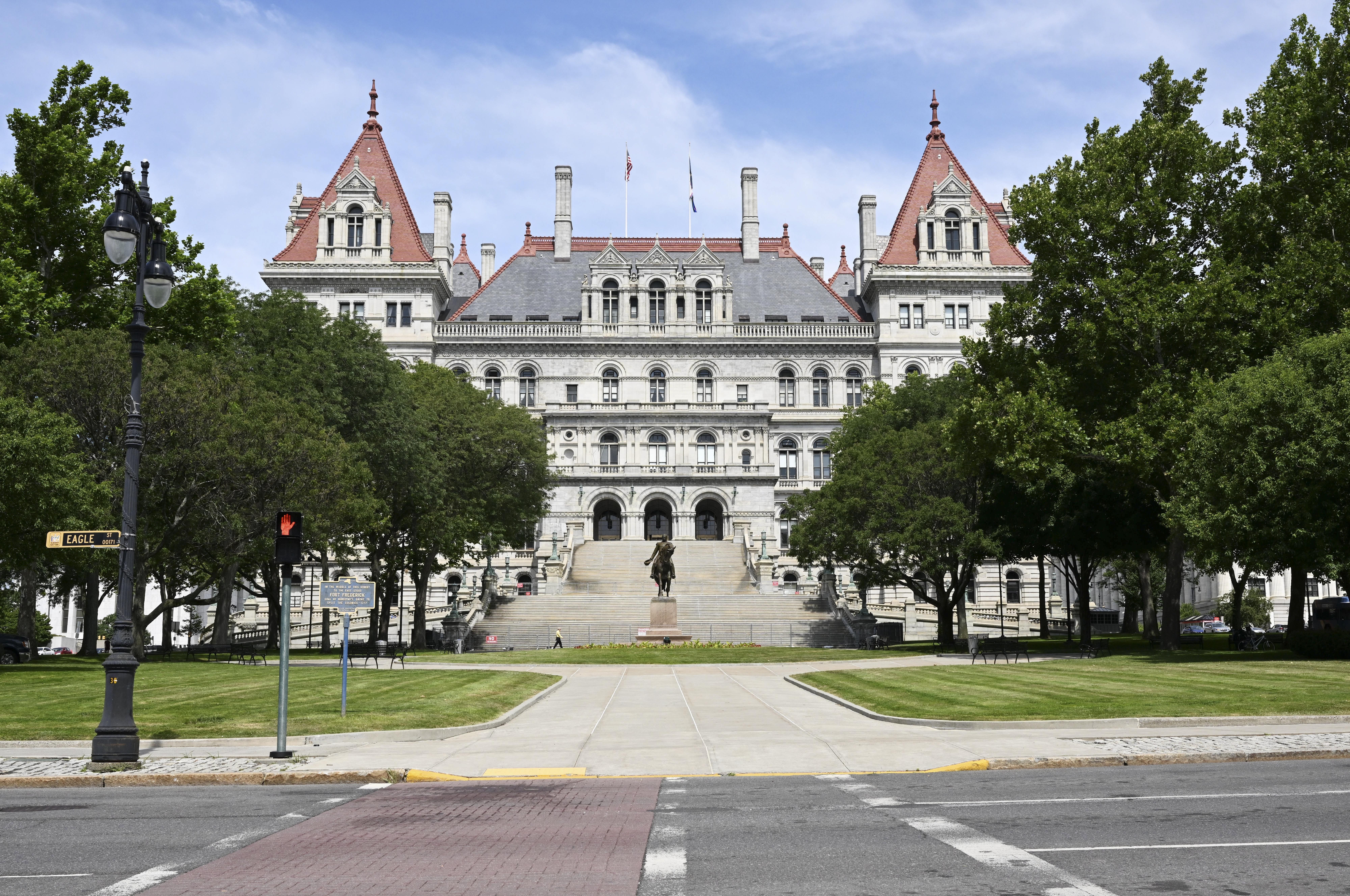
NOTHING IS OVER: State workers earned $1.6 billion in overtime in 2025, a 22.7 percent increase from the prior year, according to a report released Thursday morning by Comptroller Tom DiNapoli’s office.
The findings come as unions are pressing to expand retirement benefits in the Tier 6 pension category — changes that would cost state and local governments up to $1.5 billion a year.
“State agencies need to carefully monitor overtime to ensure that its use is justified and that state services are provided safely and effectively,” the overtime report found. “The use of overtime can have a substantial impact on long-term pension costs.”
Read more from Blue Light News Pro’s Nick Reisman.
PARTY RAIDS: Progressives in the Hudson Valley seem to have avoided the party raiding that’s been the norm in that corner of the state — but one candidate in Saratoga County is raising eyebrows.
It’s become increasingly common for allies of major party candidates to manipulate minor party nominations. Most prominently, a former Republican won the 2024 Working Families Party’s primary in Rep. Mike Lawler’s district after being supported by people who joined the WFP days before the deadline. That ensured the left would split its vote.
A comparable situation in area congressional or state legislative districts doesn’t appear to exist this year. The only candidate who submitted petitions to challenge Lawler on a minor line was the WFP-backed Democrat Effie Phillips-Staley.
Still, there was a curious registration in the Saratoga-area district held by Democratic Assemblymember Carrie Woerner.
The only candidate who submitted for the WFP line in that district was a Thomas Kenny. Attempts to figure out just who he is weren’t immediately successful — as of January, nobody with that name was registered to vote in that corner of the state. Woerner’s campaign believes he might have been a Conservative until recently, possibly living elsewhere.
There have been some electoral oddities in the county in the past. Dozens of individuals connected to the Saratoga Springs Police Department switched their registration from the Republican or Conservative Parties to the WFP in 2021, forcing a primary against the Democratic supervisor.
Saratoga GOP Chair Joe Suhrada said he didn’t know anything about the Kenny candidacy.
“I don’t know him and I’m not sure who he is,” Suhrada said. He theorized the candidate — unknown to Democrats and the WFP alike — might be a leftist. “There are so many people who decry the Democrats as supposedly not standing up to Trump enough … That could be the case here.” — Bill Mahoney
FROM THE CAMPAIGN TRAIL

CALLING IT QUITS: Just hours before tonight’s Democratic debate to take on Lawler in NY-17, tech executive and local government official Peter Chatzky ended his bid. Chatzky, who loaned himself a whopping $5 million, was set to take the stage with Army veteran Cait Conley, Rockland County Legislator Beth Davidson and Phillips-Staley.
In a statement, Chatzky criticized the “machinery of the Democratic party” and said that if he continued his campaign, “the party establishment and my competitors would need to spend significant effort and money to defeat me, resources that would be better used to defeat Mike Lawler.”
Chatzky had been vying to claim the progressive lane, which Working Families Party-backed Phillips-Staley is also pushing for. Last month, Phillips-Staley was the only candidate to call on Chatzky to drop out after reports of his bawdy online posts emerged. (Chatzky did not mention those incidents in his statement, though he has made the rounds in local media explaining his sense of humor.) Conley and Davidson are taking a more moderate approach to their candidacies.
Chatzky did not immediately endorse an opponent upon dropping out.
That leaves five candidates in the running for the Democratic nomination: Conley, Davidson and Phillips-Staley, along with former TV reporter Mike Sacks and Air Force veteran John Cappello. The latter two were not invited to participate in tonight’s debate and have largely flown under the radar. — Madison Fernandez
HOCHUL DOUBLES DOWN ON NY-21: Hochul isn’t backing down from her bet that Rep. Elise Stefanik’s deep-red seat could actually turn blue.
Speaking with reporters today at an unrelated event, Hochul said she’s spent time listening to New Yorkers of all stripes during her trips to the North Country and thinks Democrats could flip the district.
“Conservative, Republican farmers [are] telling me they are ‘had it’ with the tariffs, they are ‘had it’ with this ICE raids on their farms,” Hochul said. “I heard a lot of anger. I was reflecting on that as a place that people would not expect us to have an opportunity to win, where I believe we do. People are rejecting the policies that are driving up costs and making their lives miserable.”
Hochul told Young Democrats last month that she’s “so optimistic about our chances this year, I believe we can even take Elise Stefanik’s seat.”
Stefanik, who is not seeking reelection, won her seat in a general election by 24 points. Assemblymember Robert Smullen and Sticker Mule CEO Anthony Constantino are running as Republicans to replace her. Democrat Blake Gendebien is running for the seat. — Jason Beeferman
IN OTHER NEWS
— CHILLING EFFECT?: According to the Rent Guidelines Board, landlord costs rose by 5.3 percent over the last year, an increase that could undermine Mamdani’s efforts to freeze rents for the city’s rent-stabilized apartments. (POLITICO Pro)
— FULL-TIME TOTS: Mamdani announces full-day, year-round care for New York City’s 2-K program with the first 2,000 seats opening this fall with extended-hours. (New York Daily News)
— NOT BRAGG, BUT…: Housing groups are pushing for new tenant harassment protections in the state budget that would create criminal penalties for harassing rent-stabilized apartment dwellers. (amNY)
Missed this morning’s New York Playbook? We forgive you. Read it here.


Democrats are, once again, punting on what to do about Israel.
DNC members on Thursday rejected a symbolic resolution to limit the influence of the American Israel Public Affairs Committee and dark-money corporate groups in Democratic primaries — an unsurprising result that is nevertheless a blow to those within the party who have been infuriated by the pro-Israel group’s recent interventions.
They also punted on a pair of sweeping resolutions concerning conflicts in the Middle East that pushed the party to support conditioning military aid to Israel. The measures were referred to the party’s nascent Middle East Working Group, which is meeting for the fourth time this week and has been slow to coalesce around an agenda.
While the resolutions were not expected to pass, the outcomes reflect a party establishment still grappling with how to respond to the increasingly thorny politics around Israel and AIPAC — and their base’s sharp turn away from the longtime U.S. ally.
The AIPAC resolution called for the DNC to condemn “the growing influence of dark money” in Democratic elections, including from the pro-Israel group that has pumped tens of millions of dollars into recent primaries. Several members of the DNC’s resolutions committee said they voted it down because they had passed a resolution earlier in their meeting broadly condemning the influence of dark money in the midterms without calling out individual groups.
Florida Democrat Allison Minnerly, who introduced the AIPAC resolution, argued there’s “merit to calling out different PACs with intention.” She said that “Democrats overwhelmingly want a party that stands for human rights and against increased conflict in the Middle East.”
In the day following President Donald Trump’s announcement of a two-week ceasefire with Iran, dozens of congressional Republicans released statements of support for the administration’s peace negotiations.
But the lawmakers largely steered clear of one major topic: oil.
Crude prices tumbled following Trump’s Tuesday night announcement that the Strait of Hormuz would reopen as part of the ceasefire agreement. It’s what many Republicans were hoping for heading into the midterm elections.
But despite the ceasefire, it’s unclear when international oil shipments will return to normal through the Strait of Hormuz, and there’s alarm about Iran gaining more power over a waterway that carries roughly 20 percent of the world’s oil traffic.
“This is an important step toward ending the conflict, but we need to remain vigilant,” said Sen. John Hoeven (R-N.D.), a member of the Energy and Natural Resources Committee. “We must maintain pressure on Iran to follow through on its commitment to re-open the Strait of Hormuz and agree to a deal that achieves our objectives.”
Indeed, Iran state media reported Wednesday that the country would move to close the strait again if Israel kept bombing targets in Lebanon. The White House said Lebanon was not part of the ceasefire and downplayed the closure threat.
Still, the president has appeared open to Iran keeping some influence over the strait and charging ships for crossing. That’s something causing alarm with industry leaders.
“The supposed negotiating document, in my view, has some troubling aspects, but time will tell. I look forward to the architects of this proposal, the Vice President and others, coming forward to Congress and explaining how a negotiated deal meets our national security objectives in Iran,” Sen. Lindsey Graham (R-S.C.), long an Iran hawk, wrote on X about initial reports on the ceasefire deal.
Other Republican were less specific in their response. Energy and Natural Resources Chair Mike Lee (R-Utah) wrote on social media that the ceasefire was “excellent news.” But he did not weigh in on the oil price declines Wednesday or lingering concerns about energy markets, and his office did not respond to request for comment.
On the House side, Energy and Commerce Chair Brett Guthrie (R-Ky.) similarly kept his ceasefire comments focused on military objectives, rather than the energy ramifications of the conflict.
“I pray that the end of hostilities will be lasting, that the Iranian regime permanently ends their nuclear ambitions, and stops their spread of terror once and for all,” Guthrie wrote.
Sen. Kevin Cramer (R-N.D.), another outspoken Republican on energy issues, took a tone of caution while celebrating the ceasefire agreement. “We have to keep our eyes wide open obviously, it’s not like the Iranian regime is good for keeping its word, but in my mind, this is a pretty good breakthrough,” he said in a statement.
Rep. Andy Biggs (R-Ariz.) was one of the only GOP lawmakers to comment about energy and Iran on Wednesday. But rather than calling attention to plummeting oil prices, he instead made an argument for American energy independence.
The president and his allies have been touting their support for more U.S. fossil fuel production as an insurance policy against global disruptions, even though average gasoline prices spiked from $3.25 a year ago to more than $4.
“If the past two months have taught us anything, it’s that we can’t put a price tag on American energy independence and dominance,” Biggs wrote on social media.
Democrats keep up attacks
The ceasefire announcement and drop in oil prices didn’t blunt the Democrats’ campaign that the administration’s war — and other policies — are hurting American consumers.
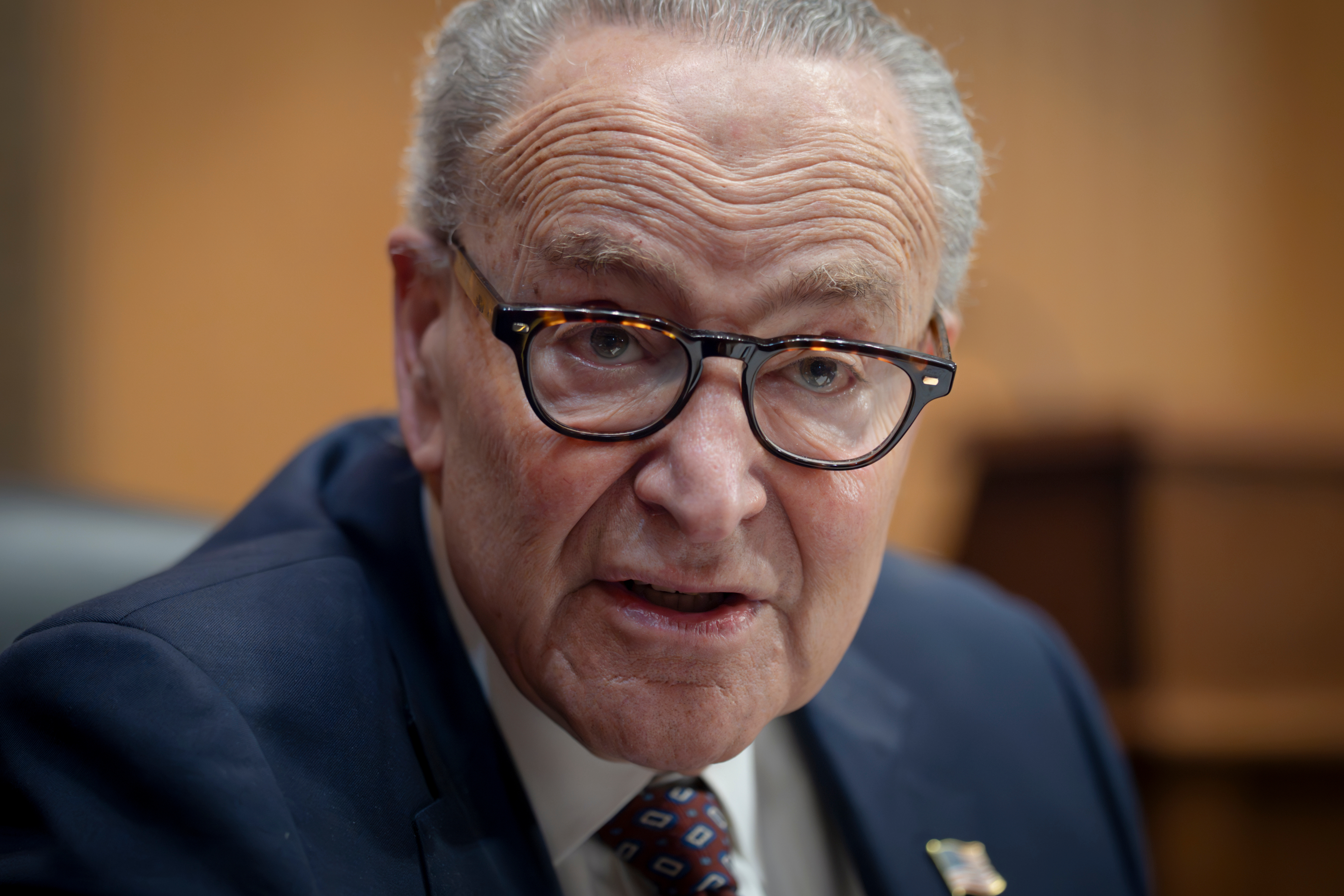
Minority Leader Chuck Schumer highlighted the continued volatility in the Strait of Hormuz during a press conference Wednesday and said he didn’t expect prices at the pump to ease anytime soon.
“At home here, American families have paid the price for this war. Gas prices have skyrocketed in just a matter of days. They’re not going to change until August. And in general, the world oil markets will be unsettled for years,” Schumer said.
House Energy and Commerce ranking member Frank Pallone (D-N.J.) said, “Even though there’s now a ceasefire, the oil supply chain has unfortunately been disrupted — and may be for a long time.”
Iran’s control over Strait of Hormuz traffic — something it didn’t have before — is also giving Democrats ammunition against the president’s decision to join Israel in attacking Iran.
“A waterway that was free to the world is now a toll booth that Iran controls,” wrote Rep. Mike Levin (D-Calif.) on social media. “Every barrel of oil that gets taxed on the way through raises prices for American families”
Andres Picon contributed to this report.
Democrats’ internal feud over Israel is rearing its head on the party’s biggest stage — again.
Critics of Israel’s military actions and the pro-Israel lobby’s interference in recent Democratic primaries are setting up thorny test votes at the Democratic National Committee’s spring meeting in New Orleans on Thursday, where members will debate resolutions recognizing a Palestinian state, conditioning military aid to Israel and condemning the “growing influence” of the American Israel Public Affairs Committee and other dark-money groups.
The measures before the DNC’s resolutions committee are unlikely to pass and are nonbinding even if they do. But they are the latest public clash that will pit more pro-Israel party brass against a base whose views on Israel have turned sharply negative and progressive activists who are increasingly incensed by the glut of special-interest spending in Democratic primaries that is often directed against their candidates.
In a sign of the heightened sensitivity around the politics of Israel, one DNC member who was granted anonymity to discuss private conversations said they had received direct calls about the resolutions from two presidential aspirants who would have to answer for the DNC’s positions on Israel and AIPAC if they run. The resolutions are also highlighting sharp divisions within the task force DNC Chair Ken Martin established last year to set the party’s strategy on the Middle East — a committee that remains in early stages and is far from formalizing an agenda.
James Zogby — a longtime DNC member and critic of Israel who is president of the Arab American Institute and who sits on Martin’s Middle East Working Group — said the party needs to wake up to voters’ shifting views on Israel.
“Public opinion has shifted. Democrats have clearly shifted. Candidates have shifted. And we’re not where we were five years ago even,” Zogby said. “We have to avoid the mistakes that we’ve been making, which simply show us to be unwilling to accept or unable to accept the political realities.”
A Pew Research survey released this week showed 80 percent of Democrats and Democratic-leaning independents hold unfavorable views of Israel, up from 69 percent last year and 53 percent in 2022. A NBC News poll conducted in late February and early March, meanwhile, found that 57 percent of Democrats view Israel negatively, a dramatic change from when just 35 percent held a negative view of the country after Hamas attacked it on Oct. 7, 2023.
“The Democratic Party, time and time again, is presented with absolutely winning issues,” said Allison Minnerly, a DNC member from Florida who submitted the resolution criticizing AIPAC and corporate-aligned spending, and who unsuccessfully pushed another last year calling for an arms embargo on Israel. “People 1) hate corporate money and 2) do not want to be involved in further conflict in the Middle East.”
But Halie Soifer, the CEO of the Jewish Democratic Council of America, which is against the current measures, said the increasing critiques of the Israeli government by prominent elected officials “doesn’t necessarily mean there’s a wholesale shift in support for Israel’s security or its right to exist as a Jewish state.” Soifer, a former Kamala Harris adviser whose group has opposed similar efforts before the DNC in the past, cast the latest batch of foreign-policy resolutions as a “distraction” for a party that’s showing early success in the midterms by honing in on domestic issues.
The DNC and a spokesperson for AIPAC declined to comment.
Democrats have been here before. The party conducted a 2024 autopsy that found its approach to Gaza hurt the top of the ticket — then decided not to release it publicly.
At the party’s meeting in Minneapolis last summer, Minnerly’s weapons ban failed, while Martin yanked his measure calling for “unrestricted” aid to Gaza and a two-state solution after it passed in favor of creating the task force to advance “solutions” to the party’s divide.
The Middle East Working Group is slated for its fourth meeting this week in New Orleans. Some members lamented to Blue Light News that the group lacked structure and any real institutional power. And they disagree on how best to approach their mission.
Joe Salas, a member of the working group from California, believes that Gaza was “one of the things that lost us the White House” in 2024 and is urging the party to adjust its response. He put forward the resolution recognizing the “State of Palestine” and pausing or conditioning weapons transfers to “any military units credibly implicated in violations of international humanitarian law or obstruction of humanitarian assistance,” telling Blue Light News he hoped it would serve as a guidepost for the task force.
But Andrew Lachman, another task force member and the past president of the California Jewish Democrats, said he doesn’t want to see members of the group trying to “undermine the work of the commission” by pushing catchall resolutions that could bigfoot its efforts.
“It would be much better for us to try to find ways for us to work together as a party, to stand together against these wars, than engaging in this kind of approach,” he said.
The resolutions have also set off a fresh round of lobbying among interest groups. IMEU Policy Project, a pro-Palestinian group, sent members a memo on Wednesday urging them to pass the measures.
“The signs are growing that the gap between Democratic leadership and their voters on this issue will be a liability in 2026 unless serious action is taken,” the group warned in its memo, a copy of which was shared with Blue Light News.
- What Trump’s blowup with Rutte was really about
- The enduring influence of Al Sharpton

- RFK Jr. amends guidelines for key vaccine panel
- DNC punts on the big Israel questions
- NATO chief insists Europe is ‘scrambling’ to help with Iran war after latest Trump attacks
- US, Israel and Iran agree to a 2-week ceasefire but much remains unclear

- Republicans cautious on energy prices despite ceasefire

- US, Iran say they have agreed to a two-week ceasefire

- The DNC is meeting — and Israel is at the forefront once again
- Rand Paul is facing an ICE funding dilemma
-

 Politics1 year ago
Former ‘Squad’ members launching ‘Bowman and Bush’ YouTube show
-

 The Dictatorship1 year ago
Luigi Mangione acknowledges public support in first official statement since arrest
-

 Politics1 year ago
Former Kentucky AG Daniel Cameron launches Senate bid
-

 The Dictatorship1 year ago
Pete Hegseth’s tenure at the Pentagon goes from bad to worse
-

 Politics1 year ago
Blue Light News’s Editorial Director Ryan Hutchins speaks at Blue Light News’s 2025 Governors Summit
-

 The Dictatorship7 months ago
Mike Johnson sums up the GOP’s arrogant position on military occupation with two words
-
Uncategorized1 year ago
Bob Good to step down as Freedom Caucus chair this week
-

 Politics12 months ago
Democrat challenging Joni Ernst: I want to ‘tear down’ party, ‘build it back up’