
Politics
The DOJ has a very long memory. Hamas leaders may not want to call that bluff.

Why? And why now?
Those were the first questions that sprang to mind Tuesday, when the Justice Department unsealed a criminal complaint charging six leaders of Hamas for their roles in the Oct. 7, 2023, terrorist attack in Israel that killed around 1,200 people, including 40 U.S. citizens. A DOJ press statement said the attack was the “culmination of Hamas’s decades-long campaign of terrorism and violence against Israel and its allies, including American citizens.”
According to the complaint filed in the Southern District of New York, Hamas was founded “to create an Islamic Palestinian state throughout Israel by eliminating the State of Israel through violent holy war.” The complaint further states that “Hamas has murdered and injured dozens of Americans as part of its campaign of violence and terror,” and has done so “in retaliation for and in an effort to weaken American support for Israel’s right to exist and defense of that right.” The 38-page document details decades of brutal attacks and atrocities going back to 1997 that were allegedly committed by a group the U.S. government has designated a foreign terrorist organization since.
The Justice Department has long been in the business of using criminal prosecution to hold terrorists who kill American citizens accountable.
Let’s start with the first question. Why would the DOJ file charges against Hamas leaders it is unlikely to ever arrest and bring to trial, particularly when three of those leaders have been already been killed?
First, the Justice Department has long been in the business of using criminal prosecution to hold terrorists who kill American citizens accountable, even when the conduct occurs overseas. For example, in 2002, the Justice Department announced charges against Ahmed Omar Saeed Sheikh for his role in the brutal killing of journalist Daniel Pearldespite the defendant’s pending charges in Pakistan. In 2017, Ahmed Abu Khatallah was convicted in a U.S. court for helping to plan and carry out the 2012 attack on the U.S. Mission in Benghazi that resulted in the death of U.S. Ambassador Christopher Stevens and three other Americans posted in Libya.
In some instances, it can take years or even decades to bring defendants to justice, but the DOJ has pursued terrorists relentlessly across administrations. In 2020, the Justice Department unsealed charges against the accused maker of the bomb that destroyed Pan Am 103 and killed 190 Americans over Lockerbie, Scotland, 34 years earlier. In 2021, the U.S. attorney for the Southern District of New York announced charges against Taliban commander Haji Najibullah for his alleged role in the killing of three American service members in 2008. In 2011, prosecution of the 1998 bombings of the U.S. embassies in Kenya and Tanzania was completed with the life sentence of the fifth defendant, Ahmad Ghailani.
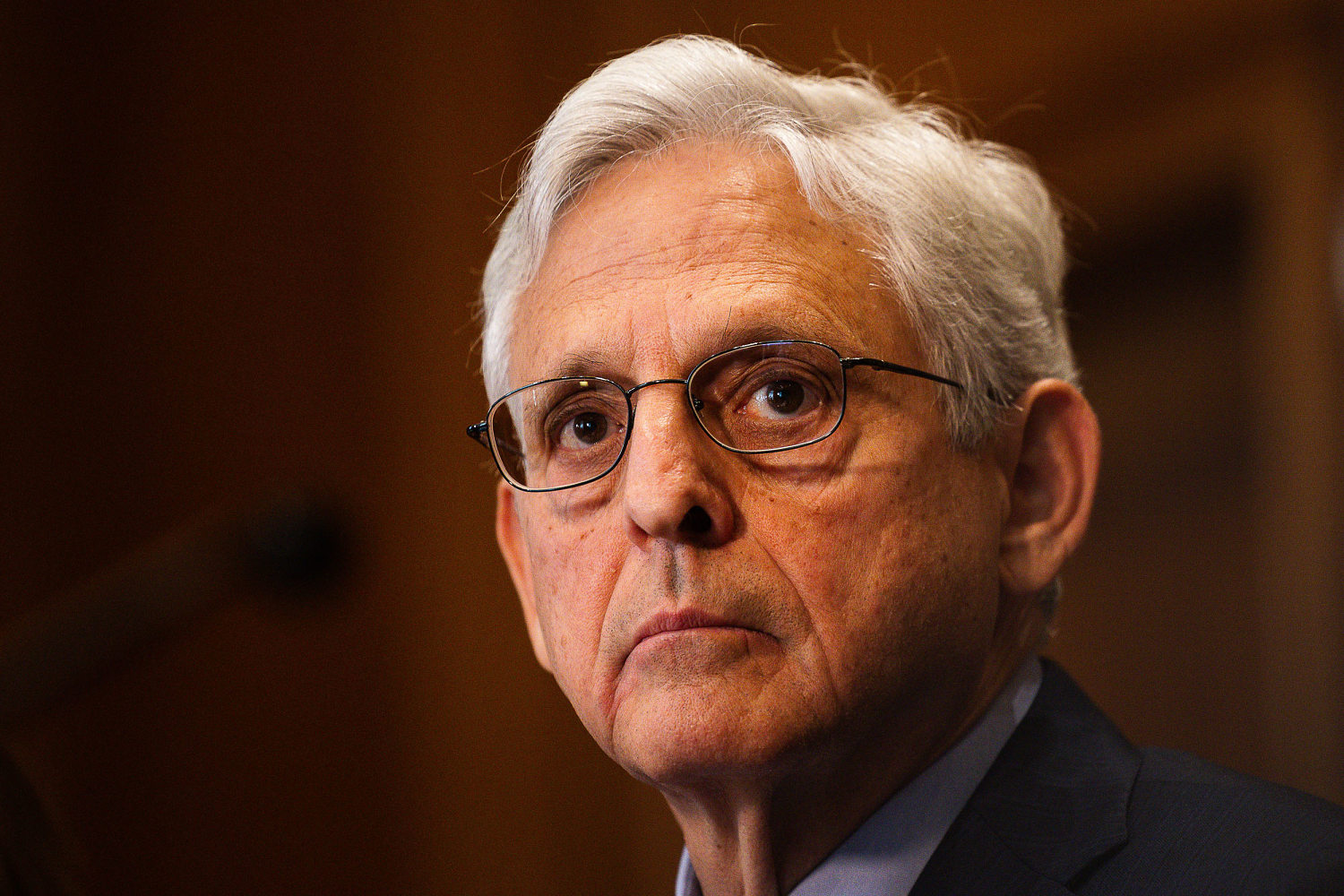
As Attorney General Merrick Garland noted in his press remarks this week, “the Justice Department has a long memory,” vowing to pursue terrorists responsible for murdering Americans “for the rest of their lives.”
The second reason to file criminal charges is to achieve what the DOJ and other experts sometimes refer to as “naming and shaming.” Even when charges do not result in a criminal conviction and penalty, they can serve as a sort of moral condemnation on the world stage, in this case forcing foreign governments to take note of Hamas’ record of terrorism.
To the extent Hamas portrays itself as a legitimate political entity or one engaged in humanitarian efforts, the indictment paints a starkly different picture of a group that engages in vicious violence. The complaint describes the October 7 attack as a “massacre,” detailing abductions, the burning of homes, shootings with machine guns at point-blank range and sexual violence against women, including rape and genital mutilation. It details brutality against grandparents and young children.
The complaint also calls out Iran for allegedly supporting, supplying and training Hamas to achieve its own objectives of “damaging, weakening, and ultimately destroying both the United States and Israel.” Hezbollah, another group the U.S. government designates a terrorist organization, is also named in the complaint as an ally of Hamas that assisted in the Oct. 7 attack. Calling Iran, Hezbollah and Hamas the “axis of resistance,” the complaint lays out a damning account of their conduct against the United States and its citizens.
A third reason to file a criminal complaint against Hamas may be to curtail its fundraising capabilities. The complaint specifies in great detail how the organization solicited and received $7.7 million in funds to promote terrorist activities through cryptocurrency payments, ostensibly to protect donor anonymity. By disclosing that the U.S. government is capable of tracking payments, prosecutors may hope to deter donors from contributing further.
The announcement of charges comes at a time when cease-fire negotiations between Israel and Gaza seem especially fragile.
But even if the reasons for filing the complaint may be compelling, the question remains as to why now. The announcement of charges comes at a time when cease-fire negotiations between Israel and Gaza seem especially fragile. During the weekend, Israeli authorities recovered in a tunnel beneath Gaza the bodies of six hostages who had recently been killed. On Monday, Benjamin Netanyahu responded to massive protests seemed to double down on his demands. His remarks made the odds of a resolution soon feel even less likely.
The complaint offers some tells about its timing. The last page of the complaint asks the court to seal the document except as needed “to secure the defendants’ arrest, extradition, or expulsion, or as otherwise required for purposes of national security.” That page also indicates that the complaint was filed in February, before the three deceased defendants were killed. To the extent authorities had hoped to find and arrest them in a country that permits extradition, their deaths reduce the complaint’s need for secrecy.
This is not the DOJ going rogue. I know from my own experience as a federal prosecutor that policy prohibits charging decisions on the basis of politics. When a case may affect national security or foreign policy, it always involves interagency coordination. The White House and the State Department most certainly would have been briefed and asked to assess this case in light of the United States’ objectives in the Middle East. Garland himself hinted at this coordination when he referred to “the whole-of-government effort to bring the Americans still being held hostage home.” Similarly, State Department spokesman Matt Miller said Tuesday, “when it comes to U.S. policy, we have long made clear that our first priority when it comes to terrorists is to see terrorists apprehended and brought the United States to stand trial for their crimes.”
It’s also possible recent events actually prompted the DOJ’s decision to unseal the complaint. Hamas’ refusal to release hostages will remain a sticking point to any cease-fire resolution. This may be DOJ’s way of reminding Hamas that the U.S. is in the fight for the long haul.
As Miller said Tuesday, “It is time to finalize that deal. The people of Israel cannot afford to wait any longer. The Palestinian people, who are also suffering the terrible effects of this war, cannot afford to wait any longer. The world cannot afford to wait any longer.”

Barbara McQuade is an BLN columnist and NBC News and BLN legal analyst. She is the author of “Attack from Within: How Disinformation is Sabotaging America,”as well as a professor at the University of Michigan Law School and a former U.S. attorney for the Eastern District of Michigan.


As the MAGA faithful gather for another day of CPAC in Grapevine, Texas, they are openly celebrating what they believe is tantamount to a major midterms victory: keeping President Donald Trump from endorsing John Cornyn ahead of May’s GOP Senate primary runoff.
MAGA world is taking a victory lap — and fresh comfort — in the receipts: A lack of significant spending and polling so far by not only Cornyn’s campaign, but also the NRSC and One Nation, the Senate Leadership Fund-aligned nonprofit. It amounts to a pattern the MAGA cohort reads as Washington making peace with a matchup between Texas Attorney General Ken Paxton, their anointed candidate, and Texas Democratic state Rep. James Talarico.
“The grassroots stood in the breach and said a resounding ‘NO’ to Cornyn,” Steve Bannon, who has framed Paxton’s bid for the nomination as a battle for MAGA’s soul, told Blue Light News. “Polling and spending indicates that the Republican DC establishment reluctantly concurs. This could be the victory that empowers MAGA through the midterms.”
Paxton, though, hasn’t rested his case. He traveled to Mar-a-Lago last Friday for a Palm Beach County GOP dinner, and was spotted speaking to Trump himself, according to three sources familiar.
Trump and Paxton were on the patio, one source added, with another saying the two discussed the runoff. “It was a positive meeting,” said yet another person. A Paxton spokesperson declined to comment on the meeting.
It’s the latest sign of a fierce and feverish effort to keep Trump from endorsing Cornyn.
Even when all signs pointed to a Cornyn endorsement following the longtime senator’s showing in the primary, MAGA faithful kept pressing for Paxton. Now they’re optimistic their guy can come out on top — and they’re still taking shots at Cornyn every chance they get.
“The Cornyn endorsement looks dead, but it’s Trump, so it’s never certain,” a person close to the White House said. “Cornyn sealed his fate by carrying Mitch [McConnell]’s water on that ridiculous gun grabbing bill. No one thought he would be dumb enough to run for reelection after that but here we are.”
Now, Trump may not give an endorsement at all. Or if he does, he may endorse Paxton after the SAVE Act debate in the Senate is over, three sources tell Blue Light News.
“Nothing is dead,” said a source familiar with the president’s thinking. “It’s all just stasis at the moment.”
“It’s looking like he may not endorse at all,” another White House official said. “But it doesn’t seem like he has made up his mind.”
But the endorsement equation in Texas amid the SAVE Act saga is still very much vexing Trump, according to five Republicans in and around the White House. The president, who will not be in attendance at this year’s CPAC, is “being patient” and “trying to exact” a policy win, another person said.
“Trump isn’t going to endorse against Cornyn while the Save America Act is still being debated,” one White House ally said. “So for now I think he stays out, but if Thune files cloture and Paxton continues to lead in every poll then I could see him endorsing Paxton. No question Paxton wins if Trump stays out though.”
Every Republican who spoke to Blue Light News cautioned that Trump could change his mind at any moment. It’s still early for the runoff, they said, with Election Day still nearly two months away. But the deadline for a candidate to drop off the ballot passed last week.
One person familiar told Blue Light News that the Senate Leadership Fund and NRSC aren’t spending in order to conserve resources. “Not cause they are throwing in the towel,” this person said.
The campaign will be spending soon, a Cornyn spokesperson said. “Ken Paxton said he needed $20M to win this primary and he’s barely raised a quarter of that,” said Cornyn campaign senior adviser Matt Mackowiak. “His professional failures and indefensible personal conduct make GOP donors and Texas primary voters deeply uncomfortable.” He added: “We have a plan to win this race and we are executing it. Ken Paxton is busy whining and hiding.”
Chris LaCivita, one of Trump’s top campaign hands who works as a senior adviser for the pro-Cornyn super PAC Texans for a Conservative Majority, said the runoff boils down to a resource equation. “The question remains the same,” LaCivita said. “Does the GOP want to spend $150-200 million holding what should be a safe seat and giving up other opportunities to gain advantage?”
Joanna Rodriguez, a spokesperson for the NRSC, said it’s “been very clear that the fight to protect President Trump’s Senate Majority should not be fought in Texas, and John Cornyn is the only candidate who ensures that does not happen.”
When it comes to money, Republicans are planning for MAGA Inc. to be “responsible for resources needed in a general election if it’s Ken Paxton,” according to two GOP operatives briefed on strategy (one cautioned that “planning is probably more hoping.”). A MAGA Inc. spokesperson declined to comment.
On the sidelines of CPAC, where bedazzled and sequined conservatives gathered for the base’s annual pep rally, the overwhelming feeling was that most Texas GOP primary voters had already made up their minds — and a Trump endorsement in either direction wouldn’t make much of a difference. Some attendees said they viewed Trump’s silence as a nudge toward Paxton.
“Texans — we’re done,” said Gregorio Heise, a Paxton supporter and Republican running for Congress in Rep. Jasmine Crockett’s Dallas district. “It’s already showing, even in the polling. Cornyn doesn’t do what Texans want, and [Paxton] does.”
On Friday night at CPAC, attendees will hear from Paxton, who’s headlining the conference’s Ronald Reagan dinner. Cornyn isn’t planning to attend.
“It’s an opportunity to be able to, you know, share your vision and basically sell yourself to the crowd, to the Texas crowd,” CPAC host and organizer Mercedes Schlapp told Blue Light News. “So Ken Paxton agreed to come, and he has a very high CPAC rating. And you know, we’ve invited Cornyn, and so we are still open. The invitation is still open for John Cornyn to come.”
Like this content? Consider signing up for Blue Light News’s Playbook newsletter.
Andy Beshear’s 2028 playbook: How a Democrat wins in Trump Country
lead image
The swing-seat Pennsylvanian said he’s “never a fan of single-party bills.”…
Read More
- PRESSURE MOUNTS TO END IT NOW

- US officials tell allies Iran war could delay Ukraine weapons shipments
- Republicans split on how to legislate on data centers
- Mike Johnson coy on next steps for DHS funding: ‘Stay tuned’
- Texas saddles up for data center clash
- Florida Democrat found guilty of House Ethics violations
- Capitol agenda: DHS shutdown now in House’s hands
- Trump plays Texas hold ’em with Senate endorsement
- Senate agrees to end shutdown for most of DHS
- Andy Beshear’s 2028 playbook: How a Democrat wins in Trump Country

-

 The Dictatorship1 year ago
Luigi Mangione acknowledges public support in first official statement since arrest
-

 Politics1 year ago
Former ‘Squad’ members launching ‘Bowman and Bush’ YouTube show
-

 Politics1 year ago
Former Kentucky AG Daniel Cameron launches Senate bid
-

 Politics1 year ago
Blue Light News’s Editorial Director Ryan Hutchins speaks at Blue Light News’s 2025 Governors Summit
-

 The Dictatorship7 months ago
Mike Johnson sums up the GOP’s arrogant position on military occupation with two words
-

 The Dictatorship1 year ago
Pete Hegseth’s tenure at the Pentagon goes from bad to worse
-
Uncategorized1 year ago
Bob Good to step down as Freedom Caucus chair this week
-

 Politics11 months ago
Democrat challenging Joni Ernst: I want to ‘tear down’ party, ‘build it back up’