
Politics
The challenge Trump could face in trying to use the Alien Enemies Act in a second term

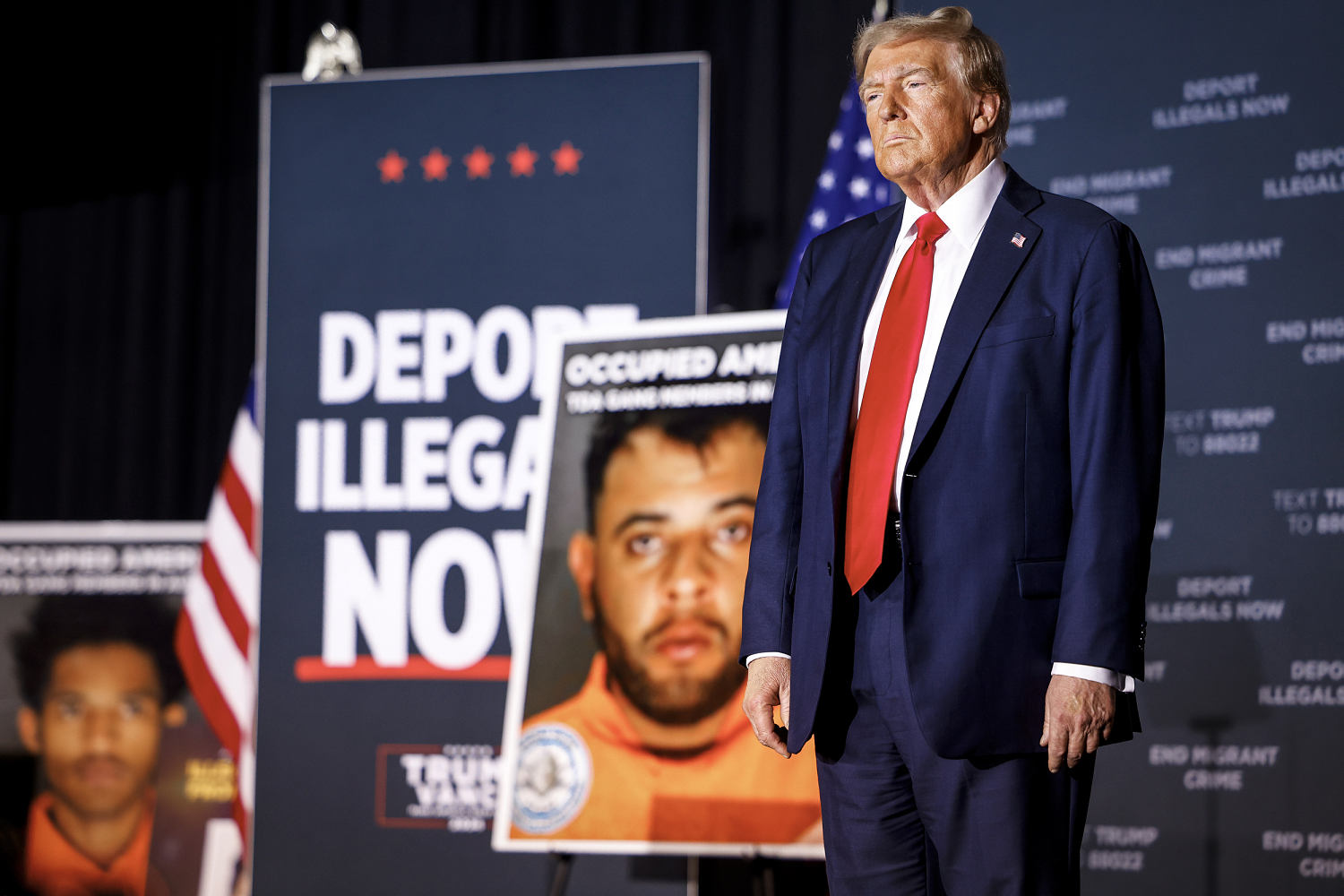

Donald Trump said he wants to use a 1798 law “to target and dismantle every migrant criminal network operating on American soil.”
But a second Trump administration’s mass detention and deportation efforts could face difficulty if attempted under that wartime law, known as the Alien Enemies Act or Alien Enemy Act.
Whenever there is a declared war between the United States and any foreign nation or government, or any invasion or predatory incursion is perpetrated, attempted, or threatened against the territory of the United States by any foreign nation or government, and the President makes public proclamation of the event, all natives, citizens, denizens, or subjects of the hostile nation or government, being of the age of fourteen years and upward, who shall be within the United States and not actually naturalized, shall be liable to be apprehended, restrained, secured, and removed as alien enemies.
That language reflects a potential problem with the Republican presidential nominee’s proposal: It’s not tied to a declared war or an invasion or predatory incursion by another country.
Congress (not the president) has the power to declare war. And while Trump and other politicians have used invasion-type language when talking about immigration, that doesn’t turn the actions of people from other countries into actions taken by other countries. It’s a wartime law, and there isn’t a war.
That doesn’t mean the law hasn’t been abused and couldn’t be again, as this Brennan Center analysis explains regarding the statute, which Democrats have proposed repealing.
It’s a wartime law, and there isn’t a war.
Nor can we be sure what would happen if an enforcement attempt landed at a Supreme Court that has taken an expansive view of presidential power — especially if Trump and Republicans are able to further shape the court. Given the tension between Trump’s stated plan and the text of the law, his best hope in that scenario might be that the Roberts Court deems it the sort of “political question” that courts refuse to resolve (while effectively resolving the challenged action against the challenger). Even on that legal terrain, however, a Trump victory wouldn’t be guaranteed.
What’s more certain is that Trump’s recent invocation of the 18th-century law wasn’t a random musing, and (relatedly) it wasn’t the first time he has mentioned the act. So if he wins in November, we could soon find out how far the high court will let him go on this front.
Subscribe to the Deadline: Legal Newsletter for expert analysis on the top legal stories of the week, including updates from the Supreme Court and developments in Donald Trump’s legal cases.
Jordan Rubin is the Deadline: Legal Blog writer. He was a prosecutor for the New York County District Attorney’s Office in Manhattan and is the author of “Bizarro,” a book about the secret war on synthetic drugs. Before he joined BLN, he was a legal reporter for Bloomberg Law.



New York is relaxing its liquor laws to allow bars and restaurants in some parts of the state to open early for the U.S. men’s hockey team’s gold medal game against Canada on Sunday. Gov. Kathy Hochul (D) announced Saturday that she directed the State Liquor Authority to suspend enforcement between 6 a.m…
Read More
Politics
Trump calls for Netflix to fire Susan Rice after she warned corporations for bending ‘a knee’
President Trump on Saturday called on Netflix to fire former United Nations Ambassador Susan Rice from its board of directors after she warned about an “accountability agenda” if Democrats regain power in the upcoming elections. “Netflix should fire racist, Trump Deranged Susan Rice, IMMEDIATELY, or pay the consequences…
Read More
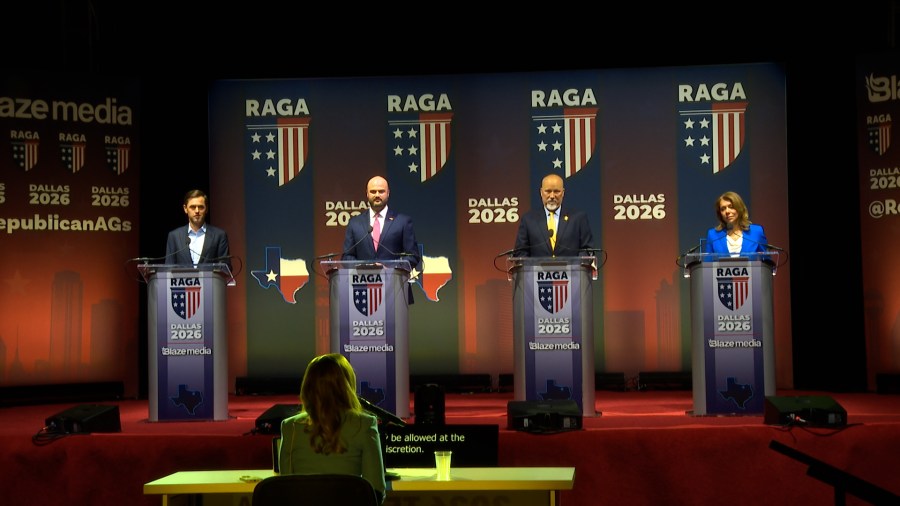
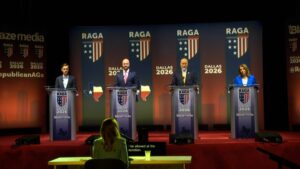
The four candidates vying for the Republican nomination for Texas Attorney General — State Sen. Mayes Middleton, R-Galveston, State Sen. Joan Huffman, R-Houston, former Assistant U.S. Attorney Aaron Reitz and U.S. Rep. Chip Roy, R-Texas — agree on almost everything. However, that didn’t stop them from attacking each other on their records and experience during Tuesday night’s Republican Attorneys General Association (RAGA) debate…
Read More
- Businesses face uncertainty as Supreme Court strikes down Trump tariffs

- The Supreme Court struck down Trump’s tariffs. Now comes the hard work of issuing refunds

- Hochul relaxes NY liquor laws during US-Canada hockey gold medal game

- Trump calls for Netflix to fire Susan Rice after she warned corporations for bending ‘a knee’
- State of Texas: GOP AG hopefuls agree on policy but clash over records in Dallas debate
- Schiff to boycott Trump’s State of the Union, speak at alternative event
- DHS suspending 2 travel programs amid shutdown

- Democrats warn Trump ‘must consult with Congress’ before striking Iran
- Trump hikes global tariff even higher — to 15% after Supreme Court ruling
- DOJ again swiftly fires a U.S. attorney chosen to replace Trump loyalist
-

 The Dictatorship1 year ago
Luigi Mangione acknowledges public support in first official statement since arrest
-

 Politics1 year ago
Former ‘Squad’ members launching ‘Bowman and Bush’ YouTube show
-

 The Dictatorship5 months ago
Mike Johnson sums up the GOP’s arrogant position on military occupation with two words
-

 Politics1 year ago
Blue Light News’s Editorial Director Ryan Hutchins speaks at Blue Light News’s 2025 Governors Summit
-

 Politics1 year ago
Former Kentucky AG Daniel Cameron launches Senate bid
-

 The Dictatorship1 year ago
Pete Hegseth’s tenure at the Pentagon goes from bad to worse
-
Uncategorized1 year ago
Bob Good to step down as Freedom Caucus chair this week
-

 Politics10 months ago
Democrat challenging Joni Ernst: I want to ‘tear down’ party, ‘build it back up’