
The Dictatorship
The antitrust scandals brewing inside Trump’s DOJ

This is an adapted excerpt from the March 29 episode of “Velshi.”
An investigation into a scandal within Donald Trump’s administration, which has largely flown under the radar, now appears ready to break open into a Watergate-level crisis for the president.
While it’s tempting to recall Watergate as being triggered by a break-in, it actually had its roots in an antitrust scandal — and in a thread that two lawmakers refused to stop pulling on.
In the early 1970s, the Nixon administration stood accused of interfering in a Justice Department case against International Telephone and Telegraphor ITT, which was a conglomerate that controlled telecom, hotels, defense contracts and plenty of other things.
The allegation at the center of the scandal was that the Justice Department went easy on ITT’s antitrust case in exchange for corporate funding of the 1972 Republican National Convention.
A Texas Democrat named Wright Patman, then chair of the House Banking Committee, tried to investigate. But he was blocked by members of his own party, who called it too risky to do in an election year.
So Patman passed the information to Democratic Sen. Sam Ervin of North Carolina, and an investigation followed. Piece by piece, the scandal came into focus.
Davis helped pick the referees, then showed up to play the game.
The ITT antitrust case may seem obscure today, but it revealed the administration’s willingness to bend rules for political and corporate gain, setting the stage for the Watergate break-in, which is the part of the scandal most Americans remember.
As investigators began digging into these financial and political connections, Richard Nixon’s campaign grew increasingly paranoid about leaks and opposition research. That fear and suspicion led to the infamous break-in at the Democratic National Committee headquarters in the Watergate complex, and it triggered the historic investigations that forced a sitting president to resign just two years later.
That history matters today, especially considering what The Wall Street Journal has uncovered inside the current Justice Department — which may be the Trump administration’s first antitrust domino to fall.
In an investigation that involved interviews with more than three dozen Justice Department employees, lobbyists, lawyers and others familiar with the antitrust division, the Journal describes a scandal that “casts a shadow over the Justice Department’s integrity” and “has alarmed even some Trump loyalists in the department.”
The man at the center of it is Mike Davis. After the FBI search of Mar-a-Lago, Davis became one of Trump’s most aggressive public defenders, making thousands of media appearances and positioning himself as a top outside legal ally, since he was not officially part of the president’s team.
Trump rewarded that loyalty publiclycalling Davis “tough as hell” on the campaign trail and saying he was someone he wanted in a “very high capacity.”
After the election, Davis helped recommend key figures to lead antitrust enforcement inside the administration, including Gail Slater, whom Trump nominated as assistant attorney general to run the Justice Department’s Antitrust Division.
Then, by his own account, Davis turned around and bragged to the same officials he had helped install that corporate clients were “beating his door down” because of his amazing White House access, according to the Journal.
Davis helped pick the referees, then showed up to play the game.
Under Trump, lobbyists who once thrived behind the scenes now openly tout their connections and wins.
Former Federal Trade Commission Chairman William Kovacic, who was appointed by President George W. Bush, told the Journal that Davis is “the face of this movement.” In previous administrations, Kovacic noted, “You would never want to be seen holding the knife.”
Last year, lawyers from the Justice Department’s antitrust division tried to block a $14 billion merger of Hewlett Packard Enterprise and Juniper Networksarguing that it would reduce competition in a critical tech sector. They pushed for the merged company to sell off key assets so it would be less concentrated and market-dominating.
That’s how antitrust enforcement is supposed to work.
But according to a sworn deposition from Justice Department official Roger Alford, during this process, Davis, who was hired by Hewlett Packard, interfered and told Slater, whom he helped install in the administration, “If you don’t approve this settlement, I will destroy you. I will destroy your job at the DOJ.”
While Davis denies that conversation, and told the Journal it was “utter bulls–––,” Slater was shaken enough to report the call immediately, according to Alford.
When the Justice Department’s career lawyers tried to block the Hewlett Packard-Juniper merger to protect competition, the companies’ lawyers didn’t negotiate on the merits, as would normally happen.
Instead, they went over the heads of agency staff, allegedly appealing directly to Trump-appointed leadership and using back-channel outreach to senior department officials, according to the Journal.
The judge called it “unacceptable” and said it showed “absolute disrespect for the court, for the jury, for this entire process.”
According to people familiar with the matter, even as Slater instructed the company that “no more lobbyists” should be involved in the process, a directive meant to stop outside influence, Davis was allegedly already meeting privately with top officials behind the scenes — bypassing the very people responsible for enforcing the law, the Journal reports.
A Justice Department official denied that the antitrust division was cut out of talks. A spokesman for Hewlett Packard told the Journal that the company appealed to senior leadership at the department because they believed antitrust officials were not giving proper consideration to national-security issues.
Then came one of the most extraordinary moments in this whole story. People familiar with the matter told the Journal that a senior DOJ official walked into Slater’s office and placed a settlement term sheet on her desk — written by Hewlett Packard’s own lawyers.
When Slater asked her superior what would happen if she refused to sign, he reportedly told her he would fire her deputies. The next day, the deal was announced.
Weeks later, her deputies were terminated, and months after that, Slater, the person Davis himself helped install and then allegedly threatened, was out of the department.
Davis pushed for her removal and celebrated it publicly in more than a dozen posts on X. In his own deposition, he acknowledged recommending her firing to “anyone who would listen.”
As for the deputies’ firings, Davis told the Journal he pushed for their termination because they made “bogus” allegations of corruption against him, not because of the merger deal.
Notably, the case is far from over; several state attorneys general refused to join the settlement and are continuing the fight.
After Watergate, Congress passed something called the Tunney Act to prevent exactly this kind of corruption, requiring parties to disclose meetings, contacts and communications. But investigators say key meetings with lobbyists were never disclosed, back-channel contacts were left off official records, and text messages involving Davis were never produced.
In a separate merger, involving real estate giant Compassantitrust enforcers called for a deeper investigation, then the company hired Davis to help push the acquisition.
According to the Journal’s reporting, Compass wanted to avoid a “second request,” a routine part of antitrust enforcement in which an agency asks for more information to decide whether to block or approve a deal. Slater wanted one, but she was overruled and the deal went through, right in the middle of a national housing crisis.
Then came the case you may know, even if you didn’t know this backstory: Live Nation Entertainment and its ticketing arm, Ticketmaster. The company has been accused of using its dominance over concerts, venues and ticketing to crush competition and drive up prices.
The government argued that Live Nation controls roughly half the concert promotion market, and court filings describe internal company conversations about how “stupid” their customers were and how they were “robbing them blind.”
The antitrust staff at the DOJ were actively litigating this case in federal court when suddenly a settlement appeared, negotiated above their heads.
Antitrust regulators were completely shut out of the process — not once, not twice, but throughout, according to reporting by The Wall Street Journal and Matt Stollerresearch director at the American Economic Liberties Project and one of the country’s sharpest outside analysts of antitrust and monopoly power.

People familiar with the conversations told the Journal that Trump was personally calling aides, asking why the case hadn’t been settled. The Journal reported that Trump heard about the case from Ari Emanuel, Hollywood superagent and former Live Nation board member, who reportedly urged the president to resolve it.
According to the Journal, on March 5, Trump hosted a controversial White House meeting with Live Nation CEO Michael Rapino, Attorney General Pam Bondi and Slater’s acting replacement. The same day, the settlement was signed and the company avoided a breakup.
Critics called the outcome an effective “corporate pardon” of a powerful monopoly.
A Justice Department spokesperson told the Journal that there was nothing unusual about the behavior of agency leadership.
The federal judge’s reaction was not subtle. The DOJ’s own lead trial attorney told the court: “I only saw the term sheet when you did.” The nation’s top antitrust enforcers stood in federal court and told a judge they were kept completely in the dark about a settlement in a case they were actively prosecuting.
The judge called it “unacceptable” and said it showed “absolute disrespect for the court, for the jury, for this entire process.”
Guess who Live Nation has on retainer? Davis.
According to the Journal’s reporting, Davis earns fees across his client portfolio that can reach $300,000 a month, representing companies with billions on the line. In his own words, he told the outlet, “I know the people. I know the pressure points. I know how to win.”
Watergate didn’t begin with a break-in. It began with an antitrust thread and two lawmakers who refused to let it go. Once they pulled it, everything else followed.
When it comes to antitrust scandals inside the Trump administration, what we know so far comes from sworn depositions, court filings and investigative reporting by The Wall Street Journal, along with the ongoing analytical work of Stoller, who has been among the most precise outside observers of what’s happening inside the current DOJ.
But the bigger question is what hasn’t come out yet.
Allison Detzel contributed.
Ali and lshi is the host of “Velshi,” which airs Saturdays and Sundays on BLN. He has been awarded the National Headliner Award for Business & Consumer Reporting for “How the Wheels Came Off,” a special on the near collapse of the American auto industry. His work on disabled workers and Chicago’s red-light camera scandal in 2016 earned him two News and Documentary Emmy Award nominations, adding to a nomination in 2010 for his terrorism coverage.

Amel Ahmed
Amel Ahmed is a Segment Producer for “Velshi.”


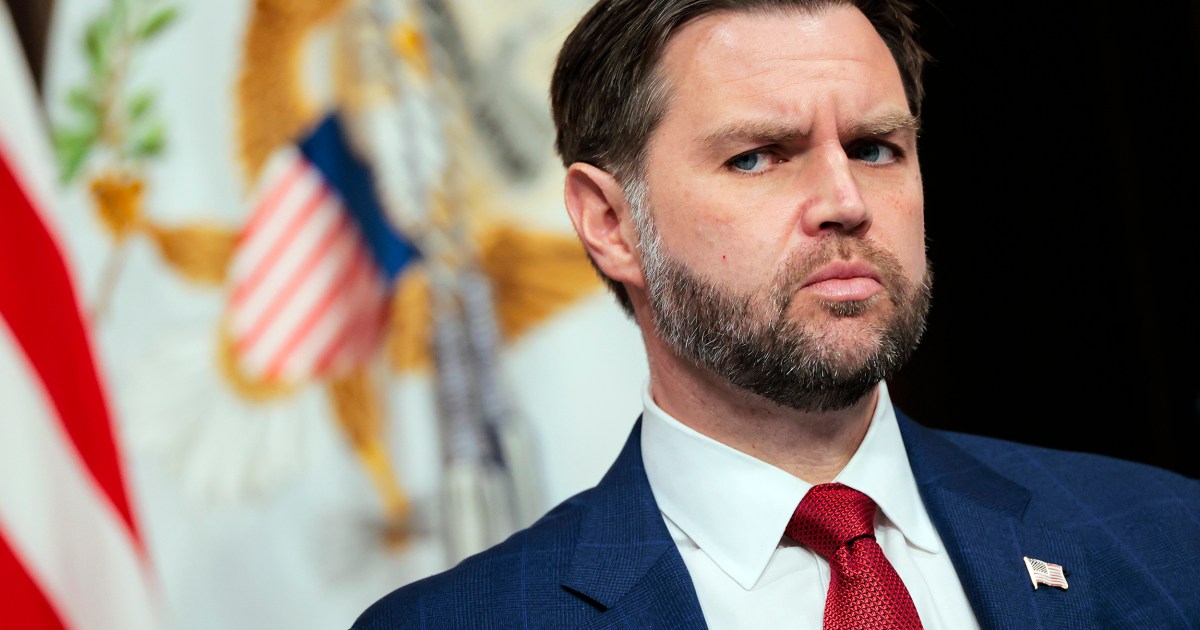
For many people who care deeply about issues like civil rights, combating child sex abuse and thwarting corruption, there has never been anything cool about the MAGA movement.
But now it seems that others inside the tent are coming around to that realization as well, albeit a bit more slowly.
President Donald Trump and his allies have used everything from misinformed emcees to gamer memes to project an air of coolness around the MAGA movement. But evidence suggests the air is beginning to evaporate, even among supporters of the president. Multiple polls this year have shown Trump’s support among young men, the group arguably most responsible for propping up this facade of coolness, has hit new lows, compared to where it was during the 2024 election.
At Blue Light News”https://www.Blue Light News.com/news/2026/03/28/iran-trump-maga-men-divide-cpac-00849378″>report on the Conservative Political Action Conference over the weekend underscored this trend, citing multiple conservative young men who said Trump’s warmongering in Iran was turning them off ahead of this year’s midterms. The New York Times published a similar dispatch from the conference, highlighting young conservatives’ disillusionment with MAGA.
And all of this seems relevant to Vice President JD Vance’s recent attempt to downplay a complaint from Trump-aligned podcaster Joe Rogan, who disparaged MAGA for attracting “dorks.”
In his NSFW rant, Rogan (who endorsed Trump in 2024) complained about the slogan “make America great again” and Trump’s movement supposedly becoming “a movement of a bunch of dorks.”
“A lot of them are these really weird, f–––ing uninteresting, unintelligent people,” Rogan said, before griping that some “genuine patriots” in the movement get “lumped into this one group” with the “dorks.” The critique isn’t all that different from the one Hillary Clinton made about a decade ago, when she referred to some people in the movement as a “basket of deplorables” who espoused bigotry.
Rogan also argued that former President Barack Obama was more effective in deporting people than Trump has been.
Vance took umbrage with both claims during an interview with far-right propagandist Benny Johnson last week. The vice president said he would text Rogan to rebut the claims, but on the topic of MAGA “dorks,” Vance said, “We have many, many fewer dorks than the far left. But we love our dorks. We love our cool kids. We love anybody who wants to save the country.”
🚨NEW: JD Vance issues a direct response to Joe Rogan calling Trump supporters “dorks”
“We have many, MANY fewer dorks than the far-left! But we LOVE our dorks. We love our cool kids. We love anybody who wants to save the country.”pic.twitter.com/DOPgCRvA5A
— Jack (@jackunheard) March 27, 2026
Is it puerile that two conservative thought leaders were seriously discussing whether the so-called dorks could sit with them at lunch? Absolutely.
But it also speaks to the superficiality of the MAGA movement, which perceives “coolness” as a very real political currency. And one that Trump appears to be losing rapidly among some noteworthy constituents.
Ja’han Jones is an MS NOW opinion blogger. He previously wrote The ReidOut Blog.
The Dictatorship
Columbia University protester says year in ICE custody ‘destroyed’ her physical health
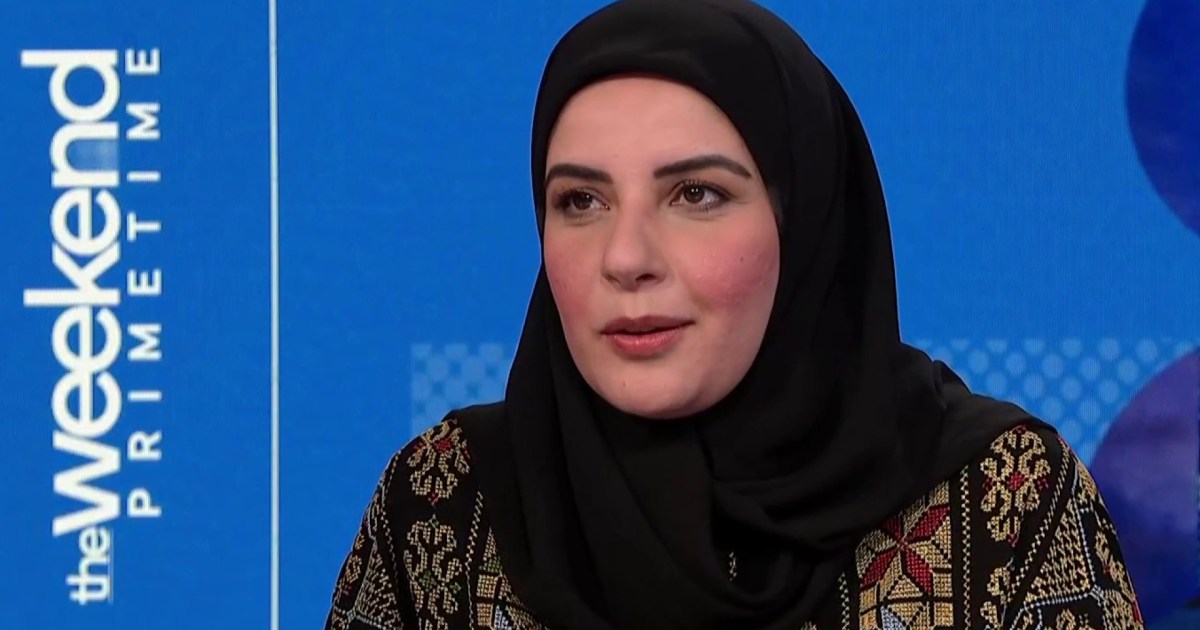
Leqaa Kordia, a Palestinian woman who was detained by U.S. Immigration and Customs Enforcement for more than a year after participating in protests near Columbia Universitysat down with MS NOW for her first television interview since being released from custody.
She joined “The Weekend: Primetime” on Sunday to discuss her time inside a Texas detention center and the toll it took on her physical and mental health.
Earlier this month, an immigration judge ordered that Kordia be released on a $100,000 bond. The 33-year-old had been held at the Prairieland Detention Center in Alvarado, Texas, since last March, after federal authorities arrested her for overstaying her student visa. She has not been charged with a crime.
“It was an awful experience,” she said of her time at the Texas facility. “It was a long, tough year. The conditions in ICE detentions are horrible, horrific. I always say that we need days to talk about [a] few of the conditions.”
According to Kordia, detainees live in inhumane conditions and lack adequate access to nutritious food and proper health care, which she said she witnessed firsthand after suffering from a seizure while in custody. “Medical care is horrible,” she said. “They don’t have doctors. They don’t have even nurses.”
She said she had a fever a few days before experiencing a seizure. “I looked miserable,” she said. “I felt miserable, and I was begging them for help. … Nobody showed up.”
While Kordia said she does not remember what happened in the moments before her seizure, she recalled waking up in the medical unit “terrified.”
For the next three days, she was “chained” to a hospital bed, she said. “If I wanted to use the bathroom, I would be chained. If I wanted to take a shower, I’d be chained,” she told MS NOW.
“I actually felt relieved when I went back to the dorm because my experience at the hospital was like they’re torturing me,” she added.
Kordia said the experience “destroyed” her physical health. “I experienced my first seizure ever in my whole life,” she said. “Now I have to be on a heavy anti-seizure medication for at least two years. This is like changing my whole health.”
She also spoke about the emotional toll of her year in detention, saying: “It’s affecting my mental health also — like, not having a stable physical health affects your mental health. I was in a jail for a whole year. I was treated awfully. I was humiliated many times, so often.”
You can watch Kordia’s full interview in the clip at the top of the page.
Allison Detzel is an editor/producer for MS NOW. She was previously a segment producer for “AYMAN” and “The Mehdi Hasan Show.”
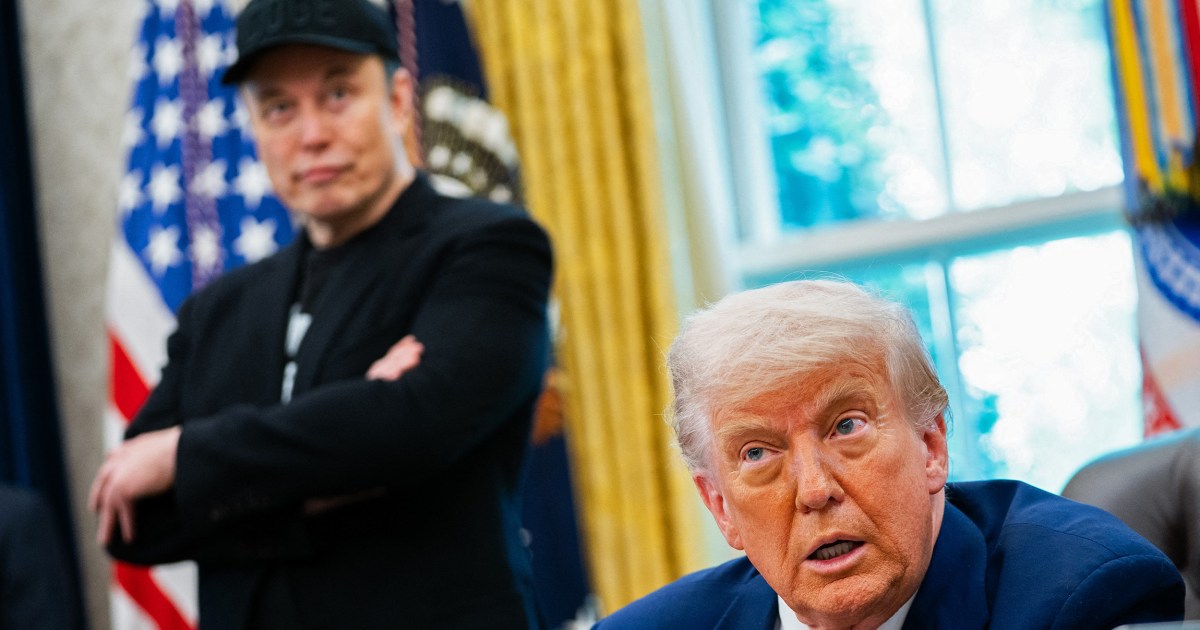
As the war in Iran begins its second month, it stands to reason that Donald Trump would have quite a bit to talk about during his latest phone meeting with Indian Prime Minister Narendra Modi. There was no obvious reason why the American president would include Elon Musk in the call, but according to The New York Timesthat’s precisely what happened:
Elon Musk participated in a phone call on Tuesday with President Trump and Prime Minister Narendra Modi of India, an unusual appearance by a private citizen on a call between two heads of state during a wartime crisis. […]
It is unclear why Mr. Musk was on the call or whether he spoke. … The call, American and Indian officials have said, was about the escalating crisis in the Middle East, and in particular the Iranian military’s control of the Strait of Hormuz, which is critical for the shipping of oil and gas around the globe.
None of the relevant players responded to the Times’ request for comment, and the reporting has not been independently verified by MS NOW.
That said, if the account is accurate, it would suggest that the rift between the president and his top 2024 campaign donor has been resolved and that Musk is no longer on the outs with Team Trump.
But more important is the substantive element: Why in the world would the American president agree to let a private citizen join a sensitive call with a key foreign leader about an ongoing war?
More to the point, why would Trump do this again?
During the Republican’s pre-inaugural transition period, Trump did this quite a bit:
- When Trump met with Hungarian Prime Minister Viktor Orbán at Mar-a-Lago, Musk participated in the conversation.
- When Trump spoke to Ukrainian President Volodymyr Zelenskyy, Musk joined the phone call.
- When Trump traveled to Paris for the reopening of Notre Dame Cathedral and spoke to French President Emmanuel Macron, Musk was there.
- When Trump spoke to Italian Prime Minister Giorgia Meloni, Musk was there, too.
About a year and a half later, it’s apparently happening again.
The New Republic noted“There is literally no rational justification for including the world’s richest man on a call between two national leaders during a global crisis.”
If Trump has a defense for such a move, I’m eager to hear it.
This post updates our related earlier coverage.
Steve Benen is a producer for “The Rachel Maddow Show,” the editor of MaddowBlog and an MS NOW political contributor. He’s also the bestselling author of “Ministry of Truth: Democracy, Reality, and the Republicans’ War on the Recent Past.”
- Delaware judge reassigns multiple Musk cases after accusations of bias

- Leavitt on Trump’s TSA order: ‘It should not have come to this point’
- US-bound flight returns to Brazil due to engine problem

- Could US currency with Trump’s signature become a collector’s item?
- Army investigates helicopter fly-by at Kid Rock’s Nashville estate

- JD Vance responds to Joe Rogan’s complaint about MAGA ‘dorks’
- Columbia University protester says year in ICE custody ‘destroyed’ her physical health

- Trump reportedly includes Elon Musk in phone meeting with foreign leader (again)
- Key Democrats probe report Hegseth blocked promotions for women, Black officers
- The antitrust scandals brewing inside Trump’s DOJ
-

 The Dictatorship1 year ago
Luigi Mangione acknowledges public support in first official statement since arrest
-

 Politics1 year ago
Former ‘Squad’ members launching ‘Bowman and Bush’ YouTube show
-

 Politics1 year ago
Former Kentucky AG Daniel Cameron launches Senate bid
-

 Politics1 year ago
Blue Light News’s Editorial Director Ryan Hutchins speaks at Blue Light News’s 2025 Governors Summit
-

 The Dictatorship7 months ago
Mike Johnson sums up the GOP’s arrogant position on military occupation with two words
-

 The Dictatorship1 year ago
Pete Hegseth’s tenure at the Pentagon goes from bad to worse
-
Uncategorized1 year ago
Bob Good to step down as Freedom Caucus chair this week
-

 Politics11 months ago
Democrat challenging Joni Ernst: I want to ‘tear down’ party, ‘build it back up’