
The Dictatorship
Texas governor issues threat to city in his state over a symbolic bill criticizing Israel

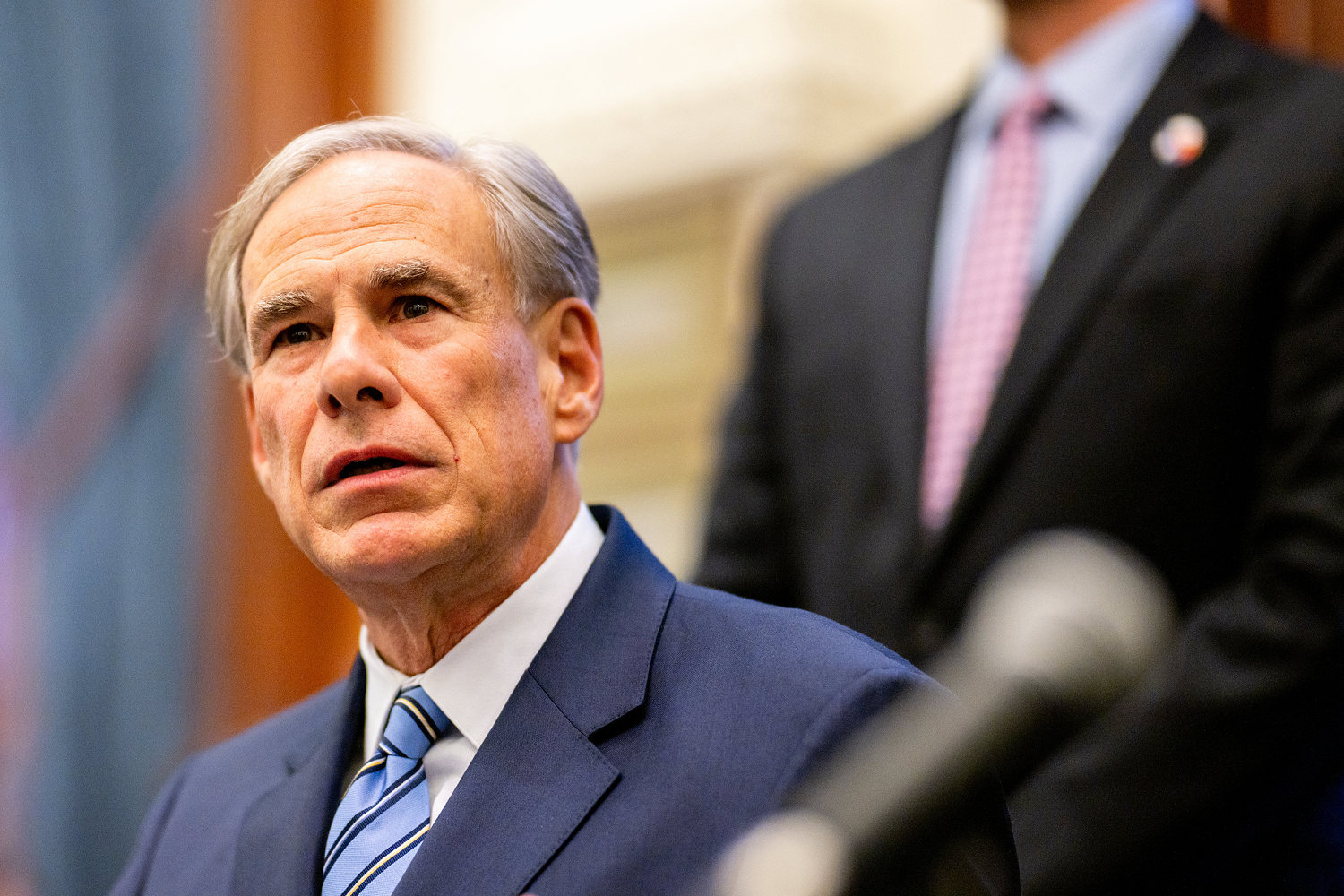
Texas Gov. Greg Abbott claims to be all about “America First,” so why is he threatening to punish a city in his state for insufficient loyalty to Israel?
The city council of San Marcos has set up a vote for next week on a largely symbolic resolution that calls for “an Immediate, Permanent, and Sustained Ceasefire in Occupied Palestine, Arms Embargo on the State of Israel, Recognition of Palestinian Sovereignty and Protection of Constitutional Rights.”
The proposed resolution reads in part:
We follow the lead of the World Health Organization, United Nations, Save the Children, Amnesty International, Human Rights Watch, His Holiness Pope Francis, more than 150 countries, and countless other organizations in the United States and around the world in calling for a ceasefire, because what happens internationally impacts our constituents locally. We believe in the shared humanity of all people, reiterate that all people are entitled to live life in safety and free from violence, and affirm these as common values held by San Marcos residents and leaders.
The resolution specifically highlights that Palestinians of Jewish, Muslim and Christian faiths are facing a humanitarian crisis in Gaza and says that the council “condemns anti-Palestinian, Islamophobic, antisemitic, and all xenophobic rhetoric and attacks.” Nonetheless, in a threatening letter to San Marcos’ mayor, Abbott decried the resolution for being “antisemitic.”
In the letterAbbott wrote that “anti-Israel policies are anti-Texas policies” and said the proposed resolution “seems calculated to violate” a state law on boycotting Israel. The resolution notes that San Marcos residents’ tax dollars funded more than $4 million of Israel’s weapons purchases in 2024 and says that San Marcos “stands to benefit from a reallocation of local funds towards essential domestic priorities such as transportation, education, housing, healthcare, environmental protection, and public goods and services, which currently face neglect due to state and federal appropriations to Israel’s military.”
According to Abbott, this puts the city’s state grants at risk. He concluded by saying:
Whenever San Marcos enters into grant agreements with my office, it is required to certify that it will comply with all state laws, including laws prohibiting government support for boycotts of Israel. My office is already reviewing active grants with San Marcos to determine whether the City has breached terms by falsely certifying compliance with Texas law. If the City Council adopts this Resolution, the Office of the Governor will not enter into any future grant agreements with the City and will act swiftly to terminate active grants for non-compliance. I will further direct all other state agencies to review agreements with the City for possible breach.
The hypocrisy at play is hard to ignore. Abbott has made a fairly similar argument to the one made in the proposed resolution, in which he says federal aid to Ukraine would be money better spent on Americans. For the record, most of the funding authorized for Ukraine has been spent making purchases from the U.S. defense industrybut the contradiction is clear: Abbott seems perfectly fine with the argument that American tax dollars are better off staying at home — unless anti-Israel sentiment is involved.
With a recent Pew Research survey showing that 53% of Americans carry an unfavorable view of Israelup from 42% in March 2022, it seems like Abbott is intent on quashing broadening dissent over all else.



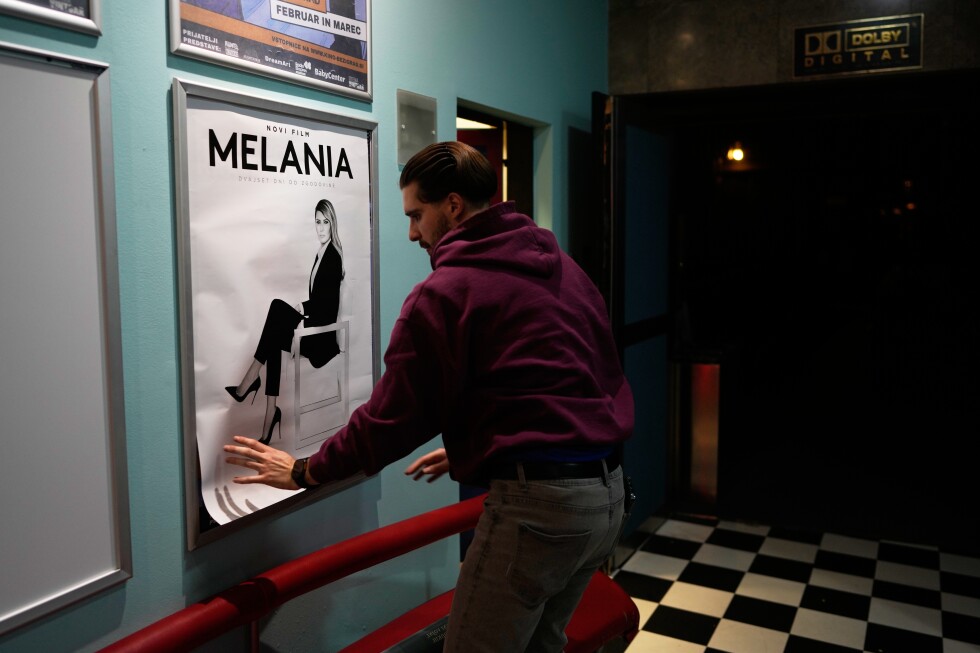

NEW YORK (AP) — Hollywood largely ceded attention to football over a slow box-office weekend, with the survival thriller “Send Help” repeating as No. 1 in ticket sales and the Melania Trump documentary “Melania” falling sharply in its second weekend.
Super Bowl weekend is typically one of the lowest attended moviegoing times of the year. It was the second slowest weekend last year and in 2024 it ranked dead last for moviegoing.
Studios instead put their focus on advertising movies for the massive television audience. Among the trailers expected to hit the NFL broadcast Sunday were The Walt Disney Co.’s “Mandalorian and Grogu,” Lionsgate’s Michael Jackson biopic, “Michael” and Universal Pictures’ “The Super Mario Galaxy Movie.”
In North American theaters, the Disney.-20th Century Studios release “Send Help,” directed by Sam Raimi, lead all films with $10 million in its second weekend, according to studio estimates Sunday. With $53.7 million globally thus far, the R-rated survival thriller has proved a solid midbudget success. Disney meanwhile watched its remarkably long-lasting “Zootopia 2″ cross $1.8 billion worldwide in its 11th week of release.
“Melania,” from Amazon MGM, added 300 theaters in its second weekend but dropped steeply with to $2.4 million in ticket sales, down 67% from its much-discussed debut. The rapid downturn means the Brett Ratner-directed documentary is likely heading toward flop territory given its high price tag. Amazon MGM paid $40 million for film rights, plus some $35 million to market it.
The North American total for “Melania” stands at $13.4 million. Amazon MGM has not released international figures, though they’re expected to be paltry.
Kevin Wilson, head of domestic distribution for the studio, said the movie’s box-office performance “is a critical first moment that validates our wholistic distribution strategy, building awareness, engagement, and provides momentum ahead of the film’s eventual debut on Prime Video.”
The film’s ticket sales — which would be very good for a less expensive documentary — were a talking point throughout the week. Late-night hosts Stephen Colbert and Jimmy Kimmel hammered the movie’s sales. Kimmel called them a “rigged outcome.” Elsewhere in theaters, the Italy-set Kevin James romantic comedy “Solo Mio” debuted with a robust $7.2 million, a major win for Angel Studios, best known for its faith-based releases. “Stray Kids: The Dominate Experience,” a K-pop concert film released by Bleecker Street, launched with $5.6 million, and an additional $13.2 million overseas. The Luc Besson-directed Bram Stoker adaptation “Dracula” opened with $4.5 million, a studio-best debut for the indie distributor Vertical.
One of the most unusual releases in theaters, however, remains the low-budget indie “Iron Lung.” The YouTube filmmaker Markiplier, whose real name is Mark Fischbach, self-financed and self-distributed the R-rated video game adaptation, along with writing, directing and starring in it. In its second weekend, “Iron Lung” collected $6.2 million, bringing its two-week total to $31.2 million. It cost $3 million to make.
Top 10 movies by domestic box office
With final domestic figures being released Monday, this list factors in the estimated ticket sales for Friday through Sunday at U.S. and Canadian theaters, according to Comscore:
1. “Send Help,” $10 million.
2. “Solo Mio,” $7.2 million.
3. “Iron Lung,” $6 million.
4. “Stray Kids: The Dominate Experience,” $5.6 million.
5. “Dracula,” $4.5 million.
6. “Zootopia 2,” $4 million.
7. “Avatar: Fire and Ash,” $3.5 million.
8. “The Strangers: Chapter 3,” $3.5 million.
9. “Shelter,” $2.4 million.
10. “Melania,” $2.4 million.

WASHINGTON (AP) — President Donald Trump wants to keep home prices highbypassing calls to ramp up construction so people can afford what has been a ticket to the middle class.
Trump has instead argued for protecting existing owners who have watched the values of their homes climb. It’s a position that flies in the face of what many economists, the real estate industry, local officials and apartment dwellers say is needed to fix a big chunk of America’s affordability problem.
“I don’t want to drive housing prices down. I want to drive housing prices up for people that own their homes, and they can be assured that’s what’s going to happen,” Trump told his Cabinet on Jan. 29.
That approach could bolster the Republican president’s standing with older voters, a group that over time has been more likely to vote in midterm elections. Those races in November will determine whether Trump’s party can retain control of the House and Senate.
“You have a lot of people that have become wealthy in the last year because their house value has gone up,” Trump said. “And you know, when you get the housing — when you make it too easy and too cheap to buy houses — those values come down.”
But by catering to older baby boomers on housing, Trump risks alienating the younger voters who expanded his coalition in 2024 and helped him win a second term, and he could wade into a “generational war” in the midterms, said Brent Buchanan, whose polling firm Cygnal advises Republicans.
“The under-40 group is the most important right now — they are the ones who put Trump in the White House,” Buchanan said. “Their desire to show up in an election or not is going to make the difference in this election. If they feel that Donald Trump is taking care of the boomers at their expense, that is going to hurt Republicans.”
The logic in appealing to older voters
In the 2024 presidential election, 81% of Trump’s voters were homeowners, according to AP VoteCast data. This means many of his supporters already have mortgages with low rates or own their homes outright, possibly blunting the importance of housing as an issue.
Older voters tend to show up to vote more than do younger people, said Oscar Pocasangre, a senior data analyst at liberal think tank New America who has studied the age divide in U.S. politics. “However, appealing to older voters may prove to be a misguided policy if what’s needed to win is to expand the voting base,” Pocasangre said.
Before the 2026 elections, voters have consistently rated affordability as a top concern, and that is especially true for younger voters with regard to housing.
Booker Lightman, 30, a software engineer in Highlands Ranch, Colorado, who identifies politically as a libertarian Republican, said the shortage of housing has been a leading problem in his state.
Lightman just closed on a home last month, and while he and his wife, Alice, were able to manage the cost, he said that the lack of construction is pushing people out of Colorado. “There’s just not enough housing supply,” he said.
Shay Hata, a real estate agent in the Chicago and Denver areas, said she handles about 100 to 150 transactions a year. But she sees the potential for a lot more. “We have a lack of inventory to the point where most properties, particularly in the suburbs, are getting between five and 20 offers,” she said, describing what she sees in the Chicago area.
New construction could help more people afford homes because in some cases, buyers qualify for discounted mortgage rates from the builders’ preferred lenders, Hata said. She called the current situation “very discouraging for buyers because they’re getting priced out of the market.”
But pending construction has fallen under Trump. Permits to build single-family homes have plunged 9.4% over the past 12 months in October, the most recent month available, to an annual rate of 876,000, according to the U.S. Census Bureau.
Trump’s other ideas to help people buy houses
Trump has not always been against increasing housing supply.
During the 2024 campaignTrump’s team said he would create tax breaks for homebuyers, trim regulations on construction, open up federal land for housing developments and make monthly payments more manageable by cutting mortgage rates. Advisers also claimed that housing stock would open up because of Trump’s push for mass deportations of people who were in the United States illegally.
As recently as October, Trump urged builders to ramp up construction. “They’re sitting on 2 Million empty lots, A RECORD. I’m asking Fannie Mae and Freddie Mac to get Big Homebuilders going and, by so doing, help restore the American Dream!” Trump posted on social media, referring to the government-backed lenders.
But more recently, he has been unequivocal on not wanting to pursue policies that would boost supply and lower prices.
In office, Trump has so far focused his housing policy on lobbying the Federal Reserve to cut its benchmark interest rates. He believes that would make mortgages more affordable, although critics say it could spur higher inflation. Trump announced that the two mortgage companies, which are under government conservatorship, would buy at least $200 billion in home loan securities in a bid to reduce rates.
Trump also wants Congress to ban large financial institutions from buying homes. But he has rejected suggestions for expanding rules to let buyers use 401(k) retirement accounts for down payments, telling reporters that he did not want people to take their money out of the stock market because it was doing so well.
There are signs that lawmakers in both parties see the benefits of taking steps to add houses before this year’s elections. There are efforts in the Senate and House to jump-start construction through the use of incentives to change zoning restrictions, among other policies.
One of the underlying challenges on affordability is that home prices have been generally rising faster than incomes for several years.
This makes it harder to save for down payments or upgrade to a nicer home. It also means that the places where people live increasingly double as their key financial asset, one that leaves many families looking moneyed on paper even if they are struggling with monthly bills.
There is another risk for Trump. If the economy grows this year, as he has promised, that could push up demand for houses — as well as their prices — making the affordability problem more pronounced, said Edward Pinto, a senior fellow at the American Enterprise Institute, a center-right think tank.
Pinto said construction of single-family homes would have to rise by 50% to 100% during the next three years for average home price gains to be flat — a sign, he said, that Trump’s fears about falling home prices were probably unwarranted.
“It’s very hard to crater home prices,” Pinto said.

This is the Feb. 9, 2026, edition of “The Tea, Spilled by Morning Joe” newsletter.Subscribe hereto get it delivered straight to your inbox every Monday through Friday.
Bad Bunny’s Super Bowl performance was a jolt of Latino pride coursing through a country whose greatest strength, as Ronald Reagan once said, is its immigrants.
At the start of his electrifying show, Bad Bunny quietly handed his Grammy to a young Hispanic boy. It was a small gesture that spoke volumes.
Then came the explosion of vivid colors and cultural references — a celebration of Latino American life. Families dancing together, generations working side by side, communities building their own American dream.
Unlike the hyperchoreographed spectacle of a J.Lo show, this was an authentic snapshot of people rejoicing in who they are — children and seniors alike filling the stage with joy, energy, and love.
The performance was a testament to the diverse spirit of the Americas, stretching from Canada’s Arctic Circle to the tip of Chile.
More than 130 million viewers saw the vastness and depth of Latino culture choreographed in a big, brilliant, romantic way.
Elsewhere, the contrast could not have been sharper.
An alternative Super Bowl halftime show featured performers like Kid Rock lip-synching trite, audience-specific lyrics for a preening crowd. The event was organized by self-righteous elites who chose a performer whose career has included songs glorifying the exploitation of girls and women — even lyrics celebrating his fondness for underage girls.
Lines that read as if they were torn straight from the pages of the Epstein files.
Back on the main stage, Bad Bunny offered something entirely different — a cultural marker in the age of Trump that transcended language and politics.
“The only thing more powerful than hate is love.”
In his closing moments, Bad Bunny looked straight into the camera and said he reached this stage by never losing faith.
Believe. Believe. Believe.
And you can get here, too.
“This is the Epstein class ruling our country. They are the elites they pretend to hate.”
— Sen. Jon OssoffD-Ga., campaigning for re-election in Atlanta on Saturday


BAD DAY FOR THE PATRIOTS

It was a rough day at the office for the Patriots’ QB, Drake Maye. The 2nd year standout felt the crush of Seattle’s pass rush. The Seahawks won Super Bowl LX 29-13.
A CONVERSATION ABOUT BAD BUNNY
The Super Bowl halftime show drew more than 130 million viewers — and a predictable outcry from the MAGA right. David Drucker, John Heilemann, Jonathan Lemire, Katty Kay, and Al Sharpton joined us to discuss the performance, the backlash, and what the moment revealed about America on its biggest stage.
JS: A lot of the criticism of the halftime show was framed as moral outrage. Rev. Al, what do you make of the reaction we’re seeing?
AS: You have people who want to look the other way and turn the page on their own behavior while holding everyone else to a moral standard. That alone tells you a lot.
There was a prayer breakfast last week— traditionally bipartisan, meant to bring people together — and the president used it to attack his enemies. Then later that same day, there was a video depicting former President Obama and former first lady Michelle Obama as apes. And after all that, they wonder why people don’t take their pretensions of moral authority seriously. Look at how they behave.
JS: On the performance itself, David Drucker, what did you think?
DD: I don’t get offended very easily. I don’t own any of Bad Bunny’s music — I know I’m not the target demographic — but I watched it and thought it was a good show. It was entertaining.
JS: Critics said it wasn’t “American.” How did it look to you?
DD: I grew up in Los Angeles, and this felt very American to me. In major cities across the country, people speak all sorts of languages. That’s just how America works.
JS: From the NFL’s perspective, why did this choice make sense?
DD: The NFL has decided its growth market is international. Next year they’re scheduled to have nine regular-season games overseas — Australia, Brazil, Mexico City. The NFL is looking to grow its business, and this fits.
JS: John Heilemann, what did this moment signal to Hispanic Americans?
JH: For Hispanics, who’ve long been treated as the “other,” this had to be an extraordinary night — one of the most powerful institutions in America recognizing that we are Americans. And the NFL is so big that it simply doesn’t care what Donald Trump or the MAGA right tweets.
JS: Was Bad Bunny actually a risky choice for the league?
JH: No. The NFL followed the data. This is the most streamed artist in the world, on the biggest stage anywhere. That’s not bold — that’s smart.
JS: Jonathan Lemire, how political was this performance, and in what way?
JL: Only subtly — in its inclusiveness. It was a love letter to Puerto Rico and to all the Americas. And in this moment, that message of unity over division is something a lot of Americans wanted.
JS: Katty Kay, what stood out to you?
KK: The politics was the joy. People expected something confrontational, but instead it was a celebration of heritage and love. The final message — that the only thing more powerful than hate is love — made it very hard to be offended.
JS: John, what’s the takeaway?
JH: Whatever you think of the music, this was one of the most exquisitely produced halftime shows ever. And it shut up the critics in every possible way.
This conversation has been condensed and edited for brevity and clarity.
OLYMPIANS SPEAK OUT
American athletes have long carried domestic politics onto the international stage. From Tommie Smith and John Carlos Black Power salute at the 1968 Mexico City Games to the U.S. women’s soccer team kneeling in 2021, the Olympics have often reflected the country’s political tensions back to the world.
That tradition resurfaced almost immediately at the Milan-Cortina Winter Games. Asked about representing Team USA during the Trump administration’s immigration crackdown, freestyle skier Hunter Hess said he had “mixed emotions,” adding that there was “a lot going on” he wasn’t a fan of.
Donald Trump responded angrily on Truth Social, calling Hess “a real Loser” and saying he never should have made the team. Rep. Byron DonaldsMegyn Kellyand Jake Paul quickly joined the criticism.
Other American athletes echoed those concerns. Teammate Chris Lillis said he feels “heartbroken about what’s happened in the United States,” while figure skater Amber Glenn said the LGBTQ community has struggled during the Trump administration — a reminder that sports and politics have never been as separate as critics insist.
EXTRA HOT TEA

Prediction market companies Kalshi and Polymarket — platforms that allow you to bet on, oh, anything and everything — may have been banned from advertising at Super Bowl LX, but they got eyeballs and bets rolling anyway. Here’s how last night played out in wager world:
$500M (Kalshi) and $55M (Polymarket) on the outcome of the Super Bowl
$397M on which player would get the most fantasy points (Seattle Seahawks kicker Jason Myers surpassed Patriots quarterback Drake Maye for the final time just past 8:45 p.m. ET)
$1.5M on how long the halftime show would last.
$113.5M on Bad Bunny’s opener (“Titi Asked Me”)
One person with a Polymarket account created the day before the game got every single bet on celebrity appearances — even unannounced guests like Lady Gaga and Ricky Martin — on the halftime show, strengthening claims that prediction market companies encourage insider trading.
ONE MORE SHOT

While East Coast residents endured subzero temperatures, Canadians asked “What’s that aboot?” as they celebrated the Quebec Winter Carnival in Quebec City, Canada. Here, a hearty soul smiles after jumping into the snow for a “snow bath.”
ON THE RADAR
In the coming days, actorsHalle BerryandChris Hemsworthwill join us to discuss their new film “Crime 101.”
Stay tuned for more!
CATCH UP ON MORNING JOE


Mika Brzezinski is the co-host of MS NOW’s Morning Joe, founder of “Know Your Value” and author of four best-selling books, including “EARN IT!: Know Your Value and Grow Your Career, in Your 20s and Beyond” (Hachette Books; May 7, 2019) with co-author Daniela Pierre-Bravo. Prior to joining BLN in 2007, Mika was an anchor of CBS Evening News Weekend Edition and a CBS News correspondent who frequently contributed to CBS Sunday Morning and 60 Minutes.
- ‘Melania’ falls steeply at the box office

- Johnson moves to again block House from voting on Trump tariffs
- House approves housing bill, setting stage for tough Senate negotiations
- RFK Jr.’s followers plan to back Trump-endorsed candidates
- Lawmakers don’t rule out exposing redacted names in Epstein files
- Howard Lutnick faces bipartisan calls to resign over latest Epstein revelations
- Ghislaine Maxwell pleads the Fifth in House Oversight Epstein investigation
- Capitol agenda: Republicans prepare DHS punt
- How cigars, whiskey and an old-school Oklahoman got the government funded
- White House eyes data center agreements amid energy price spikes
-

 The Dictatorship12 months ago
Luigi Mangione acknowledges public support in first official statement since arrest
-

 Politics12 months ago
Former ‘Squad’ members launching ‘Bowman and Bush’ YouTube show
-

 The Dictatorship5 months ago
Mike Johnson sums up the GOP’s arrogant position on military occupation with two words
-

 Politics12 months ago
Blue Light News’s Editorial Director Ryan Hutchins speaks at Blue Light News’s 2025 Governors Summit
-

 The Dictatorship12 months ago
Pete Hegseth’s tenure at the Pentagon goes from bad to worse
-

 Politics12 months ago
Former Kentucky AG Daniel Cameron launches Senate bid
-
Uncategorized1 year ago
Bob Good to step down as Freedom Caucus chair this week
-

 Politics10 months ago
Democrat challenging Joni Ernst: I want to ‘tear down’ party, ‘build it back up’