
Politics
Supreme Court could save ‘Cowboys for Trump’ leader after D.C. panel rejects him

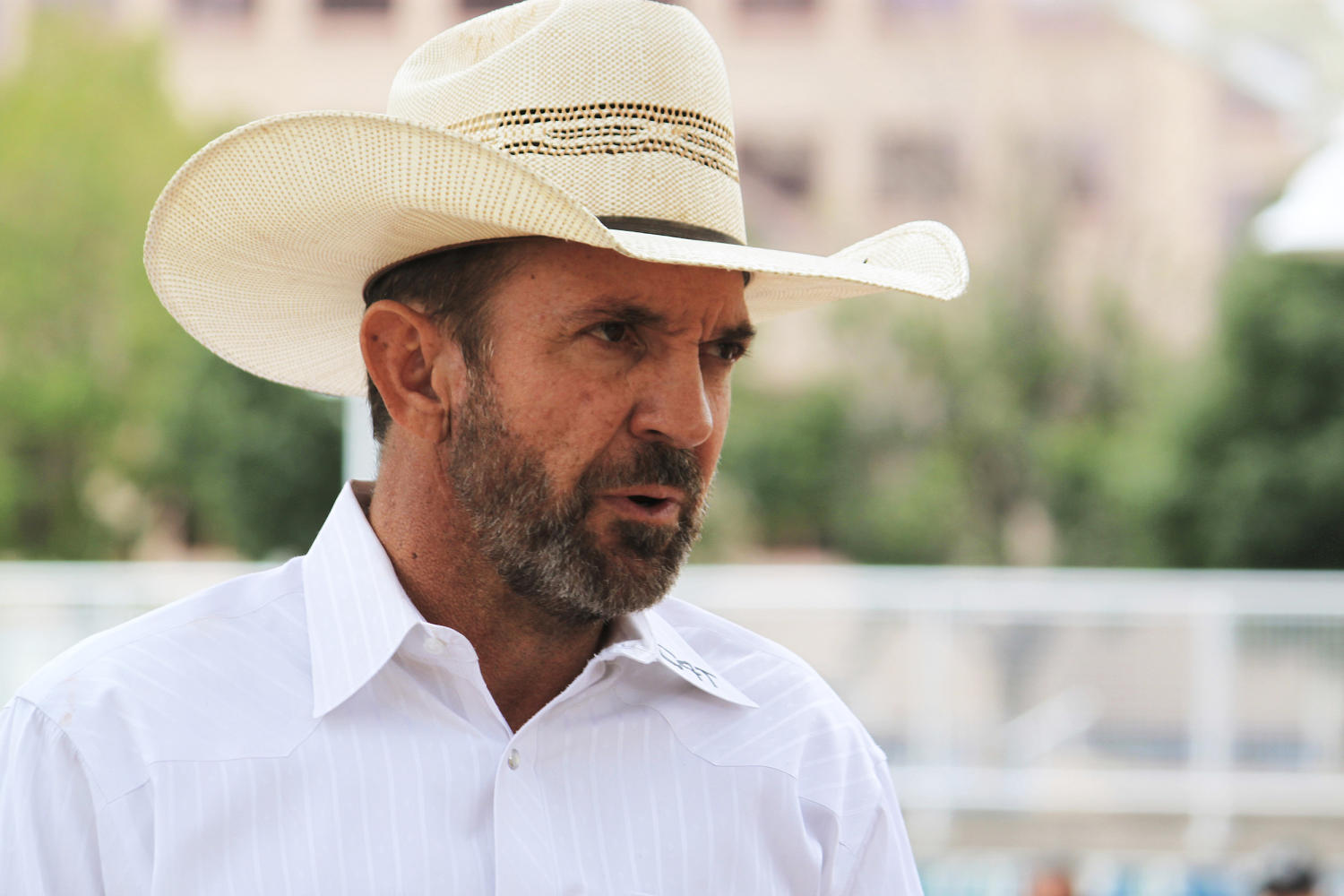

Earlier this year in Fischer v. United States, the Supreme Court narrowed a federal obstruction law used against Jan. 6 defendants, overturning a ruling from the federal appeals court in Washington. That same appeals court just upheld a Jan. 6 defendant’s federal trespass conviction, setting up a potential appeal for the justices to curb that law, too.
Tuesday’s decision came in the case of Cowboys for Trump leader Couy Griffin, who was convicted in 2022 under the trespass law that bars people from knowingly entering or remaining in “any restricted building or grounds” without lawful authority. Such an area is defined under the law as “any posted, cordoned off, or otherwise restricted area” where a Secret Service protectee “is or will be temporarily visiting.”
Griffin, who in January 2021 was an elected county commissioner in New Mexico, argued that people can only be convicted under that law if they know the basis for restricting the area is to safeguard a Secret Service protectee.
But a divided three-judge appellate panel held Tuesday that “knowingly breaching the restricted area suffices, even without knowing the basis of the restriction — here, the presence of Vice President Pence at the Capitol on January 6 — which merely confirms that such trespasses are within Congress’s legislative authority.”
The two judges in the majority, Barack Obama appointee Cornelia Pillard and Bill Clinton appointee Judith Rogers, noted that a different reading “would impair the Secret Service’s ability to protect its charges.” They concluded that “[n]either the text nor the context of the statute supports that reading.”
Dissenting, Donald Trump appointee Gregory Katsas argued that the law puts a greater burden on the government than the majority thinks. He said that on top of proving Griffin’s knowledge that the Capitol grounds “were posted, cordoned off, or otherwise restricted,” prosecutors also had to prove that he knew Pence was present “when he entered or remained in those restricted grounds.”
Ultimately, Katsas’ opinion could carry the day — or at least help Griffin get his case to the justices. Indeed, in the Fischer case that narrowed Jan. 6 obstruction charges, Katsas dissented from the majority panel ruling that the Supreme Court overturned in June.
And in Griffin’s case, Katsas noted that federal prosecutors had secured over 470 convictions under the law and that, in all of them, “criminal liability may turn on whether the defendant had to know that Vice President Pence was present at the time of the trespass.” Katsas added that the trial judges in Washington “are deeply divided on that question; six have answered yes, while ten have answered no.”
Both the broad impact of an issue and division over it can lead to the Supreme Court stepping in.
The justices declined to take up a separate appeal from Griffin in March. That appeal related to him being barred from office after Jan. 6. He was barred from state office as opposed to federal office in the case of Trump, whom the high court cleared to run for president again despite the insurrection. But Griffin may have a better outcome if he petitions the justices to review his trespass conviction.
Subscribe to the Deadline: Legal Newsletter for expert analysis on the top legal stories of the week, including updates from the Supreme Court and developments in Donald Trump’s legal cases.
Jordan Rubin is the Deadline: Legal Blog writer. He was a prosecutor for the New York County District Attorney’s Office in Manhattan and is the author of “Bizarro,” a book about the secret war on synthetic drugs. Before he joined BLN, he was a legal reporter for Bloomberg Law.


President Donald Trump’s so-called Religious Liberty Commission, which is filled with right-wing zealotsappears to be coming apart at the seams.
Last week’s resignation of Sameerah Munshi, formerly the only Muslim woman selected as one of the commission’s advisers, underscores the religious divisions that are causing disarray for the panel and the conservative movement more broadly.
Munshi is a conservative activist who has advocated for allowing parents to opt out of lesson plans related to LGBTQ+ issues, a stance the White House has praised for its rejection of “radical gender ideology.” She said her resignation was due to two things: the commission’s expulsion of conservative activist Carrie Prejean Boller and the Trump administration’s war with Iran.
I recently wrote about how Boller’s removal, which followed a heated argument at a commission hearing over antisemitism, has fueled allegations of anti-Catholicism within the MAGA movement. Boller recently appeared on an episode of Tucker Carlson’s podcast for a chummy chat about her removal. And Rep. Thomas Massie, R-Ky., requested last week that the House Oversight and Judiciary committees review her ouster.
In addition to that, Trump’s Religious Liberty Commission is being sued over its lack of diversity. (The White House has said the panel is intended to reflect a “diversity of faith traditions, professional backgrounds and viewpoints.”)
So Munshi’s resignation is just the latest negative publicity for the commission.
“I resign in protest of two deeply troubling developments: the official removal of Carrie Prejean Boller for her deeply held beliefs about Palestine and the federal government’s illegal war against Iran, undertaken without clear constitutional or congressional authorization,” Munshi wrote on Substack.
“Ultimately, I will have to stand before God and answer to Him for my role in this commission,” she added. “I ask His forgiveness if I have legitimized their evil or the evil of this administration in any way. I ask Him to keep my intentions pure and to guide me toward paths that bring true benefit to my community.”
Boller’s removal has also helped fuel right-wing antipathy toward the Rev. Paula White, who Boller has said was behind a “witch hunt” that led to her ouster. During their conversation, Boller and Carlson took turns bashing White, a controversial preacher of the prosperity gospel who has served as religious adviser to Trump.
Some evangelicals in the MAGA movement were apoplectic when White was chosen to lead the White House Faith Office. And now it appears the chickens have come home to roost as her involvement with Trump’s White House threatens the MAGA movement’s religious coalition.
Ja’han Jones is an MS NOW opinion blogger. He previously wrote The ReidOut Blog.
Lt. Gov. Juliana Stratton had touted an endorsement from Jackson, who died in February…
Read More
Speaker Mike Johnson said he supports President Donald Trump’s effort to build a global coalition ensure safe passage of commerce through the Strait of Hormuz — even if Trump “didn’t anticipate it” being necessary before launching airstrikes against Iran. Speaking to reporters after attending a Washington event with Trump…
Read More
- Right-wing Muslim activist resigns from Trump’s Religious Liberty Commission
- Monday’s Mini-Report, 3.16.26

- Right-wing Muslim activist resigns from Trump’s Religious Liberty Commission
- Jesse Jackson’s family grapples with Illinois Senate endorsement controversy
- Johnson on Trump’s Hormuz plan
- House Budget chair eyes more safety-net cuts for second megabill
- Capitol agenda: Trump’s Doral demands ripple through GOP
- Trump is failing at the business of war
- Federal judge temporarily blocks RFK Jr.’s changes to vaccine policy
- What Brendan Carr’s media threats are really about
-

 The Dictatorship1 year ago
Luigi Mangione acknowledges public support in first official statement since arrest
-

 Politics1 year ago
Former ‘Squad’ members launching ‘Bowman and Bush’ YouTube show
-

 Politics1 year ago
Blue Light News’s Editorial Director Ryan Hutchins speaks at Blue Light News’s 2025 Governors Summit
-

 Politics1 year ago
Former Kentucky AG Daniel Cameron launches Senate bid
-

 The Dictatorship6 months ago
Mike Johnson sums up the GOP’s arrogant position on military occupation with two words
-

 The Dictatorship1 year ago
Pete Hegseth’s tenure at the Pentagon goes from bad to worse
-
 Politics11 months ago
Democrat challenging Joni Ernst: I want to ‘tear down’ party, ‘build it back up’
-
Uncategorized1 year ago
Bob Good to step down as Freedom Caucus chair this week