
The Dictatorship
Stock market sends a message to Trump on Greenland

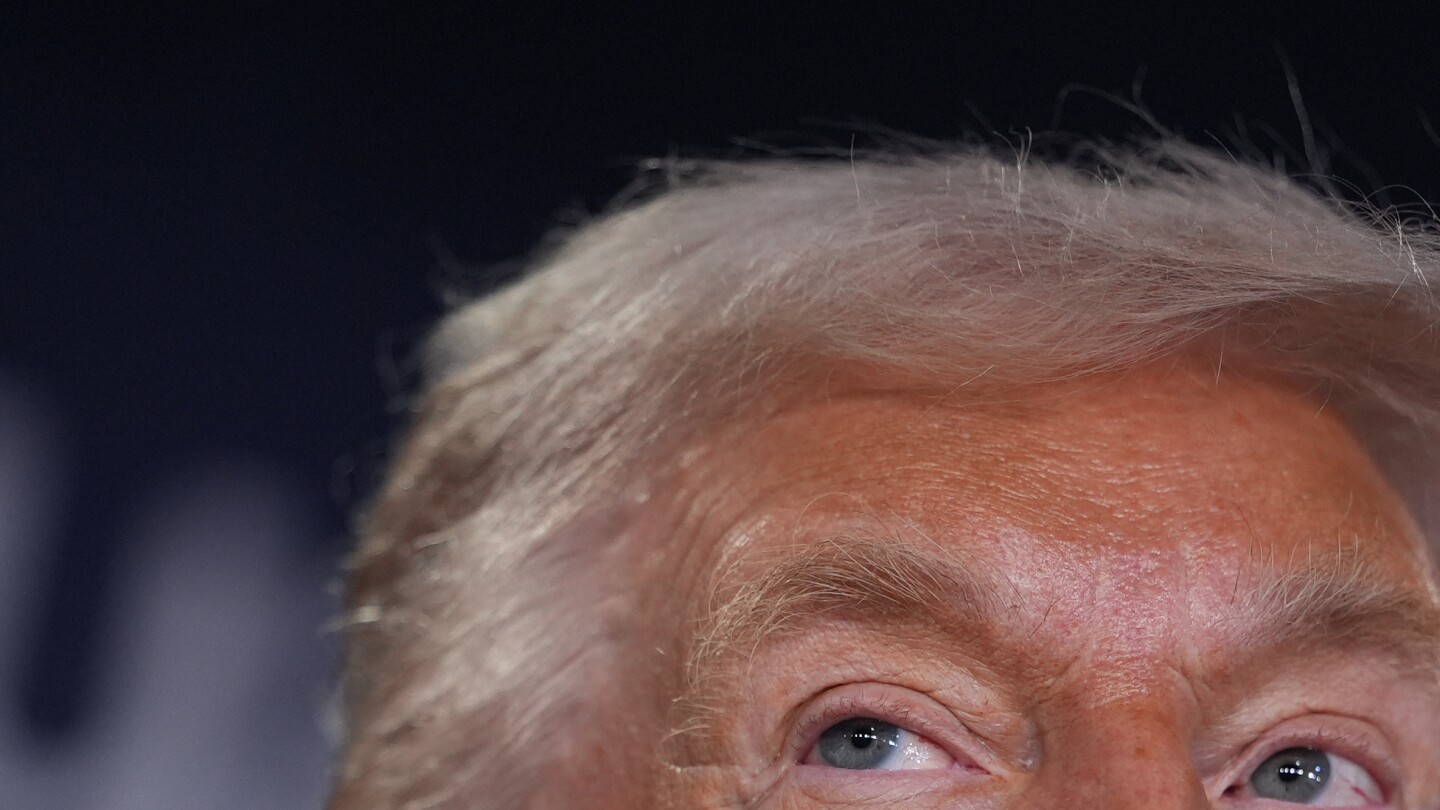
DAVOS, Switzerland (AP) — Investors appeared to have gotten through to President Donald Trump about the risk posed by his designs for Greenland with a message he wasn’t hearing from European leaders: Threatening allies with tariffs and land seizure isn’t exactly the type of policy that generates confidence in the global economy.
Trump on Wednesday backed off his threat to slap punishing tariffs on eight European allies for opposing his insistence on acquiring Greenland from longtime ally Denmark after the plan spooked Wall Street by sparking serious talk within NATO about a fundamental rupture to the transatlantic military alliance that’s been a linchpin of post-World War II security.
Markets had seen their biggest losses since October as Trump prepared to travel to DavosSwitzerland, to give a keynote address to leaders and the global elite at the World Economic Forum.
Trump grumbled about what he called a stock market “dip” with some annoyance during the speech, complaining the market gyrations happened despite the U.S. “giving NATO and European nations trillions and trillions of dollars in defense.”
But during that speech, he made his first abrupt shift in position for the day: He took off the table the option of using military force to take over Greenland.
“I won’t do that. OK?” Trump told the packed conference room.
Then, hours later, Trump announced he was retreating from the tariffs altogether after he said he had come to terms with NATO Secretary-General Mark Rutte on a “framework” on Greenland that “gets us everything we needed to get” if the agreement is consummated.
Trump promptly took to financial network CNBC just before Wall Street trading ended for the day, boasting that the framework was “going to be a very good deal for the United States” and allies.
He downplayed the role that the jittery market played on his decision on tariffs. “No, we took that off because it looks like we have pretty much a concept of a deal,” Trump said.
Trump didn’t offer details on the terms of that framework. But the S&P 500 rallied 1.2% after his remarks, recovering about half the ground it had lost a day earlier. The Dow Jones Industrial Average also rose 1.2%, as did the Nasdaq Composite.
A concept of a deal, without many details
After the retreat, Denmark’s foreign minister Lars Løkke Rasmussen cautiously offered that “the day is ending on a better note than it began” but said the details of the agreement still need to be worked out.
One idea NATO members have discussed as part of the compromise would see Denmark and the alliance working with the U.S. to build out more U.S. bases in Greenland, according to a European official familiar with the matter but not authorized to comment publicly. The official said it was not immediately clear if that idea was included in the contours of the framework that Trump and Rutte discussed on the sidelines of Davos on Wednesday.
Rutte in an appearance on Fox News on Wednesday evening gave little hint about what precisely he and Trump agreed to.
“We agreed that he’s right, and he’s right that collectively we have to protect the Arctic regions,” Rutte said. “But also, of course, the U.S. continue its conversations with Greenland and Denmark when it comes to how can we make sure that the Russians and China will not gain access to the economy or a military sense of Greenland.”
It wasn’t just the financial markets that were telling Trump to rethink the tariffs and tough rhetoric toward allies.
A number of U.S. officials had also been concerned about Trump’s hardline stance and bellicose language toward Greenland, Denmark and other NATO allies because they feared it could harm other foreign policy goals.
These officials thought the fixation on Greenland and Trump’s earlier comments suggesting that the potential splintering of NATO was a cost he might be willing to pay were complicating the president’s effort to form the Board of Peacewhich he’s expected to spotlight Thursday in Davos. The U.S. officials spoke on condition of anonymity to discuss concerns being floated inside the administration.
Many European countries, which were already skeptical of the proposed board’s broad global mandate, had reacted even more negatively to the concept after Trump’s tariff threat. The board, which was born from Trump’s 20-point plan to end the Israel-Hamas warwas initially envisioned as a small group of world leaders overseeing the Gaza ceasefire but has morphed into something far more ambitious.
A few European nations have even declined their invitations.
“The interpretation that European leaders are going to take from this is that actually standing up and being firm defused the crisis,” said Max Bergmann, director of the Europe, Russia and Eurasia Program at the Center for Strategic and International Studies. “Trump is acting like a bully, and the only way that we’re going to have a stable relationship is if we push back.”
But Matthew Kroenig, vice president and senior director of the Atlantic Council’s Scowcroft Center for Strategy and Security, countered that the idea that Trump would seize Greenland seemed more like a bluff all along — and one that may have worked.
“Most of the world was freaking out over these threats,” Kroenig said. But he he noted there are some downsides to that negotiating style.
For one, it drove the prime minister of Canada, a close U.S. ally, to propose that smaller countries unite against aggressive superpowers.
“It’s been unnecessarily dramatic, costly and damaging, but all the damages so far are repairable,” added Daniel Fried, a former U.S. ambassador to Poland who is now a distinguished senior fellow at the Atlantic Council in Washington.
That possibility, Fried noted, would be harder to achieve had Trump continued on the path with Greenland where he appeared to be heading.
—
AP writers Stan Choe in New York and Matthew Lee in Washington contributed reporting.


The Dictatorship
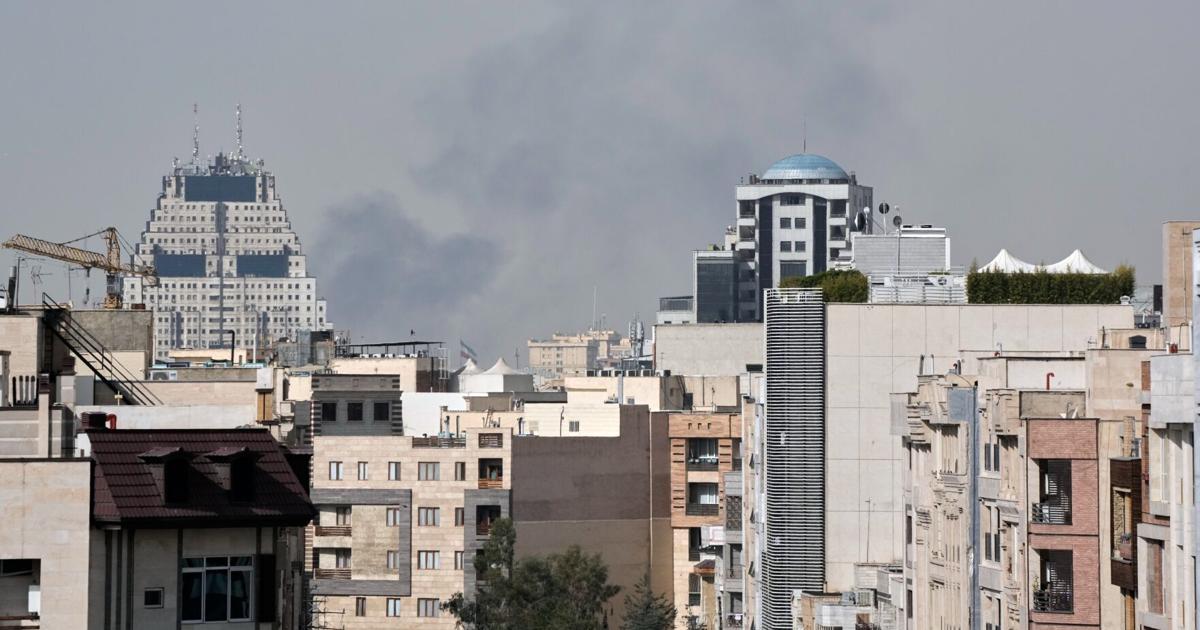
The Latest: US and Israel attack Iran as Trump says US begins ‘major combat operations’
Rice secures 80-74 win over Temple
Anthony’s 16 help Iona beat Manhattan 69-65
Folefac scores 23 as Siena beats Rider 76-61
SnoCountry Mountain Reports
Gulf States Sportswatch Daily Listings
Quinnipiac wins 67-63 against Canisius
President Donald Trump called the celebrations in the streets of Iran “fantastic” following the killing of the country’s supreme leaderAyatollah Ali Khamenei, during a brief phone call with MS NOW on Saturday night.
Trump told MS NOW that he’s seen the celebrations in Iran and in parts of America, after joint U.S.-Israel airstrikes killed Khamenei.
“I think it’s fantastic,” the president said of the celebrations. “I’ve seen them in Los Angeles, also — celebrations.”
“I’ve seen them in Los Angeles, celebrations, celebrations,” Trump said, accentuating the point.
The interview took place roughly 11 hours before the Pentagon announced the first U.S.military casualties of the war. U.S. Central Command said three American service members were killed in action, and five others had been seriously wounded.
Revelry broke out in Iran, the United States and across the globe on Saturday, with Iranians cheering the death of Khamenei, who led Iran with an iron fist for more than 30 years, cracking down on dissent at home and maintaining a hostile posture with the U.S. and Israel.
Asked how he was feeling after the strike on Khamenei, whose death was confirmed just a few hours earlier, Trump said it was a positive development for the United States.
“I think it was a great thing for our country,” he said.
The call — which lasted less than a minute — came after a marathon day, which began in the wee hours of the morning with strikes on Iran and continued with retaliatory ballistic missiles from Tehran targeting Israel and countries in the Middle East region that host U.S. military bases.
The day ended with few answers from the White House to increasing questions about the long-term future of Iran, how long the U.S. will continue operations there, and the metastasizing ramifications it could have on the world stage. In fact, the president has done little to convince the public to back his Iran operation, nor to explain why the country is at war without the authorization of Congress.
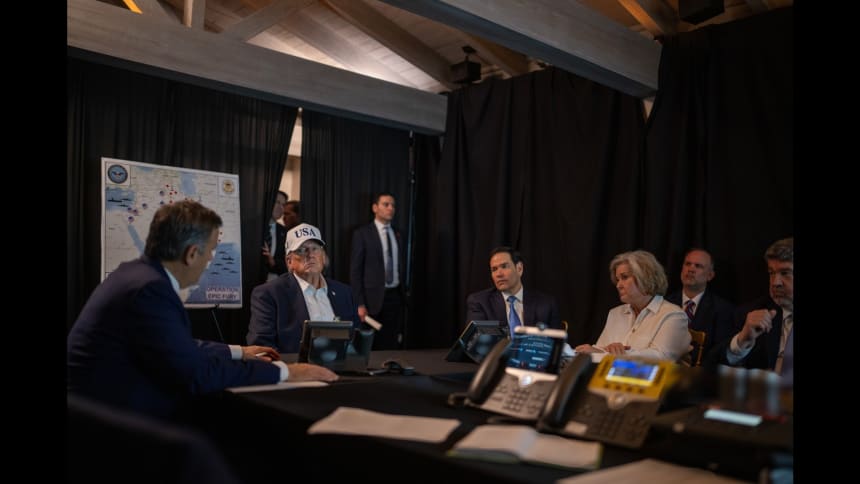
On perhaps the most consequential day of his second term, Trump did not give a formal address to the public, nor did he hold a press conference. Instead, he stayed out of public view at Mar-a-Lago, his private club and residence in Palm Beach, Florida, where he attended a $1 million-per-plate fundraising dinner on Saturday evening.
But throughout the day, Trump took calls from reporters at various new outlets, including from MS NOW at around 11 p.m. ET.
The strikes, known formally as “Operation Epic Fury,” came after months of talks over Iran’s nuclear program, and warnings from Trump that he would strike Tehran if they did not agree to his often shifting conditions.
At 2:30 a.m. ET on Saturday, Trump posted a video to social media announcing the operation, which he said was designed to “defend the American people by eliminating imminent threats from the Iranian regime, a vicious group of very hard, terrible people.”
“The lives of courageous American heroes may be lost and we may have casualties. That often happens in war,” Trump said when he announced the strikes on Iran.
Mychael Schnell is a reporter for MS NOW.
Laura Barrón-López covers the White House for MS NOW.
Three U.S. service members were killed and five seriously wounded as the United States and Israel launched attacks on Iran, U.S. Central Command said Sunday morning.
The three service members — the first Americans to die in the conflict — were killed in Kuwait, a U.S. official said.
Several others sustained minor injuries from shrapnel and concussions but will return to duty, the Pentagon said. The identities of the dead and wounded have not been made public.
“The situation is fluid, so out of respect for the families, we will withhold additional information, including the identities of our fallen warriors, until 24 hours after next of kin have been notified,” Central Command said in a statement.
The U.S. and Israel launched sweeping airstrikes on Iranon Saturday, killing Ayatollah Ali Khameneithe country’s supreme leader for nearly four decades. Iran has vowed retaliation and hit several U.S. military bases across the region.
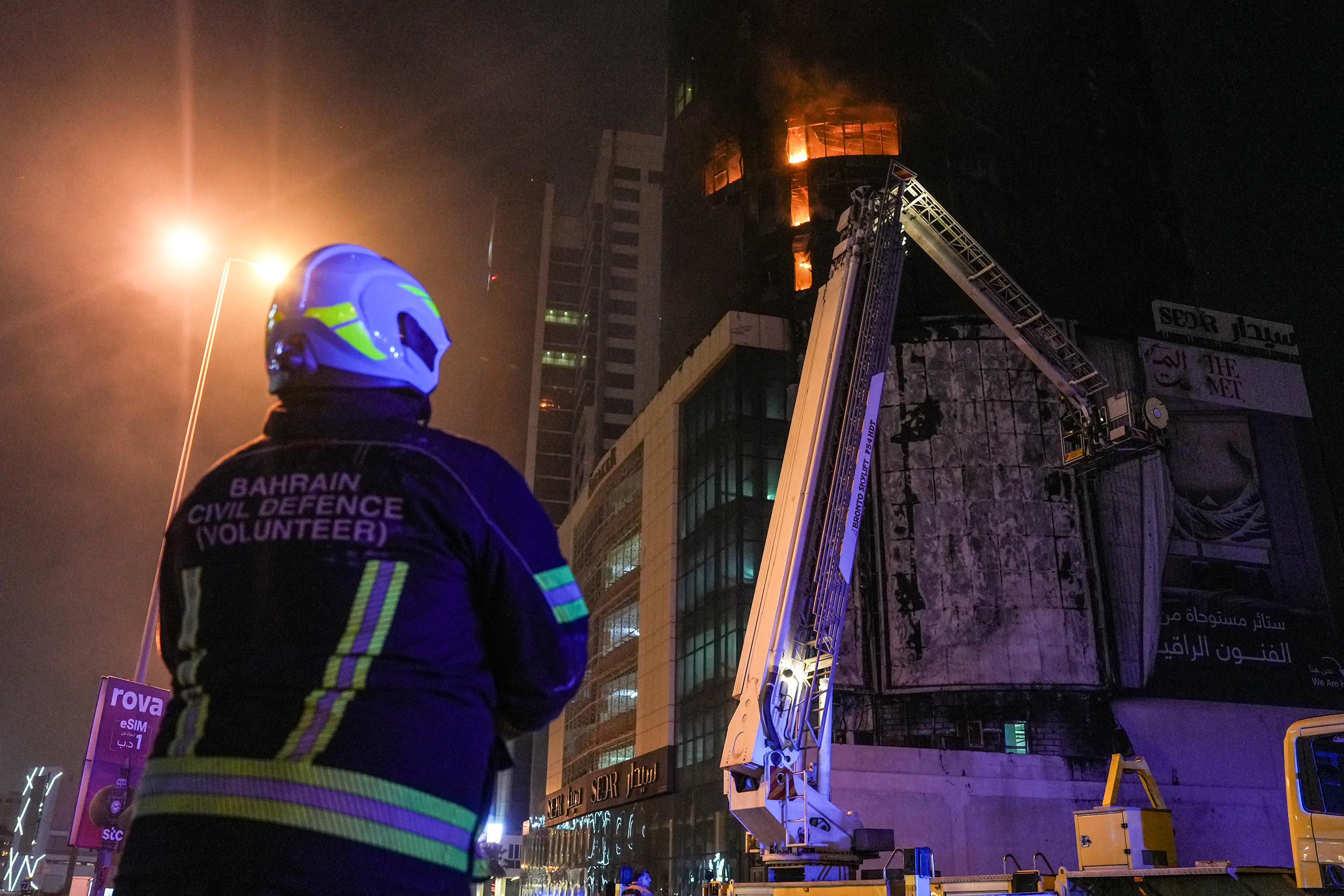
According to U.S. Central Command, Iran has also attacked more than a dozen locations, including airports in Dubai, Kuwait and Iraq, and residential neighborhoods in Israel, Bahrain and Qatar.
Israel Defence Forces said Sunday that Iran fired missiles toward the neighborhood of Beit Shemesh, killing civilians. The missile hit a synagogue, killing at least nine people, according to the Associated Press.
AP reported that authorities said at least 22 people were killed and 120 others wounded when demonstrators tried to attack the U.S. Consulate in Karachi in Pakistan.
The violence came after the United States and Israel attacked Irankilling its Supreme Leader Ayatollah Ali Khamenei. Police and officials at a hospital in Karachi said that at least 50 people were also wounded in the clashes and some of them were in critical condition.
On Sunday, Israel Defence Forces said on X, “It’s official: All senior terrorist leaders of Iran’s Axis of Terror have been eliminated.”
President Donald Trump told CNBC’s Joe Kernen on Sunday that the operation in Iran is “moving along very well, very well — ahead of schedule.”
In a phone call with MS NOW late Saturday, Trump called the celebrations in the streets of Iran “fantastic” following the killing of Khamenei.
Confirming Khamenei’s death, Prime Minister Benjamin Netanyahu said Sunday: “We have eliminated the tyrant Khamenei and dozens of senior figures of the oppressive regime. Our forces are now striking at the heart of Tehran with increasing intensity, set to escalate further in the coming days.”
The exchange of hostilities comes after weeks of fragile negotiations between the U.S. and Iran over Iran’s nuclear operations.
Esmail Baghaei, a spokesperson for Iran’s foreign ministry, called the joint U.S-Israeli attack an “unprovoked, unwarranted act of aggression” in an interview with MS NOW’s Ali Velshi on Sunday. He said Iran’s nuclear program has been used a pretext for the attack.
“We have every right to defend our people because we have come under this egregious act of aggression,” Baghaei said.
Trump announced the attack early Saturday during a short video posted on his Truth Social account. He called for an end to the Iranian regime and urged Iranians to “take back the country.”
Negotiators and mediators from Oman were supposed to meet in Vienna on Monday to discuss the technical aspect of a potential nuclear deal.
Rep. Eric Swawell, D-Calif., told MS NOW’s Alex Witt on Sunday afternoon that the president’s military operation in Iran was illegal, echoing what many lawmakers have said in citing that under the U.S. Constitution only Congress can declare war.
“This is a values argument. We don’t just lob missiles into other countries when we are not provoked, attacked and have no plan for what comes next,” he said.
“We have been shown zero evidence that anything changed in Iran from last year when the president did not come to Congress and took a strike on Iran,” Swalwell said.
In June the U.S. struck three Iranian nuclear sites. Trump said the facilities had been “completely and totally obliterated.” But experts and U.S. officials said the sites were damaged but not destroyed.
Erum Salam is breaking news reporter for MS NOW, with a focus on how global events and foreign policy shape U.S. politics. She previously was a breaking news reporter for The Guardian and is a graduate of Texas A&M University and the Columbia University Graduate School of Journalism. Follow her on X, Bluesky and Instagram.
Akayla Gardner is a White House correspondent for MS NOW.
- Trump met with Coinbase CEO before bashing banks over crypto bill
- Cornyn, Paxton head to runoff in Texas Senate GOP race
- Rep. Chip Roy headed to runoff in Texas AG race
- Democrats reject ‘ridiculous’ GOP demand to fund DHS after Iran attack
- Josh Hawley says he’ll oppose Iran war powers resolution
- House Ethics panel probing Nancy Mace over alleged improper reimbursements
- Iranian ‘regime will be defeated,’ White House tells Hill Republicans
- Lawmakers splinter on Trump administration’s case for war on Iran
- Lawmakers anticipate Trump will seek emergency funding for ‘open-ended’ Iran war
- House Republicans are publicly cheering Trump’s Iran war. Privately, many are worried.
-

 The Dictatorship1 year ago
Luigi Mangione acknowledges public support in first official statement since arrest
-

 Politics1 year ago
Former ‘Squad’ members launching ‘Bowman and Bush’ YouTube show
-

 Politics1 year ago
Blue Light News’s Editorial Director Ryan Hutchins speaks at Blue Light News’s 2025 Governors Summit
-

 The Dictatorship6 months ago
Mike Johnson sums up the GOP’s arrogant position on military occupation with two words
-

 Politics1 year ago
Former Kentucky AG Daniel Cameron launches Senate bid
-

 The Dictatorship1 year ago
Pete Hegseth’s tenure at the Pentagon goes from bad to worse
-
Uncategorized1 year ago
Bob Good to step down as Freedom Caucus chair this week
-

 Politics11 months ago
Democrat challenging Joni Ernst: I want to ‘tear down’ party, ‘build it back up’