
The Dictatorship
Seeing myself on screen in ‘Roseanne’ and ‘The Conners’ helped change my politics


ABC broadcast the series finale of “The Conners” on Wednesday, closing out character arcs that began more than 36 years ago with “Roseanne.” When the first run of Roseanne Barr’s eponymous working-class comedy premiered on ABC in 1988it stood in stark contrast to the prime-time glamour of “Dallas” and “Dynasty,” which then dominated television. Instead of sparkling gowns and champagne-fueled catfights, plots on “Roseanne” involved unpaid electric bills, broken washing machines and kitchen-table spats.
“Roseanne” and “The Conners” had an almost magical ability to speak to the haves and the have-nots.
For many Americans, like the ones I grew up with in Appalachia“Roseanne” gave us a mirror, instead of an escape. It transformed working-class humor-as-a-survival-tool into a relatable sitcom format. It helped viewers — those seeing themselves for the first time and those seeing others for the first time — grow toward each other.
“Roseanne” and “The Conners” had an almost magical ability to speak to the haves and the have-nots. The shows invited the wealthy to laugh withnot at, working-class struggles, which helped generate empathy. They invited white working-class audiences into progressive conversations from which they may have previously been excluded. Both shows discussed topics including racism, queerness, gender equality, LGBTQ youth, immigration — often characterized as issues for liberal elites or big-city residents — in the language of Lanford, Illinois.
As a kid growing up in rural Kentucky in the 1980s and ‘90s, “Roseanne” introduced conversations I wasn’t having in church or the living room, and I’m not alone among my blue-collar friends in saying that it was “Roseanne” that made me the political progressive I am today. The show made us aware that we, too, should be a part of these conversations, that we were worthy of being taken seriously, and that the issues we associated with others were intimately tied to our lives, as well.
The power of the series to do this work — in its original incarnation, its reboot and in the renamed show after Barr’s character, Roseanne Conner, was killed off — came from its capacity to invite and add. For rural or blue-collar viewers, the show presented new ideas in a world they were comfortable in. For others, the show presented ideas they were already comfortable with but in a world new to them.
The show’s legacy, then, is making progressive ideas digestible to poor and working-class people.
The show’s legacy is making progressive ideas digestible to poor and working-class people.
This legacy may be surprising to some, given Barr’s disappointing evolution. Now a controversial conservative figureher 2018 reboot was canceled after a racist tweet. (“The Conners” starts after her character on the show has died.) In 2024, Barr released a pro-Trump rap video called “Daddy’s Home.” Those choices should certainly shape how we understand Barr, but they don’t erase the complexity or impact of her earlier work or the original show’s spinoff.
In 2013, when I taught a course on gender and television, I had my students analyze shows using the Bechdel testwhich asks only: Are there two women on screen talking about something other than men? It took 50 years of randomized TV episodes before we hit one that passed: “Don’t Ask, Don’t Tell,” a 1994 episode of “Roseanne” that tackled homophobia, performative allyship, gender expression and included a same-sex kiss. Revolutionary doesn’t begin to describe it. The show earned that moment because its viewers trusted the characters. Viewers, at least the ones I knew, felt like they were watching “one of us” — which made room for growth.
Throughout 17 years of the Conners’ lives shown across two series, viewers were watching stories about difficult topics, but “Roseanne” invited them in. It said: You’re a part of this. To the same extent, the show said to Americans quick to dismiss the struggles of the poor and working class: This is how hard life is when you’re living paycheck to paycheck — you, too, are a part of this. No one gets a pass because everyone is included. Few shows have had such political stamina.
In the highly criticized original finale, the Conners win the lottery and live out their wildest dreams, but it’s later revealed to be a story made up by the character Roseanne. “The Conners” echoed the original series’ finale in its final season, with a story arc involving a lawsuit the family filed over the opioid-induced death of Roseanne. Given the scourge of opioids in working-class America, that storyline made sense. This time, though, there is no big payout. In the end, the Conners get a check for only $700, which they use to throw a party with pizza and beer.
Ultimately, this is a more fitting conclusion because there is no magical ending for America’s problems. No lottery win. No glamour and champagne. Just moments of pain and fleeting relief. All we can do is care enough to see our own — and each other’s — stories.
“Roseanne” and “The Conners” gave us just that. One episode at a time.
Willie Carver
Willie Carver is a gay hillbilly writer and poet from Eastern Kentucky. He is the 2022 Kentucky Teacher of the Year and the author of “Gay Poems for Red States.”


The Dictatorship
What Americans think about Trump’s judgment on military force as Iran talks resume: new AP-NORC poll
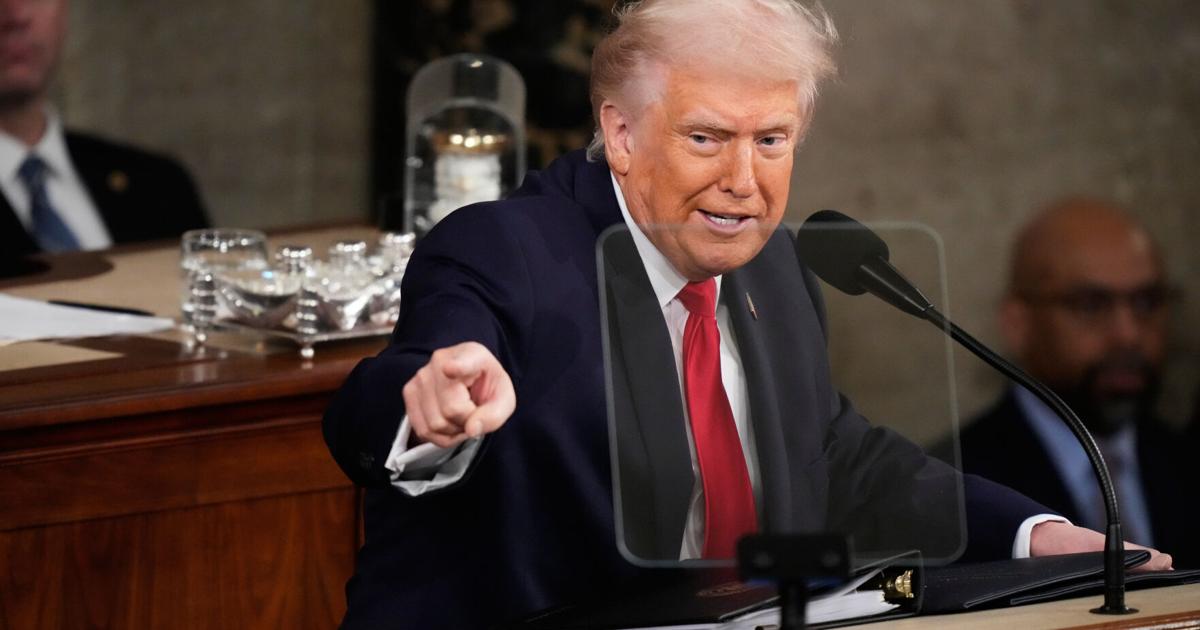
WASHINGTON (AP) — As the U.S. and Iran head into their next round of nuclear talks in Genevaa new AP-NORC poll finds that many U.S. adults continue to view Iran’s nuclear program as a threat — but they also don’t have high trust in President Donald Trump’s judgment on the use of military force abroad.
About half of U.S. adults are “extremely” or “very” concerned that Iran’s nuclear program poses a direct threat to the United States, according to the new poll from The Associated Press-NORC Center for Public Affairs Research. About 3 in 10 are “moderately” concerned and only about 2 in 10 are “not very” concerned or “not concerned at all.”
The survey was conducted Feb. 19-23, as military tensions built in the Middle East between the United States and Iran. The U.S. is seeking a deal to limit Iran’s nuclear program and ensure it does not develop nuclear weapons, while Iran says it is not pursuing weapons and has so far resisted demands that it halt uranium enrichment on its soil or hand over its stockpile of highly enriched uranium.
Trump, who scrapped an earlier nuclear agreement with Iran during his first term, has repeatedly threatened to use force to compel Iran to agree to constrain its atomic programwhich Trump claimed to have “obliterated” following the 12-day war in June where the U.S. bombed Iranian nuclear sites. Iran has said it would respond with an attack of its own. Trump has also threatened Iran over the killing of protesters. Both countries have signaled they are prepared for war if the talks on Tehran’s nuclear program fail, and the U.S. has assembled its largest military force in the Mideast in decades as tensions with Iran have risen.
Most Americans, 61%, say Iran is an “enemy” of the U.S., which is up slightly from a Pearson Institute/AP-NORC poll conducted in September 2023. But their confidence in the president’s judgment when it comes to relationships with adversaries and the use of military force abroad is low, the new poll shows, with only about 3 in 10 Americans saying they have “a great deal” or “quite a bit” of trust in Trump.
Even some Republicans — particularly younger Republicans — have reservations about Trump’s ability to make the right choices on these high-stakes issues.
Most US adults have concerns about Trump’s judgment on military force
The Trump administration this year has held two rounds of nuclear talks with Iran under Omani mediation, with a third round scheduled to begin Thursday. Similar talks last year between the U.S. and Iran about Iran’s nuclear program broke down after Israel launched what became the 12-day war in June.
AP AUDIO: What Americans think about Trump’s judgment on military force as Iran talks resume: new AP-NORC poll
AP Washington correspondent Sagar Meghani reports on a poll showing American fears about both Iran and President Trump’s judgment on using military force abroad.
“We are in negotiations with them,” Trump said during his State of the Union address on Tuesday night, which took place after the poll was conducted. “They want to make a deal, but we haven’t heard those secret words: We will never have a nuclear weapon.”
Americans have significant reservations about Trump’s judgment on foreign conflicts, the AP-NORC poll shows. Only about 3 in 10 of U.S. adults have “a great deal” or “quite a bit” of trust in Trump’s judgment on the use of military force, relationships with U.S. adversaries or the use of nuclear weapons. More than half trust him “only a little” or “not at all.”
On each measure, Republicans are more likely than Democrats and Independents to trust that the president will make the right decisions. About 6 in 10 Republicans have a high level of trust in Trump, while roughly 9 in 10 Democrats have a low level of trust in him.
But some Republicans’ confidence is more qualified. Younger Republicans — those under 45 — are less likely than older Republicans to say they trust Trump “a great deal” or “quite a bit” on his use of military force. About half of younger Republicans say this, compared with about two-thirds of older Republicans.
Many view Iran’s nuclear program as a threat
The new finding that 48% of U.S. adults are “extremely” or “very” concerned that Iran’s nuclear program poses a direct threat to their country is in line with an AP-NORC poll conducted in July 2025, indicating that even with recent escalations between the two countries, Americans have not changed their views.
Before the June war, Iran had been enriching uranium up to 60% purity, a short, technical step away from weapons-grade levels. The U.N. nuclear watchdog — the International Atomic Energy Agency — had said Iran was the only country in the world to enrich to that level that wasn’t armed with the bomb.
Iran has been refusing requests by the IAEA to inspect the sites bombed in the June war, raising the concerns of nonproliferation experts.
Worries about Iran’s nuclear program cross party lines in the U.S., though Republicans are currently more concerned. Most Republicans — 56% — say they are “extremely” or “very” concerned about Iran’s nuclear program, compared with 44% of Democrats.
Younger Americans are less worried about Iran
Americans generally hold a negative view of Iran, but the view is sharper among older Americans.
About 6 in 10 U.S. adults say Iran is an “enemy” of the United States, up slightly from 53% from the Pearson/AP-NORC poll from 2023. Roughly 3 in 10 say the countries are “not friendly, but not enemies,” and only about 1 in 10 Americans consider the two nations “friendly” or “close allies.”
At the same time, only about half of U.S. adults under 45 say Iran is an enemy, compared with about 7 in 10 Americans ages 45 and older. There is also a wide generational divide in concern about Iran’s nuclear program, with only about one-third of Americans under 45 saying they are highly concerned, compared with about 6 in 10 older Americans.
Tensions over Iran’s nuclear program have existed for decadeswhich may help explain why older Americans are more concerned. Nuclear talks had been deadlocked for years after Trump’s decision in 2018 to unilaterally withdraw the U.S. from Iran’s 2015 nuclear deal with world powers.
___
Liechtenstein reported from Vienna. Associated Press writer Jon Gambrell in Dubai, United Arab Emirates, contributed to this report.
___
The AP-NORC poll of 1,133 adults was conducted Feb. 19-23 using a sample drawn from NORC’s probability-based AmeriSpeak Panel, which is designed to be representative of the U.S. population. The margin of sampling error for adults overall is plus or minus 4.0 percentage points.
___
The Associated Press receives support for nuclear security coverage from the Carnegie Corporation of New York and Outrider Foundation. The AP is solely responsible for all content.
___
Additional AP coverage of the nuclear landscape: https://apnews.com/projects/the-new-nuclear-landscape/
Today’s live updates have ended. Read what you missed below and find more coverage at apnews.com.
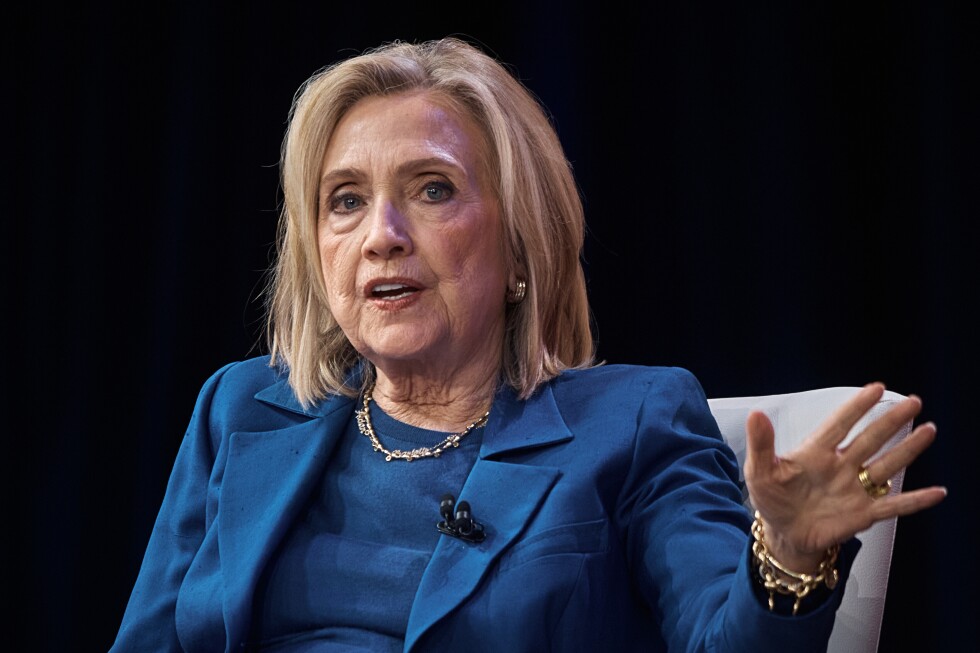
Former Secretary of State Hillary Clinton told U.S. House lawmakers on Thursday that she had no knowledge of Jeffrey Epstein’s or Ghislaine Maxwell’s crimes at the start of two days of depositions that will also include former President Bill Clinton.
The deposition was paused after Republican Rep. Lauren Boebert sent a photo of Hillary Clinton in the room to a conservative influencer who posted it on social media, violating the committee’s rules for depositions.
The incident prompted the former secretary of state to repeat her longstanding demand that the deposition be made open to reporters.
The Clintons agreed to testify after their offers of sworn statements were rebuffed by the House Oversight panel, whose chairman, Rep. James Comer, R-Ky., threatened criminal contempt of Congress charges against them.
Bill Clinton’s Friday testimony will be the first time a former president has been forced to testify before Congress — the latest sign that the demand for a reckoning over Epstein’s abuse of underage girls has become a near-unstoppable force on Capitol Hill and beyond.
Other news we’re following:
- Cuba says 4 killed in speedboat shooting were attempting to infiltrate the country: Cuba’s government said late Wednesday that the 10 passengers on a boat that opened fire on its soldiers were armed Cubans living in the U.S. who were trying to infiltrate the island and unleash terrorism. Cuba’s government said the majority of the 10 people on the boat “have a known history of criminal and violent activity.”
- US and Iran wrap up another round of indirect nuclear talks: Oman’s foreign minister, who is mediating the talks, said Thursday that they had ended but “will resume soon.” The talks are aimed at reaching a deal on Tehran’s nuclear program and potentially averting another war as the U.S. gathers a massive fleet of aircraft and warships in the Middle East.
- FBI fires agents who worked on Trump classified document investigation, AP sources say: The FBI has fired additional agents who worked on an investigation into Trump, this time terminating employees who participated in the probe into the Republican’s hoarding of classified documentspeople familiar with the matter said.
Trump huddles with GOP senators on midterm-year agenda
Among the other meetings that the president had at the White House on Thursday was a strategy session with Senate GOP leaders and other close allies on the party’s agenda.
Among those who attended the afternoon meeting with Trump were Senate Majority Leader John Thune, Senate Majority Whip John Barrasso and Sen. Eric Schmitt of Missouri, according to two people with knowledge of the discussion.
The meeting was to discuss the party’s broader agenda, said one of the people, both of whom were granted anonymity to discuss a private meeting.
Hillary Clinton says she told lawmakers repeatedly she did not know Epstein
The former secretary of state’s deposition has ended and she told reporters as she exited that she answered the same question again and again from lawmakers about whether she knew Jeffrey Epstein at all.
“I don’t know how many times I had to say I did not know Jeffrey Epstein,” Hillary Clinton said.
She also told reporters that her husband Bill Clinton had ended his relationship with Epstein before Epstein’s sexual abuse came to light in 2008.
Anthropic says it can’t agree to Pentagon demands
Anthropic CEO Dario Amodei said Thursday that the artificial intelligence company “cannot in good conscience accede” to the Pentagon’s demands to allow wider use of its technology.
The company said in a statement that it’s not walking away from negotiation but that new contract language received from the Defense Department “made virtually no progress on preventing Claude’s use for mass surveillance of Americans or in fully autonomous weapons.”
Top Pentagon spokesman Sean Parnell said earlier that the military would use the technology in legal ways and not let Anthropic dictate any limits ahead of a Friday deadline to agree to its demands or face losing its contract.
He said the Pentagon “has no interest in using AI to conduct mass surveillance of Americans (which is illegal) nor do we want to use AI to develop autonomous weapons that operate without human involvement.”
JUST IN: Anthropic CEO says AI company ‘cannot in good conscience accede’ to Pentagon’s demands to allow wider use of its tech
JUST IN: Hillary Clinton’s deposition in House Epstein investigation ends after over six hours of questioning
US official says 1 American killed, another wounded in speedboat shooting near Cuba
A U.S. official says at least one American citizen was killed and another wounded in an incident in which the crew of a Florida-registered speedboat exchanged fire with the Cuban military.
The official, who spoke on condition of anonymity due to the sensitivity of the ongoing investigation into Wednesday’s firefight, said another member of the 10-person crew was in the U.S. on a visa and several others may have been green card holders.
The official said the owner of the boat has alleged that it was stolen by one of his employees.
National Trust says decision on the White House ballroom project means the case can continue
Carol Quillen, president and CEO of the National Trust for Historic Preservation, said the group was “disappointed” that the injunction it sought to halt work on the ballroom wasn’t granted.
But she said the group was pleased that the decision found that the National Trust “has standing to bring this lawsuit, as we have asserted from the start.”
Thursday’s ruling “encouraged us to amend our complaint — specifically, to assert that the president has acted beyond his statutory authority — and we plan to do so promptly,” Quillen said in a statement.
She added that doing so would allow the case to continue.
Denver mayor announces steps against ICE to “keep every resident safe”
Mike Johnston, a Democrat, announced that federal immigration agents wouldn’t be able to operate on city property and that the city’s police would be authorized to intervene to prevent any illegal activity like brutality against suspects and protesters.
Johnston said he was acting to reassure residents rather than because Denver had information about any upcoming increase in immigration operations.
Denver becomes the latest Democrat-dominated city to announce new restrictions on immigration operations, joining Chicago, New York and Seattle. Democratic-led states have also pushed back.
“We will keep every resident safe, regardless of their status,” Johnston said.
Trump to award Medal of Honor to 3 Army veterans
The White House said Trump will give the highest military decoration on March 2 to three U.S. Army veterans: Master Sergeant Roderick W. Edmonds, Staff Sergeant Michael H. Ollis, and Command Sergeant Major Terry P. Richardson.
The Medal of Honor is being awarded posthumously to Edmonds for thwarting efforts at a German prison camp during World War II to segregate Jewish-American prisoners.
The Medal of Honor is being awarded posthumously to Ollis for his work to repel an enemy attack in 2013 of a base in Ghazni, Afghanistan that led to his death after an insurgent detonated his suicide vest.
Richardson is receiving the Medal of Honor for his leadership in a reconnaissance mission in 1968 in Vietnam to occupy an enemy regiment’s base camp and direct airstrikes despite being wounded by an enemy sniper.
Mamdani presents Trump with mock newspaper touting future big housing initiative
New York City Mayor Zohran Mamdani presented Trump with a mock newspaper front page during his visit to the White House on Thursday to show the president how a significant housing initiative might be received.
It’s a tactic designed to appeal to Trump, who is known to voraciously consume coverage in the local New York City publications.
Anna Bahr, Mamdani’s communications director, said the Democratic mayor’s team created the mock front page and its headlines for the Republican president to look at and demonstrate what kind of reaction that new federal housing investments could bring.
The mock New York Daily News front page says “Trump to City: Let’s Build” — a riff on the famous 1975 cover that read “Ford to City: Drop Dead,” referring to Gerald Ford’s vow to veto financial assistance to the city.
Mamdani’s office declined to elaborate on the mayor’s housing proposal, but Bahr said Trump was “very enthusiastic” about it.
EPA union denounces layoff of environmental justice workers
The 22 fired workers focused on poor and minority communities that are disproportionately burdened by environmental hazards and industrial pollution.
The layoffs come as the Environmental Protection Agency has reduced its workforce by about 30% in Trump’s second term.
Justin Chen, president of the American Federation of Government Employees Council 238, said Thursday that the cuts have “stretched remaining staff to the breaking point and weakened our ability to respond to mounting environmental and public health threats. There is no justification for further cuts.”
EPA spokesperson Brigit Hirsch said the layoffs are consistent with a notice to Congress last year and are part of EPA’s “broader effort to ensure that the agency’s workforce is best positioned to meet its core mission.”
Columbia student detained by ICE to be released after Mamdani meeting with Trump
The New York City mayor and the president’s surprise meeting at the White House was intended to be about housing.
But during the meeting, Mamdani raised the issue of Ellie Aghayeva, a Columbia University student from Azerbaijan who was arrested earlier Thursday by federal immigration agents.
The agents had accessed a campus residence by claiming they were searching for a “missing person,” according to Aghayeva’s attorneys and Columbia’s president.
But in a social media post on X, Mamdani said he had received a call from Trump after his in-person meeting at the White House, and that the president “informed me that she will be released imminently.”
Boebert says ‘why not?’ send photo of Hillary Clinton in closed door deposition

Rep. Lauren Boebert, R-Colo. leaves the Chappaqua Performing Arts Center during a deposition by Secretary of State Hillary Clinton who was testifying before U.S. House lawmakers as part of a congressional investigation into convicted sex offender Jeffrey Epstein, Thursday, Feb. 26, 2026, in Chappaqua, N.Y. (AP Photo/Yuki Iwamura)
Rep. Lauren Boebert, R-Colo. leaves the Chappaqua Performing Arts Center during a deposition by Secretary of State Hillary Clinton who was testifying before U.S. House lawmakers as part of a congressional investigation into convicted sex offender Jeffrey Epstein, Thursday, Feb. 26, 2026, in Chappaqua, N.Y. (AP Photo/Yuki Iwamura)
Rep. Lauren Boebert, R-Colo., was defiant in remarks to reporters as she left the closed-door deposition for Hillary Clinton.
Boebert had violated committee protocol by sharing a photo of Clinton with a conservative influencer who posted it online.
When asked why she had shared the photo, Boebert responded, “Why not?”
Boebert also sarcastically said she admired Clinton’s blue suit and wanted to show it to everyone.
Hillary Clinton again demands a public deposition after leaked photo
The former secretary of state repeated demands that reporters be allowed into her deposition after a Republican lawmaker shared a photo of her inside the room with a conservative influencer who posted it on social media.
Clinton has been calling for a public hearing before the House Oversight Committee, but the chair, Rep. James Comer, has insisted that it be conducted in the same manner as other depositions.
Democratic lawmakers said that the leaked photo underscored that there needs to be a clear public record of the deposition. They called for a transcript and video to be released within 24 hours of the deposition’s conclusion.
All three Texas Senate GOP candidates to appear with Trump
The president — and Republican Party kingmaker — has declined to endorse in Texas’s hotly-contested Senate primary.
So when Trump appears in Corpus Christi, Texas, on Friday to talk about energy policies and the economy, all three candidates — incumbent Sen. John Cornyn, Rep. Wesley Hunt and state Attorney General Ken Paxton — will be there, too.
1 of 3|
Sen. John Cornyn, R-Texas, makes a campaign stop in Austin, Texas, Tuesday, Feb. 17, 2026. (AP Photo/Eric Gay)
2 of 3|
U.S. Rep. Wesley Hunt, R-Texas, speaks at a campaign event, Monday, Feb. 16, 2026, in Dallas. (AP Photo/Julio Cortez)
3 of 3|
Texas Attorney General Ken Paxton, a Republican candidate for the U.S. Senate, speaks to a supporter during a campaign event, Monday, Feb. 16, 2026, in Tyler, Texas. (AP Photo/Julio Cortez)
1 of 3|
Sen. John Cornyn, R-Texas, makes a campaign stop in Austin, Texas, Tuesday, Feb. 17, 2026. (AP Photo/Eric Gay)
1 of 3
Sen. John Cornyn, R-Texas, makes a campaign stop in Austin, Texas, Tuesday, Feb. 17, 2026. (AP Photo/Eric Gay)
2 of 3|
U.S. Rep. Wesley Hunt, R-Texas, speaks at a campaign event, Monday, Feb. 16, 2026, in Dallas. (AP Photo/Julio Cortez)
2 of 3
U.S. Rep. Wesley Hunt, R-Texas, speaks at a campaign event, Monday, Feb. 16, 2026, in Dallas. (AP Photo/Julio Cortez)
3 of 3|
Texas Attorney General Ken Paxton, a Republican candidate for the U.S. Senate, speaks to a supporter during a campaign event, Monday, Feb. 16, 2026, in Tyler, Texas. (AP Photo/Julio Cortez)
3 of 3
Texas Attorney General Ken Paxton, a Republican candidate for the U.S. Senate, speaks to a supporter during a campaign event, Monday, Feb. 16, 2026, in Tyler, Texas. (AP Photo/Julio Cortez)
Their appearance at Trump’s visit to the southern Te xas town was confirmed by their campaigns and congressional offices.
Cornyn, who is running for his fifth term, is fending off challenges in a primary battle that has gotten vicious and personal.
A candidate must win 50% of the vote in the March 3 primary in order to win outright. If that doesn’t happen, the race will go to a May 26 runoff with the top two vote-getters.
Justice Thomas alludes to threats to explain his remote participation in DC law school conference
Thomas said he changed his plans to appear in person on the American University law school campus because “I wanted to make sure that I didn’t endanger anyone by my mere presence.”
A couple dozen students who protested outside the conference said they were upset that the school provided no notice about or access to the private event. They also distributed a single sheet with excerpts of the testimony of law professor Anita Hill, whose allegations that Thomas sexually harassed her nearly derailed his nomination in 1991.
Spokespeople for the Supreme Court and the school didn’t immediately respond to requests for comment.
Thomas was honored with an award by the J. Reuben Clark Law Society, made up mainly of members of the Church of Latter Day Saints.
Thomas spoke from the Washington office of Sen. Mike Lee, R-Utah.
Pennsylvania governor vows to block 2 planned ICE facilities
Pennsylvania Gov. Josh Shapiro vowed Thursday to do whatever he can to block a pair of warehouses slated to become U.S. Immigration and Customs Enforcement facilities in his state as part of a massive expansion.
The Democratic governor met privately for more than an hour with local government officials about plans for the facilities in Berks and Schuylkill counties. Shapiro said they voiced concerns about water and sewer capacity, the impact on roads, the demand for emergency fire and rescue response as well as medical care and other potential effects.
Shapiro said he plans to flex his regulatory authority and legal powers to try to stop them.
First lady Melania Trump to preside over UN Security Council in a historic first
When the wife of President Donald Trump sits in the president’s seat to chair a meeting on Monday afternoon, it “will be the first time a first lady, or first gentleman for that matter, has ever presided over a Security Council meeting,” U.N. spokesman Stephane Dujarric said Thursday.
The United States takes over the rotating presidency of the 15-member council for the month of March and the first lady’s office said the meeting she will preside over on Monday will “emphasize education’s role in advancing tolerance and world peace.”
Asked the significance of Melania Trump’s presiding role, Dujarric said: “Obviously, it’s a sign of the importance that the United States feels towards the Security Council and the subject.”
He said U.N. political chief Rosemary DiCarlo will be briefing the Security Council at the meeting officially entitled “Children, Technology, and Education in Conflict” on behalf of Secretary-General Antonio Guterres.
Pentagon spokesman says they won’t let AI company dictate limits
The Pentagon’s top spokesman reiterated that the military wants to use Anthropic’s AI models in legal ways and won’t let the company dictate any limits ahead of a Friday deadline to agree to the demands.
Sean Parnell said Thursday on social media that the Pentagon “has no interest in using AI to conduct mass surveillance of Americans (which is illegal) nor do we want to use AI to develop autonomous weapons that operate without human involvement.”
Anthropic’s policies prevent their models from being used for those purposes. It’s the last of its peers to not supply its technology to a new U.S. military internal network.
Parnell says the Pentagon wants to “use Anthropic’s model for all lawful purposes” but didn’t offer details and asserted that Anthropic’s resistance is “jeopardizing critical military operations.”
After meeting Tuesday, the Pentagon told the company to open up its technology or risk losing its contract and be designated a supply chain risk.
Mediator cites progress as indirect nuclear talks between the US and Iran wrap up
Oman’s foreign minister said Thursday that talks between the United States and Iran had ended in Geneva but “will resume soon.”
Badr al-Busaidi wrote on X that there had been “significant progress in the negotiation” without elaborating.
He said technical-level talks would take place next week in Vienna, home to the International Atomic Energy Agency.
There was no immediate comment from either American or Iranian officials. Analysts had been concerned that ending Thursday’s talks without an immediate deal could spark U.S. military action against Iran.
JUST IN: Oman’s foreign minister says talks between Iran and the US in Geneva have ended but ‘will resume soon
Trump hails ruling on White House ballroom construction
“Great news for America, and our wonderful White House!,” Trump posted on his social media site after a federal judge rejected a preservationist group’s request to block continued construction of a ballroom that crews demolished the East Wing to build.
Trump wrote that the project is “ahead of schedule, and under budget” and that the finished project “will stand long into the future as a symbol to the Greatness of America.”
Hillary Clinton deposition resumes
After a pause, the House Oversight Committee’s deposition of the former secretary of state has restarted.
It was put on hold after Republican Rep. Lauren Boebert shared a photo of Clinton at the closed-door proceeding with a conservative influence who posted it on social media.
The photo violated committee rules for depositions, but Boebert posted on social media that the influencer “did nothing wrong.”
Democratic senator says Vance is visiting Wisconsin to help congressman
Democratic U.S. Sen. Tammy Baldwin says that Vice President JD Vance is visiting Wisconsin to “shore up” a Republican congressman in a district targeted by Democrats.
Vance’s trip to central Wisconsin on Thursday was touted by the White House as a chance to talk about President Donald Trump’s successes in the wake of the State of the Union address.
But Baldwin says the true purpose is to help Republican Rep. Derrick Van Orden, who she says is in “lock step with this administration.” Van Orden planned to attend Vance’s event at a manufacturing business in Plover, Wisconsin.
Baldwin says it’s good for Vance to come to Wisconsin “so he can see exactly how this administration’s policies are affecting and in many ways harming Wisconsinites.”
She says Van Orden has not been responsive to voters who oppose Trump’s tariffs, cuts to Affordable Care Act subsidies and reductions to federal food aid.
Vance speaks in Wisconsin on affordability, fraud

Vice President JD Vance speaks at Pointe Precision in Plover Wis., Thursday, Feb. 26, 2026. (AP Photo/Matt Rourke, Pool)
Vice President JD Vance speaks at Pointe Precision in Plover Wis., Thursday, Feb. 26, 2026. (AP Photo/Matt Rourke, Pool)
Vice President JD spoke on Thursday in Plover, Wisconsin, about affordability and reducing fraud, making the case for Republicans in the 2026 midterms.
“The question in November is do we give power to the people who fight for corruption, who fight for fraud, who fight for illegal aliens, or do we give the government to the American citizens for whom it was designed and for whom it was created?” he asked during his address at Pointe Precision Inc., a machining facility. “I think I know the answer. Let’s vote for our people .”
Vance blamed Democrats for the current affordability crisis and called out alleged corruption in Minnesota, citing an example that involved money supposedly being taken away from autistic children.
Democratic senator says Vance coming to Wisconsin to help congressman
Democratic U.S. Sen. Tammy Baldwin says that Vice President JD Vance is coming to Wisconsin to “shore up” a Republican congressman in a district targeted by Democrats.
Vance’s trip to central Wisconsin on Thursday was touted by the White House as a chance to talk about President Donald Trump’s successes in the wake of the State of the Union address.
But Baldwin says the true purpose is to help Republican Rep. Derrick Van Orden, who she says is in “lock step with this administration.” Van Orden planned to attend Vance’s event at a manufacturing business in Plover, Wisconsin.
Baldwin says it’s good for Vance to come to Wisconsin “so he can see exactly how this administration’s policies are affecting and in many ways harming Wisconsinites.”
She says Van Orden has not been responsive to voters who oppose Trump’s tariffs, cuts to Affordable Care Act subsidies and reductions to federal food aid.
Trump, Mamdani to meet at the White House
The New York City mayor is planning on meeting with the president at the White House on Thursday.
That’s according to a person with knowledge of the meeting, granted anonymity to discuss something that was not on Trump’s public schedule. The meeting is expected to be in part about housing.
Despite deriding Mamdani as he campaigned for mayor, Trump has taken a liking to him after their one-on-one meeting late last year.

FILE – President Donald Trump talks after meeting with New York City Mayor-elect Zohran Mamdani in the Oval Office of the White House, Friday, Nov. 21, 2025, in Washington. (AP Photo/Evan Vucci)
FILE – President Donald Trump talks after meeting with New York City Mayor-elect Zohran Mamdani in the Oval Office of the White House, Friday, Nov. 21, 2025, in Washington. (AP Photo/Evan Vucci)
Judge rejects request to block Trump White House from building its $400 million ballroom project
A federal judge on Thursday rejected a preservationist group’s request to block the Trump administration from continuing construction of a $400 million ballroom where it demolished the East Wing of the White House.
U.S. District Judge Richard Leon ruled that The National Trust for Historic Preservation was unlikely to succeed on the merits of its bid to temporarily halt President Donald Trump’s project.
Hillary Clinton deposition paused over leaked photo
The House Oversight Committee’s deposition of Hillary Clinton is being paused after Republican Rep. Lauren Boebert sent a photo of the closed-door proceeding to a conservative influencer.
Benny Johnson, a right-wing Youtuber, posted a photo of Clinton at the deposition online and said Boebert had provided it.
The deposition is being recorded on video, but Comer has said that will only be released after Clinton’s attorneys have a chance to review it. The committee’s rules do not allow outside press or photographers to take photos of the proceedings.
JUST IN: Federal judge rejects request to block Trump White House from building its $400 million ballroom project
GOP chair of House Oversight panel says it’s possible lawmakers will question Lutnick on Epstein ties

FILE – Commerce Secretary Howard Lutnick listens during an event with President Donald Trump in the Oval Office of the White House, Monday, Feb. 2, 2026, in Washington. (AP Photo/Alex Brandon)
FILE – Commerce Secretary Howard Lutnick listens during an event with President Donald Trump in the Oval Office of the White House, Monday, Feb. 2, 2026, in Washington. (AP Photo/Alex Brandon)
Outside the House Oversight Committee’s deposition for former Secretary of State Hillary Clinton, Rep. James Comer told reporters that it’s “very possible” that Commerce Secretary Howard Lutnick is called to testify in the House investigation into Jeffrey Epstein.
Comer is seeking to cast the investigation as a bipartisan effort that is also willing to question Republicans.
Lutnick was Epstein’s neighbor in New York City. He had previously claimed that he cut all ties with Epstein after 2005, but the release of case files on Epstein showed that they had several interactions in the years after that.
JUST IN: Convoy carrying US diplomats in Geneva arrives to resume indirect talks with Iran
Noem says more than 250 DACA recipients arrested and dozens deported in 2025
Homeland Security Secretary Kristi Noem said in a letter to Democratic Sen. Dick Durbin and other senators that the Deferred Action for Childhood Arrivals program provides just that, a deferral of removal “for a period of time.”
Dubin and Sens. Alex Padilla, D-Ca., and Mark Kelly, D-Ariz., blasted the treatment of DACA recipients, known as Dreamers.
“News of DACA recipients being arrested and deported is deeply troubling,” the senators said in a statement.

FILE – Susana Lujano, left, a dreamer from Mexico who lives in Houston, joins other activists to rally in support of the Deferred Action for Childhood Arrivals program, also known as DACA, at the U.S. Capitol in Washington on June 15, 2022. (AP Photo/J. Scott Applewhite, File)
FILE – Susana Lujano, left, a dreamer from Mexico who lives in Houston, joins other activists to rally in support of the Deferred Action for Childhood Arrivals program, also known as DACA, at the U.S. Capitol in Washington on June 15, 2022. (AP Photo/J. Scott Applewhite, File)
The DACA program was created during the Obama administration to provide a way for young people who arrived in the U.S. illegally as children to remain in the country, so long as they register, undergo a background check and meet other requirements, such as attending school or working. Many have spent much of their lives in the U.S., and have since become adults with families of their own.
From Jan. 1, 2025 to Nov. 19, 2025, Immigration and Customs Enforcement reported 261 DACA recipients were arrested and 86 had been removed from the country, according to Noem’s letter.
It said of those arrested, 241 had criminal histories, but didn’t provide further information, citing privacy issues. The senators demanded DHS provide more information on the rationale for arresting and deporting Dreamers.
Hillary Clinton testifies she has no information on Epstein’s criminal activities
Former Secretary of State Hillary Clinton is telling U.S. House lawmakers she had no knowledge of Jeffrey Epstein’s or Ghislaine Maxwell’s crimes.
“I had no idea about their criminal activities. I do not recall ever encountering Mr. Epstein,” Hillary Clinton said in an opening statement she shared on social media.
Her testimony starts off two days of depositions that will also include former President Bill Clinton.
JUST IN: Hillary Clinton in testimony says she has no information on Epstein’s criminal activities and never recalls meeting him
Hillary Clinton’s deposition is getting underway
The House Oversight Committee’s closed-door deposition of former Secretary of State Hillary Clinton is getting underway in Chappaqua, New York, as lawmakers start two days of depositions that will also include former President Bill Clinton.
Hillary Clinton has previously told the committee she has no memory of ever meeting Jeffrey Epstein, the disgraced financier who killed himself in 2019 while facing charges for sexually abusing and trafficking underage girls.
“There is no indication — zero, zip, zilch, nada — that Secretary Clinton had any knowledge of Epstein’s crimes,” Rep. James Walkinshaw, a Virginia Democrat, said just before the deposition.
Clinton did have connections to Epstein’s former girlfriend, Ghislaine Maxwell, through the Clinton Foundation. Maxwell was also a guest at the 2010 wedding of their daughter Chelsea Clinton.
WATCH: Hillary Clinton’s motorcade arrives
Former Secretary of State Hillary Clinton is testifying before U.S. House lawmakers in New York as part of a congressional investigation into convicted sex offender Jeffrey Epstein.
Democrats call for Trump to answer questions in House Epstein investigation

Rep. Robert Garcia, D-Calif. Speaks outside the Chappaqua Performing Arts Center before the arrival of former Secretary of State Hillary Clinton who is testifying before U.S. House lawmakers as part of a congressional investigation into convicted sex offender Jeffrey Epstein, Thursday, Feb. 26, 2026, in Chappaqua, N.Y. (AP Photo/Yuki Iwamura)
Rep. Robert Garcia, D-Calif. Speaks outside the Chappaqua Performing Arts Center before the arrival of former Secretary of State Hillary Clinton who is testifying before U.S. House lawmakers as part of a congressional investigation into convicted sex offender Jeffrey Epstein, Thursday, Feb. 26, 2026, in Chappaqua, N.Y. (AP Photo/Yuki Iwamura)
Democrats on the House Oversight Committee are arguing that former President Bill Clinton’s appearance for a deposition sets a precedent that should apply to President Donald Trump as well.
” Let’s get President Trump in front of our committee to answer the questions that are being asked across this country from survivors,” said Rep. Robert Garcia, the top Democrat on the Oversight panel.
The Republican chair of the committee, Republican Rep. James Comer, has previously said the committee can’t deposition Trump because he’s a sitting president. Trump, however, has expressed regret that the Clintons are being forced to testify in the committee’s probe.
Republicans relishing the chance to question the Clintons
It’s hardly the first time congressional Republicans have pressured the Clintons to answer their questions, but this time it comes as both former President Bill Clinton and former Secretary of State Hillary Clinton are more than a decade removed from public office.
None the less, the Clintons have emerged as a top target for Republicans in the House investigation into convicted sex offender Jeffrey Epstein, and they were successful in forcing them to appear for depositions in Chappaqua, New York, over the next two days.
“No one’s accusing at this moment the Clintons of any wrongdoing,” Rep. James Comer, the chair of the House Oversight Committee, told reporters just before the deposition for Hillary Clinton began.
Comer added that Republicans were hoping to understand how Epstein accumulated his wealth and influence with high-powered men around the world.
IN PHOTOS: The press awaits Hillary Clinton’s arrival ahead of testimony
1 of 3|
A New Castle police officer sets up barricades outside the Chappaqua Performing Arts Center as members of the media await the arrival of former Secretary of State Hillary Clinton who is testifying before U.S. House lawmakers as part of a congressional investigation into convicted sex offender Jeffrey Epstein, Thursday, Feb. 26, 2026, in Chappaqua, N.Y. (AP Photo/Yuki Iwamura)
2 of 3|
Members of the media set up outside the Chappaqua Performing Arts Center as awaiting the arrival of former Secretary of State Hillary Clinton who is testifying before U.S. House lawmakers as part of a congressional investigation into convicted sex offender Jeffrey Epstein, Thursday, Feb. 26, 2026, in Chappaqua, N.Y. (AP Photo/Yuki Iwamura)
3 of 3|
Members of the media set up outside the Chappaqua Performing Arts Center as awaiting the arrival of former Secretary of State Hillary Clinton who is testifying before U.S. House lawmakers as part of a congressional investigation into convicted sex offender Jeffrey Epstein, Thursday, Feb. 26, 2026, in Chappaqua, N.Y. (AP Photo/Yuki Iwamura)
1 of 3|
A New Castle police officer sets up barricades outside the Chappaqua Performing Arts Center as members of the media await the arrival of former Secretary of State Hillary Clinton who is testifying before U.S. House lawmakers as part of a congressional investigation into convicted sex offender Jeffrey Epstein, Thursday, Feb. 26, 2026, in Chappaqua, N.Y. (AP Photo/Yuki Iwamura)
1 of 3
A New Castle police officer sets up barricades outside the Chappaqua Performing Arts Center as members of the media await the arrival of former Secretary of State Hillary Clinton who is testifying before U.S. House lawmakers as part of a congressional investigation into convicted sex offender Jeffrey Epstein, Thursday, Feb. 26, 2026, in Chappaqua, N.Y. (AP Photo/Yuki Iwamura)
2 of 3|
Members of the media set up outside the Chappaqua Performing Arts Center as awaiting the arrival of former Secretary of State Hillary Clinton who is testifying before U.S. House lawmakers as part of a congressional investigation into convicted sex offender Jeffrey Epstein, Thursday, Feb. 26, 2026, in Chappaqua, N.Y. (AP Photo/Yuki Iwamura)
2 of 3
Members of the media set up outside the Chappaqua Performing Arts Center as awaiting the arrival of former Secretary of State Hillary Clinton who is testifying before U.S. House lawmakers as part of a congressional investigation into convicted sex offender Jeffrey Epstein, Thursday, Feb. 26, 2026, in Chappaqua, N.Y. (AP Photo/Yuki Iwamura)
3 of 3|
Members of the media set up outside the Chappaqua Performing Arts Center as awaiting the arrival of former Secretary of State Hillary Clinton who is testifying before U.S. House lawmakers as part of a congressional investigation into convicted sex offender Jeffrey Epstein, Thursday, Feb. 26, 2026, in Chappaqua, N.Y. (AP Photo/Yuki Iwamura)
3 of 3
Members of the media set up outside the Chappaqua Performing Arts Center as awaiting the arrival of former Secretary of State Hillary Clinton who is testifying before U.S. House lawmakers as part of a congressional investigation into convicted sex offender Jeffrey Epstein, Thursday, Feb. 26, 2026, in Chappaqua, N.Y. (AP Photo/Yuki Iwamura)
Republican chair pledges long days of depositions for the Clintons

FILE – House Oversight Committee Chairman James Comer, R-Ky., joined at left by Rep. Andy Biggs, R-Ariz., speaks to reporters after a closed-door deposition with Ghislaine Maxwell, the former girlfriend and confidante of sex trafficker Jeffrey Epstein, at the Capitol in Washington, Feb. 9, 2026. (AP Photo/J. Scott Applewhite, File)
FILE – House Oversight Committee Chairman James Comer, R-Ky., joined at left by Rep. Andy Biggs, R-Ariz., speaks to reporters after a closed-door deposition with Ghislaine Maxwell, the former girlfriend and confidante of sex trafficker Jeffrey Epstein, at the Capitol in Washington, Feb. 9, 2026. (AP Photo/J. Scott Applewhite, File)
Rep. James Comer, the GOP chair of the House Oversight Committee, previewed lengthy interviews for both Hillary and Bill Clinton as lawmakers question them about Jeffrey Epstein.
“This is going to be a long deposition,” Comer told reporters outside the convention center in Chappaqua, New York, where the depositions are being held.
Hillary Clinton has said she doesn’t remember ever meeting with Epstein, although she does have some connections to his former girlfriend, Ghislaine Maxwell.
House Democrats to force war powers vote on Iran
House Democratic leaders say they’ll force a vote next week on legislation requiring President Trump to terminate military force against Iran unless explicitly authorized by a declaration of war from Congress.
The U.S. has gathered a massive fleet of aircraft and warships in the Middle East and the two nations are engaged in indirect talks to reach a deal on Tehran’s nuclear program and potentially avert a war.
Democratic leader Hakeem Jeffries was joined in the announcement by several Democrats who serve as the ranking member on committees with jurisdiction.
Their news release says the Iranian regime is “brutal and destabilizing,” and cited the killing of thousands of protesters.
“However, undertaking a war of choice in the Middle East, without a full understanding of all the attendant risks to our servicemembers and to escalation, is reckless,” the news release stated. “We maintain that any such action would be unconstitutional without consultation with and authorization from Congress.”
Trump administration appeals to the Supreme Court in immigration case
The Trump administration is asking the Supreme Court to allow it to end legal protections for migrants from Syria for now. It’s the administration’s latest emergency appeal to the nation’s highest court.
The government wants the court to lift a New York judge’s ruling halting the Department of Homeland Security’s decision to end temporary protected status for Syrians.
The justices have previously allowed immigration authorities to end legal protections for migrants from Venezuela while lawsuits continue to play out. The federal government argued the Syria case is similar.
About 6,000 people from Syria have temporary legal status after fleeing armed conflict. Ending those protections could mean people lose work authorization and be exposed to possible deportation.
White House drug czar is in Mexico following operation that killed powerful cartel leader
Sara Carter, who heads the administration’s Office of National Drug Control Policy, is in Mexico for talks with government officials following this week’s operation that killed Nemesio Oseguera Cervantes, the country’s most powerful drug lord.
“The Mexican government is demonstrating a sincere ongoing commitment to the shared counternarcotics cause which has plagued both of our nations for decades,” Carter said in a statement. “Defeating the cartels is an ongoing mutual effort necessary for the safety and security of both our nations.”

Newspapers hang on display for sale in Mexico City, Monday, Feb. 23, 2026, a day after the Mexican army killed Jalisco New Generation Cartel leader Nemesio Oseguera Cervantes, known as “El Mencho.” (AP Photo/Jon Orbach)
Newspapers hang on display for sale in Mexico City, Monday, Feb. 23, 2026, a day after the Mexican army killed Jalisco New Generation Cartel leader Nemesio Oseguera Cervantes, known as “El Mencho.” (AP Photo/Jon Orbach)
U.S. intelligence officials provided support to the Mexican government for the operation that killed the cartel leader known as “El Mencho,” according to the White House.
The operation follows President Trump repeatedly pressing the Mexican government to more aggressively target the country’s illegal drug trade. The U.S. president has threatened to send U.S. troops to take out cartels, if Mexico’s government can’t.
Carter and U.S Ambassador Ronald Johnson have met with Mexico’s security cabinet and offered condolences to Mexico’s defense secretary, Gen. Ricardo Trevilla, for the deaths of 33 Mexican national guardsmen and three special operations members killed in the operation.
Led by new generation, Democrats prioritize transparency on Epstein over defending former leaders
Several Democratic lawmakers joined with Republicans on the Oversight panel to advance the contempt of Congress charges against the Clintons last month. Several said they had no relationship with the Clintons and owed no loyalty to t hem.
Rep. Robert Garcia of California, the top Democrat on the Oversight panel, said both Republican and Democratic administrations “have failed survivors in not getting more information out to the public.” He also said he wanted to ask about Epstein’s possible ties to foreign governments.
Democrats are also coming off an effort this week to confront Trump about his administration’s handling of the Epstein files by taking women who survived Epstein’s abuse as their guests to Trump’s State of the Union address. Even senior Democrats, such as former Speaker Nancy Pelosi of California, said it was appropriate for the committee to interview anyone, including the former president, who was connected to Epstein.
World Economic Forum head Børge Brende steps down following pressure over Epstein links

FILE – CEO of the World Economic Forum Borge Brende talks during of the Annual Meeting of the World Economic Forum in Davos, Switzerland, Tuesday, Jan. 20, 2026. (AP Photo/Markus Schreiber, File)
FILE – CEO of the World Economic Forum Borge Brende talks during of the Annual Meeting of the World Economic Forum in Davos, Switzerland, Tuesday, Jan. 20, 2026. (AP Photo/Markus Schreiber, File)
Brende, a former Norwegian foreign minister, said in a statement Thursday that he’d decided “after careful consideration” to step down as president and chief executive of the forum, known for its annual January summit in the Swiss Alpine resort of Davos.
“I am grateful for the incredible collaboration with my colleagues, partners, and constituents, and I believe now is the right moment for the Forum to continue its important work without distractions,” Brende said in a statement released by the WEF.
Brende was Norway’s foreign minister from 2013-2017 and is one of several prominent Norwegians who’ve faced scrutiny following the latest release of Epstein files.
He didn’t refer directly to that controversy in Thursday’s statement, but the WEF announced earlier this month that it was opening an internal review into Brende to determine his relationship with Epstein after files indicated the two had dined together several times and exchanged messages.
Iran would be outgunned in any war with the US but could still inflict considerable pain
As U.S. forces mass in the Middle East, Iran faces the threat of major strikes by the world’s most powerful military, potentially targeting its leaders, military, nuclear sites and critical infrastructure.
Iran has nowhere near the same capabilities, and is even more vulnerable after last year’s war launched by Israel and recent anti-government protests. But it could still inflict pain on American forces and allies, and may feel it has to if the Islamic Republic’s survival is at stake.
While Iran suffered major losses last June, it still has hundreds of missiles capable of hitting Israel, according to Israel’s estimates. Iran boasts a much larger arsenal of shorter-range missiles capable of hitting U.S. bases in Gulf countries and offshore American forces, soon to be joined by a second aircraft carrier.
Iran has previously threatened to close the Strait of Hormuz, a vital waterway for the global oil tradeand claimed to have done so partially during military drills last week.
Slightly more Americans now see Iran and the US as enemies: AP-NORC poll
Most Americans, 61%, say Iran is an “enemy” of the U.S., according to the new AP-NORC poll. That is up slightly from 53% in a Pearson Institute/AP-NORC poll conducted in September 2023.
Roughly 3 in 10 Americans currently say the countries are “not friendly, but not enemies,” and only about 1 in 10 Americans consider the two nations “friendly” or “close allies.”
At the same time, there’s a bit of an age gap on that perception. Only about half of U.S. adults under 45 say Iran is an enemy, compared with about 7 in 10 Americans ages 45 and older.
Most US adults have low trust in Trump’s judgment on military force: AP-NORC poll
Most Americans have significant reservations about Trump’s judgment on foreign conflicts, the AP-NORC poll shows.
Only about 3 in 10 of U.S. adults have “a great deal” or “quite a bit” of trust in Trump’s judgment on the use of military force, relationships with U.S. adversaries or the use of nuclear weapons. More than half trust him “only a little” or “not at all.”
On each measure, Republicans are more likely than Democrats and Independents to trust that the president will make the right decisions. About 6 in 10 Republicans have a high level of trust in Trump, while roughly 9 in 10 Democrats have a low level of trust in him.
Most Americans see Iran as an enemy but doubt Trump’s judgment on military force, AP-NORC poll finds
As the U.S. and Iran head into their next round of nuclear talks in Genevaa new AP-NORC poll finds that many U.S. adults continue to view Iran’s nuclear program as a threat — but they also don’t have high trust in Trump’s judgment on the use of military force abroad.
About half of U.S. adults are “extremely” or “very” concerned that Iran’s nuclear program poses a direct threat to the United States, according to the new poll from The Associated Press-NORC Center for Public Affairs Research. About 3 in 10 are “moderately” concerned and only about 2 in 10 are “not very” concerned or “not concerned at all.”
The survey was conducted Feb. 19-23, as military tensions built in the Middle East between the United States and Iran. The U.S. is seeking a deal to limit Iran’s nuclear program and ensure it does not develop nuclear weapons, while Iran says it is not pursuing weapons and has so far resisted demands that it halt uranium enrichment on its soil or hand over its stockpile of highly enriched uranium.
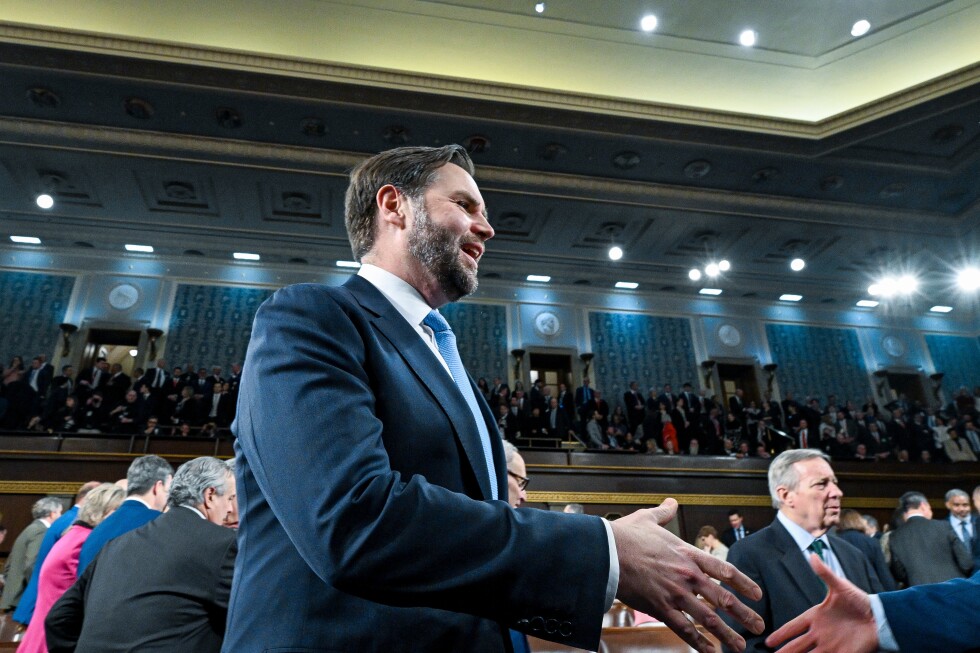
WASHINGTON (AP) — Vice President JD Vance announced Wednesday that the Trump administration would “temporarily halt” some Medicaid funding to the state of Minnesota over fraud concernsas part of what he described as an aggressive crackdown on misuse of public funds.
Vance, who made the announcement with Dr. Mehmet Oz, the administrator for the Centers for Medicare and Medicaid Services, said the administration was taking the action “in order to ensure that the state of Minnesota takes its obligations seriously to be good stewards of the American people’s tax money.”
Oz, who referred to people committing fraud as “self-serving scoundrels,” said the federal government would hold off on paying $259.5 million to Minnesota in funding for Medicaid, the health care safety net for low-income Americans.
“This is not a problem with the people of Minnesota, it’s a problem with the leadership of Minnesota and other states who do not take Medicaid preservation seriously,” Oz said.
Wednesday’s move is part of a larger Trump administration effort to spotlight fraud around the country. That effort comes after allegations of fraud involving day care centers run by Somali residents in Minneapolis prompted a massive immigration crackdown in the Midwestern city, resulting in widespread protests. President Donald Trump, in his State of the Union address on Tuesday, announced Vance would spearhead a national “war on fraud.”
Trump also recently nominated Colin McDonald to serve as the first assistant attorney general in charge of a Justice Department division dedicated to rooting out fraud.
Minnesota pushes back
Oz said the administration was simultaneously notifying Minnesota’s Democratic Gov. Tim Walz as he was making the announcement publicly.
“We will give them the money, but we’re going to hold it and only release it after they propose and act on a comprehensive corrective action plan to solve the problem,” Oz said.
He said Walz would have 60 days to respond and advised health care providers and Medicaid beneficiaries who were concerned to contact Walz’s office.
Walz, former Vice President Kamala Harris’ 2024 running mate, said in a pair of social media posts that the administration’s move had nothing to do with fraud.
“This is a campaign of retribution. Trump is weaponizing the entirety of the federal government to punish blue states like Minnesota,” Walz said. “These cuts will be devastating for veterans, families with young kids, folks with disabilities, and working people across our state.”
Minnesota Attorney General Keith Ellison said in a statement that his team has secured over 300 Medicaid fraud convictions since he took office in 2019. And he noted that he called on the Legislature earlier Wednesday to give him more staff and new legal tools to combat Medicaid fraud.
“Courts have repeatedly found that their pattern of cutting first and asking questions later is illegal, and if the federal government is unlawfully withholding money meant for the 1.2 million low-income Minnesotans on Medicaid, we will see them in court,” Ellison said.
Oz said the Centers for Medicare and Medicaid Services were also taking action to crack down on fraud in Medicare, the health care system relied upon by millions of older adults.
He said CMS for six months would block any new Medicare enrollments for suppliers of durable medical equipment, prosthetics, orthotics or other supplies used to treat chronic conditions or assist in injury recovery.
The Office of the Inspector General for the U.S. Department of Health and Human Services found last year that Medicare improperly paid suppliers nearly $23 million for durable medical equipment from 2018 through 2024. But it found that most of that was before January 2020, when changes to the system were implemented.
Oz also announced a new crowdsourcing effort he said would help “crush fraud” by soliciting Americans’ tips and suggestions.
“All of us are smarter than any one of us,” he said.
In a news release accompanying the announcement, CMS said the funding being paused in Minnesota included some $244 million in unsupported or potentially fraudulent Medicaid claims and about $15 million in claims involving “individuals lacking a satisfactory immigration status.”
Immigrants who are not living in the U.S. legally, as well as some lawfully present immigrants, are not allowed to enroll in the Medicaid program that provides nearly-free coverage for health services.
CMS said in the release that if Minnesota fails to satisfy its requirements, it may defer up to $1 billion in federal funds to the state over the next year. CMS spokesperson Catherine Howden said the agency’s review of potential fraud cases would include sampling claims to see if they comply with federal requirements, and potentially requesting more information about specific claims.
Akeiisa Coleman, the senior program officer for Medicaid at the Commonwealth Fund, said CMS was taking a “highly unusual step” in deferring funding. She said if the state doesn’t have enough funds available, it may have to halt payments to providers, which could affect care.
Democratic-run states face cutoffs
The administration has threatened to cut off funding for various programs for some Democratic-run states over fraud concerns over the last few months.
One judge blocked those actions and required that payments flowing to Minnesota and four other states — California, Colorado, Illinois and New York — for a variety of social service programs. The government had said that there was “reason to believe” that those states were granting benefits to people in the country illegally. It did not initially explain where that information came from, but a government lawyer told the judge it was largely in reaction to news reports about possible fraud.
Another judge said she would not let it cut off funding for administrative costs for 22 states that have refused to hand over information about applicants and recipients of food aid through the Supplemental Nutritional Assistance Program.
The latest action was prompted in part by a series of fraud cases, including a nonprofit called Feeding Our Future accused of stealing pandemic aid meant for school meals. Prosecutors have put the losses from that case at $300 million.
Since then, Trump has targeted the Somali diaspora in Minnesota with immigration enforcement actions and has made a series of disparaging comments about the community. During his State of the Union address on Tuesday, Trump said “pirates” have “ransacked Minnesota.”
Federal agencies have also been enlisted to assist in targeting fraud in Minnesota.
Last December, the U.S. Treasury Department issued an order requiring money wire services that people use to send money to Somalia to submit additional verification to the Treasury.
The Center for Medicare and Medicaid Services told Minnesota in January that it intended to freeze parts of payments for some Medicaid programs that were deemed high-risk. The state said that those cuts would add up to more than $2 billion annually if they lasted and made an administrative appeal.
___
Associated Press writers Geoff Mulvihill in Philadelphia, Steve Karnowski in Minneapolis and Fatima Hussein in Washington contributed to this report.
- Serious investigation or ‘clown show’? Clintons’ closed testimonies on Epstein leave room for disagreement

- House Oversight chair: Bill Clinton punts question to committee on whether Trump should testify in Epstein probe
- FEMA taps billions for disasters, warning Democrats of ‘dire’ shutdown impact
- Bill Clinton says in opening statement he had ‘no idea’ about Epstein’s crimes
- Trump administration delivers latest DHS funding offer
- More Iranians face executions over protests: UN rights chief

- FEMA OKs billions in disaster assistance

- Duffy’s wife knocks Trump’s Venezuela policy: ‘We’re getting a little too cozy’

- Bill Clinton gets bipartisan praise for cooperating in historic deposition on Epstein
- RFK Jr. tells Joe Rogan he was not ‘particularly happy’ with Trump’s glyphosate order

-

 The Dictatorship1 year ago
Luigi Mangione acknowledges public support in first official statement since arrest
-

 Politics1 year ago
Former ‘Squad’ members launching ‘Bowman and Bush’ YouTube show
-

 Politics1 year ago
Blue Light News’s Editorial Director Ryan Hutchins speaks at Blue Light News’s 2025 Governors Summit
-

 The Dictatorship6 months ago
Mike Johnson sums up the GOP’s arrogant position on military occupation with two words
-

 Politics1 year ago
Former Kentucky AG Daniel Cameron launches Senate bid
-

 The Dictatorship1 year ago
Pete Hegseth’s tenure at the Pentagon goes from bad to worse
-
Uncategorized1 year ago
Bob Good to step down as Freedom Caucus chair this week
-

 Politics10 months ago
Democrat challenging Joni Ernst: I want to ‘tear down’ party, ‘build it back up’