
The Dictatorship
RFK Jr.’s new report calls for more scrutiny of vaccines and autism

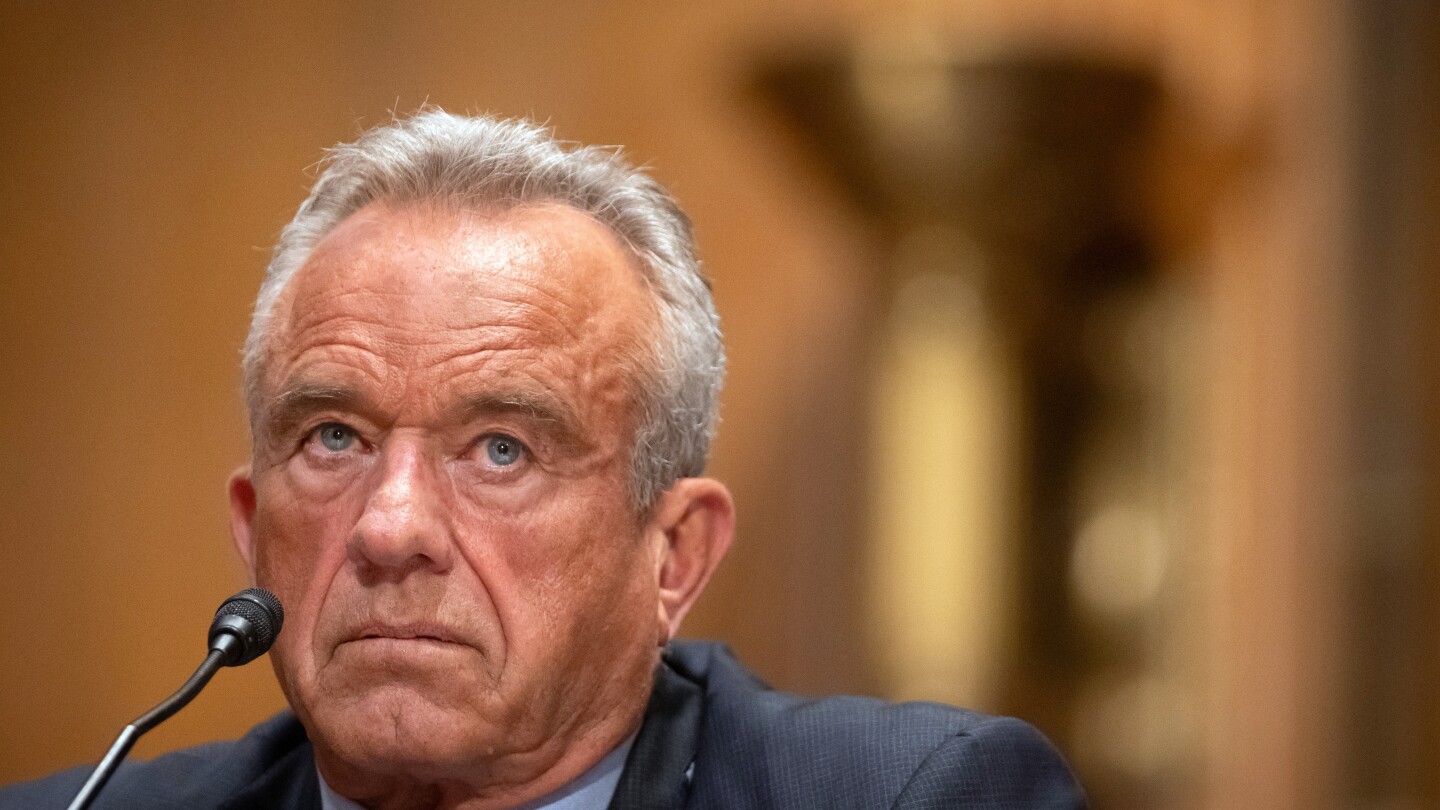
WASHINGTON (AP) — The Trump administration directed the nation’s public health and environmental agencies to prioritize investigations into vaccine injuries, prescription drug use and autism’s causes in its latest “Make America Healthy Again” report released Tuesday.
The 20-page report, overseen by Health and Human Services Secretary Robert F. Kennedy Jr.echoes many of the talking points Kennedy and those in his wide-ranging and politically diverse “MAHA” movement have united around. The document promises to put an end to childhood diseases and to make children healthier, but does not lay out regulatory changes to ensure an overhaul of Americans’ health.
Among the report’s recommendations is a call for more rigorous government investigations into vaccine injuries, a move that could stir more uproar as lawmakers raise alarm over how the health secretary’s anti-vaccine policies have thrown the nation’s public health agency into weeks of tumult.
Kennedy promised to “recast the entire program” for investigating vaccine injuries as he joined administration officials to unveil the MAHA report. Currently, the Centers for Disease Control and Prevention investigates injuries that are reported by individuals or providers.
“They will be welcomed and we will learn everything we can about them so we can improve the safety of these products,” Kennedy said of people who report vaccine injuries. He added that doctors are not currently compensated for filing complaints for vaccine injuries.
A bipartisan group of senators has raised alarm over Kennedy’s actions at the CDC, which was thrown into chaos last month when Kennedy abruptly fired his hand-picked director and other top leaders walked out on the job, citing disagreements over immunization recommendations. Last week, senators grilled Kennedy over his anti-vaccine agenda and leadership of the public health agencies.
The Trump administration’s cuts to federal health programs, including Medicaid, as well as Kennedy’s anti-vaccine rhetoric, could ultimately lead to worse health outcomes for children, Dr. Susan J. Kressly, the president of the American Academy of Pediatrics, said in a statement.
“It lacks details on how the Administration plans to address those issues and omits key drivers that harm children’s health, including gun violence and environmental hazards,” Kressly said of the report. “We also cannot ignore the fact that this report is being published in the context of other recent harmful actions by the Administration and Congress that undermine many of the report’s recommendations.”
An earlier version of the report was first leaked and publicized in August. Slight changes have been made to the final draft, which was developed by a “MAHA” commission that included Kennedy and other members of the president’s cabinet. Despite pledging “radical transparency,” the commission never held a public meeting ahead of the report’s release.
Among the differences in the final version of the report released on Tuesday is a call for the National Institutes of Health to use personal medical records and health insurance claims data to investigate the cause of diseases and disorders, including autism.
“The NIH will link multiple datasets, such as claims information, electronic health records, and wearables data, into a single integrated dataset for researchers studying the causes of, and developing treatments for, the chronic disease crisis,” the report says.
Kennedy has vowed for months that he would unveil the cause of autisma complex developmental disorder that impacts the brain, by September. He has promised to execute a massive research effort to identify the disorder’s causes, but has stayed mum on details regarding who is conducting that research and when it will be released.
Last month, President Donald Trump pressed Kennedy for his findings during a cabinet meeting.
Those who have spent decades researching autism have found no single cause. Besides genetics, scientists have identified various possible factors, including the age of a child’s father, the mother’s weight, and whether she had diabetes or was exposed to certain chemicals.
Trump ordered his first action as a result of the MAHA report’s recommendations on Tuesday evening, signing a memorandum to beef up enforcement of pharmaceutical ads that run across TVs, websites and social media accounts. Administration officials said during a call on Tuesday that they would be sending “hundreds” of letters to pharmaceutical companies that have run misleading ads.
The “MAHA” report addressed a number of other issues, including ultraprocessed food consumption, water quality, fluoride and the use of prescription drugs in children. Agencies, including the health department and the Department of Justice, should increase enforcement and oversight of prescription drug ads, especially those published by social media influencers and telehealth companies, the report says.
The National Institutes of Health, which is facing a 40% cut to its budgetis tasked with undertaking much of the MAHA-related research in the report.
___
Associated Press writer Matthew Perrone contributed.


ABOARD AIRFORCE ONE (AP) — President Donald Trump on Sunday night said he has “no problem” with a Russian oil tanker off the coast of Cuba delivering relief to the island, which has been brought to its knees by a U.S. oil blockade.
“We have a tanker out there. We don’t mind having somebody get a boatload because they need … they have to survive,” Trump told reporters as he flew back to Washington.
When asked if a New York Times report that the tanker would be allowed to reach Cuba was true, Trump said: “I told them, if a country wants to send some oil into Cuba right now, I have no problem whether it’s Russia or not.”
On Monday, Russia’s Transport Ministry said the oil tanker Anatoly Kolodkin arrived at the Cuban port of Matanzas carrying “humanitarian supplies” of about 730,000 barrels of oil.
Activists from the vessel Maguro, that arrived from Mexico, unload solar panels and other humanitarian aid from the “Nuestra America,” or Our America convoy, at the port in Havana Bay, Cuba, Tuesday, March 24, 2026. (Jorge Luis Banos/IPS via AP, Pool)
Activists from the vessel Maguro, that arrived from Mexico, unload solar panels and other humanitarian aid from the “Nuestra America,” or Our America convoy, at the port in Havana Bay, Cuba, Tuesday, March 24, 2026. (Jorge Luis Banos/IPS via AP, Pool)
The vessel is sanctioned by the United States, the European Union and the United Kingdom following the war in Ukraine.
Kremlin spokesman Dmitry Peskov said Monday that Russia had previously discussed its oil shipment to Cuba with the United States. “Russia сonsiders it its duty not to stand aside, but to provide the necessary assistance to our Cuban friends,” he told reporters.
Trump, whose government has come at its Caribbean adversary more aggressively than any U.S. government in recent history, has effectively cut Cuba off from key oil shipments in an effort to force regime change. The blockade has had devastating effects on the civilians Trump and Secretary of State Marco Rubio say they want to help, leaving many desperate.
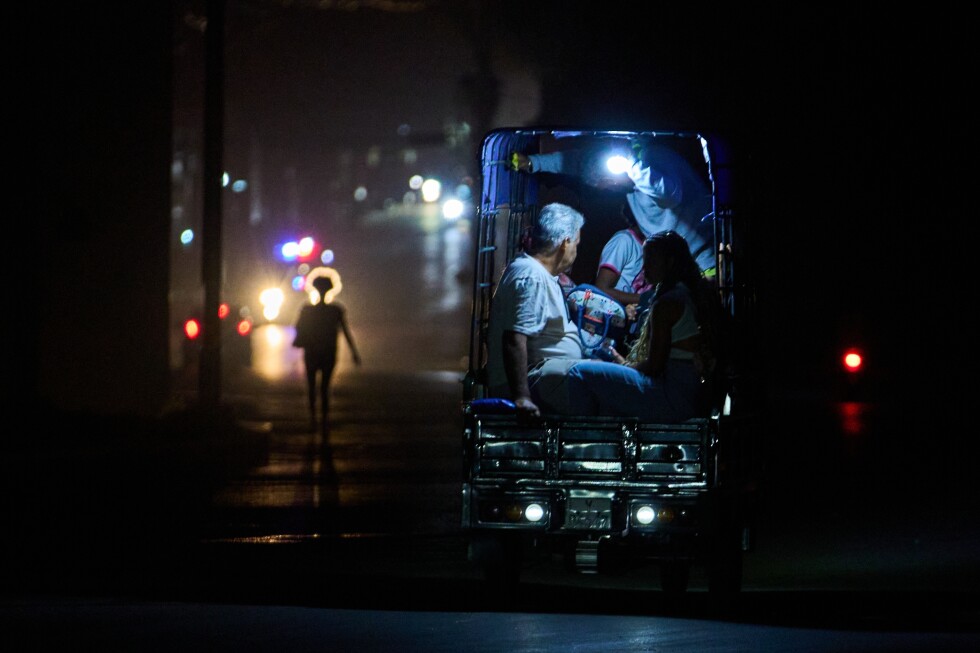
Islandwide blackouts have roiled Cubans already grappling with years of crisis, and a lack of gasoline and basic resources has crippled hospital and slashed public transport.
Experts say the anticipated shipment could produce about 180,000 barrels of diesel, enough to feed Cuba’s daily demand for nine or 10 days.
Cuba has long been at the heart of geopolitical tug-of-war between the U.S. and Russia, dating back decades. Trump on Sunday dismissed the idea that allowing the boat to reach Cuba would help Russian President Vladimir Putin.
A man fill containers with potable water during a blackout in Havana, Sunday, March 22, 2026. (AP Photo/Ramon Espinosa)
A man fill containers with potable water during a blackout in Havana, Sunday, March 22, 2026. (AP Photo/Ramon Espinosa)
“It doesn’t help him. He loses one boatload of oil, that’s all it is. If he wants to do that, and if other countries want to do it, it doesn’t bother me much,” Trump said. “It’s not going to have an impact. Cuba’s finished. They have a bad regime. They have very bad and corrupt leadership and whether or not they get a boat of oil, it’s not going to matter.”
He added: “I’d prefer letting it in, whether it’s Russia or anybody else because the people need heat and cooling and all of the other things.”
___
Associated Press reporters Megan Janetsky contributed to this report from Mexico City and Andrea Rodríguez contributed from Havana.
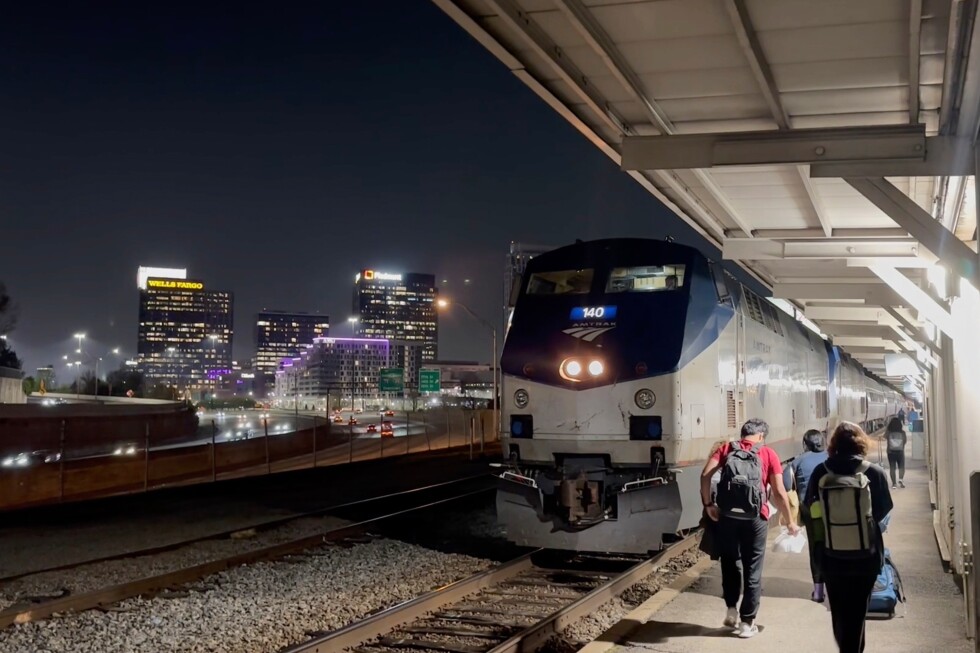
ABOARD THE CRESCENT (AP) — There’s something melodic about watching the sun rise over a rural stillness broken only by the rhythms of steel wheels on tracks. Or so we tell ourselves.
In this case, being aboard a train at all owed more to politics than poetry.
This image made from an Associated Press video shows the Virginia countryside, as seen from an Amtrak train, Friday, March 27, 2026. (AP Photo/Bill Barrow)
This image made from an Associated Press video shows the Virginia countryside, as seen from an Amtrak train, Friday, March 27, 2026. (AP Photo/Bill Barrow)
Congress and Donald Trump were mired in their latest budget stalemate, one rooted in the Republican president’s immigration crackdown and the tactics of federal forces he has sent to U.S. cities. But this impasse has upended a foundational constant of American life today: easy air travel.
In Atlanta, my hometown airport, cheerfully marketed as the world’s busiest, had descended into organized chaos. Unpaid federal employees called out from work, leaving a diminished security staff to screen travelers frustrated by hourslong waits in line. I wanted to get to Washington for the NCAA basketball tournament. So I eliminated the risk of a missed flight and booked the train overnight and into game day across a 650-mile route.
In this fraught moment in U.S. politics, I slowed down and thought about things we take for granted. Who ever ponders the conveniences of that 20th-century innovation, the airplane, that makes 21st-century hustle possible? We book and board. An unconscious, first-world flex of modernity. It’s even rarer to grapple with the inconvenience.
My decision had taken me further back, to the 19th century and another defining innovation: the long-distance train.
The Amtrak station in Danville, VA, is seen Friday, March 27, 2026. (AP Photo/Bill Barrow)
The Amtrak station in Danville, VA, is seen Friday, March 27, 2026. (AP Photo/Bill Barrow)
A 14½-hour weekend train ride is time aplenty to appreciate how completely politics, economics, social strife and fights over identity and belonging have always affected the order of our lives, including how, when and where we move around in these United States. But Amtrak’s Crescent also allowed me to see the expanse of our collective experience.
I traversed the urban, suburban and rural breadth of East Coast America. I learned how other travelers came aboard. And in that, I found the portrait of people, past and present, who refuse to be as paralyzed as some of their elected leaders.
Convenience on the railways
There is little glamour late night in a crowded Amtrak station. Children are up past bedtime and tended by frazzled parents. Older adults struggle with luggage and stairs.
Airports are not red-carpet affairs either, of course. But there is a certain cache to Delta’s Atlanta-Washington flights. They typically take about two hours gate to gate. They often are slotted at a midpoint gate of the concourse nearest the main terminal. That is almost certainly a nod to members of Congress who use it — but who have lost some airline perks during this extended partial shutdown.
In normal circumstances I can get from my front porch to Capitol Hill or downtown in as little as 4½ hours. Security lines these days could at least double my overall air travel time.
Union Station is seen Friday, March 27, 2026, in Washington. (AP Photo/Bill Barrow)
Union Station is seen Friday, March 27, 2026, in Washington. (AP Photo/Bill Barrow)
The train is still longer, and time is money, we are taught. But certainty has value, too, even if it means at 11:29 p.m. departure. And at the Amtrak station, there were no standstill lines, no Transportation Security Administration agents, no ICE agents as stand-ins.
Passengers who arrived mere minutes before departure made it on board and found seats quickly — assigned in boarding order, not predetermined zones that yield jammed aisles. There’s no in-seat service or satellite TV. But even coach seats, the lowest Amtrak tier, are as spacious as airline first-class – and there is Wi-Fi, so it’s not the 19th century or even 20th century after all.
On board, I heard one crew member joke, “I’m no TSA agent.”
The pathways of history
As a boy in rural Alabama, I counted train cars and wondered where they were headed. I’ve since read diary entries and letters from my grandmother and her sisters recounting World War II-era weekend trips to Atlanta.
The South’s largest city has a historical hook, too. Originally named “Terminus,” Atlanta developed in the antebellum era as a critical intersection of north-south and east-west rail routes. That is what drew Gen. William Tecumseh Sherman for one of the Civil War’s seminal campaigns that helped defeat the Confederacy.
A century after the Civil War, Delta chose Atlanta for its headquarters rather than Birmingham, Alabama, which was the larger city as of the 1960 census. The company’s decision was tied up in tax breaks for the airline, named for its crop duster origins in the Mississippi Delta region. According to some interpretations, Delta’s decision was made easier because of the more overt racism of Alabama’s and Birmingham’s leaders as they defended Jim Crow — a code that, among other acts, allowed states to segregate the passenger trains that predated Amtrak.
On this night, I heard many languages and accents, notable given the role that immigrant labor played in building the U.S. rail system and especially striking now with immigration — legal and illegal — at the forefront in Washington, my destination. I saw faces that reflected U.S. pluralism, a different mix from what my grandmother and aunts would have seen a lifetime ago.
Union Station is seen Friday, March 27, 2026, in Washington. (AP Photo/Bill Barrow)
Union Station is seen Friday, March 27, 2026, in Washington. (AP Photo/Bill Barrow)
The array of voices celebrated the freedom and ease of rail travel. So did Agatha Grimes and her friends after they boarded in Greensboro, North Carolina, as part of a long weekend trip to celebrate her 62nd birthday.
“I got stuck in the Atlanta airport last week,” Grimes said, as her group laughed together in the dining car. “It’s just nuts.”
Beretta Nunnally, a self-described “train veteran” who organized their trip, said, “There’s no worry about parking. No checking bags. You come to the station, you get where you going, and you come home.”
An era for planes, trains and automobiles
Still, that is not as easy in the United States as it once was.
Just as politics, economics and subsidies helped grow U.S. railroads, those factors diminished the network as auto manufacturers, o il companies, roadbuilders and, finally, airline manufacturers and airlines commanded favor from politicians and attention from consumers.
Riding hours across rural areas, I noticed the junkyards where kudzu and chain-link fencing framed rows of rusted automobiles. I saw the farmland and equipment that helps feed cities and the rest of the nation. I awoke to see the night lights of office towers in Charlotte, North Carolina, and its NFL stadium. I saw vibrant county seats — and I thought of countless other towns like them that are not thriving as they sit disconnected from passenger rail and far from the Eisenhower-era interstate system that we crossed multiple times on our way.
In each setting, voters — conservatives, liberals, the extremes and betweens — have chosen their representatives, senators and a president who now set the nation’s course.
When I arrived in Washington, I paused to enjoy Union Station’s grand hall and its Beaux Arts appeal, and I lamented how much splendor has been lost because so many striking U.S. terminals have been razed. I stepped outside and looked up at the Capitol dome.
While I had slept, the Senate managed a bipartisan deal to fund all of the Department of Homeland Security except immigration enforcement. As I continued northward, House Republican leaders rejected it. The stalemate continued.
I was a weary traveler but renewed citizen. I had a game to get to. And the train rolled on.
For many people who care deeply about issues like civil rights, combating child sex abuse and thwarting corruption, there has never been anything cool about the MAGA movement.
But now it seems that others inside the tent are coming around to that realization as well, albeit a bit more slowly.
President Donald Trump and his allies have used everything from misinformed emcees to gamer memes to project an air of coolness around the MAGA movement. But evidence suggests the air is beginning to evaporate, even among supporters of the president. Multiple polls this year have shown Trump’s support among young men, the group arguably most responsible for propping up this facade of coolness, has hit new lows, compared to where it was during the 2024 election.
At Blue Light News”https://www.Blue Light News.com/news/2026/03/28/iran-trump-maga-men-divide-cpac-00849378″>report on the Conservative Political Action Conference over the weekend underscored this trend, citing multiple conservative young men who said Trump’s warmongering in Iran was turning them off ahead of this year’s midterms. The New York Times published a similar dispatch from the conference, highlighting young conservatives’ disillusionment with MAGA.
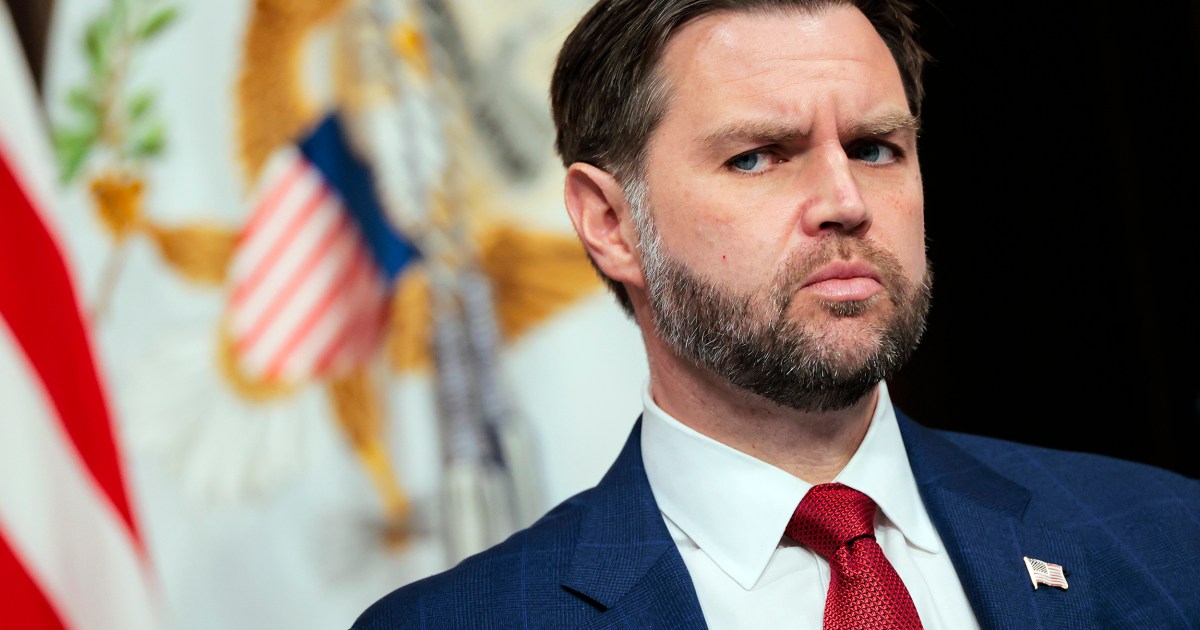
And all of this seems relevant to Vice President JD Vance’s recent attempt to downplay a complaint from Trump-aligned podcaster Joe Rogan, who disparaged MAGA for attracting “dorks.”
In his NSFW rant, Rogan (who endorsed Trump in 2024) complained about the slogan “make America great again” and Trump’s movement supposedly becoming “a movement of a bunch of dorks.”
“A lot of them are these really weird, f–––ing uninteresting, unintelligent people,” Rogan said, before griping that some “genuine patriots” in the movement get “lumped into this one group” with the “dorks.” The critique isn’t all that different from the one Hillary Clinton made about a decade ago, when she referred to some people in the movement as a “basket of deplorables” who espoused bigotry.
Rogan also argued that former President Barack Obama was more effective in deporting people than Trump has been.
Vance took umbrage with both claims during an interview with far-right propagandist Benny Johnson last week. The vice president said he would text Rogan to rebut the claims, but on the topic of MAGA “dorks,” Vance said, “We have many, many fewer dorks than the far left. But we love our dorks. We love our cool kids. We love anybody who wants to save the country.”
🚨NEW: JD Vance issues a direct response to Joe Rogan calling Trump supporters “dorks”
“We have many, MANY fewer dorks than the far-left! But we LOVE our dorks. We love our cool kids. We love anybody who wants to save the country.”pic.twitter.com/DOPgCRvA5A
— Jack (@jackunheard) March 27, 2026
Is it puerile that two conservative thought leaders were seriously discussing whether the so-called dorks could sit with them at lunch? Absolutely.
But it also speaks to the superficiality of the MAGA movement, which perceives “coolness” as a very real political currency. And one that Trump appears to be losing rapidly among some noteworthy constituents.
Ja’han Jones is an MS NOW opinion blogger. He previously wrote The ReidOut Blog.
- The future of space business depends on a rocket that keeps blowing up
- No one wanted to redevelop this polluted property. Then came AI.
- The DHS shutdown might never end
- Trump says he has ‘no problem’ with Russian oil tanker bringing relief to Cuba

- Midnight train from GA: A view of America from the tracks as airports struggle

- Democrats clamored for George Santos’ ouster. Soon they could face having to evict one of their own.
- ‘I just want to go home’: Despair settles over the Capitol as DHS deal hopes evaporate
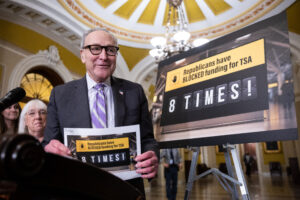
- Schumer rolls out Democrats’ midterm energy pitch

- Special election shocker has Florida Republicans nervous about redistricting

- GOP framework still ‘best landing spot’ for DHS funding, Thune says
-

 The Dictatorship1 year ago
Luigi Mangione acknowledges public support in first official statement since arrest
-

 Politics1 year ago
Former ‘Squad’ members launching ‘Bowman and Bush’ YouTube show
-

 Politics1 year ago
Former Kentucky AG Daniel Cameron launches Senate bid
-

 Politics1 year ago
Blue Light News’s Editorial Director Ryan Hutchins speaks at Blue Light News’s 2025 Governors Summit
-

 The Dictatorship7 months ago
Mike Johnson sums up the GOP’s arrogant position on military occupation with two words
-

 The Dictatorship1 year ago
Pete Hegseth’s tenure at the Pentagon goes from bad to worse
-
Uncategorized1 year ago
Bob Good to step down as Freedom Caucus chair this week
-

 Politics11 months ago
Democrat challenging Joni Ernst: I want to ‘tear down’ party, ‘build it back up’