
Politics
Republicans hold their breath and hope for a quick Trump endorsement in Texas

President Donald Trump is signaling he will soon endorse someone in the Texas primary. Key Republican players are scrambling to make the case for incumbent John Cornyn — and hoping Trump acts fast.
“I hope it’s going to be soon,” Senate Majority Leader John Thune told reporters Wednesday, just hours after making his latest plea on Cornyn’s behalf to the president.
At stake is $100 million or more in Republican donor money that many in D.C. party circles believe could be burned in the 12-week runoff showdown with Texas Attorney General Ken Paxton, who finished closely behind Cornyn in Tuesday’s GOP primary.
Beyond the money that stands to be incinerated, party operatives fear the scorched-earth campaign will give a further leg up to Democratic candidate James Talarico, the state lawmaker who won his party’s primary outright Tuesday.
In a lengthy Truth Social post Wednesday, Trump spelled out that he was mindful of a costly internecine fight.
“I will be making my Endorsement soon,” he wrote, as he called on the candidate he doesn’t endorse to “DROP OUT OF THE RACE,” stressing that Republicans must “TOTALLY FOCUS” on beating the “Radical Left Opponent.”
Cornyn’s Senate colleagues delivered a succession of public and private entreaties to the president throughout the day Wednesday.
Sen. Katie Britt (R-Ala.) said in an exclusive interview for Blue Light News’s “The Conversation” that Cornyn was “without a doubt the candidate to win in November.” The episode is set for publication Friday.
“There’s nothing more powerful than President Trump’s endorsement,” Britt added, speaking before she traveled to the White House for a roundtable event with Trump.
Multiple Republicans delivered a similar message directly to Trump, according to three people granted anonymity to describe the private conversations — sharing their concerns that a Senate seat that has been in GOP hands since 1961 could be at risk of flipping in November if the scandal-dogged Paxton is the top of the ticket.
Senate Republicans were told during their closed-door lunch Wednesday that Trump will soon endorse in the race, two attendees said, but not whom the president will back.
But there was a palpable sense of hope among some of Cornyn’s allies Wednesday, who believe that things are aligning in the incumbent’s favor as he appears on track to win a plurality in Tuesday’s voting.
As of Wednesday evening Cornyn led Paxton by about 25,000 votes with more than 95 percent of ballots counted, according to the Associated Press. That represented an overperformance, some Cornyn allies argued, given that several pre-election polls had him soundly trailing Paxton.
A Cornyn campaign aide said there is “new momentum” and “new support coming” after Tuesday’s results.
“The case got stronger because of last night — that’s undeniable,” the aide said about Trump endorsing Cornyn. “There certainly are lots of conversations happening, lots of people who are seeing the bigger picture.”
Arriving in the Senate Wednesday evening, Cornyn declined to answer questions about the possibility of an endorsement — or anything else — as his colleagues warmly welcomed him back to Washington.
“Big John,” said No. 2 Senate GOP leader John Barrasso of Wyoming, greeting Cornyn as he rushed into the Capitol after a flight from Texas.
Several former Trump campaign aides are now associated with Cornyn’s campaign and are thought to be lobbying on his behalf. But Trump has long been personally fond of Paxton, a MAGA firebrand who eagerly joined his effort to overturn the 2020 presidential contest that elected Joe Biden.
A Republican close to the Paxton campaign, granted anonymity to speak candidly before Trump sent his Truth Social message, said Trump “knows that the base despises Cornyn” and would not risk alienating them by endorsing the sitting senator.
“He knows Cornyn is a squish and RINO,” he said. “But he’s got to make a pragmatic decision. It just kind of depends on what folks are telling him.”
Hopes for a quick endorsement for Cornyn could be on hold as the final votes are counted and his lead over Paxton is confirmed.
“Any president would prefer to be positioned with the winning campaign,” said one GOP donor, granted anonymity to speak candidly about the endorsement dynamics.
The White House did not respond to requests for comment on when the president will endorse and which candidate.
Talarico clinching the nomination while two well-financed Republicans beat each other up is exactly the scenario Washington Republicans were hoping to avoid ahead of Tuesday’s election. Internal polling released earlier this month by the Senate GOP’s campaign arm showed Paxton would lose the general election to Talarico by 3 points while Cornyn could beat him by 3 points.
The Republican close to the Paxton campaign said the attorney general is well positioned to win a runoff given that the primary electorate tends to be more conservative — and that Talarico is more beatable than Washington Republicans believe, given his past comments on transgender rights and his liberal view of the Bible. The person said Paxton’s data modeling showed a Cornyn plurality “was a possibility.”
“I guess it’s fair to say he was a little bit stronger than expected, but again it wasn’t too far up from our data,” the person said.
Still, the strong showing gave Cornyn’s colleagues a prime opportunity to argue that it was time to bring the rivalry to an end.
“John Cornyn is the best bet to win the November election,” said Sen. Lindsey Graham (R-S.C.), a close Trump ally known to have the president’s ear.
Barrasso added that he, too, would encourage Trump to back his Texas colleague, adding that it’s “critically important for John Cornyn to be the nominee.”
“We need to hold that seat which means we need to nominate someone who is going to win in November,” Barrasso added. “The person that will win in November is John Cornyn.”
Dasha Burns and Adam Wren contributed to this report.


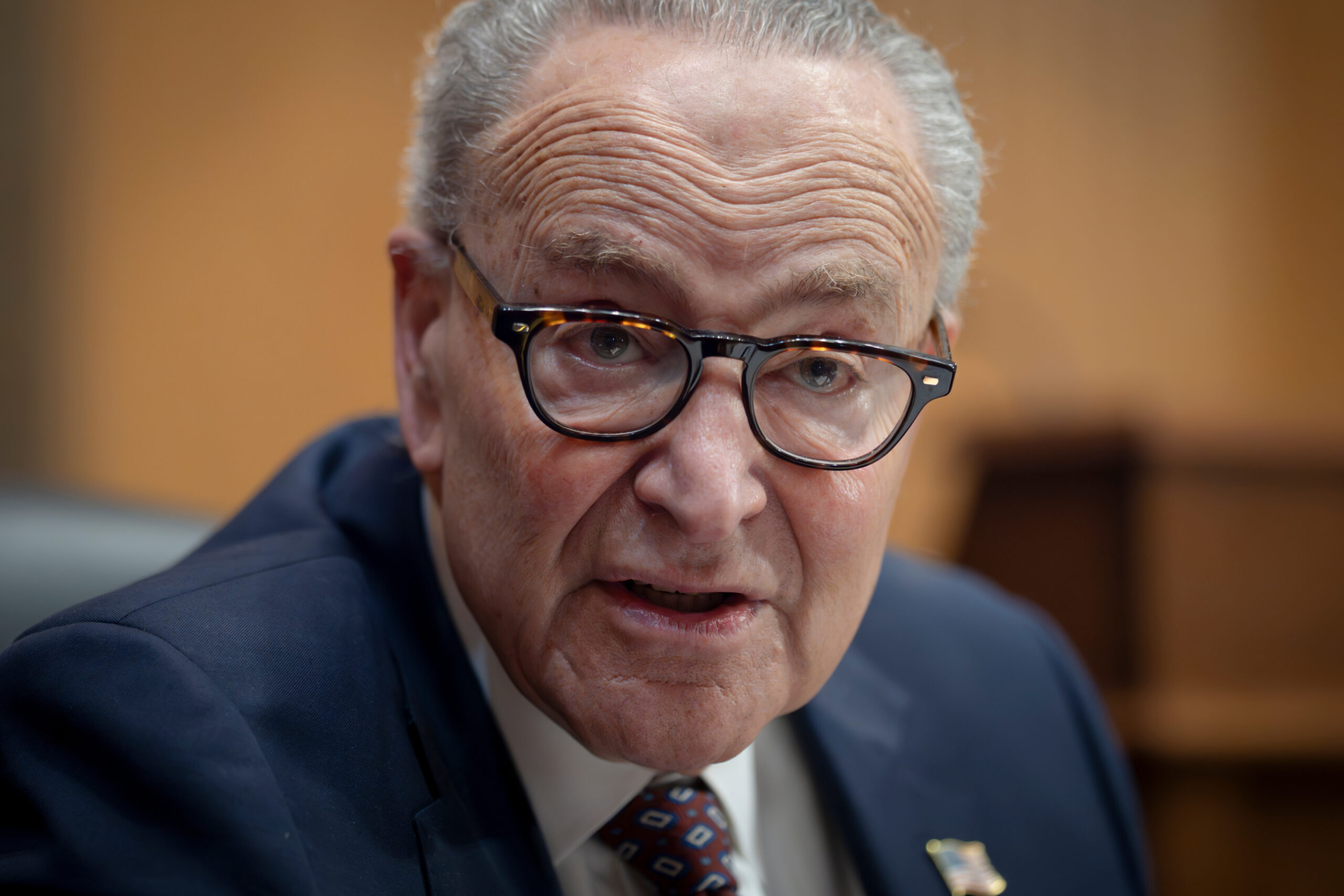
In the day following President Donald Trump’s announcement of a two-week ceasefire with Iran, dozens of congressional Republicans released statements of support for the administration’s peace negotiations.
But the lawmakers largely steered clear of one major topic: oil.
Crude prices tumbled following Trump’s Tuesday night announcement that the Strait of Hormuz would reopen as part of the ceasefire agreement. It’s what many Republicans were hoping for heading into the midterm elections.
But despite the ceasefire, it’s unclear when international oil shipments will return to normal through the Strait of Hormuz, and there’s alarm about Iran gaining more power over a waterway that carries roughly 20 percent of the world’s oil traffic.
“This is an important step toward ending the conflict, but we need to remain vigilant,” said Sen. John Hoeven (R-N.D.), a member of the Energy and Natural Resources Committee. “We must maintain pressure on Iran to follow through on its commitment to re-open the Strait of Hormuz and agree to a deal that achieves our objectives.”
Indeed, Iran state media reported Wednesday that the country would move to close the strait again if Israel kept bombing targets in Lebanon. The White House said Lebanon was not part of the ceasefire and downplayed the closure threat.
Still, the president has appeared open to Iran keeping some influence over the strait and charging ships for crossing. That’s something causing alarm with industry leaders.
“The supposed negotiating document, in my view, has some troubling aspects, but time will tell. I look forward to the architects of this proposal, the Vice President and others, coming forward to Congress and explaining how a negotiated deal meets our national security objectives in Iran,” Sen. Lindsey Graham (R-S.C.), long an Iran hawk, wrote on X about initial reports on the ceasefire deal.
Other Republican were less specific in their response. Energy and Natural Resources Chair Mike Lee (R-Utah) wrote on social media that the ceasefire was “excellent news.” But he did not weigh in on the oil price declines Wednesday or lingering concerns about energy markets, and his office did not respond to request for comment.
On the House side, Energy and Commerce Chair Brett Guthrie (R-Ky.) similarly kept his ceasefire comments focused on military objectives, rather than the energy ramifications of the conflict.
“I pray that the end of hostilities will be lasting, that the Iranian regime permanently ends their nuclear ambitions, and stops their spread of terror once and for all,” Guthrie wrote.
Sen. Kevin Cramer (R-N.D.), another outspoken Republican on energy issues, took a tone of caution while celebrating the ceasefire agreement. “We have to keep our eyes wide open obviously, it’s not like the Iranian regime is good for keeping its word, but in my mind, this is a pretty good breakthrough,” he said in a statement.
Rep. Andy Biggs (R-Ariz.) was one of the only GOP lawmakers to comment about energy and Iran on Wednesday. But rather than calling attention to plummeting oil prices, he instead made an argument for American energy independence.
The president and his allies have been touting their support for more U.S. fossil fuel production as an insurance policy against global disruptions, even though average gasoline prices spiked from $3.25 a year ago to more than $4.
“If the past two months have taught us anything, it’s that we can’t put a price tag on American energy independence and dominance,” Biggs wrote on social media.
Democrats keep up attacks
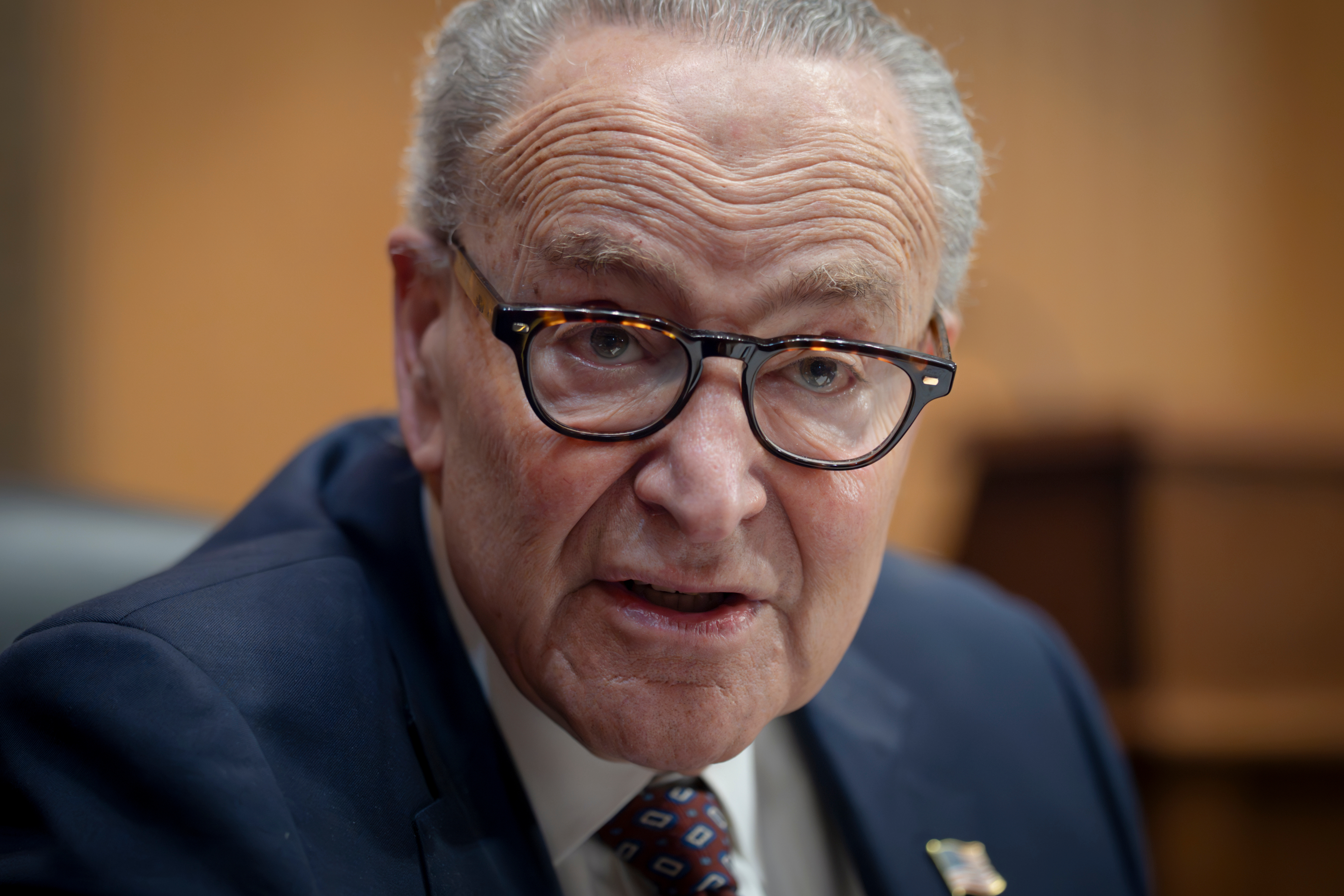
The ceasefire announcement and drop in oil prices didn’t blunt the Democrats’ campaign that the administration’s war — and other policies — are hurting American consumers.
Minority Leader Chuck Schumer highlighted the continued volatility in the Strait of Hormuz during a press conference Wednesday and said he didn’t expect prices at the pump to ease anytime soon.
“At home here, American families have paid the price for this war. Gas prices have skyrocketed in just a matter of days. They’re not going to change until August. And in general, the world oil markets will be unsettled for years,” Schumer said.
House Energy and Commerce ranking member Frank Pallone (D-N.J.) said, “Even though there’s now a ceasefire, the oil supply chain has unfortunately been disrupted — and may be for a long time.”
Iran’s control over Strait of Hormuz traffic — something it didn’t have before — is also giving Democrats ammunition against the president’s decision to join Israel in attacking Iran.
“A waterway that was free to the world is now a toll booth that Iran controls,” wrote Rep. Mike Levin (D-Calif.) on social media. “Every barrel of oil that gets taxed on the way through raises prices for American families”
Andres Picon contributed to this report.
Democrats’ internal feud over Israel is rearing its head on the party’s biggest stage — again.
Critics of Israel’s military actions and the pro-Israel lobby’s interference in recent Democratic primaries are setting up thorny test votes at the Democratic National Committee’s spring meeting in New Orleans on Thursday, where members will debate resolutions recognizing a Palestinian state, conditioning military aid to Israel and condemning the “growing influence” of the American Israel Public Affairs Committee and other dark-money groups.
The measures before the DNC’s resolutions committee are unlikely to pass and are nonbinding even if they do. But they are the latest public clash that will pit more pro-Israel party brass against a base whose views on Israel have turned sharply negative and progressive activists who are increasingly incensed by the glut of special-interest spending in Democratic primaries that is often directed against their candidates.
In a sign of the heightened sensitivity around the politics of Israel, one DNC member who was granted anonymity to discuss private conversations said they had received direct calls about the resolutions from two presidential aspirants who would have to answer for the DNC’s positions on Israel and AIPAC if they run. The resolutions are also highlighting sharp divisions within the task force DNC Chair Ken Martin established last year to set the party’s strategy on the Middle East — a committee that remains in early stages and is far from formalizing an agenda.
James Zogby — a longtime DNC member and critic of Israel who is president of the Arab American Institute and who sits on Martin’s Middle East Working Group — said the party needs to wake up to voters’ shifting views on Israel.
“Public opinion has shifted. Democrats have clearly shifted. Candidates have shifted. And we’re not where we were five years ago even,” Zogby said. “We have to avoid the mistakes that we’ve been making, which simply show us to be unwilling to accept or unable to accept the political realities.”
A Pew Research survey released this week showed 80 percent of Democrats and Democratic-leaning independents hold unfavorable views of Israel, up from 69 percent last year and 53 percent in 2022. A NBC News poll conducted in late February and early March, meanwhile, found that 57 percent of Democrats view Israel negatively, a dramatic change from when just 35 percent held a negative view of the country after Hamas attacked it on Oct. 7, 2023.
“The Democratic Party, time and time again, is presented with absolutely winning issues,” said Allison Minnerly, a DNC member from Florida who submitted the resolution criticizing AIPAC and corporate-aligned spending, and who unsuccessfully pushed another last year calling for an arms embargo on Israel. “People 1) hate corporate money and 2) do not want to be involved in further conflict in the Middle East.”
But Halie Soifer, the CEO of the Jewish Democratic Council of America, which is against the current measures, said the increasing critiques of the Israeli government by prominent elected officials “doesn’t necessarily mean there’s a wholesale shift in support for Israel’s security or its right to exist as a Jewish state.” Soifer, a former Kamala Harris adviser whose group has opposed similar efforts before the DNC in the past, cast the latest batch of foreign-policy resolutions as a “distraction” for a party that’s showing early success in the midterms by honing in on domestic issues.
The DNC and a spokesperson for AIPAC declined to comment.
Democrats have been here before. The party conducted a 2024 autopsy that found its approach to Gaza hurt the top of the ticket — then decided not to release it publicly.
At the party’s meeting in Minneapolis last summer, Minnerly’s weapons ban failed, while Martin yanked his measure calling for “unrestricted” aid to Gaza and a two-state solution after it passed in favor of creating the task force to advance “solutions” to the party’s divide.
The Middle East Working Group is slated for its fourth meeting this week in New Orleans. Some members lamented to Blue Light News that the group lacked structure and any real institutional power. And they disagree on how best to approach their mission.
Joe Salas, a member of the working group from California, believes that Gaza was “one of the things that lost us the White House” in 2024 and is urging the party to adjust its response. He put forward the resolution recognizing the “State of Palestine” and pausing or conditioning weapons transfers to “any military units credibly implicated in violations of international humanitarian law or obstruction of humanitarian assistance,” telling Blue Light News he hoped it would serve as a guidepost for the task force.
But Andrew Lachman, another task force member and the past president of the California Jewish Democrats, said he doesn’t want to see members of the group trying to “undermine the work of the commission” by pushing catchall resolutions that could bigfoot its efforts.
“It would be much better for us to try to find ways for us to work together as a party, to stand together against these wars, than engaging in this kind of approach,” he said.
The resolutions have also set off a fresh round of lobbying among interest groups. IMEU Policy Project, a pro-Palestinian group, sent members a memo on Wednesday urging them to pass the measures.
“The signs are growing that the gap between Democratic leadership and their voters on this issue will be a liability in 2026 unless serious action is taken,” the group warned in its memo, a copy of which was shared with Blue Light News.
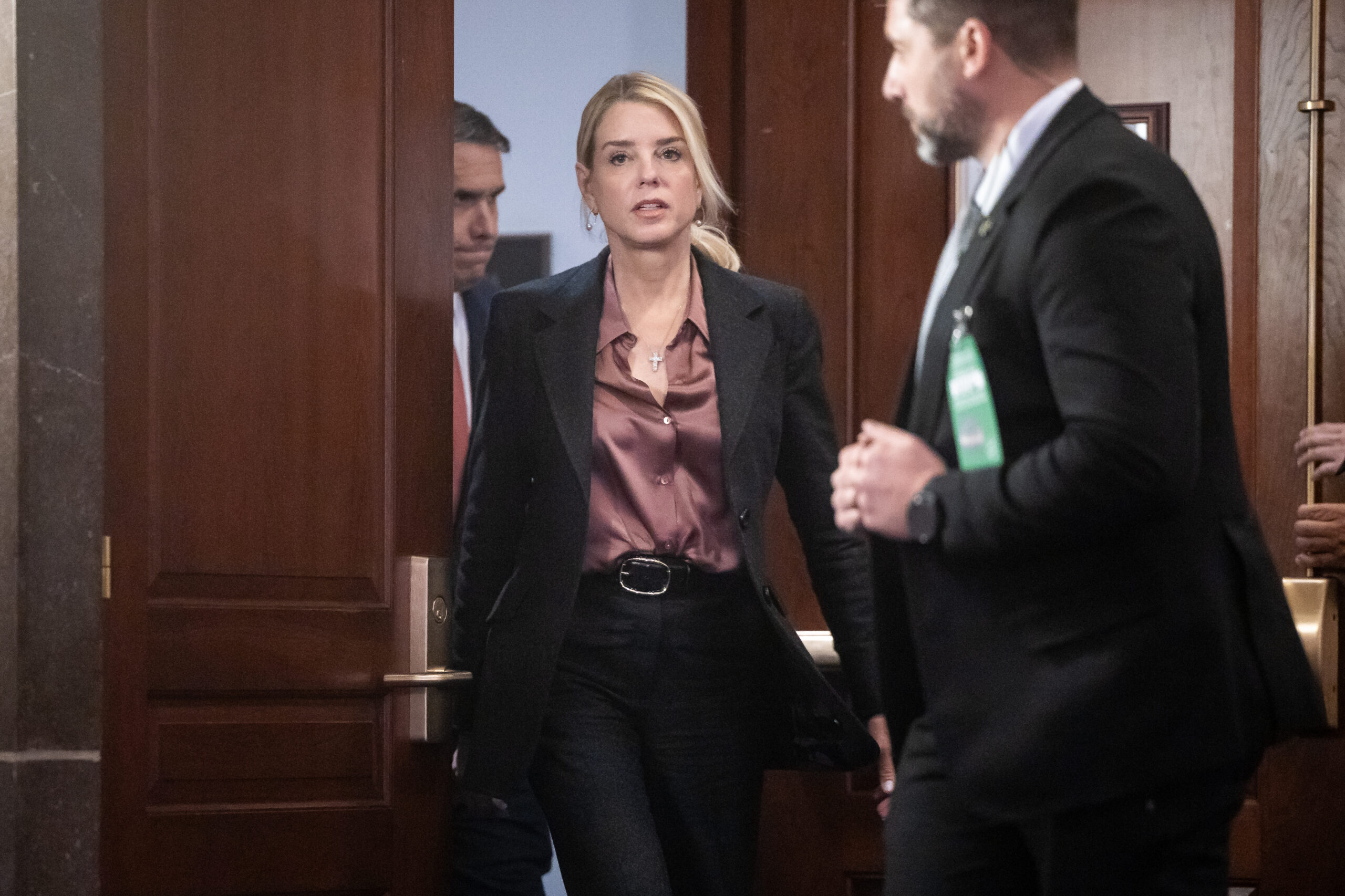
Trump’s former attorney general had been subpoenaed for an April 14 deposition that was never confirmed…
Read More
- Republicans cautious on energy prices despite ceasefire

- US, Iran say they have agreed to a two-week ceasefire
- The DNC is meeting — and Israel is at the forefront once again
- Rand Paul is facing an ICE funding dilemma
- Pam Bondi still on the hook for Epstein testimony, Oversight panel says

- Khanna keeps door open on possible 2028 White House bid
- Strait of Hormuz, Lebanon emerge as obstacles for Iran ceasefire

- Democratic senator: Hegseth ‘blowing smoke’ with claims about Iran war
- Trump: ‘Fraudsters’ circulating purported Iran talks documents

- Democrats to try limiting Trump Iran war powers during House pro forma session
-

 The Dictatorship1 year ago
Luigi Mangione acknowledges public support in first official statement since arrest
-

 Politics1 year ago
Former ‘Squad’ members launching ‘Bowman and Bush’ YouTube show
-

 Politics1 year ago
Former Kentucky AG Daniel Cameron launches Senate bid
-

 The Dictatorship1 year ago
Pete Hegseth’s tenure at the Pentagon goes from bad to worse
-

 Politics1 year ago
Blue Light News’s Editorial Director Ryan Hutchins speaks at Blue Light News’s 2025 Governors Summit
-

 The Dictatorship7 months ago
Mike Johnson sums up the GOP’s arrogant position on military occupation with two words
-
Uncategorized1 year ago
Bob Good to step down as Freedom Caucus chair this week
-

 Politics12 months ago
Democrat challenging Joni Ernst: I want to ‘tear down’ party, ‘build it back up’