
The Dictatorship
Republicans forge tax bill in Trump’s image, with ‘MAGA accounts’ and more…

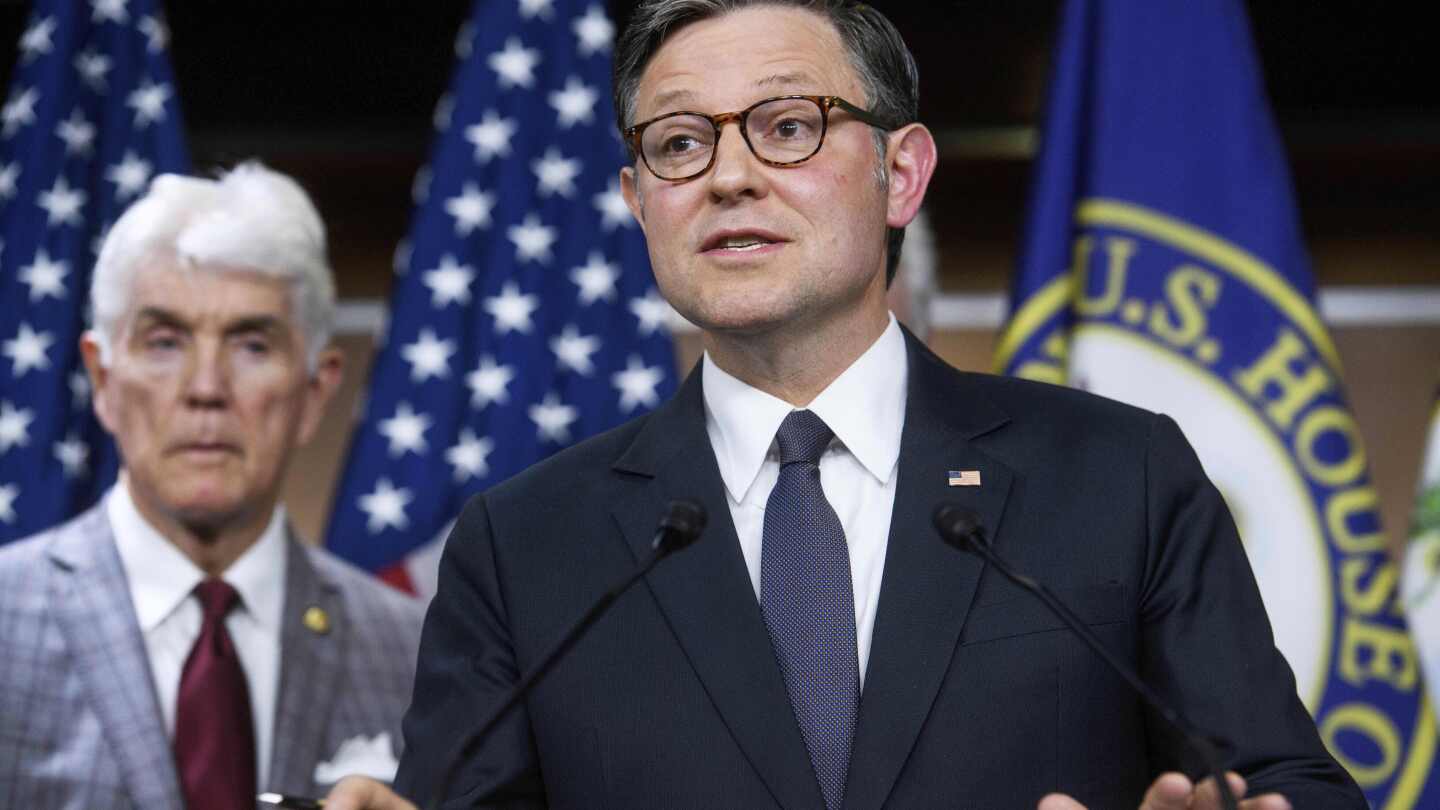
WASHINGTON (AP) — Days before Republicans unveiled their sweeping tax cut plan, the chairman of the powerful Ways and Means Committee had one last person to consult. He went to the White House, where he and President Donald Trump went over the legislation “line by line.”
“He was very happy with what we’re delivering,” said Rep. Jason Smith, a Republican from Missouri.
Trump had every reason to be pleased. His imprint is all over on the bill making its way through the House, starting with its title — the “ One Big Beautiful Bill Act.”
The legislation realizes many of Trump’s campaign promises, temporarily ending taxes on overtime and tips for many workers, creating a new $10,000 tax break on auto loan interest for American-made cars, and even creating a new tax-free “MAGA account” — a nod to his ”Make America Great Again” movement, but in this case, it means “Money Accounts for Growth and Advancement.” This would contribute $1,000 to children born in his second term.
The Trump-inspired contours of the legislative package, months if not years in the making, reflect not only the president’s considerable influence over the Republican Party, but also the hard political realities in the House, where Republicans have only the barest of majorities and often find it difficult to find consensus without Trump’s involvement.
Speaker Mike Johnson, R-La., effectively owes his job to Trump and has kept in constant contact with him during the negotiations, including during his overseas trip this week.
“He’s excited about our forward progress,” Johnson said. “You know, I keep him apprised of the developments, and he’s had a busy time over there in the Middle East, and it’s been good — he’s in good spirits and we’re in good spirits.”
The Republican bill runs a whopping 1,116 pages and includes more than $5 trillion in tax cuts, costs that are partially offset by spending cuts elsewhere and other changes in the tax code. The legislation would make permanent the tax cuts from Trump’s first term while reducing funding for programs involving food assistance, college financing and environmental protection.
As talks over the bill have progressed, divisions have emerged among Republicans, particularly between fiscal hawks most concerned about federal deficits and others more focused on the impact of cuts back home.
That’s where Trump usually comes in, playing the “closer” who turns no votes to yes.
“President Trump has gone out of his way to ask us: ‘Are there any members you want me to call? Anybody that you want me to talk to?’ And he calls them right then,” said House Majority Leader Steve Scalise, R-La. “He’s been incredibly hands-on and incredibly helpful at getting the bill to where it is.”
Trump’s involvement seems certain to grow as Johnson labors to get the tax package through the House by a self-imposed Memorial Day deadline.
Conservatives slowed the process Friday, refusing to advance the tax package out of the House Budget Committee until it includes faster implementation of Medicaid changes and a more wholesale repeal of Biden-era green energy credits. They vowed to hold firm until their demands are met.
Trump took notice, applying pressure even before the gavel went down on the failed committee vote.
“We don’t need ‘GRANDSTANDERS’ in the Republican Party,” Trump wrote on social media. “STOP TALKING, AND GET IT DONE!”
Negotiations were expected to stretch through the weekend, with the Budget Committee reconvening late Sunday night in hopes of a breakthrough.
Rep. Mike Rogers, R-Ala., chairman of the House Armed Services Committee, predicted the tax package will ultimately get over the finish line once Trump — just returning from a tour of the Middle East — starts making calls to skeptical lawmakers.
“You may have noticed he likes talking on the telephone,” Rogers said.
Added Rep. Tim Burchett of Tennessee, “I think the only way we’re going to get on track with it is with Trump.”
The close coordination with Republican leaders stands in stark contrast to Trump’s first term, when the party first enacted a slew of personal and corporate tax breaks. Republicans quickly cobbled that tax package together in late 2017 after a disastrous attempt at fulfilling their central campaign promise — repealing and replacing the Affordable Care Act, often referred to as Obamacare.
This time, White House aides have been in regular contact with GOP lawmakers as the tax bill progresses through drafts and markups, highlighting programs they aim to overhaul and provisions they’d like to add or cut.
The president “is much more engaged in directing what happens than the first time because he and the leadership of Congress in 2017 were not seeing eye-to-eye,” Scalise said. “He didn’t necessarily want health care to be the first thing that was done, and yet it was. This time around we talked a lot before he was sworn in to make sure we were all on the same page.”
Trump first began to set the course of the GOP’s current legislative strategy back in January, when he posted to social media that Republicans should pass “one powerful bill” that would tackle all of the party’s priorities instead of splitting the agenda into two packages.
Senate Republicans argued for a different approach. They urged quick passage of a bill to provide billions for the Pentagon and Trump’s immigration clampdown, saying a second tax package could wait until later.
Trump wavered for a time, giving Republicans on Capitol Hill mixed signals over the best approach. But his original preference for one bill won out in the end, in part because House Republicans insisted their chamber could not do it any other way.
Democrats uniformly oppose the package but have little power to stop it from becoming law if Republicans remain unified. As they continue to grapple with the party’s losses in last year’s election, Democrats have worked to mobilize public opposition to the bill, decrying it as a giveaway to the rich paid for with cuts to healthcare and other social services.
Rep. Pramila Jayapal, D-Wash., called it “one big, beautiful betrayal.”
Republicans, meanwhile, are eager to press ahead and get the tax package to the Senate, with hopes of getting it on Trump’s desk by the Fourth of July.
Burchett said that while “everybody rises up in righteous indignation” over the details, Republicans will start “coming to the table” once Trump is fully engaged.
“It’s like an NBA basketball game right now,” Burchett said. “Don’t watch the game. Just wait till the last two minutes and then turn on the TV.”
___
Associated Press writer Kevin Freking contributed.


The Dictatorship
Honduras weighs shift in China-Taiwan ties as Trump pushes for US dominance in Latin America
WASHINGTON (AP) — Three years after Honduras parted ways with Taiwan and forged diplomatic ties with China in hope of economic gainshrimp farmers in the Central American country are in revolt.
Their sales to Taiwan fell to a mere $16 million in 2025, down from more than $100 million in 2022, and the Chinese didn’t fill the void as hoped.
“We were deceived,” said Javier Amador, executive director of the National Aquaculture Association of Honduras, as he described the promises from former President Xiomara Castro of better opportunities with China when she severed ties with Taiwan and opened an embassy in Beijing in 2023.
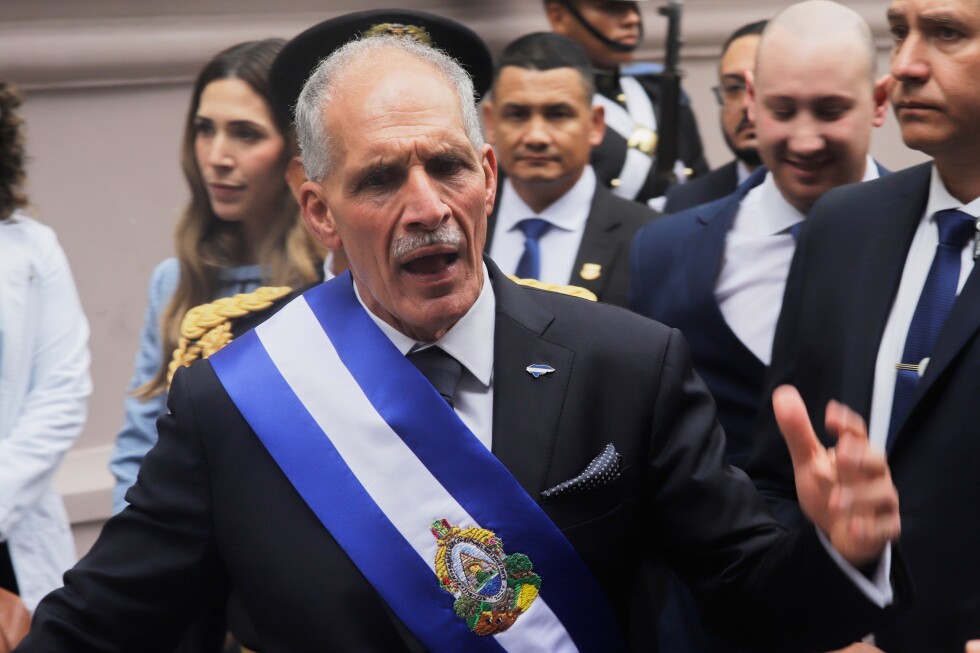
Nasry Asfura, who was elected president with the backing of President Donald Trump and sworn into office in January, has ordered a review of agreements between Tegucigalpa and Beijing. This has fueled expectations that Honduras will distance itself from China, in line with a Trump administration campaign to reduce Chinese influence and economic clout in Latin America.
Asfura is expected to join other regional leaders for a security summit Trump is hosting at his golf course near Miami on Saturday.
“Honduras is probably the most likely country in the world right now to switch diplomatic recognition back to Taiwan,” said Francisco Urdinez, an associate professor at the Political Science Institute of the Pontifical Catholic University of Chile. “President Asfura campaigned on it, he met Trump at Mar-a-Lago within days of taking office, and his vice president has confirmed the government’s intention.”
“But it’s not as simple as flipping a switch,” he said, noting that Honduras has signed more than a dozen agreements with China since 2023.
China and Taiwan were both diplomatic in responding to questions about a potential shift in allegiance.
Liu Pengyu, the spokesperson for the Chinese Embassy in Washington, said Honduras has better prospects for its long-term development since establishing diplomatic ties with China and both countries have “reaped fruitful cooperation outcomes in various fields.”
The Taipei Economic and Cultural Representative Office, the island’s de facto embassy in Washington, said Taiwan will continue to advance relations with Honduras “in an open and pragmatic manner, without preconditions, and on the basis of equality and reciprocity.”
The Honduras government has not responded to a request for comment.
Taiwan as a barometer of influence
Latin America’s ties with Taiwan have gained attention because they have become a barometer of the power balance between the world’s two largest economies.
Beijing considers Taiwan to be Chinese territory, while Washington, despite its lack of formal ties with Taiwan, is the island’s strongest partner and has vowed to help Taiwan keep its formal allies, seen as necessary for the island to eke out a legitimate space on the global stage.
Of the 12 governments that still recognize Taiwan’s statehood, seven are in Latin America, including Guatemala, Paraguay and five in the Caribbean.
Secretary of State Marco Rubio, during a visit to Guatemala in February, thanked the country for sticking with Taiwan.
“It’s not easy in a world where there is a lot of pressure to change that recognition and to break those ties, but you have always stood firm,” Rubio said, as he promised to work with Guatemala to deepen its economic ties with Taiwan.
Rep. John Moolenaar, chair of the House Select Committee on the Chinese Communist Party, had a similar message when hosting a delegation from Guatemala in November.
“While too many countries bow to the bullying of Beijing, Guatemala stands with the people of Taiwan and prospers through a strong trade relationship,” Moolenaar, a Michigan Republican, said. “I support Guatemala’s efforts to oppose Chinese aggression in our hemisphere and look forward to working with Guatemala on areas of common ground.”
U.S. lawmakers have introduced a bill that could provide $120 million over three years in assistance to Taiwan’s partners.
Thousands of shrimp farmers lose their jobs
In 2016 and 2017, Panama, the Dominican Republic and El Salvador all switched their allegiance from Taipei to Beijing. Nicaragua flipped in 2021, and Honduras in 2023.
The loss of the Taiwanese market led to the closure of at least 95 shrimp farms and one processing plant, the loss of more than 25,000 direct and indirect jobs, and the loss of millions of dollars in foreign exchange for the Central American country, according to Amador.
“Most of the companies closed in 2024 because many couldn’t ship to other markets, and China hasn’t been the answer, because we’re not competitive for them,” he said.
Amador hopes the president restores ties with Taiwan for the benefit of the 330 shrimp farming companies that are still operating.
“The issue of returning to Taiwan is not about recovering what we have already lost, but about whether we are going to start over to reactivate industry, improve productivity and generate foreign currency and employment,” he said.
Honduras’ new president has a dilemma
For Asfura, who campaigned on severing ties with Beijing, there’s more to untangle. China has hundreds of millions of dollars worth of investments in Honduras.
Enrique Millán-Mejía, senior fellow on economic development at the Atlantic Council’s Adrienne Arsht Latin America Center, said Honduras could confer “a special status” on Taiwan and withdraw from Beijing’s global infrastructure project, the Belt and Road Initiative, which has helped the Chinese government open markets and extend its influence.
Last year, Panama became the first Latin American country to quit the Belt and Road Initiative, prompting an angry response from Beijing, which accused the U.S. of using “pressure and coercion” to undermine the cooperation.
Urdinez said Asfura may go further and rebuild formal ties with Taiwan.
“Asfura’s calculus is fundamentally about the U.S., not about Taiwan per se,” Urdinez said. “Taiwan recognition is essentially the price of admission to Trump’s good graces.”
___
Gonzalez reported from Tegucigalpa, Honduras.
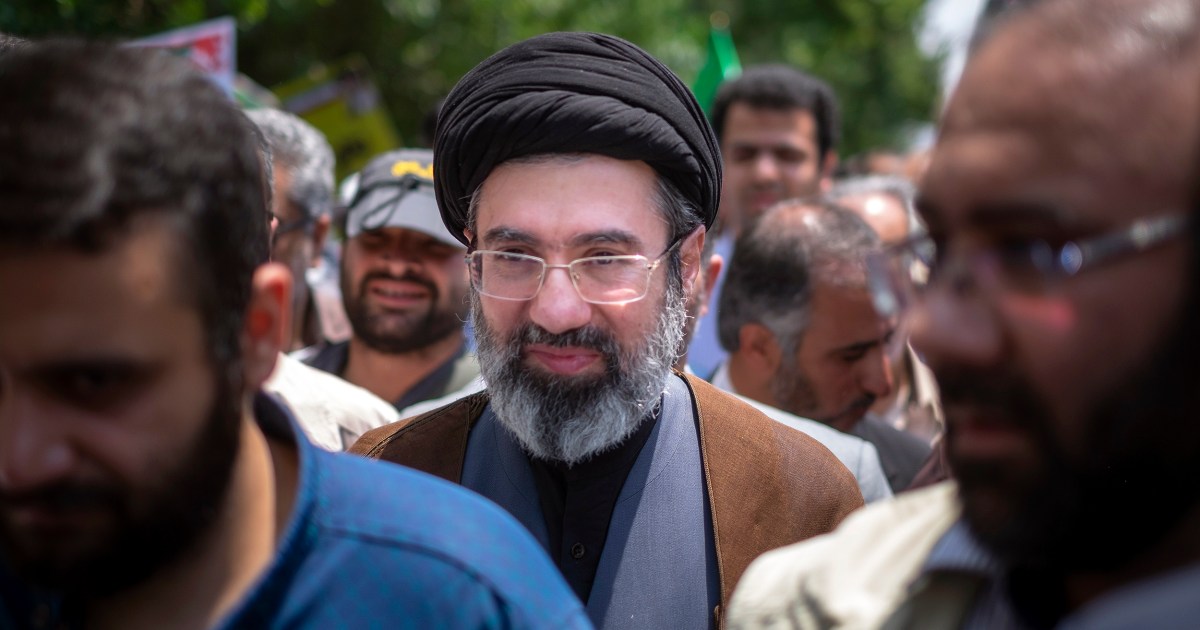
Iran’s regime has named Mojtaba Khamenei the Islamic Republic’s supreme leader, succeeding his father, Ayatollah Ali Khamenei, who was killed in an airstrike at the start of the ongoing Middle East war.
Several of Mojtaba Khamenei’s other family members were also killed in the initial strikes, including his wife, Zahra Adel, his mother, Mansoureh Khojasteh Bagherzadeh, and his son, according to Iranian state media.
The ascension of Khamenei to his father’s seat of nearly absolute power suggests a determination by regime hard-liners to dig in against internal and external pressure for reform, even as U.S. and Israeli bombs continue to fall.
It also creates the awkward appearance of a ruling family leading an Islamic Republic that supplanted the monarchy of the shahs after the Iranian Revolution of 1979.
In an interview with ABC News on SundayPresident Donald Trump reiterated that any new Iranian leader will “have to get approval from us.”
“If he doesn’t get approval from us he’s not going to last long. We want to make sure that we don’t have to go back every 10 years, when you don’t have a president like me that’s not going to do it,” Trump said.
But Trump did not rule out accepting a new Iranian leader with ties to the old regime.
Khamenei, the late ayatollah’s second son, becomes just the third person to hold the title of supreme leader, after his father and Ayatollah Ruhollah Khomeini, the founder of the republic.
Like his father when he took power in 1989, Khamenei, 56, is not an ayatollah but a mid-level Shia cleric. The elder Khamenei had the law changed to make himself an ayatollah essentially overnight – a source of tension that never quite went away during his brutal reign of nearly 37 years.
Until now, Khamenei has been considered a quietly powerful figure who has played a behind-the-scenes role in the regime. He has reportedly amassed a vast real estate portfolio through shell companies with several properties in Dubai, Frankfurt, Mallorca and on London’s “Billionaire’s Row” worth more than $100 million combined, according to a Bloomberg investigation.
In addition to Iran’s Islamic Revolutionary Guard, his new role also means he is the de-facto leader of the so-called Axis of Resistance, a collection of paramilitary groups within the region united against the U.S., Israel and Saudi Arabia, including Hezbollah in Lebanon, the Houthis in Yemen and Hamas in Gaza, as well as smaller groups in Iraq.
Regardless of who the leader would have been, they have a target on their back as U.S. and Israeli officials have vowed to assassinate them. Several high-ranking Iranian officialsincluding Defense Minister Amir Nasirzadeh and Revolutionary Guards commander Mohammad Pakpour, have already been killed.
Israeli Defense Minister Israel Katz said on X on Wednesday that “every leader appointed by the Iranian terror regime to continue and lead the plan to destroy Israel, to threaten the United States and the free world and the countries of the region, and to suppress the Iranian people—will be an unequivocal target for elimination.”
President Donald Trump has said that “someone from within” the Iranian regime may be the best choice to assume power after the U.S.-Iraeli military campaign, but added that “most of the people we had in mind are dead.”
The new leader was chosen by Iran’s Assembly of Experts, the governmental body comprised of 88 clerics established at the beginning of the revolution. The group’s building in Qom, a city south of capital Tehran, was hit in an airstrike on March 3.
In an interview with MS NOW on March 4, Iran’s Deputy Foreign Minister Majid Takht-Ravanchi did not confirm if Mojtaba would succeed his father, but said that “a new body has been established, comprised of three people, so they will be in charge until the new leader is elected,” adding that the group was “working to prepare the ground for the election of the new leader.”
Cabrera questioned Takht-Ravanchi’s definition of an “election,” asking, “Will the people of Iran have any say on who leads this country next? Or is that predetermined?”
“The people have already chosen that body who is going to elect the supreme leader,” Takht-Ravanchi said, calling the process “very transparent” and “democratic.”
Trump had repeatedly and publicly urged Iran to accept his terms for a nuclear weapons agreementamid fragile negotiations mediated by Omani diplomats, and threatened an attack if it did not. More than 1,000 people have been killed in Iran since the war began, according to U.S.-based Human Rights Activists News Agency (HRANA). Iran has struck several U.S. military bases and civilian sites throughout the Middle East in retaliation, with at least six U.S. service members killed and numerous other deaths around the region from Iran’s retaliatory drone and missile strikes.
Erum Salam is a breaking news reporter for MS NOW, with a focus on how global events and foreign policy shape U.S. politics. She previously was a breaking news reporter for The Guardian.
Press freedom organizations are celebrating the court decision invalidating Kari Lake’s tenure at Voice of America and nullifying the mass layoffs she ordered last year.
Reporters without Borders’ Executive Director Clayton Weimers, said the Saturday evening ruling “confirms what we knew when we first filed this lawsuit almost one year ago: that Kari Lake and the Trump administration acted unlawfully in gutting Voice of America (VOA). There is still more to unpack in this decision and work to be done to ensure VOA’s journalists get back to work. Beyond the immediate implications of the decision, this case is proof that fighting for press freedom matters.”
Lake, a former local news anchor and failed gubernatorial and Senate candidate, had tried to dismantle Voice of America, the U.S. government-funded international broadcaster created during World War II to provide news to a global audience, particularly to countries with little to no press freedom. Lake left her position as CEO on Nov. 19.
U.S. District Judge Royce Lamberth found that Lake was ineligible to serve as acting CEO of the United States Agency for Global Media, Voice of America’s parent company, when she was appointed to the position in July without Senate approval.
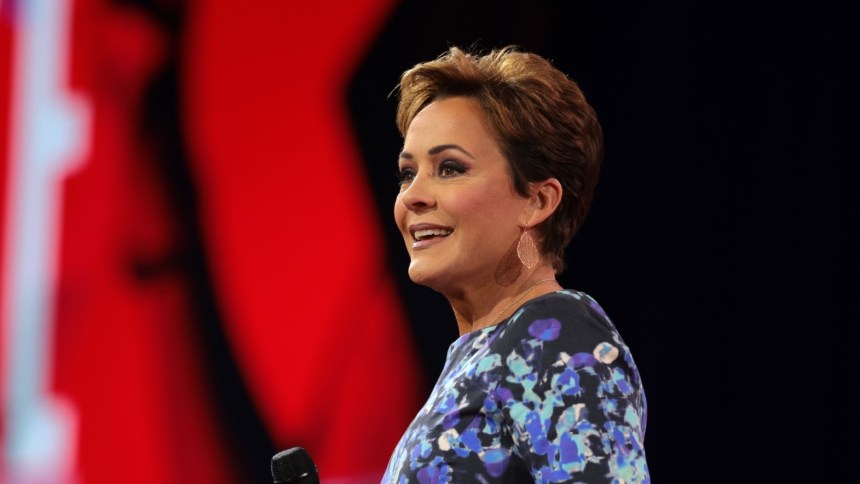
“The Court finds that these expansive delegations were an unlawful effort to transform Lake into the CEO of U.S. Agency for Global Media in all but name,” Lamberth wrote, adding that “Lake satisfies the requirements of neither the statute nor the Constitution.”
Lake called the decision “bogus” and vowed to appeal it.
Lee Saunders, president of the American Federation of State, County and Municipal Employees, the country’s largest trade union for public sector employees, called the ruling “a major victory for the federal workers who Kari Lake and this administration have been attempting to illegally fire for the last year.”
“Voice of America employees are dedicated public servants who provide hope for freedom to those living under oppressive governments around the world,” Saunders said. “Yet time and again, this administration has attempted to strip these proud AFSCME members of their collective bargaining freedoms and their jobs.”
Erum Salam is a breaking news reporter for MS NOW, with a focus on how global events and foreign policy shape U.S. politics. She previously was a breaking news reporter for The Guardian.
- SAVE America Act is ‘No. 1 priority,’ Trump tells Republicans
- Rising energy prices threaten cornerstone of GOP midterm pitch
- Thune: Talking filibuster ‘more complicated and risky’ than people realize
- Tennessee GOP Rep. Andy Ogles says Muslims ‘don’t belong’ in America
- ‘I share your outrage’: Democrats woo MAHA moms ahead of the midterms
- Oil climbs down from precipice as US crude reserve release ‘on the table’
- Honduras weighs shift in China-Taiwan ties as Trump pushes for US dominance in Latin America

- Capitol Agenda: Republicans face new Trump ultimatum
- House rejects Nancy Mace’s push for sexual harassment disclosure
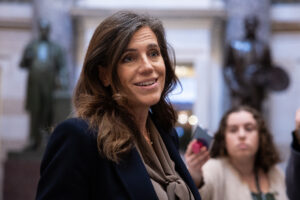
- ‘Substantial reason to believe’ Tony Gonzales had sex with his staffer, House probe finds

-

 The Dictatorship1 year ago
Luigi Mangione acknowledges public support in first official statement since arrest
-

 Politics1 year ago
Former ‘Squad’ members launching ‘Bowman and Bush’ YouTube show
-

 Politics1 year ago
Blue Light News’s Editorial Director Ryan Hutchins speaks at Blue Light News’s 2025 Governors Summit
-

 Politics1 year ago
Former Kentucky AG Daniel Cameron launches Senate bid
-

 The Dictatorship6 months ago
Mike Johnson sums up the GOP’s arrogant position on military occupation with two words
-

 The Dictatorship1 year ago
Pete Hegseth’s tenure at the Pentagon goes from bad to worse
-
Uncategorized1 year ago
Bob Good to step down as Freedom Caucus chair this week
-

 Politics11 months ago
Democrat challenging Joni Ernst: I want to ‘tear down’ party, ‘build it back up’