
The Dictatorship
Meet the MAGA world pastor who is trying to convert Trump on Ukraine

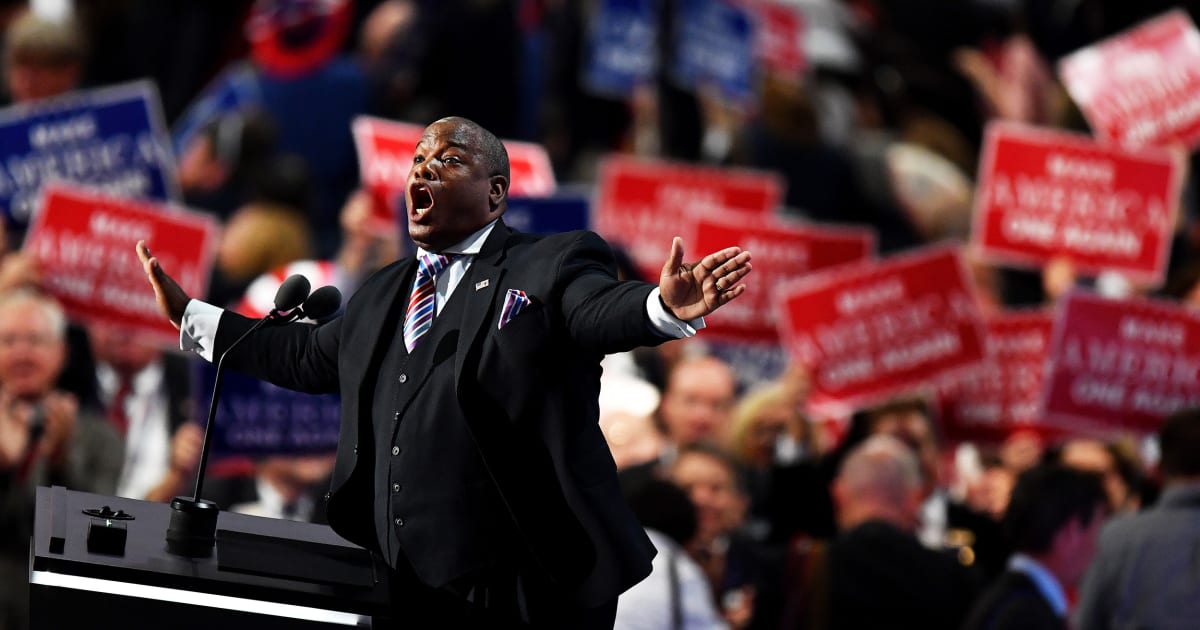
New battle lines are being drawn over what “America First” actually means, and Pastor Mark Burns has planted his flag on the side nobody saw coming.
Trump’s unofficial spiritual advisor is now meeting regularly with the State Department, pushing secondary sanctions on Russian oil and telling anyone who will listen that supporting Ukraine in its war against Russia is actually an America First position.
The televangelist-turned-Trump confidante didn’t plan to become Ukraine’s most unlikely champion. He once believed the Russian talking points, appearing on every media outlet that would have him arguing against U.S. involvement in the country. But after befriending Ukraine’s chief rabbi, Moshe Azman, Burns visited Kyiv earlier this year, where he witnessed firsthand the devastation wrought by the war.
Now, Burns is pointing fingers at the conservative media ecosystem that helped shape much of MAGA’s views on the war. Calling out Tucker Carlson, Fox News and the anti-Ukraine chorus of right-wing voices, Burns spoke in an interview of his past conviction that Ukraine was a Nazi-harboring, racist regime that persecuted Christians and was undeserving of American support.
That was all a lie, Burns now says.
“I believed the hype when they said Ukraine does not allow religious freedoms to happen…I believed that Russians were conservatives and believed in the conservative movement in America – all of that is a lie,” he told MS NOW.
“I believed the hype when they said Ukraine does not allow religious freedoms to happen… I believed that Russians were conservatives and believed in the conservative movement in America – all of that is a lie.”
Pastor Mark Burns, Trump’s unofficial spiritual advisor
Before his Ukraine conversion, Burns struck up a relationship with Trump in 2015 when he was invited to Trump Tower with other evangelical leaders to discuss Trump’s first presidential bid. Burns quickly became a campaign surrogate, electrifying crowds at rallies across the country with his sermon-like speeches.
The pastor, who founded the Now TV Network for Christians, was then tapped to serve on the campaign’s evangelical advisory board. His trajectory to unofficial “spiritual diplomat,” as he calls it, following several failed congressional bids in South Carolina, has kept him at the fringes of Trumpworld, one of the figures with varying influence on the president who is outside of the formal chain of command.
He’s not traveling as an official government emissary, but Burns says he’s in frequent touch with the State Department about Ukraine. He has not spoken directly with Secretary of State Marco Rubio, who was among the American negotiators who met with Ukrainian President Volodymyr Zelenskyy on Thursday to discuss the latest peace proposal, or Steve Witkoff, Trump’s special envoy who is deeply involved in efforts to broker peace.
The White House and the State Department did not respond to request for comment.
Unlike most MAGA acolytes, Burns finds himself at odds with Trump on one of the most consequential foreign policy questions of the moment. Administration figures sympathetic to Ukraine are dwindling: Trump’s special envoy for Ukraine, Keith Kellogg, is set to leave his post next year.
Burns’s Ukraine awakening started with his spring visit to the country, which took place shortly after the explosive Oval Office showdown between Trump, Vice President JD Vance and Zelenskyy. The pastor said the trip left him near tears as he toured flattened sites, saw evidence of what he described as Russian atrocities and heard harrowing testimony from religious leaders. He also felt remorse and regret for taking part in the campaign to amplify Russian narratives about the war and criticisms of Ukraine aid.
Burns started flooding Trump with images and reports from the ground. “I was sending him everything that I can see, and every image that I could see – and this is what’s really happening. These things are not showing up on Fox News,” Burns explained.
Since that trip, Burns has privately and publicly called on Trump to supply Ukraine with weapons. And after the release of the recent 28-point peace plan that echoed Russian talking points, Burns said he told Trump he “disagreed” with a proposal he viewed as “capitulating to Russia.”
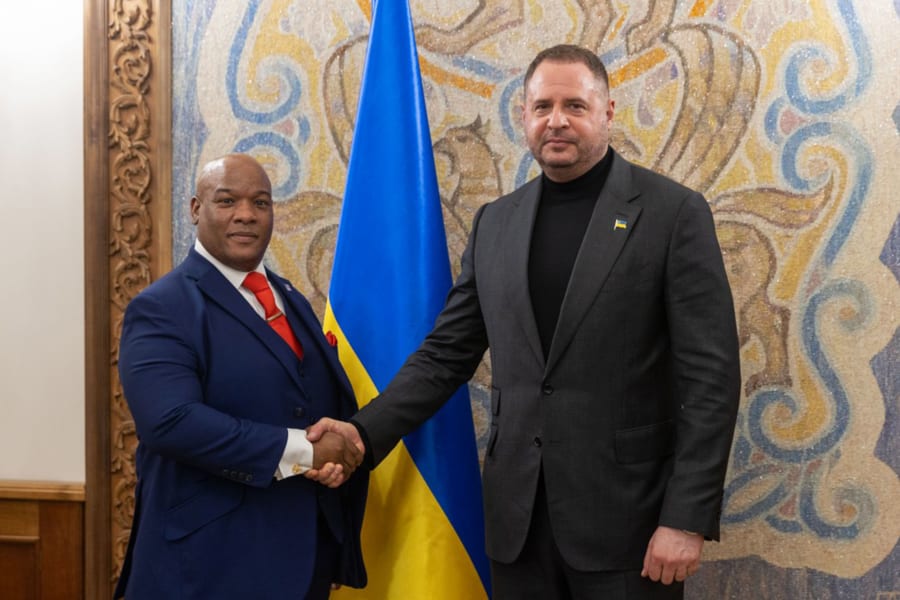
Pastor Mark Burns, left, and Head of the Office of the President of Ukraine Andriy Yermak on March 31, 2025, in Ukraine. The Presidential Office of Ukraine, www.president.gov.ua
But the Trump administration seems committed to pulling back from Ukraine, ramping up pressure on Zelenskyy to accept a plan that calls for Ukraine to withdraw from territory in the eastern Donbas region. Last week, in a document known as the National Security Strategythe administration stated the need for an “expeditious” peace deal, the re-establishment of “strategic stability with Russia,” and a retreat from European security interests.
Burns’ work for Ukraine was recognized this week by the U.S.-Ukraine foundation, a non-profit that advocates for close ties between the two countries. The way Burns sees it, support for Ukraine is an America First policy: arm Ukraine now, or risk sending American soldiers to fight a third World War in Europe at a later date, if Russian President Vladimir Putin triggers NATO’s mutual defense clause. It’s essentially the same argument establishment Republicans have made for decades about containing and deterring foreign adversaries – a worldview that Trump explicitly ran against.
Burns’ advocacy has started to extend beyond military aid to what he has described as a moral crisis that has also put him at odds with another one of the administration’s policies.
He’s now lobbying State on behalf of Ukrainians refugees who came to the U.S. legally to flee the war and are facing deportation as their visas expire and the Biden-era immigration program has been paused. Burns told MS NOW he met with State Department staff about the issue this week as roughly 260,000 people who fled the war and now live in the U.S. are in legal limbo, according to Reuters.
“We have a moral obligation to support the people – those who have entered into our nation legally,” Burns said.
“Locked up by ICE? This doesn’t make any sense to me,” Burns added. “They left with nothing. Many came here with just their book bag,” he said. “Now many can’t work and their visas are expiring. There’s no renewing these applications. It’s a 911 situation that is a moral obligation.”
Jacqueline Alemany is co-anchor of “The Weekend” and a Washington correspondent for MS NOW.


The Dictatorship
The Latest: US and Israel attack Iran as Trump says US begins ‘major combat operations’
Rice secures 80-74 win over Temple
Anthony’s 16 help Iona beat Manhattan 69-65
Folefac scores 23 as Siena beats Rider 76-61
SnoCountry Mountain Reports
Gulf States Sportswatch Daily Listings
Quinnipiac wins 67-63 against Canisius
President Donald Trump called the celebrations in the streets of Iran “fantastic” following the killing of the country’s supreme leaderAyatollah Ali Khamenei, during a brief phone call with MS NOW on Saturday night.
Trump told MS NOW that he’s seen the celebrations in Iran and in parts of America, after joint U.S.-Israel airstrikes killed Khamenei.
“I think it’s fantastic,” the president said of the celebrations. “I’ve seen them in Los Angeles, also — celebrations.”
“I’ve seen them in Los Angeles, celebrations, celebrations,” Trump said, accentuating the point.
The interview took place roughly 11 hours before the Pentagon announced the first U.S.military casualties of the war. U.S. Central Command said three American service members were killed in action, and five others had been seriously wounded.
Revelry broke out in Iran, the United States and across the globe on Saturday, with Iranians cheering the death of Khamenei, who led Iran with an iron fist for more than 30 years, cracking down on dissent at home and maintaining a hostile posture with the U.S. and Israel.
Asked how he was feeling after the strike on Khamenei, whose death was confirmed just a few hours earlier, Trump said it was a positive development for the United States.
“I think it was a great thing for our country,” he said.
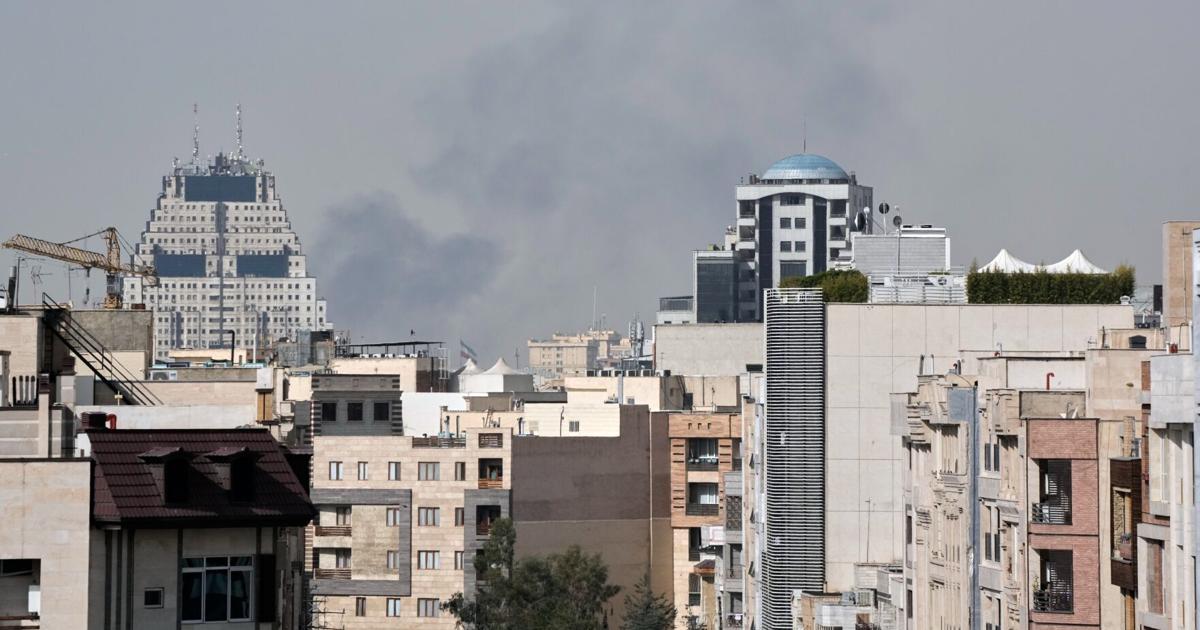
The call — which lasted less than a minute — came after a marathon day, which began in the wee hours of the morning with strikes on Iran and continued with retaliatory ballistic missiles from Tehran targeting Israel and countries in the Middle East region that host U.S. military bases.
The day ended with few answers from the White House to increasing questions about the long-term future of Iran, how long the U.S. will continue operations there, and the metastasizing ramifications it could have on the world stage. In fact, the president has done little to convince the public to back his Iran operation, nor to explain why the country is at war without the authorization of Congress.
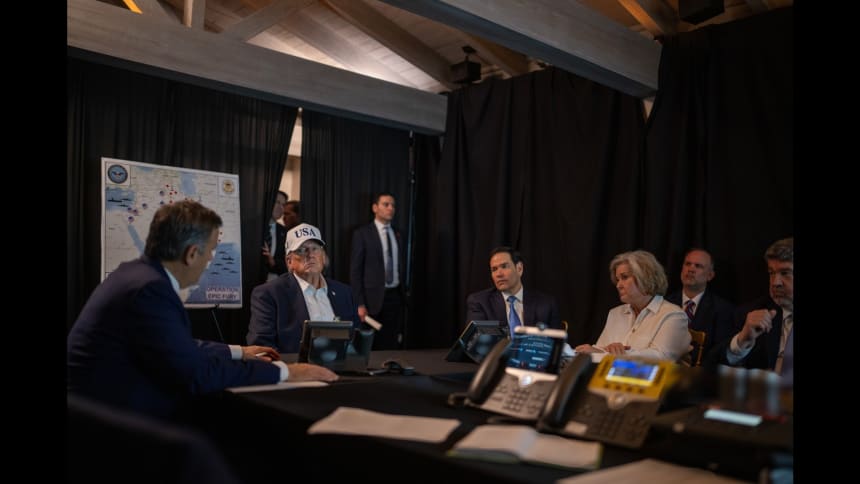
On perhaps the most consequential day of his second term, Trump did not give a formal address to the public, nor did he hold a press conference. Instead, he stayed out of public view at Mar-a-Lago, his private club and residence in Palm Beach, Florida, where he attended a $1 million-per-plate fundraising dinner on Saturday evening.
But throughout the day, Trump took calls from reporters at various new outlets, including from MS NOW at around 11 p.m. ET.
The strikes, known formally as “Operation Epic Fury,” came after months of talks over Iran’s nuclear program, and warnings from Trump that he would strike Tehran if they did not agree to his often shifting conditions.
At 2:30 a.m. ET on Saturday, Trump posted a video to social media announcing the operation, which he said was designed to “defend the American people by eliminating imminent threats from the Iranian regime, a vicious group of very hard, terrible people.”
“The lives of courageous American heroes may be lost and we may have casualties. That often happens in war,” Trump said when he announced the strikes on Iran.
Mychael Schnell is a reporter for MS NOW.
Laura Barrón-López covers the White House for MS NOW.
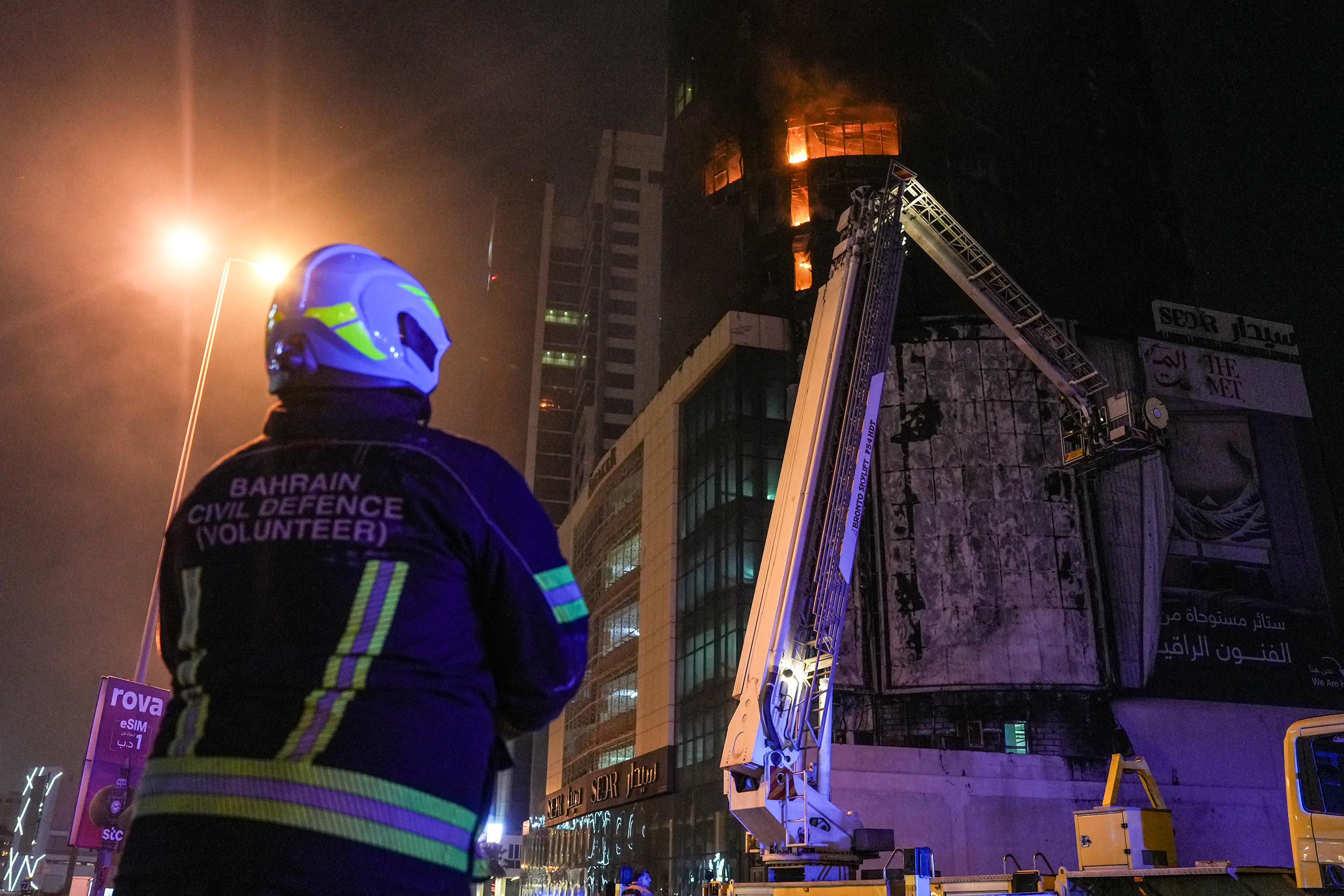
Three U.S. service members were killed and five seriously wounded as the United States and Israel launched attacks on Iran, U.S. Central Command said Sunday morning.
The three service members — the first Americans to die in the conflict — were killed in Kuwait, a U.S. official said.
Several others sustained minor injuries from shrapnel and concussions but will return to duty, the Pentagon said. The identities of the dead and wounded have not been made public.
“The situation is fluid, so out of respect for the families, we will withhold additional information, including the identities of our fallen warriors, until 24 hours after next of kin have been notified,” Central Command said in a statement.
The U.S. and Israel launched sweeping airstrikes on Iranon Saturday, killing Ayatollah Ali Khameneithe country’s supreme leader for nearly four decades. Iran has vowed retaliation and hit several U.S. military bases across the region.
According to U.S. Central Command, Iran has also attacked more than a dozen locations, including airports in Dubai, Kuwait and Iraq, and residential neighborhoods in Israel, Bahrain and Qatar.
Israel Defence Forces said Sunday that Iran fired missiles toward the neighborhood of Beit Shemesh, killing civilians. The missile hit a synagogue, killing at least nine people, according to the Associated Press.
AP reported that authorities said at least 22 people were killed and 120 others wounded when demonstrators tried to attack the U.S. Consulate in Karachi in Pakistan.
The violence came after the United States and Israel attacked Irankilling its Supreme Leader Ayatollah Ali Khamenei. Police and officials at a hospital in Karachi said that at least 50 people were also wounded in the clashes and some of them were in critical condition.
On Sunday, Israel Defence Forces said on X, “It’s official: All senior terrorist leaders of Iran’s Axis of Terror have been eliminated.”
President Donald Trump told CNBC’s Joe Kernen on Sunday that the operation in Iran is “moving along very well, very well — ahead of schedule.”
In a phone call with MS NOW late Saturday, Trump called the celebrations in the streets of Iran “fantastic” following the killing of Khamenei.
Confirming Khamenei’s death, Prime Minister Benjamin Netanyahu said Sunday: “We have eliminated the tyrant Khamenei and dozens of senior figures of the oppressive regime. Our forces are now striking at the heart of Tehran with increasing intensity, set to escalate further in the coming days.”
The exchange of hostilities comes after weeks of fragile negotiations between the U.S. and Iran over Iran’s nuclear operations.
Esmail Baghaei, a spokesperson for Iran’s foreign ministry, called the joint U.S-Israeli attack an “unprovoked, unwarranted act of aggression” in an interview with MS NOW’s Ali Velshi on Sunday. He said Iran’s nuclear program has been used a pretext for the attack.
“We have every right to defend our people because we have come under this egregious act of aggression,” Baghaei said.
Trump announced the attack early Saturday during a short video posted on his Truth Social account. He called for an end to the Iranian regime and urged Iranians to “take back the country.”
Negotiators and mediators from Oman were supposed to meet in Vienna on Monday to discuss the technical aspect of a potential nuclear deal.
Rep. Eric Swawell, D-Calif., told MS NOW’s Alex Witt on Sunday afternoon that the president’s military operation in Iran was illegal, echoing what many lawmakers have said in citing that under the U.S. Constitution only Congress can declare war.
“This is a values argument. We don’t just lob missiles into other countries when we are not provoked, attacked and have no plan for what comes next,” he said.
“We have been shown zero evidence that anything changed in Iran from last year when the president did not come to Congress and took a strike on Iran,” Swalwell said.
In June the U.S. struck three Iranian nuclear sites. Trump said the facilities had been “completely and totally obliterated.” But experts and U.S. officials said the sites were damaged but not destroyed.
Erum Salam is breaking news reporter for MS NOW, with a focus on how global events and foreign policy shape U.S. politics. She previously was a breaking news reporter for The Guardian and is a graduate of Texas A&M University and the Columbia University Graduate School of Journalism. Follow her on X, Bluesky and Instagram.
Akayla Gardner is a White House correspondent for MS NOW.
-

 The Dictatorship1 year ago
Luigi Mangione acknowledges public support in first official statement since arrest
-

 Politics1 year ago
Former ‘Squad’ members launching ‘Bowman and Bush’ YouTube show
-

 Politics1 year ago
Blue Light News’s Editorial Director Ryan Hutchins speaks at Blue Light News’s 2025 Governors Summit
-

 The Dictatorship6 months ago
Mike Johnson sums up the GOP’s arrogant position on military occupation with two words
-

 Politics1 year ago
Former Kentucky AG Daniel Cameron launches Senate bid
-

 The Dictatorship1 year ago
Pete Hegseth’s tenure at the Pentagon goes from bad to worse
-
Uncategorized1 year ago
Bob Good to step down as Freedom Caucus chair this week
-

 Politics11 months ago
Democrat challenging Joni Ernst: I want to ‘tear down’ party, ‘build it back up’