
The Dictatorship
Luigi Mangione acknowledges public support in first official statement since arrest


Luigi Mangionethe suspect in the killing of UnitedHealthcare CEO Brian Thompson, issued his first public statement on Friday to thank supporters for sending him letters while he is being held at a correctional facility in Brooklyn, New York.
“I am overwhelmed by — and grateful for — everyone who has written me to share their stories and express their support,” Mangione said, adding that he has received mail from around the world. “While it is impossible for me to reply to most letters, please know that I read every one that I receive. Thank you again to everyone who took the time to write.”
Mangione, 26, released his statement on a website that his legal team created to provide updates on his case and “dispel misinformation,” it said. The statement is his first official public remarks since he was arrested on Dec. 9.
Mangione is accused of fatally shooting Thompson in the back on Dec. 4 in midtown Manhattan. Police have said it was a targeted attack on the CEO. A manhunt for a suspect ensued, and Mangione was arrested in Pennsylvania days later.
Thompson’s killing ignited a national debate about America’s broken health care system and exposed the public’s anger toward the health insurance industry for its role in it. Many people have also implicitly and explicitly expressed support for Mangione, which has in turn prompted backlash over what critics call the hero worship of an alleged killer.
But support for Mangione among the public persists. A group raising money for his legal defense said on Feb. 10 that Mangione has accepted nearly $300,000 in donations. His attorney, Karen Friedman Agnifilo, confirmed to Rolling Stone that Mangione is aware of the fund and “plans on utilizing it to fight all three of the unprecedented cases against him.”
As of Saturday afternoon, the fundraiser has collected more than $430,000.
Mangione faces federal charges ofmurder through use of a firearm, stalking and a firearms offense. He was also indicted in New York on murder and terror chargesand in Pennsylvania on two felony and three misdemeanor charges. He has pleaded not guilty to the New York chargesand his attorneys have said he will similarly plead not guilty to his other federal and state charges.

Clarissa-Jan Lim is a breaking/trending news blogger for BLN Digital. She was previously a senior reporter and editor at BuzzFeed News.


The Dictatorship
Trump uses Iran war address to urge an increasingly skeptical electorate to give him a bit more time
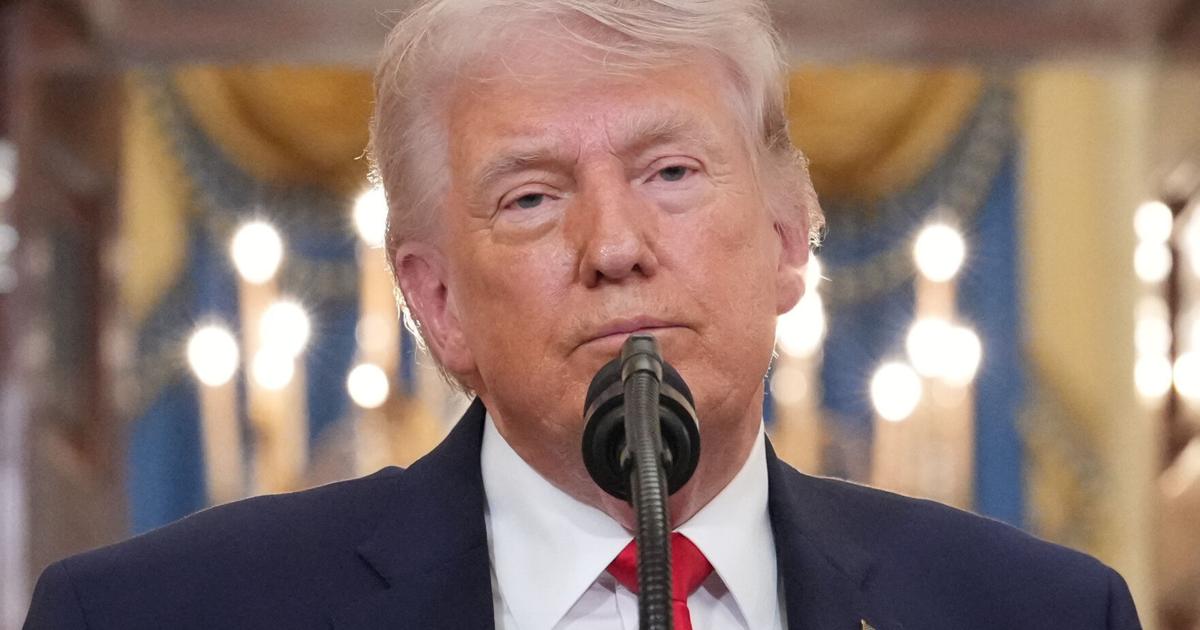
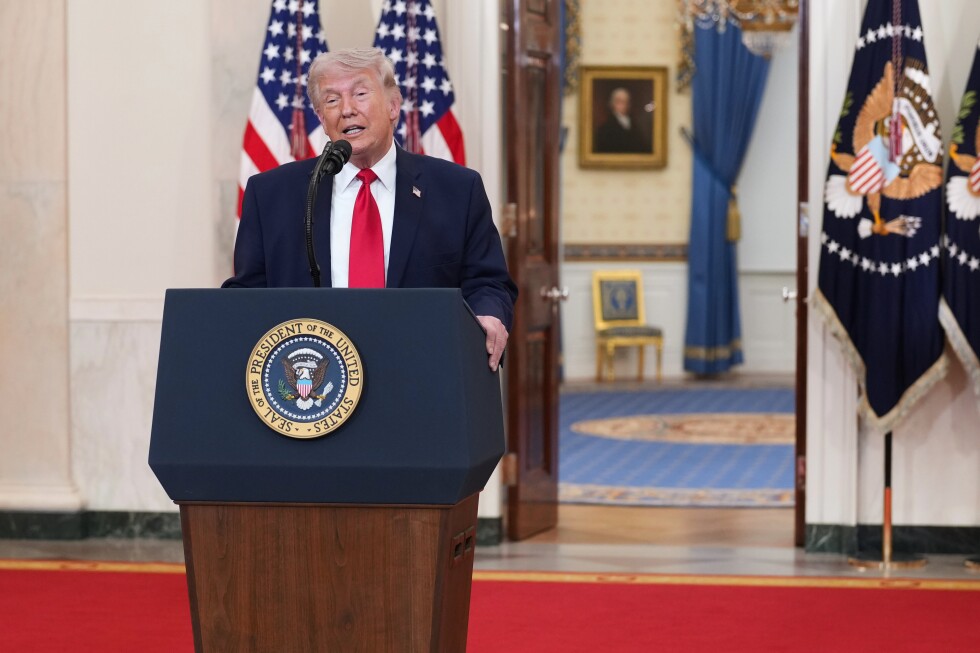
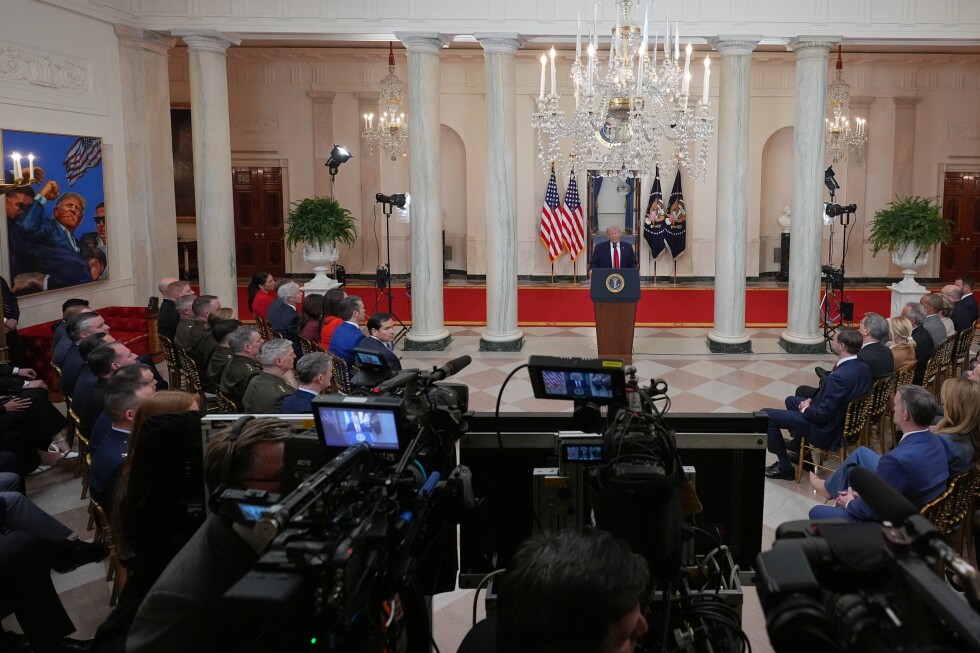
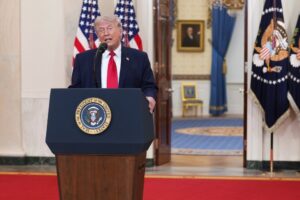
WASHINGTON (AP) — President Donald Trump used his first major address since launching his war in Iran to assure Americans that all of his military objectives will be completed “shortly” and urge an increasingly skeptical electorate to give him a little bit more time.
Trump in his Wednesday evening speech dialed back the bluster that’s dominated his rhetoric in recent days as world markets convulse and a badly battered Iran is still landing some effective blows on Gulf neighbors’ infrastructure and U.S. bases.
But the Republican president’s promise to “finish the job” hardly built confidence with a jittery market as oil prices surged and Asian stocks fell as he vowed that the U.S. will continue to hit Iran very hard.
He offered no detail about the state of negotiations with Iran that could bring about a promised endgame that he insists could come in a matter of weeks. There was also no overt lashing out at NATO allies for failing to fall in line and help him reopen the critical Strait of Hormuz waterway — something White House officials had said would be a prominent part of his roughly 20-minute address.
The U.S. will continue to hit Iran hard for the next two or three weeks, he said, without saying how much longer the war would last. But he offered a plea to Americans to show a little patience.
“We are in this military operation, so powerful, so brilliant, against one of the most powerful countries for 32 days, and the country has been eviscerated and essentially is really no longer a threat,” Trump said. “This is a true investment in your children and your grandchildren’s future. The whole world is watching, and they can’t believe the power, strength and brilliance.”
Trump finds himself not only negotiating with an enemy that refuses to throw in the towel but also dealing with an American tolerance for a conflict that’s being stretched.
Most Americans believe recent U.S. military action against Iran has gone too far, and many are worried about affording gasoline, according to an AP-NORC poll conducted in mid-March, a couple of weeks after the war started. While Trump is deploying more warships and troops to the Middle East, about 59% of Americans say U.S. military action in Iran has been excessive.
Meanwhile, 45% are “extremely” or “very” concerned about being able to afford gas in the next few months, up from 30% in an AP-NORC poll conducted shortly after Trump won reelection with promises that he would improve the economy and lower the cost of living.
Americans, Trump noted, have certainly shown patience during times of war.
“American involvement in World War I,” he said, “lasted one year, seven months and five days. World War II lasted for three years, eight months and 25 days. The Korean War lasted for three years, one month and two days. The Vietnam War lasted for 19 years, five months and 29 days. Iraq went on for eight years, eight months and 28 days.”
Hours before his address, Trump seemed to reflect on the domestic pressure he’s feeling to wrap up the war.
Speaking at a private lunch at the White House to mark Easter, Trump argued that the U.S. could “very easily” use this moment to take Iran’s oil. It is “unfortunate,” he lamented, that there did not seem to be patience among the American people for such an effort.
“They want to see it end,” he said. He added, “People in the country sort of say, ‘Just win. You’re winning so big. Just win. Come home.’ And I’m OK with that, too.”
Democrats lash at Trump for failing to offer a coherent argument for conflict
Sen. Chris Murphy, D-Conn., said Trump’s speech was “grounded in a reality that only exists in Donald Trump’s mind.”
The president, Democrats fumed, offered no plan for how he would go about reopening Hormuz, the critical waterway for oil tankers that a battered Iran has effectively choked off even though Trump claims it’s been defeated.
For allies worried about a global economy that’s been rattled by rising oil prices, Trump suggested they “buy oil from the United States of America” and “build up some delayed courage” and help the U.S. secure the strait. Trump made no attempt to answer his European critics who say he entered his war of choice against Iran without consulting global allies but is now expecting the world to help him fix the unintended damage that it has caused.
“We are losing this war,” Murphy added. “We cannot destroy all their missiles or drones, nor their nuclear program. Iran projects more power in the region than they did before the war, especially if they now permanently control the Strait of Hormuz. We are spending billions we don’t have and losing American lives in a war that is destabilizing the world and making us look feckless.”
President steers clear of suggesting ground troops deployment could be coming
Trump offered cautious optimism that those now in power in Iran after more than a month of U.S. and Israeli strikes are “less radical and much more reasonable” with much of the pre-war Islamic Republic’s hierarchy taken out. He didn’t explicitly mention a Monday deadline he has set for Iran to open the strait or face attacks from U.S. forces on its energy infrastructure, though he made clear that he remains open to targeting the heartbeat of Tehran’s economy.
“If there is no deal, we are going to hit each and every one of their electric generating plants very hard and probably simultaneously,” Trump said. “We have not hit their oil, even though that’s the easiest target of all, because it would not give them even a small chance of survival or rebuilding. But we could hit it, and it would be gone.”
Trump also notably did not signal that he’s making any preparation for a ground invasion by American troops.
He seemed to steer away from the possibility of sending ground troops to secure Iran’s nearly 1,000 pounds (450 kilograms) of highly enriched uraniumsaying it “would take months” for Iran to get to it as it’s buried under the rubble created by last year’s American bombing campaign of Iran’s nuclear sites.
Trump has offered shifting reasons for launching the war, but he has been consistent in articulating that a primary objective in joining Israel in the military action is ensuring that Iran will “never have a nuclear weapon.”
But over the course of the conflict, he has been more circumspect about how far he’s willing to go to follow through on his pledge to destroy Iran’s weapons program once and for all, including seizing or destroying the near-bomb-grade nuclear material that Iran possesses.
“We have it under intense satellite surveillance and control,” Trump said in his prime-time speech. “If we see them make a move, even a move for it, we’ll hit them with missiles very hard again. We have all the cards. They have none.”
___
Associated Press writers Collin Binkley, Michelle L. Price and Konstantin Toropin contributed to this report.
NEW YORK (AP) — Stocks shook off an early stumble to finish with slim gains on Wall Street Thursday and close out their first winning week since the start of the Iran war.
The early decline for stocks was driven by a surge in oil prices following a national address late Wednesday from President Donald Trump. He vowed the U.S. will continue to attack Iran and failed to offer a clear timetable for ending the conflict in the Middle East. Oil prices eased slightly during the day, but still remain elevated well above $100 per barrel.
The S&P 500 rose 7.37 points, or 0.1%, to 6,582.69. Several days of solid gains this week helped the benchmark index notch a 3.4% gain for the week. That’s the first weekly gain since the conflict started for index at the heart of many 401(k) accounts. Stock markets will be closed for Good Friday.
The Dow Jones Industrial Average fell 61.07 points, or 0.1%, to 46,504.67. The Nasdaq composite rose 38.23 points, or 0.2%, to 21,879.18. Both indexes also notched weekly gains.
A barrel of U.S. crude oil rose 11.3% to $111.54, though prices rose close to $114 at one point during the day. The price of Brent crude, the international standard, jumped 7.8% to $109.03 per barrel. Crude oil prices have been the main force behind the sharp swings for stocks globally. Shipping traffic has been severely curtailed in the Strait of Hormuzwhere a fifth of the world’s traded oil passes through during peacetime.
Crude oil prices had been sliding back toward $100 per barrel prior to Trump’s address on Wednesday. The U.S. only relies on the Persian Gulf for a fraction of the oil it imports, but oil is a commodity and prices are set in a global market. A disruption anywhere affects prices everywhere.
Stocks have been broadly sliding since the war began, with indexes often rising and falling sharply along with statements from Trump about the direction of the war. Just on Monday, the S&P 500 briefly neared a 10% drop from its record, a steep-enough fall that professional investors have a name for it: a “correction. The index gained ground Tuesday and Wednesday on hope that the war could end soon.
“For markets, a prolonged conflict increases the risk of sustained pressures on inflation, global growth, interest rates, and equity valuations,” wrote Adam Turnquist, chief technical strategist for LPL Financial, in a note to investors.
Airlines and other travel-related companies were among the biggest losers on Thursday. United Airlines fell 3% and Carnival shed 3.5%.
Tesla fell 5.4% after a report showing that sales over the past three months fell short of analysts’ expectations.
Several big technology stocks gained ground to help counter losses elsewhere in the market. Intel jumped 4.9% and Advanced Micro Devices rose 3.5%.
Treasury yields remained relatively steady in the bond market. The yield on the 10-year Treasury fell to to 4.30% from 4.32%.
Wall Street is worried that higher energy prices are adding to already stubbornly high inflation. Rising fuel prices take a bigger chunk out of consumers’ wallets in several ways. Directly, gasoline prices in the U.S. have surged 36 percent from a month ago to average $4.08 per gallon, according to the auto club AAA.
Indirectly, rising fuel prices tend to make a wide range of services and goods more expensive. Flights become more expensive as airlines raise ticket prices to offset rising fuel costs. Consumer goods become more expensive as shipping and transportation costs rise.
Inflation has been stubbornly above the Federal Reserve’s 2% target. The war and its corresponding surge in energy prices effectively pushes inflation higher and that has dashed hopes for the Fed to cut interest rates. Wall Street had hoped for the central bank to cut rates in order to help offset a weakening job market. Lower interest rates could help stimulate the economy by lowering borrowing costs, but they also risk worsening inflation.
Traders came into 2026 forecasting several cuts to the Fed’s benchmark interest rate, which influences rates for mortgages and other loans. They are now expecting the benchmark rate to remain steady this year.
The war has also caused an anomaly of sorts in the oil market. Brent crude oil futures are typically priced higher than those for U.S. crude oil, but the war flipped that on its head. Because of the supply constraints, the sooner a buyer needs a barrel of oil, the more they’ll have to pay. Right now, the most actively traded futures contract for U.S. crude oil is for delivery in May, while the Brent futures contract is for delivery in June. That shorter timeframe is why U.S. crude is trading for more than Brent.
Tom Kloza, chief energy adviser at Gulf Oil, points out that a buyer who needs oil immediately will pay about $3 to $5 a barrel above the futures price for U.S. crude and an even steeper premium for Brent.
___
An earlier version of this story incorrectly reported the weekly percentage change for the S&P 500.
___
Associated Press journalists Chan Ho-Him and Matt Ott contributed to this report.
WASHINGTON (AP) — President Donald Trump mischaracterized core elements of the U.S. economy and stretched the facts in claiming to have toppled Iran’s government as he addressed the nation Wednesday night in a time of soaring gas prices and persistent inflation.
Here’s a look at some of his statements:
‘No inflation’

A woman carries reuable shopping bags to her car on Monday, March 16, 2026, in Portland, Ore. (AP Photo/Jenny Kane)
A woman carries reuable shopping bags to her car on Monday, March 16, 2026, in Portland, Ore. (AP Photo/Jenny Kane)
CLAIM: “We were a dead and crippled country after the last administration and made it the hottest country anywhere in the world by far, with no inflation.’’
THE FACTS: This is a standard Trump claim. But the economy he inherited was far from weak. In 2024, the last year of Joe Biden’s presidency, American gross domestic product grew 2.8%, adjusted for inflation, faster than any wealthy country in the world except Spain. It also expanded at a healthy rate from 2021 through 2023. Last year, in fact, U.S. economic growth decelerated under Trump to a still-respectable 2.1%, partly because the 43-day federal government shutdown slashed growth from October through December.
Nor has inflation vanished. The Labor Department’s consumer price index was up 2.4% in February compared with a year earlier. It’s still above the Federal Reserve’s 2% target.
‘Regime change’

Pro-government supporters wave national flags as one of them holds a picture of the Supreme Leader Ayatollah Mojtaba Khamenei during a rally in a square in western Tehran, Iran, Wednesday, March 25, 2026. (AP Photo/Vahid Salemi)
Pro-government supporters wave national flags as one of them holds a picture of the Supreme Leader Ayatollah Mojtaba Khamenei during a rally in a square in western Tehran, Iran, Wednesday, March 25, 2026. (AP Photo/Vahid Salemi)
CLAIM: “Regime change was not our goal. We never said regime change, but regime change has occurred because of all of their original leaders’ death. They’re all dead. The new group is less radical and much more reasonable.”
THE FACTS: Trump’s depiction of the people now in charge in Iran, after scores of senior leaders were killed in the war, stretches credulity.
Israel’s airstrike at the start of the war Feb. 28 killed Supreme Leader Ayatollah Ali Khamenei. Iran then installed his son, Mojtaba, who is viewed as even more hard-line, as supreme leader. The monthlong war has seen Iran’s paramilitary Revolutionary Guard grow even more ascendant. Iran’s civilian leadership — broadly untouched by the war — acknowledges it has little command and control over the Guard’s actions.
Both Trump and Israel have signaled they would tell the Iranian people to rise up at a point in the war to take back their government. That hasn’t happened.
Protester deaths

In this frame grab from footage circulating on social media shows protesters dancing and cheering around a bonfire as they take to the streets despite an intensifying crackdown as the Islamic Republic remains cut off from the rest of the world, in Tehran, Iran, Friday, Jan. 9, 2026.(UGC via AP)
In this frame grab from footage circulating on social media shows protesters dancing and cheering around a bonfire as they take to the streets despite an intensifying crackdown as the Islamic Republic remains cut off from the rest of the world, in Tehran, Iran, Friday, Jan. 9, 2026.(UGC via AP)
CLAIM: “This murderous regime also recently killed 45,000 of their own people who were protesting in Iran.”
THE FACTS: A death toll that high has not been verified.
The U.S.-based group Human Rights Activists News Agency, which has been accurate in multiple rounds of demonstrations in Iran, said it confirmed the deaths of just over 7,000 people in the nationwide protests that reached their apex in January. However, it said thousands more may have been killed, though internet and communication restrictions in Iran since have made verifying the reports incredibly difficult. It put total arrests at more than 53,000.
Iran’s government, which long has played down death tolls in other unrest, offered its only toll on Jan. 21, saying 3,117 people were killed.
Trump previously said that at least 32,000 people were killed in January protests, which is at the far end of estimates offered by activists for the death toll. He offered no evidence to support those figures.
This is how the AP reports on the death toll from Iran’s protests.
Middle East oil

Marcus Hopkins, a street performer, does a backflip in front of advertised gas prices Monday, March 9, 2026, in Los Angeles. (AP Photo/Damian Dovarganes)
Marcus Hopkins, a street performer, does a backflip in front of advertised gas prices Monday, March 9, 2026, in Los Angeles. (AP Photo/Damian Dovarganes)
CLAIM: “We’re now totally independent of the Middle East, and yet we are there to help. We don’t have to be there. We don’t need their oil.’’
THE FACTS: It’s true that the United States is by far the world’s leading producer of oil and relies on the Persian Gulf for a fraction (8.5% in 2025) of the oil it imports. But, as is obvious at U.S. gas pumps, that doesn’t mean it is unaffected by the turmoil in the Middle East.
Oil is a commodity, “the price of which is set in a global market,’’ University of Chicago energy analyst Sam Ori said before Trump’s speech, “and a disruption anywhere affects the price everywhere.’’ Which is why the price of benchmark U.S. crude oil is up more than 50% since the Iran war began, and the average price of U.S. gallon of gasoline cracked $4 a gallon this week.
Inflated investments

President Donald Trump speaks at the Future Investment Initiative Institute’s summit Friday, March 27, 2026, in Miami Beach, Fla. (AP Photo/Mark Schiefelbein)
President Donald Trump speaks at the Future Investment Initiative Institute’s summit Friday, March 27, 2026, in Miami Beach, Fla. (AP Photo/Mark Schiefelbein)
CLAIM: Trump cited “record-setting setting investments coming into the United States, over $18 trillion.”
THE FACTS: Trump has presented no evidence that he’s secured this much domestic or foreign investment in the U.S. Based on statements from various companies, foreign countries and the White House’s own website, that figure appears to be exaggerated, highly speculative and far higher than the actual sum. The White House website offers a far lower number, $10.5 trillion, and that figure appears to include some investment commitments made during the Biden administration.
A study published in January raised doubts about whether more than $5 trillion in investment commitments made last year by many of America’s biggest trading partners will actually materialize and questions how it would be spent if it did.
Cash to Iran

President Barack Obama speaks about the nuclear deal with Iran, Wednesday, Aug. 5, 2015, at American University in Washington. The president said the nuclear deal with Iran builds on the tradition of strong diplomacy that won the Cold War without firing any shots. (AP Photo/Carolyn Kaster)
President Barack Obama speaks about the nuclear deal with Iran, Wednesday, Aug. 5, 2015, at American University in Washington. The president said the nuclear deal with Iran builds on the tradition of strong diplomacy that won the Cold War without firing any shots. (AP Photo/Carolyn Kaster)
CLAIM: “Obama gave them $1.7 billion in cash.”
THE FACTS: This misleading claim that President Barack Obama handed over cash to the Iranians dates back to Trump’s first term and persists in his second.
The U.S. treasury did pay Iran roughly that amount under Obama. But it was not a gift. Rather, it was money owed to the Iranians since the 1970s, when they paid the U.S. $400 million for military equipment that was never delivered because the government was overthrown and diplomatic relations ruptured.
After the 2015 deal to restrain Iran’s nuclear development, the U.S. and Iran announced they had settled the matter, with the U.S. agreeing to pay the $400 million principal in cash, along with about $1.3 billion in interest. Trump later took the U.S. out of the deal.
__
Gambrell reported from Dubai, United Arab Emirates.
___
Find AP Fact Checks here: https://apnews.com/APFactCheck.
- Trump admin moves Title X family planning program away from contraception, towards conception
- NATO’s Rutte to meet with Trump at White House amid attacks on alliance
- US military launches rescue mission for pilots who crashed in Iran
- Trump wants the world to buy more US oil. He might regret it.
- Trump asks Congress to supersize military budget, slash domestic programs
- Trump uses Iran war address to urge an increasingly skeptical electorate to give him a bit more time
- Oil rises and stocks fall after Trump’s address
- FACT FOCUS: False claims from Trump in address to the nation
- Trial exposes secret Venezuela lobbying involving top Trump officials
- Why Republicans aren’t rushing to save Trump’s ballroom
-

 Politics1 year ago
Former ‘Squad’ members launching ‘Bowman and Bush’ YouTube show
-

 Politics1 year ago
Former Kentucky AG Daniel Cameron launches Senate bid
-

 Politics1 year ago
Blue Light News’s Editorial Director Ryan Hutchins speaks at Blue Light News’s 2025 Governors Summit
-

 The Dictatorship7 months ago
Mike Johnson sums up the GOP’s arrogant position on military occupation with two words
-

 The Dictatorship1 year ago
Pete Hegseth’s tenure at the Pentagon goes from bad to worse
-
Uncategorized1 year ago
Bob Good to step down as Freedom Caucus chair this week
-

 Politics12 months ago
Democrat challenging Joni Ernst: I want to ‘tear down’ party, ‘build it back up’
-

 The Josh Fourrier Show1 year ago
DOOMSDAY: Trump won, now what?