
Politics
Little debate that Pennsylvania is key as Harris and Trump prep for Philly showdown
HARRISBURG, Pa. (AP) — When Donald Trump and Kamala Harris meet onstage Tuesday night in Philadelphia, they’ll both know there’s little debate that Pennsylvania is critical to their chances of winning the presidency. The most populous presidential swing state has sided with the winner of the past two elections, each time by just tens of

HARRISBURG, Pa. (AP) — When Donald Trump and Kamala Harris meet onstage Tuesday night in Philadelphia, they’ll both know there’s little debate that Pennsylvania is critical to their chances of winning the presidency.
The most populous presidential swing state has sided with the winner of the past two elections, each time by just tens of thousands of votes. Polling this year suggests Pennsylvania will be close once more in November.
A loss in the state will make it difficult to make up the electoral votes elsewhere to win the presidency. Trump and Harris have been frequent visitors in recent days — Harris plans to return on Friday — and the former president was speaking in Butler County on July 14 when he was the target of an assassination attempt.
The stakes may be especially high for Harris: No Democrat has won the White House without Pennsylvania since 1948.
Pennsylvanians broke a string of six Democratic victories in the state when they helped propel Trump to victory in 2016, then backed native son Joe Biden in the 2020 race against Trump.
“They say that ‘If you win Pennsylvania, you’re going to win the whole thing,’” Trump told a crowd in Wilkes-Barre’s Mohegan Arena in August.
Republicans are looking to blunt Trump’s unpopularity in Pennsylvania’s growing and increasingly liberal suburbs by criticizing the Biden administration’s handling of the economy. They hope to counter the Democrats’ massive advantage in early voting by encouraging their base to vote by mail.
Harris is looking to reassemble the coalition behind Biden’s winning campaign, including college students, Black voters and women animated by protecting abortion rights.
Democrats also say it will be critical for Harris to win big in Philadelphia — the state’s largest city, where Black residents are the largest group by race — and its suburbs, while paring Trump’s large margins among white voters across wide swaths of rural and small-town Pennsylvania.
The debate is set for the National Constitution Center in Philadelphia. The city is a Democratic stronghold where Trump in 2020 notoriously said “ bad things happen,” one of his baseless broadsides suggesting that Democrats could only win Pennsylvania by cheating.
Biden flipped Pennsylvania in 2020 not just by winning big in Philadelphia, but by running up bigger margins in the heavily populated suburbs around Philadelphia and Pittsburgh. He also got a boost in northeastern Pennsylvania in the counties around Scranton, where he grew up.
Ed Rendell, a former two-term Democratic governor who was hugely popular in Philadelphia and its suburbs, says Harris can do better than Biden in the suburbs.
“There’s plenty of votes to get, a Democrat can get a greater margin in those counties,” Rendell said.
Lawrence Tabas, chair of Pennsylvania’s Republican Party, said Trump can make gains there, too. The GOP’s polling and outreach shows that the effect of inflation on the economy is a priority for those suburbanites, he said, and that the issue works in the party’s favor.
“A lot of people are really now starting to say, ‘Look, personalities aside, they are what they are, but we really need the American economy to become strong again,’” Tabas said.
Rendell dismisses that claim. He said Trump is veering off script and saying bizarre things that will ensure he gets a smaller share of independents and Republicans in the suburbs than he did in 2020.
“He’s gotten so weird that he’ll lose a lot of votes,” Rendell said.
Harris has championed various steps to fight inflation, including capping the cost of prescription drugs, helping families afford child care, lowering the cost of groceries and offering incentives to encourage home ownership.
Pennsylvania’s relatively stagnant economy usually lags the national economy, but its unemployment rate in July was nearly a full percentage point lower. The state’s private sector wage growth, however, has slightly lagged behind the nation’s since Biden took office in 2021, according to federal data.
Meanwhile, Democrats are hoping the enthusiasm since Biden withdrew from the race and Harris stepped in will carry through Election Day in November.
For one, they hope she will do better with women and Black voters, as the first female presidential nominee of Black heritage. Rendell said he is more optimistic about Harris’ chances to win Pennsylvania than he was with Biden in the race.
“I think we’re the favorite now,” Rendell said.
The debate takes place before voting starts — in Pennsylvania and everywhere else.
A national Associated Press-NORC Center for Public Affairs Research survey conducted in July showed that about 8 in 10 Democrats said they would be satisfied with Harris as the party’s nominee compared with 4 in 10 Democrats in March saying they would be satisfied with Biden as the candidate.
There is some optimism among Pennsylvania Democrats even in Republican-leaning counties, including a number of whiter, less affluent counties near Pittsburgh and Scranton that once voted for Democrats consistently.
In Washington County, just outside Pittsburgh in the heart of the state’s natural gas-producing region, Larry Maggi, a Democratic county commissioner, thinks she will outrun Biden there.
Maggi is seeing more lawn signs for Harris than he ever saw for Biden, as well as more volunteers, many of whom are young women concerned about protecting abortion rights.
“I’ve been doing this for 25 years and I’m seeing people I’ve never seen,” Maggi said.
Democrats also hope there is a growing number of voters like Roy Robbins, a retired FBI agent and registered independent, who regrets voting for Trump in 2016. Robbins did so, he said, because he thought a businessperson could break congressional deadlock.
“He’s a liar,” Robbins said. “I think he’s totally devoid of any morals whatsoever. And you can quote me: I think he’s a despicable human being even though I voted for him.”
But Republicans have reason to be optimistic, too.
In the nation’s No. 2 gas-producing state, even Democrats acknowledge that Harris’ prior support for a fracking ban in her run for the 2020 nomination could prove costly. In this campaign, the vice president said the nation can achieve its clean energy goals without a ban, though Trump insists she will reverse course again.
Meanwhile, the Democratic advantage in the state’s voter registration rolls has steadily shrunk since 2008, from 1.2 million to about 350,000 now.
Republicans credit their outreach to younger voters, as well as Black, Asian and Hispanic voters.
“A lot of them tell us it’s the economy,” Tabas said. “And in Philly, it’s also the crime and safety in the neighborhoods and communities.”
Those gains have yet to translate into GOP wins as Democrats have beaten Republicans by more than 2-to-1 in statewide contests the past decade.
Daniel Hopkins, a political science professor at the University of Pennsylvania, chalks up the narrowing registration gap, in part, to “Reagan Democrats” who have long voted for Republicans, but did not change their registration right away.
One of those voters is Larry Mitko, a longtime Democrat-turned-Republican who lives in a Pittsburgh suburb.
Mitko, 74, voted for Trump in 2016 and Biden in 2020, and was leaning toward voting for Trump in 2024 because of inflation and Biden’s handling of the economy before Biden exited the race.
That is when Mitko became sure he would vote for Trump.
“I don’t like the fact of how they lied to us telling us, ‘He’s OK, he’s OK,’ and he can’t walk up the steps, he can’t finish a sentence without forgetting what he’s talking about,” Mitko said of Biden.
Harris’ late entry into the race could mean that many voters are still learning about her, said Kathleen Hall Jamieson, a University of Pennsylvania professor of communication who researches presidential debates.
More voters than usual may not be locked into a decision even as voting looms, Jamieson said, so this debate could make a difference.
___
This story first moved Sept. 8, 2024. It was corrected Sept. 8, 2024, to show the name of a prospective voter is Roy Robbins, not Ray.
___
Follow Marc Levy at twitter.com/timelywriter. Follow the AP’s coverage of the 2024 election at https://apnews.com/hub/election-2024.


Politics
Trump’s MAGA allies have a new plan for mass deportations. It could splinter the coalition.
A group of President Donald Trump’s MAGA allies released a playbook Wednesday to fulfill the largest deportation push in U.S. history. It could very well split Trump’s coalition.
The plan from the Mass Deportation Coalition — an organization led by some prominent Trumpworld veterans, immigration restrictionist groups and hawkish policy experts — rests on one crucial pillar: A major immigration enforcement crackdown on workplaces, modeling the strategy that former President Dwight D. Eisenhower’s administration used to deliver the nation’s largest deportation initiative in history.
“There is no chance for a mass deportation program if worksite enforcement is not the centerpiece,” the playbook, shared first with POLITICO, reads. “Enforcement at scale means focusing on physical areas where illegal aliens are concentrated: worksites.”
That strategy almost certainly promises to alienate some of the Trump administration’s allies in the agriculture, construction and hospitality industries, which all rely heavily on undocumented labor. Farm groups in particular hold significant sway in Trump’s Washington and have already shown prowess in steering the administration away from worksite enforcement when those efforts disrupted the industry.
Worksite raids could also prove deeply unpopular with voters, whose views have turned increasingly negative toward Trump on immigration and seemingly forced the administration to ramp down its deportation push.
The White House and the Department of Homeland Security did not respond to requests for comment.
The release of the group’s playbook — which also offers recommendations from digitizing the employment verification process to barring unauthorized immigrants from accessing credit — comes as the Trump administration enters a new stage of internal immigration enforcement.
In the months since an immigration surge in Minneapolis left two U.S. citizens dead, the administration pivoted its message on mass deportations while overhauling its leadership at the Department of Homeland Security. Border czar Tom Homan replaced Customs and Border Protection chief Greg Bovino in Minneapolis and drew down the immigration enforcement presence in the city; the president ousted DHS Secretary Kristi Noem and tapped then-Sen. Markwayne Mullin (R-Okla.) to replace her; and a POLITICO review of official administration social media accounts found that references to “mass deportations” sharply decreased in March.
In a statement, White House spokesperson Abigail Jackson denied that the White House has shifted its deportation approach.
“Nobody is changing the Administration’s immigration enforcement agenda,” she said in a statement. “President Trump’s highest priority has always been the deportation of illegal alien criminals who endanger American communities. As the Department of Homeland Security has repeatedly said, approximately 70 percent of deportations to date have been illegal aliens with criminal records.”
Still, the Mass Deportation Coalition is trying to push the White House back toward a more aggressive immigration approach. Its members include Mark Morgan, the former acting commissioner of CBP under Trump; Erik Prince, a Trump ally and former Blackwater CEO who has pitched the White House on privatizing immigration detention operations; and a number of conservative organizations like the Heritage Foundation.
The group commissioned a poll last month by McLaughlin & Associates, one of Trump’s pollsters, that found a majority of likely U.S. voters support deporting all migrants who entered the country illegally. The poll also found that 70 percent of likely voters support “strengthening workplace immigration enforcement to help raise wages for American workers.”
However, those results differ drastically from other recent polling on immigration, like a January POLITICO poll amid the Minneapolis surge which found that nearly half of U.S. adults say Trump’s mass deportation campaign was too aggressive, including 1 in 5 of his 2024 voters.
“Special interests and industry have been able to operate in the shadows, and to lean on lawmakers and administration officials,” said Mike Howell, president of the Oversight Project and a member of the Mass Deportation Coalition. “We’re taking that fight public, and we don’t think that they’re well situated to win that fight, because their arguments don’t sell with the American people.”
The group’s stated goal of 1 million deportations in 2026 mirrors a private goal among White House officials, the Washington Post reported last year. It would mark a significant uptick in apprehensions: The Department of Homeland Security said it deported just over 600,000 individuals in 2025, though independent analyses put the number lower.
Industry groups are warning worksite enforcement would disrupt supply chains. Last June, after immigration raids on farms and meatpacking plants sent a shiver through the agriculture industry and drew negative headlines, Agriculture Secretary Brooke Rollins and others successfully lobbied the president to pivot to focus on blue cities instead — a move that eventually culminated with the tumultuous operation in Minneapolis.
“The president made clear where he stands on the issue, and made clear how he wants to see the policy enforced,” said John Hollay, president of the National Council of Agricultural Employers. “If [immigration raids] were to occur again on farm operations, that’s going to disrupt the food supply chain, and we’ve made that very clear. We know the president is committed to ensuring our food supply chain is not disrupted and that prices at the grocery store are not raised unnecessarily.”
Democrats are opening a new front in their midterm offensive over Iran.
VoteVets Action Fund is rolling out a $250,000 ad campaign Wednesday targeting Rep. Derrick Van Orden (R-Wis.) over his support of the war with Iran, according to details shared first with Blue Light News.
It’s one of the first examples of Democrats putting real money behind the issue in the midterms since President Donald Trump’s attack on the country more than a month ago. And it comes as Republicans grow increasingly worried that the war’s impact on prices could hurt the party at the ballot box this fall.
The ad attacks Van Orden, an at-risk Republican and combat veteran, for backing a Pentagon push for $200 billion more for the Iran operation as prices at the pump continue to rise, and after he called last year for cuts to the Department of Veterans Affairs. The ad accuses Van Orden of backing cuts to veterans’ care — though in the hearing referenced, the Republican advocates for slashing bureaucrats to add more doctors.
The spot sheds light on how Democrats are working to weaponize the war: by arguing that Trump is spending big abroad while further pinching voters’ pocketbooks and, in VoteVets’ case, stiffing veterans.
“Look at that gas pump. We’re paying the cost every damn day of this war in Iran. But for Congressman Van Orden, we’re not paying enough. He’s going for another $200 billion dollars to spend in Iran,” a male Marine Corps veteran narrates in the clip.
“This is the same guy who backed big cuts to VA care for vets,” the veteran says, referring to significant staffing reductions at the agency since Trump returned to office, including thousands of medical personnel. “Vets like me, we understand the cost of war. But if we don’t have the money to take care of our veterans, we damn sure can’t afford another war. Call Van Orden on it.”
VoteVets, whose PAC works to elect Democratic veterans, intends to expand its Iran ad campaign into other battleground districts, with a particular focus on GOP veterans who the group argues are blindly following Trump in abandoning his campaign-trail pledge to end endless wars.
“There’s absolutely no doubt that voters throughout the country, and particularly in Rep. Van Orden’s district, are very aware of the fact that every single day we spend billions of dollars [on] this war in Iran is yet another day that not only is the affordability crisis ignored, but it’s getting even worse,” said former Rep. Max Rose, a New York Democrat who serves as a senior adviser to VoteVets. “What this first video represents is our commitment to holding every single Republican veteran in the House of Representatives accountable for their lies, hypocrisy and absence of courage.”
Van Orden, a retired Navy SEAL who served in Iraq and Afghanistan, slammed VoteVets as a “running joke in the veteran community” in a statement to Blue Light News. He expressed support for Trump’s military operation and the supplemental funding plan that the White House has been reviewing. But Van Orden stressed that he continues to oppose putting uniformed troops on the ground in Iran.
“Iran has been at war with the United States for 47 years. When we start putting a price tag on American citizens’ lives, we’ve already lost sight of our responsibility,” Van Orden said. “Every single American murdered by these radical Muslim mullahs is priceless, and every American life we can save is beyond value.”
The 30-second spot will run during NCAA games and other live sporting events, as well as on broadcast, radio, streaming services and social media platforms. It represents an escalation in Democrats’ rhetoric and aggression as the party seizes on growing voter backlash to the now monthlong conflict that Trump is threatening to intensify.
Democrats have already been hammering Republicans over affordability as the average price of a gallon of gas soars over $4. Now they’re eyeing ways to connect other cost concerns to the ballooning spending on the war amid reporting that Republicans are considering further reductions to federal health spending to bankroll the military effort — returning to some of their signature issues of the cycle to argue that the GOP is prioritizing fealty to the president over voters’ pocketbooks.
Other Democrat-aligned groups are joining in. Battleground Alliance PAC flew a plane over a minor league baseball game in Pennsylvania over the weekend with a banner targeting Republican Rep. Ryan Mackenzie that read “Mackenzie: Your Iran Vote = Sky High $$$Gas.” The group is planning similar stunts in more than half a dozen other swing districts across Michigan, Iowa, Nebraska and Ohio.
“We’re in a war of choice, which is spending an enormous amount of money, and we’re going to get more health care cuts and oil price increases,” said Andrew Grossman, a senior adviser to the labor-backed Battleground Alliance PAC. “And so the cost of living — like the chaos and the Republican Congress just saying yes always to President Trump — is hitting Americans in our pocketbooks, and that is the single most important issue of our moment.”
Mackenzie’s campaign manager, Andres Weller, dismissed the move in a statement as “the same political stunts that people are tired of. An outside group did the same thing at the same place in 2024, and all it accomplished was annoying people who were trying to enjoy a baseball game with their family and friends.”
Democrats’ ramp-up comes as Republicans are increasingly fearful a prolonged war will hurt their chances of holding onto power in the midterms. The conflict is already fracturing the MAGA coalition. And polls show a majority of Americans are against the operation in Iran, including an Ipsos survey released Tuesday that found two-thirds of Americans want the U.S. to end its involvement even if the president does not achieve all his goals, and that 56 percent expect the conflict will have a negative impact on their personal financial situation.
Voters are “going to look to their members of Congress to see if they double down or be an independent voice [on Iran],” Samuel Chen, a Pennsylvania-based GOP strategist, said. “If they’re doubling down on it in these tight seats in Pennsylvania and Wisconsin and other places, that could be the difference.”
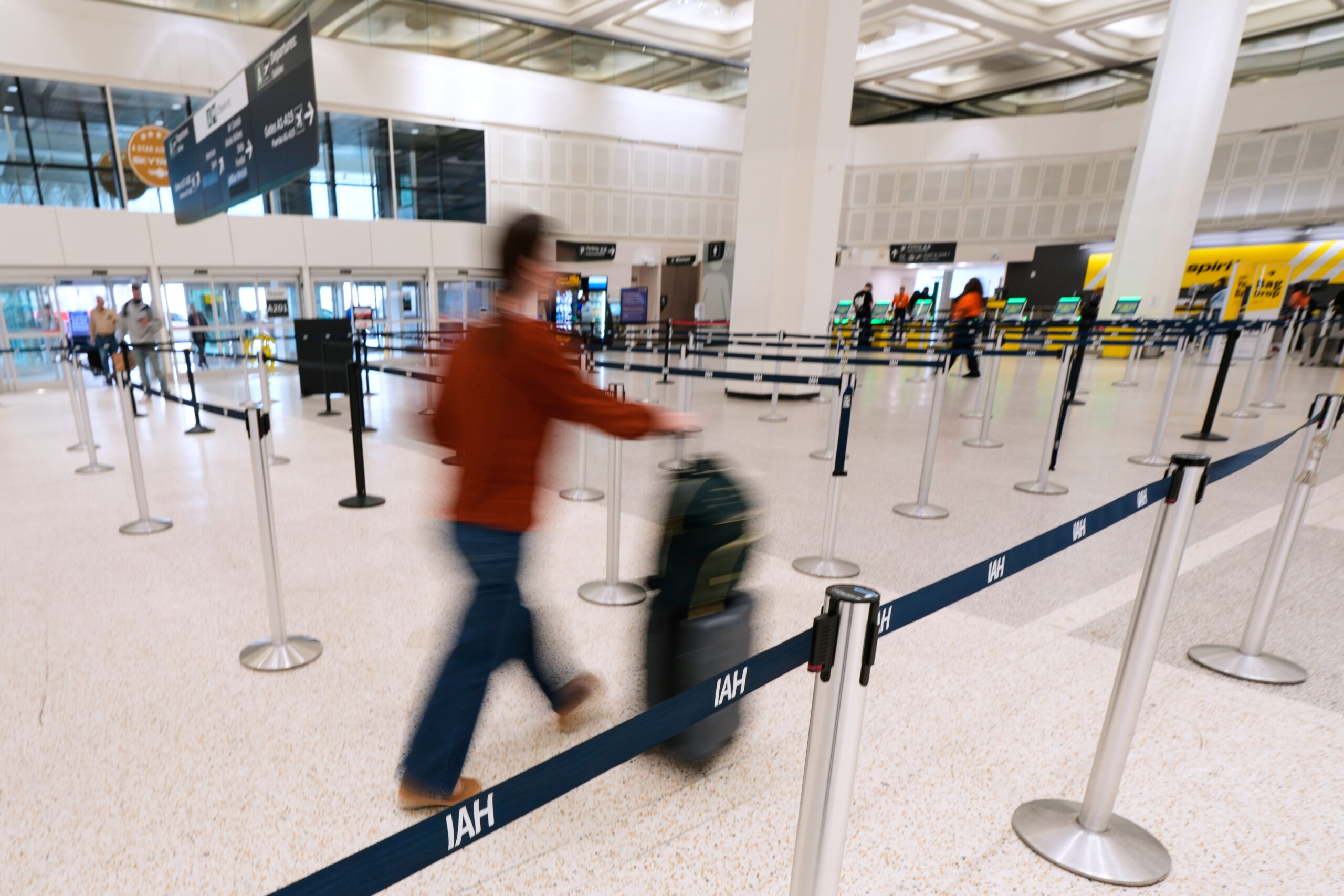
The strongest impetus for a deal — the hourslong security lines at some U.S. airports — is already dissipating…
Read More
- Trump’s MAGA allies have a new plan for mass deportations. It could splinter the coalition.
- Isaacman aims to reinvigorate NASA’s image, starting with the moon
- Dems hit the airwaves over Iran
- A slowdown in US visa processing is wreaking havoc on foreign doctors’ lives
- How prediction markets landed in Congress’ crosshairs
- The DHS shutdown might never end

- What Trump’s threat against Iran’s desalination plants means for Mideast

- Artemis is NASA’s return to the moon. Why astronauts won’t land there just yet

- Ingraham questions whether Trump understood Iran military operation’s ‘complexity’

- The Iran conflict is teaching the wrong lessons for the Pacific

-

 Politics1 year ago
Former ‘Squad’ members launching ‘Bowman and Bush’ YouTube show
-

 The Dictatorship1 year ago
Luigi Mangione acknowledges public support in first official statement since arrest
-

 Politics1 year ago
Former Kentucky AG Daniel Cameron launches Senate bid
-

 Politics1 year ago
Blue Light News’s Editorial Director Ryan Hutchins speaks at Blue Light News’s 2025 Governors Summit
-

 The Dictatorship7 months ago
Mike Johnson sums up the GOP’s arrogant position on military occupation with two words
-

 The Dictatorship1 year ago
Pete Hegseth’s tenure at the Pentagon goes from bad to worse
-
Uncategorized1 year ago
Bob Good to step down as Freedom Caucus chair this week
-

 Politics11 months ago
Democrat challenging Joni Ernst: I want to ‘tear down’ party, ‘build it back up’