
The Dictatorship
Kamala Harris is done sacrificing herself for the sake of party unity

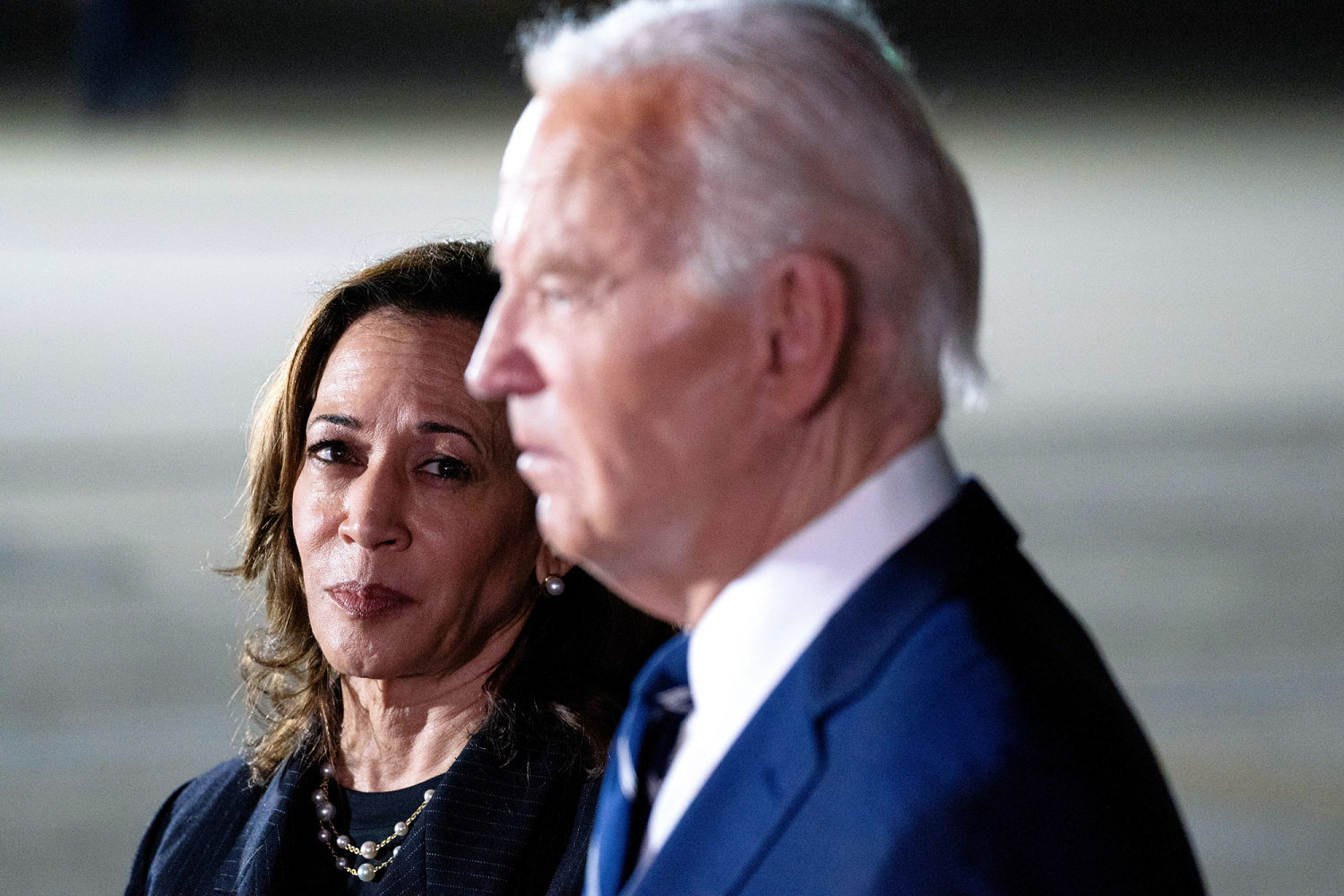
For years it was an open secret in Washington that former Vice President Kamala Harris had amassed powerful critics among the advisers closest to President Joe Biden. As a Democratic strategist and columnist during the Biden presidency, I received my fair share of insider pitches from Harris skeptics in the West Wing. This week’s much-hyped preview of Harris’ upcoming memoir, “107 Days,” reveals a politician finally ready to reclaim ownership of her own political and personal narrative.
“I often learned that the president’s staff was adding fuel to negative narratives that sprang up around me,” Harris writes. “One narrative that took a stubborn hold was that I had a ‘chaotic’ office and unusually high staff turnover during my first year.”
Within months of Biden’s inauguration, Beltway gossip columns openly discussed the tension between Harris and first lady Jill Biden.
The gossip wasn’t subtle. Within months of Biden’s inauguration, Beltway gossip columns openly discussed the tension between Harris and first lady Jill Biden. White House staffers did little to rebut (and often quietly supported) stories of Harris’ staff dysfunction that later made their way into prominent political tell-all books. I even wrote about Biden’s bizarre decision to sideline Harris despite her significant achievements in a 2023 column for this website.
Harris, according to her book, took Team Biden’s barbs in stride because she understood how critical it was for Democrats to telegraph unity and shared purpose after four divisive years of Donald Trump. She might have hoped that her willingness to overlook all that political backbiting would be repaid with respect and support from Biden’s team after taking over Biden’s spot on the Democratic ticket in August 2024. That respect never came.
Instead, Biden loyalists piled blame onto Harris for the party’s 2024 losses just days after the election. They could have — would have — done it better, they recounted to journalist Franklin Foer. Whatever dignity Harris expected to earn from her grace, it’s clear she wildly misunderstood the intensity of political tribalism in Biden’s inner circle. Now, freed from her connection to her former colleague, Harris and her team are finally venting their frustrations.
Democrats should listen closely, because Harris is articulating a key problem that still plagues the party even after Biden’s departure.
Anyone who doubts Harris’ claims need only look at the bitter response from Biden world. On Thursday, anonymous former Biden advisers dismissed Harris as playing “zero substantive role” in the administration, and instead focusing on “stilted photo ops.” That those advisers refused to put their names behind such nasty accusations speaks volumes about the toxicity that still dominates Biden’s inner circle.
Rhonda Elaine Foxx, former Biden campaign director of women’s engagement, was among the first to validate Harris’ account of her treatment on the campaign trail. In a post on XFoxx recounted emailing Biden staffers about the dismissive way women of color were treated on the campaign, specifically around the uphill battle to give Harris any visible presence at major Black cultural events — the same Black voters who played a pivotal role in Biden’s 2020 victoryand who Biden personally pledged to represent in his inaugural remarks.

“The fight just to have a campaign presence at the Zeta convention referenced in her excerpt was insane,” Foxx wrote. “Black spaces that should’ve been obvious priorities for coalition-building were dismissed. The expertise of Black staffers was constantly dismissed. What the VP says in 107 Days is right: our biggest challenge isn’t just Trump, it’s us.”
Lest anyone think Foxx is just a disgruntled former staffer, her post received public support in a post from former Democratic National Committee Chair Jaime Harrison, one of Biden’s most visible backers during the campaign.
Harris’ book and the testimonials of former staffers paint a picture of a vice president willing to suffer petty humiliations in order to maximize Democrats’ chances of beating Trump in 2024. Instead of embracing Harris’ proposals to increase the campaign’s engagement with Black communities, the Biden team egotistically dismissed them as efforts to promote her own brand over and above the boss.
“Their thinking was zero-sum: If she’s shining, he’s dimmed. None of them grasped that if I did well, he did well,” Harris wrote. “It would serve as a testament to his judgment in choosing me and reassurance that if something happened, the country was in good hands. My success was important for him. His team didn’t get it.”
The Biden team’s growing insecurity about Harris’ publicity would have disastrous consequences on Election Day, when Black voters bolted from a Democratic Party they felt took them for granted.
The Biden team’s growing insecurity about Harris’ publicity would have disastrous consequences on Election Day, when Black voters bolted from a Democratic Party they felt took them for granted. Democrats won 87% of Black men and 95% of Black women in 2020. Four years later, they won just three-quarters of Black men and 89% of Black women.
Harris’ memoir is a cautionary tale about what happens when a president allows his senior staff to amass too much decision-making power. Time and again, Harris describes her personal relationship with Biden in positive terms, yet key campaign decisions seemed to be made by staffers who rarely or never consulted Biden directly. Perhaps had the former president been informed, he would have made different decisions.
Unfortunately for the American people, the extreme control Biden’s team had over his day-to-day decisions means we will likely never know. What is clear is that Harris doesn’t deserve the venom heaped upon her in the wake of Democrats’ 2024 losses, and she’s no longer willing to take incoming fire for a White House team that apparently showed little loyalty or decency to her. As someone who has spent nearly two decades fighting to build a Democratic Party that lives up to its moral promise both internally and externally, I say it’s about time.

Max Burns is a Democratic strategist and founder of Third Degree Strategies. Find him on X, @themaxburns.


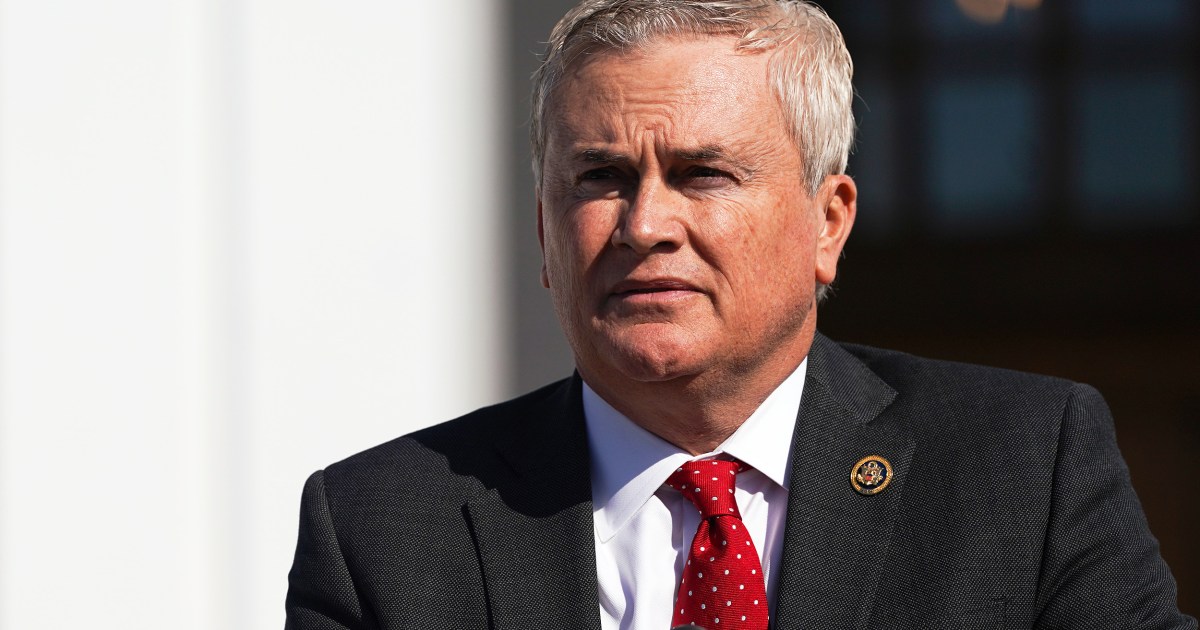
“Botched.” That was apparently House Oversight Committee Chair James Comer’s, R-Ky., assessment of the Justice Department’s handling, or mishandling, of the Epstein files under President Donald Trump. Comer made his critical comments to BLN on Monday night, awkwardly enough, during an attempt to defend the administration from criticism.
Comer also cast some blame on Jeffrey Epstein’s victims for delaying the release of files related to the late sex criminal, suggesting that class action lawsuits and victims’ demands for redactions have caused holdups, despite a federal law and congressional subpoena requiring the release of the vast majority of files related to Epstein.
This explanation doesn’t account for the department withholding documents detailing sexual assault allegations against Trump and other wealthy Epstein associates (all of whom have denied any wrongdoing). Comer’s excuse also doesn’t seem to explain a heavily redacted document that details a 2015 probe by the Drug Enforcement Administration into whether Epstein and others used drugs in connection with a prostitution ring. And of course, it doesn’t account for the inadequate redactions that exposed many victims’ names and personal details when some documents were initially released.
When BLN’s Jake Tapper noted the Trump administration has not released the files as mandated and has redacted names of individuals in Epstein’s inner circle, the chairman was seemingly forced to concede.
“Well, I think the Justice Department has botched this,” Comer said. “I don’t think anyone in America — Republican or, you know, avid Trump supporter — would defend the way that this has been rolled out.”
Some might say “botched” is too generous a characterization, given it suggests there was, at some point, a meaningful attempt to meet public expectations and comply with the law.
I can also think of more than a few Republicans who have defended and continue to defend the way the administration has handled the Epstein files, including TrumpAttorney General Pam Bondi and House Speaker Mike JohnsonR-La.
Comer himself has repeatedly thanked the administration for its “commitment to transparency.”
But Comer’s comment Monday was a prime example of the honesty that slips out of the chairman when he’s trying to defend Trump and his allies while discussing Epstein. Another example came in early March, when he said the DOJ in Trump’s first term moved to kill a 2019 state probe into Epstein’s New Mexico ranch.
“The federal government asked New Mexico to stop their investigation, I believe back in 2019, of that ranch,” Comer told Fox News. “So there’s just so many questions about how the government failed the victims and how government failed in trying to prosecute Epstein sooner. I mean, this whole thing doesn’t make sense.”
Ja’han Jones is an MS NOW opinion blogger. He previously wrote The ReidOut Blog.

Toward the end of Monday’s briefing, a reporter reminded White House press secretary Caroline Leavitt that Pope Leo XIVin remarks delivered on Palm Sunday, said God “does not listen to the prayers of those who wage war.” Citing a Bible passage, the pontiff added, “Even though you make many prayers, I will not listen: Your hands are full of blood.”
Asked for her reaction, Leavitt replied“I don’t think there’s anything wrong with our military leaders or with the president calling on the American people to pray for our service members and those who are serving our country overseas.”
Part of the problem, of course, is that no prominent political figures have argued there is something wrong with praying for service members. But the other element to this is some are going far further than simply calling on the public to pray for U.S. troops.
Take Defense Secretary Pete Hegseth, for example. The Washington Post reported earlier this week:
[L]ongtime norms are being upended by the proselytizing Christian campaign of Defense Secretary Pete Hegseth, say multiple former high-ranking military officials and experts on religion and law. Rather than boosting cohesion through a more universal spiritual uplift, they say, the new approach violates the Constitution and undermines the bonds of mutual respect between troops that are essential, especially in wartime.
The scope of the beleaguered Pentagon chief’s embrace of Christian nationalism is quite broad. In recent months, Hegseth has:
- led Christian prayer services in the Pentagon’s auditorium;
- invited radical Christian nationalist figures to speak at official prayer services;
- used social media to promote messages that suggest his faith should dominate over other religious traditions; and
- argued during an official press briefing that Americans should take a knee and pray “in the name of Jesus Christ,” at the same briefing in which he quoted Scripture.
At an event last week, Hegseth took matters to a new level when he prayed for U.S. troops to inflict “overwhelming violence of action against those who deserve no mercy. … We ask these things with bold confidence in the mighty and powerful name of Jesus Christ.”
In case this isn’t obvious, Hegseth is as free as every other American to worship, or not, as he pleases. His religiosity is his own business.
But as has become clear in recent weeks, the defense secretary isn’t just exercising his faith in line with his conscience, he’s also erasing the First Amendment’s church-state line and incorporating Christian nationalism into his wartime message in ways without precedent in the American tradition.
Retired Army Col. Larry Wilkerson, who served as chief of staff to Colin Powell during Powell’s tenures as chairman of the Joint Chiefs of Staff and secretary of state, told the Post, “The American military has had a remarkable ride of equanimity and fairness and justice and all manner of good adjectives with regard to religion. It’s done this in a way that’s really remarkable — until now.”
The New Republic’s Greg Sargent had a related report this week:
If Hegseth truly believes his war on Iran is unfolding in accordance with his conception of biblical law — the highest authority of all — then that explains why he treats all those niggling secular constraints as unbinding on him. Maximum violence and killing of the enemy — who cry out to God but, unlike Hegseth, don’t get an answer back from Him — are affirmatively good.
‘It’s not the way somebody who claims to be a person of God — a religious person — should think,’ [Democratic Sen. Mark Kelly of Arizona]who has flown many combat missions himself, told me. War, he added, ‘is a morally and ethically complicated thing for any person. Any serious warfighter struggles with it.’ If we don’t wrestle with this, Kelly said, we’ll ‘start to lose ourselves.’
Looking ahead, there are limited options to curtail the defense secretary’s public advocacy of Christian nationalism — Donald Trump could intervene, though that seems exceedingly unlikely — but Hegseth’s critics are not powerless. On the contrary, some of the Pentagon chief’s policies related to religious promotion have already sparked litigationwhich opens the door to possible court-imposed limits. Watch this space.
Steve Benen is a producer for “The Rachel Maddow Show,” the editor of MaddowBlog and an MS NOW political contributor. He’s also the bestselling author of “Ministry of Truth: Democracy, Reality, and the Republicans’ War on the Recent Past.”

This is an adapted excerpt from the March 30 episode of “The Rachel Maddow Show.”
On Monday morning, a 10-foot-tall golden toilet appeared at the National Mall in Washington, D.C., along with a plaque that reads “A throne fit for a king.”
“In a time of unprecedented division, escalating conflict and economic turmoil, President Trump focused on what really mattered: Remodeling the Lincoln Bathroom in the White House,” the plaque continued, adding that the giant toilet “stands as a tribute to an unwavering visionary who looked down, saw a problem, and painted it gold.”

This weekend, that gold-toilet president was also the target of one of the largest single-day nationwide demonstrations in American history. Organizers estimate that more than 8 million Americans joined the third day of No Kings protests against Donald Trump in 10 months.
One of the places where the local press reported a steep increase in participation compared with previous anti-Trump and No Kings protests was in Hagerstown, Marylandwhere an estimated 3,000 people took part in a demonstration at the public square.
In Hagerstown, the banner for the protest wasn’t just “No Kings,” it was “No Kings, No Camps.” Just outside that city, the administration has been trying to build one of its Trump prison campswhich would hold thousands of people without trial.
The grassroots group Maryland Coalition to Stop the Camps asked people to come from all over the state to Hagerstown to show opposition to the prison camp that Trump is trying to put there.
This piece of this story is worth watching right now, especially after Kristi Noem was ousted as homeland security secretary and a new guy, former Oklahoma Sen. Markwayne Mullinis taking over.
One of the things that has emerged about the warehouse purchases the administration has been making for its prison camps is that for some reason the government appears to have been eager to wildly overpay.
In Salt Lake City, the administration paid almost 50% more than the property appeared to be worth. It was assessed at $97 million, and the government paid more than $145 million. In Roxbury, New Jersey, one warehouse was assessed at $62 million, but the Trump administration came in and offered $129 million for it — more than double the cost. In Georgia, one of the properties valued last year at $26 million was purchased for $129 million.
On Friday, The Washington Post reported on an internal department memo that circulated last week, the day after Mullin was sworn in as the new head of Homeland Security. The memo reportedly said that the process of turning these warehouses into Trump prison camps was going to be slowed down and that the proposals for these facilities are going to be revised to start incorporating feedback from stakeholders — whatever that means — before they move ahead.
Simultaneously, CNN reported that there is a new inspector general investigation into alleged corruption at the department concerning the soliciting and handling of contracts, including the involvement of Noem and her top adviser, Corey Lewandowski.
There was already an audit that had been sparked in the department; now, on top of that, there’s a new and apparently urgent investigation, which reportedly included investigators searching the offices of one Homeland Security official who had been placed in a job at the agency by Noem and Lewandowski.
That investigation came after NBC News reported on March 19 that Lewandowski reportedly sought multimillion-dollar payments from companies contracting with Homeland Security, including companies that operate immigration prisons.
Lewandowski has denied the allegations. Democratic members of Congress have now opened their own investigation into what has been going on there.
Earlier this month in Social Circle, Georgia, town officials put a lock on the water meter at a warehouse that the Trump administration is trying to turn into a prison there. In Salt Lake City, officials voted to cap the amount of water that the federal government would be allowed to use at a warehouse it wants to convert to a prison, one that it appears the administration overpaid $48 million for.
Why’d they do that? Who made off with that money? Whose pockets just got stuffed with tens of millions of dollars in taxpayer money?
That stink is what you think it is: It smells like corruption. It’s the kind of behavior for which kings and dictators are famous.
But on Wednesday, the Trump administration will try to make its most radical move yet against immigrants. It will argue before the Supreme Court that when the Constitution says that anyone born in this country is an American, the Constitution didn’t really mean that.
Everyone calls this the birthright citizenship case, but no one who’s not a lawyer instinctively knows what that means. What it means is that anyone born in this country is an American by virtue of the fact that they were born here.
But now, the Trump administration is trying to change that. It wants to assess the allegiance and the loyalty of a person’s parents before it decides if that person — born here, in this country — can be considered American.
The last time we had massive domestic prison camps in this country, to hold people indefinitely and without trial, was in World War II, when the U.S. government locked up Japanese Americans for yearsregardless of their citizenship, on the theory that their race alone made them dangerous.
Japanese American groups and experts on their wartime incarceration have filed friend-of-the-court briefs in that case ahead of the oral arguments this week.
On Wednesday, the Trump administration will try to make its most radical move yet against immigrants.
Law professor Eric Muller of the University of North Carolina is a nationally recognized expert on what happened to Japanese Americans during the war. He’s written four books on the topic.
In his friend-of-the-court briefhe explained, sort of patiently, that even in World War II — when we were so panicked about the loyalties and the allegiances of whole huge swaths of people, so much so that we created effectively a concentration camp system to lock up an entire ethnic group for years on the basis of how scared we were about their supposed loyalties and allegiances — if the citizens of Japan who we had locked up had babies inside the camps, there was no controversy at all about the fact that those babies were definitely American.
Beyond that, when people had renounced their American citizenship, and we had them locked up in prison camps, if they had babies here, there was no question that their babies were Americans.
Even beyond that, the United States in World War II went so far as to grab a bunch of people who had no ties to America whatsoever, including people of Japanese descent from Peruand force them to come to this country to be put in prison so they could be used in prisoner swaps with Japan.
These were Peruvians of Japanese descent who were only in this country because they were forced against their will to be here, but still, when they had babies in American prison camps during the war, those babies were uncontroversially considered to be American citizens.
But under Trump, who has entrusted the wise and prudent stewardship of immigration matters to people like Noem, Lewandowski and now Mullin, the federal government is now going to tell the Supreme Court that the Constitution has been wrong all this time and that it is he, Trump, who, neutrally and with an even hand, will assess a person’s loyalties and allegiances before it’s decided if they are really an American.
The administration is dragging that stinking heap up to the door of the Supreme Court this very week, the same week that more than 8 million Americans from every single corner of the country came out full tilt and full blast to say No Kings.
No thrones. No golden toilets. No crowns. No camps.
That’s where we are. That’s where we stand. Game on.
Allison Detzel contributed.
- Artemis is NASA’s return to the moon. Why astronauts won’t land there just yet

- Ingraham questions whether Trump understood Iran military operation’s ‘complexity’

- The Iran conflict is teaching the wrong lessons for the Pacific

- Former FBI agents who worked on Trump election investigation sue Patel, Bondi

- Laura Dern to play journalist investigating Epstein in TV series

- Comer’s excuses for DOJ fall flat as he concedes it ‘botched’ Epstein files

- Hegseth’s unprecedented embrace of Christian nationalism sparks backlash

- Comer’s excuses for DOJ fall flat as he concedes it ‘botched’ Epstein files
- Trump said he expects US to leave Iran in ‘2 or 3 weeks’
- Why is Trump’s DHS wildly overpaying for ICE warehouse detention centers?
-

 Politics1 year ago
Former ‘Squad’ members launching ‘Bowman and Bush’ YouTube show
-

 The Dictatorship1 year ago
Luigi Mangione acknowledges public support in first official statement since arrest
-

 Politics1 year ago
Former Kentucky AG Daniel Cameron launches Senate bid
-

 Politics1 year ago
Blue Light News’s Editorial Director Ryan Hutchins speaks at Blue Light News’s 2025 Governors Summit
-

 The Dictatorship7 months ago
Mike Johnson sums up the GOP’s arrogant position on military occupation with two words
-

 The Dictatorship1 year ago
Pete Hegseth’s tenure at the Pentagon goes from bad to worse
-
Uncategorized1 year ago
Bob Good to step down as Freedom Caucus chair this week
-

 Politics11 months ago
Democrat challenging Joni Ernst: I want to ‘tear down’ party, ‘build it back up’