
Politics
Janet Jackson should know better than to boost MAGA lies

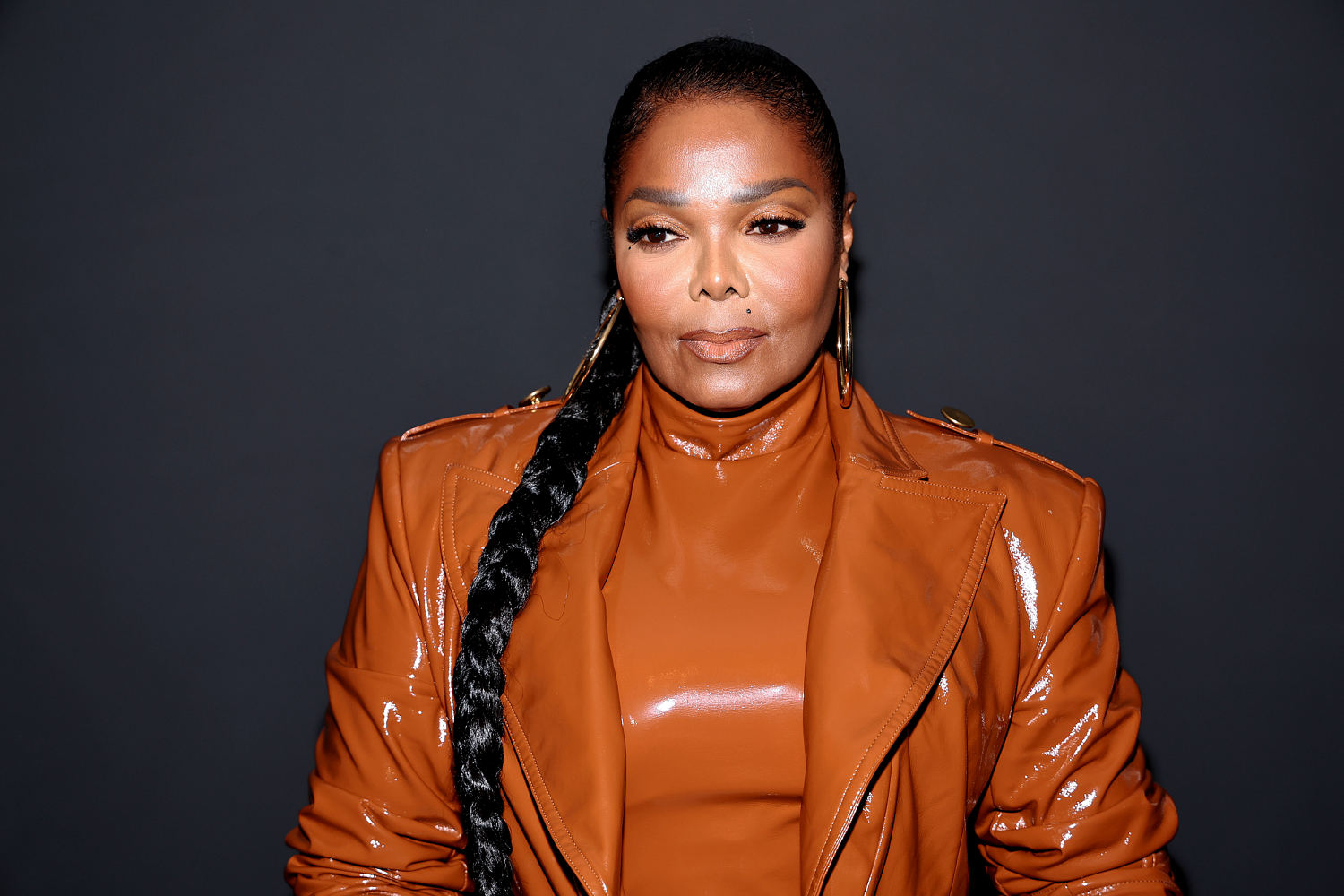
Music legend Janet Jackson is rightly receiving backlash for mischaracterizing Vice President Kamala Harris’ race in an interview with The Guardian, when she was asked about her feelings about the possibility of a Black woman being elected U.S. president.
We like to think that celebrities, especially beloved ones like Jackson, are savvy enough to tell truth from fiction.
“She’s not Black,” the 58-year-old five-time Grammy Award winner said. “That’s what I heard. That she’s Indian.” Guardian reporter Nosheen Iqbal described herself as “floored” when Jackson then claimed that Harris’ father, who’s Blackis white. But maybe Iqbal shouldn’t have been shocked. We like to think that celebrities, especially beloved, or even idolized, ones like Jackson, are savvy enough to tell truth from fiction.
It wasn’t so much that Jackson was misinformed, but that she echoed MAGA-fueled lies. Her statement about what she heard sounded eerily similar to former President Donald Trump’s lie at the National Association of Black Journalists convention in July that the biracial Harris — who says she was raised as a Black womanattended the historically Black Howard University and pledged Alpha Kappa Alphathe nation’s oldest Black sorority — “happened to turn Black” out of political expediency. And that only recently.
Jackson seemed disturbingly unaware that she was spouting misinformation. It’s a moment that should cause us to rethink what it means to have celebrities expressing their political views and making political endorsements when, as a rule, those celebrities live radically different lives than the rest of us.
Jackson, the youngest child in a family of entertainers, cemented her public image as a champion for social justice when she lamented George Floyd’s murder in 2020 and vocally supported Black Lives Matter. She has repeatedly used her social media platforms and live performances to speak out against sexism, racism, homophobia and other forms of discrimination, including xenophobic attacks on immigrants. Even though her advocacy is mostly tied to heartfelt pleas during award acceptance speeches and concerts, the soft spoken icon has not left any doubt about what outrages and concerns her. And none of it seems aligned with the far political right.
At this point, it’s difficult to view any questioning of Harris’ race as anything other than an unwarranted personal attack, and it’s disappointing that Jackson, who was herself mistreated, isn’t making that connection.
After the infamous “wardrobe malfunction” during halftime at the 2004 Super Bowl — Justin Timberlake tore away part of her clothing and exposed her breast — she had her songs pulled from the radio and was dis-invited from that year’s Grammy Awards. Timberlake suffered no consequences and in 2018 was given a solo Super Bowl halftime show.
Even as Jackson’s career stalled, for the most part, Jackson’s Black fans stood by her, correctly seeing her as the victim of a double standard. Perhaps, that is why her reluctance to support the Black candidate running against Trump — whose racist language and racist policies are well known — is so baffling. In addition to questioning Harris’ background, she warned that there would be social mayhem regardless of who was elected without stating any preferences. (Here, it’s probably important to mention that Janet Jackson was raised by a mother, Katherine Jackson, who is a devout Jehovah’s Witness, and Witnesses don’t participate in politics. In the past, Janet Jackson has said her religious upbringing was very important to her but that she didn’t identify as a Witness.)
But politics aside, Janet Jackson’s comments discounting Harris’ race shine a light on how isolated celebrities are from the rest of us. There is no reason to disbelieve Jackson’s earlier social advocacy but it does lead one to wonder how deeply those commitments are felt when the same person can unwittingly play into what Harris aptly called the “same old, tired playbook” about Black people in leadership positions. It’s unnerving when Black people appear to flip through the same book for information about each other. While there are some Black Trump supporters, given her past social positions, it’s hard to imagine Jackson among them.
As we know very well from her late brother Michael, being a celebrity can be deeply isolating. It’s not unlike social alienation in the way that it can leave celebrities disconnected and distrustful.
Instead, she seems to have fallen down those internet rabbit holes that make wild conspiracies sound plausible. Indeed, Jackson said during the Guardian interview that she was told the information she shared about Harris, and that “they had discovered” Harris’ father was white. As we know very well from her late brother Michael, being a celebrity can be deeply isolating. It’s not unlike social alienation in the way that it can leave celebrities disconnected and worrisomely distrustful of social institutions like government and media.
Celebrities like Jackson are among the uber wealthy whose lives bear no resemblance to ours; yet we crave to know what they think about political causes and social issues, assuming, sometimes, that they can change hearts and minds in a way that we cannot. Such endorsements can have a rallying effect on supporters even as the longer term impact is unclear.
When Taylor Swift endorsed Harris immediately after her Sept. 10 debate against Trump, many breathed a sigh of relief. Swift has a massive fanbase, especially among white women whom Democrats are hoping turn out in huge numbers in November. Swift’s well-timed endorsement, which was viewed as especially thoughtful and influential, was liked by millions within minutes, prompting Trump to post “I HATE TAYLOR SWIFT!” on Truth Social. From Susan Sarandon to Harry Belafonte, entertainers have long used their celebrity status to speak out for the causes they believe in, sometimes jeopardizing their careers along the way.
But Jackson didn’t speak out as much as she fumbled her way through a bizarre reply to a simple question. If we’re to take anything away from that fumbling, it’s a reminder that while celebrities seem larger than life, like us, they are susceptible to misinformation, maybe even more so.
Robyn Autry
Robyn Autry is a sociology professor and director of the Center for the Study of Public Life at Wesleyan University. She is the author of “Desegregating the Past: The Public Life of Memory in the U.S. and South Africa.”


Border czar Tom Homan met again with lawmakers Friday night in the Capitol…
Read More
Fox News’s Martha MacCallum pressed Interior Secretary Doug Burgum on Friday afternoon about growing concerns about rising gas prices amid the U.S. war on Iran. “I think that this is a situation where people have to understand that this is temporary, this is not permanent,” Burgum said…
Read More
Republicans are bracing for President Trump to deploy U.S. troops on the ground in Iran as the conflict in the Middle East crosses into its third week with no signs of slowing down. The administration is reportedly weighing missions to secure a safe passage for oil tankers through the Strait of Hormuz and overtake Iran’s…
Read More
- White House revises its DHS offer as talks to end shutdown pick up
- Fox News host presses Burgum over gas prices

- GOP braces for Trump to possibly deploy troops inside Iran
- Still trailing by 23 votes, NC Senate leader asks for hand recount
- Federal judge rules RFK Jr. overreached in restricting trans health care to minors
- Heritage president: MAGA tensions over Iran war ‘good’
- Trump’s next Smithsonian target: A future women’s history museum

- Trump is planning a Christian ‘revival’ for America’s 250th anniversary
- Trump v. Roberts: The president crashes out online while the chief stays the course
- Chuck Norris was a more interesting person than his late-in-life caricature

-

 The Dictatorship1 year ago
Luigi Mangione acknowledges public support in first official statement since arrest
-

 Politics1 year ago
Former ‘Squad’ members launching ‘Bowman and Bush’ YouTube show
-

 Politics1 year ago
Blue Light News’s Editorial Director Ryan Hutchins speaks at Blue Light News’s 2025 Governors Summit
-

 Politics1 year ago
Former Kentucky AG Daniel Cameron launches Senate bid
-

 The Dictatorship6 months ago
Mike Johnson sums up the GOP’s arrogant position on military occupation with two words
-

 The Dictatorship1 year ago
Pete Hegseth’s tenure at the Pentagon goes from bad to worse
-
Uncategorized1 year ago
Bob Good to step down as Freedom Caucus chair this week
-

 Politics11 months ago
Democrat challenging Joni Ernst: I want to ‘tear down’ party, ‘build it back up’