
Politics
In Mark Robinson’s fall, Republicans are getting what they asked for

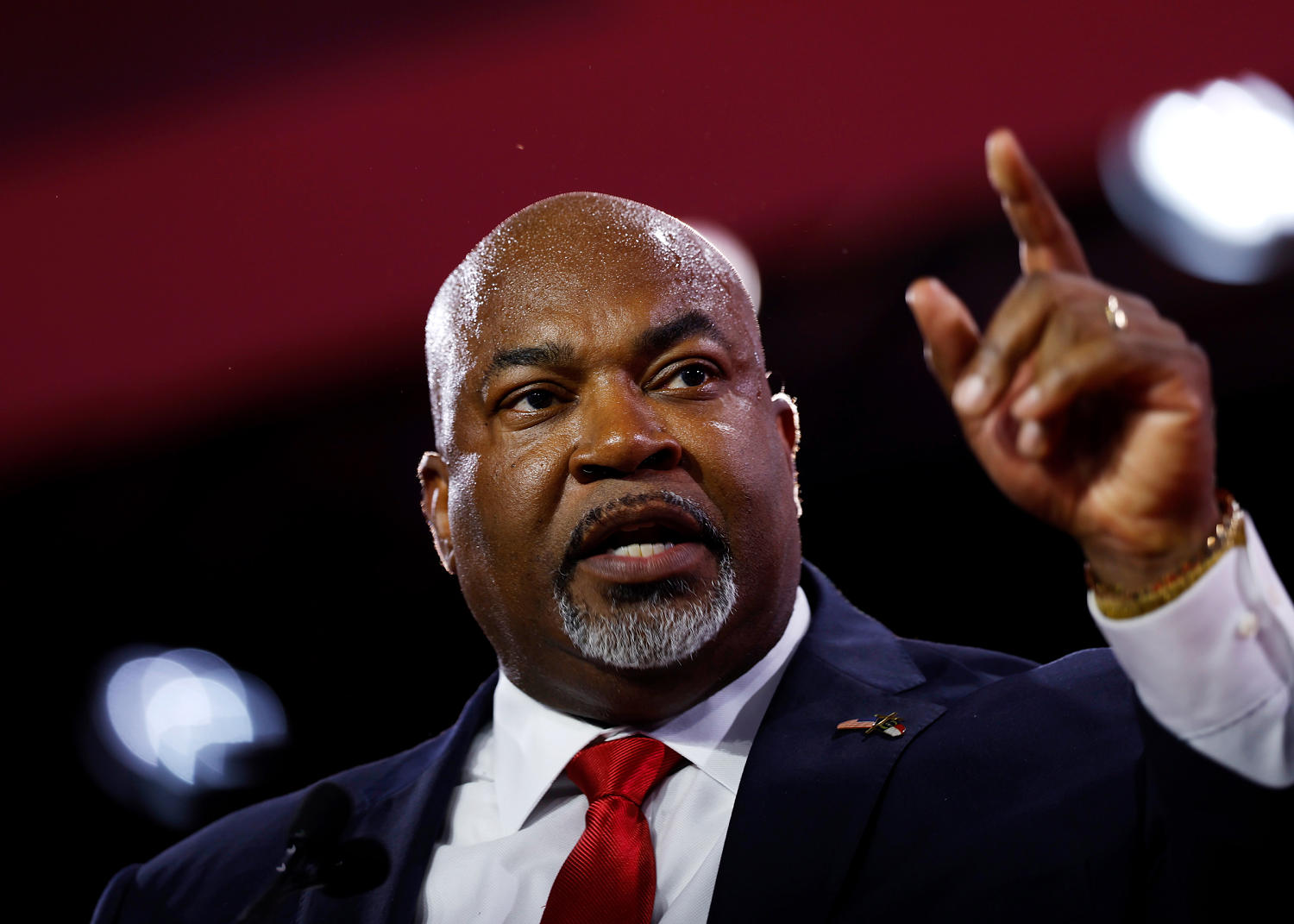
Lt. Gov. Mark Robinson, Republican candidate for governor of North Carolina, can no longer win a political race in the state — or anywhere in America, for that matter.
Not after BLN uncovered sexually explicit and inflammatory postshe reportedly wrote in the comments of a pornographic website. According to the report, Robinson — who’s campaigned as a fundamentalist, Christian conservative — commented frequently between 2008 and 2012 on a site called “Nude Africa.”
He’s an outstanding person. I’ve gotten to know him so well.”
Donald Trumpon Mark Robinson
Robinson has denied he is the author of the posts, saying “these are not the words of Mark Robinson” and dismissing the report as “salacious tabloid trash.” But BLN’s reporters documented several connections between the candidate, the email he used to register with the sites and biographical details posted to the various profiles.
The porn chatroom posts identified as Robinson’s are graphic, sexually menacing and demeaning to women. If you track them down, you can’t unsee them.
He commented on his love for transgender pornography, called himself a “Black Nazi,” made profane comments about a woman’s alleged rape, referred to Martin Luther King Jr. by a racial slur (note that this article later quotes some of that language, which readers may find offensive), and even reminisced graphically about a teenage experience peeping on a women’s locker room at a local college.
These are just the tip of a nasty iceberg. BLN acknowledged many of the things Robinson is accused of writing were so lurid, they couldn’t be published.
If these statements offend you, congratulations: You are a thinking, feeling person. You’re holding your elected leaders to a higher standard than the North Carolina Republican Party, which doubled downon its support for Robinson on Thursday night after the report was published. Most folks wouldn’t let the guy in this story watch their dog, much less lead their state.
North Carolina Republicans had few realistic options for replacing Robinson, with the state deadline for candidates to withdraw just hours away when the story dropped. But there’s no reason to think they would have pushed him out anyway. They’ve stuck with him through every disturbing scandal so farand there have been a lot.
This is what rigor mortis looks like in a campaign.
His candidacy was damaged and unhinged from the start, fetishizing violence, demonizing gay people and talking about women like they’re trash. The party has had literally dozens of opportunities to disavow Robinson: when he said some folks out there “need killing,” when he fantasized about murdering people in the governmentwith his AR-15, when he called LGBTQ people “maggots,” when he said women getting abortions just need to keep their “skirt down.”
The party routinely looked past Robinson’s breathtaking hypocrisy. A 2022 story revealed that Robinson, who has referred to abortion as “murder” and abortion doctors as “butchers,” once paid for a girlfriend’s abortion. He’s implied gender-neutral restrooms are a breeding ground for perverts. He’s said women need protection from those perverts, but boasted online about spying on college girls in a locker room, according to BLN. He described LGBTQ+ people as “maggots” but according to that same BLN report, he once wrote about his enjoyment of pornography that features trans people, enthusiastically describing himself as a “perv.”
Many of Robinson’s Republican peers have held him up as a champion, though, an example of America at its finest. At one stump speech in North Carolina, Donald Trump said Robinson was “like a fine wine.”
“You have to cherish him,” Trump said. “He’s an outstanding person. I’ve gotten to know him so well.”
Like Trump, Robinson cast himself as an uncensored outsider who traded put-downs for policy; a conservative, chest-thumping warrior who seemed to be the beneficiary of limitless forgiveness for his transgressions.
North Carolina Republicans have shown that the MAGA movement doesn’t believe in such limits. But voters will, which is why Republicans and Robinson will stay this way, locked in a doomed embrace, through Election Day. This is what rigor mortis looks like in a campaign.
The only question is whether Republicans up and down the ticket, including Trump, will get dragged down with him. Trump is virtually tied with Kamala Harris in this battleground state and some conservatives are worried Robinson’s troubles will keep Trump voters at home. On Thursday night, GOP candidates running for office in North Carolina were trying to scrub their social media profiles of references to Robinson, like rats fleeing a sinking ship.
The only question is whether Republicans up and down the ticket, including Trump, will get dragged down with him.
A candidate who talks about the historic nature of his candidacy — if he wins, he would be the first Black governor in the state’s history — once allegedly wrote, “Slavery is not bad. Some people need to be slaves. I wish they would bring it (slavery) back. I would certainly buy a few.” The man whom Trump praised as “MLK on steroids” once referred to Martin Luther King Jr. as “Martin Lucifer Koon.”
Coincidentally, I interviewed Martin Luther King III on Thursday about a trip he’s making to North Carolina this weekend to speak to rural communities of color about the election. The BLN story hadn’t broken yet but the word was out that it contained hateful descriptions of his late father.
When I asked him about it, he was tactful, which isn’t easy when someone says something awful about your dad.
“Clearly, it feels like this rejection is emerging for this candidacy,” King said. “And at some point, it will be looked at as a disaster.”
Why wait any longer? Let’s call it that now.

Billy Ball
Billy Ball is an award-winning journalist from North Carolina and a senior editor at Cardinal & Pinean online news site that covers North Carolina politics. His work has been published in The Atlantic, The Washington Post, and others.



NEW YORK (AP) — A federal judge on Tuesday ordered the Trump administration to restore the government-run Voice of America’s operations after it had effectively been shut down a year ago, putting hundreds of employees who have been on administrative leave back to work.
U.S. District Court Judge Royce C. Lamberth gave the U.S. Agency for Global Media a week to put together a plan for putting Voice of America on the air. It has been operating with a skeleton staff since President Donald Trump issued an executive order to shut it down.
A week ago, Lamberth said Kari Lake, who had been Trump’s choice to lead the agency, did not have the legal authority to do what she had done at Voice of America. In Tuesday’s decision, Lamberth ruled on the actions she had taken to respond to Trump’s order, essentially shelving 1,042 of VOA’s 1,147 employees.
“Defendants have provided nothing approaching a principled basis for their decision,” Lamberth wrote.
There was no immediate comment on the decision by the agency overseeing Voice of America. Lake had denounced Lamberth’s March 7 ruling, saying it would be appealed. Since then, Trump nominated Sarah Rogers, the undersecretary of state for public diplomacy, to run USAGM. That requires Senate approval, a step that was not taken with Lake.
Patsy Widakuswara, Voice of America’s White House bureau chief and a plaintiff in the lawsuit to restore it, said she is deeply grateful for the decision.
“We are eager to begin repairing the damage Kari Lake has inflicted on our agency and our colleagues, to return to our congressional mandate, and to rebuild the trust of the global audience we have been unable to serve for the past year,” she said.
“We know the road to restoring VOA’s operations and reputation will be long and difficult,” she said. “We hope the American people will continue to support our mission to produce journalism, not propaganda.”
Voice of America has transmitted news coverage to countries around the world since its formation in World War II, often in countries with no tradition of a free press. Before Trump’s executive order, VOA had operated in 49 different languages, broadcasting to 362 million people.
NEW YORK (AP) — A federal judge on Tuesday ordered the Trump administration to restore the government-run Voice of America’s operations after it had effectively been shut down a year ago, putting hundreds of employees who have been on administrative leave back to work.
U.S. District Court Judge Royce C. Lamberth gave the U.S. Agency for Global Media a week to put together a plan for putting Voice of America on the air. It has been operating with a skeleton staff since President Donald Trump issued an executive order to shut it down.
A week ago, Lamberth said Kari Lake, who had been Trump’s choice to lead the agency, did not have the legal authority to do what she had done at Voice of America. In Tuesday’s decision, Lamberth ruled on the actions she had taken to respond to Trump’s order, essentially shelving 1,042 of VOA’s 1,147 employees.
“Defendants have provided nothing approaching a principled basis for their decision,” Lamberth wrote.
There was no immediate comment on the decision by the agency overseeing Voice of America. Lake had denounced Lamberth’s March 7 ruling, saying it would be appealed. Since then, Trump nominated Sarah Rogers, the undersecretary of state for public diplomacy, to run USAGM. That requires Senate approval, a step that was not taken with Lake.
Patsy Widakuswara, Voice of America’s White House bureau chief and a plaintiff in the lawsuit to restore it, said she is deeply grateful for the decision.
“We are eager to begin repairing the damage Kari Lake has inflicted on our agency and our colleagues, to return to our congressional mandate, and to rebuild the trust of the global audience we have been unable to serve for the past year,” she said.
“We know the road to restoring VOA’s operations and reputation will be long and difficult,” she said. “We hope the American people will continue to support our mission to produce journalism, not propaganda.”
Voice of America has transmitted news coverage to countries around the world since its formation in World War II, often in countries with no tradition of a free press. Before Trump’s executive order, VOA had operated in 49 different languages, broadcasting to 362 million people.
The Oklahoma senator’s secretive travel a decade ago has emerged as an issue in his confirmation…
Read More
- Judge orders restoration of Voice of America

- Trump delays China trip to focus on war in Iran

- Judge orders restoration of Voice of America
- Judge orders restoration of Voice of America
- Democrats say Bondi won’t commit to testifying in House Epstein investigation
- Senate rejects limits on Trump as Iran war intensifies
- Why Judge Boasberg’s ruling on DOJ’s Jerome Powell investigation is bigger than one case
- Judge writes Kari Lake ‘repeatedly thumbed her nose’ at legal requirements

- In touting SAVE Act, Johnson refuses to cite any fraud it would have prevented
- ‘Warrants or bust’: House hard-liners deliver ultimatum ahead of spy powers vote
-

 The Dictatorship1 year ago
Luigi Mangione acknowledges public support in first official statement since arrest
-

 Politics1 year ago
Former ‘Squad’ members launching ‘Bowman and Bush’ YouTube show
-

 Politics1 year ago
Blue Light News’s Editorial Director Ryan Hutchins speaks at Blue Light News’s 2025 Governors Summit
-

 Politics1 year ago
Former Kentucky AG Daniel Cameron launches Senate bid
-

 The Dictatorship6 months ago
Mike Johnson sums up the GOP’s arrogant position on military occupation with two words
-

 The Dictatorship1 year ago
Pete Hegseth’s tenure at the Pentagon goes from bad to worse
-

 Politics11 months ago
Democrat challenging Joni Ernst: I want to ‘tear down’ party, ‘build it back up’
-
Uncategorized1 year ago
Bob Good to step down as Freedom Caucus chair this week