
The Dictatorship
‘I don’t care about that’: Trump moves the goal posts on Iran’s uranium stockpile

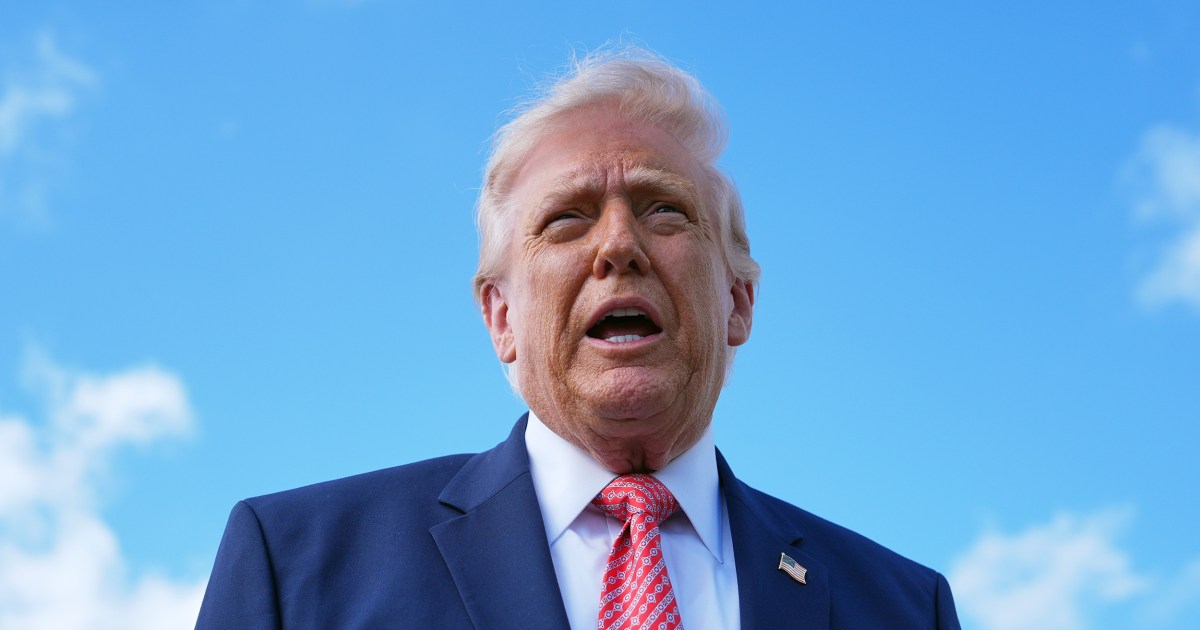
More than a month into the war in Iran, there’s still great uncertainty about why the United States launched this military offensive in the first place. There’s reason to believe, however, that the conflict has something to do with Iran’s nuclear program.
At an unrelated White House event on Tuesday, for example, Donald Trump said“I had one goal: They will have no nuclear weapon, and that goal has been attained.”
It was a curious comment, in part because by the president’s own assessmentIran didn’t have a nuclear weapon before he decided to launch the war, and in part because Secretary of State Marco Rubio this week presented the administration’s four major objectives in the conflict, none of which had anything to do with Iran’s nuclear program.
As for whether Trump’s newly manufactured “goal” has actually been “attained,” The New York Times reported“Unless something changes over the next two weeks — the target Mr. Trump set to begin withdrawing from the conflict — he will have left the Iranians with 970 pounds of highly enriched uranium, enough for 10 to a dozen bombs. The country will retain control over an even larger inventory of medium-enriched uranium that, with further enrichment, could be turned into bomb fuel, if the Iranians can rebuild that capacity after a month of steady bombing.”
The American president has acknowledged that these details are true, though he apparently no longer cares. Ahead of an Oval Office address to the nation about the war in Iran, the Republican spoke to Reuters about his perspective:
Of the enriched uranium, Trump said: ‘That’s so far underground, I don’t care about that.’
‘We’ll always be watching it by satellite,’ he added. He said Iran was ‘incapable’ of developing a weapon now.
The president’s comments definitely have a practical element: It’s been an open question for weeks as to whether Trump intends to try to seize Iran’s uranium stockpile, which would require ground troops and be profoundly dangerous for U.S. military service members.
If Trump told Reuters the truth and is prepared to let Iran keep the uranium it already has because he no longer “cares about that,” it would drastically reduce the likelihood of a ground invasion — one that would almost certainly cost lives.
But there’s another element to this worth keeping in mind as the process moves forward: Ever since the Obama administration struck the original nuclear agreement with Iran in 2015, Trump has insisted that it was wrong to allow the country to hold onto nuclear materials that might someday be used in a nuclear weapon.
A decade later, he’s suddenly indifferent to Iran’s uranium stockpile — which has only grown larger since Trump abandoned the Obama-era policy.
Trump’s goalposts, in other words, are on the move.
Indeed, if the American president’s comments reflect his true perspective (and with this guy, one never really knows), we’re due for a serious public conversation about the motives and objectives for the war. Because as things stand, before the war, Iran had a regime run by radical religious clerics and the Islamic Revolutionary Guard; the country had a significant uranium stockpile; and the Strait of Hormuz was open.
And now, Trump’s apparent vision for a successful offensive will include Iran with a regime run by radical religious clerics and the Islamic Revolutionary Guard; the country still holding a significant uranium stockpile; and the Strait of Hormuz will be open.
Mission accomplished, I guess?
Steve Benen is a producer for “The Rachel Maddow Show,” the editor of MaddowBlog and an MS NOW political contributor. He’s also the bestselling author of “Ministry of Truth: Democracy, Reality, and the Republicans’ War on the Recent Past.”


Just days after labeling the Senate deal to end the record-breaking shutdown at the Department of Homeland Security a “crap sandwich,” Speaker Mike Johnson, R-La., now appears ready to swallow it whole.
Johnson and Senate Majority Leader John Thune, R-S.D., announced Wednesday they will move forward with the two-track approach senators unanimously backed last Friday. They will pass a bill to fund most of DHS — with the exception of Immigration and Customs Enforcement and parts of Customs and Border Patrol — and then look to approve money for ICE and CBP in a separate reconciliation package.
“In following this two-track approach, the Republican Congress will fully reopen the Department, make sure all federal workers are paid, and specifically fund immigration enforcement and border security for the next three years so that those law-enforcement activities can continue uninhibited,” Johnson and Thune said in a joint statement.

The announcement amounts to a stunning reversal for Johnson, who was facing pressure from conservatives to oppose the Senate deal. Their objections centered on the lack of money for ICE, as well as the Senate’s failure to include new voter ID restrictions, championed by President Donald Trump, with the so-called SAVE America Act.
Instead, Johnson on Friday forced a House vote on an alternative measure to fund all of DHS for eight weeks. While it passed almost entirely along party linesthe stopgap measure stood no chance in the Senate, where Democrats have repeatedly rejected a similar proposal in recent weeks.
Lawmakers were back to square one.
But it turns out, all they needed was a little push from Trump.
Less than three hours before Johnson and Thune’s announcement, Trump urged Republicans — in a lengthy statement on Truth Social — to pass funding for ICE and border patrol through budget reconciliation. While that approach allows GOP lawmakers to bypass Democratic opposition, it requires near-unanimous GOP support.
Trump said he wants the legislation on his desk by June 1 — an ambitious timeline that dramatically increased pressure on Republicans.
“We are going to work as fast, and as focused, as possible to replenish funding for our Border and ICE Agents, and the Radical Left Democrats won’t be able to stop us,” Trump wrote on Truth Social. “We will not allow them to hurt the families of these Great Patriots by defunding them. I am asking that the Bill be on my desk NO LATER than June 1st.”

With Johnson suddenly on board, lawmakers appear poised to end the DHS shutdown just as soon as the House can reconvene. It’s unclear exactly when that might happen. The House isn’t due back until April 14. But Johnson could always call lawmakers back sooner — or look to pass the Senate bill while both chambers are out on recess through a special process.
Because the House never technically sent its 60-day continuing resolution to the Senate, the House could just recede from its amendment of the Senate-passed bill and immediately send the legislation to the president.
Either way, barring another sudden shift from Trump or House leadership, the longest government shutdown in U.S. history may soon be over — and Democrats are already taking a victory lap.
“Throughout this fight, Senate Democrats never wavered,” Senate Minority Leader Chuck Schumer said in a statement. “We were clear from the start: fund critical security, protect Americans, and no blank check for reckless ICE and Border Patrol enforcement.”
“We were united, held the line, and refused to let Republican chaos win,” Schumer added.
Kevin Frey is a congressional reporter for MS NOW.
Mychael Schnell is a reporter for MS NOW.
The Dictatorship
Former White House official: Trump’s Supreme Court attendance could be ‘perceived as intimidation’
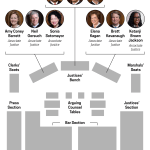
President Donald Trump became the first sitting American president to attend oral arguments at the Supreme Court on Wednesday morning when he sat in the audience to hear his administration argue to limit birthright citizenship guarantees for the children of undocumented immigrants and temporary U.S. residents.
Before arguments began, Trump entered the courtroom wearing his usual red tie and sat in the front row of the public seating area. Commerce Secretary Howard Lutnick and Attorney General Pam Bondi were also in the room.
None of the justices acknowledged Trump’s presence while he was in the courtroom.
As the justices began to question U.S. Solicitor General John Sauer, who was arguing on behalf of the administration, Trump remained focused and wore a blank expression.
After Sauer finished his arguments, Trump remained in the courtroom for a few minutes. He got up and quietly left, flanked by Secret Service agents, shortly after Cecillia Wang began her arguments for the ACLU.

Trump’s presence at the court is significant. A sitting president of the United States has never attended oral arguments at the high court before, which is widely considered a sign of respect for the balance of power between the federal government and the judiciary.
Two senior White House officials who requested anonymity to speak about the president’s internal strategy told MS NOW that Trump wanted to listen to the oral argument because “it’s an important case.” The outcome of the case will have sweeping legal implications for Trump’s sprawling immigration enforcement agenda.
“Behind closed doors there’s a realization of the tremendous legal wall this is to climb,” a former White House official familiar with Trump’s thinking who spoke on the condition of anonymity told MS NOW.
“I’m not sure of the calculation from him to go today. It will be perceived as intimidation, and some justices won’t like that,” the former official said.
Trump has shown scorn for the justices for their ruling on his aggressive tariff policy. Earlier this year, Trump said the justices who ruled against the policy were an “an embarrassment to their families.” The president has railed against the justices, including the ones he appointed in his first term, for striking down his sprawling trade agenda.
Trump has pivoted between slamming the justices on social media for the February tariff ruling and calling on them to uphold his birthright citizenship order.
Domicile, the legal term for the place where an individual maintains a permanent home, was at the heart of Sauer’s argument Wednesday. Sauer argued that parents of children born in the U.S. must be domiciled in the United States and demonstrate allegiance to the country in order for their children to be granted citizenship.
Trump left the court after his administration’s argument faced pushback from the court’s key conservative justices, Chief Justice John Roberts and Justice Neil Gorsuch, as well as the rest of the justices on the bench.
As Trump’s motorcade rolled back to the White House, droves of tourists watched and responded with positive and negative gestures. National Guard members were in the crowds, as well.
The case, Trump v. Barbara, centers on the citizenship clause of the 14th Amendment, which has long been understood to confer citizenship to almost all individuals born on U.S. soil: “All persons born or naturalized in the United States and subject to the jurisdiction thereof are citizens of the United States and of the state wherein they reside.”
Shortly after returning to the White House last year, Trump signed an executive order seeking to end that guarantee. The justices will weigh whether the executive order complies with the federal statute that codified that clause.
Trump did not stay to hear more than the first few minutes of the dissenting arguments. But after returning to the White House, he posted a response on his Truth Social platform. “We are the only Country in the World STUPID enough to allow “Birthright” Citizenship!”
Sydney Carruth is a breaking news reporter covering national politics and policy for MS NOW. You can send her tips from a non-work device on Signal at SydneyCarruth.46 or follow her work on X and Bluesky.
Jake Traylor is a White House correspondent for MS NOW.
Fallon Gallagher is a legal affairs reporter for MS NOW.
ByNicholas Grossman
President Donald Trump reportedly told aides he is willing to end the Iran war while Iran still controls of the Strait of Hormuzsaid a closed strait blocking energy shipments is other countries’ problem and told interviewers the strait will “automatically open” when the United States leaves, which will not be “too much longer” because “it’s a total obliteration.”
Stock markets leapt up on the news. But the strait is America’s problem, whether Trump wants it to be or not, and Iran gets a say in how this goes.
The oil and natural gas markets are global. By blocking the Strait of Hormuz at the end of the Persian Gulf, Iran has blocked about 20% of the global supply, and all it needs to do to keep it blocked is make shipping and insurance companies too afraid to sail. Despite an extensive bombing campaign targeting Iran’s military capabilities and leadership, the U.S. and Israel have not been able to stop Iran from launching drones and missiles daily. On March 31, an Iranian drone hit a Kuwaiti tanker off the coast of Dubai. Besides a few exceptions Iran has granted, traffic through the strait has stopped.
Hormuz is America’s problem, whether Trump wants it to be or not, and Iran gets a say in how this goes.
An energy supply crunch is unavoidable, and the odds of one have grown worse every day. The price of oil is over 50% higher since before the war, and it could easily rise more. The U.S. drills more oil than it uses, but it both imports and exports petroleum products, and there is not a large spare capacity to quickly tap that could cover the global shortage. Most oil out of the gulf goes east to Asia, which has been hit harder more quickly, such as in rising airline costs. But no matter what Trump has said, the war has put upward pressure on prices in the U.S., most visibly for gasoline, but also for food and almost everything else.
This has put Iran in a strong strategic position, even as the U.S. and Israel have control of its skies, bombing targets at will. Iran has demanded U.S. forces leave the region and said it will impose tolls to cross the Strait of Hormuz, perhaps $2 million per ship, with all U.S. and Israeli vessels banned. And Iran’s foreign minister rebutted Trump’s claim of negotiationssaying talks have not taken place.
Iran might not want to end the war yet. It can’t trust Trump to honor any agreement, since in his first term he broke the Joint Comprehensive Plan of Action (the “Iran nuclear deal”) without cause, and he started this war while U.S. and Iranian representatives were negotiating. Iran’s rulers can’t be confident that the U.S. and Israel won’t pocket any gains and attack again later. That gives Iran an incentive to impose sustained economic pain, establishing a deterrent the U.S. can’t shrug off.
Even if Trump ordered U.S. forces to cease fire tomorrow, Iran could continue blocking the strait, hurting the global economy and humiliating the U.S. while demanding war reparations. This is not like businesswhere he can declare bankruptcy and walk away.

Trump’s claims of an obliterated Iran eager to offer concessions is at best wishful thinking, and more likely a lie to get through a few news cycles and boost volatile markets. He has dropped talk of unconditional surrender, or even restricting Iran’s nuclear program, and would find it hard to spin quitting as anything but a humiliating strategic defeat. America’s Gulf Arab partners have urged Trump to escalateapparently recognizing that ending the war with Iran dominating the strait and charging tolls would be a serious loss.
Trump’s comments about ending the war without opening the strait could also be a bluff — a play for time while positioning forces for ground operations. The U.S. has deployed additional troops to the Middle Eastincluding a Marine Expeditionary Unit of about 4,500 plus 2,000 from the Army’s 82nd Airborne. That’s the sort of capacity to establish a beachhead, potentially on Kharg Islandfor a larger invasion to follow, not to take and hold territory.
Taking islands in the gulf or the coast around the strait won’t bring Iran to its knees any more than the bombing and assassinations have, nor fully prevent Iran’s ability to fire into the strait. If Trump ordered ground operations, it would add risk, and even assuming it went well, what then? Indefinite occupation of Iranian territory, taking fire, while economic disruptions deepen?
No matter how hard he wishes or how forcefully he lies, it looks like there’s no good way out.
Trump’s words about Hormuz sound like attempted negotiation. He has devalued the asset, acting like he does not really care about the strait, and Iran should not expect much for it. That’s unlikely to work, since Iran can see oil prices rising, U.S. gas prices rising with them and Trump’s approval dropping. In that light, he looks thirsty for a way out.
Trump’s rhetoric has also directed at NATO allies in Europewhom he has been berating to join the war. Now he has threatened to leave the alliance if they don’t, undermining the credibility of America’s commitment to NATO, which Trump already had on shaky ground, and with it all U.S. alliances. It also has undermined America’s negotiating position with Iran, indicating a desire to force the strait open, but disinclination to take on the costs alone.
Unsurprisingly, Trump has not gotten any NATO country to join in. It’s a defensive pact, where “an attack on one is an attack on all,” not a promise to help each other’s offensive adventures. Trump did not tell them about the attack on Iran, and later sneered that the U.S. did not need or even want their help. He and his administration have denigrated NATO alliesimposed tariffs on them, threatened to take territory from them and spoken more positively of their adversary Russia than their partner, Ukraine.
Thanks to Trump, leaders in U.S. treaty allies get more domestic political benefit from defying America than assisting. Spain and France have closed their airspace to U.S. aircraft headed for the Middle East, and other European countries may follow. It’s an extraordinary step, highlighting the damage this war has done to the Western alliance, and how much Trump has already done.
The Iran war is already looking like a world-shaping conflict. Trump has gotten America into a bad strategic position, and no matter how hard he wishes or how forcefully he lies, it looks like there’s no good way out.

Nicholas Grossman
Nicholas Grossman is a political science professor at the University of Illinois, editor of Arc Digital and the author of “Drones and Terrorism.”
- ‘No evidence it’s real’: Officials see few signs Trump’s NATO rhetoric is turning into action
- ‘I don’t care about that’: Trump moves the goal posts on Iran’s uranium stockpile
- Mike Johnson caves to the Senate, paving the way for likely DHS shutdown deal
- Former White House official: Trump’s Supreme Court attendance could be ‘perceived as intimidation’
- The Strait of Hormuz is the U.S.’ problem now — whether Trump likes it or not
- Sen. Mark Kelly slams Pete Hegseth for injecting Christian rhetoric into Iran war

- Hill staffers brace for their boss’s ‘TMZ moment’
- Trump’s strategy to calm markets during Iran war is falling flat
- Trump’s MAGA allies have a new plan for mass deportations. It could splinter the coalition.
- Isaacman aims to reinvigorate NASA’s image, starting with the moon
-

 Politics1 year ago
Former ‘Squad’ members launching ‘Bowman and Bush’ YouTube show
-

 The Dictatorship1 year ago
Luigi Mangione acknowledges public support in first official statement since arrest
-

 Politics1 year ago
Former Kentucky AG Daniel Cameron launches Senate bid
-

 Politics1 year ago
Blue Light News’s Editorial Director Ryan Hutchins speaks at Blue Light News’s 2025 Governors Summit
-

 The Dictatorship7 months ago
Mike Johnson sums up the GOP’s arrogant position on military occupation with two words
-

 The Dictatorship1 year ago
Pete Hegseth’s tenure at the Pentagon goes from bad to worse
-
Uncategorized1 year ago
Bob Good to step down as Freedom Caucus chair this week
-

 Politics12 months ago
Democrat challenging Joni Ernst: I want to ‘tear down’ party, ‘build it back up’