
The Dictatorship
How Trump’s war on international students works against his own interests

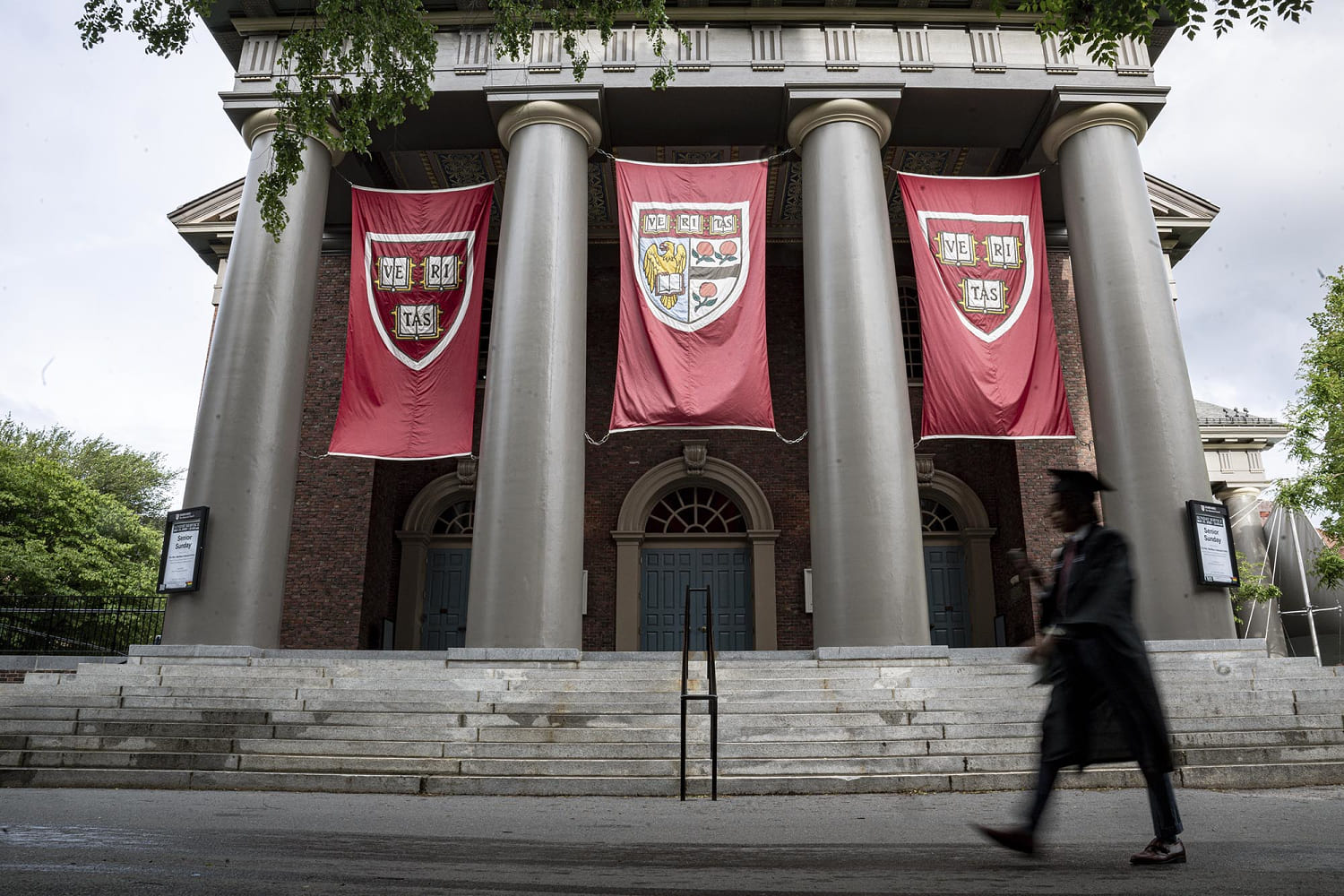
It’s hard to feel much sympathy for Harvard University. It has historically absorbed billions of dollars in federal subsidies and research grants, while discriminating against some applicants based on their race prior to the 2022 Supreme Court decision in Students for Fair Admissions v. Harvard.
But now, President Donald Trump is ending all remaining federal grants to Harvard. And beyond cutting off federal money, the administration has gone further by threatening to block Harvard’s access to all foreign students in 30 days. Worse, it is pausing all interviews for new foreign students, as well as the so-called exchange visaswhile the administration considers whether and how to vet applicants’ social media accounts.
The administration is completely off-base in its attacks on universities and international students.
This goes way too far. There’s not a single terrorist attack in the last 50 years that would have been prevented by such a thorough and subjective search, but the administration would likely use it to exclude students with unpopular opinions. (On Thursday, a federal judge extended a temporary order blocking the administration’s attempt to bar Harvard from enrolling international students.)
Moreover, the administration is completely off-base in its attacks on universities and international students.
There are more than 1.1 million foreign students enrolled in American colleges and universities, amounting to just under 6% of the 19.1 million students enrolled in higher education. According to the Open Doors 2024 Report on International Educational Exchange56% of foreign students studied STEM, about 25% studied math and computer science, and nearly one-fifth studied engineering.
Skilled immigrants often start as foreign students and end up staying. Elon Musk started as a student at the University of Pennsylvania before getting an H-1B visa. Usually, after the H-1B (or another temporary visa called OPT), the migrants are sponsored for a green card, and then they can eventually become American citizens, just as Musk did. Another South African immigrant, Patrick Soon-Shiong, completed his surgical training at UCLA before inventing the drug Abraxane for lung, breast and pancreatic cancer.
“The innovation this country spawns is the only way I think that America continues to be the leader of the world,” Soon-Shiong, now a billionaire and the owner of the Los Angeles Times, said in 2017. “We still have the best universities, and I think it’s crazy that (foreigners) come here and we train them as masters and PhDs and then we kick them out. That’s ridiculous.”
The data bears out Soon-Shiong’s observations in innovation and entrepreneurship. From 1950-2000, a 1 percentage point increase in immigrants results in 15% more patents on a per capita basis. But entrepreneurship is even more important for innovation, and that’s where immigrants really shine. According to research by economist Pierre Azoulay and his co-authorsimmigrants are 80% more likely to start a business, their businesses created about 50% more jobs, they start more businesses at every size, and they pay about 1% higher wages than firms started by native-born Americans.
Abandoning student visas doesn’t mean kicking high-skilled immigrants out today, but it does mean that many fewer will be here in the future because they’re kicked off the bottom rung of the ladder. Canceling student visas will actually counteract the intent of the administration’s trade war.
The administration started its trade war on the false notion that countries with trade surpluses have taken advantage of Americans. “We’re just not going to get ripped off anymore,” Commerce Secretary Howard Lutnick said. But even if the trade surplus were an economically meaningful number, ending student visas is counterproductive because, according to the Bureau of Economic Analysisthey amount to a $50.2 billion export. The effect of canceling student visas is to increase the Trade deficit.
Secretary of State Marco Rubio recently announced that the administration will more aggressively review visas for Chinese students with ties to the Communist Party and who study “critical fields.”
Canceling student visas will actually counteract the intent of the administration’s trade war.
Espionage is a legitimate concernalthough an overblown one, but sending a signal to intelligent and hard-working Chinese students that the U.S. doesn’t want them will do more harm. If the administration is truly worried about China, it makes little sense to lock their smartest students in a communist dictatorship during a trade war in which one of the main goals is to reduce the trade deficit with China (even though the latter point isn’t important).
Beyond just the myopic assaults on immigration, policing international students’ speech isn’t a worthy task for America’s border bureaucrats. And even if it were, they should be able to do it without pausing all student visas. The Trump administration should abandon this endeavor before it starts.
Alex Nowrasteh
Alex Nowrasteh is the vice president for economic and social policy studies at the Cato Institute.


State bar associations play an important accountability role across the country. Trump administration lawyers know that their legal licenses are subject to censure, because practicing law in the United States remains a privilege, not a right. But if Attorney General Pam Bondi has her way, even this guardrail could disappear.
Last week, Bondi proposed a new rule that would allow the Department of Justice to take over investigations of alleged attorney misconduct of its own lawyers. State bar authorities would have to pause their investigations while the Justice Department conducts its own probe. The rule gives the DOJ the ability to delay or even derail a state investigation.
The rule gives the DOJ the ability to delay or even derail a state investigation.
It doesn’t feel like a coincidence that there has been a series of state ethics complaints filed against Trump administration lawyers, including Bondi, Deputy Attorney General Todd Blanche and federal prosecutors handling immigration cases. President Donald Trump’s polarizing pardon attorney Ed Martin is currently facing just such a complaint from the D.C. Bar.
As outlined in the Federal Registerthe proposal argues that “political activists have weaponized the bar complaint and investigation process.” Of course, even if it were true that frivolous complaints were being filed against Justice Department lawyers, state bar grievance authorities should be able to weed them out just as effectively as the department’s own investigators. In fact, having an independent review process would provide more credibility than the DOJ would in dismissing such claims.
Federal law requires all federal prosecutors to comply with the ethics rules of the state where they practice law, including the District of Columbia. The new rule requires Justice Department lawyers to obey the substance of their state’s ethics rules, but gives the DOJ the authority to investigate violations. According to the proposal, whenever a bar grievance is filed, “the Department will have the right to review the allegations in the first instance and shall request that the bar disciplinary authority suspend any parallel investigations until the completion of the Department’s review.”

From there, multiple scenarios are possible. First, “if the Attorney General decides not to complete her review,” the state bar disciplinary authorities “may resume their investigations or disciplinary hearings.” Second, if the attorney general finds misconduct, “the State bar disciplinary authorities will then have the option of beginning or resuming their investigations or disciplinary proceedings” and, if appropriate, “to impose additional sanctions beyond those already imposed by the Department, including suspension or permanent disbarment.”
But what is missing from the language of the rule itself is a potential third scenario. What if the attorney general clears the attorney of misconduct? On that, the rule is silent.
Say, for example, a federal prosecutor in Minnesota is accused of making false representations to an immigration judge. The judge or opposing party could file a grievance with the Minnesota Office of Lawyers Professional Responsibility. Under the new rule, the state bar would be required to stand down and await a DOJ investigation, with no provisions for time limits or transparency. Of course, even the delay could compromise the subsequent Minnesota probe. But if the Justice Department clears the lawyer, it is also unclear what happens next. According to Bloomberg“If the DOJ finds no violation, that blocks the state from investigating the alleged infraction.” This conclusion may be a fair inference for a department that has thrown its weight around. According to the proposed rule, “the Attorney General retains the discretion to displace State bar enforcement and to create an entirely Federal enforcement mechanism.”
But even if the rule merely delays state enforcement, the DOJ could slow-walk a grievance into oblivion. According to a comment posted by the Illinois State Bar Association, the DOJ is attempting to “shield” its lawyers from accountability. The proposed rule also includes an ominous provision that if bar disciplinary authorities refuse the attorney general’s request, “the Department shall take appropriate action to prevent the bar disciplinary authorities from interfering with the Attorney General’s review of the allegations.”
Even if the rule merely delays state enforcement, the DOJ could slow-walk a grievance into oblivion.
In the decades since the Watergate scandal, the Justice Department has conducted robust investigations of allegations of ethical misconduct by its own attorneys and imposed discipline. In fact, it was common for state bar authorities to wait for the DOJ to complete its investigations before initiating their own probes, because the federal process held attorneys to standards even higher than state ethics rules. But that landscape changed last year, when Bondi fired the head of the department’s Office of Professional Responsibility and its chief ethics officer. Now there is a risk that DOJ lawyers will be even further sheltered from meaningful ethical oversight.
In the first nine days of the 30-day notice and comment period, the proposed rule has attracted more than 30,000 comments. And once implemented, the rule will no doubt invite legal challenges and ultimately could be struck down. But until then, it threatens to give carte blanche to DOJ lawyers who represent the Trump administration not just zealously but with impunity, knowing that the attorney general can simply delay or even block state bar ethics complaints. And the rule represents one more openly regressive blow against the checks and balances that are essential to democracy.
Barbara McQuade is a former Michigan U.S. attorney and legal analyst.
The Dictatorship
Trump administration reportedly seeks to use HIV aid to extract minerals from Zambia
Donald Trump’s imperial administration appears intent on plundering and exploiting the African continent by any means.
As the president looks around the globe for ways to acquire the world’s resourcesa new report from The New York Times underscored just how low the administration is willing to go.
And in this case, the downstream impact could be catastrophic for Americans. The Times’ report, which MS NOW has not independently confirmed, said the Trump administration might withhold HIV aid to Zambia to try to coerce the nation to hand over critical minerals.
The State Department is considering withholding lifesaving assistance to people with H.I.V. in Zambia as a negotiating tactic to force the government of the southern African country to sign a deal giving the United States more access to its critical minerals.
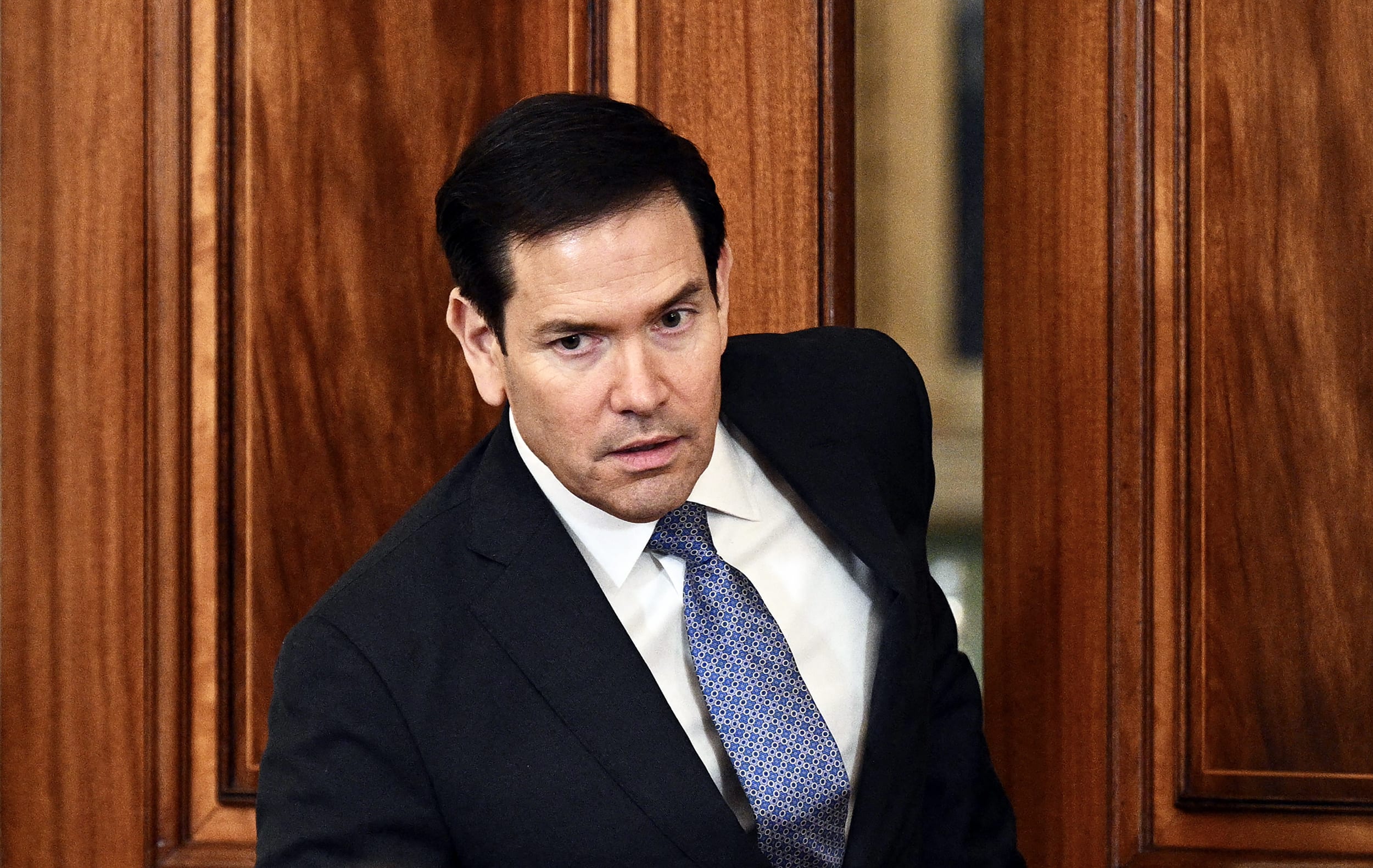
‘We will only secure our priorities by demonstrating willingness to publicly take support away from Zambia on a massive scale,’ a draft of a memo prepared for Secretary of State Marco Rubio by the department’s Africa Bureau staff says. A copy of the memo was obtained by The New York Times.
The Times’ report noted that about 1.3 million people in Zambia rely on daily HIV treatment through a U.S. program known as PEPFAR, and the memo said the administration is considering whether to “significantly cut assistance” as soon as May to try to force the Zambian government’s hand.
According to the report, the administration also has tried to pressure African nations to sign new agreements to hand over minerals and sensitive health data, including information about abortionsin exchange for health assistance.
I recently wrote about the Trump administration attempting to force Benin to participate in a vaccine study that garnered comparisons to the racist Tuskegee experiment. And one might say this plan to similarly coerce Zambia is as idiotic as it is cruel.
HIV and AIDS prevention experts have already warned that the administration’s cuts to PEPFAR, or the U.S. President’s Emergency Plan for AIDS Reliefstand to cause 6.6 million new HIV infections and 4.2 million new AIDS-related deaths, between 2025 and 2029.
And because Americans do not live in an antiseptic bubble, enabling the spread of HIV — as the Trump administration risks doing with its ultimatum to Zambia — may very well threaten public health in the United States as well.
We can see here how a combination of racism, greed and unabashed ignorance can put the entire world at risk. Contrary to his predecessor’s administration, which sought to improve on the paternalistic and exploitative relationship the U.S. has long maintained with African nations, Trump’s appears to see the continent — filled with nations he has labeled “s—hole” countries — as a waste bin where it can discard people targeted in the president’s racist anti-immigrant crackdownand a region from which to extract coveted minerals.
Ja’han Jones is an MS NOW opinion blogger. He previously wrote The ReidOut Blog.
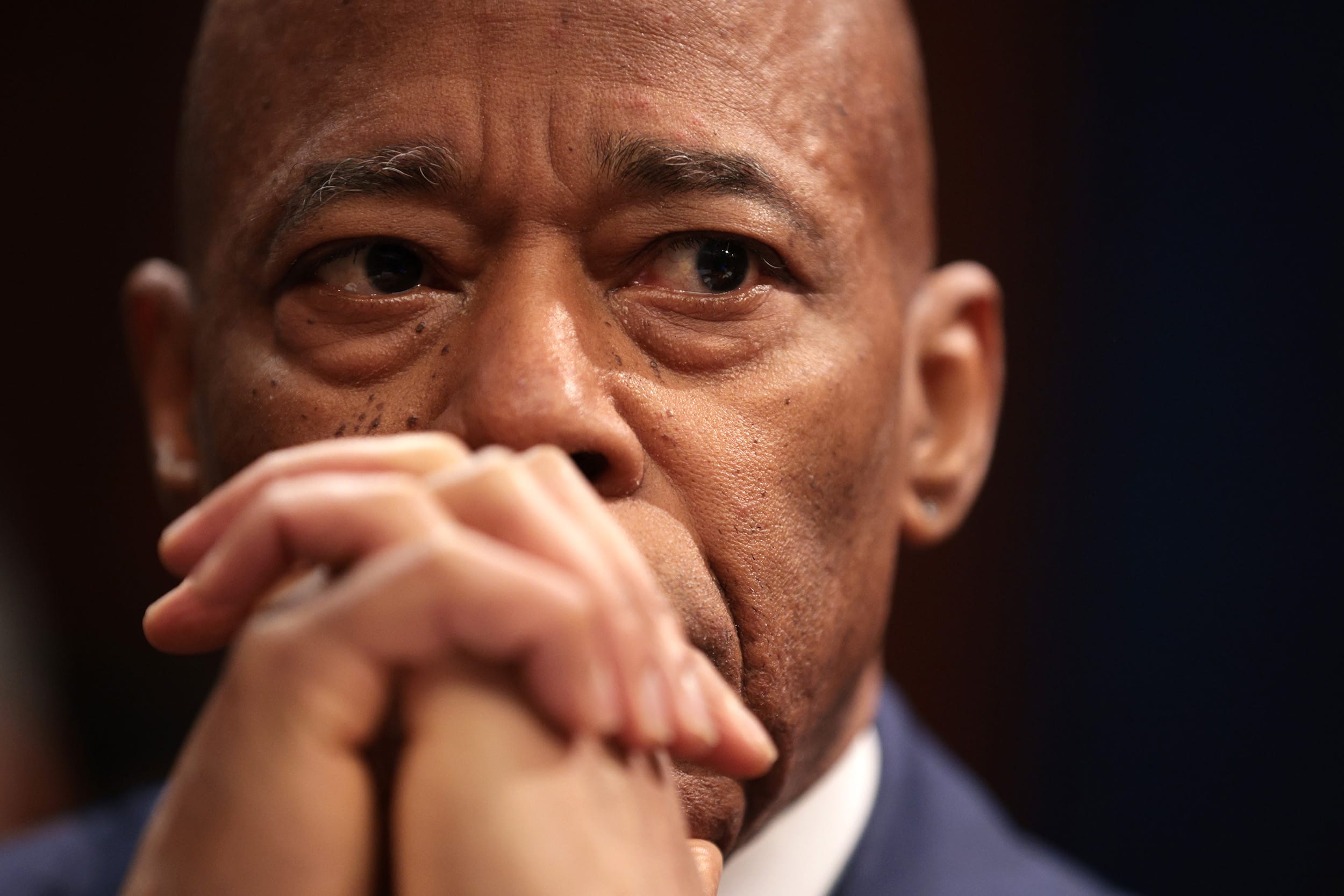
New York City is seeking to end its law department’s representation of former Mayor Eric Adams in a sexual assault lawsuit, a move that, if approved by a judge, means Adams will have to hire his own attorney.
The city requested permission to pull its representation in a court filing Tuesday, arguing that Adams “was not acting within the scope of his City employment” at the time of the alleged assault, which the plaintiff said happened decades ago.
Adams was sued in 2024 by a woman who alleged that he sexually assaulted her in a car in 1993 when she sought his help with her career at the Transit Bureau of the New York Police Department.
She turned to Adams, who was a member of the Guardians Association, a fraternal order of Black members of the NYPD, “because he had held himself out to be an advocate for equality and fair treatment for Black employees,” she said in the lawsuit.
“Based on my review of new evidence since the original decision to represent him was made, I have determined that he is not entitled to representation by the City in this matter,” the city’s top lawyer, Steve Banks, said this week in a statement about Adams’ case.
The plaintiff’s legal team said the Adult Survivors Act, a state law that opened a one-year window for sexual violence survivors to file civil lawsuits against their abusers beyond the statute of limitations, prompted her to seek recourse for Adams’ alleged actions.
Adams has denied the allegations. When the lawsuit was first filed, he said, “I don’t recall ever meeting this person during my time in the police department.”
Neither Mayor Zohran Mamdani’s office nor Adams’ spokesperson responded to requests for comment.
MS NOW generally does not identify people who say they have been victims of sexual assault.
Mamdani’s spokeswoman, Dora Pekec, told the”https://gothamist.com/news/nyc-moves-to-end-legal-representation-of-ex-mayor-adams-in-sex-abuse-case”>Gothamist that the mayor was not involved in Banks’ decision.
Adams has kept a low profile since he left office in December. His re-election bid was thwarted by scandals that dominated the end of his term: a criminal indictment for campaign finance offenses in 2024 and then the dismissal of that federal case by President Donald Trump’s Justice Department under dubious circumstances.
Clarissa-Jan Lim is a breaking news reporter for MS NOW. She was previously a senior reporter and editor at BuzzFeed News.
- White House releases DHS funding offer
- La Shawn Ford wins Dem primary to succeed Illinois Rep. Danny Davis
- Stratton wins Illinois primary, giving Dems another Black female senator
- AIPAC attacks fall flat as Democrat Daniel Biss wins Illinois House primary
- AIPAC, AI money propels Melissa Bean to comeback victory in Illinois
- White House releases DHS funding offer
- The DOJ’s ethics proposal would have a corrupt fox guarding the henhouse
- Trump administration reportedly seeks to use HIV aid to extract minerals from Zambia
- NYC moves to quit defending Eric Adams in sexual assault suit
- Haitian, Somali and Syrian immigrants deserve protection in the U.S.
-

 The Dictatorship1 year ago
Luigi Mangione acknowledges public support in first official statement since arrest
-

 Politics1 year ago
Former ‘Squad’ members launching ‘Bowman and Bush’ YouTube show
-

 Politics1 year ago
Blue Light News’s Editorial Director Ryan Hutchins speaks at Blue Light News’s 2025 Governors Summit
-

 Politics1 year ago
Former Kentucky AG Daniel Cameron launches Senate bid
-

 The Dictatorship6 months ago
Mike Johnson sums up the GOP’s arrogant position on military occupation with two words
-

 The Dictatorship1 year ago
Pete Hegseth’s tenure at the Pentagon goes from bad to worse
-

 Politics11 months ago
Democrat challenging Joni Ernst: I want to ‘tear down’ party, ‘build it back up’
-
Uncategorized1 year ago
Bob Good to step down as Freedom Caucus chair this week