
The Dictatorship
How the far-right Heritage Foundation keeps accidentally proving liberals right


America is experiencing a baby slumpand the MAGA pro-natalist movement claims to have just the solutions for it. But they’re not what you might expect.
According to data the Centers for Disease Control and Prevention released on Wednesday, the American fertility rate currently sits at around 1.6 per woman — a rate just 1% higher than the record low set in 2023, and significantly lower than the replacement rate of 2.1. The U.S. birth rate, which has been on a steady downward slide since 2007, has the Trumpist right worried about the fall of “Western civilization.”
At one of his first appearances after being sworn in as vice president, JD Vance stated, “Very simply, I want to see more babies in America.” At the same event, Florida Gov. Ron DeSantis awkwardly quipped, “Florida is not just the place that woke goes to die, it’s the place that babies go to live.”
Elon Musk has characterized the drop in birth rates as a catastrophe leading to civilizational ‘collapse.’
Transportation Secretary Sean Duffy, a father of nine, issued a memo shortly after being confirmed by the Senate stating that his department would be prioritizing federal transportation-related funding to states and districts with marriage and birth rates above the national average. (How are highways made? Well, when a mommy and a daddy love each other very much…)
Elon Musk has characterized the drop in birth rates as a catastrophe leading to civilizational “collapse,” warned that it “will lead to mass extinction of entire nations” and claimed on Fox News that unless the birth rate increases, “civilization will disappear.” The father of at least 14 children by at least four different women, he’s maybe joked, maybe bragged about “doing his part” to rectify the global fertility rate.
In recent years, natalism has made cultural inroads as well. Simone and Malcolm Collins seem to pop up everywhere in the pro-natalist space, from the baby-fever-afflicted White House to a recent annual conference on natalism known as NatalCon. (They’ve been profiled by major media outlets so many times that Slate felt the need to run an article on them titled, “For the Love of God, Stop Profiling This Couple!”) The Collinses say they have relied on a sort of Gattaca-adjacent technology to screen all of their embryos before choosing the strongest ones to implant in Simone, thus ensuring their children will be “highly intelligent.”
And no social media feed is safe from the deluge of tradwife and big-family content that makes it look like the only thing standing between ennui and a full life is a brood of four to eight children.
Many have described the new MAGA-spiced “pro-natalism” as just old-fashioned American eugenics in a Tesla. But there’s something else going on here. A recent New York Times piece details some of the new ideas MAGA pro-natalist thinkers are batting around as a way to goose the birth rate, and, well, they sound a little familiar.
According to the Times’ reporting, the conservative-leaning Heritage Foundation think tank has formed its own natalist task force — the DeVos Center for Life, Religion, and Family.
Heritage’s “newest and boldest” (their words) policy idea is … a tax credit for married couples with children that increases the more children the couple has. That would have been a new and bold idea in 1991, when 16-term Connecticut Democrat and longtime Child Tax Credit advocate Rep. Rosa DeLauro entered Congress. Heritage’s bold new idea is to do a version of a law that’s been on the books since 1997, except it would only benefit married parents, who typically are in a higher income bracket than single parents and thus don’t need as much help.
Columbusing — the act of ‘discovering something that is not new’ — is happening in abundance among the pro-natalist MAGA right.
Another pro-natalist pitch put forth in the Times article is to pay women a $5,000 bonus to have babies. Which, again, sounds like a rehashing of the Child Tax Credit, this time increasing the size of the cash payout and making it single-use. By the way, in recent years, Republicans have had opportunities to permanently expand the child tax credit that already exists — and have blocked it at every turn.
Columbusing — the act of “discovering something that is not new” — is happening in abundance among the pro-natalist MAGA right. They’re taking long-held center-left policy proposals, throwing a Western-centric, nationalistic sheen on them, and acting as if they’re newly discovered innovations in good governance.
One Heritage Foundation thinker suggested that rather than prescribing IVF as a panacea, Trump’s pro-natalists should invest in getting to the bottom of what causes infertility. “The idea, called Restorative Reproductive Medicine, revolves around treating the ‘root causes’ of infertility, and leaving IVF as a last resort,” the Times reported.
Great “new idea,” but it’s also well-trod territory.
In 2010, for example, pre-eminent American scholar Greta Gaard wrote that reproductive technologies like IVF “medicalize and thus depoliticize the contemporary phenomenon of decreased fertility in first-world industrialized societies, personalizing and privatizing both the problem and the solution when the root of this phenomenon may be more usefully addressed as a problem of PCBs, POPs, and other toxic by-products of industrialized culture.”
The Heritage Foundation seems to have somehow stumbled into embracing an idea rooted in ecofeminism.
And scientists have been looking into the root causes of infertility for quite some time. Much of the research has found that, as insinuated by both Gaard and memes shared by Maha moms on Instagram, environmental factors like air and water pollution are at least partially to blame. For example, a handful of studies have linked exposure to polyfluoroalkyl substances (PFAS) to both male and female infertilitywhich makes the Trump administration’s recent move to withdraw limits on PFAS allowed in industrial wastewater — and the other myriad rollbacks to clean air and water standards — counterproductive to the natalist cause.
Most young women know how to get pregnant, despite a decadeslong fight from the right to keep sexual and reproductive health information away from them. But another Heritage source featured in the Times piece wonders: Could the issue be that women simply don’t know how to get pregnant? Their solution to this imagined problem is also a rerun: teaching young women about their bodies and menstrual cycles, perhaps in a classroom setting.
Like, say, a school sex education program.
I see no evidence that anybody in pro-natalist MAGA land bothered to ask reproductive-age American women why they don’t want to have as many babies as previous generations did.
There are myriad factors that contribute to a country’s birth rate rising or falling, and researchers still haven’t nailed down how, exactly, to convince women to have more children when they’d rather not. A Pew study released last year found that 64% of American women under 50 who don’t have any children say they simply do not want to have them. That leaves the Trump White House with an ever-shrinking pool of potential willing mothers to make up the difference.
Which might necessitate some kind of incentive for those patriotic birthers willing to get in the birthing stirrups over and over again for the good of their country. Might I suggest, perhaps, a medal for women with six or more children?
Most young women know how to get pregnant, despite a decadeslong fight from the right to keep sexual and reproductive health information away from them.
This idea also has a precedent, although it’s older than the proposals that have been basic Democratic fare for four or five decades. In 1927, a program started in Italy called “Battle for Births,” which aimed to increase the population from 40 million to 60 million by 1950. The state would award women with five or more children a medal for bravery, among other measures designed to reward reproduction and punish childlessness. The most prolific birthers would even have a chance to meet their country’s leader — Benito Mussolini.
Sadly for the medal winners, the Italian Battle for Births was a failure. The population only increased 7.5 million by 1950. The Italian birth rate is currently among the lowest in Europe, at 1.24. But it might work for us.
Goosing the birth rate has flummoxed policymakers for generations. But one factor that’s been shown — over and over again — to make women in industrialized countries actually want to have more children was their male partners doing more around the house.
One potential solution to raising the birth rate in the U.S. is not handing out medals or writing checks. It’s for men to evolve. Let’s see how long it takes the Heritage Foundation to come up with that one.
Erin Gloria Ryan
Erin Ryan is a writer and podcaster. She’s the creator, cohost and executive producer of Crooked Media’s Hysteria podcast and a frequent contributor to other Crooked Media podcasts and video series. She’s written for It’s Always Sunny in Philadelphia, The Daily Beast, Jezebel, and other TV shows and publications.


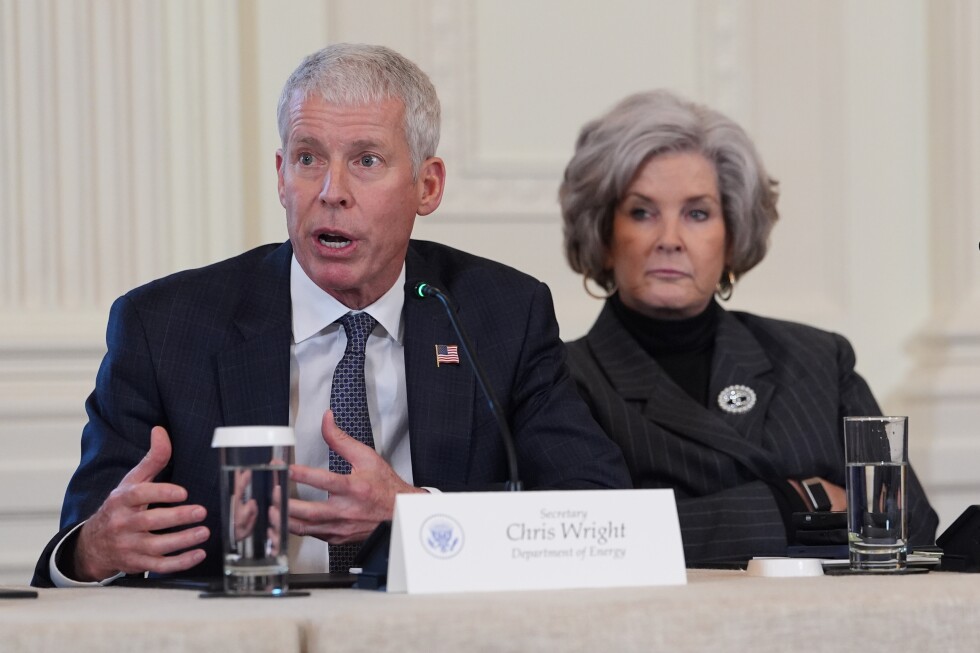
WASHINGTON (AP) — The Trump administration said Friday that its use of emergency orders to keep aging coal-fired plants operating helped prevent a major blackout from power shortages during the brutally frigid weather that has gripped most of America for the past two weeks.
Scattered outages occurred because of ice accumulation that felled local power lines, leaving hundreds of thousands without power, at least briefly. But the nation’s regional power grids generally maintained reliable electricity service, with natural gas and coal leading the way, Energy Secretary Chris Wright and other officials said.
“The big picture story is where we actually got energy from during this storm,” Wright said at a news conference at the Energy Department. “In fact, we had times where our existing capacity couldn’t deliver anything and the lights would have gone out if not for emergency orders.’’
Critics said Wright’s comments understated the role that wind and solar power played during the storm, adding that the administration’s orders over the past nine months to keep some oil and coal-fired plants open past their planned retirement dates could cost U.S. utility customers billions of dollars over the next few years.
In the lead-up to the storm and cold temperatures, Wright also excused utilities from pollution limits on fossil fuel-fired plants and ordered that backup generators at data centers and other large facilities be available to grid operators and utilities to supply emergency power.
Trump administration’s ‘way of doing business’
Deputy Energy Secretary James Danly drew a contrast with the grid performance during a similar severe storm in 2021, calling the Trump administration’s approach a “new way of doing business” during power emergencies.
“The bottom line here is that we managed to ensure that there was sufficient capacity,” Danly said. “Not one area had a blackout or a forced outage due to loss of capacity.”
There were nearly 1 million outages during the storm’s peak, but most were not long-lasting, Danly said. Nearly 55,000 customers were without power as of Friday, including more than 17,000 in Mississippi and 7,000 in Texas, according to the outage tracking website poweroutage.us.
Wright cited statistics showing that natural gas — long the nation’s leading source of electricity — provided 43% of electric power at peak generation during the storm, followed by coal at 24% and nuclear at 15%. Renewables such as wind, solar and hydropower provided a combined 14%, Wright said.
Wright and President Donald Trump have frequently made the case for their fossil fuel-friendly orders, blaming the Biden administration and Democratic-leaning states for policies they say threaten the reliability of the nation’s electric grid and drive up electricity bills.
The proportion of coal and natural gas power rose substantially during the storm, while the proportion of wind power used during the storm dropped by 40%, Wright said. Solar stayed flat at a fraction of the amount of coal and natural gas power.
Wright dismissed solar as “meaningless” during a severe storm in certain regions and said, “It’s not an all-weather power source.”
Pushback on orders to keep coal plants running
Some state and utility officials have chafed at Wright’s orders to keep plants operating, saying they’re not necessary for emergency power and are simply raising electric bills for regular ratepayers to keep relatively expensive plants operating.
Preventing the nation’s coal plants from retiring over the next three years could cost consumers at least $3 billion per year, according to a report from Grid Strategies, a consulting firm.
“A lot of these plants were retiring because they’re no longer economic to operate,” said Michael Goggin, an executive vice president at Grid Strategies. “It’s expensive to keep them going.”
Opponents have challenged the coal orders in court, arguing that Congress intended for emergency powers to be used only in rare, temporary cases.
The nonprofit owners of the Craig Generating Station in Colorado, the Tri-State Generation and Transmission Association and Platte River Power Authority, last week filed a protest with the Energy Department seeking to reverse Wright’s order to keep its Unit 1 operating. The Dec. 30 order came one day before it was to shut down.
In its request for a rehearing, the nonprofits said its members and communities were unfairly being forced to pay to keep a costly and unreliable plant operating and that the department didn’t even comply with the law requiring it to show why this was the best alternative. They also said the department’s order unfairly punished them for the mistakes of other utilities.
Wright brushed off the criticism, saying there would be “far larger costs from blackouts.”
Solar and wind said to save consumers ‘billions’
Clean energy advocates said that renewable sources saved consumers billions during the storm and helped ensure the lights stayed on, especially in regions that have significant investments in wind, solar, and energy storage.
In Texas, wind, solar and storage provided about 25% of power for the grid’s 27 million customers — a major increase over 2021 and a key reason blackouts were largely avoided, said John Hensley, a senior vice president at the American Clean Power Association, an industry group.
Wind and solar also accounted for significant power in the Midwest and Southwest, Hensley said. In the mid-Atlantic region served by grid operator PJM, only 5% of power came from wind and solar generation, a fact Hensley blamed on lack of investment in renewables in the region, as well as hostility by the Trump administration to new wind and solar power.
Blaming renewables for not performing during the storm “is like trying to blame someone on the bench for losing the game,” Hensley said. “They didn’t get a chance” to play.
The Dictatorship
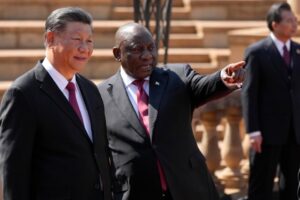
Facing high Trump tariffs, South Africa signs framework agreement for trade deal with China
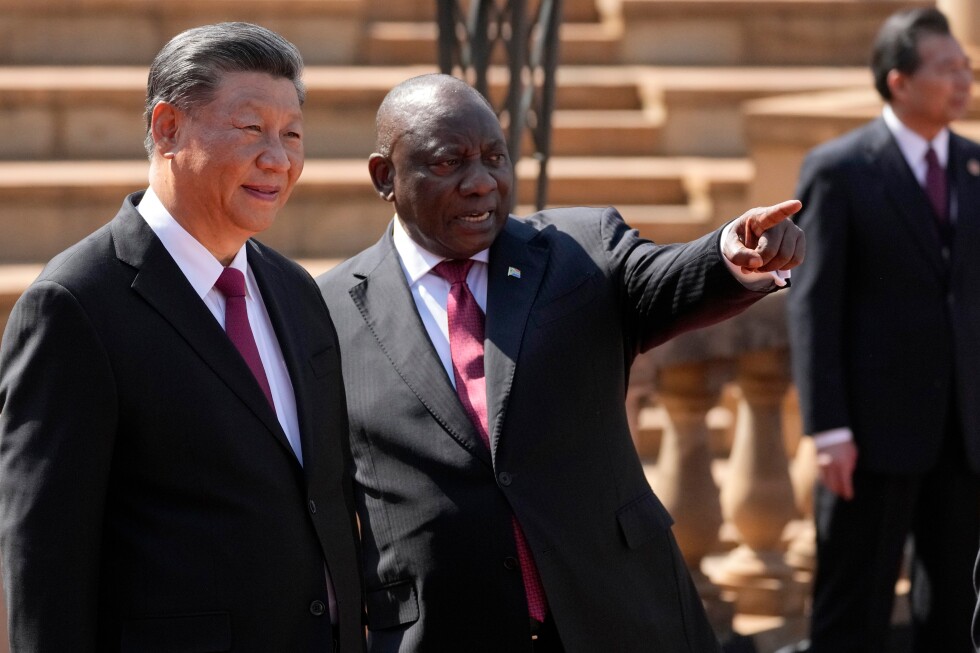
CAPE TOWN, South Africa (AP) — China and South Africa signed a framework agreement for a new trade deal on Friday as Africa’s leading economy looks to other options following the high import tariffs imposed on it by the U.S. and its diplomatic fallout with the Trump administration.
South Africa’s Ministry of Trade and Industry said the agreement would start negotiations over a deal that would give some South African goods, such as fruit, duty-free access to the Chinese market. The ministry said it expected the trade deal to be finalized by the end of March.
In return, the trade ministry said China will get enhanced investment opportunities in South Africa, where its car sales have seen rapid growth.
The U.S. slapped 30% duties on some South African goods under U.S. President Donald Trump’s reciprocal tariffs policy — one of the higher rates applied across the world. South Africa has said it is still negotiating with the U.S. for a better deal.
The China-South Africa deal follows others looking for alternatives to U.S. partnership in the face of Trump’s aggressive trade policies.
The announcement on the negotiations between China and South Africa came days after Trump issued a short-term renewal of a longstanding free-trade agreement between the U.S. and African nations. The U.S. extended the African Growth and Opportunity Act, which South Africa is a major beneficiary of, just until the end of the year and indicated it would be modified to fit the administration’s America First policy.
China is already South Africa’s largest trade partner for both imports and exports, while Chinese economic influence across the African continent continues to grow and it dominates in the extraction of Africa’s critical minerals that are key components for new high-tech products.
“South Africa looks forward to working with China in a friendly, pragmatic and flexible manner,” the trade ministry said.
Trade and Industry Minister Parks Tau, who traveled to China to sign the agreement, said the deal would benefit South Africa’s mining, agriculture, renewable energy and technology sectors.
U.S.-South Africa diplomatic ties have plunged to their worst point in decades after the Trump administration accused South Africa of pursuing an anti-American foreign policy and allowing the violent persecution of a white minority group at home. South Africa’s government has denied allegations that white Afrikaner farmers are being killed in a widespread effort to seize their land as baseless.
Trump has also barred South Africa from taking part in meetings of the Group of 20 rich and developing nations this year in the U.S.
South Africa’s biggest exports to China are gold, iron ore and platinum-group metals, while Chinese cars have quickly grown their market share in South Africa. Industry groups estimate Chinese brands have grown from around 2.8% of the South African market in 2020 to between 11% and 15% last year.
China’s BYD overtook Elon Musk’s Tesla in 2025 as the world’s biggest electric vehicle maker.
___
AP Africa news: https://apnews.com/hub/africa
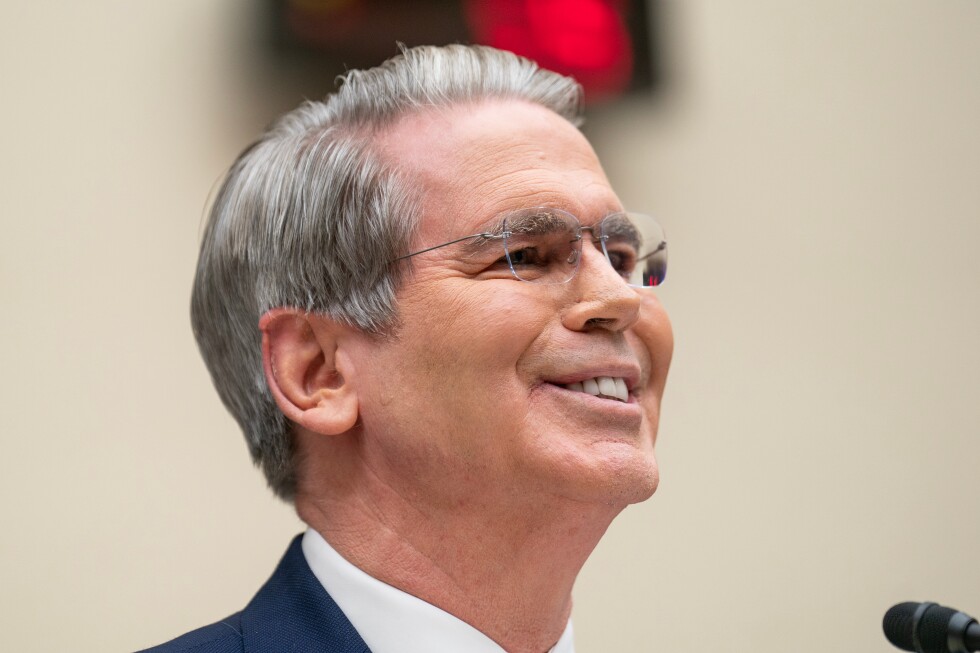

WASHINGTON (AP) — A hearing about oversight of the U.S. financial system devolved into insults several times Wednesday as Treasury Secretary Scott Bessent clashed with Democratic lawmakers over fiscal policy, the business dealings of the Trump family and other issues.
Appearances by treasury secretaries on Capitol Hill are more typically known for staid exchanges over economic policy than for political theater, but Wednesday’s hearing of the House Financial Services Committee hearing featured several fiery exchanges between the Republican Cabinet member and Democrats, with Bessent even lobbing insults back to the lawmakers.
Bessent called Rep. Sylvia Garcia “confused” when she questioned how undocumented immigrants could affect housing affordability across the country, prompting the Texas Democrat to snap back, “Don’t be demeaning to me, alright?”
Bessent later mocked a question from Rep. Stephen Lynch, D-Mass., about shuttered investigations into cryptocurrency firms. Lynch expressed frustration with Bessent’s interruptions, saying, “Mister Chairman, the answers have to be responsive if we are going to have a serious hearing.”
Bessent replied, “Well, the questions have to be serious.”
After a back-and-forth over whether tariffs cause inflation or one-time price increases for consumers, California Democratic Rep. Maxine Waters asked committee leaders to intervene with Bessent: “Can someone shut him up?”
And in a fiery exchange with Rep. Gregory Meeks over the Abu Dhabi royal family’s investment into the Trump family’s World Liberty Financial cryptocurrency firm last year, the New York Democrat dropped an F-bomb as he shouted at Bessent: “Stop covering for the president! Stop being a flunky!”
The Treasury Department did not immediately respond to a request for comment on the fireworks.
Bessent’s performance was “not a role you typically see a treasury secretary play,” said Graham Steele, a former assistant secretary for financial institutions under Biden-era Treasury Secretary Janet Yellen. The department has traditionally “been removed from some of the day-to-day, hand-to-hand political combat,” Steele said in an interview.
He recalled his former boss having tense exchanges over climate change and policy issues with Republican lawmakers during committee hearings, but the exchanges were not personal, he said, noting treasury secretaries have to strike a “delicate balance” of working with the White House while safeguarding the “economic stature” of the country internationally.
In recent months, Bessent has ratcheted up his insults when it comes to Democratic leaders.
He has called California Gov. Gavin Newsom “economically illiterate,” compared him to the fictional serial killer Patrick Bateman, and called him “a brontosaurus with a brain the size of a walnut.” He has on several occasions called Massachusetts Sen. Elizabeth Warren an “American Peronist” after she told American financial institutions not to finance the Trump administration’s massive support package for Argentina.
Bessent’s combativeness is, in part, a sign of the times, said David Lublin, chair of the Department of Government at American University’s School of Public Affairs.
“President Trump has shown he likes belligerence and he likes nominees and others who defend him vociferously,” Lublin told The Associated Press.
“It’s hard to say that this is unusual for this political environment. What used to be the normal modicum of respect for Congress has frayed to the point of vanishing,” Lublin said.
What was unusual, in Lublin’s view, was for Bessent to reveal his thoughts on monetary policy — normally the purview of the Federal Reserve — and his insistence that Trump has the right to interfere with the decision-making of the central bank. “You have a cabinet secretary defending the president’s efforts to erode institutions,” Lublin said.
On Thursday, Bessent will get another opportunity to spar with lawmakers. He is scheduled to appear before the Senate Banking, Housing and Urban Affairs Committee on the same topic: the annual report by the Financial Stability Oversight Council, which Bessent leads.
- Lindsey Graham says Johnson is open to expanding Smith probe payouts
- Bessent refuses to say the administration will not sue the next Fed chair
- DHS negotiations have yet to get underway, Thune says, as shutdown clock ticks
- Tim Scott on DOJ probe into Powell: ‘I do not believe that he committed a crime’ in Fed HQ testimony
- Capitol agenda: Lawmakers brace for a DHS shutdown
- Energy chief says coal plant orders helped during winter storm
- Facing high Trump tariffs, South Africa signs framework agreement for trade deal with China
- Judge extends block on Trump admin’s bid to slash social services funds to 5 states

- Woodward says he was ‘crushed’ by Washington Post layoffs: Colleagues ‘deserve more’

- To the moon and back: Can the US recreate the magic of the lunar landing?

-

 The Dictatorship12 months ago
Luigi Mangione acknowledges public support in first official statement since arrest
-

 Politics12 months ago
Former ‘Squad’ members launching ‘Bowman and Bush’ YouTube show
-

 The Dictatorship5 months ago
Mike Johnson sums up the GOP’s arrogant position on military occupation with two words
-

 Politics12 months ago
Blue Light News’s Editorial Director Ryan Hutchins speaks at Blue Light News’s 2025 Governors Summit
-

 The Dictatorship12 months ago
Pete Hegseth’s tenure at the Pentagon goes from bad to worse
-

 Politics12 months ago
Former Kentucky AG Daniel Cameron launches Senate bid
-
Uncategorized1 year ago
Bob Good to step down as Freedom Caucus chair this week
-

 Politics10 months ago
Democrat challenging Joni Ernst: I want to ‘tear down’ party, ‘build it back up’