
The Dictatorship
How Marco Rubio is helping Trump consolidate unchecked power


When federal agents arrested Columbia graduate student Mahmoud Khalil this month, he was reportedly told that his student visa was being revoked. The supposed offense: leading protests denouncing Israel’s war in Gaza on the school’s New York City campus last year. When Khalil said he was a permanent resident with a green card, he was told that status was being revoked by the State Department.
Secretary of State Marco Rubio told CBS’s “Face the Nation” on Sunday that the Trump administration will continue to revoke the legal immigration status of folks he terms “Hamas supporters” in order to deport them. Rubio’s bold assertion may succeed in court thanks to a rarely used power the secretary of state possesses that can circumvent other statutes that could have protected Khalil from arrest and deportation.
President Donald Trump’s advisers and administrators have been laser-focused on finding potential edge cases in the law, that is, areas where loopholes and emergency powers can be exploited.
A 1990 update to the Immigration and Nationality Act says the rules that let the State Department deny a noncitizen admission into the U.S. can also be used to make a legal alien eligible for deportation. Immigrants can’t be barred from entry for holding beliefs that would be legal in the United States and, for now at least, there’s no question that believing Israel’s war in Gaza should end is, in fact, still legal for American citizens, as is protesting universities’ support in that war. But the law makes an exception if “the Secretary of State personally determines that the alien’s admission would compromise a compelling United States foreign policy interest.”
President Donald Trump’s advisers and administrators have been laser-focused on finding potential edge cases in the lawthat is, areas where loopholes and emergency powers can be exploited. In the flurry of executive orders issued from the White House, agencies have consistently been told to comply with their instructions “to the maximum extent of the law.” But that boilerplate language obscures how this administration is pushing the limits and trying to establish a new normal where there are no checks on whatever the president wants to do.
Admittedly, the federal code is filled with laws that leave plenty room for bad-faith interpretation. Congress has developed a habit of writing bills that allow the executive branch to bypass lawmakers in case of emergency or otherwise divest authority on the details of how the law will be executed. The Trump administration seeks to trigger those authorities in ways that Congress may not have intended, and the courts may not agree with, to give the veneer of legality as they proceed with their plans.
In Khalil’s case, leapfrogging the normal immigration channels means the Trump administration doesn’t need to accuse Khalil of a crime. Under this reading, as Trump lawyer Alina Habba told Fox Newseven handing out of pamphlets the administration doesn’t like could be grounds for deportation.
Trump is trying to use every legal provision, regardless of how flimsy, to justify the mass deportations that are central to his immigration policy. On the first day of this term, he declared an “emergency” along the southern border, invoking the powers granted in the National Emergencies Act to mobilize resources and the armed forces. Trump also issued a proclamation declaring that an “invasion” is ongoing, and that he would use the “inherent powers to control the borders” he possesses, regardless of the limitations of the Immigration and Nationality Act.
Those orders became the foundation on which his administration invoked the Alien Enemies Act to rapidly deport Venezuelans it accused of gang activity this weekend. The 1798 statute was part of the infamous Alien and Sedition Actswhich were passed in a time of quasi-war against France and Britain. In the proclamation announcing the policyTrump claimed that the law grants him the authority to expel Tren de Aragua, a gang designated as a terrorist organization under another questionable executive order. A federal judge paused the administration’s use of the law in an order issued Saturday, but an unknown number of immigrants have now been deported to El Salvador, even though many of them reportedly have no proven connection to the gang in question.
Meanwhile, Trump officials continue to hunt for the slightest pretense to invoke other emergency powers. The administration is reportedly looking for a reason to use Title 42a public health provision triggered early in the pandemic, to fully close the southern border again. Trump is waiting on a report from the Pentagon and Department of Homeland Security on whether he should call upon the Insurrection Act’s powers to deploy the military deeper into the United States. Civil liberties groups fear the 1807 law could be used to stifle civil protests, as Trump advocated during his first termwrongly transforming the armed forces and National Guard into a domestic police force.
The administration has also been busy in other areas finding weak points in the law to consolidate power. Office of Management and Budget Director Russel Vought has been especially adept at playing this game. Even before being sworn-in, he had helped draft orders that twisted the rules for hiring special government employees to quickly staff up the Department of Government Efficiency. He has since then been finding ways to skirt federal employment laws to downsize the governmenteffectively shuttering whole agencies and encouraging department heads to illegally fire staffers by deliberately misusing the authorities granted to fire “probationary” workers for their performance.
There’s a term in medicine for when a previously benign bit of biological code gets twisted and begins attacking the rest of the body: a cancer.
And where there is no foothold in the U.S. Code to exploit, the Trump administration has argued even greater authority: Article II of the Constitution. Justice Department lawyers have already claimed a constitutional power to ignore judges’ rulings on foreign affairs in the Alien Enemies Act case and defended his ability to impound whatever money he doesn’t want to spend. In a proclamation on defending the states from “invasion,” Trump claimed that under his Article II role as commander-in-chief of the military, he has a duty under Article IV, Section 4, to repel whatever immigrants he says shouldn’t enter the country.
Trump’s infamous 2019 claim that Article II means “I have to the right to do whatever I want as president” has thereby gone from the simplistic notion of a political neophyte to the core tenet of his second administration. And the GOP-controlled Congress has been quick to quietly bolster existing gray areas of the law to grant him even more leeway. For example, in passing the recent six-month spending bill, the House explicitly stripped away Congress’ power to challenge Trump’s use of the National Economic Emergencies Act in deploying his tariffs.
There’s still a chance the courts override Rubio’s determination on Khalil’s deportability. The government will likely have to establish how it reached its conclusion about the supposed foreign policy threat the Columbia grad student poses. (Rubio was also supposed to notify Congress of his decision, but no such notification has been reported as of Tuesday.) But if Rubio is willing to make that call in this case, how hard would it be for him to keep the ball rolling? What other “foreign policy interests” could be used to hastily deport legal permanent residents? It is a twisting of the intent of the law to bypass due process and establish a norm that could stifle dissent among American citizens as well. Trump has long been keen on the idea of being able to strip protestors of their citizenship; it would be foolish to put it past this administration to try it given the groundwork now being laid.
These attacks on the system from within are ongoing. In Khalil’s case and others, we are seeing the arcane nature of the U.S. federal bureaucracy being used as a weapon against itself. There’s a term in medicine for when a previously benign bit of biological code gets twisted and begins attacking the rest of the body: a cancer.
Congress and the courts need to excise this tumor before it metastasizes. It needs to happen soon though, as the prognosis for the rule of law is otherwise grim.

Hayes Brown is a writer and editor for BLN Daily, where he helps frame the news of the day for readers. He was previously at BuzzFeed News and holds a degree in international relations from Michigan State University.




WASHINGTON (AP) — The Trump administration on Wednesday opened a new trade investigation into manufacturing in foreign countries — an effort that comes after the Supreme Court struck down President Donald Trump’s previous use of tariffs by declaring an economic emergency.
Trump and his team have made clear that they’re seeking to replace the hundreds of billions of dollars in lost revenues after the Supreme Court’s February ruling by using different laws to establish new tariffs.
In this case, the administration is starting investigations under Section 301 of the Trade Act of 1974, which could eventually lead to new import taxes. But U.S. Trade Representative Jamieson Greer, in a Wednesday call with reporters, said he didn’t want to prejudge the outcome of the process.
“The policy remains the same — the tools may change depending on, you know, the vagaries of courts and other things,” said Greer, stressing that the goal was to protect American jobs.
U.S. Trade Representative Jamieson Greer speaks with reporters at the White House, Oct. 30, 2025, in Washington. (AP Photo/Alex Brandon, file)
U.S. Trade Representative Jamieson Greer speaks with reporters at the White House, Oct. 30, 2025, in Washington. (AP Photo/Alex Brandon, file)
The start of the process to fully replace Trump’s prior tariffs could invite a return of much of the drama that rattled the global economy last year. The since-overturned tariffs led to new frameworks with U.S. trade partners — and it’s unclear what impact a new set of import taxes could have on those agreements. Greer described the trade frameworks as standing on their own and suggested they were separate from the new investigation.
This new set of tariffs could play out against the backdrop of a war in Iran and midterm elections in which Democrats are running against Trump’s Republican allies by emphasizing that the public is owed tariff refunds following the Supreme Court decision.
Greer said that the investigation would examine excess industrial capacity and government backing that could give foreign companies an unfair advantage over U.S. companies.
Containers are stored in a cargo terminal in Frankfurt, Germany, Monday, Feb. 23, 2026. (AP Photo/Michael Probst)
Containers are stored in a cargo terminal in Frankfurt, Germany, Monday, Feb. 23, 2026. (AP Photo/Michael Probst)
The entities subject to the investigation include China, the European Union, Singapore, Switzerland, Norway, Indonesia, Malaysia, Cambodia, Thailand, South Korea, Vietnam, the self-governing island of Taiwan, Bangladesh, Mexico, Japan and India. The government is looking for what it deems to be persistent trade surpluses with the U.S. and policies such as subsidies and the suppression of workers’ wages, among other factors.
The administration is also rolling out a Section 301 investigation to ban the importing of goods made by forced labor.
Greer indicated that there could be additional Section 301 investigations over issues such as digital service taxes, pharmaceutical drug pricing and ocean pollution, among other possibilities. The Commerce Department has separate trade investigations under Section 232 of the 1962 Trade Expansion Act.
There are timeline pressures for the administration to complete its investigations. The administration has imposed 10% tariffs on foreign-made goods under section 122 of the 1974 Trade Act, but those expire after 150 days on July 24. Trump said he planned to raise that import tax to 15%, but he has yet to do so.
Containers are stacked at the Port of Long Beach Friday, Feb. 20, 2026, in Long Beach, Calif. (AP Photo/Damian Dovarganes)
Containers are stacked at the Port of Long Beach Friday, Feb. 20, 2026, in Long Beach, Calif. (AP Photo/Damian Dovarganes)
Greer said the administration is “keying off” the new investigation based on the 150-day deadline, saying that the goal is to bring “potential options” to Trump as soon as possible.
Greer said the investigations would be separate from the trade frameworks announced last year by Trump that set baseline tariff rates, which led to 15% rates charged on goods from the European Union, Japan and South Korea, among other places, that have since been overturned by the Supreme Court. Still, he suggested that the frameworks could play a factor.
“My sense is that these countries continue to want to deal, and President Trump continues to want the deal,” Greer said, adding that since tariffs are in play the commitments that the countries have made and the implementation of the frameworks would be considered as they “bump” against the demands of the Section 301 process.
___
AP writer Mae Anderson contributed to this report.
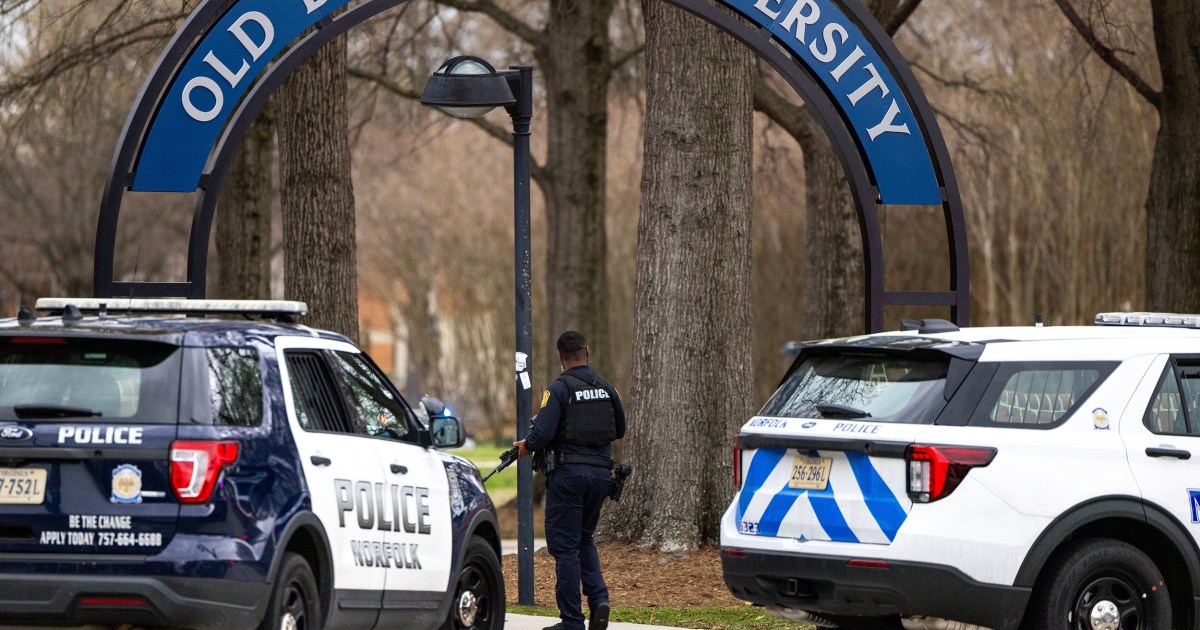
A gunman killed one person and injured two others in a shooting on Thursday at Old Dominion University in Virginia, Norfolk police said.
Authorities have identified the shooter as Mohamed Bailor Jalloh, a U.S. citizen who pleaded guilty in October 2016 to attempting to provide material support to the extremist militant group ISIS, two U.S. officials familiar with the matter told MS NOW.
In that 2016 case, Jalloh, a former member of the U.S. Army, admitted to attempting to donate money to the terror group and carry out a domestic attack in its name, the U.S. officials said.
The FBI is investigating the shooting as an act of terrorism. The bureau said members of the school’s ROTC program “terminated the threat” but did not shoot the gunman.
The U.S. Army Cadet Command (ROTC) confirmed in a statement Thursday evening that three victims were members of the university’s ROTC program, one of whom died. “We are deeply saddened by the loss of a member of the U.S. Army ROTC team,” the statement said.
Virginia Gov. Abigail Spanberger, in an X post Thursday night, identified the deceased victim as Lt. Col. Brandon Shah. “Lt. Col. Brandon Shah was killed today in his classroom at Old Dominion University. A devoted ROTC instructor, Lt. Col. Shah didn’t just lead a life of service to our country, he taught and led others to follow that path,” the governor said.
“The shooter is now deceased thanks to a group of brave students who stepped in and subdued him — actions that undoubtedly saved lives along with the quick response of law enforcement,” FBI Director Kash Patel said.
Shortly before 11 a.m. ET, Old Dominion University and Norfolk police, as well as emergency personnel, responded to reports of a shooter at a building that houses the university’s business school, the university said. The injured were taken to a hospital, where their conditions weren’t immediately known.
“Old Dominion University has canceled classes and operations on main campus for the remainder of the day,” a spokesperson for the school said in a statement shortly after the campus went on lockdown. “Please avoid the area in and around Constant Hall where emergency personnel continue to work.”
Spanberger said in a statement that she is monitoring the investigation into the shooting.
“Adam and I are praying for the victims, their families, and every Virginian who has been touched by this terrifying shooting,” Spanberger said. “I encourage community members to continue following guidance from the university and local emergency officials.”
This is a developing story. Please check back for updates.
Erum Salam is a breaking news reporter for MS NOW, with a focus on how global events and foreign policy shape U.S. politics. She previously was a breaking news reporter for The Guardian.
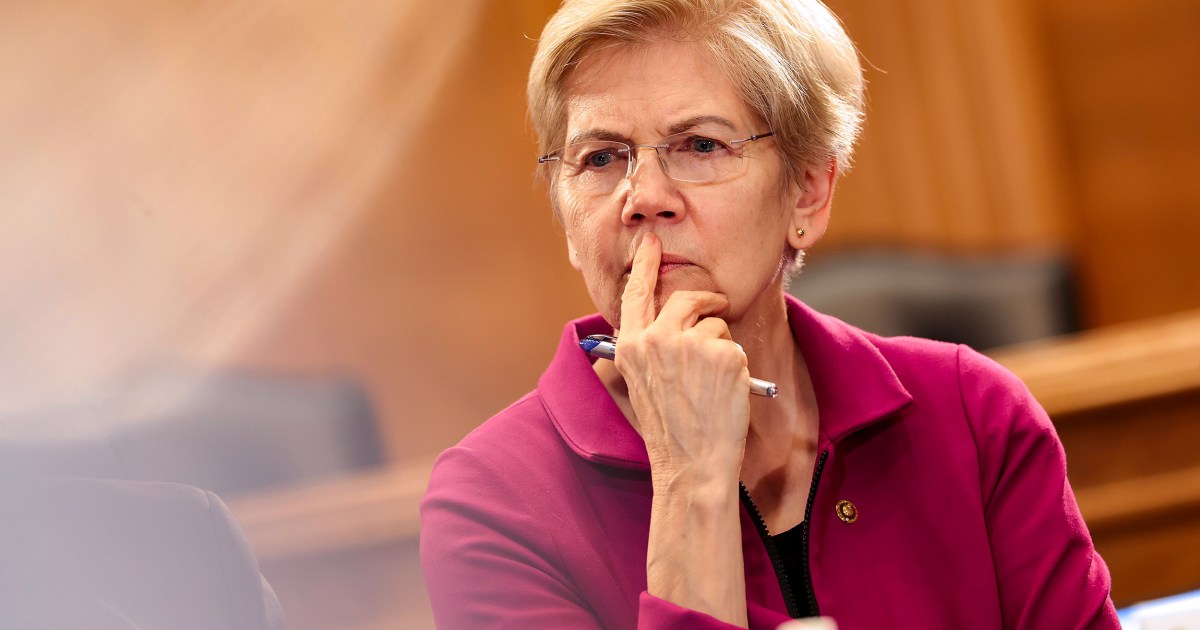
Lawmakers are pressing major corporations for details on tens of millions of dollars pledged to a planned Donald Trump presidential library, after the nonprofit originally meant to receive the funds was dissolved quietly last year.
Sens. Elizabeth Warren, D-Mass., and Richard Blumenthal, D-Conn., along with Rep. Melanie Stansbury, D-N.M., sent letters to executives at companies including ABC, Meta, Paramount and X, seeking details on at least $63 million in commitments those companies made as part of legal settlements with Trump or his allies. The letters seek to clarify whether the funds were ever transferred, and if so, how they have been used.
The Donald J. Trump Presidential Library Fund Inc., the nonprofit originally designated to receive the money, was dissolved in 2025. A successor organization, the Donald J. Trump Presidential Library Foundation Inc., has reported receiving $50 million, but has not confirmed the source of those funds, leaving it unclear whether the settlement pledges were fulfilled or redirected.
The inquiry comes amid growing scrutiny over the flow of money and assets tied to Trump’s presidency and post‑presidential plans, including reports that a luxury Boeing 747‑8 jumbo jet — valued at about $400 million and offered by the Qatari government for use as Air Force One — could potentially be transferred to the Trump library foundation after he leaves office.
The congressional investigation was first reported by The Washington Post.
Lily Becker is a producer on “The Weeknight” for MS NOW.

David Rohde
David Rohde is the senior national security reporter for MS NOW. Previously he was the senior executive editor for national security and law for NBC News.
- Trump administration invokes emergency powers to restart oil operations off California coast
- Birth control clinics rush to reapply for funding after receiving new Trump admin guidance
- Hegseth ignored military officials when he slashed offices that limit risk to civilians
- Can Democrats actually flip this red Kentucky district?
- Hegseth, attacking press, declares victory is near amid ongoing Iran conflict
- There’s a new wedge issue playing out in Senate Dem primaries
- ‘Oh, boy’: Oil industry frets over Trump’s profit-minded Iran post
- How a top DC strategist courted Jeffrey Epstein
- Trump administration kicks off new tariff strategy

- GOP senator proposes vote to nix filibuster amid elections bill debate
-

 The Dictatorship1 year ago
Luigi Mangione acknowledges public support in first official statement since arrest
-

 Politics1 year ago
Former ‘Squad’ members launching ‘Bowman and Bush’ YouTube show
-

 Politics1 year ago
Blue Light News’s Editorial Director Ryan Hutchins speaks at Blue Light News’s 2025 Governors Summit
-

 Politics1 year ago
Former Kentucky AG Daniel Cameron launches Senate bid
-

 The Dictatorship6 months ago
Mike Johnson sums up the GOP’s arrogant position on military occupation with two words
-

 The Dictatorship1 year ago
Pete Hegseth’s tenure at the Pentagon goes from bad to worse
-

 Politics11 months ago
Democrat challenging Joni Ernst: I want to ‘tear down’ party, ‘build it back up’
-
Uncategorized1 year ago
Bob Good to step down as Freedom Caucus chair this week