
The Dictatorship
How DOJ approval of a corporate merger has exposed a rift in the MAGA movement

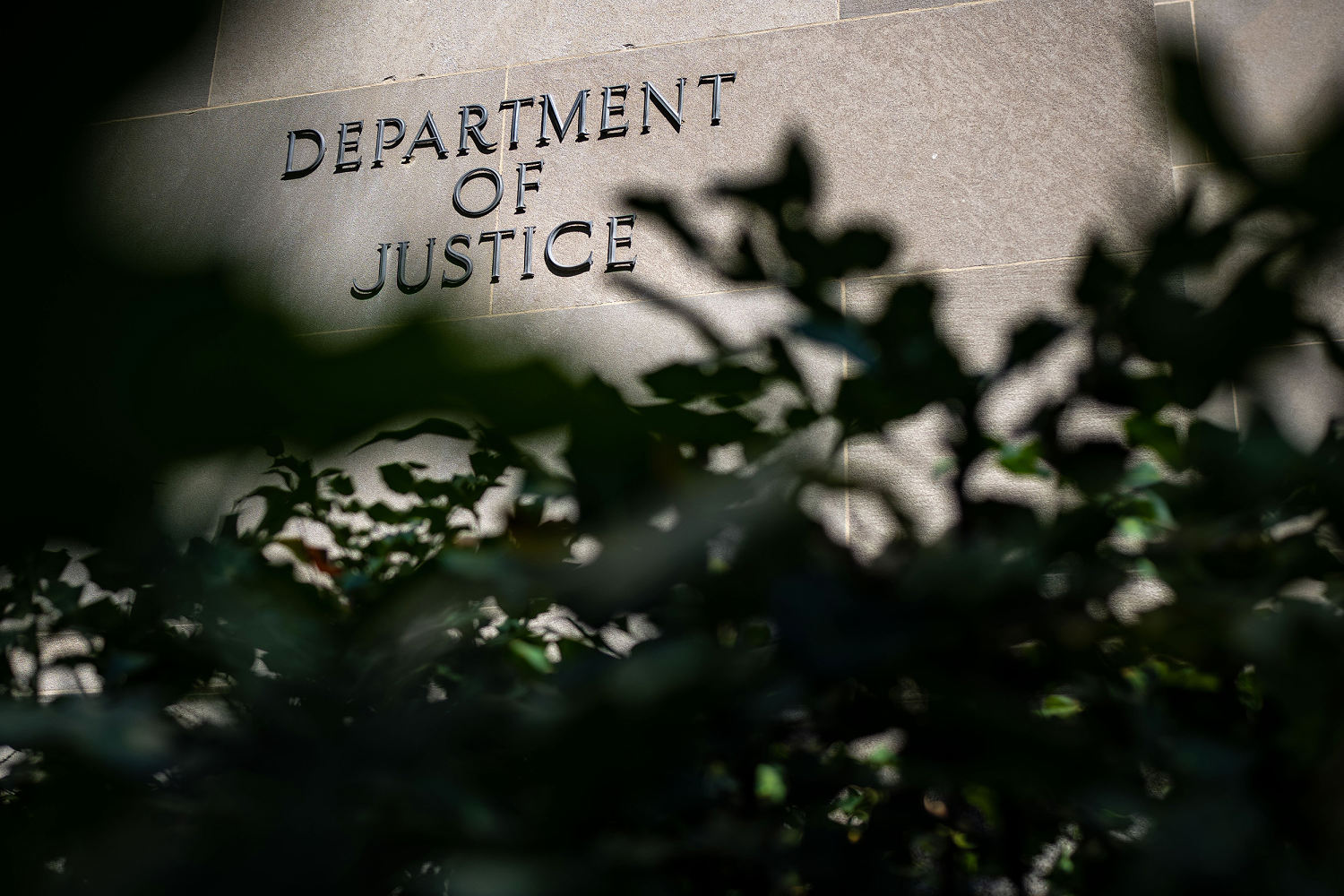
Last month, senior Justice Department officials overruled their subordinates and allowed a major corporate merger to go forward after the companies hired well-connected Trump supporters to lobby the government, sparking allegations of influence peddling.
Some might say that’s just another day in the second Trump administration — but this controversy feels different for a few reasons.
The antitrust settlement, obscure to most people, led to the firing of two senior political appointees within the Justice Department and has deepened a rift among MAGA activists — one of whom publicly blasted the decision as corrupt before taking down her post.
Unlike most allegations of wrongdoing levied against the Trump administration, these seem likely to be independently investigated by a federal judge with the power to put people under oath.
Unlike most allegations of wrongdoing levied against the Trump administration, these seem likely to be independently investigated by a federal judge with the power to put people under oath.
“This is huge deal, and we are only at the beginning,” a former senior DOJ official said.
At issue is a case that looms large in the business world — a fight over a proposed $14 billion merger between computer giant Hewlett Packard Enterprise and rival Juniper Networks, both of which make and sell wireless networking equipment.
Justice Department lawyers first determined the merger was illegal on antitrust grounds because it would stifle competition. Just after Trump took office in January, the DOJ sued to block it. But last month, on the eve of trial, the Justice Department settled the case, allowing the merger to go forward over the opposition of senior antitrust lawyers inside the department, three former DOJ officials familiar with the matter said.
The Justice Department did not immediately respond to a request for comment.
Two top political appointees in the antitrust division were fired after an internal power struggle over the deal, and two career lawyers who worked on the case resigned, according to the sources. One of them, Roger Alford, posted his termination notice on LinkedIn.
The two fired lawyers worked for the DOJ’s antitrust chief, Gail Slater, who has been labeled the face of a robust MAGA faction that favors strong enforcement of antitrust laws.
Neither Slater nor any other DOJ antitrust lawyer signed the settlementwhich was instead inked by two senior aides to Attorney General Pam Bondi — Justice Department chief of staff Chad Mizelle and Stanley Woodward, who has been nominated to be associate attorney general. Former DOJ officials say lawyers in the division almost always sign the case filings, and that the lack of their signature if a red flag.
The DOJ’s change of position came after HPE and Juniper acknowledged in court filings that the companies retained Mike Davis, a lawyer and MAGA activist who has advised the Trump administration on judicial nominations and other legal issues. The filings say the companies also hired Will Levi, who served as a senior Justice Department official in the first Trump administration.
People familiar with the matter tell BLN that Arthur Schwartz, a consultant with deep MAGA ties, was also making the case for the merger. Davis declined to comment, and Levi and Schwartz did not respond to requests for comment. Schwartz was not listed in corporate filings, so it’s unclear who was paying him.
MAGA activist Laura Loomer, who has traveled with President Trump, criticized the arrangement in an extraordinary post on X that she later took down.
“Now that @ChadMizelle47 has made it clear that he is open for business at the DOJ to the highest bidder, other consultants are now putting big price tags on their lobby efforts to influence the DOJ to settle even more anti-Trust cases,” Loomer wrote.
“Insider trading? Influence peddling for million dollar contracts? Unregistered MAGA lobbyists? Why is @AGPamBondi, who is supposedly running the DOJ, allowing this kind of grift to take place under the supervision of her boy @ChadMizelle47? Why is she trying to create scandals for the Trump admin?”
Loomer’s comments reflect a faction of the MAGA movement that takes to heart Trump’s promise to drain the Washington swamp —a group deeply suspicious of the tech industry and corporate power in general.
Interestingly, another person who has sometimes espoused those views is Davis, who praised the lawsuit when it was filed in January.
Democratic senators have seized on the case as an example of possible misconduct.
“We are dismayed by allegations that officials in the Antitrust Division may have been sidelined because they opposed the backroom negotiations that led to this settlement,” wrote senators Elizabeth Warren, D-Mass., Amy Klobuchar, D-Minn., Cory Booker, D-N.J. and Richard Blumenthal, D-Conn. to Judge P. Casey Pitts of the United States District Court for the Northern District of California on July 29.
“Unfortunately, it appears the settlement does not in fact address the concerns DOJ cited as the basis for its January 30 challenge,” the senators noted in their letter, adding that the circumstances of the settlement raise the question of “whether the settlement advances the interests of the public or a well-connected, well-paid group of insiders.”
Requests by Democrats for investigations are a dime a dozen these days, and they have tended to go nowhere. But in this case, the judge presiding over the legal case has extraordinary authority to conduct a probe.
In some past cases, judges have held what amounted to a mini trial in exercising their authority under the Tunney Act.
Under the Tunney Act, a law passed in the wake of a Nixon-era antitrust scandal, Biden-appointed Judge Pitts of the Northern District of California has leeway to thoroughly examine the Justice Department settlement to ensure it’s in the public interest. The judge is allowed to require the production of documents and witness testimony. In some past casesjudges have held what amounted to a mini trial in exercising their authority under the Tunney Act.
The settlement will allow the merger to go forward while requiring HPE to make what industry insiders are calling an unrelated divestment of part of its wireless networking business.
The three former Justice Department officials who are experts in antitrust law — and who declined to be named because they said they feared retaliation — told BLN the settlement did little to resolve concerns internally at DOJ that the merger will harm customers by reducing competition.
If a Tunney Act proceeding goes forward, key figures in Trump world may have to discuss their change of heart under oath. And senior Justice Department officials may have to explain why they adopted his point of view, over the objections of the career experts.
On Tuesday, the Justice Department dismissed another antitrust lawsuit that sought to block a merger between American Express Global Business Travel and CWT Holdings, a case the Antitrust Division filed in mid-January at the end of the Biden administration. But because that lawsuit was dismissed outright instead of settled, the Tunney Act does not apply, and no judge will be able to review what led to the decision.
“I don’t remember that ever happening,” a former DOJ antitrust lawyer said. “The Anti-trust Division has enormous power, and when they bring a case, they usually have the goods.”



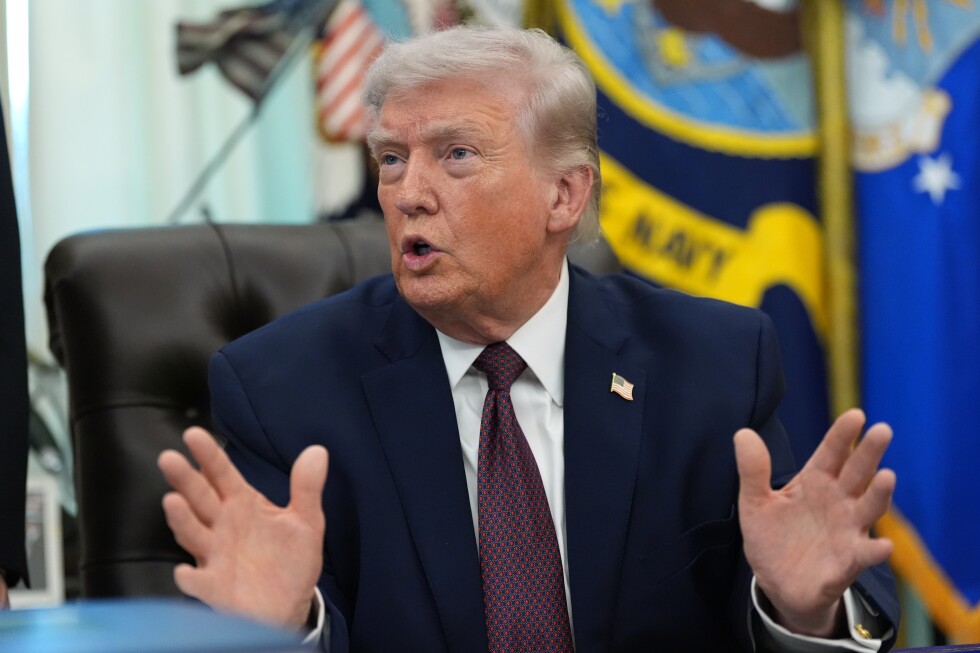
WASHINGTON (AP) — President Donald Trump on Tuesday signed an executive order to create a nationwide list of verified eligible voters and to restrict mail-in voting, a move that swiftly drew legal threats from state Democratic officials ahead of this year’s midterm elections.
The order, which voting law experts say violates the Constitution by attempting to seize states’ power to run elections, is the latest in a torrent of efforts from Trump to interfere with the way Americans vote based on his false allegations of fraud. The president has repeatedly lied about the outcome of the 2020 presidential campaign and the integrity of state-run elections, asserting again Tuesday that he won “three times” and citing accusations of voter fraud that numerous auditsinvestigations and courts have debunked.
The order signed Tuesday calls on the Department of Homeland Security, working in conjunction with the Social Security Administration, to make the list of eligible voters in each state. It also seeks to bar the U.S. Postal Service from sending absentee ballots to those not on each state’s approved list.
Trump is also calling for ballots to have secure envelopes with unique barcodes for tracking, according to the executive order, which was first reported by the Daily Caller. Federal funding could be withheld from states and localities that don’t comply.
“The cheating on mail-in voting is legendary. It’s horrible what’s going on,” Trump said, repeating his false allegations about mail ballots as he signed the order. “I think this will help a lot with elections.”
Democratic states quickly threaten lawsuits, non-compliance
Within minutes of Trump signing the order, top elections officials in Oregon and Arizona, two states that rely heavily on mail ballots, pledged to sue, arguing that the president was illegally encroaching on the right of states to run elections.
Arizona Secretary of State Adrian Fontes said the state’s vote-by-mail system was designed by Republicans and is now used by 80% of voters. Arizona doesn’t need the federal government to tell it who can vote, and federal data isn’t always reliable, he said.
“It is just wrongheaded for a president of the United States to pretend like he can pick his own voters,” Fontes told The Associated Press. “That’s just not how America works.”
Maine Secretary of State Shenna Bellows told the AP that the order was “laughably unconstitutional” and said her state would not comply. More than a quarter of Maine voters cast mail-in ballots in the 2024 election.
Nevada Secretary of State Francisco Aguilar said Trump’s order would cripple local election officials charged with implementing it and silence voters counting on casting a mail ballot.
“It doesn’t benefit anybody in this country except himself,” Aguilar said.
Legal experts noted other potential flaws with the order. David Becker, a former Justice Department lawyer who leads the Center for Election Innovation and Research, said the Postal Service is run by a board of governors, and the president has no power to tell it what mail it can and cannot deliver.
A spokesperson for USPS said Tuesday the agency will review the order. Trump has sought to bring the independent agency under more presidential control, proposing to fold it under the Commerce Department — whose secretary, Howard Lutnick, was on hand for Tuesday’s signing.
Trump has long tried to interfere with state-run elections
Trump’s March 2025 election executive order sought sweeping changes to how elections are run, including adding a documentary proof-of-citizenship requirement to the federal voter registration form and requiring mailed ballots to be received at election offices by Election Day. Much of it has been blocked through legal challenges brought by voting rights groups and Democratic state attorneys general who allege it’s an unconstitutional power grab that would disenfranchise large groups of voters.
He also told a conservative podcaster in February that he wants to “take over” elections from Democratic-run areas.
U.S. elections are unique because they are not centralized. Rather than being run by the federal government, they’re conducted by election officials and volunteers in thousands of jurisdictions across the country, from tiny townships to sprawling urban counties with more voters than some states have people. The Constitution’s Elections Clause gives Congress the power to “make or alter” election regulations, at least for federal office, but it doesn’t mention presidential authority over election administration.
“This is Donald Trump turning the Department of Homeland Security into the department of controlling the homeland,” said Maya Wiley, president and CEO of the Leadership Conference on Civil and Human Rights.
The Trump administration has launched a widespread campaign it says is meant to target allegations of voter fraud that for years have been the subject of false claims from Trump and his allies. The Justice Department for months has been demanding detailed voter registration lists from states in what it has described as an effort to ensure the security of elections, and has sued when state officials have refused to hand them over.
The FBI in January seized ballots from the election office of a Georgia county that has been central to right-wing conspiracy theories over Trump’s 2020 election loss. And Attorney General Pam Bondi recently named a “special attorney” with the power to investigate and prosecute cases across the country “relating to the integrity of federal elections,” according to a copy of the order.
Voting rights groups raise concerns about current verification system
The Department of Homeland Security’s SAVE system for verifying citizenship and immigration status has come under scrutiny for producing flawed results from unreliable data sets, as well as over privacy concerns. One example is that states can conduct bulk searches of the system with Social Security numbers, but few states collect full Social Security numbers as part of voter registration, according to the Brennan Center for Justice.
The Trump administration undertook an overhaul of the system last year, but it still faces legal challenges alleging that reliance on the system can lead to errors in identifying citizenship status and affect eligible voters.
At least one Republican elections official on Tuesday defended the SAVE system while downplaying the potential of widespread voter fraud.
Robert Sinners, a spokesperson for Georgia Secretary of State Brad Raffensperger, said their recommendations to the Trump administration have strengthened voter verification and stressed that “the small number flagged as potential non-citizens cannot vote by mail or in person until they provide proof of citizenship.”
“The executive order will be decided in court, but in Georgia, we already verify citizenship and will continue to do so regardless of the outcome,” Sinners added.
The president is a vocal critic of mail-in voting, alleging that the practice is rife with fraud as he pushes lawmakers to pass a far-reaching elections bill that would clamp down on it. A 2025 report by the Brookings Institution found that mail voting fraud occurred in only 0.000043% of total mail ballots cast, or about four cases per 10 million.
Trump himself has also used mail ballots, most recently last week in local Florida elections. The White House has said that Trump is opposed to universal mail-in voting, rather than individual voters who may need the alternative voting method for reasons such as travel or military deployment.
___
Swenson reported from New York, and Cooper reported from Phoenix. Associated Press writers Alanna Durkin Richer in Washington, Susan Haigh in Hartford, Connecticut, and Julie Carr Smyth in Columbus, Ohio, contributed to this report.

WASHINGTON (AP) — Citing the First Amendment, a federal judge on Tuesday agreed to permanently block the Trump administration from implementing a presidential directive to end federal funding for National Public Radio and the Public Broadcasting Service, two media entities that the White House has said are counterproductive to American priorities.
The operational impact of U.S. District Judge Randolph Moss’ decision was not immediately clear — both because it will likely be appealed and because too much damage to the public-broadcasting system has already been done, both by the president and Congress.
Moss ruled that President Donald Trump’s executive order to cease funding for NPR and PBS is unlawful and unenforceable. The judge said the First Amendment right to free speech “does not tolerate viewpoint discrimination and retaliation of this type.”
“It is difficult to conceive of clearer evidence that a government action is targeted at viewpoints that the President does not like and seeks to squelch,” wrote Moss, who was nominated to the bench by President Barack Obama, a Democrat.
White House spokesperson Abigail Jackson said Moss’ decision is “a ridiculous ruling by an activist judge attempting to undermine the law.”
“NPR and PBS have no right to receive taxpayer funds, and Congress already voted to defund them. The Trump Administration looks forward to ultimate victory on the issue,” Jackson said in a statement.
PBS, with programming ranging from “Sesame Street” and “Mister Rogers’ Neighborhood” to Ken Burns’ documentaries, has been operating for more than half a century. NPR has news programming from “All Things Considered” and cultural shows like the “Tiny Desk” concerts. For decades, the fates of both systems have been part of a philosophical debate over whether government should help fund their operations.
Punishment for ‘past speech’ cited in decision
The judge noted that Trump’s executive order simply directs that all federal agencies “cut off any and all funding” to NPR, which is based in Washington, and PBS, based in Arlington, Virginia.
“The Federal Defendants fail to cite a single case in which a court has ever upheld a statute or executive action that bars a particular person or entity from participating in any federally funded activity based on that person or entity’s past speech,” the judge wrote.
Last year, Trump, a Republican, said at a news conference he would “love to” defund NPR and PBS because he believes they’re biased in favor of Democrats.
“The message is clear: NPR and PBS need not apply for any federal benefit because the President disapproves of their ‘left wing’ coverage of the news,” Moss wrote.
NPR accused the Corporation for Public Broadcasting of violating its First Amendment free speech rights when it moved to cut off its access to grant money appropriated by Congress. NPR also claims Trump wants to punish it for the content of its journalism.
“Public media exists to serve the public interest — that of Americans — not that of any political agenda or elected official,” said Katherine Maher, NPR’s president and CEO. She called the decision a decisive affirmation of the rights of a free and independent press.
PBS chief Paula Kerger said she was thrilled with the decision. The executive order, she said, is “textbook” unconstitutional viewpoint discrimination and retaliation. “At PBS, we will continue to do what we’ve always done: serve our mission to educate and inspire all Americans as the nation’s most trusted media institution.”
Last August, CPB announced it would take steps toward closing itself down after being defunded by Congress.
A victory, though incremental, for press freedom
Plaintiffs’ attorney Theodore Boutrous said Tuesday’s ruling is “a victory for the First Amendment and for freedom of the press.”
“As the Court expressly recognized, the First Amendment draws a line, which the government may not cross, at efforts to use government power — including the power of the purse — ‘to punish or suppress disfavored expression’ by others,” Boutrous said in a statement. “The Executive Order crossed that line.”
The judge agreed with government attorneys that some of the news outlets’ legal claims are moot, partly because the CPB no longer exists.
“But that does not end the matter because the Executive Order sweeps beyond the CPB,” Moss added. “It also directs that all federal agencies refrain from funding NPR and PBS — regardless of the nature of the program or the merits of their applications or requests for funding.”
NPR and three public radio stations sued administration officials last May. While Trump was named as a defendant, the case did not include Congress — and the legislative body has played a large role in the public-broadcasting saga in the past year.
Trump’s executive order immediately cut millions of dollars in funding from the Education Department to PBS for its children’s programming, forcing the system to lay off one-third of the PBS Kids staff. The Trump order didn’t impact Congress’ vote to eliminate the overall federal appropriations for PBS and NPR, which forced the closure of the Corporation for Public Broadcasting, the entity that funneled that money to the TV and radio networks.
___
AP Media Writer David Bauder and AP writer Darlene Superville contributed to this report.
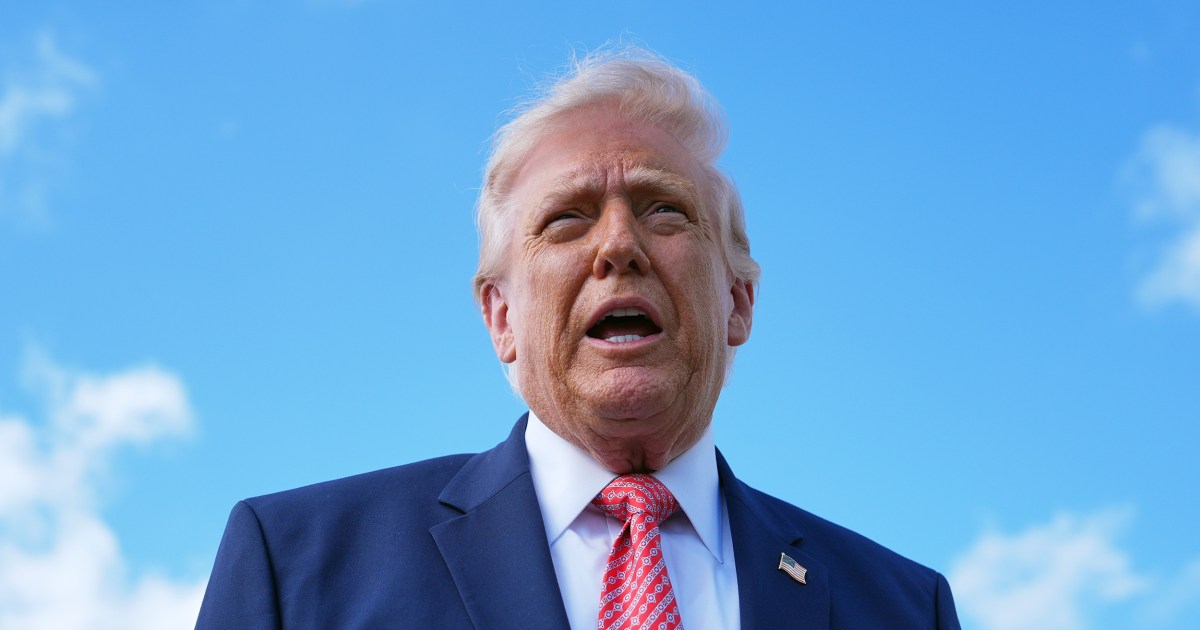
More than a month into the war in Iran, there’s still great uncertainty about why the United States launched this military offensive in the first place. There’s reason to believe, however, that the conflict has something to do with Iran’s nuclear program.
At an unrelated White House event on Tuesday, for example, Donald Trump said“I had one goal: They will have no nuclear weapon, and that goal has been attained.”
It was a curious comment, in part because by the president’s own assessmentIran didn’t have a nuclear weapon before he decided to launch the war, and in part because Secretary of State Marco Rubio this week presented the administration’s four major objectives in the conflict, none of which had anything to do with Iran’s nuclear program.
As for whether Trump’s newly manufactured “goal” has actually been “attained,” The New York Times reported“Unless something changes over the next two weeks — the target Mr. Trump set to begin withdrawing from the conflict — he will have left the Iranians with 970 pounds of highly enriched uranium, enough for 10 to a dozen bombs. The country will retain control over an even larger inventory of medium-enriched uranium that, with further enrichment, could be turned into bomb fuel, if the Iranians can rebuild that capacity after a month of steady bombing.”
The American president has acknowledged that these details are true, though he apparently no longer cares. Ahead of an Oval Office address to the nation about the war in Iran, the Republican spoke to Reuters about his perspective:
Of the enriched uranium, Trump said: ‘That’s so far underground, I don’t care about that.’
‘We’ll always be watching it by satellite,’ he added. He said Iran was ‘incapable’ of developing a weapon now.
The president’s comments definitely have a practical element: It’s been an open question for weeks as to whether Trump intends to try to seize Iran’s uranium stockpile, which would require ground troops and be profoundly dangerous for U.S. military service members.
If Trump told Reuters the truth and is prepared to let Iran keep the uranium it already has because he no longer “cares about that,” it would drastically reduce the likelihood of a ground invasion — one that would almost certainly cost lives.
But there’s another element to this worth keeping in mind as the process moves forward: Ever since the Obama administration struck the original nuclear agreement with Iran in 2015, Trump has insisted that it was wrong to allow the country to hold onto nuclear materials that might someday be used in a nuclear weapon.
A decade later, he’s suddenly indifferent to Iran’s uranium stockpile — which has only grown larger since Trump abandoned the Obama-era policy.
Trump’s goalposts, in other words, are on the move.
Indeed, if the American president’s comments reflect his true perspective (and with this guy, one never really knows), we’re due for a serious public conversation about the motives and objectives for the war. Because as things stand, before the war, Iran had a regime run by radical religious clerics and the Islamic Revolutionary Guard; the country had a significant uranium stockpile; and the Strait of Hormuz was open.
And now, Trump’s apparent vision for a successful offensive will include Iran with a regime run by radical religious clerics and the Islamic Revolutionary Guard; the country still holding a significant uranium stockpile; and the Strait of Hormuz will be open.
Mission accomplished, I guess?
Steve Benen is a producer for “The Rachel Maddow Show,” the editor of MaddowBlog and an MS NOW political contributor. He’s also the bestselling author of “Ministry of Truth: Democracy, Reality, and the Republicans’ War on the Recent Past.”
- MIDTERM WATCH: Executive Order Cracks Down on Voting…
- Democrats sue Trump administration over mail-in-voting order
- Hill staffers brace for their boss’s ‘TMZ moment’

- ‘The status quo is unsustainable’: Congressional scrutiny of Kalshi, Polymarket explodes
- IrynaZarutskamural censored by leftists, mayor calls it ‘divisive’

- Ro Khanna: I hope Trump ‘just declares victory’ in Iran and ‘gets out’
- Live updates: Trump-appointed justices appear unswayed by admin’s birthright citizenship order

- ‘Call Her Daddy’ host Alex Cooper brings ‘Mormon Wives’ to her new show

- Government requests for social media user data up 770 percent in past decade: Research

- NASA’s historic moon mission blasts into space
-

 Politics1 year ago
Former ‘Squad’ members launching ‘Bowman and Bush’ YouTube show
-

 The Dictatorship1 year ago
Luigi Mangione acknowledges public support in first official statement since arrest
-

 Politics1 year ago
Former Kentucky AG Daniel Cameron launches Senate bid
-

 The Dictatorship7 months ago
Mike Johnson sums up the GOP’s arrogant position on military occupation with two words
-

 Politics1 year ago
Blue Light News’s Editorial Director Ryan Hutchins speaks at Blue Light News’s 2025 Governors Summit
-

 The Dictatorship1 year ago
Pete Hegseth’s tenure at the Pentagon goes from bad to worse
-
Uncategorized1 year ago
Bob Good to step down as Freedom Caucus chair this week
-

 Politics12 months ago
Democrat challenging Joni Ernst: I want to ‘tear down’ party, ‘build it back up’