
Congress
House approves housing bill, setting stage for tough Senate negotiations

The House on Monday night passed its bipartisan housing package aimed at increasing home supply and affordability, setting up an uncertain effort to merge the measure with a Senate housing bill.
House lawmakers approved by a vote of 390-9 the Housing in the 21st Century Act under suspension of the rules, a fast-track procedure for non-controversial legislation. The bill includes provisions to modernize local development and rural housing programs, expand manufactured and affordable housing, protect borrowers and those utilizing federal housing programs and enhance oversight of housing providers. The package also contained a recently added section aimed at increasing community bank lending.
Congress must now work to get a unified bill to the president’s desk. The Senate passed its own bipartisan housing affordability package in October, which was supported by the White House. Financial Services Chair French Hill (R-Ark.) — who spearheaded the House bill with ranking member Maxine Waters (D-Calif.) — told reporters Monday he plans to negotiate with the administration as well as his counterparts on the Senate Banking Committee to get a final version which both chambers and the White House can support.
“We wanted to get [the housing bill and other committee priorities] through the House so that we could work with the Senate to find packages that the President could sign into law, long before the very active summer campaign season,” Hill said. “So I would hope that we could work over the spring and find a way to have a bicameral, bipartisan set of bills.”
Hill has previously said the Senate bill, the ROAD to Housing Act, contained a number of provisions that House Republicans would likely not support. Although the House and Senate bills share many similarities, the Senate measure includes a number of grant programs that would expand federal spending.
But Senate Banking ranking member Elizabeth Warren (D-Mass.) said that she still wants the House to take up the Senate bill, setting the stage for a potential clash. Support from Senate Democrats will likely be necessary to get housing legislation through the upper chamber.
“ROAD to Housing is a Jenga tower. Adding or taking things away risks losing the unanimous coalition that we have built in the Senate,” Warren said in an interview.
Warren also signaled that she disapproved of the new section added to the House legislation, which would ease regulation on community banks — reflecting Hill’s “Make Community Banking Great Again” agenda.
“House Republicans should not hold housing relief hostage to push forward several bank deregulatory bills that will make our community banks more fragile,” Warren said in a statement before Monday’s House vote.
Katherine Hapgood contributed to this report.


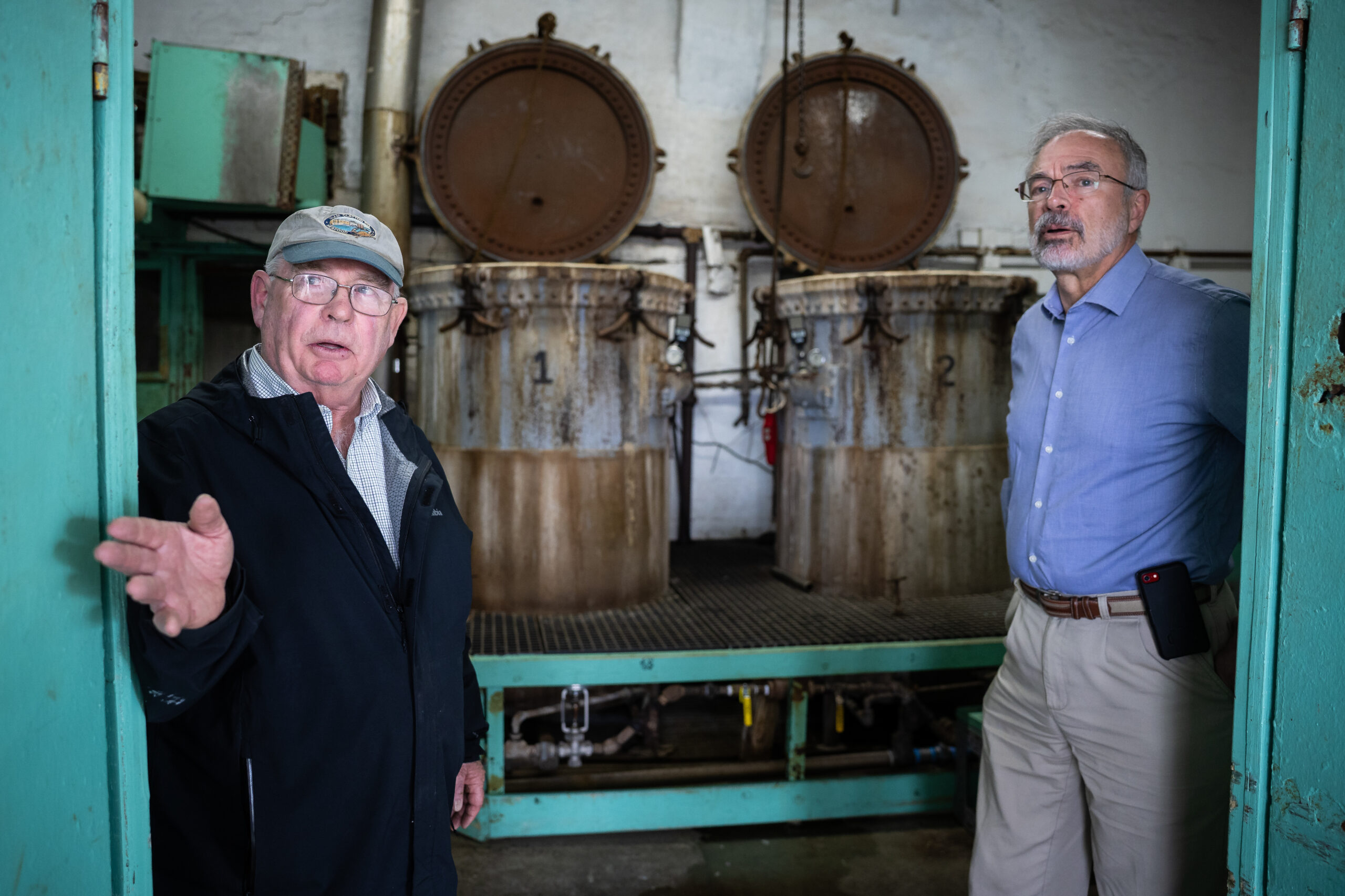
CAMBRIDGE, Maryland — On Capitol Hill, Rep. Andy Harris is one of the most uncompromising advocates of President Donald Trump’s immigration crackdown. On the Eastern Shore of the Chesapeake Bay, the Maryland Republican is seen as a hero for securing foreign labor to power his state’s commercial seafood industry.
The 69-year-old lawmaker, who chairs the ultraconservative House Freedom Caucus and the subcommittee that funds the Department of Agriculture, has leveraged his influence as one of Washington’s most prominent hard-liners to lobby the White House in favor of a robust influx of temporary foreign workers.
That meant convincing the Trump administration earlier this year to max out the number of guest workers allowed for the season, helping businesses throughout the country — including seafood producers in his district, who bring in workers from Mexico to hand-pick meat from the region’s blue crabs.
“I’ve been in long enough to know how to get things done, and we got it done,” Harris told Jack Brooks, owner of the J.M. Clayton crab company, on a recent afternoon outside his facility along the Choptank River.
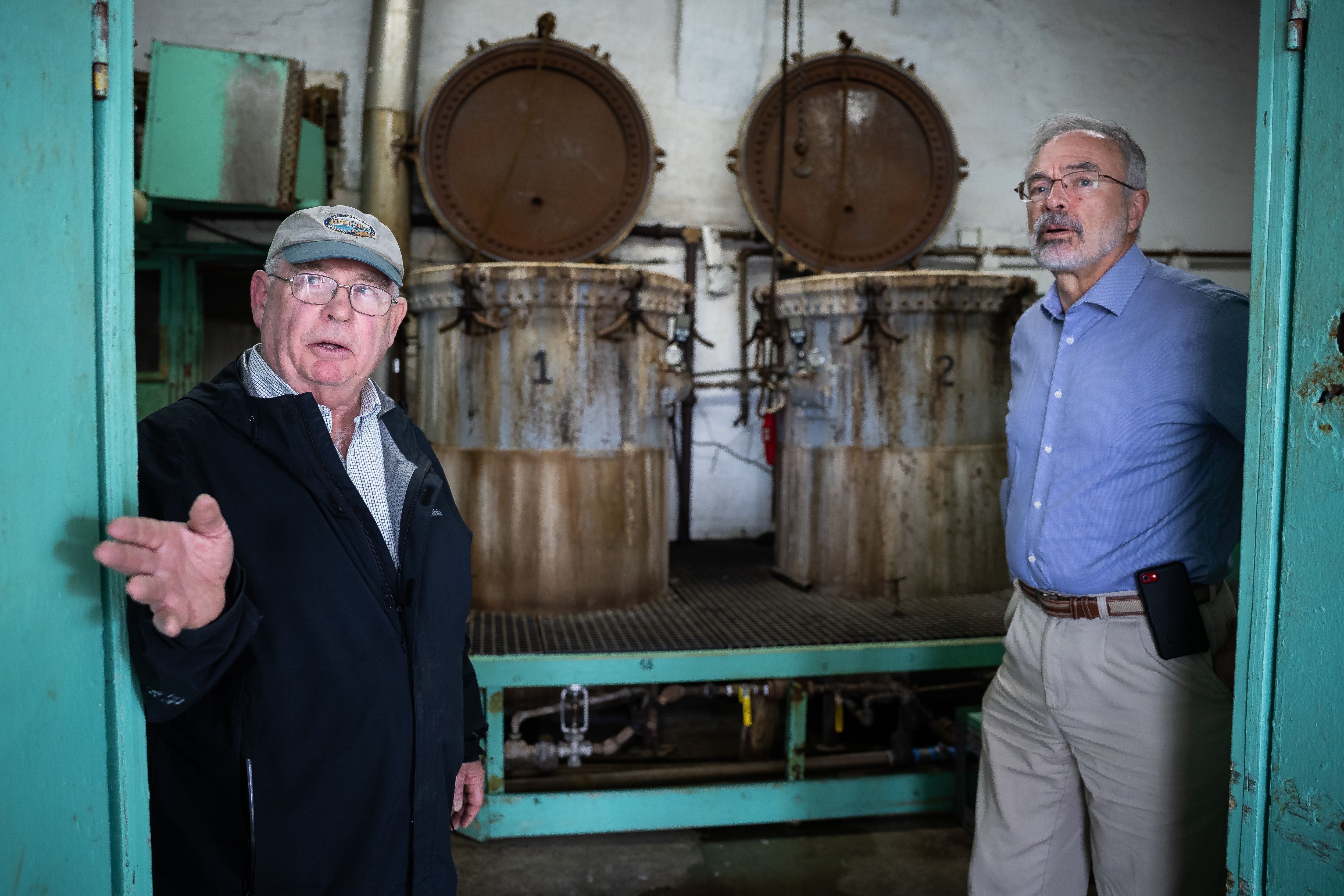
It’s not just a parochial priority for Harris, who has grander ambitions to increase the number of seasonal workers who flow in and out of the country. He’s driving a debate within the Republican party about whether the president’s “America First” agenda means aggressively stemming the number of foreigners who enter the United States — both legally and illegally — or helping the U.S. economy with regulated foreign labor.
Harris told Brooks he plans to build on his success by working to guarantee longtime H-2B employers get the positions they seek regardless of their luck in a yearly lottery.
“We appreciate you out there battling on our behalf, for sure,” Brooks said to Harris. “I know you’re just one guy.”
The H-2B visa program Harris wants to expand is distinct from a separate temporary visa program for migrant farmworkers. It’s instead aimed at nonagricultural jobs such as landscaping, construction and, in this case, “crab picking.”
There is no conflict, Harris argues, between his endorsement of the president’s aggressive approach to illegal immigration and his support for more temporary foreign workers who return to their home countries each year.


At the same time, Harris — the son of immigrants from Central Europe — also consistently rails against amnesty policies that would create a pathway to citizenship for undocumented immigrants.
“This is not an immigration issue — this is a temporary foreign worker issue,” Harris said in an interview. “Once we control the uncontrolled border crossing, let’s talk about how we can bring a foreign workforce in to boost the economy where it needs to be boosted.”
Under the “Buy American, Hire American” agenda Trump has pursued throughout his first and second terms, his administration has often resisted calls to issue the maximum number of H-2B visas Congress allows. This year, however, Harris traveled down Pennsylvania Avenue at a crucial moment to persuade the White House otherwise — quietly locking in roughly 65,000 positions for workers with H-2B visas for the current season, about 30,000 more than what the Trump administration had announced it would allow.
The White House’s decision to boost the number of visas followed the termination of work documents for 1.3 million undocumented immigrants, White House spokesperson Taylor Rogers said in a statement. The Trump administration’s No. 1 priority, she said, “is protecting American jobs and wages” while meeting the demands of the president’s “rapidly growing economy.”
Harris pitched Agriculture Secretary Brooke Rollins in recent weeks on his ideas for embracing an influx of temporary foreign workers as Trump promises “a Golden Age of American agriculture” and a renaissance for U.S. manufacturing amid record tariffs and new Republican-led tax perks.
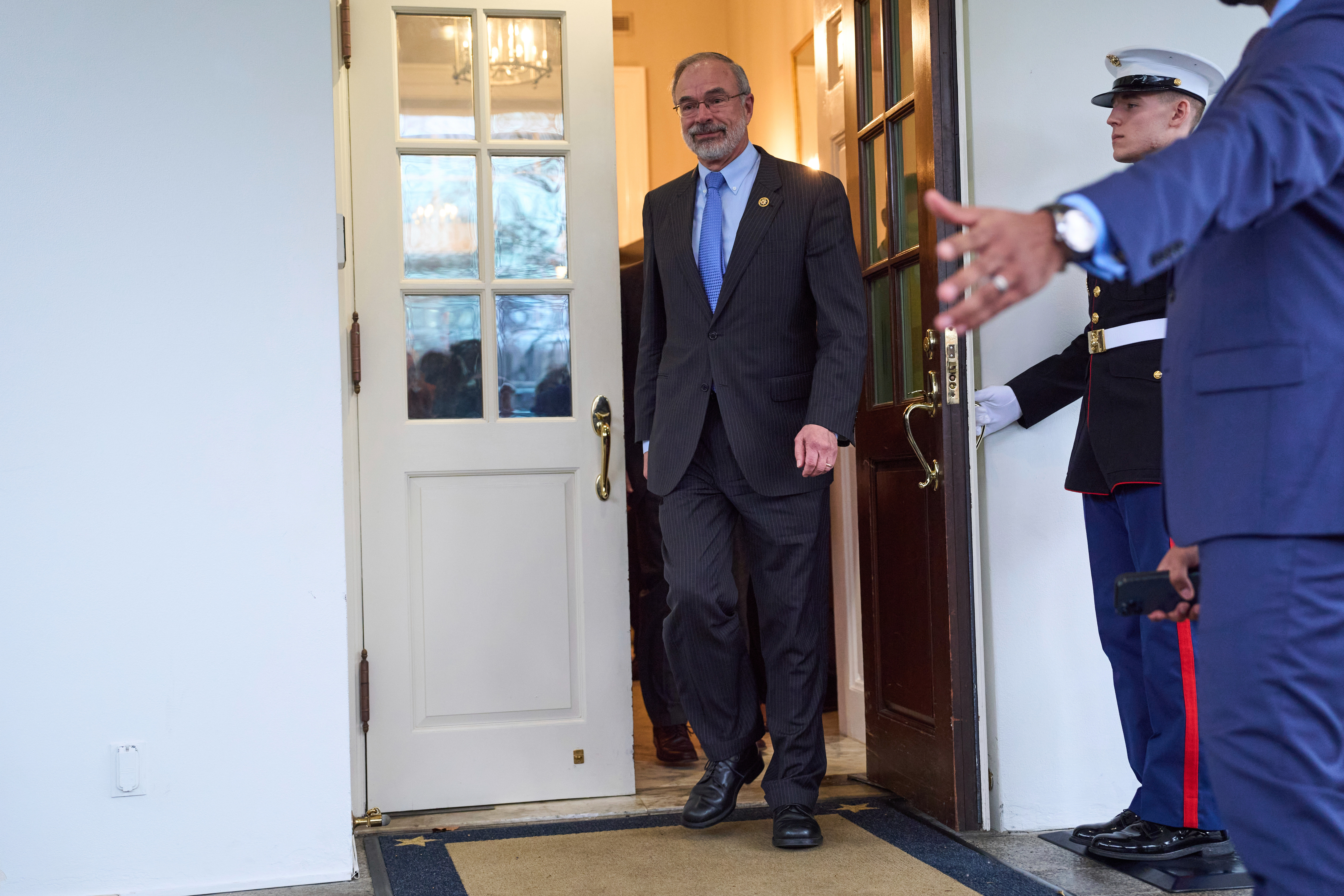
“I think they realized that — as we bring work back — we are going to have to provide the labor here,” Harris said.
The congressman also wants to impose a “buy American” mandate for SNAP food assistance to ensure the roughly $100 billion in federal aid each year is used to purchase food grown and produced in the United States. “But that means that you’re going to have to have workers here,” Harris explained.
Asked about the Trump administration’s reception of Harris’ ideas, a spokesperson for USDA said in a statement that the president “is putting America First” by “streamlining” visa policy and “prioritizing fixing programs farmers and ranchers rely on to produce the safest and most productive food supply in the world.”
To close followers of visa policy debate in Washington, it’s clear that Harris is “the ringleader” of the push to expand the pool of temporary foreign workers, said Daniel Costa, a director at the Economic Policy Institute, a group that is critical of the way workers are treated under the H-2B program.
While Harris’ stance is not “a paradox,” Costa said in an interview, it’s certainly in conflict with the MAGA vision of top Trump advisers, including Stephen Miller. Harris’ lobbying effort is reminiscent of the “fracture in the Republican coalition” last year when Elon Musk pressed the president to boost a separate visa program for high-skilled workers against the guidance of other close Trump allies, he added.
Back in Harris’ district, seafood processors on the Eastern Shore have for decades struggled to fill key gaps in their workforce. “Crab pickers” began moving into manufacturing and other jobs in the mid-1990s, forcing business owners in the region to start seeking seasonal foreign workers.

At that time, there were more than 50 crab producers in the area. Those businesses that didn’t bring in foreign employees quickly closed, followed in later years by those that had bad luck in the visa lottery. Local crab producers still standing estimate there are fewer than a dozen remaining.
Lindy’s Seafood, another producer on the Eastern Shore, was not awarded any foreign workers in this year’s initial federal lottery. But the company lucked out when the Trump administration opened up the supplemental visas Harris helped secure.
“It’s a scary thing to go through, when every year is kind of tossing the dice,” said Aubrey Vincent, the company’s owner.

Other Maryland lawmakers have tried to help. Democratic Sens. Chris Van Hollen and Angela Alsobrooks have joined with lawmakers from states with big seafood industries to push a bipartisan bill that would exempt seafood processors from the cap on H-2B visas.
“It’d be nice to have the Trump administration support this effort,” Van Hollen said in an interview. “But regardless, we’re going to push very hard to get it done.”
Maryland’s Democrats don’t have the same sway right now as Harris, the sole Republican in his state’s 10-member congressional delegation and the only Marylander on Capitol Hill who has the ear of Trump administration officials mostly disinterested in working across the aisle.
Before Harris was elected to Congress in 2011, Maryland’s crab producers had another powerful advocate: then-Sen. Barbara Mikulski, who later chaired the Senate Appropriations Committee. After the limit on H-2B visas was first imposed in 2005, Mikulski succeeded in excluding returning workers from the visa cap.
But when Mikulski retired in 2017, Senate support for that policy died. “As soon as you lost the bicameral advocacy for it, it just became difficult,” said Harris, who pushed the policy in the House while Mikulski championed it in the Senate.
In 2016, appropriators started adding language to the annual funding bills allowing DHS to issue about 65,000 extra H-2B visas per year — the quota Harris got the Trump administration to fulfill this year.

Now Harris is working alongside the Senate funding panel’s current chair, Maine Republican Sen. Susan Collins, to advocate for the visas, which she argues are essential to “temporarily fill the seasonal roles that many inns, restaurants, and hotels rely on” during the summer tourism boom in her home state, whose license plates read “Vacationland.”
For the upcoming fiscal year, Harris wants to add what he calls “certified employer” language to a full-year funding bill for DHS. That means businesses that have used the H-2B visa program to hire temporary foreign workers for several years could go through a process to guarantee they get the same number of seasonal employees each year.
Some of Harris’ colleagues suggest waiting for a comprehensive immigration overhaul package to make changes to the H-2B visa program, rather than tackle it piecemeal. But Congress hasn’t been able to achieve such a feat in 40 years, and Harris isn’t interested in waiting.
“It’s not going to be anytime soon,” Harris said. “So let’s just deal with the issue now.”
Former Speaker Nancy Pelosi headlined a growing list of Democratic lawmakers who called Friday on Rep. Eric Swalwell to withdraw his campaign for California governor amid allegations of sexual misconduct.
“This extremely sensitive matter must be appropriately investigated with full transparency and accountability,” Pelosi said in a statement. “As I discussed with Congressman Swalwell, it is clear that is best done outside of a gubernatorial campaign.
The San Francisco Chronicle reported Friday that a former congressional aide accused the congressman of two sexual encounters without her consent, beginning in 2019. BLN later reported that four women allege that Swalwell has committed sexual misconduct, including one former staffer who accuses Swalwell of rape.
Swalwell denied the allegations in a statement.
“These allegations are false and come on the eve of an election against the frontrunner for governor,” he said. “I will defend myself with the facts and where necessary bring legal action.”
Key backers of Swalwell’s governor bid swiftly revoked their support after the Chronicle’s story was published, including Reps. Jimmy Gomez (D-Calif.) and Adam Gray (D-Calif.), who served as campaign co-chairs.
“Today’s reports about Eric Swalwell’s conduct while in office are deeply disturbing,” Gray said in a statement. “Harassment, abuse, and violence of any sort are unacceptable. Given these serious allegations, I am withdrawing my support and Eric Swalwell should end his campaign immediately.”
But nothing underscored the peril for Swalwell’s nearly two-decade political career as vividly as Pelosi’s statement. The former speaker included Swalwell in her inner circle of favored Democratic members for years, tapping him for junior leadership roles and to serve as a manager in Donald Trump’s second impeachment trial in 2021.
The situation also presents a predicament for the sitting House Democratic leaders, who have insisted on letting a full Ethics Committee investigation play out before supporting formal discipline against another House Democrat accused of misconduct, Rep. Sheila Cherfilus-McCormick (D-Fla.).
A spokesperson for Minority Leader Hakeem Jeffries called the allegations “serious” and said they require “a serious and thorough investigation.”
“These brave women must be heard and respected,” the spokesperson, Christie Stephenson, said in a statement. “It is imperative that the inquiry follow the facts, apply the law and take place immediately.”
House Republicans already began discussing Friday evening the likely scenario that one of their own members will bring a censure effort against Swalwell, according to three people granted anonymity to describe private conversations.
Rep. Anna Paulina Luna (R-Fla.) said in an interview that she was weighing a censure and other action against Swalwell based on the reports of sexual assault allegations against him.
Luna said she would act “if there is evidence brought forward.”
The internal consequences could start playing out as soon as the House returns to session Tuesday, but a wave of top California Democrats immediately dropped their endorsements of Swalwell, including Rep. Ted Lieu, the No. 4 Democrat in House leadership.
Rep. Ro Khanna (D-Calif.) likened the situation to his push for transparency around disgraced financier Jeffrey Epstein and called for “appropriate” House and law enforcement investigations.
“No one in a position of power should be allowed to act above the law or with impunity,” he said in a statement. “It doesn’t matter what office you hold, how wealthy you are, or which political party you align with. The same rules must apply to Eric Swalwell.”
Meredith Lee Hill and Hailey Fuchs contributed to this report.
President Donald Trump gave his blessing Friday afternoon for a party-line package focused narrowly on immigration enforcement — in a boost to Senate GOP leaders amid the Department of Homeland Security funding stalemate.
Trump’s comments came after he met Friday with Senate Budget Chair Lindsey Graham of South Carolina and Senate Majority Whip John Barrasso of Wyoming. The two lawmakers went to the White House to pitch Senate GOP leadership’s plan to restrict the party’s filibuster-skirting effort to only funding for Immigration and Customs Enforcement and parts of Customs and Border Protection.
“Reconciliation is ON TRACK, and we are moving FAST and FOCUSED in keeping our Border SECURE, and getting funding to the Department of Homeland Security and the Justice Department to continue our incredible SUCCESS at MAKING AMERICA SAFE AGAIN!” Trump wrote on Truth Social.
Trump had previously backed using reconciliation to pass funding for immigration enforcement after it became clear Democrats would not agree to reopen those shuttered operations within DHS without a deal for more guardrails on ICE and CBP. But the president’s post Friday, which hammered home the preference for focusing the bill on this issue, is a significant boost to GOP leaders as they face calls from some of their members to broaden the scope of any reconciliation measure.
Some Republicans have called for funding all of DHS through reconciliation. The Senate previously passed a bipartisan deal that would reopen the department except for ICE and Border Patrol, but it has stalled in the House as hard-liners demand the Senate first pass the immigration enforcement funding.
Graham, whom Trump also re-endorsed Friday, is responsible for crafting the budget resolution that will allow the party to begin the reconciliation process — its second time using this maneuver in addition to last year’s tax and spending megabill. He is expected to tap the Judiciary Committee and the Homeland Security and Governmental Affairs panel to draft the immigration enforcement measure.
Senate Republicansare expected to not include pay-fors for the funding, arguing that it would have gone through the appropriations process were it not for opposition from Democrats. They’ll need sign-off from their own conservatives and the right-flank in the House for such a plan.
Trump also reiterated Friday that he wants the bill on his desk by June 1, adding that Republicans won’t need Democrats’ votes “as long as Republicans UNIFY, and stick together.”
The White House did not immediately respond to a request for comment.
Myah Ward contributed to this report.
- ‘It would be catastrophic’: A Supreme Court decision could upend Alaska’s crucial Senate race
- Vance says no headway in ceasefire talks: ‘I think that’s bad news for Iran’

- China preparing delivery of new air defense systems to Iran, report says

- White House ballroom construction can continue, federal appeals court says

- Sunday shows preview: Ceasefire on shaky ground as US, Iran hold direct talks in Pakistan

- Ex-diplomat ranks US-Vatican tensions as ‘maybe a 23’ on a 1-10 scale of unusual
- The MAGA loyalist working to grow the foreign guest-worker program

- Trump’s white supremacy refugee policy is in full effect
- Peace talks fail after U.S. warships launch risky Strait of Hormuz action
- U.S. Vice President JD Vance says talks with Iran ended after 21 hours without reaching agreement

-

 Politics1 year ago
Former ‘Squad’ members launching ‘Bowman and Bush’ YouTube show
-

 The Dictatorship1 year ago
Luigi Mangione acknowledges public support in first official statement since arrest
-

 Politics1 year ago
Former Kentucky AG Daniel Cameron launches Senate bid
-

 The Dictatorship1 year ago
Pete Hegseth’s tenure at the Pentagon goes from bad to worse
-

 The Dictatorship7 months ago
Mike Johnson sums up the GOP’s arrogant position on military occupation with two words
-

 Politics1 year ago
Blue Light News’s Editorial Director Ryan Hutchins speaks at Blue Light News’s 2025 Governors Summit
-
Uncategorized1 year ago
Bob Good to step down as Freedom Caucus chair this week
-

 Politics12 months ago
Democrat challenging Joni Ernst: I want to ‘tear down’ party, ‘build it back up’