
The Dictatorship
Georgia’s special election shows a better way to vote, but not everyone gets to use it

The race to replace former Rep. Marjorie Taylor Greene is a doozy.
After the firebrand Georgia Republican resigned in January, nearly two dozen Republicans and Democrats filed to run for her seat, ranging from the usual local elected officials and business leaders to a farmer, a horse trainer and a travel consultant.
With no candidate likely to win an outright majority on Tuesday, the top two will face off in a runoff on April 7.
Every year, about a dozen special elections like this are held to fill House seats left vacant because a lawmaker accepted another government appointment, died or resigned, as Greene did in January.
These elections can cost hundreds of thousands of dollars to run. Turnout is typically low — about half that of the previous regular election — and even lower when there is a runoff. In states without runoffs, the winner of a multicandidate race may not even win a majority of the votes cast, meaning they were chosen by a fraction of a fraction of the district’s voters.
The state’s Republicans aren’t keen on talking about it, because it refutes a major GOP talking point on election reform.
Georgia has found a solution to almost all of these problems. But there’s a catch: Only members of the military and voters who live overseas can use it. And Republicans in the state are pushing to ban it for everyone else.
The solution is called ranked-choice voting, and it works pretty similar to the runoff Georgia’s regular voters will likely face in a month for Greene’s seat.
Instead of casting a second ballot, military and overseas voters simply rank the field of candidates in order of their preference. (For example: 1) the farmer, 2) the horse trainer, 3) the travel consultant.) If no candidate gets 50%, the lowest-ranked candidate is removed, and the second choices of their voters are reassigned. (So if the farmer came in last, your vote now goes to the horse trainer.) Some advocates refer to this as an “instant runoff,” since it works the same way as a runoff.
This works well for military voters, who must receive a ballot at least 45 days before a federal election under federal law so that they have enough time to receive it, fill it out and return it. In Texas, which doesn’t have a ranked-choice ballot for military voters, the alternative is to hold the runoff much later. This is why Sen. John Cornyn, R-Texas, and Texas Attorney General Ken Paxton won’t face off for the Republican Senate nomination until late May, which can create problems for the eventual nominee.
Ranked-choice voting isn’t just convenient for military voters, though. Research has also shown that it can boost turnoutreduce negative campaigningincrease the number of women and minority candidates, eliminate the “spoiler effect” of third-party candidateselect more moderates and make governing more bipartisan. That’s why it’s used in elections from the New York City Democratic mayoral primary won by Zohran Mamdani to statewide races in Maine and Alaska to Australian national elections. It’s even used to determine the Academy Award for Best Picture and the Heisman Trophy.

To be fair, there are some drawbacks. It’s a little more expensive, takes longer to count and can be more work for voters — although polls show that most people who’ve used it found it “easy.” and want to keep it.
For many Republican lawmakers, though, ranked-choice voting is a nefarious plot. Sen. Tom Cotton, R-Ark., has called it a “naked power grab” by liberals “hoping to split the conservative vote” and elect Democrats. Gov. Kay Ivey, R-Ala., called it “complicated and confusing” and argued it “makes winners out of losers.” The Republican National Committee adopted a resolution that said it amounted to “voter suppression” and put elections in the hands of “confusing technology” and “unelected bureaucrats.”
Opposition to ranked-choice voting has quickly become an article of faith in the GOP. Earlier this month, Indiana became the 19th state to ban the use of ranked-choice voting, even at the local level.
In quieter moments away from the spotlight, some Republicans seem to understand its benefits. During the pandemic, the Indiana Republican Party used ranked-choice voting to streamline its virtual state convention in 2020. The Virginia GOP had no problem with it the following year when it chose Glenn Youngkin as its nominee for governor after five rounds of ballot counting. And Utah has long used it at state conventions.
But the biggest tell is its use for military and overseas voters in six statesincluding Georgia as well as Alabama, Arkansas, Louisiana, Mississippi and South Carolina. Of those states, only Georgia and South Carolina haven’t banned the use of rank-choice voting in all other situations, and Republican lawmakers in both states are currently considering bans.
There’s really no argument being made against ranked-choice voting that holds for members of the military but not for the public at large. Either it’s a partisan scheme to elect Democrats that is too confusing, suppresses voters and empowers nefarious bureaucrats — or it’s not. The only argument would be that it’s much more convenient for voters deployed to another country but not worth the hassle for voters back home, but that’s not what Republicans have argued.
The biggest fear among Republicans seems to be that ranked-choice voting will help elect Democrats, but a recent survey of research by the Institute of Government and Public Affairs at the University of Illinois-Chicago found there’s no evidence that it helps or hurts either party.
In fact, the only candidates that it seems to hurt are ideological extremists who disdain bipartisanship and struggle to reach out to their rival’s supporters. Lawmakers who continue to oppose it may be telling on themselves more than they realize.
This is a preview of MS NOW’s Project 47 Newsletter. As President Trump continues implementing his ambitious agenda, get expert analysis on the administration’s latest actions and how others are pushing back sent straight to your inbox every Tuesday. Sign up now.
Ryan Teague Beckwith is a newsletter editor for MS NOW. He has previously worked for such outlets as Time magazine and Bloomberg News. He teaches journalism at Georgetown University’s School of Continuing Studies and is the creator of Your First Byline.


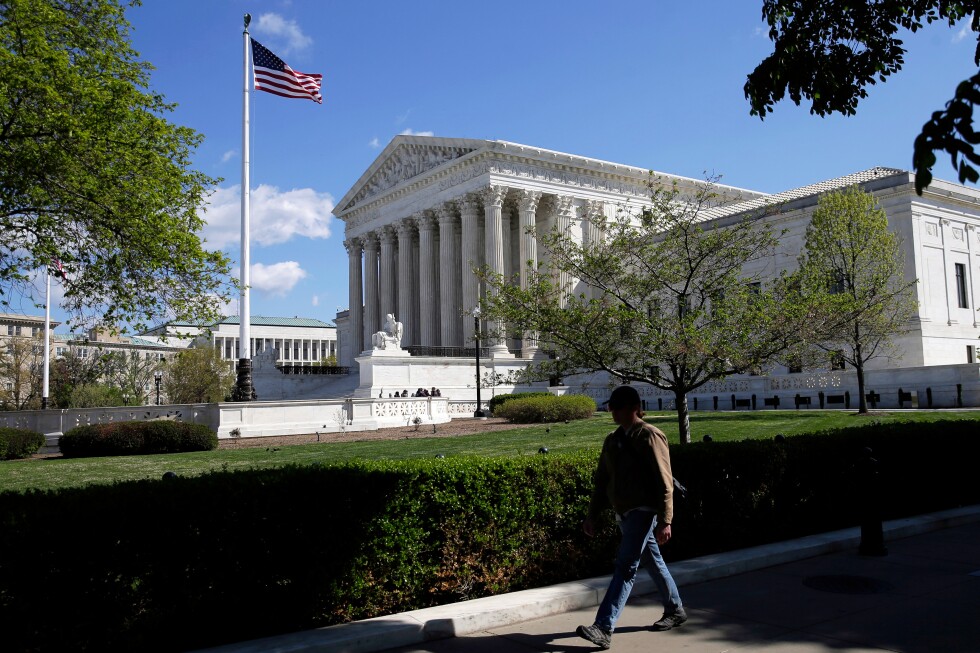

WASHINGTON (AP) — Supreme CourtJustice Ketanji Brown Jackson has delivered a sustained attack on her conservative colleagues’ use of emergency orders to benefit the Trump administration, calling the orders “scratch-paper musings” that can “seem oblivious and thus ring hollow.”
The court’s newest justice, Jackson delivered a lengthy assessment of roughly two dozen court orders issued last year that allowed President Donald Trump to put in place controversial policies on immigration, steep federal funding cuts and other topics, after lower courts found they were likely illegal.
While designed to be short-term, those orders have largely allowed Trump to move ahead — for now — with key parts of his sweeping agenda.
Jackson spoke for nearly an hour on Monday at Yale Law School, which posted a video of the event on Wednesday.
Last week, Justice Sonia Sotomayor similarly talked about emergency orders in an event Tuesday at the University of Alabama that also took issue with the conservatives’ approach.
Jackson has previously criticized the emergency orders both in dissenting opinions and in an unusual appearance with Justice Brett Kavanaugh last month. But her talk at Yale, addressing the public rather than the other eight justices, was notable.
She referred to orders, which often are issued with little or no explanation as “back-of-the-envelope, first-blush impressions of the merits of the legal issue.”
Worse still, she said, was that the court then insists that “those scratch-paper musings” be applied by lower courts in other cases.
The orders suffer from an additional problem, she said, a failure to acknowledge that real people are involved, making them “seem oblivious and thus ring hollow.”
She also pushed back on the court’s assessment that preventing the president from putting his policy in place also is a harm that often outweighs what the challengers to a policy might face.
“The president of the United States, though he may be harmed in an abstract way, he certainly isn’t harmed if what he wants to do is illegal,” Jackson said during a question-and-answer session with law school dean Cristina Rodriguez.
The court used to be reluctant to step into cases early in the legal process, she said. “There is value in avoiding having the court continually touching the third rail of every divisive policy issue in American life,” Jackson said.
While she said she couldn’t explain the change, “in recent years, the Supreme Court has taken a decidedly different approach to addressing emergency stay applications. It has been noticeably less restrained, especially with respect to pending cases that involve controversial matters.”
Sign up for Morning Wire: Our flagship newsletter breaks down the biggest headlines of the day.
Jackson, often joined by Sotomayor and Justice Elena Kagan, has frequently dissented.
There have been conversations about emergency orders among the justices, Jackson said, but she decided to speak publicly with the goal of being “a catalyst for change.”
Also on Wednesday, Sotomayor issued a rare public apology to another justice, Kavanaugh, for what she termed “hurtful comments” she made last week during an appearance at the University of Kansas law school.
Referencing an opinion Kavanaugh wrote in an immigration case where the court granted an emergency order sought by the administration, Sotomayor said her colleague “probably doesn’t really know any person who works by the hour.” Her remarks were reported by Bloomberg Law.
The Dictatorship
Trump threatens to fire Powell if the Fed Chair remains with central bank after his term ends
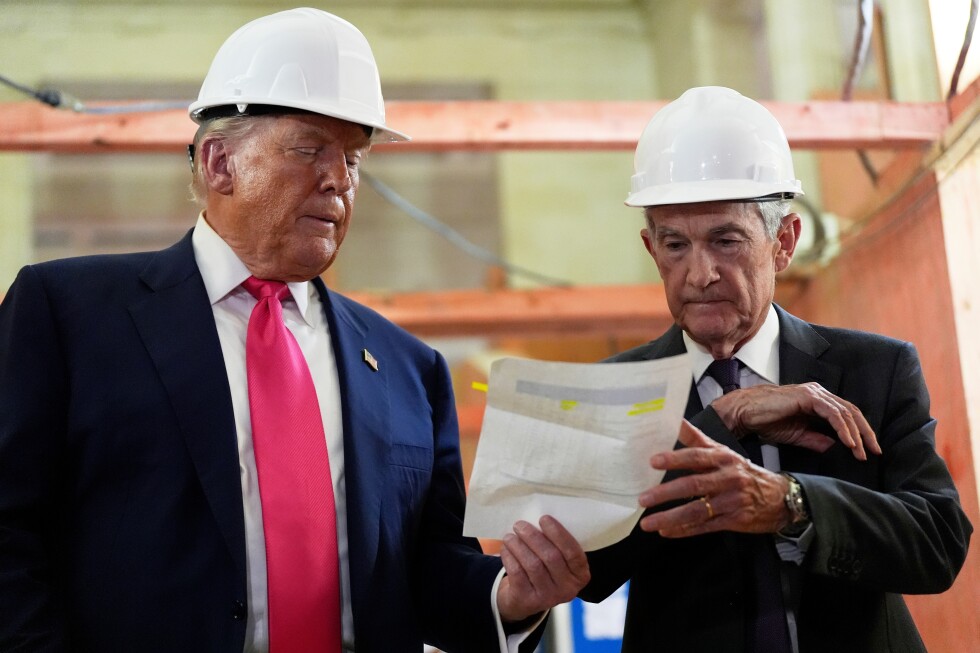
WASHINGTON (AP) — Federal prosecutors made an unannounced visit this week to a construction site at Federal Reserve headquarters that is the focus of an investigation into a $2.5 billion renovation projectaccording to two people familiar with the visit.
Two prosecutors and an investigator from U.S. Attorney Jeanine Pirro’s office were turned away on Tuesday by a building contractor and referred to Fed attorneys, one of the people said. The two people familiar with the visit spoke on condition of anonymity because they weren’t authorized to publicly discuss an ongoing investigation.
The visit underscores that the Trump administration is not backing down from its investigation of the Fed and its chair, Jerome Powell, even though the probe has delayed the confirmation of a new chair nominated by President Donald Trump. The investigation is focused on cost overruns and brief testimony about the project last summer by Powell. Trump confirmed in an interview that aired Wednesday on Fox Business that he wants to continue the probe.
Last month, during a closed-door hearing before a federal judge, a top deputy from Pirro’s office conceded that they hadn’t found any evidence of a crime in their investigation of the headquarters project.
Robert Hur, an attorney for the Federal Reserve board of governors, sent an email to Pirro’s prosecutors about their visit and their request for a “tour” to “check on progress” at the construction site. Hur’s email, which The Associated Press has viewed, noted that U.S. District Judge James Boasberg concluded that their interest in the Federal Reserve’s renovation project was “pretextual.”
AP AUDIO: Prosecutors sought access to Federal Reserve building as Trump threatens to fire Powell
AP Washington correspondent Sagar Meghani reports on more drama surrounding a federal probe of a massive construction project at the Federal Reserve’s headquarters.
“Should you wish to challenge that finding, the courts provide an avenue for you; it is not appropriate for you to try to circumvent it,” Hur wrote.
Republican Tillis is key vote
Sen. Thom Tillis, a North Carolina Republican who is a key member of the Senate Banking Committee, has vowed to vote against Kevin WarshTrump’s nominee to replace Powell as Fed chair, until the investigation is dropped. With the committee closely divided on partisan lines, Tillis’ opposition is enough to block Warsh from receiving the committee’s approval.
Tillis on Wednesday criticized the investigation as “bogus, ill-timed, ill-informed” and repeated that seven Republican members of the banking panel have said they do not believe Powell committed a crime when he testified last June.
Tillis also said there aren’t enough votes on the committee or in the broader Senate to do an end-run around the committee and get Warsh confirmed some other way.
“There really is no path,” he told reporters, adding that Pirro and her aides were “asleep at the switch” because the investigation has essentially delayed Powell’s departure from the Fed, despite Trump’s obsessive criticism of the Fed chair. Powell has now said he won’t leave until the investigation is resolved.
Sign up for Morning Wire: Our flagship newsletter breaks down the biggest headlines of the day.
Tillis suggested Pirro blindsided the White House with her investigation. “They should have consulted with the White House, because I’m sure if they would have, (the White House) would have said, ‘no, we can wait,’” until Powell steps down.
But Kevin Hassett, the Trump administration’s top economist, said Wednesday that the Justice Department got involved because “the president wanted to investigate the cost overrun,” Axios reported.
The Banking panel said Tuesday that it will hold a hearing on Warsh’s nomination April 21. Powell’s term as Fed chair ends May 15, but Powell said last month he would remain as chair until a replacement is named.
Powell is serving a separate term as a member of the Fed’s governing board that lasts until January 2028. Chairs typically leave the board when their terms as chair end, but they can remain on the board if they choose. Powell has said he won’t leave until the investigation is resolved. If he remains it would deny Trump the opportunity to appoint someone else to the seven-member board.
Late Tuesday Tillis posted a link on social media to The Wall Street Journal’s article on the visit below an image of the Three Stooges and wrote, “The U.S. Attorney’s Office for D.C. at the crime scene.”
Investigation centers on building renovations
The investigation centers on an appearance by Powell before the Banking Committee last June, when he was asked about cost overruns on the renovations. The most recent estimates from the Fed suggest the current estimated cost of $2.5 billion is about $600 million higher than a 2022 estimate of $1.9 billion.
“It is probably corrupt, but what it really is, is incompetent,” Trump said. “Don’t you think we have to find out what happened there?”
The president’s support for the investigation threatens a timeframe set out by Sen. Tim Scott, a South Carolina Republican who chairs the Banking Committee. Scott said Tuesday on Fox Business that he believed the investigation would be “wrapped up in the next few weeks,” allowing Warsh to be confirmed soon after.
Threat to fire Powell
News of the unannounced visit by prosecutors comes as Trump has again threatened to fire Powell, if the Federal Reserve Chair decides to stay on the central bank’s governing board after his term as chair expires next month.
“Well then I’ll have to fire him, OK?” Trump said.
Trump has for months wanted to remove Powell, saying he has been too slow in orchestrating interest rate cuts that would give the U.S. economy a quick boost. Powell has said the investigation is a pretext to undermine the Fed’s independence to set rates.
Sen. Josh Hawley, a Missouri Republican, said Trump can only fire Powell “for cause,” meaning some kind of misconduct, “so that’s a pretty tall order.”
Supreme Court weighing another Trump removal
Trump’s threat to fire Powell comes as the Supreme Court is weighing the president’s effort to remove another central bank governor, Lisa Cook. Lower courts have so far allowed Cook to remain in her job while her legal challenge to the firing continues. The Supreme Court also seemed likely to keep her on the Fed when the court heard arguments in January. A decision could come any time.
The issue in Cook’s case is whether allegations of mortgage fraud, which she has denied, is a sufficient reason to fire her or a mere pretext masking Trump’s desire to exert more control over U.S. interest rate policy.
The Supreme Court has allowed the firings of the heads of other governmental agencies at the president’s discretion, with no claim that they did anything wrong, while also signaling that it is approaching the independence of the nation’s central bank more cautiouslycalling the Fed “a uniquely structured, quasi-private entity.”
___
AP Writers Seung Min Kim, Mark Sherman, Paul Wiseman, Alanna Durkin Richer, and video journalist Nathan Ellgren contributed to this report.
The Dictatorship
The Latest: US blockade of Iranian ports ‘fully implemented’ as Trump says war is near end

SnoCountry Mountain Reports
Sports Betting Line
Pacific Northwest Sportswatch Daily Listings
Gulf States Sportswatch Daily Listings
- House passes short-term spy powers extension in late-night vote after deal falls apart
- Republicans move forward on last-minute spy powers deal, teeing up late-night vote
- Acting ICE chief to exit agency: DHS secretary

- Popular weight loss medications linked to hidden side effects, study finds

- Trump claims Mamdani is ‘destroying New York’ with proposed second-home tax
- GOP hard-liners threaten to tank FISA vote
- Why Steve Hilton thinks he can turn California red

- Justice Jackson chides ‘oblivious’ Supreme Court conservatives…
- ‘The original sin:’ Hill Republicans blame White House for slow-walking FISA sales pitch
- A depleted Space Force races to prepare for Trump’s spending spree
-

 Politics1 year ago
Former ‘Squad’ members launching ‘Bowman and Bush’ YouTube show
-

 The Dictatorship1 year ago
Luigi Mangione acknowledges public support in first official statement since arrest
-

 Politics1 year ago
Former Kentucky AG Daniel Cameron launches Senate bid
-

 The Dictatorship1 year ago
Pete Hegseth’s tenure at the Pentagon goes from bad to worse
-

 The Dictatorship7 months ago
Mike Johnson sums up the GOP’s arrogant position on military occupation with two words
-

 Politics1 year ago
Blue Light News’s Editorial Director Ryan Hutchins speaks at Blue Light News’s 2025 Governors Summit
-
Uncategorized1 year ago
Bob Good to step down as Freedom Caucus chair this week
-

 The Josh Fourrier Show1 year ago
DOOMSDAY: Trump won, now what?