
Congress
Feds charge man accused of attacking Ilhan Omar at town hall with assault

Federal authorities charged a man who allegedly attacked Rep. Ilhan Omar (D-Minn.) this week at a town hall in Minnesota with assaulting or impeding a federal employee.
Minneapolis resident Anthony Kazmierczak, 55, allegedly charged at Omar on Tuesday night and sprayed her with a liquid after she called for the abolishment of Immigration and Customs Enforcement and the removal of Homeland Security Secretary Kristi Noem, addressing constituents at a town hall amid unrest in the city following the fatal shootings of two Minneapolis residents this month.
Kazmierczak apparently responded, “She’s not resigning. You’re splitting Minnesotans apart,” according to video evidence reviewed by the FBI.
Kazmierczak was tackled by two security guards and later arrested by the Minneapolis Police Department. He is set to make an initial court appearance in Minnesota on Thursday afternoon.
A hazardous materials specialist later identified the substance from the syringe as water and apple cider vinegar, with Kazmierczak allegedly admitting to squirting Omar with vinegar at the time of his arrest, according to an affidavit.
At a Wednesday press conference, Omar — who has been a frequent target of Donald Trump’s criticism — blamed the president for threats against her.
“Every time the president of the United States has chosen to use hateful rhetoric to talk about me and the community that I represent, my death threats skyrocket,” she said.
The attack came less than a week after Trump wrote in a social media post that Omar “should be investigated for Financial and Political Crimes, and that investigation should start, NOW!” Trump has criticized her many times on social media.
Shortly after the incident, Trump reiterated his criticism of the Minnesota Democrat, telling ABC News: “I think she’s a fraud.” He also alleged, without evidence, that Omar may have “had her herself sprayed.”
Kazmierczak, who has been arrested twice for driving under the influence and was convicted of felony auto theft in 1989, apparently told a close associate that “someone should kill” Omar several years ago, per the affidavit.
He also has a history of pro-Trump social media activity. In one October 2021 Facebook post, he shared a political cartoon depicting Omar holding a sign that reads “Defund police” and saying: “Security for me, none for thee.” The cartoon also depicts a security officer holding a bag of money that reads: “Omar and the squad spent a combined $100,000 on security last quarter,” an apparent reference to the young progressive group of House Democrats.
Kazmierczak also repeatedly posted in defense of Kyle Rittenhouse, the man who shot three people — killing two — at a 2020 Black Lives Matter protest in Kenosha, Wisconsin.


You may hear House members calling for his ouster after the resignations of Reps. Tony Gonzales and Eric Swalwell, but Rep. Cory Mills looks to be on solid footing.
Despite months of scrutiny over a range of conduct issues — including accusations of illicit involvement in federal contracts and stolen valor — members of both parties say the circumstances are different for the Florida Republican.
Republicans and Democrats are leaning on bureaucratic rationalizations before leaping to a fresh wave of expulsions, despite growing alarm around congressional sleaze.
They say they’re waiting for the conclusion of an active House Ethics investigation into Mills before moving to crack down on him — a similar approach they’re taking with Rep. Sheila Cherfilus-McCormick, who is set to hear her formal punishment from Ethics next Tuesday after the panel found her guilty of two dozen counts of misconduct.
“I have a three part test — Has the member admitted to the conduct in question? Has there been a finding by a court? Or has there been a finding by the Ethics Committee?” Republican Rep. Nick LaLota said. “I don’t think that the Mills case meets any of those three criteria.”
“If there’s expulsion votes, if they’re political, I’m not interested,” said Rep. Brad Schneider, the chair of the centrist New Democrat Coalition. “If they are based on facts established by process, I’m gonna follow the facts.”
Mills said in an interview he had told Speaker Mike Johnson he was “unfairly lumped into this” with Swalwell and Gonzales as well as with Cherfilus-McCormick. Unlike Cherfilus-McCormick, he is not facing a federal indictment. And unlike Swalwell and Gonzales, he is not facing charges of sexual misconduct — something Mills said Johnson has acknowledged.
It’s not clear where the investigation into Mills stands. Johnson told reporters Tuesday he is “looking into” it. Republicans have quietly worried about the accusations against Mills for some time, but the GOP’s narrow House majority has complicated the prospect of leadership engaging in any sort of accountability.
What else we’re watching:
— FISA lives to face its next test: Johnson is figuring out how to move forward with a clean, 18-month extension of a key spy power — Section 702 of the Foreign Intelligence Surveillance Act— as several Republicans plan to vote against a procedural step up for consideration Wednesday. Talks are ongoing between GOP leaders, hard-liners and the White House as the program faces an April 20 expiration.
— Sanders to Force Israel Arms Sales Vote: Sen. Bernie Sanders plans to force a vote Wednesday on two resolutions to block nearly half a billion dollars in U.S. arms sales to Israel. There’s renewed energy behind Sanders’ push as Democrats separately try to rein in Trump’s power to continue the Israel-US war in Iran.
—Vought’s Budget Pitch: White House budget chief Russ Vought is set to defend Trump’s $1.5 trillion Pentagon budget request when he appears at House Budget Wednesday. Meanwhile House Armed Services Chair Mike Rogers said Tuesday he expects to craft defense policy legislation with a $1.15 trillion budget topline, a move that could make the upcoming NDAA more politically palatable to Democrats.
Riley Rogerson and Hailey Fuchs contributed to this report.
Senate Republicans plan to forge ahead next week with the first formal steps to pass a party-line immigration enforcement bill totaling $65 billion to $75 billion.
But as GOP leaders scramble to meet President Donald Trump’s June 1 deadline to clear a bill funding ICE and Border Patrol for more than three years, they are facing competing visions within their ranks for what else should be tacked on as the party runs out of time to score more legislative wins before the midterms.
“I think this is it. This is our shot,” Sen. John Kennedy (R-La.) told reporters Tuesday, predicting that Republicans would not end up enacting a third filibuster-skirting budget reconciliation bill before Election Day.
“And that’s why you sense some frustration among a lot of the senators,” he added. “Some of which has been voiced and a lot of which it hasn’t.”
Senate Majority Leader John Thune laid out the up-to $75 billion price tag for the bill to reporters Tuesday. The bill’s topline was in the range of what Republicans had been telegraphing over the past week but could spark pushback from at least one fiscal hawk — Senate Homeland Security Chair Rand Paul — because it’s higher than the roughly $50 billion it would cost to fund immigration enforcement at current levels for three years.
The worry among some senior Republicans is that expanding the scope of the bill will slow down the process and complicate the measure’s chances of passing. Instead, they want to simply fund the immigration enforcement agencies not covered under the Senate-passed measure House Republicans are still waiting to clear, two months after funding first lapsed for all of the Department of Homeland Security, which houses the immigration agencies.
“We have members who want other things. I mean, I want other things,” Thune said Tuesday afternoon. “But obviously we have a specific mission and purpose here.”
Senate Budget Chair Lindsey Graham (R-S.C) is expected to release the budget resolution as soon as this week to set the general framework for the final package.
Senate GOP leaders are encouraging Republican senators to offer their ideas as amendments during the chamber’s marathon “vote-a-rama” debate, during which lawmakers are allowed to offer as many germane amendments as they wish.
“There was some suggestion that it ought to be a little broader and everything. I think that’s where the default position is, ‘Then put it in an amendment, and we’ll see if it can pass,’” West Virginia Sen. Shelley Moore Capito, the No. 4 Senate Republican, told reporters Tuesday afternoon.
Senate Majority Whip John Barrasso said Tuesday the chamber intends to vote “next week” on approving the fiscal blueprint that will allow them to later pass the party-line immigration enforcement bill.
Thune can lose three of his own members and still win on the floor with Vice President JD Vance as the tie-breaking vote, and Republicans are cautiously optimistic they will have the votes next week.
But some fiscal hawks aren’t yet backing down from their demand that the immigration enforcement bill be paid for, which could broaden the scope of the measure as well as the number of issues where Democrats could force tricky amendment votes.
Even if Senate Republicans succeed in adopting the budget framework next week, an identical budget measure also needs to clear the House. GOP hard-liners rejected the Senate’s last attempt to end the DHS shutdown and are now demanding that Republicans use the party-line reconciliation process to fund all of the department.
Thune and Speaker Mike Johnson had been expected to hold a weekly meeting Tuesday where they would discuss the path forward on DHS funding, among other issues. But Thune said the sitdown was punted to Wednesday because of scheduling issues.
Mia McCarthy and Calen Razor contributed to this report.
A key procedural step to extend U.S. government spy powers ahead of next week’s deadline is in limbo as members of the House Rules Committee Tuesday night paused their work on the legislation.
GOP leaders are trying to figure out how to get enough support for a clean extension of Section 702 of the Foreign Intelligence Surveillance Act that’s a priority for President Donald Trump, despite opposition from House GOP hard-liners.
Senior Republicans are planning to reconvene the panel at 10:15 p.m. Tuesday to try to make progress, and Republicans privately say they are closer to an agreement, according to five people.
House GOP leaders appear more open to discussing an amendment involving warrants, and hardliners also want a previously promised ban on a central bank digital currency to advance through some vehicle. In exchange, House GOP leaders are pushing for a longer extension than 18 months.
Speaker Mike Johnson wants to put a clean, 18-month FISA extension on the House floor Wednesday with the goal of final passage before the program expires April 20. But at least a dozen GOP hard-liners are vowing to oppose a procedural vote if they’re not given the chance to amend the legislation.
GOP leaders can lose two Republican votes on the committee and still advance the measure.
The next hurdle will be passing the party-line procedural vote on the House floor. Several Republicans, including Reps. Andrew Clyde (R-Ga.), Tim Burchett (R-Tenn.) and Lauren Boebert (R-Colo.), suggested they would be open to tanking the rule vote on the floor with Johnson’s razor thin majority.
Rep. Ralph Norman (R-S.C.), a Rules Committee member, said in an interview he told the White House he would vote against the clean 18 month extension unless an amendment to prohibit warrantless surveillance of Americans was added.
“What I want is a FISA amendment for warrants,” Norman said. “You get that, we’ll be good.”
The problem for House GOP leadership, however, is that a warrants amendment is likely to pass if they allow a vote on it, scuttling Trump’s demand for a clean extension. Some Republicans also want an amendment to prevent third-party data brokers from selling information to the federal government, according to five people involved in the talks.
Administration officials invited some of the GOP holdouts to a 6:30 p.m. meeting at the White House Tuesday night, but many of them went instead to the regular meeting of the House Freedom Caucus a few blocks from the Capitol to discuss their own plans.
Judiciary Chair Jim Jordan (R-Ohio), one member who has supported the White House’s position of a clean extension, was at the Freedom Caucus’ meeting Tuesday night.
GOP leaders have been privately discussing a backup option of a shorter extension, such as 12 months, which some conservatives are open to. But several holdouts said that would not be enough to get their support.
“I don’t think a clean extension has the votes to pass,” Clyde said. “No matter how long it is.”
House GOP leaders have also discussed simply putting a rule for the clean extension on the House floor Wednesday, and letting Trump see who opposes it, before they pursue any backup plans.
- Rick Jackson cannonballed into the governor race. It’s having ripple effects across Georgia.

- Mike Johnson faces FISA mayhem
- Capitol agenda: Cory Mills under fire but not going anywhere
- Mike Johnson faces FISA mayhem
- GOP leaders struggle to keep $75B immigration plan narrow
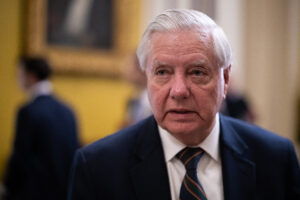
- Mike Johnson faces FISA mayhem
- How 1 GOP billionaire is upending Georgia politics

- GOP leaders struggle to keep $75B immigration plan narrow
- Democrats to confront Trump budget director Russ Vought about his ‘stone cold silence’
- Justice Department moves to erase Jan. 6 convictions of Oath Keepers, Proud Boys’ leaders

-

 Politics1 year ago
Former ‘Squad’ members launching ‘Bowman and Bush’ YouTube show
-

 The Dictatorship1 year ago
Luigi Mangione acknowledges public support in first official statement since arrest
-

 Politics1 year ago
Former Kentucky AG Daniel Cameron launches Senate bid
-

 The Dictatorship1 year ago
Pete Hegseth’s tenure at the Pentagon goes from bad to worse
-

 The Dictatorship7 months ago
Mike Johnson sums up the GOP’s arrogant position on military occupation with two words
-

 Politics1 year ago
Blue Light News’s Editorial Director Ryan Hutchins speaks at Blue Light News’s 2025 Governors Summit
-
Uncategorized1 year ago
Bob Good to step down as Freedom Caucus chair this week
-

 The Josh Fourrier Show1 year ago
DOOMSDAY: Trump won, now what?