
The Dictatorship
Federal prosecutors in N.Y. officially move to dismiss Mayor Eric Adams’ criminal case

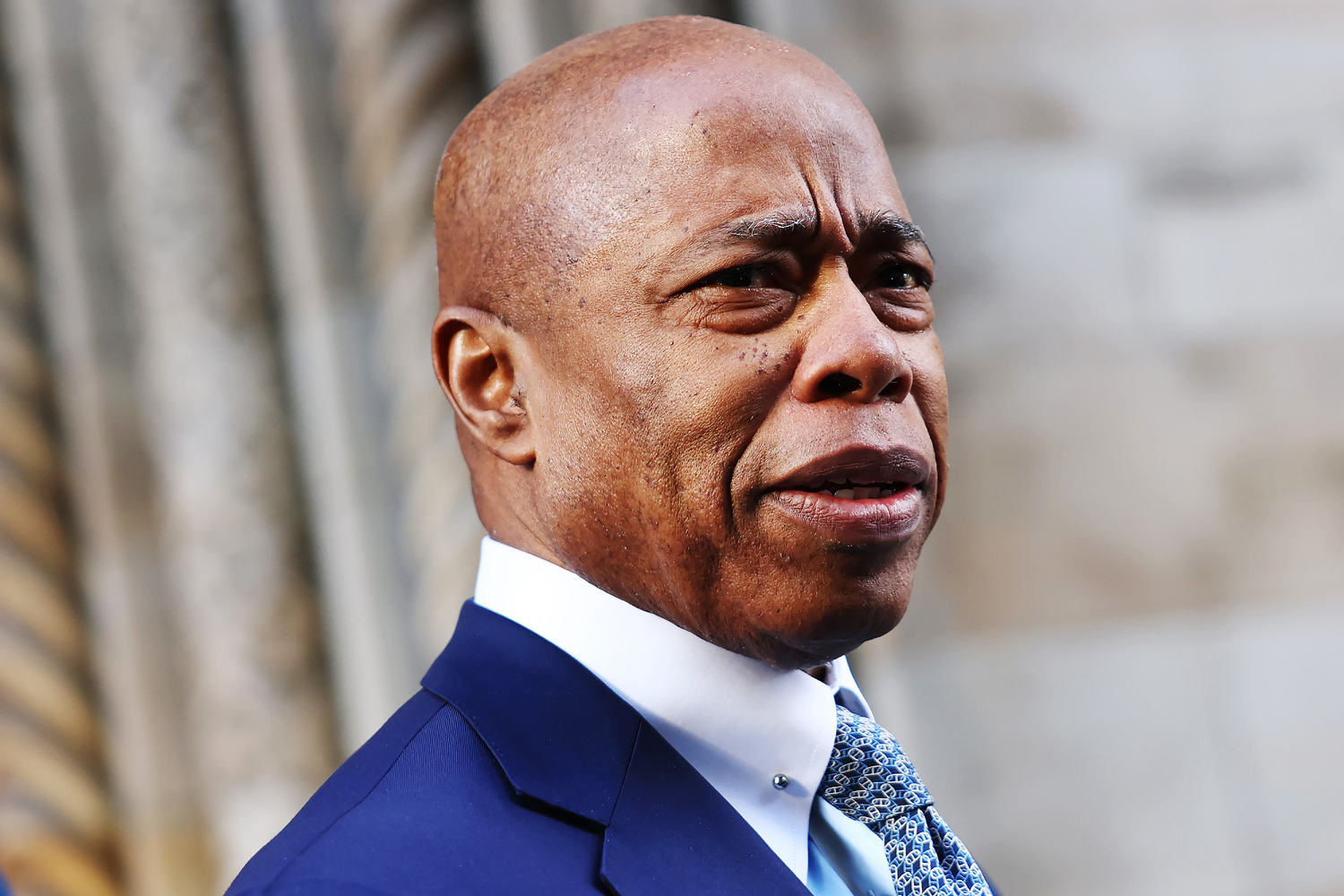
Federal prosecutors in Manhattan filed a motion Friday to dismiss New York City Mayor Eric Adams’ corruption casecaving to pressure from the Justice Department to drop criminal charges against the mayor.
In a memo to federal prosecutors on Feb. 10, acting U.S. Deputy Attorney General Emil Bove asked for Adams’ case to be dismissed without prejudicearguing that the indictment in September is too close to the upcoming New York City mayoral primary in June. Bove also claimed that the criminal charges against Adams — which he pleaded not guilty to in September — hindered the mayor’s ability to work with President Donald Trump to crack down on immigrants and fight crime in New York.
Bove’s memo sparked something of a revolt within the Justice Department. Danielle Sassoon, the acting U.S. attorney for the Southern District of New York, and at least six other federal prosecutors have resigned over the DOJ directive.
Sassoon told U.S. Attorney General Pam Bondi in a letter dated Feb. 12 that in a meeting last month with Bove and Adams’ attorney Alex Spiro, the mayor’s legal team “repeatedly urged what amounted to a quid pro quo, indicating that Adams would be in a position to assist with Department’s enforcement priorities only if the indictment were dismissed.” Bove also “admonished a member of my team who took notes during that meeting and directed the collection of those notes at the meeting’s conclusion,” Sassoon wrote.
Spiro and Bove have denied Sassoon’s allegation of engaging in a quid pro quo. Adams said in a statement Friday that he has “never offered — nor did anyone offer on my behalf — any trade of my authority as your mayor for an end to my case.”
Adams and Spiro have framed Bove’s request for the case’s dismissal as proof of his innocence. But the charges against the mayor have not yet vanished. A federal judge will review the motion for dismissal.

Clarissa-Jan Lim is a breaking/trending news blogger for BLN Digital. She was previously a senior reporter and editor at BuzzFeed News.


The Dictatorship
Pakistan to host U.S.-Iran talks as Iran vows U.S. ground troops would be ‘set on fire’

ISLAMABAD (AP) — Pakistanannounced Sunday that it will soon host talks between the U.S. and Iran, though there was no immediate word from Washington or Tehran, and it was unclear whether discussions on the monthlong warwould be direct or indirect.
“Pakistan is very happy that both Iran and the U.S. have expressed their confidence in Pakistan to facilitate the talks. Pakistan will be honored to host and facilitate meaningful talks between the two sides in the coming days,” Foreign Minister Ishaq Dar said after top diplomats from Turkey, Egypt and Saudi Arabia met in Islamabad.
Pakistan later said the diplomats had departed for their home countries. The talks were originally scheduled to continue Monday.
Pakistan’s foreign ministry did not answer questions, and Iran’s mission to the United Nations declined to comment.
Islamabad has emerged as a mediator, having relatively good ties with Washington and Tehran, after what Pakistani officials call weeks of quiet diplomacy.
Earlier, Iran’s parliament speaker, Mohammad Bagher Qalibaf, dismissed the talks in Pakistan as a cover after some 2,500 U.S. Marinestrained in amphibious landings arrived in the Middle East. He said Iranian forces were “waiting for the arrival of American troops on the ground to set them on fire and punish their regional partners forever,” according to state media.
Iran also threatened to attack homes of U.S. and Israeli “commanders and political officials” in the region. A spokesperson for the Iranian military’s joint command, Ebrahim Zolfaghari, cited the “targeting of residential homes of the Iranian people in various cities” and other “malicious actions,” state media reported.
Meanwhile in Israel, Prime Minister Benjamin Netanyahu said the military will widen its invasionof Lebanon, expanding the “existing security strip” in that country’s south while targeting the Iranian-backed Hezbollah militant group. No details were released.
Over 1 million Lebanese have been displaced in the war. One of them, Mohammad Doghman, called Israel “an expansionist state.”
Fleeing Iranians urge US to end war
The warhas threatened global suppliesof oil, natural gas and fertilizerand disrupted air travel. Iran’s grip on the strategic Strait of Hormuzhas shaken markets and prices. Now the Iranian-backed Houthi rebels‘ entry into the war could threaten shipping on another crucial waterway, the Bab el-Mandeb strait to the Red Sea.
“We don’t know at what moment our homes could be targeted,” said Razzak Saghir al-Mousawi, 71, describing relentless airstrikes as Iranians crossing into Iraq urged the United States to end the war. “I am definitely afraid.”
Witnesses reported more strikes Sunday night in Tehran, and state media cited Iran’s energy ministry as saying power was cut in Tehran and Alborz provinces after attacks on electricity facilities. The Israeli military said it was striking Tehran and that Iran had launched more missiles.
More than 3,000 people have been killed in the warthat began with U.S. and Israeli strikes on Iran that triggered Iranian attacks against Israel and U.S. military assets and other sites in neighboring Gulf Arab states. The war continues on the digital frontas well.
Egypt says meetings aim for ‘direct dialogue’
Egyptian Foreign Minister Badr Abdelatty said the meetings in Pakistan are aimed at opening a “direct dialogue” between the U.S. and Iran, which have largely communicated through mediators. The war began with U.S. and Israeli strikes during indirect talks. Pakistan said the foreign ministers met Sunday without U.S. or Israeli participation.
Iranian officials have rejected a U.S. 15-point “action list” as a framework for a possible peace deal and publicly dismissed the idea of negotiating under pressure. But Iran’s state broadcaster has reported that Tehran drafted its own five-point proposal reportedly calling for a halt to killing Iranian officials, guarantees against future attacks, reparations and Iran’s “exercise of sovereignty over the Strait of Hormuz.”
Iran has eased some restrictions on commercial shipsin the strait, agreeing late Saturday to allow 20 more Pakistani-flagged vessels to pass through. It “sends a clear signal that Iran remains open for business with the world, provided the United States abandons coercion,” said Asif Durrani, Pakistan’s former ambassador to Iran.
An adviser to the United Arab Emirates, Anwar Gargash, called for any settlement to the war to include “clear guarantees” that Iranian attacks on neighbors will not be repeated. He said Iran’s government has become “the main threat” to Persian Gulf security, and called for compensation for attacks on civilian infrastructure.
Iran threatens strikes on Israeli and US universities
Iran warned of escalation after Israeli airstrikes hit several universities, including ones that Israel claimed were used for nuclear research and development. Concerns over Iran’s nuclear programare at the heart of tensions.
The paramilitary Revolutionary Guardsaid Iran would consider Israeli universities and branches of U.S. universities in the region “legitimate targets” unless offered safety assurances for Iranian universities, state media reported.
“If the U.S. government wants its universities in the region spared, it should condemn the bombardment” of Iranian universities by midday Monday, the Guard said.
U.S. colleges have campuses in Qatar and the UAE, including Georgetown, New York and Northwestern universities. The American University of Beirut moved classes online and called it a precautionary measure.
Iran’s Foreign Ministry has said dozens of universities and research centers have been hit, including the Iran University of Science and Technology and Isfahan University of Technology.
Both sides in the war have threatened to attack civilian facilities, which critics have warned could be a war crime.
Death toll climbs
In Lebanon, officials said more than 1,200 people have been killed. There were fears of more deaths after Netanyahu, speaking on a visit to northern Israel, announced the expanded invasion. Hezbollah “still has residual capability to fire rockets at us,” he said.
Iranian authorities say more than 1,900 people have been killed in the Islamic Republic, while 19 have been reported dead in Israel.
In Iraq, where Iranian-supported militia groups have entered the conflict, 80 members of the security forces have died.
In Gulf states, 20 people have been killed. Four have been killed in the occupied West Bank.
Thirteen U.S. service members have been killedin the war.
The Dictatorship
Raskin slams Justice Department for not releasing Trump classified documents report
Rep. Jamie Raskin, D-Md., on Sunday slammed the Department of Justice for not releasing former special counsel Jack Smith’s report on top secret documents that Trump took to his Mar-a-Lago resort in Florida in 2021.
“It’s only this one that Trump and the DOJ have insisted upon staying secret, and they got Judge Eileen Cannon, who is, as you know, Donald Trump’s loyal flunky in Florida, to issue that order,” Raskin said during an interview with MS NOW’s “The Weekend,” noting that “every other special counsel report” going back to Ken Starr’s report on former President Bill Clinton has been released publicly.
Raskin, the top Democrat on the House Judiciary Committee, revealed on Wednesday that he had obtained a memo from Smith’s investigation that said Trump possessed “classified documents pertinent to his business interests.”
🚨MAJOR BREAKING: Damning new documents from Special Counsel Jack Smith’s investigation, obtained by @RepRaskin and Judiciary Democrats, reveal:
– Trump stole classified documents to advance his “business interests”
– Trump showed a classified map to unnamed passengers on a… https://t.co/oqZFRb5Rtr— House Judiciary Dems (@HouseJudiciary) March 25, 2026
As MS NOW reported on Friday, Smith suspected that Trump took hundreds of pages of classified documents after he left office in 2021 because they would help him financially. Ultimately, however, Smith and his team concluded they could not prove such a motive and decided that Trump somehow felt entitled to keep the records and because, as sources told MS NOW, they were “cool” to have.
The hidden classified documents were discovered after an unannounced FBI raid of Trump’s Mar-a-Lago residence in August 2022. Trump and his lawyers’ reasons for keeping the documents in their possession in spite of a May 2022 DOJ subpoena, remain unknown.
Raskin said Sunday that any “specific business motives” for Trump taking the classified documents is “guesswork” because the Smith investigation memo that the Judiciary Committee obtained contained only generalities.

“Some people think it was crypto, some people think it was the Saudis. Donald Trump’s son in law, Jared Kushner, brought back a cool two and a half billion dollars from the Saudi sovereign fund,” Raskin said, adding, “That’s really why we need to make sure that that Jack Smith’s Special Counsel report Volume Two is released.”
Responding to a request for comment, White House spokeswoman Abigail Jackson on Sunday repeated a statement she gave to MS NOW on Friday, saying, “Jack Smith is Trump deranged lunatic and a proven liar with zero credibility.”
Separately, other congressional Democrats, including Rep. Robert Garcia, D-Calif., and Sen. Ron Wyden, D-Ore., have written to Kushner’s company, Affinity Partnersasking “what safeguards are in place to ensure his government work is fully separated from his fundraising and foreign business activities.”
“Jared Kushner raising billions from Middle Eastern governments for his private equity firm, pocketing tens of millions in fees each year, while serving as Donald Trump’s Middle East envoy raises serious concerns about his potential conflicts of interest,” Ranking Member Garcia said in a statement on March 19. “We need answers if Trump’s son-in-law is profiting by selling access to influence U.S. policy to foreign investors. If he’s getting influenced by cash from other countries, America’s national security is at risk. Oversight Democrats are fighting for answers and transparency.”
Raskin said the newly unearthed information from Smith’s probe, which Democrats have characterized as “damning,” landed in his lap by accident.
“It wasn’t like some kind of Sherlock Holmes maneuver. It was inadvertent, and we just published that and said, ‘Well, look, there are some really stunning things in there,’” Raskin said. “Donald Trump, you know, in his rush to steal all these documents, took one document that is so top secret only six people in the entire government, one of them, being the president of the United States, was allowed to see and he was showing stuff off on an airplane to several people, including Susie Wiles.”
The Justice Department responded to Raskin and other House Judiciary Committee Democrats on Wednesday, saying, “Jack Smith’s team was desperate to prosecute Biden’s top political opponent, so it is no surprise that his files contain salacious and untrue claims about President Trump.”
Erum Salam is a breaking news reporter for MS NOW, with a focus on how global events and foreign policy shape U.S. politics. She previously was a breaking news reporter for The Guardian.
The No Kings protests that took place across the country on Saturday were massive. Americans once again turned out in large numbers in thousands of cities and townsin both red and blue states, to protest against President Donald Trump’s authoritarian presidency.
The huge size of the protests is a stirring demonstration of democratic expression. It drives home how Trump’s imperial presidency is not only unpopularbut unpopular in a manner that infuriates and mobilizes people. These protests don’t only galvanize activist types, but also people who rarely protest — or have never protested before in their lives. They are also altering our political geography: Harvard researchers have found that the No Kings protests are spreading deeper into Trump country over time.
But something is missing. There is an absence of friction. The contained and routinized choreography of these demonstrations every few months is central to their mass appeal. Paradoxically, it is also what limits their power.
Massive street protests are best understood as the tip of the iceberg.
Implicit in highly-curated street protest is an orderly return to business as usual by the end of day. Thus, they serve more as a barometer of anti-Trump sentiment than as a model of resistance. Ultimately, Americans interested in using collective action to push back against Trump’s authoritarian agenda will need to show more ambition and creativity.
No Kings is, by design, meant to be as broadly appealing as possible and serve as a big tent for a wide coalition of social movements opposed to authoritarianism. And size matters: it helps signal disapproval more powerfully than a poll number does.
No Kings’ the-more-the-merrier framework opens up the possibility that a day of anti-Trump protest hits that golden 3.5% of the population benchmark — the proportion of the population engaged in nonviolent protest that some social scientists say historically corresponds with successful campaigns for sweeping social change. (In the U.S., that would be roughly 12 million people on the streets.) But as Harvard political scientist Erica Chenoweth told MS NOW’s Chris Hayes last year, that number tends to correspond with a wide range of pronounced political activity, and is not in and of itself a silver bullet for social change:
[Hitting 3.5%] usually suggests that there is a much broader range of support for the movement than just people actively participating in that movement. What does that mean? It means that this is at a peak of a movement that has been building over the years. Building, organizing, engaged in lots of other low-level tactics, protests, non-cooperation, everyday forms of resistance.
In other words, massive street protests are best understood as the tip of the iceberg rather than the apex of dissident energy. Even when the numbers are huge, they serve as a portal into movement energy rather than an endpoint.
“There’s not any one way to get people into a movement. You want to have as many doors open as possible because you have to reach people wherever they are,” Hahrie Han, a political scientist at Johns Hopkins University recently told The Guardian. “The bigger challenge is, once they’re there, how do you keep them there, and then how do you channel that engagement in collective ways?”
There are a few ways for the left to think about how it should direct energy that is coalescing at No Kings protests.

The first is to remember that the art of protest is drama: a protagonist contesting the power of an antagonist. The effective ones are often animated by some type of refusal to cooperate with unjust policy, and specific in their grievances and policy demands.
In this vein, the most widely cited and admired protest movement in American history is civil disobedience during the Civil Rights era. Protesters merged theory and practice, nonviolently insisting on laying claims to rights with their bodies. Noncooperation invites repression, but repression of these kinds of protests often only serves to underscore the righteousness of the cause of the protesters. It’s a story that activists often win when they are organized and dogged enough.
Minneapolis activists’ resistance to federal immigration agents showcases the outsize power of civil disobedience laser focused on a specific goal. Activists nonviolently refused to cooperate with the wishes of federal agents by surveilling their movements and raids; alerting immigrant communities to incoming Immigration and Customs Enforcement raids; shutting down significant parts of the economy; and demanding the agents leave by constantly whistling and honking in their presence and banging pots and pans to interfere with their sleep. The vicious repression of these protesters was broadcast across the country, and provided a preview of what the rest of the country might see if Trump had his dreams fulfilled: cities occupied by secret police bent on shredding up our civil liberties. After weeks of terrible press and federal agents killed two protesters, Trump was forced to retreat as his poll numbers on his signature issue of immigration dropped.

There are many ways in which activists can use noncooperation to effect change. Some scholars who study political dissent argue boycotts are uniquely effective — when well-organized — because they require relatively little effort and can attract first-time protesters easily. Some big labor unions are putting call-outs for other unions to coordinate on efforts to put together a general strike in the U.S. — widespread workplace stoppages across the country — in the coming years. Bolder displays of dissent from people in ordinary spaces can help inspire more noncooperation among the elite echelons of civil society which were depressingly quick to capitulate to Trump, from big business to law firms to academia to corporate media companies.
None of this is to say No Kings protests are frivolous or a waste of time. They are impressive exercises in solidarity on behalf of American democracy, and a reminder of the possibility of coalition-building across a factionalized left. But the kind of sustained collective action that moves the dial and truly contests authority needs to go beyond intermittent street protests. It requires confrontation.
Zeeshan Aleem is a writer and editor for MS NOW. He primarily writes about politics and foreign policy.
- House Democrat warns of ‘boots-on-the-ground quagmire’ in Iran
- Democrats see openings inOhio races forSenate, governor

- Iranian-American lawmaker says Trump needs to find an off-ramp quickly for Iran war
- Burchett calls for new Senate leadership after DHS vote
- Cruz, Huckabee criticize Israel for blocking Latin patriarch on Palm Sunday
- Pakistan to host U.S.-Iran talks as Iran vows U.S. ground troops would be ‘set on fire’

- Raskin slams Justice Department for not releasing Trump classified documents report
- No Kings is impressive. It’s not enough.
- The DHS shutdown is straining air traffic controllers like me
- Why Jared Kushner’s dealmaking hit a wall with Iran
-

 The Dictatorship1 year ago
Luigi Mangione acknowledges public support in first official statement since arrest
-

 Politics1 year ago
Former ‘Squad’ members launching ‘Bowman and Bush’ YouTube show
-

 Politics1 year ago
Former Kentucky AG Daniel Cameron launches Senate bid
-

 Politics1 year ago
Blue Light News’s Editorial Director Ryan Hutchins speaks at Blue Light News’s 2025 Governors Summit
-

 The Dictatorship7 months ago
Mike Johnson sums up the GOP’s arrogant position on military occupation with two words
-

 The Dictatorship1 year ago
Pete Hegseth’s tenure at the Pentagon goes from bad to worse
-
Uncategorized1 year ago
Bob Good to step down as Freedom Caucus chair this week
-

 Politics11 months ago
Democrat challenging Joni Ernst: I want to ‘tear down’ party, ‘build it back up’