
The Dictatorship
Federal immigration agents keep shooting at drivers. We tracked 15 cases since July.

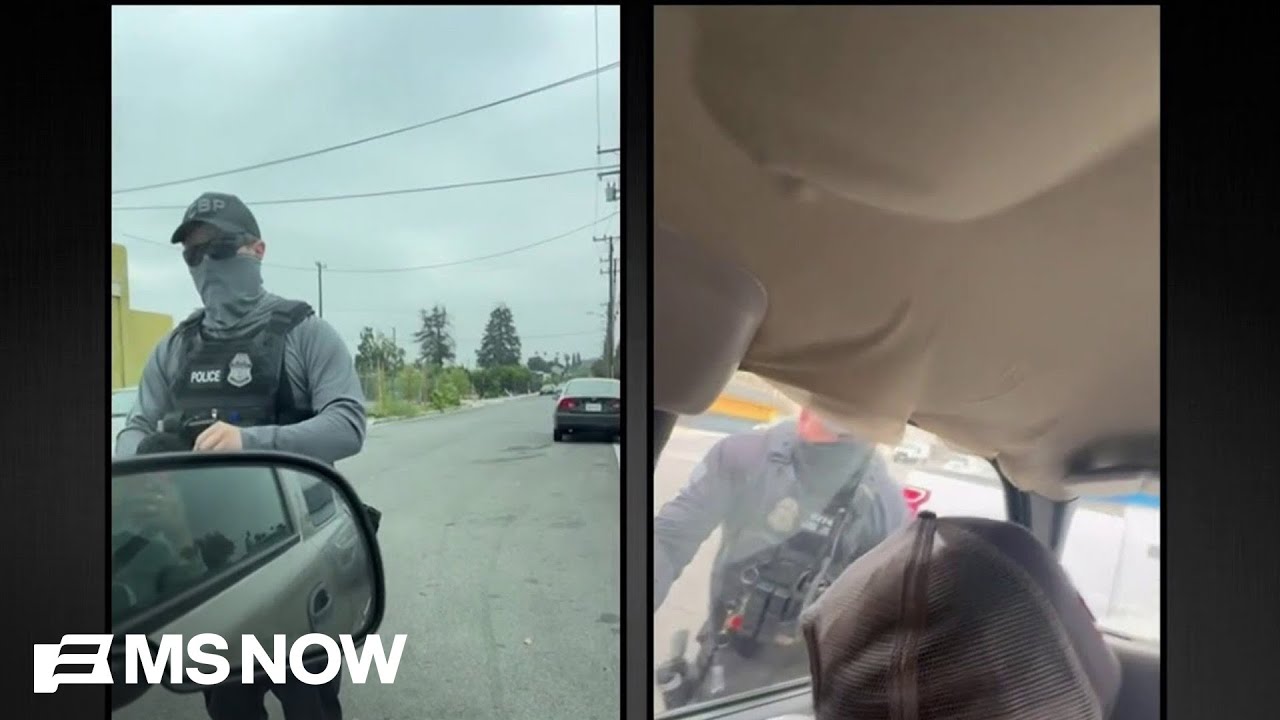
Last August, federal immigration agents in unmarked cars pulled over Francisco Longoria as he drove through a majority Hispanic neighborhood in San Bernardino, California, with his teenage son in the passenger seat.
Cellphone and surveillance videos show masked agents surrounding the pickup truck, at least one with a gun drawn. When Longoria refused to roll down his window, one agent smashed the driver-side glass and reached inside. That’s when Longoria hit the gas and fled, and an agent fired multiple shots at the passenger side of his truck. Longoria and his son were not injured.
That same day, the Department of Homeland Security issued a statement asserting that Longoria “drove his truck at the officers and struck two CBP [Customs and Border Protection] officers with his vehicle,” and that an officer fired his gun “in self-defense.” But video recordings from inside the truck and a nearby business appear to show no agents or vehicles in Longoria’s path as he drove away.
Longoria was charged with assaulting a federal officer with a deadly weapon. Weeks later, during a court hearing, prosecutors acknowledged they couldn’t identify a lawful basis for the stop and had no evidence that any officers were injured. The Department of Justice dropped the case less than a month after filing it.
Like the fatal shooting of Renee Good in Minneapolis, the Longoria case is part of a pattern of behavior exhibited by federal immigration agents since the Trump administration escalated its immigration enforcement campaign last summer. According to an MS NOW review of court records and media reports, federal agents – some working for Immigration and Customs Enforcement, others for the Border Patrol, a part of CBP – have shot at people in their cars at least 15 times since July.
These agents have escalated what’s always been a problem with policing in America… I think we’re going to see a lot more people get killed.”
E. Paige White, defense attorney
These incidents cast new light on the Trump administration’s aggressive and, in the view of critics, reckless federal crackdown on American cities. The shootings occurred most often in places Trump has targeted with federal deployments — mostly Democratic-led jurisdictions with sanctuary policies, including California, Illinois, Minnesota and Washington, D.C.
The agents work in different subdivisions and units under the DHS banner, each agent with a unique combination of training and field experience. All of them were reassigned by the Trump administration to “roving patrols” tasked with arresting as many undocumented immigrants as possible. Jonathan Ross, the agent who killed Good in Minneapolis, had military training and almost 20 years’ experience with both Border Patrol and ICE. But in nearly every other case, the agents remain publicly unidentified, so the nature of their training and experience is unknown.
After each shooting, federal officials and agencies worked promptly to justify their officers’ actions using the same assertion: The drivers attempted to run over or ram agents with their vehicles. In many cases, the government offered this rationale in the immediate aftermath of the shooting, well before officials could produce evidence or file charges, let alone complete an investigation. But the claim frequently falls apart under public scrutiny, when video or other evidence comes to light.
Of the 15 incidents reviewed by MS NOW, eight resulted in criminal cases, four of which were dropped or dismissed by judges, and four of which are ongoing. In three other cases, civilians were placed in deportation proceedings and remain in ICE custody, but have not been criminally charged, despite DHS’s public claims that they committed serious offenses. In two of the incidents, criminal charges were never filed because the civilians were fatally shot. The status of the remaining cases is unclear.
None of the federal agents who fired their weapons at civilians has been charged with a crime. Defense attorneys working on the cases told MS NOW that they haven’t been informed of any agents being placed on administrative leave or subjected to internal discipline.
Former DHS officials and law enforcement experts suggest these shootings are the product of dramatically escalated enforcement tactics deployed during Trump’s second term. But it’s hard to say with certainty whether federal agents are shooting at drivers more frequently today than in previous years. Although DHS publishes partial data for use-of-force incidents, the nature of the data and the Trump administration’s changes to standard operating procedure make historical comparisons difficult. But former officials told MS NOW that this kind of event — agents firing guns at vehicles in urban areas, far away from their standard posts on the border — used to be exceedingly rare.
Police experts who reviewed the cases told MS NOW that almost every officer who fired their weapon acted outside deadly-force guidelines accepted by most of the U.S. law enforcement community.
“The tactics you’re seeing used by ICE and CBP are absolutely not in line with best practices in American policing,” said Art Acevedo, the former police chief in Houston, Miami and other cities. “It’s a recipe for disaster.”
Before Trump’s second term, ICE and Border Patrol agents very rarely engaged in the kinds of operations that are now a common sight in American cities: large-scale, indiscriminate sweeps in urban environments, often in the presence of community members.
For its part, DHS disputes these assertions.
“The pattern is NOT of law enforcement using deadly force,” DHS Assistant Secretary for Public Affairs Tricia McLaughlin told MS NOW. “It’s a pattern of vehicles being used as weapons by violent agitators to attack our law enforcement. … Our officers are experiencing a 3,200% increase in vehicular attacks. When faced with dangerous circumstances, DHS law enforcement used their training to protect themselves, their fellow officers, and the public.”
McLaughlin did not provide evidence to support the claim of a 3,200% increase in vehicular attacks.
“Officer-created jeopardy“
Daniel J. Oates worked for the New York Police Department for 21 years before becoming police chief, a title he held in Ann Arbor, Michigan, Aurora, Colorado, and Miami Beach, Florida. At each of the departments he led, Oates — following the model set by New York in 1972 — imposed rules strictly forbidding officers from firing at moving cars, including in cases when drivers try to ram officers.
“The cops were somewhat resistant, but eventually they accepted the rule and the reasons behind it,” Oates said.
His rationale is simple: The ban makes interactions between officers and civilians safer. One of many concerns is that firing a gun and incapacitating the driver of a moving car puts bystanders in danger. Instead, Oates focuses on training officers to avoid what law enforcement professionals call “officer-created jeopardy” — in other words, police actions that lead people to behave in ways that might justify deadly force.
Oates and other law enforcement experts interviewed by MS NOW suggested that Good’s shooting was a case of officer-created jeopardy. Oates stressed that only a full and impartial investigation could resolve the case. But based on publicly available video, Oates said, it appears that Ross put himself in danger by walking in front of a running vehicle with a driver at the wheel. For this reason, even if Ross genuinely believed Good was trying to run him over, the shooting would be unjustified, Oates said.
“Those of us who have had executive positions and have had to hold cops accountable would not accept that explanation,” Oates said. “If you place yourself in front of the vehicle and then you shoot someone because you’re in front of the vehicle, that’s not acceptable in American policing.”
Strict rules against firing at moving vehicles are now common across local and state law enforcement in the U.S., and are recommended by the Police Executive Research Forumwhich advises police on use-of-force standards. ICE and CBP have their own use-of-force standards predating the Trump administration that, while less explicit, embrace similar principles, including keeping officers out of unnecessary danger.
“ICE law enforcement officers are trained to use the minimum amount of force necessary to resolve dangerous situations to prioritize the safety of the public and our officers,” McLaughlin said in her statement. She stressed that many federal immigration agents also have experience with other law enforcement agencies and the U.S. armed forces.
“To all ICE officers: You have federal immunity in the conduct of your duties. You have immunity to perform your duties, and no one — no city official, no state official, no illegal alien, no leftist agitator or domestic insurrectionist — can prevent you from fulfilling your legal obligations.”
STEPHEn miller, White House deputy chief of staff
“Officers are highly trained in de-escalation tactics and regularly receive ongoing use of force training,” she said.
Yet federal agents are firing into vehicles at a rate that’s raising concern among experts, who are starting to wonder whether the training McLaughlin touts is effective — or even still in use.
“I would hope that every police officer, anyone who’s allowed to carry a firearm, would be trained not to shoot at a moving vehicle,” said Geoffrey Alpert, a criminologist at the University of South Carolina who specializes in high-risk police activities.
A change in tactics
Before June of last year, ICE and Border Patrol agents very rarely engaged in the kind of operations that are now common in Chicago, Los Angeles, Minneapolis and other American cities: large-scale, indiscriminate sweeps in urban environments, often in the presence of community members observing or actively antagonizing them.
Federal agents’ work used to look much different, especially before Trump’s second term. Officers with ICE’s Enforcement and Removal Operations, or ERO, typically picked up detainee transfers at local county jails. Border Patrol agents were accustomed to pursuing and detaining people in rural border areas where the agency manages multiple layers of surveillance and exerts near total territorial control.
Tactics changed dramatically last year, when the administration began an aggressive recruiting campaign and directed ICE and Border Patrol to roam metro areas — starting with Los Angeles in June — to detain as many people as possible rather than going after preselected targets.
As a result, streets across the country are flooded with agents who do not necessarily have appropriate training for the operations they’re conducting, according to a former high-level official who was with DHS during the Biden administration. The source spoke on condition of anonymity because they are still employed by the government.
While some units are trained for high-impact urban operations — including ERO’s Fugitive Operations Division and the Border Patrol Tactical Unit (or BORTAC) — even that training, the former official said, is inappropriate for the operations of today, which often involve all kinds of civilians in situations that require tact and care.
“They’re trained to start off at 10 out of 10 as far as aggression and perception of risk,” said the former official.
The shift in tactics has created dangerous conditions for civilians and officers alike, said one former CBP oversight official with experience in internal use-of-force investigations. The official, who worked under both Republican and Democratic administrations, asked not to be named for fear of politicizing the work of their former unit.
“Attempting to conduct enforcement operations in chaotic urban environments where you’re having all kinds of unknown variables injected in the middle of your operation is extremely fraught,” said the former CBP official. “It’s risky for the public and it’s risky for the agents.”
I didn’t even see them. They didn’t pull me over, like with red and blue flashing lights. No, this was me at a stop sign, as if I was getting carjacked.”
Philip Brown, u.s. citizen shot at by agents
What remains unclear is whether DHS or any of the agencies under its umbrella are following up with officers after their operations go awry. When an agent fires their weapon, standard DHS protocol suggests placing the agent on administrative leave while ensuing investigations run their course. In her statement, McLaughlin said that “every use of force incident and any discharge of an ICE firearm must be properly reported and reviewed by the agency in accordance with agency policy, procedure, and guidelines.” She didn’t respond, however, when asked whether any agents involved in the shootings reviewed by MS NOW were placed on administrative leave.
Meanwhile, Trump administration officials have publicly urged ICE and Border Patrol agents to operate with little restraint. Five days after Good’s killing, DHS’ official X account reposted an October interview with White House deputy chief of staff Stephen Miller.
“To all ICE officers: You have federal immunity in the conduct of your duties,” Miller said. “You have immunity to perform your duties, and no one — no city official, no state official, no illegal alien, no leftist agitator or domestic insurrectionist — can prevent you from fulfilling your legal obligations and duties.”
“Who shot?”
At least three of the cases examined by MS NOW involved evidentiary and due process failures after the shootings, according to court records and interviews with defense attorneys.
Marimar Martinez, a U.S. citizen who was shot in Chicago in October, was the victim of one of these failures. DHS and federal prosecutors said she rammed her car into a government vehicle driven by the Border Patrol agent who shot her. The agent then drove the vehicle out of state and, with agency authorization, had it cleaned and repaired before Martinez’s defense team could inspect it. The agent also bragged about the hearing in text messages released as evidence in the criminal case, sending one text that read: “I fired 5 rounds and she had 7 holes. Put that in your books boys.”
Prosecutors later dropped the charges against Martinez.
In the case of Carlitos Ricardo Parias — a Mexican national and TikToker known by the moniker Richard LA for filming federal agents in Los Angeles — a federal judge threw out the indictment three days before it was set to go to trial, citing violations of Parias’ constitutional rights.
According to court documents, Border Patrol agents surrounded Parias’ car on Oct. 21 with a warrant for his arrest on immigration violations. Footage from a body camera worn by Border Patrol agent Jaime Avina shows that Parias, with his car boxed between two agents’ vehicles, accelerated in place, producing a thick plume of smoke. After the smoke cleared, Avina — who had his gun drawn — approached the smashed passenger-side window of Parias’ car and, while attempting to open the door from the inside, swapped the gun from his right hand to his left and fired it. The vehicle did not appear to be moving at the time.
“Oh!” Avina can be heard exclaiming in the video after firing the weapon. “Fuck!”
The bullet struck Parias in the elbow and ricocheted, striking an agent with the U.S. Marshals in the hand. Other agents yelled, “Who shot?” Avina backed away from the car and replied, “I shot.”
In a statement, McLaughlin said that Parias had “weaponized his vehicle and began ramming the law enforcement vehicle in an attempt to flee. Fearing for the safety of the public and law enforcement, our officers followed their training and fired defensive shots.”
Parias was charged in federal court with assaulting a federal officer with a deadly weapon, but authorities did not produce the body camera footage that cast doubt on the government’s version of events until six weeks after the incident — five days after the discovery deadline imposed by the court.
A federal judge dismissed the charges, citing the government’s failure to turn over evidence, as well as violations of Parias’ right to counsel. Court documents show that ICE, which had Parias in its custody at the time, repeatedly obstructed his lawyers’ efforts to meet with their client by, among other things, allowing their calls and emails to the ICE detention center to go unanswered for long periods of time.
The Department of Justice did not respond to a request for comment in this case, and DHS did not respond specifically to questions about its handling of evidence and due process after the incidents in question.
“As if I was getting carjacked”
In August, federal immigration agents began appearing on patrols in Washington alongside officers from the Metropolitan Police Department, following a Trump administration order temporarily federalizing the city’s police force under a declared “crime emergency.” During the 30-day takeover, ICE and Border Patrol personnel accompanied MPD officers on routine patrols. Although formal federal control expired in September, ICE and CBP agents continued operating in the district in visible coordination with local police.
On Oct. 17, on Benning Road NE, Philip Brown, a Black man and U.S. citizen originally from Brooklyn, New York, was in his Dodge Durango at a stop sign with another vehicle directly in front of him when armed men suddenly approached his car.
“I didn’t even see them,” Brown told MS NOW. “They didn’t pull me over, like with red and blue flashing lights. No, this was me at a stop sign, as if I was getting carjacked.”
An MPD officer present at the scene named Jason Sterling later testified in court that officers stopped Brown over his dark window tinting and a missing front license plate. As they approached, Sterling said he heard Brown’s car rev and then collide with the car in front of him, followed by the sound of gunshots. It was later determined in a preliminary court hearing that an agent with ICE’s Homeland Security Investigations — the agency’s criminal investigations division — fired his gun at Brown’s vehicle at least four times.
The bullets narrowly missed Brown. One went through the collar of his jacket.
“I’m still in shock from it,” Brown said.
Days later, DHS said in a statement that Brown had driven his car at officers “in a deliberate attempt to run them down.” Brown denies this, and Sterling testified in court that there were no officers positioned in front of Brown’s vehicle when he heard the gunshots.
Brown was charged with felony fleeing — not with assault or attempted assault on an officer. During the first hearing in D.C. Superior Court, Sterling admitted that, under the advice of another MPD official, he intentionally omitted the shooting from his police report. The judge dismissed the charges during the hearing, citing a lack of probable cause for the arrest and Sterling’s glaring omission from the charging documents.
Brown’s lawyer, E. Paige White, who used to work as a public defender in Washington, said the MPD officers’ actions were unusual and likely influenced by the presence of armed federal agents.
“The feds being involved makes it totally different,” she told MS NOW. “The MPD is not moving the way the MPD normally moves.”
White is still awaiting the results of an investigation MPD said it was conducting into the incident. Brown, meanwhile, has watched events unfold in Minneapolis and feels grateful to be alive.
“Those three bullets that they let off at [Good] are the same three bullets that they let off at me,” Brown said. “I just so happen to be the survivor. I’m able to see my daughter turn 5 years old.”
If federal agencies continue to subvert law enforcement norms while carrying out Trump’s escalating federal crackdown on American cities, White worries that Brown’s experience — and Good’s — will become more common.
“These agents have escalated what’s always been a problem with policing in America to a level that none of us have seen before,” said White. “I think that we’re going to see a lot more people get killed.”
This story is part of Cities Under Siege, an MS NOW effort to document how the Trump administration’s aggressive immigration enforcement tactics are affecting communities across America.
David Noriega is a MS NOW Reporter based in Los Angeles.

Kay Guerrero
Kay Guerrero is a senior producer of newsgathering for MS NOW.


The Dictatorship
The Latest: US and Israel attack Iran as Trump says US begins ‘major combat operations’
Rice secures 80-74 win over Temple
Anthony’s 16 help Iona beat Manhattan 69-65
Folefac scores 23 as Siena beats Rider 76-61
SnoCountry Mountain Reports
Gulf States Sportswatch Daily Listings
Quinnipiac wins 67-63 against Canisius
President Donald Trump called the celebrations in the streets of Iran “fantastic” following the killing of the country’s supreme leaderAyatollah Ali Khamenei, during a brief phone call with MS NOW on Saturday night.
Trump told MS NOW that he’s seen the celebrations in Iran and in parts of America, after joint U.S.-Israel airstrikes killed Khamenei.
“I think it’s fantastic,” the president said of the celebrations. “I’ve seen them in Los Angeles, also — celebrations.”
“I’ve seen them in Los Angeles, celebrations, celebrations,” Trump said, accentuating the point.
The interview took place roughly 11 hours before the Pentagon announced the first U.S.military casualties of the war. U.S. Central Command said three American service members were killed in action, and five others had been seriously wounded.
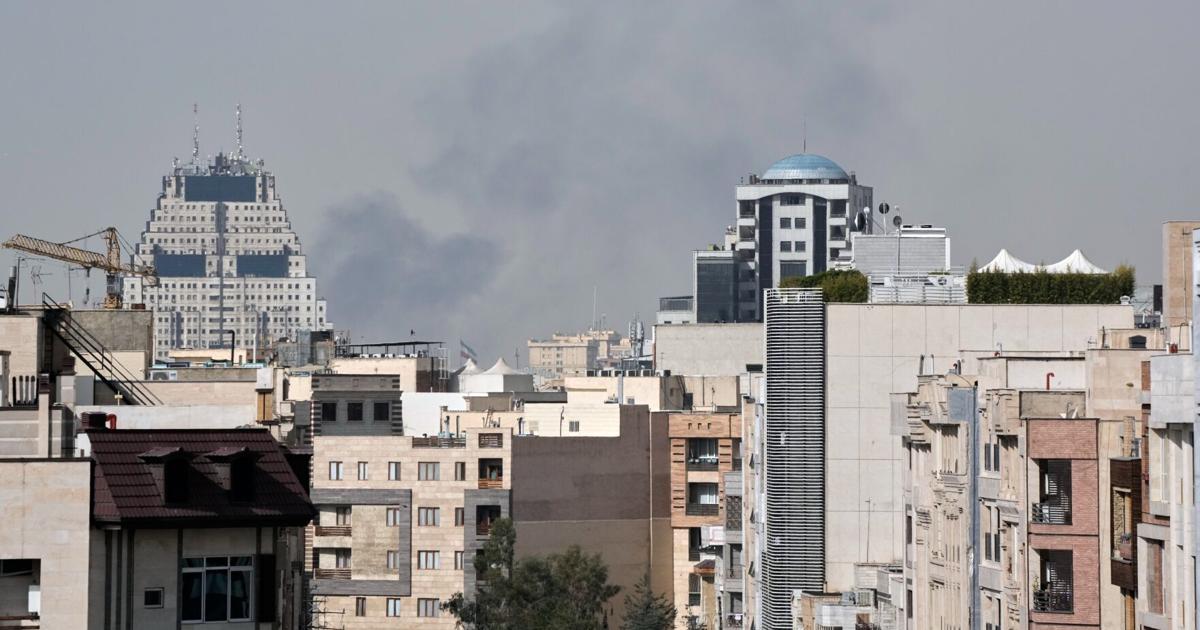
Revelry broke out in Iran, the United States and across the globe on Saturday, with Iranians cheering the death of Khamenei, who led Iran with an iron fist for more than 30 years, cracking down on dissent at home and maintaining a hostile posture with the U.S. and Israel.
Asked how he was feeling after the strike on Khamenei, whose death was confirmed just a few hours earlier, Trump said it was a positive development for the United States.
“I think it was a great thing for our country,” he said.
The call — which lasted less than a minute — came after a marathon day, which began in the wee hours of the morning with strikes on Iran and continued with retaliatory ballistic missiles from Tehran targeting Israel and countries in the Middle East region that host U.S. military bases.
The day ended with few answers from the White House to increasing questions about the long-term future of Iran, how long the U.S. will continue operations there, and the metastasizing ramifications it could have on the world stage. In fact, the president has done little to convince the public to back his Iran operation, nor to explain why the country is at war without the authorization of Congress.
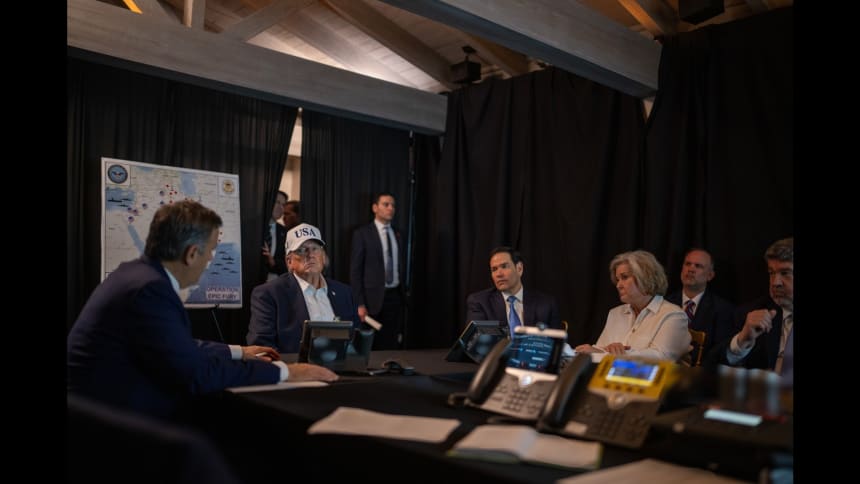
On perhaps the most consequential day of his second term, Trump did not give a formal address to the public, nor did he hold a press conference. Instead, he stayed out of public view at Mar-a-Lago, his private club and residence in Palm Beach, Florida, where he attended a $1 million-per-plate fundraising dinner on Saturday evening.
But throughout the day, Trump took calls from reporters at various new outlets, including from MS NOW at around 11 p.m. ET.
The strikes, known formally as “Operation Epic Fury,” came after months of talks over Iran’s nuclear program, and warnings from Trump that he would strike Tehran if they did not agree to his often shifting conditions.
At 2:30 a.m. ET on Saturday, Trump posted a video to social media announcing the operation, which he said was designed to “defend the American people by eliminating imminent threats from the Iranian regime, a vicious group of very hard, terrible people.”
“The lives of courageous American heroes may be lost and we may have casualties. That often happens in war,” Trump said when he announced the strikes on Iran.
Mychael Schnell is a reporter for MS NOW.
Laura Barrón-López covers the White House for MS NOW.
Three U.S. service members were killed and five seriously wounded as the United States and Israel launched attacks on Iran, U.S. Central Command said Sunday morning.
The three service members — the first Americans to die in the conflict — were killed in Kuwait, a U.S. official said.
Several others sustained minor injuries from shrapnel and concussions but will return to duty, the Pentagon said. The identities of the dead and wounded have not been made public.
“The situation is fluid, so out of respect for the families, we will withhold additional information, including the identities of our fallen warriors, until 24 hours after next of kin have been notified,” Central Command said in a statement.
The U.S. and Israel launched sweeping airstrikes on Iranon Saturday, killing Ayatollah Ali Khameneithe country’s supreme leader for nearly four decades. Iran has vowed retaliation and hit several U.S. military bases across the region.
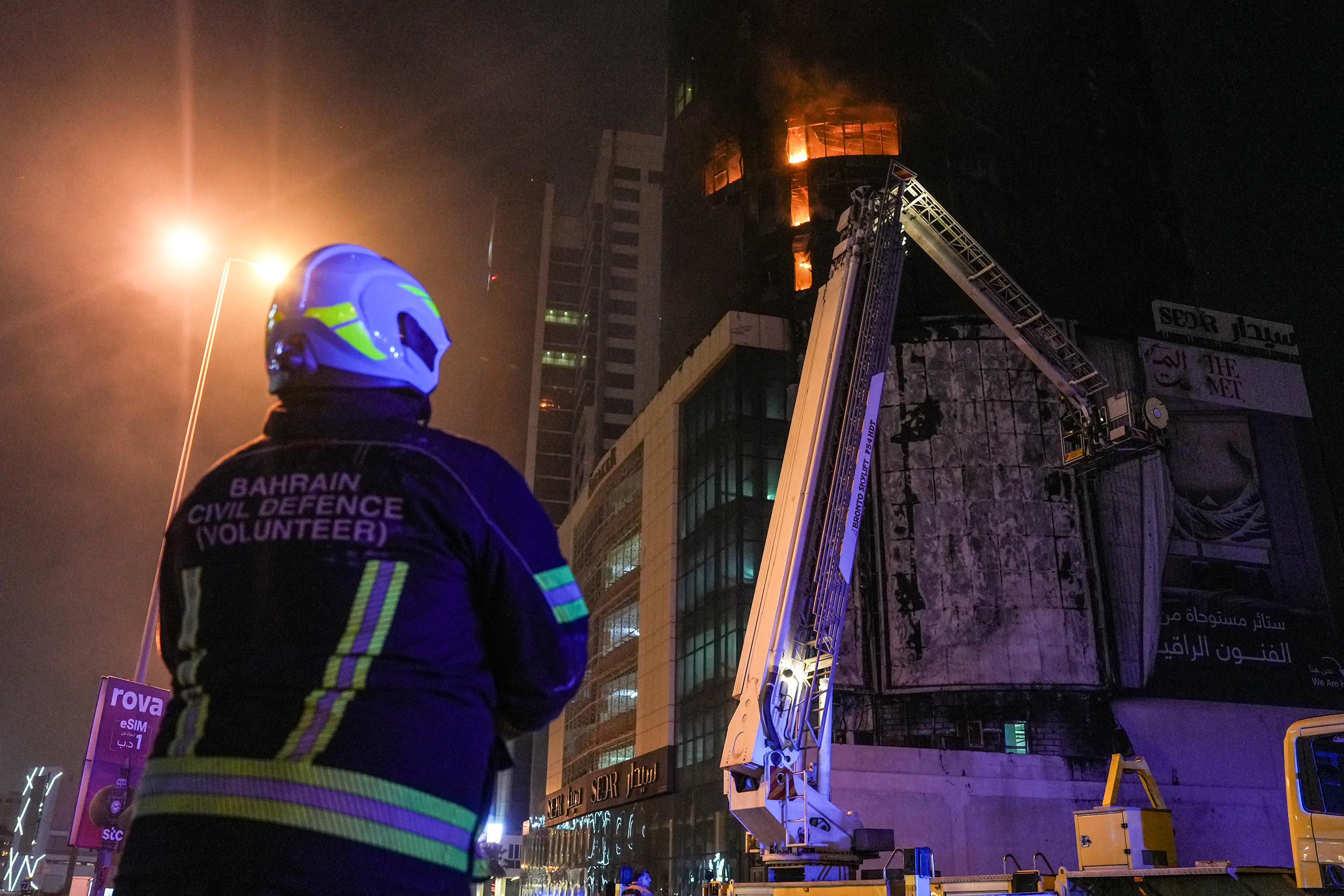
According to U.S. Central Command, Iran has also attacked more than a dozen locations, including airports in Dubai, Kuwait and Iraq, and residential neighborhoods in Israel, Bahrain and Qatar.
Israel Defence Forces said Sunday that Iran fired missiles toward the neighborhood of Beit Shemesh, killing civilians. The missile hit a synagogue, killing at least nine people, according to the Associated Press.
AP reported that authorities said at least 22 people were killed and 120 others wounded when demonstrators tried to attack the U.S. Consulate in Karachi in Pakistan.
The violence came after the United States and Israel attacked Irankilling its Supreme Leader Ayatollah Ali Khamenei. Police and officials at a hospital in Karachi said that at least 50 people were also wounded in the clashes and some of them were in critical condition.
On Sunday, Israel Defence Forces said on X, “It’s official: All senior terrorist leaders of Iran’s Axis of Terror have been eliminated.”
President Donald Trump told CNBC’s Joe Kernen on Sunday that the operation in Iran is “moving along very well, very well — ahead of schedule.”
In a phone call with MS NOW late Saturday, Trump called the celebrations in the streets of Iran “fantastic” following the killing of Khamenei.
Confirming Khamenei’s death, Prime Minister Benjamin Netanyahu said Sunday: “We have eliminated the tyrant Khamenei and dozens of senior figures of the oppressive regime. Our forces are now striking at the heart of Tehran with increasing intensity, set to escalate further in the coming days.”
The exchange of hostilities comes after weeks of fragile negotiations between the U.S. and Iran over Iran’s nuclear operations.
Esmail Baghaei, a spokesperson for Iran’s foreign ministry, called the joint U.S-Israeli attack an “unprovoked, unwarranted act of aggression” in an interview with MS NOW’s Ali Velshi on Sunday. He said Iran’s nuclear program has been used a pretext for the attack.
“We have every right to defend our people because we have come under this egregious act of aggression,” Baghaei said.
Trump announced the attack early Saturday during a short video posted on his Truth Social account. He called for an end to the Iranian regime and urged Iranians to “take back the country.”
Negotiators and mediators from Oman were supposed to meet in Vienna on Monday to discuss the technical aspect of a potential nuclear deal.
Rep. Eric Swawell, D-Calif., told MS NOW’s Alex Witt on Sunday afternoon that the president’s military operation in Iran was illegal, echoing what many lawmakers have said in citing that under the U.S. Constitution only Congress can declare war.
“This is a values argument. We don’t just lob missiles into other countries when we are not provoked, attacked and have no plan for what comes next,” he said.
“We have been shown zero evidence that anything changed in Iran from last year when the president did not come to Congress and took a strike on Iran,” Swalwell said.
In June the U.S. struck three Iranian nuclear sites. Trump said the facilities had been “completely and totally obliterated.” But experts and U.S. officials said the sites were damaged but not destroyed.
Erum Salam is breaking news reporter for MS NOW, with a focus on how global events and foreign policy shape U.S. politics. She previously was a breaking news reporter for The Guardian and is a graduate of Texas A&M University and the Columbia University Graduate School of Journalism. Follow her on X, Bluesky and Instagram.
Akayla Gardner is a White House correspondent for MS NOW.
- Talarico won his primary. What happens next is outside his control.
- Cornyn did so well that Trump could finally endorse him
- Talarico defeats Crockett in Texas Senate Democratic primary
- Scandal-plagued Rep. Tony Gonzales forced to runoff
- Rep. Dan Crenshaw ousted by primary challenger to his right
- Trump met with Coinbase CEO before bashing banks over crypto bill
- Cornyn, Paxton head to runoff in Texas Senate GOP race
- Rep. Chip Roy headed to runoff in Texas AG race
- Democrats reject ‘ridiculous’ GOP demand to fund DHS after Iran attack
- Josh Hawley says he’ll oppose Iran war powers resolution
-

 The Dictatorship1 year ago
Luigi Mangione acknowledges public support in first official statement since arrest
-

 Politics1 year ago
Former ‘Squad’ members launching ‘Bowman and Bush’ YouTube show
-

 Politics1 year ago
Blue Light News’s Editorial Director Ryan Hutchins speaks at Blue Light News’s 2025 Governors Summit
-

 The Dictatorship6 months ago
Mike Johnson sums up the GOP’s arrogant position on military occupation with two words
-

 Politics1 year ago
Former Kentucky AG Daniel Cameron launches Senate bid
-

 The Dictatorship1 year ago
Pete Hegseth’s tenure at the Pentagon goes from bad to worse
-
Uncategorized1 year ago
Bob Good to step down as Freedom Caucus chair this week
-

 Politics11 months ago
Democrat challenging Joni Ernst: I want to ‘tear down’ party, ‘build it back up’