
Congress
Fears are growing that Trump could push out dozens of government watchdogs

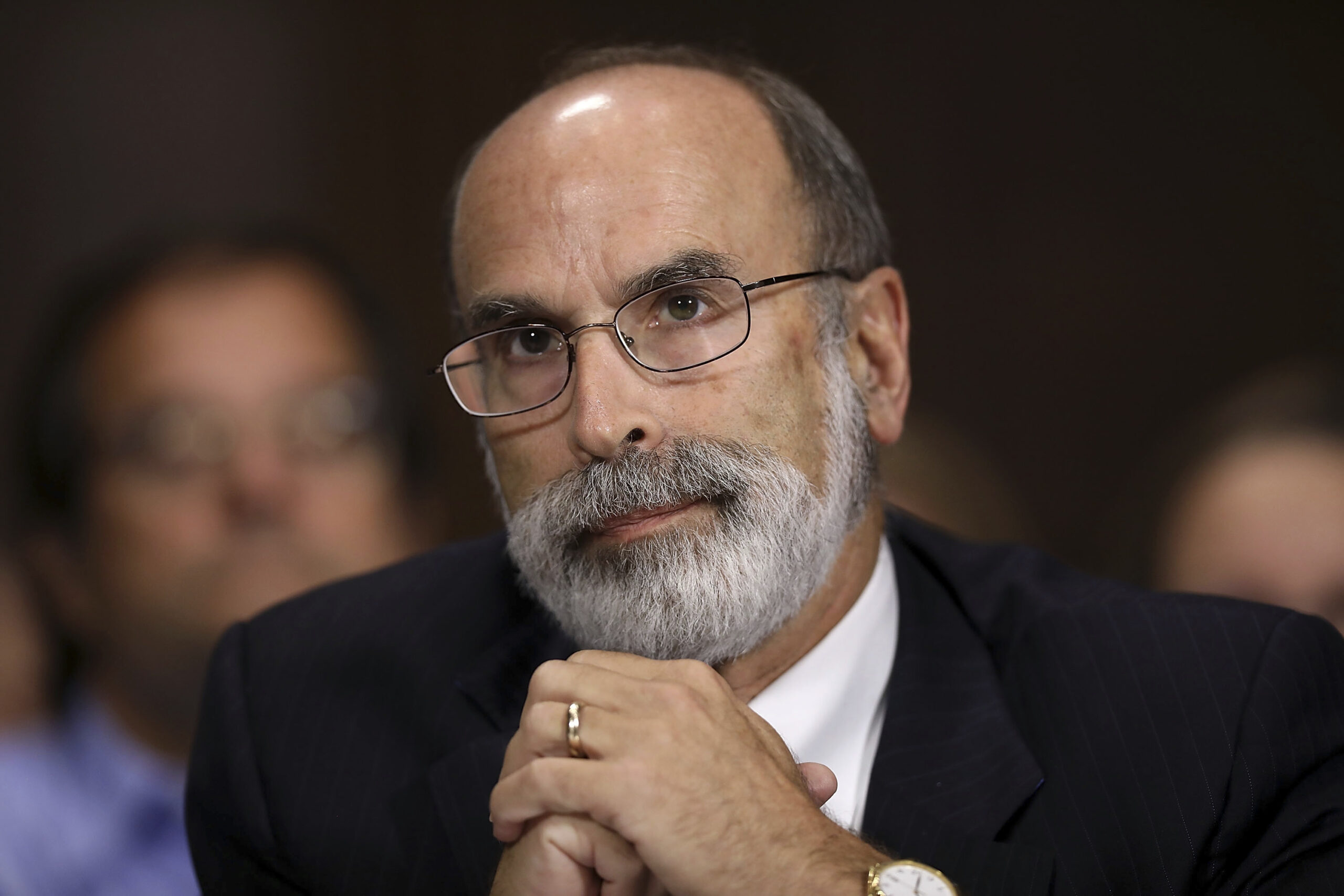
Two in-house investigators at U.S. intelligence agencies recently quit their jobs. There’s growing fear in Washington that they could be the start of an exodus — or a purge — of government watchdogs.
A wave of departures by inspectors general would give President-elect Donald Trump the opportunity to nominate or appoint people of his choice to the watchdog posts — leaving dozens of federal departments, agencies and offices subject to oversight by people who would owe their positions to Trump.
In the wake of Trump’s election, CIA Inspector General Robin Ashton and Intelligence Community Inspector General Thomas Monheim revealed they plan to leave government in the coming weeks. Neither cited Trump’s victory as a basis for the decision, but the timing of the announcements troubled some longtime advocates for IGs.
“I’m very disappointed that the two IGs have resigned,” said former Justice Department Inspector General Michael Bromwich. “My view is that when things get tough, IGs should not resign, but instead redouble their efforts to do their jobs. Doing a tough job in difficult circumstances is what they bargained for. I think preemptively resigning makes things too easy for the incoming administration to avoid oversight. To prematurely run for the exits, in my view, that is not the way to handle the responsibility.”
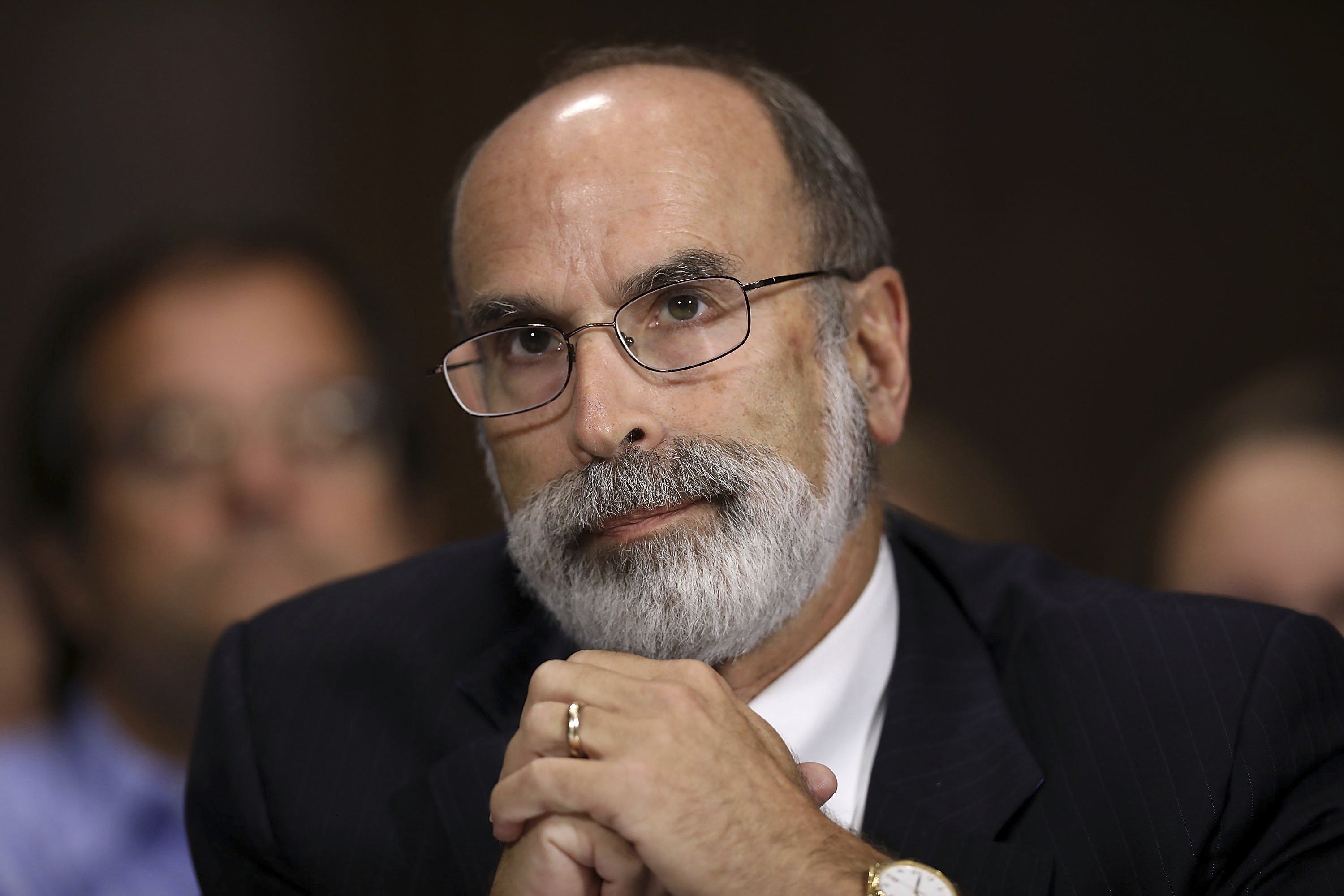
Trump frequently clashed in his first term with some IGs, who are responsible for investigating alleged misconduct by the government, and his team briefly floated a plan to call on all of them to resign, though Trump never did. This time around, Trump allies have urged the president-elect to clean house and remove from their positions all watchdogs appointed by other presidents, though it’s unclear if Trump will do so.
“I really hope that people that have a backbone don’t resign,” said Kathryn Newcomer, a professor of public policy at George Washington University and co-author of a book on IGs. “That’s very worrisome.”
Spokespeople for Ashton and Monheim did not respond directly to questions about whether Trump’s return played any role in their decisions to resign, which were first reported by the Project on Government Oversight. Both departing officials have spent decades in the federal government. But critics say the outgoing IGs should’ve announced their departures sooner and given the Biden administration the chance to nominate and confirm replacements.
Trump allies have called to replace all IGs
More than 70 inspectors general serve in posts at agencies across the federal government, tasked with ferreting out waste, fraud and abuse, and investigating alleged misconduct. They generate thousands of reports each year and claim to have identified hundreds of billions of dollars in potential savings.
Inspectors general “drive efficiency and effectiveness,” said Diana Shaw, a former acting IG at the State Department. “If you don’t have IGs, nobody is minding the store.”
Some Trump allies have urged the president-elect to install his own appointees in the watchdog posts — about half of which are subject to Senate confirmation. About 10 of the posts are currently filled by officials installed or confirmed during Trump’s first term. Another 10 are vacant.
People involved in drafting the conservative Heritage Foundation blueprint Project 2025 have advocated for wholesale replacement of inspectors general and suggested they could be viewed as part of the “deep state” Trump has crusaded against.
“In a new administration, would you rather have some fresh eyes on programs or Miss IG Debbie DC, who’s been around for half a decade, and is up to the same old stuff,” Heritage Oversight Project Director Mike Howell said in a training video obtained by ProPublica and Documented. “Fresh eyes, fresh administration, makes for better oversight, and, you know, better political management of the bureaucracy.”
But other conservative activists oppose a major overhaul of the IG ranks, arguing that many key revelations about waste and corruption in government have come from IG reports and that treating the jobs as typical political posts would undercut the credibility of their work.
“It seems more likely that there may be a demand for IG resignations or outright firings this time around, but if … going forward all IGs are merely political appointees, then what’s the purpose of having IGs? It’s a fig leaf at that point with no real independence,” said Jason Foster, founder of the whistleblower group Empower Oversight. “The value of IG objectivity would be destroyed, and their offices would just be a duplicate bureaucracy that should probably be replaced by better and more effective legislative branch-controlled oversight agencies.”
A spokesperson for the Trump transition team did not respond to questions about his plans for the inspectors general and whether he agrees with those calling for a broad purge.
While Trump’s election has led to concern among many federal government workers, particularly over his plans to dismantle civil service protections, the worries in the IG workforce are particularly acute.
“Everyone is just a nervous wreck,” said a staffer in one IG office, who was granted anonymity to speak candidly.
Trump’s tense first-term relations with IGs
Trump has had an uneasy history with inspectors general from the outset of his first term. Days before Trump took office in 2017, a transition team staffer reached out to several IGs and said they could continue in their jobs temporarily while a search for replacements was underway. Talk of a wholesale replacement of IGs — which would buck longstanding precedent — caused some alarm on Capitol Hill, and Trump’s team quickly backed down, describing the action as an error by a junior aide.
“I’ve spoken with the general counsel at the White House on this topic,” House Oversight Committee Chair Jason Chaffetz (R-Utah) said at a February 2017 hearing with several inspectors general. “I think it is safe to say that that was a mistake. They wish it hadn’t happened. It is not their approach. It’s not their intention.”
During a span of six weeks in 2020, Trump ousted five inspectors general. He sacked Michael Atkinson, the intelligence community’s chief watchdog, after Atkinson referred to Congress a whistleblower complaint about Trump’s efforts to link Ukraine aid to an announcement of an investigation into the Biden family. Trump also removed an IG overseeing pandemic relief programs and another at the State Department.
“It was like an earthquake through the IG community,” Bromwich recalled. “People said, ‘Oh my God, why are we being focused on all of a sudden?’”
Trump and his allies have also signaled that he intends to be more insistent in his second term that his appointees and even rank-and-file government workers show loyalty to him and his administration.
Many in the IG community have their eyes on whether Trump moves to push out Justice Department Inspector General Michael Horowitz. He was nominated by President Barack Obama and served through the first Trump term and through Joe Biden’s presidency. Several of Horowitz’s reports have provided fodder for Trump’s complaints about sloppy surveillance practices, leaks to the media and signs of anti-Trump sentiment among some at the FBI.
But Trump and his allies have griped that Horowitz stopped short of concluding that political bias affected Trump-related investigations. The president-elect and GOP lawmakers have also faulted the DOJ IG for taking too long — sometimes years — to complete sensitive investigations.
The Grassley factor
One member of Congress has been viewed for decades as the patron saint of inspectors general on Capitol Hill: Sen. Chuck Grassley (R-Iowa). His voice could be critical to whether Trump winds up taking or ignoring some conservatives’ advice to wholesale oust IGs. In addition, several former aides to Grassley, such as former Judiciary Committee counsel and conservative firebrand Mike Davis, hold positions of influence in Trump’s orbit.
Grassley has repeatedly clashed with presidents of both parties when he has perceived them to be intruding on IGs’ independence. And he has called for case-by-case explanations when an inspector general is removed, something that might be difficult for Trump to offer in a government-wide purge. Legislation co-sponsored by Grassley and passed in 2022 requires the president to inform Congress of the “substantive rationale, including detailed and case-specific reasons” before firing or removing an IG. The law also prevents Trump or any president from naming as an acting IG someone who isn’t already working as or for such a watchdog.
Asked Wednesday whether Trump should pursue a broad ouster of IGs, Grassley replied bluntly: “No. He should not.”
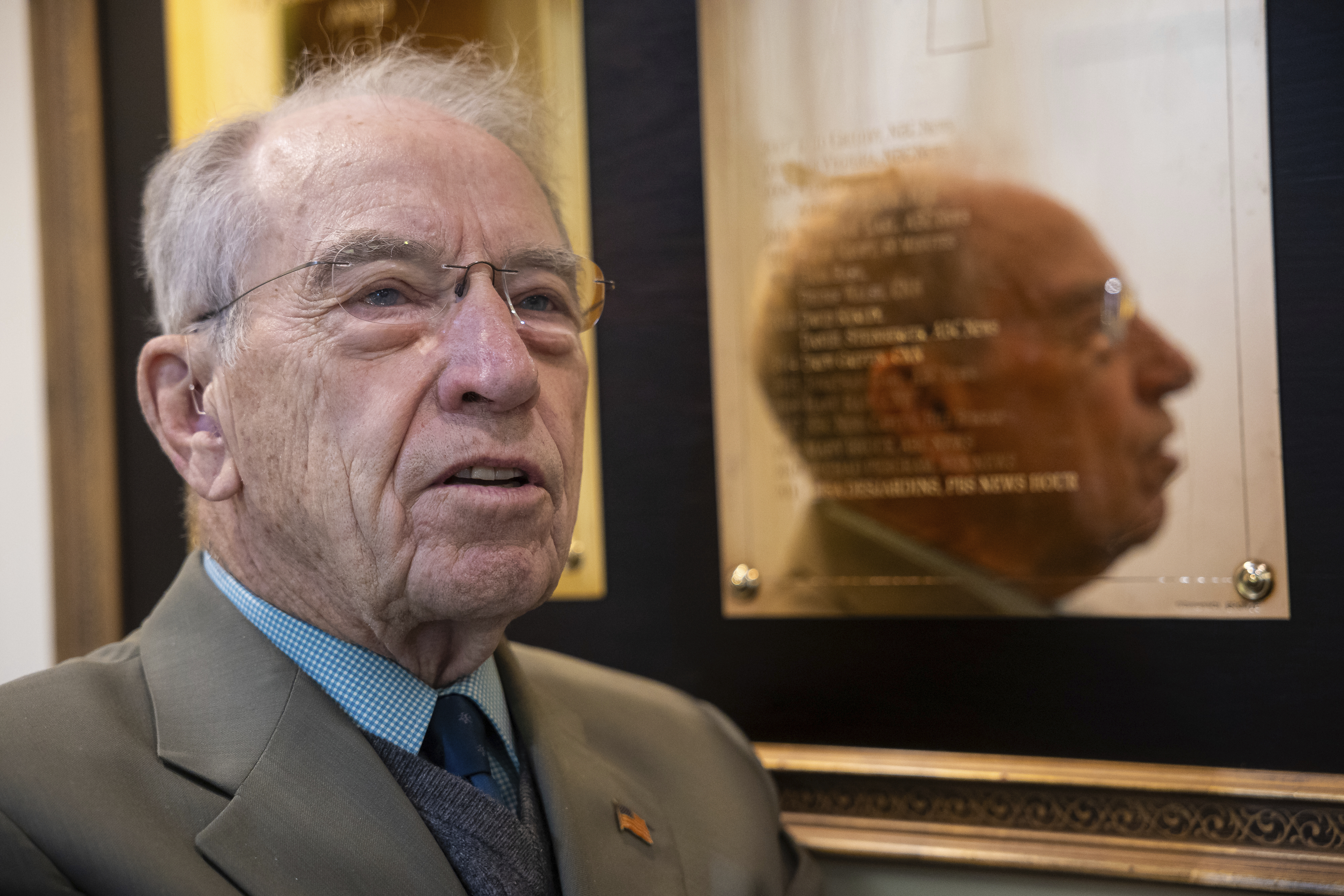
“I guess it’s the case of whether he believes in congressional oversight, because I work closely with all the inspector generals and I think I’ve got a good reputation for defending them. And I intend to defend them,” the Iowa Republican added.
When Trump lashed out at IGs during his first term, Grassley publicly urged him to ease up, arguing that they were actually advancing his agenda of accountability for the sprawling federal government.
“I encourage Pres Trump 2view IGs as helpers 2hold bureaucracy accountable+draining swamp,” Grassley wrote on X in 2020.
However, last week, Grassley sent every inspector general in the federal government ademand for information about sexual harassment settlements involving employees of the watchdog offices. The move seemed to raise the possibility he could be gathering data that Trump’s team could use to target specific IG offices.
A spokesperson for Grassley did not respond to a request for comment, but advocates for the IGs expressed hope that the long-serving senator will temper whatever plans Trump may have to upend the watchdog operations — some of which were first set up in the late 1970s.
“I know from personal experience that Sen. Grassley has been a strong proponent of IGs for forever,” Bromwich said. “I would think that he’s going to be consistent with the beliefs that he has advanced throughout his career, rather than bowing to the whims of Donald Trump and some of his people, he will fight to keep the IGs independent. … That will be telling, whether Senator Grassley exercises that influence.”


The White House on Tuesday released a letter detailing changes it is willing to make to the Department of Homeland Security as it looks to secure a deal with Democrats to end the nearly five-week long partial government shutdown.
The move is the Trump administration’s attempt to show it is making a good faith effort after Democrats derided their proposal as unserious and comes as staffing issues at the Transportation Security Administration grow more acute — leading to longer wait times at airports across the country.
The White House, in five points, said it was willing to codify a number of policy changes, including an expansion of the use of body cameras for federal immigration agents; the limit of enforcement in certain sensitive locations, including hospitals and schools; greater oversight of DHS detention facilities; the enforcement of visible officer identification and the adherence to existing law prohibiting the deportation or detention of U.S. citizens.
“We feel that this offer is serious — that it is a good faith attempt to continue to try to come to a reasonable and expeditious conclusion to the shutdown, which we are now seeing is becoming ever more disruptive on Americans’ travel plans, as well as the security mission at the department,” said a senior White House official granted anonymity to describe the private talks.
The White House offer includes some public safety exceptions for the policy changes. For sensitive locations, there is a carve-out for “national security, flight risks and public safety,” and undercover officers would not have to display identification. Undercover officers would also not be required to wear body cameras.
The proposal also doesn’t address two of Democrats main concerns: requiring officials to obtain a judicial warrant before entering private property and prohibiting federal agents from wearing masks. Administration officials have previously said the warrants are a redline.
“We’re trying to move a little bit, but they’ve got to get serious. They are not getting serious,” Senate Minority Leader Chuck Schumer said Tuesday. “The key issues of warrants when you bust in someone’s house. The key issue of identity, of police and no masks. They haven’t budged on that.”
Spokespeople for Schumer did not immediately respond to a request for comment on the White House letter.
It’s the first time in the monthslong negotiation that the White House has released details about its proposal. Republicans have been eager for the White House to share details of its offers to validate their view that the administration had moved toward Democrats on some issues.
The White House letter argued that the majority of Democrats’ demands would “make it impossible to fully protect American citizens from dangerous criminal aliens and expose law enforcement and their families to increasing threats of violence.”
The senior White House official said that at this time, there are no plans for President Donald Trump to meet with Schumer or Democrats to discuss the impasse. The president has tapped border czar Tom Homan — who co-signed the letter with James Braid, the White House director of the Office of Legislative Affairs — to take the lead on working on the policy changes to end the government shutdown.
“There are a lot of technical issues that have to be worked out” for a White House meeting to be a “productive exercise,” the senior official said. “Although, of course, the president is going to make that decision, and at any time, that could be something that does occur.”
Threats from some hard-right House Republicans to block any Senate bill until the SAVE America Act passes appear to be falling flat.
A bill from Sen. Joni Ernst (R-Iowa) to reauthorize small business grant programs passed 345-41 Tuesday, a day after another Senate bill, aimed at recovering Nazi-looted art, passed on a voice vote.
Senate Republicans voted Tuesday to launch debate on a GOP elections bill President Donald Trump called his “No. 1 priority” in Congress. They are preparing to keep it on the floor at least into next week.
Senators voted 51-48 to take up the House-passed SAVE America Act that would institute new citizenship and photo ID requirements in order to participate in elections. Sen. Lisa Murkowski (R-Alaska) voted against opening debate, and Rep. Thom Tillis (R-N.C.) did not vote. Both had aired concerns about the process.
The Senate is expected to spend days, and potentially weeks, debating the bill in a bid to pacify conservatives and corner Democrats who oppose the new election restrictions. The debate is expected to include some late-night and weekend sessions.
But in the lead-up to Tuesday’s vote, discussions of the bill devolved into an increasingly contentious GOP-on-GOP fight over how far the party should go to try to pass it.
Conservative hard-liners, led by Sen. Mike Lee (R-Utah), want to force a “talking filibuster,” which they argue can overcome the usual 60-vote legislative threshold by requiring Democrats to hold the floor in order to block the bill.
But after weeks of internal conversations, Republicans have rejected that effort, which they fear could tie up the floor indefinitely and potentially let Democrats hijack the Senate agenda by forcing amendment votes on their own priorities.
Instead, Senate Majority Leader John Thune is expected to call up several amendments, including a proposal to expand the bill to include Trump-backed restrictions on mail voting, on transgender women participating in women’s sports and on gender-affirming surgeries for minors.
Thune’s move will limit Democrats’ ability to call up their own amendments and try to sidetrack the bill. Democrats have other options to frustrate the GOP, however, such as moving to adjourn the Senate or killing the bill.
Lee continues to advocate for a more aggressive approach: “If your senators don’t support using the talking filibuster to pass the SAVE America Act, you might need to replace them,” he wrote on X late Monday night.
-

 The Dictatorship1 year ago
Luigi Mangione acknowledges public support in first official statement since arrest
-

 Politics1 year ago
Former ‘Squad’ members launching ‘Bowman and Bush’ YouTube show
-

 Politics1 year ago
Blue Light News’s Editorial Director Ryan Hutchins speaks at Blue Light News’s 2025 Governors Summit
-

 Politics1 year ago
Former Kentucky AG Daniel Cameron launches Senate bid
-

 The Dictatorship6 months ago
Mike Johnson sums up the GOP’s arrogant position on military occupation with two words
-

 The Dictatorship1 year ago
Pete Hegseth’s tenure at the Pentagon goes from bad to worse
-

 Politics11 months ago
Democrat challenging Joni Ernst: I want to ‘tear down’ party, ‘build it back up’
-
Uncategorized1 year ago
Bob Good to step down as Freedom Caucus chair this week