
The Dictatorship
Even Trump’s own allies know his executive actions are likely violating the law


This is an adapted excerpt from the Jan. 28 episode of “All In with Chris Hayes.”
The first time Donald Trump was president, his lawyers tried to dress up flatly unconstitutional orders with legal fig leaves. For example, when he implemented what many labeled a “Muslim travel ban,” the administration ultimately tweaked it to include non-Muslim countries like North Korea and Venezuela, as if to say, “See, we’re not discriminating against religion.”
The president wanted to purge them out of spite, even though their firings appear to be in violation of civil service law.
It was a pretense but one that nodded, at least, to First Amendment concerns — and one that the Supreme Court eventually got on board with. However, this time around, there are no such pretenses.
On Monday, Trump’s acting attorney general fired more than a dozen career civil servants in the Justice Department. These are attorneys with years of prosecuting experience, including going after public corruption in both parties.
They were fired because they had assisted special counsel Jack Smith’s investigations into Trump. The president wanted to purge them out of spite, even though their firings appear to be in violation of civil service law, which says employees can be fired for misconduct or poor performance, not simply for doing their jobs.
But it didn’t stop there. Those firings came on the heels of Trump’s very own Friday night massacre. Just three days before Trump fired those career civil servants, he purged 18 inspectors general from across the government.
These inspectors general were tasked with investigating allegations of waste, fraud and abuse of power everywhere from the Pentagon to the State Department. Congress created those posts after Watergate to prevent the damage a corrupt White House could do.
When Kristen Welker asked Sen. Lindsey Graham whether Trump violated the law, the Republican senator said, ‘Technically yeah. ‘
What Trump did was both an attempt to make corruption easier and also so blatantly in violation of civil service law that even one of his most loyal allies, a senator with a law degree, had to admit it.
When NBC News’ Kristen Welker asked Sen. Lindsey Graham whether Trump violated the law with those inspectors general firings, the Republican senator said, “Technically yeah. But he has the authority to do it. So I’m not, you know losing a whole lot of sleep that he wants to change the personnel out.”
Graham says it was “technically” illegal — which is just another way of saying: “illegal.”
On top of these firings, Trump has also ordered the Defense Department to straight up discriminate. Some of his executive actions thus far include banning transgender service members, abolishing programs and positions that promote anti-discrimination practices and revoking an order against discrimination for federal contractors that was signed six decades ago by President Lyndon B. Johnson.
On all of these overreaches, the Trump administration is betting that the courts are on their side. But that’s not exactly a sure bet. A lot of what happens now in the judicial system is going to determine the ultimate outcome.
Allison Detzel contributed.

Chris Hayes hosts “All In with Chris Hayes”at 8 p.m. ET Monday through Friday on BLN. He is the editor-at-large at The Nation. A former fellow at Harvard University’s Edmond J. Safra Foundation Center for Ethics, Hayes was a Bernard Schwartz Fellow at the New America Foundation. His latest book is”A Colony in a Nation” (W. W. Norton).


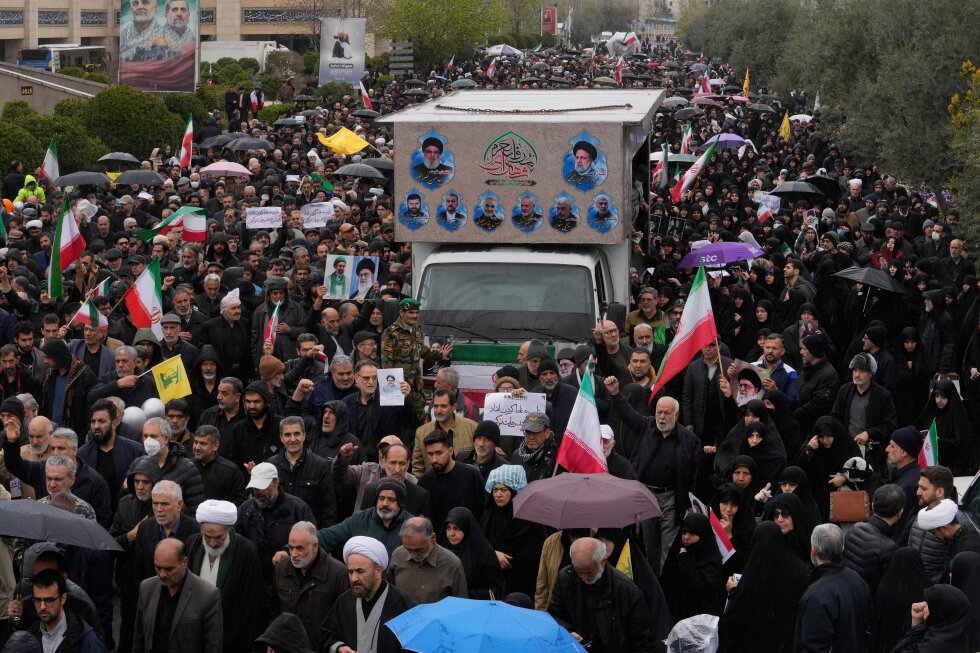
CAIRO (AP) — Iranian missiles struck two communities in southern Israel late Saturday, leaving buildings shattered and dozens injured in dual attacks not far from Israel’s main nuclear research center, while President Donald Trump warned the U.S. will “obliterate” Iranian power plants if it doesn’t fully open the Strait of Hormuz within 48 hours.
The developments signaled the war was moving in a dangerous new direction at the start of its fourth week.
Trump — who is facing increasing pressure at home to secure the strait as oil prices soar — issued the ultimatum in a social media post while he spent the weekend at his Florida home.
Trump said he’s giving Iran 48 hours to open the vital waterway or face a new round of attacks. He said the U.S. would destroy “various POWER PLANTS, STARTING WITH THE BIGGEST ONE FIRST!”
Iran warned early Sunday that any strike on its energy facilities would prompt attacks on U.S. and Israeli energy and infrastructure assets in the region, according to a statement carried by Iran’s state media and semiofficial outlets, citing an Iranian military spokesperson.
The Strait of Hormuz, which connects the Persian Gulf to the rest of the globe’s oceans, is a critical pathway for the world’s flow of oil. Attacks on commercial ships and threats of further strikes have stopped nearly all tankers from carrying oil, gas and other goods through the passage. That’s also led to cuts in output from some of the world’s largest producers, because their crude has nowhere to go.
The Iranian strikes in Israel came after Tehran’s main nuclear enrichment site at Natanz was hit earlier in the day.
Israel’s military said it was not able to intercept missiles that hit the southern cities of Dimona and Arad, the largest near the center in Israel’s sparsely populated Negev desert. It was the first time Iranian missiles penetrated Israel’s air defense systems in the area around the nuclear site.
“If the Israeli regime is unable to intercept missiles in the heavily protected Dimona area, it is, operationally, a sign of entering a new phase of the battle,” Iran’s Parliament Speaker Mohammad Bagher Ghalibaf said on X before word of the Arad strike spread.
Israeli Prime Minister Benjamin Netanyahu said more emergency crews were being sent to the scene.
“This is a very difficult evening,” he said.
Rescue workers said the direct hit in Arad caused widespread damage across at least 10 apartment buildings, three of them badly damaged and in danger of collapsing. At least 64 people were taken to hospitals.
Dimona is about 20 kilometers (12 miles) west of the nuclear research center and Arad around 35 kilometers (22 miles) north.
Israel is believed to be the only Middle East nation with nuclear weaponsthough its leaders refuse to confirm or deny their existence. The U.N. nuclear watchdog said on X it had not received reports of damage to the Israeli center or abnormal radiation levels.
A dangerous new direction in the war
“The war is not close to ending,” Israel’s army chief, Gen. Eyal Zamir, said earlier in the day.
Iran also targeted the joint U.K.-U.S. Diego Garcia military base in the Indian Ocean about 2,500 miles (4,000 kilometers) away, suggesting that Tehran has missiles that can go farther than previously acknowledged — or that it had used its space program for an improvised launch.
The U.S. and Israel have offered shifting rationales for the war, from hoping to foment an uprising that topples Iran’s leadership to eliminating its nuclear and missile programs and its support for armed proxies. There have been no signs of an uprising, while internet restrictions limit information from Iran.
The war’s effects are felt far beyond the Middle East, raising food and fuel prices.
It is not clear how much damage Iran has sustained in the U.S. and Israeli strikes that began Feb. 28 — or even who is truly in charge. Supreme Leader Ayatollah Mojtaba Khamenei has not been seen in public since being named to the role.
Israel had denied responsibility for attack on Natanz
Israel earlier Saturday denied responsibility for the strike on the Natanz nuclear facilitynearly 220 kilometers (135 miles) southeast of Tehran. The Iranian judiciary’s official news agency, Mizan, said there was no leakage.
The International Atomic Energy Agency has said the bulk of Iran’s estimated 970 pounds (440 kilograms) of enriched uranium is elsewhere, beneath the rubble at its Isfahan facility. It said on X it was looking into the strike.
The Pentagon declined to comment on the strike on Natanz, which was also hit in the first week of the war and in the 12-day war last June. Russian Foreign Ministry spokesperson Maria Zakharova said such strikes posed a “real risk of catastrophic disaster throughout the Middle East.”
Iran retaliated hours later.
US can use Diego Garcia base to protect Strait of Hormuz
U.K. officials did not give details of the strike that targeted the Diego Garcia base Friday, which was unsuccessful. Britain’s Ministry of Defense described Iran as “lashing out across the region.”
It’s unclear how close the missiles came to the island. Iran previously asserted that it has limited its missile range to below 2,000 kilometers (over 1,200 miles).
But military experts said Iran may have used its space launch vehicle for an improvised firing. “If you’ve got a space program, you’ve got a ballistic missile program,” said Steve Prest, a retired Royal Navy commodore.
Israel’s army chief, however, said Iran had fired “a two-stage intercontinental ballistic missile.” There was no statement from Iran.
Britain has not participated in U.S.-Israeli attacks but has allowed U.S. bombers to use its bases to attack Iran’s missile sites. On Friday, the U.K. government said bombers could use Diego Garcia to attack sites used to target ships in the Strait of Hormuz.
Global pressure increases to get shipping back on track
As Iran threatens shipping on the Strait of Hormuz, the United Arab Emirates joined 21 other countries including the U.K., Germany, France and Japan in expressing “readiness to contribute to appropriate efforts to ensure safe passage.”
The Trump administration announced it was temporarily lifting sanctions on Iranian oil that was already loaded on ships as of Friday, but that does not increase oil production, a central factor in surging prices. The oil ministry of Iran, which has evaded sanctions for years, replied that it “essentially has no crude oil left in floating storage.”
The head of U.S. Central Command, Adm. Brad Cooper, asserted that Iran’s ability to attack vessels on the strait had been “degraded.” He said 5,000-pound (2,270-kilogram) bombs were dropped earlier in the week on an underground facility along Iran’s coast used to store anti-ship cruise missiles and mobile missile launchers.
The U.S. is deploying three more amphibious assault ships and roughly 2,500 additional Marines to the Middle East, an official told The Associated Press. Two other U.S. officials confirmed that ships were deploying, without saying where they were headed. All three spoke on condition of anonymity to discuss the operations.
Gulf countries reported more attacks. A missile alert sounded Saturday night in Dubai. Saudi Arabia said it downed 20 drones in its east, home to major oil installations.
Iran’s death toll in the war has surpassed 1,500, the state broadcaster reported, citing the health ministry. In Israel, 15 people have been killed by Iranian missiles and four others have died in the occupied West Bank. At least 13 U.S. military members have been killed, along with well over a dozen civilians in Gulf nations.
Israeli troops and Hezbollah militants clash in Lebanon
Israel’s military said it was conducting a “targeted ground operation” in southern Lebanon and at least four militants were killed. Hezbollah said its fighters clashed with troops in the southern village of Khiam.
Israeli strikes targeting Hezbollah have killed more than 1,000 people and displaced more than 1 million, according to the Lebanese government. Hezbollah’s civilian assets also have been targeted.
___
Lawless reported from London and Lidman from Jerusalem. Sam Mednick in Tel Aviv, Israel, contributed to this report.
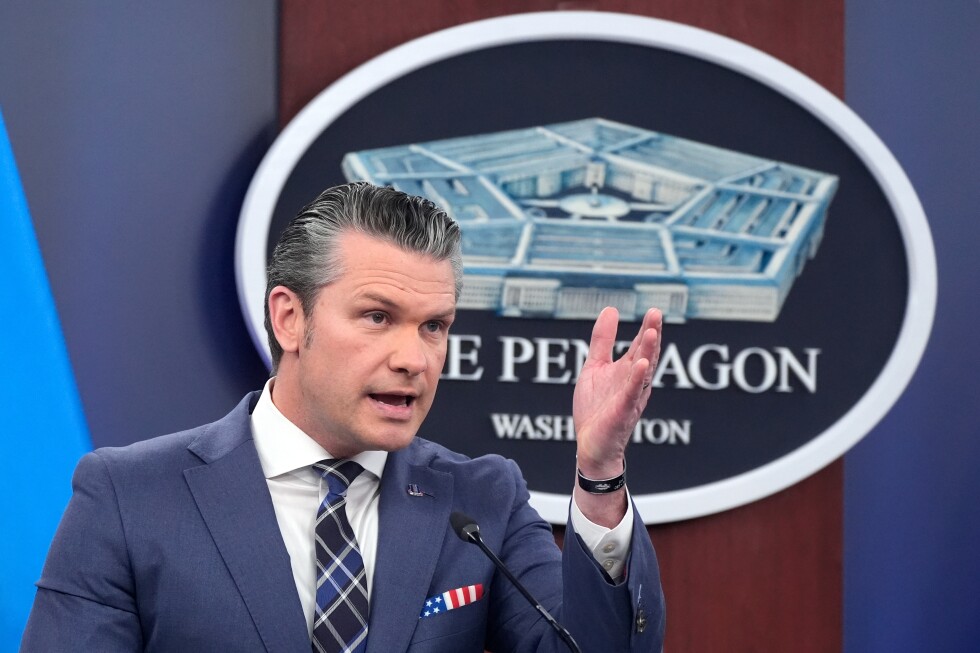
WASHINGTON (AP) — A federal judge agreed Friday to block the Trump administration from enforcing a policy limiting news reporters’ access to the Pentagon, agreeing with The New York Times that key portions of the new rules are unlawful.
U.S. District Judge Paul Friedman in Washington, D.C., sided with the newspaper and ruled that the Pentagon policy illegally restricts the press credentials of reporters who walked out of the building rather than agree to the new rules.
The Times sued the Pentagon and Defense Secretary Pete Hegseth in December, claiming the credentialing policy violates the journalists’ constitutional rights to free speech and due process.
The current Pentagon press corps is comprised mostly of conservative outlets that agreed to the policy. Reporters from outlets that refused to consent to the new rules, including from The Associated Press, have continued reporting on the military.
The Defense Department has been letting some of the legacy media reporters that didn’t agree to the restrictions back in the Pentagon for some of Hegseth’s Iran war briefings. Hegseth rarely calls on them, although he did recently take questions from reporters like Eric Schmitt of The Times and Luis Martinez of ABC.
Friedman, who was nominated to the bench by Democratic President Bill Clinton, said the policy “fails to provide fair notice of what routine, lawful journalistic practices will result in the denial, suspension, or revocation” of Pentagon press credentials. He ruled that it violates the First and Fifth amendment rights to free speech and due process.
“Those who drafted the First Amendment believed that the nation’s security requires a free press and an informed people and that such security is endangered by governmental suppression of political speech. That principle has preserved the nation’s security for almost 250 years. It must not be abandoned now,” the judge wrote.
Pentagon spokesperson Sean Parnell posted late Friday on X, “We disagree with the decision and are pursuing an immediate appeal.”
Times lauds ruling as boon for press freedom
New York Times spokesperson Charlie Stadtlander said the newspaper believes the ruling “enforces the constitutionally protected rights for the free press in this country.”
“Americans deserve visibility into how their government is being run, and the actions the military is taking in their name and with their tax dollars,” Stadtlander said in a statement. “Today’s ruling reaffirms the right of The Times and other independent media to continue to ask questions on the public’s behalf.”
Theodore Boutrous, an attorney who represented The Times at a hearing earlier this month, said in a statement that the court ruling is “a powerful rejection of the Pentagon’s effort to impede freedom of the press and the reporting of vital information to the American people during a time of war.”
The judge ordered the Pentagon to reinstate the press credentials of seven Times journalists. He also said his decision to vacate the challenged policy terms applies to “all regulated parties.”
Noting that part of the ruling, the Pentagon Press Association — which includes AP reporters — called for the immediate reinstatement of the credentials of all its members.
The PPA released a statement saying: “This is a great day for freedom of the press in the United States. It is also hopefully a learning opportunity for Pentagon leadership, which took extreme steps to limit press access to information in wartime.”
The Defense Departmant has argued that the policy imposes “common sense” rules that protect the military from the disclosure of national security information.
“The goal of that process is to prevent those who pose a security risk from having broad access to American military headquarters,” government attorneys wrote.
Times attorneys claim the policy is designed to silence unfavorable press coverage of President Donald Trump’s administration.
“The First Amendment flatly prohibits the government from granting itself the unbridled power to restrict speech because the mere existence of such arbitrary authority can lead to self-censorship,” they wrote.
Judge finds Pentagon tried to weed out ‘disfavored’ journalists
The judge said he recognizes that “national security must be protected, the security of our troops must be protected, and war plans must be protected.”
“But especially in light of the country’s recent incursion into Venezuela and its ongoing war with Iran, it is more important than ever that the public have access to information from a variety of perspectives about what its government is doing — so that the public can support government policies, if it wants to support them; protest, if it wants to protest; and decide based on full, complete, and open information who they are going to vote for in the next election,” Friedman wrote.
Friedman said the “undisputed evidence” shows that the policy is designed to weed out “disfavored journalists” and replace them with those who are “on board and willing to serve” the government, a clear instance of illegal viewpoint discrimination.
“In sum, the Policy on its face makes any newsgathering and reporting not blessed by the Department a potential basis for the denial, suspension, or revocation of a journalist’s (credentials),” he wrote. “It provides no way for journalists to know how they may do their jobs without losing their credentials.”
Pentagon must update judge in a week
The Pentagon had asked the judge to suspend his ruling for a week for an appeal. Friedman refused. He gave the Pentagon a week to file a written report on its compliance with the order.
The Times argued that the Pentagon has applied its own rules inconsistently. The newspaper noted that Trump ally Laura Loomera right-wing personality who agreed to the Pentagon policy, appeared to violate the Pentagon’s prohibition on soliciting unauthorized information by promoting her “tip line.” The government didn’t object to Loomer’s tip line but concluded that a Washington Post tip line does violate its policy because it purportedly “targets” military personnel and department employees.
The judge said he doesn’t see any meaningful difference between the two tip lines.
“But the problem is that nothing in the Policy explicitly prevents the Department from treating these two nearly identical tip lines differently,” Friedman added.
__
Associated Press writers Konstantin Toropin in Washington and David Bauder in New York contributed to this report.
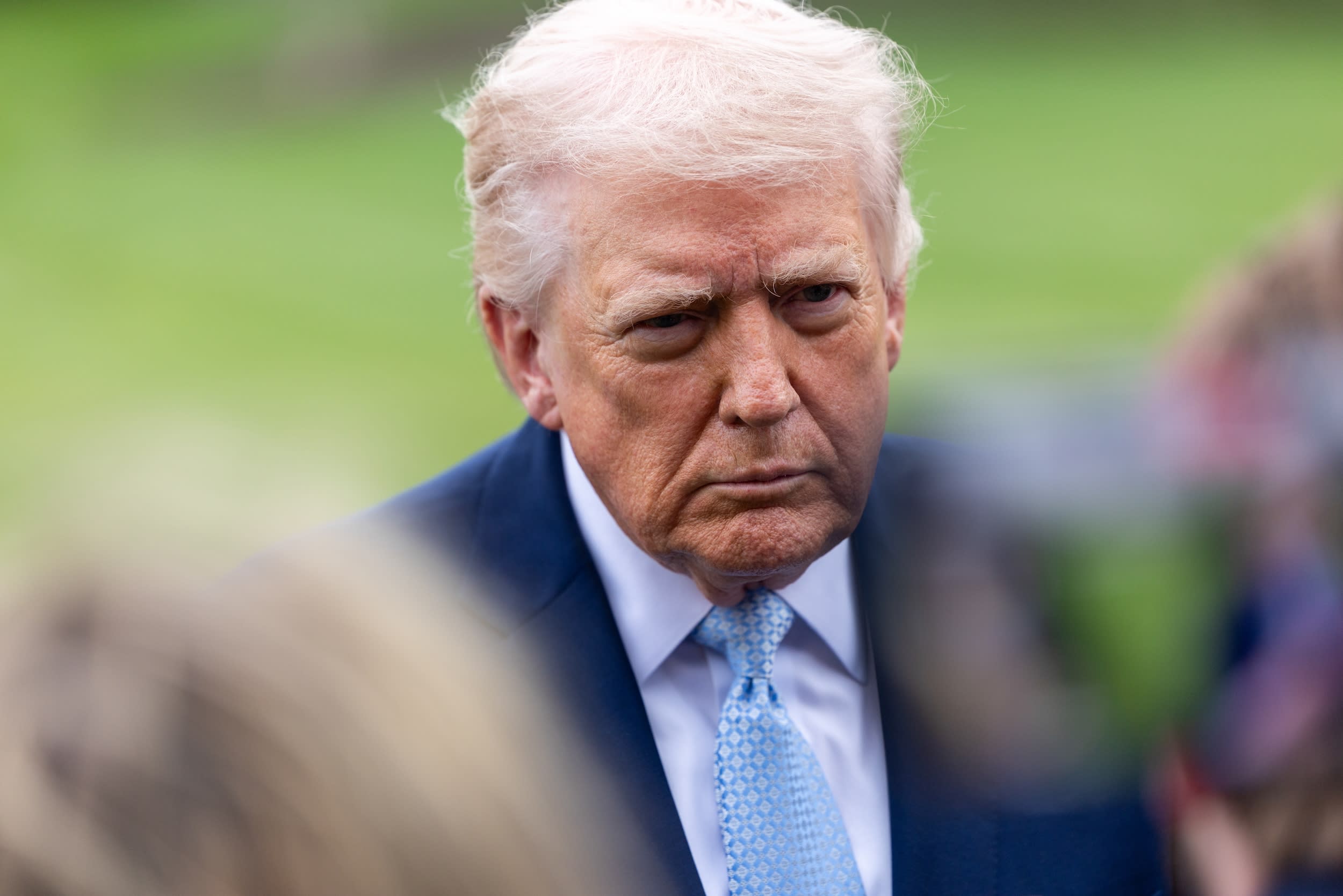
Critics say the Trump administration’s decision to halt sanctions on Iranian oil — in a bid to curb soaring energy prices caused by the intensifying war — benefits the very regime the United States is fighting.
“It’s very clear that the Trump administration is trying to alleviate some of these global energy and oil market pressures, but at the same time, what they’re doing is allowing Iran to be able to benefit from that relaxation of sanctions,” former CIA Director John Brennan said on MS NOW’s “The Weekend” on Saturday. “It shows the inconsistencies in these policies.”
Brennan, MS NOW’s senior national security and intelligence analyst, predicted the conflict will last “a long, long time, and it’s going to be very, very dangerous for U.S. national security interests.”
Philip Gordon, a former national security official in the Biden, Obama and Clinton administrations, accused Trump of hypocrisy for “giving Iran up to ten times” the amount of money that former President Barack Obama sent to the country in 2016.
When Obama sent Iran $400m + $1.3bn in interest in 2016 Trump called it “insane” and he and others spent a decade mocking the idea of “pallets of cash” even though it was Iran’s own money, American prisoners were released, courts were likely to require the U.S. payment, and Iran… https://t.co/RhP8nZRT9D
— Phil Gordon (@PhilGordonDC) March 21, 2026
Treasury Secretary Scott Bessent announced the pause in sanctions in a post on X Friday, saying it would add roughly 140 million barrels of oil to global markets. He said Iran “will have difficulty accessing any revenue generated” from those sales, and that the U.S. will essentially “be using the Iranian barrels against Tehran to keep the price down.”
But critics, including those in Congress, which did not authorize President Donald Trump’s decision to wage war on Iran jointly with Israel, say easing sanctions on the Islamic Republic helps Tehran no matter how the administration tries to sell it.
Sen. Jeanne Shaheen, D-N.H., ranking member of the Senate Foreign Relations Committee, accused the administration of “giving the regime a financial lifeline.”
“To say the President has no plan is an understatement,” she said in a statement on X.
“The Trump Administration is lifting sanctions on Iranian oil, giving the regime a financial lifeline while Americans continue to feel the impact of @POTUS’s war.
To say the President has no plan is an understatement.” –@SenatorShaheen https://t.co/tiiHbD9NaF
— Senate Foreign Relations Committee (@SFRCdems) March 20, 2026
In an attempt to stem the economic fallout from the war, as Iran’s closure of the Strait of Hormuz destabilizes global energy markets, the Trump administration also lifted sanctions on Russian oil last week, angering European allies who want to continue exerting economic pressure on Moscow.
“Sickeningly, shamefully stupid—lifting sanctions on oil sales by Russia & Iran, fueling their war machines with windfall cash,” Sen. Richard Blumenthal, D-Conn., said in a social media post on Friday. “A minimal benefit to oil prices, but huge boost to sworn enemies.”
Tommy Vietor, a former National Security Council spokesman in the Obama administration, said“This is the biggest, dumbest concession ever given to Iran by the US and all you need to know about what a disaster Trump’s policy is.”
Neither Trump nor members of his administration have given a definitive timeline for U.S. involvement in the war. Trump told MS NOW’s Stephanie Ruhle on Friday that it would take Iran 10 years to rebuild if the U.S. ended the war now, but suggested that was not acceptable to him.
“If we stay longer, they’ll never rebuild,” he said.
Still, the president indicated later in the day that he is thinking of an exit soon. In a post on Truth Social, Trump said he is considering “winding down” the military operation against Iran and claimed that the U.S. is “getting very close to meeting our objectives” — despite having said repeatedly that the U.S. has “won” the war.
Clarissa-Jan Lim is a breaking news reporter for MS NOW. She was previously a senior reporter and editor at BuzzFeed News.
- Trump hints at wind-down as US sends more troops to Middle East

- Kennedy’s latest MAHA-approved plan could supercharge peptide boom
- Cuba’s power grid collapses leaving it without electricity for the 3rd time this month
- They once called him a ‘goose-stepping extremist.’ They’re now sitting out his comeback bid.
- Capitol agenda: Senate heads into a weekend grind

- Republicans balk at going it alone on Iran war funding

- Mullin’s nomination to be DHS chief advances out of committee

- Capitol agenda: Senate heads into a weekend grind
- Trump threatens to send ICE to airports amid DHS standoff
- ‘This is about attention’: Mike Lee’s MAGA crusade is driving his colleagues crazy

-

 The Dictatorship1 year ago
Luigi Mangione acknowledges public support in first official statement since arrest
-

 Politics1 year ago
Former ‘Squad’ members launching ‘Bowman and Bush’ YouTube show
-

 Politics1 year ago
Blue Light News’s Editorial Director Ryan Hutchins speaks at Blue Light News’s 2025 Governors Summit
-

 Politics1 year ago
Former Kentucky AG Daniel Cameron launches Senate bid
-

 The Dictatorship6 months ago
Mike Johnson sums up the GOP’s arrogant position on military occupation with two words
-

 The Dictatorship1 year ago
Pete Hegseth’s tenure at the Pentagon goes from bad to worse
-
Uncategorized1 year ago
Bob Good to step down as Freedom Caucus chair this week
-

 Politics11 months ago
Democrat challenging Joni Ernst: I want to ‘tear down’ party, ‘build it back up’